Newly digitized Sanborn Fire Insurance maps of Mauston, Wisconsin, provide more detail of the sprawling Mauston Brewery complex that once covered much of the land at the corner of Morris and Winsor streets along the Lemonweir River.
We previously wrote about the Mauston Brewery as detailed in a book by Mauston native Richard D. Rossin Jr. The Wisconsin Historical Society recently digitized hundreds of maps from the Sanborn Map Company that show intricate detail of the brewery complex. “Sanborn Fire Insurance maps are meticulously detailed, large-scale lithographed, color-keyed street maps,” the Wisconsin Historical Society wrote on its web site. “Sanborn Maps helped insurance agents in the late 19th and early 20th centuries determine the degree of fire hazard associated with a particular property.”
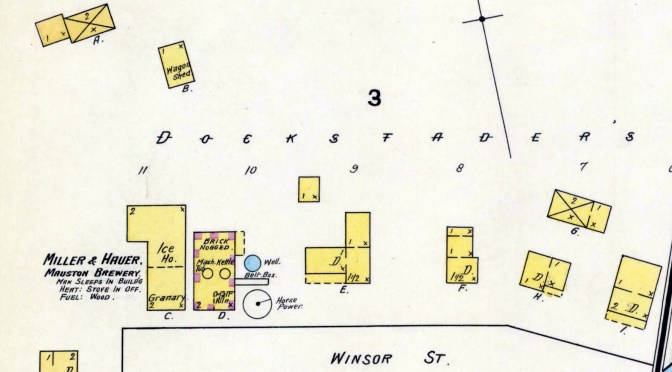
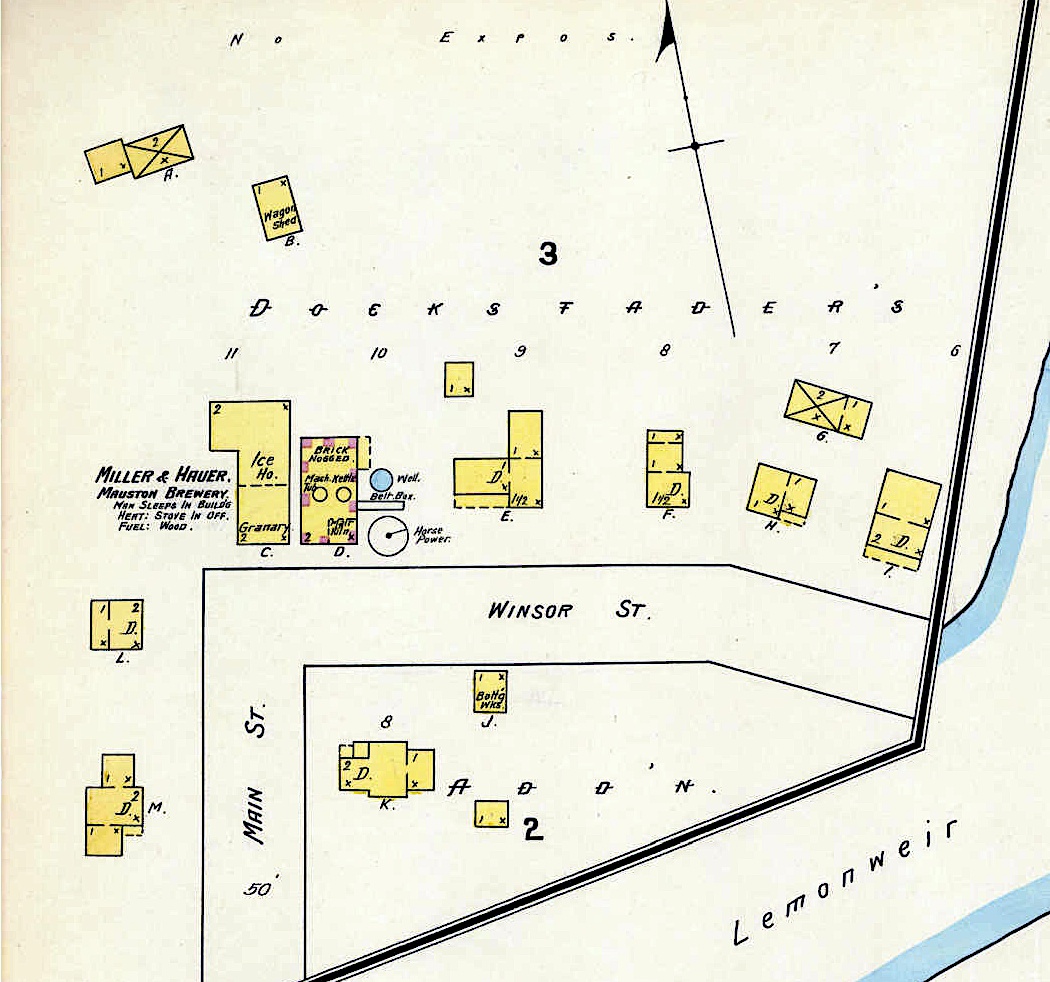
The 1894 fire map shows two Mauston Brewery buildings near the home at 22 Morris.
The old Hanneman home at 22 Morris Street was built around 1893 by Charles F. Miller, owner of the Mauston Brewery. Many of the details he put in the home — stained glass, hand-carved woodwork — remain to this day. The Sanborn maps show that the land around the home once included a bottling works and another out building related to the brewery. It is interesting that Morris Street is incorrectly labeled as Main Street on the 1894 version of the Sanborn map. By 1909, the bottling building near the Miller home was gone.
Across Winsor Street, the map shows a malt kiln, mash kettles, a well, a granary, an ice house and other outbuildings. The map notes that the buildings area heated by a wood stove, and a brewery employee sleeps in the building. The 1909 version of the Sanborn map shows addition of a second ice house on the shore of the Lemonweir River. Brewery workers cut ice blocks on the river in the winter, then moved them on a slide to the ice house.
The 1909 version of the map shows a second ice house near the river.
Charles Miller died in 1907, ending that family’s involvement in the brewery. Charles Ellison continued operating the brewery. By 1916, the brewery had ceased operation, according to Rossin’s book. A pickle factory started operation on the property, but it burned to the ground in 1922. Dr. J. Samuel Hess Jr. bought the land and built a brick ranch home in 1928.
Sometimes a photograph will strike you in a certain way that makes it memorable. It has some intangible quality that makes it almost timeless. Of the thousands of images in our library, a handful qualify for this kind of distinction. Not for their physical clarity or skill of the photographer, but that certain look. You might describe it just a bit like looking at a Rockwell painting, or a black and white photograph by Ansel Adams.
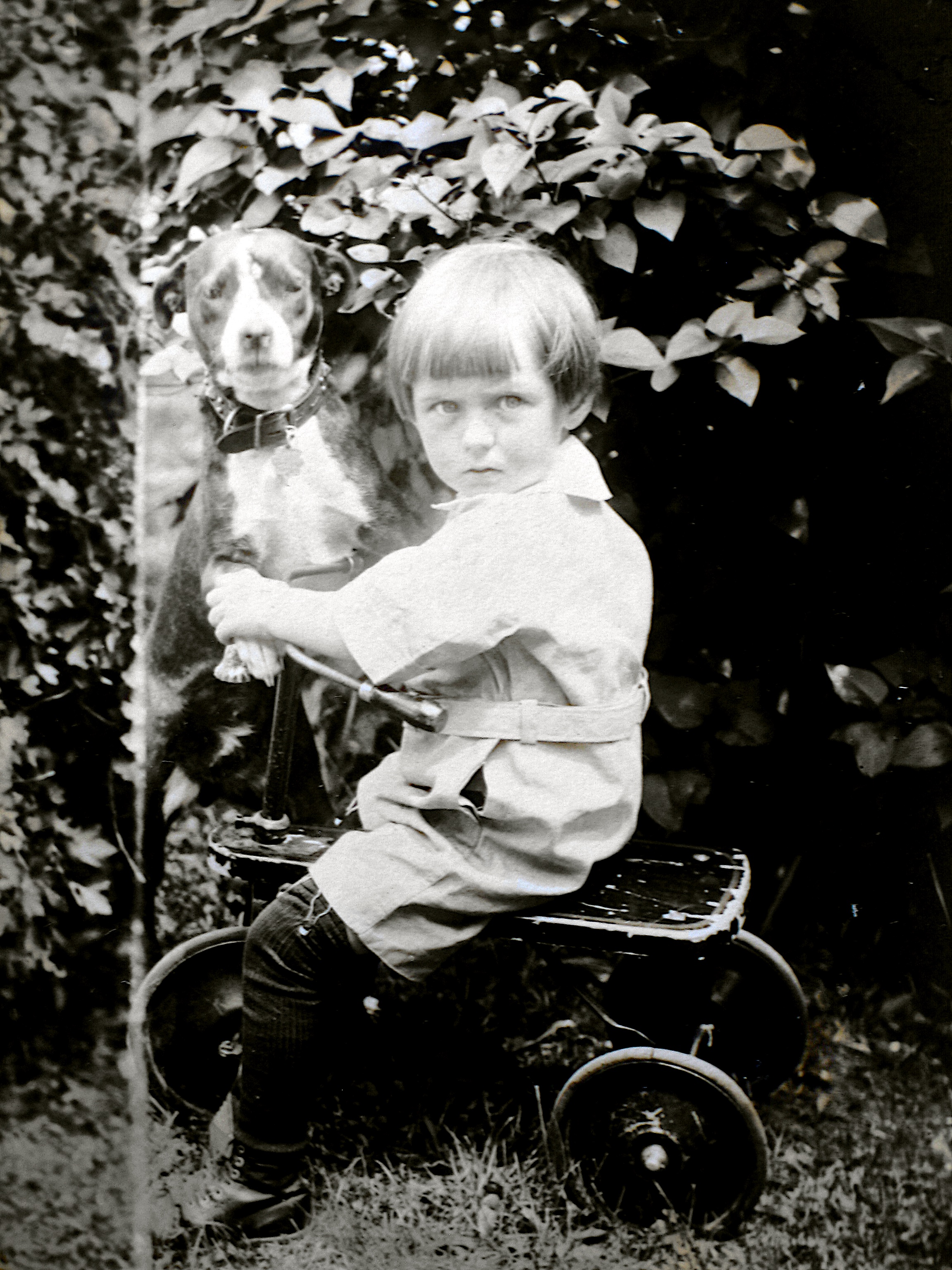
This image has a Little Rascals look and feel to it. Originally thought to be toddler Elaine Treutel and the family dog on her tricycle, circa 1922. Turns out this was actually one of the sons of Harry Cole.
View the whole collection in the gallery below:
Elaine Treutel poses with the family dog in this ca. 1923 photo near Vesper, Wis. Directly behind her is older sister Ruby V. Treutel. Sitting on the bumper of the car is father Walter Treutel (1879-1948). The others are unidentified.
This image has a Little Rascals look and feel to it. Toddler Elaine Treutel and the family dog on her tricycle, circa 1922.
David D. Hanneman with his toe in the sand at Madeline Island, circa 1942.
Ruby V. Treutel (center) relaxes with the Sunday paper near Milwaukee’s Juneau Park in 1924. Ruby was visiting her fiance, Carl F. Hanneman (1901-1982), who was studying pharmacy at Marquette University. At front is Ruby’s sister, Nina H. Treutel (1914-2005). The woman near the car is unidentified.
A formal portrait of Elaine Treutel of Vesper, Wis., circa 1938. Born in January 1920 to Walter and Mary (Ladick) Treutel of Vesper, Elaine attented Lincoln High School in Wisconsin Rapids. She married Max Clark in October 1938. The couple lived for many years in Madison, then relocated to suburban Phoenix, Arizona.
Frank Herman Albert Hanneman (1895-1947) of Grand Rapids, Wis., posed for this studio photo with a shotgun, ammunition belt and even a hunting dog. The photo was taken ca. 1909. Frank was the son of Carl Frederick Christian Hanneman (1866-1932) and Rosine B. H. Ostermann (1874-1918).
Nina Treutel of Vesper, Wis., is about 18 months old in this circa 1916 photograph. Nina’s parents are Walter Treutel and Mary Helen (Ladick) Treutel.
A beautiful portrait of Lavonne Hanneman, circa 1955.
Ruby Treutel poses for an informal photo, circa 1922.
Ruby Treutel with her siblings Marvin, Elaine and Nina, circa 1921.
Carl F. Hanneman’s high school portrait, 1921.
Lavonne and David Hanneman examine a monument on a vacation trip to South Dakota in 1947.
Ruby Treutel holds her baby brother Gordon, circa 1910. Gordon died of pneumonia in February 1911.
Patricia Treutel is having a great time on the tree swing, circa 1943.
We don’t have an ID on this beautiful young lady. Photo appears to be from 1920s.
David D. Hanneman watches over his little sister, Lavonne, circa 1938.
David D. Hanneman and sister Lavonne Marie Hanneman, circa 1942.
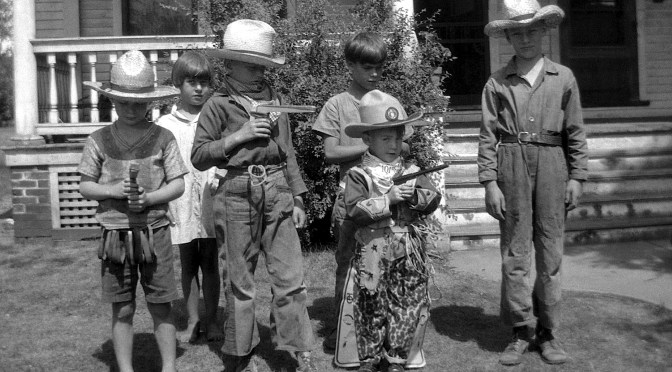
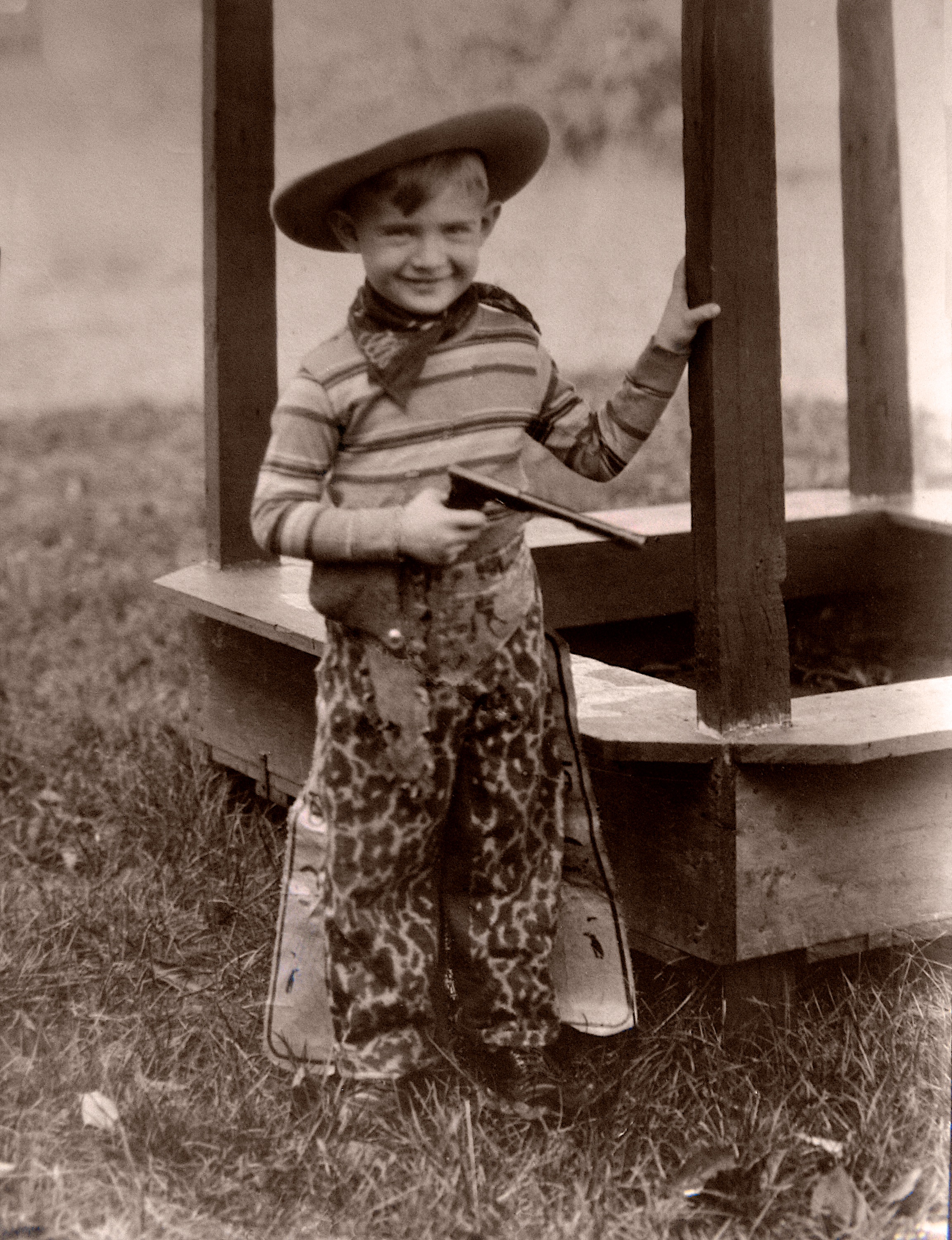
Even in the late 1920s, it was a time-honored tradition for the neighborhood boys to dress up as their favorite cowboy hero. The priceless image above shows a group of youthful cowpokes hard at play on Wisconsin Avenue in Wisconsin Rapids. The smallest cowpoke in front is Donn G. Hanneman, and judging by his spiffy cowboy getup, it might have been sometime near his August birthday.
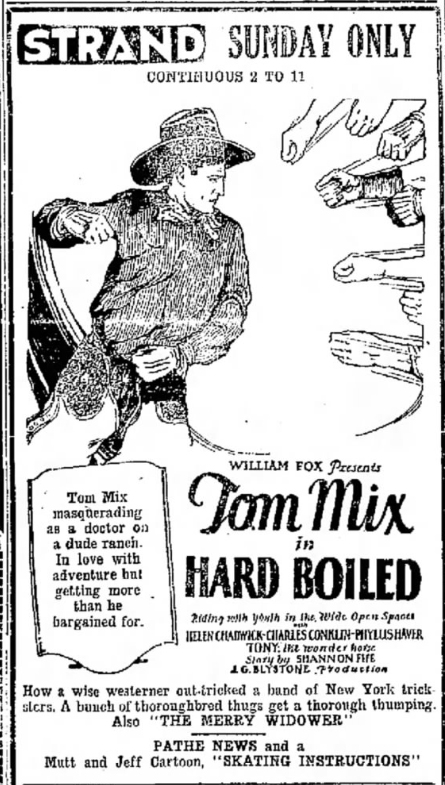
Youth flocked to see their hero Tom Mix and his steed, Tony the Wonder Horse.
So just which movie stars would these boys (and one perplexed young lady) be imitating while hard at play? The photo dates to around 1930, so it was well before the days of Red Ryder played by Red Barry and Rocky Lane, and long before the Lone Ranger. But no worries, the cowboy genre was well established at the movie house by such stars as Hoot Gibson, Tom Mix and even a very young John Wayne. These tykes might have gone off to see Fred Thompson in The Two-Gun Manor John Wayne in The Big Trail. It was still a few years before Gene Autry would be the star of In Old Santa Fe.
A bit older Donn Hanneman in his latest cowboy getup, circa 1933.
So here’s a tip of our 40-gallon hat to all of the aspiring cowboys of that era, with their chaps, shiny lawman’s badge, wooden gun and all the swagger a 5-year-old could muster. Let’s ride!
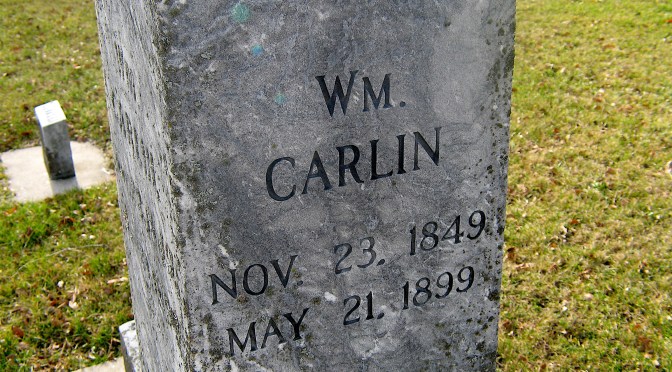
Society’s obsession with weight is not a new phenomenon, but it seems a most curious detail to include in an obituary. William Carlin of the Town of Ottawa in Waukesha County, Wisconsin, suffered such a fate when newspapers made his girth the top fact in his obituary.
“Weighed 385 Pounds,” read the Page 1 headline in the The Waukesha Freeman on May 25, 1899. “Mr. Carlin weighed 385 pounds and was doubtless the heaviest man in the county,” the article said. “His death was caused by fatty degeneration of the heart.” Doubtless. It’s unclear how the newspaper reached such a conclusion. Carlin, who was just 50 when he died, was not part of a circus. He didn’t seek fame as the state’s fattest man. Yet the newspaper deemed his life should boil down to the fact he was heavy. The Weekly Wisconsin newspaper in Milwaukee also found Carlin’s weight newsworthy, but relegated it to Page 5.
The Waukesha Freeman carried the death of William Carlin on Page 1 in May 1899.
So history won’t remember him only for his body size, we’ll shed some more light on the life of William Carlin. Born November 23, 1849 in the Town of Ottawa, he was the son of Christopher Carlin and the former Elizabeth Cobb. Christopher Carlin died at age 37 in June 1858, when William was 8 years old. The Carlins were farmers on land northwest of tiny North Prairie. Christopher Carlin emigrated from England. At one time in the 1890s, William Carlin owned 300 acres of farmland in Waukesha County.
William Carlin married the former Annie Jones, and they had two children. Orville Walter Carlin, husband of Emma (Treutel) Carlin, was born February 5, 1874. Elizabeth J. “Lizzie” Carlin was born in January 1881. Their mother died in May 1889 at the young age of 37. Orville and Lizzie suffered a second tragedy in May 1899 when their father died, as newspapers said, from “fatty degeneration of the heart.” Orville married Emma Treutel and moved to Vesper, Wisconsin, where he operated a butcher shop. He died in 1934 at age 60. Lizzie married Jacob F. Supita. She died in 1944. William’s brother, Thomas Carlin, died in 1903 at age 52, so it seems genetics worked against the Carlin men.
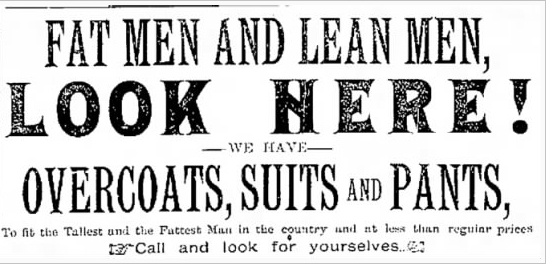
The Waukesha Journal carried this ad in November 1889.
Newspapers have long carried stories about record-setters, be it for height or weight. Often the subject of the stories sought the publicity. But what of those who didn’t? Did La Crosse businessman Samuel P. Welsh approve of his moniker as Wisconsin’s fattest man? When he married Grace Dutzel in June 1911, newspapers across the Midwest carried stories on how he weighed 400 pounds, while his bride “tipped the beam” at just 100 pounds. The Indianapolis News ran a Page 1 wire story on the Welshes arriving in Milwaukee for their honeymoon.
The Green Bay Republican carried this tidbit in December 1843: “The fattest man in the world lives in Connecticut. He is so thick through that he must lie down when he wishes to look tall.”
Dave McGuire of Silver Lake, Wisconsin, posed for a newspaper photograph in May 1921. It ran under the caption, “World’s Fattest? Who Knows?” “Dave McGuire of Silver Lake, Wis., doesn’t belong to a circus, nor does he ever expect to enter one,” one newspaper caption read. “He’s six feet seven inches tall and weighs 744 pounds, but he doesn’t care to go to the trouble of finding out whether he’s the fattest man in the world or not. He’s satisfied with the simple farm life.“
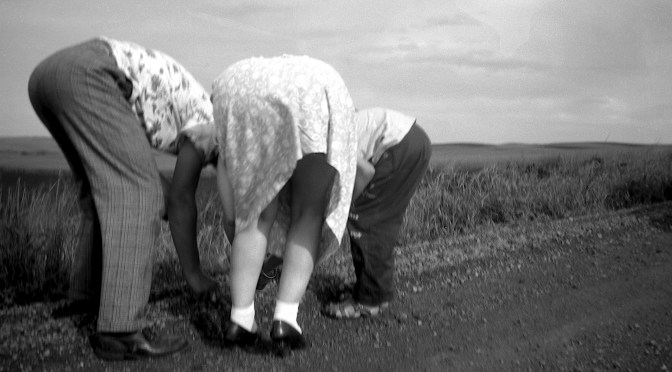
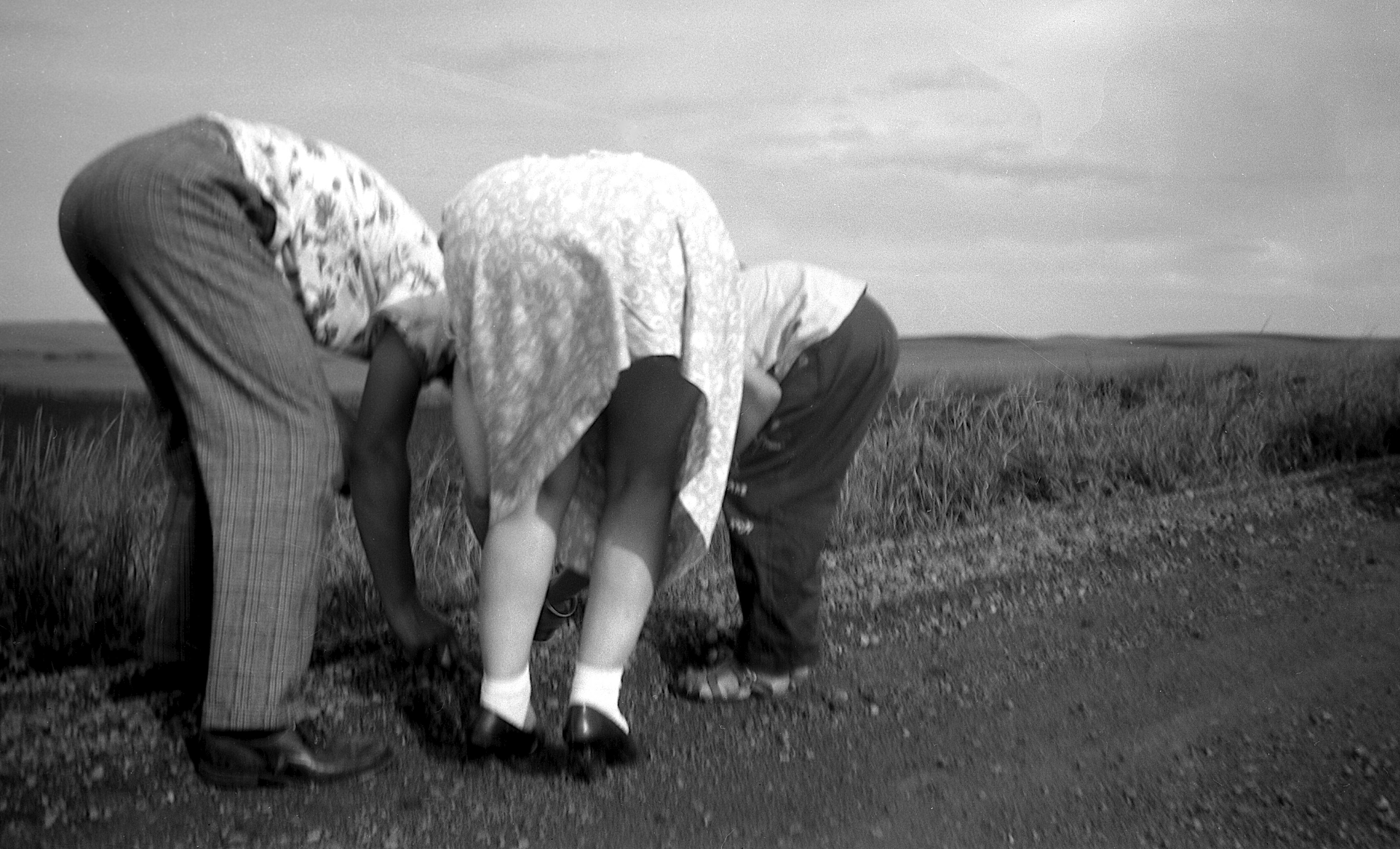
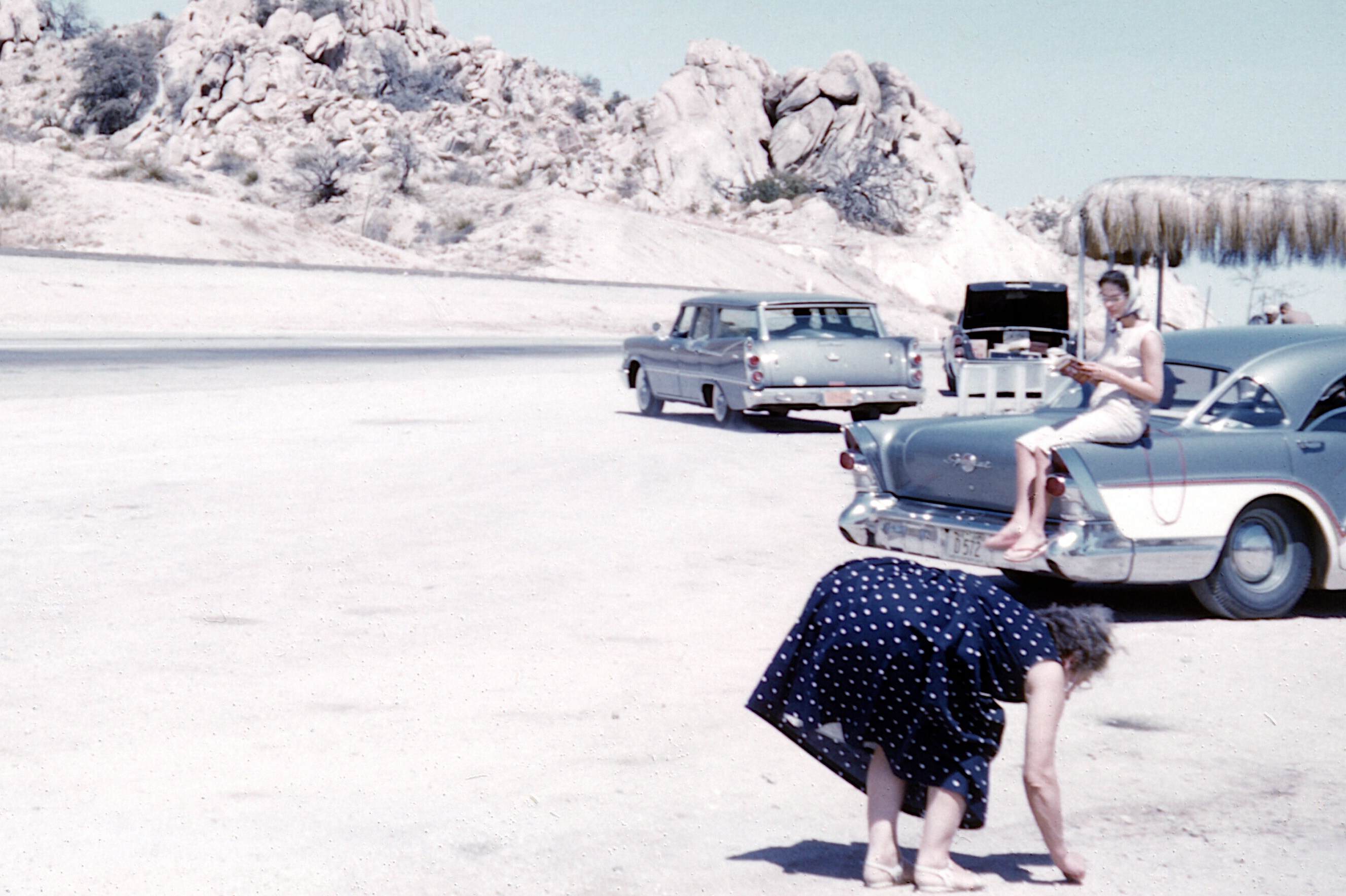
It wasn’t such a curious hobby, collecting rocks, but more in how it was done. Ruby Viola (Treutel) Hanneman (1904-1977), simply could not resist picking rocks up off the ground wherever she went. And judging by the facial expressions of those around her, it became somewhat of a family joke.
Lavonne Hanneman can’t resist laughing as her mother Ruby bends down to pick up rocks on a trip to South Dakota in 1947.
Rock collecting was certainly a Hanneman tradition. Uncle Wilbert G. Hanneman (1899-1987) had a rock shop up in Wausau, from which many a Hanneman child procured varieties of colorful, polished rocks. I have a bag of them to this day. Ruby liked to get her collectibles the old fashioned way, by finding them. She’d bend down to grab the most interesting or unusual ones, and husband Carl F. Hanneman (1901-1982) was often nearby to capture the moment on film.
David D. Hanneman’s priceless facial expression says it all, as his father Carl snaps yet another photo of mother Ruby picking up rocks.
The best examples of this hobby (or habit) came on a family trip from Mauston, Wisconsin, to Williston, South Dakota in 1947. After getting caught all bent over on several photographic occasions, Ruby and the kids shot back. They put their heads together and gave old Carl Hanneman a two-cheek salute.
David and Lavonne Hanneman joined their mother Ruby in offering a rear-end salute to cameraman Carl F. Hanneman.This photo proves Ruby’s habit was not a passing fad. Here she gathers samples on a trip to Phoenix in 1959.
Army Pvt. Rudolph Mika Jr. (at left) of Mauston, Wisconsin, talks to livestock buyer John Randall at the Juneau County Fair at Mauston in the summer of 1942. Mika went into the Army glider corps and took part in the invasion of North Africa during World War II. He was taken prisoner by German troops in Holland in September 1944 and repatriated in June 1945.
Army Pvt. Rudolph Mika (at left) of Mauston, Wis., talks to livestock buyer John Randall at the Juneau County Fair at Mauston in the summer of 1942.
The 1940 U.S. Census showed Mika working at the Mauston pickle factory and living at home with his parents, Rudolph Mika Sr. and Anna Mika. The elder Mika was a carrier for the local ice dealer. The Mikas lived on Winsor Street, just a few houses away from the Carl F. Hanneman family and the home of Dr. J. Samuel Hess Jr. Hanneman was on the Juneau County Fair Board for many years. He snapped the photo of Mika and Randall.
Rudy Mika enlisted in the U.S. Army in March 1942 at Madison. His occupation was listed as a carpenter. After the war, he returned to Mauston. He died on January 6, 2001 at Mauston, age 89. Randall died in January 1971 at age 74.
It is common knowledge to family members that Carl F. Hanneman was born on Oct. 28, 1901. But when he needed proof of that fact back in 1946, there was none to be found. On Feb. 22, 1946, Carl sent a letter and the 50-cent fee to the Wood County register of deeds, asking for a copy of his birth certificate.
Register of Deeds Henry Ebbe sent the letter back with an answer that must have shocked Carl: “There doesn’t seem to be any birth certificate for you on the above date. There is a Ruben born Oct. 21, 1901. Father Chas. and Mother Rose. Could this be yours? I am returning your 50 cents.”
The earliest known photo of Carl Henry Frank Hanneman, born 28 Oct 1901.
That set Carl off scrambling to find proof of his birth. He asked the pastor of the Moravian Church of Wisconsin Rapids for help. Carl’s parents, Charles and Rosine Hanneman, joined the Moravian Church on March 29, 1907. Church records did list Carl F’s birthdate as Oct. 28, 1901, so Moravian Minister George Westphal wrote a letter testifying to the church records. But since Carl was not baptized in the Moravian church, this record was only indirect evidence of his birth.
If Carl had turned to U.S. Census records (which were not available at the time), it might have confused the matter more. The 1910 Census lists the youngest son of Charles and Rosa Hanneman as Harold Hanneman, age 8. Carl’s first middle name is Henry, so no doubt the Census worker simply wrote it down wrong.
So what happened? It’s not clear, but we do know the record was officially corrected. Carl’s birth certificate still shows the name Ruben and the wrong birthday, but the errors are crossed out and replaced with the correct information. Wood County Health Officer Frank Pomainville corrected the record in red ink in 1960.
In a state where the one-room schoolhouse was quite the norm in the early 1900s, tiny Vesper, Wis., boasted an impressive two-story brick school building that was the center of learning for area children for decades.
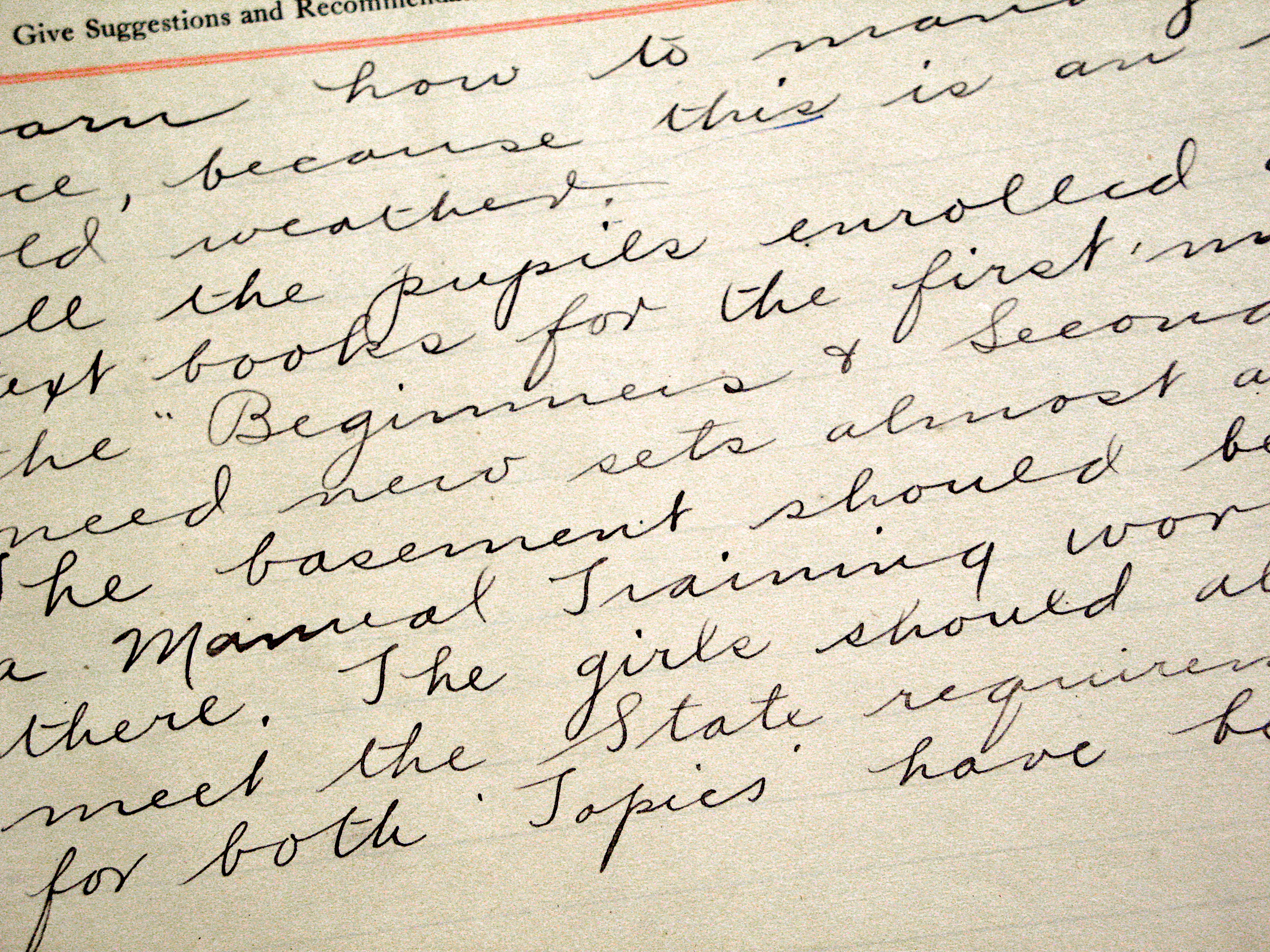
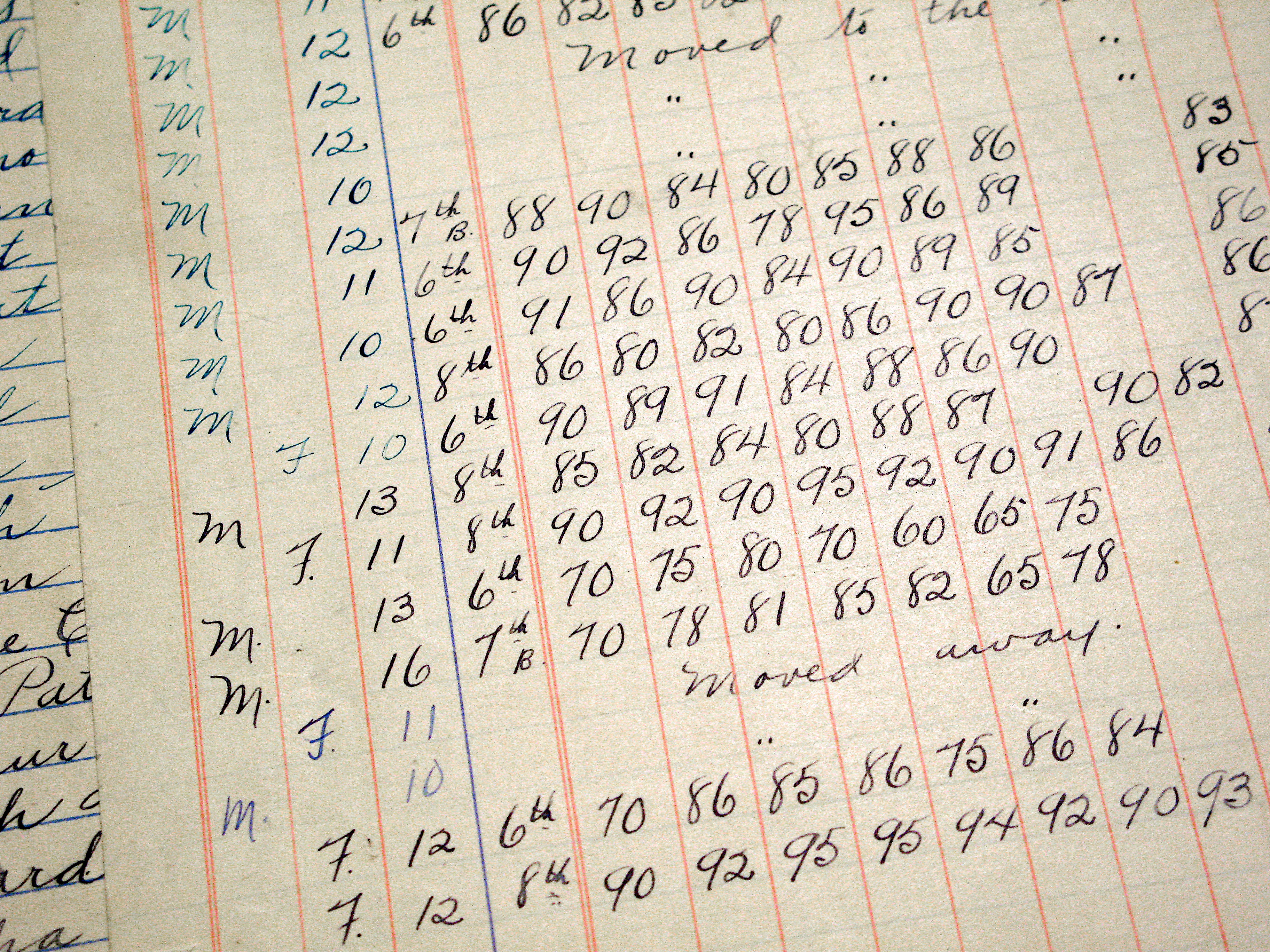
Built in 1906 just off of Main Street in Vesper, the Vesper Graded School was home to students of District No. 1, Town of Hansen. We get an interesting look at life inside the school from a teacher’s record book covering the years 1911-1917. The “Welch’s System Attendance, Classification, Gradation and Close Supervision” book belonged to Ruby (Treutel) Hanneman, who attended Vesper school starting in 1913 and later taught at the school.
The teacher kept detailed notes on conditions at the school, in addition to records of student performance and attendance.
The detailed notes in the book make one thing very clear: the teacher had her hands full each school year. Not only did one woman handle teaching duties for lower and upper grades, but she had to manage the building and contend with a cranky, bulky coal furnace each winter.
During the years covered in the record book, Vesper had three teachers: Mabelle Rowland in 1911-1912, Ella H. Hessler from 1912-13 to 1914-15, and Sara Icke in 1915-16 and 1916-17. Teachers were paid between $50 and $60 per month. Ruby’s uncle, Henry Treutel, served on the school board in early years (his son Harold attended classes during that time). In the late 1920s, another uncle, Charles Treutel, was also on the board.
It seems the biggest challenge for the teachers was not in the classroom but the furnace room. The coal-fired furnace often belched smoke and gases into the clean-air intake and into the classrooms. “Before you begin school learn how to manage the drafts of furnace and cold air shafts,” wrote Mabelle Rowland in her 1912 “Teacher’s Report to Successor.” “The inspector is very critical on this work.” Teacher Ella Hessler wrote one year later: “The furnace needs repair. The smoke enters the fresh air. The furnace work in cold weather is too heavy for a woman.” Similar notations were made in subsequent years.
Each student’s attendance and academic performance were tracked in detail.
The school typically served from 25 to 40 students per term. Primary grades were on one level and upper grades on the other. The teacher staggered the subjects so she could get lessons started for one group and then move to the other.Classes started at 9 a.m. and students were dismissed for the day at 4 p.m. Course work included arithmetic, history, language, reading, grammar, physiology, domestic science for girls, manual training for boys, civics and geography.
Some of the children walked to school from homes nearby in the village, while others came in from the countryside. Tardiness was common, due to distance walked, duties at home or a pokey walking pace. In 1911-1912, Alfred and Agnes Peterson were the brother-sister tardiness champs with 20 and 17 instances, respectively. Clara Zieher had 18 tardy notations, followed by Erma Dassow with 15 (her brother Elmer had just 4). Absence from school was also common due to illness or duties helping at home. On occasion a student or two left school for a month or two to perform farm work. Arnold Conklin had best attendance in 1911-1912, only missing one day out of 180.
Absences were common from illness or need to stay home and work on farm chores.
The book tracked each student’s attendance and progress on a range of subjects. Teachers made notations for some students that ranged from “fair worker,’“weak eyes” and “slow” to “hard worker,” “irregular and very nervous,” and “dull.”
In the 1911-1912 school year, the school library had a mere 50 volumes. The school invested in books each year, and by June 1917 the library’s holdings included 144 books. For obvious reasons, the boys’ and girls’ out buildings regularly needed repairs and painting. The number of trees on school grounds that were in “thrifty condition” ranged from four to seven.
Ruby Treutel enrolled at Vesper Graded School in November 1913, when she was 10. There was some indication she had attended a parochial school prior to that. During her first year, Ruby missed 21.5 days and was tardy six times. Her cousin Harold Treutel had a mere three sick days. Ruby received good grades for the term: orthography, 91; reading, 95; writing, 90; arithmetic, 70; grammar, 89; geography, 83; and constitutions, 90. During the 1914-1915 school year, Ruby was out sick 20 days, but she still maintained As and Bs in all of her subjects.
The teacher’s annual summary provides interesting detail on all conditions at the school.
During the 1915-1916 term, Ruby excelled in all of her courses, scoring solid ‘A’s in orthography, reading, grammar, U.S. history and physiology. Her lowest grade was a ‘B’ in geography and arithmetic.
Harold Treutel graduated from Vesper Graded School in 1917 and enrolled at Lincoln High School in Grand Rapids.Ruby graduated from Vesper in 1918, also enrolling at Lincoln High School. That may be where she first met Carl F. Hanneman, whom she would marry in July 1925.
The old Vesper Graded School is now a private home, shown here in 2006.
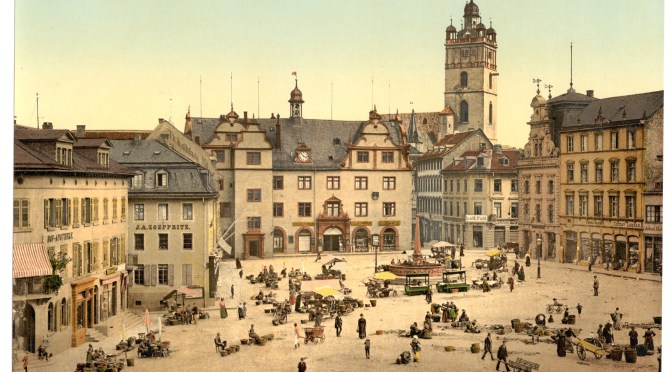
They were craftsmen — blacksmiths, tailors, chandlers, carpenters — the clan of Treutels who came to Wisconsin from the Darmstadt area of Germany starting in 1849. The Johann Adam Treutel family left the village of Königstädten between 1849 and 1854 and headed for America. They were part of a huge wave of German emigrants that changed the face of Wisconsin and the United States.
The Wisconsin branch of the Treutel family tree is from Königstädten, a village just northwest of the city of Darmstadt. From this “king’s village” came Johann Adam Treutel and his wife, Elizabetha Katharina (Geier) Treutel. According to the Hessisches Staatsarchivin Darmstadt, Adam, Katharina and at least some of their children left for America in July 1854. The emigration index simply lists that the eldest Treutel traveled “with his family.”
Their sonJohn Treutelhad already been in Wisconsin for some two years when they departed Germany. We believe the 1854 traveling party included at least three other Treutel children: Philipp Treutel, 21; Sebastian Treutel, 19; and Henry J. Treutel, 13. Their destination was Milwaukee. In May 1849, the eldest Treutel child, Adam, left for America, living in New York for a time before moving to Milwaukee.
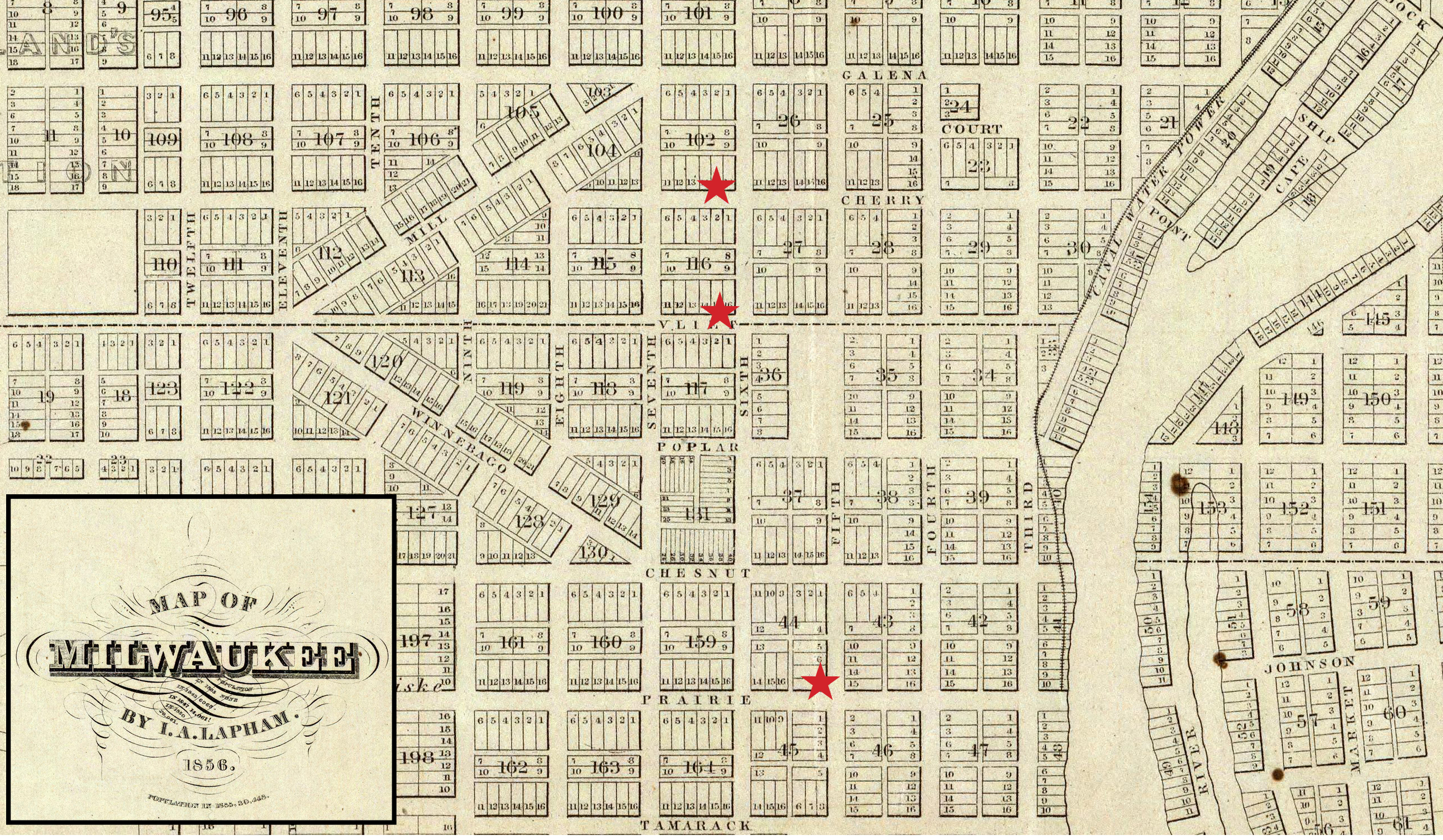
The red stars show locations where members of the Treutel family operated blacksmith and chandler shops in Milwaukee. At right is the Milwaukee River.
The Treutel family ran a tallow chandler shop near downtown Milwaukee. The shop sold soap and candles made from animal fat and other ingredients. At various times in the 1860s and 1870s, Adam Jr. worked as a railroad man, a tallow chandler and a tailor. The Treutels, some of whom lived in Milwaukee’s Second Ward, had good Darmstadt neighbors, including master brewers Joseph Schlitz and Phillip Best. When their father Johann Adam died in Milwaukee in 1859, some of the Treutel sons took up residence with other German families in Milwaukee.
Although his primary residence was in Mukwonago in Waukesha County, Philipp Treutel is listed in the 1863 Milwaukee city directory as having a blacksmith shop at the southwest corner of Fifth and Prairie in downtown Milwaukee. He is listed in the 1867 directory as living at 517 Cherry St., next door to his younger brother, Henry. So it appears Philipp moved between Milwaukee and Waukesha counties, probably based on availability of work.
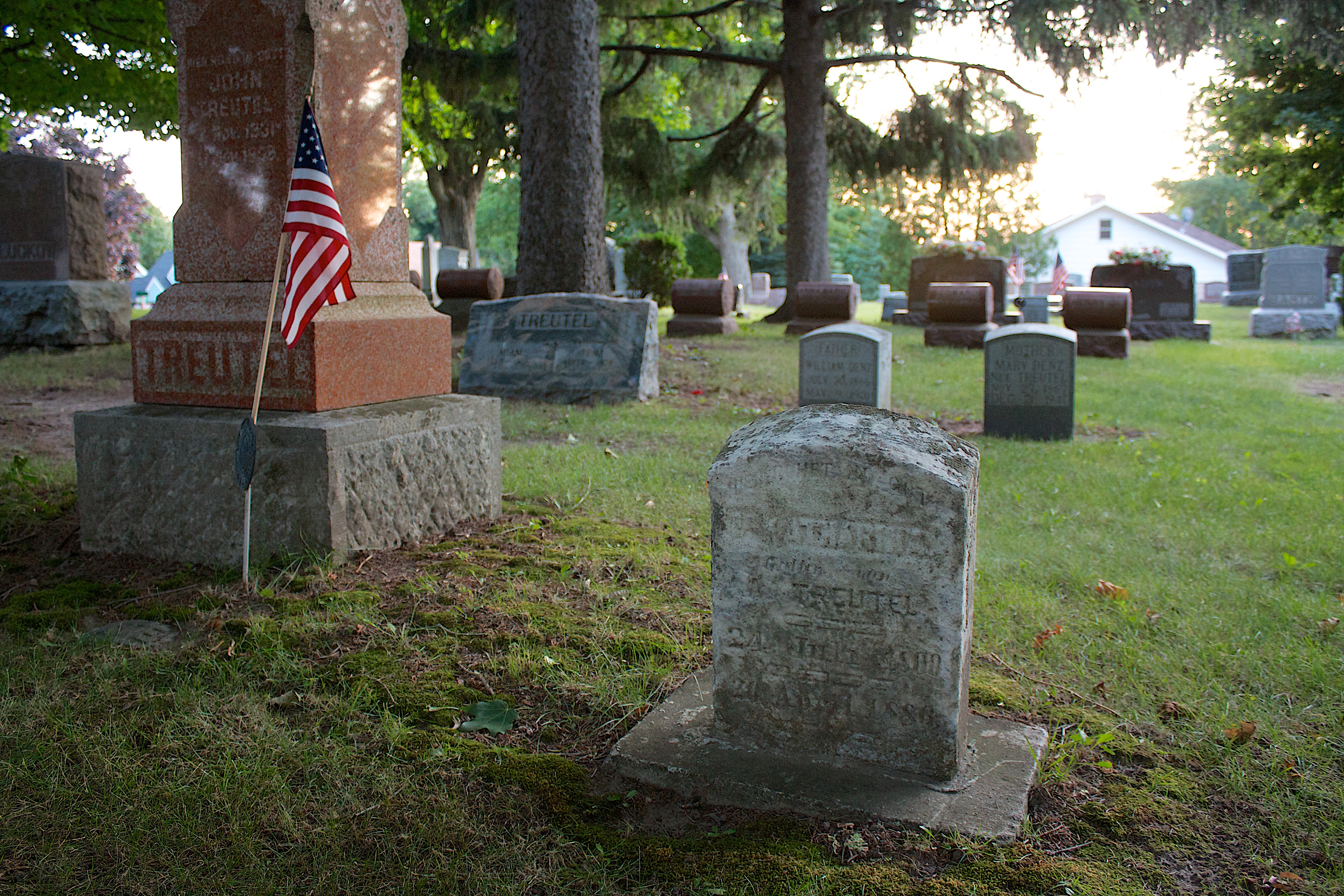
The tombstone of Katharina (Geier) Treutel sits in the shadow of the monument to her son, John, at Union Cemetery in West Bend, Wis.
Katharina Geier Treutel was born on July 24, 1800 in Hesse-Darmstadt, the daughter of Nicolaus and Elizabetha Geier. She married Johann Adam Treutel sometime around or just after 1820. She died on April 26, 1886 in the Town of Addison, Washington County, Wis., and is buried at Union Cemetery in West Bend. The cause of death was listed as marasmus senilis, which basically means old age. She had eight children, five of whom (along with 42 grandchildren) survived her. Her tombstone reads:
Hier Ruht in Gott (Here Rests in God)
Katharina
Gattin von (Wife of)
A. Treutel
Philipp Treutel settled in Mukwonago in Waukesha County, where he married Henrietta Krosch and fathered seven children, including Walter Treutel (father of Ruby Treutel Hanneman). He was a blacksmith, and probably learned the trade from his father. After Philipp’s death in 1891, Henrietta moved the Treutel family to Vesper in Wood County, Wisconsin.
Henry J. Treutel enlisted in the 26th Wisconsin Infantry Regimentduring the Civil War, and fought at the Battle of Gettysburg. Sebastian also joined the 26th Wisconsin, but was given a disability discharge in August 1863, possibly from wounds during the war. We don’t believe Philipp or John Treutel were called into service.
Henry, Sebastian and John Treutel eventually settled in the Town of Addison, Washington County. John was a carpenter. The 1870 U.S. Census for the Town of Addison shows a Jacob Treutel, 31,living at the John Treutel homestead. It is possible that Jacob, who would have been born about 1839, was a younger brother. Sebastian was also a carpenter, but he later worked hauling the U.S. Mailin Washington County. Henry operated a blacksmith shop, a store, a saloon and a cheese factory near the village of Aurora. He later moved to Wausau.
Based on all of the evidence we’ve gathered, it appears the Johann Adam Treutel family included Adam (1822), John (1831), Philipp and deceased twin brother (1833), Sebastian (1835) and Henry (1841). Other possible children are Peter and Jacob, but more research is needed to establish their lineage.
Family Line: Johann Adam Treutel >> Philipp Treutel >> Walter Treutel >> Ruby Treutel Hanneman >> Donn, David and Lavonne Hanneman.
Monument of Philipp Treutel, grandfather of Ruby (Treutel) Hanneman, at North Prairie Cemetery in Waukesha County, Wis. Philipp died in 1891.
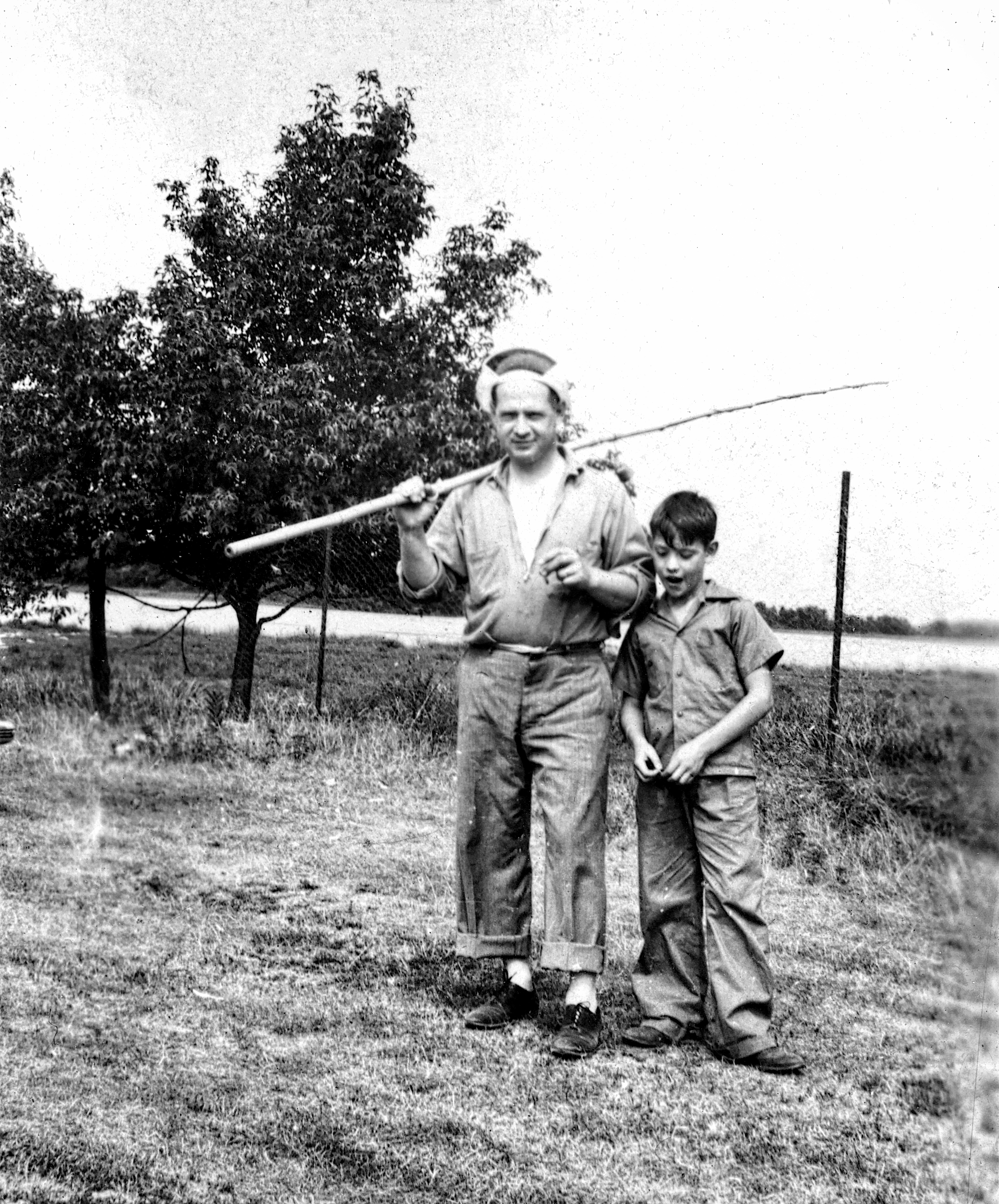
Photographs can document history in many ways, so it’s fun to look deeper into historical images to learn what they can tell us. The image atop this post shows a man and a boy. The man has a cane pole, so we can assume the pair has gone or is going fishing. Look a little deeper. The photo has a Rockwell-esque quality to it. Set in the summer of 1942, the photo shows Carl Henry Frank Hanneman (1901-1982) and his youngest son, David D. Hanneman (1933-2007). You can see Carl’s love for fishing — something he shared with his children and grandchildren who learned to fish on Mauston’s Lemonweir River.
The son is following along, asking questions of the fishing expert. What is he asking? Perhaps, “Hey, Dad, why don’t I have a cane pole?” It’s a time-honored tradition,passing on a love for fishing from one generation to the next. We’ll cover more of that in a future installment.














 The Hanneman Archive