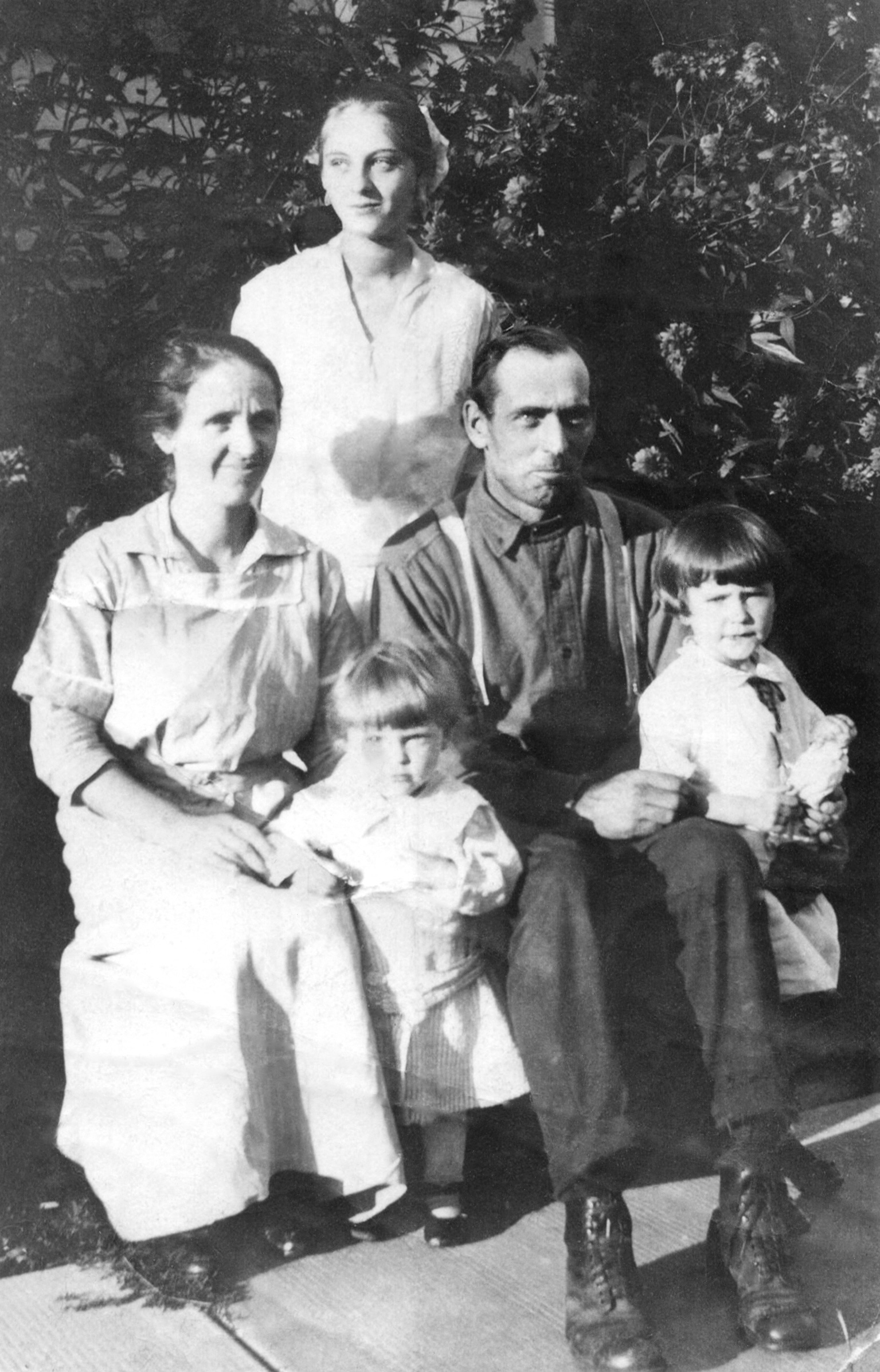
A simple family snapshot taken around 1918 is the only photograph we have showing Walter Treutel and his wife Mary (Ladick) Treutel together. Taken at the Treutel home in the village of Vesper, Wisconsin, the photo shows a teenaged Ruby along with younger siblings Marvin, 2, and Nina, 4. Elaine Treutel would come along in 1920. Baby Gordon Treutel died in 1910.
Walter was a rural route postal carrier for the U.S. Postal Service, while Mary tended to the family home on Anderton Avenue. The couple were married on December 29, 1902 in Vesper. Walter had recently relocated to Vesper from North Prairie in Waukesha County. Our Grandma Ruby Viola (Treutel) Hanneman was their first child, born June 22, 1904. Ruby was born at 1 p.m., delivered by Dr. F.A. Goedecke.
We learned recently that Mary’s nickname was Molly. That factoid came from none other than cousin Mary “Mollisu” Clark, the daughter of Elaine (Treutel) Clark and Max Clark.
Mrs. Treutel died at just 42 years old in January 1925. She had an operation in nearby Marshfield, but a post-operative infection claimed her life on January 31. She did not live to see her daughter Ruby get married that summer, and she did not get to see her other three children grow into adulthood.
The uncropped version of the photo shows Ruby V. Treutel standing at rear. Mary and Walter Treutel are seated. In front are Marvin and Nina Treutel.
Whether by voluntary enlistment or draft, the Civil War that began in April 1861 took fathers and sons away for years — and sometimes forever.
Michael Kennedy of Sun Prairie, Wisconsin, was in the first wave of men to enlist after President Abraham Lincoln called for volunteers to defend the Union. The son of Sylvester and Mary Kennedy joined the 16th Wisconsin Infantry Regiment at Camp Randall in Madison on November 21, 1861. The regiment mustered into service on January 31, 1862 and left the state on March 13 en route to Pittsburg Landing, Tennessee. After several days encampment along the Tennessee River, the 16th Wisconsin was attached to the Sixth Division, Army of the Tennessee, commanded by Brigadier Gen. Benjamin M. Prentiss.
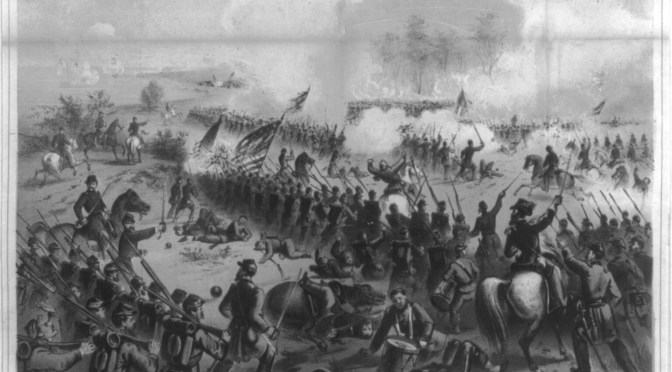
Early on April 6, Capt. Edward Saxe of the 16th Wisconsin’s Company A was ordered to make an advance toward the Confederate line. Within a short distance, an enemy volley killed Saxe and Sgt. John Williams. Thus opened the deadly Battle of Shiloh. The Battle of Shiloh went down in the annals of war as one of the bloodiest ever fought. It was a turning point for the Union. For much of the day, a desperate battle raged back and forth between Union and Confederate forces.
“The rebel hordes were coming on in front and flank, rolling up great columns like the waves of the ocean,” wrote Pvt. David G. James. Companies were moved in and out as ammunition and supplies ran short. Gen. Ulysses S. Grant told Gen. Prentiss if he could hold his position until sundown the army would be safe. Prentiss and his troops held until 5:30 p.m., when they were surrounded and more than 1,000 men taken prisoner. April 6 closed “at that time the bloodiest battle ever fought on the American continent,” James wrote. Prentiss’ Sixth Division suffered 236 killed and 928 wounded, in addition to the 1,008 captured.
At some point in wild battle, Kennedy was seriously wounded and captured by Confederate forces. Union troops were not able to recover bodies or make a full accounting of the missing until April 7, 1862. Kennedy was held prisoner at Corinth, Mississippi, where he died from his wounds on April 26, 1862. He was 20 years old.
We don’t know how much the captivity contributed to Kennedy’s death. Confederate prison camps were notorious for squalid conditions and severe mistreatment of Union soldiers. Kennedy was one of 39 soldiers from the 16th Wisconsin who later died from wounds sustained in the Battle of Shiloh. Overall, the 16th Wisconsin suffered 62 dead and 189 wounded in the battle. Kennedy is buried at Sacred Hearts Cemetery.
(This story was excerpted from “Catholic Pioneers on the Prairie,” a 28-page booklet written on the founding of Sacred Hearts of Jesus and Mary Catholic Church.)
MAUSTON, Wisconsin — Mauston residents don’t believe in the “unlucky 13” superstition anymore. They can’t after seeing 13 familiar faces that have been absent so long once again through their city streets.
These 13 familiar faces belong to Mauston servicemen, all of whom have seen service overseas and all of whom arrived home at about the same time to vi‘sit their families.
The 13, whose service abroad totals 240 months, were feted at an informal dinner and dance at the Mauston American Legion hall, under the joint sponsorship of the American Legion post and the Mauston Rod and Gun Club, and for a time they once again became “that kid next door” or that “Joe’s boy” as they let the cares of the war drop from their uniformed shoulders.
Their Record
The group includes a man who went through the entire New Guinea campaign with the famed 32nd Division; a man who stood guard over the Japanese at a prison camp overseas; a man who was taken a prisoner of war only to be released at the capitulation of Romania; a man who went through the invasions of Italy and Sicily with the Navy, and others whose heroic deeds were written in most any theater imaginable.
It also includes four airmen who have completed a total of 118 missions. The Lucky 13 are:
Capt. Riley D. Robinson, 31, whose wife and child live in Mauston, who served as supply officer and battery commander with the 32nd Division in Australia and throughout the New Guinea campaign for 30 months.
Corp. Edward Dwyer, 30, son of Mr. and Mrs. Burt Dwyer, a veteran of three and one-half years of service, two and a half years of which were spent in the southwest Pacific area.
Pfc. Harold Hagemann, 48, whose wife and child live in Mauston, who served 25 months in the south Pacific as a military policeman at a Japanese prisoner of war camp.
Pvt. Arnold L. Jobs, 20, son of Mrs. Emil Jobs, veteran of 21 months of service, of which from June 1943 to October 1944 was spent in Iceland.
First Lieut. Warren L. Hasse, 21, son of Mr. and Mrs. Louis Hasse, who completed 35 missions as a Flying Fortress bombardier navigator while serving seven months with the Eighth Air Force in England.
Corp. Clifford J. Flentye, 27, son of Mr. and Mrs. Henry Flentye, a veteran of 32 months in the southwest Pacific.
First Lieut. William R. Holgate, 21, son of Mrs. Roy Holgate, a Flying Fortress pilot who was taken prisoner in Romania after being shot down on his 13th mission and then released at the capitulation of that country.
Apprentice Seaman Robert Loomis, son of the late Gov. Orland and Mrs. Loomis, who has been in the Navy for two years, serving nine months of that time in the southwest Pacific.
First Lieut. Kenneth G. Buglass, 25, son of Mr. and Mrs. G.D. Buglass, a veteran of three years of service, who completed 50 missions as a bomber pilot in the North African and Italian theaters during 12 months of overseas duty.
Ripley Was Around Ensign Burdette Ripley, 26, son of Mr. and Mrs. Eugene Kranz, who entered service in 1939, and went overseas in March 1943, hitting ports in England, Persia, Africa, Sicily, Italy, Australia, Arabia and Ceylon.—
Staff Sgt. Earl Standish, 30, son of Mr. and Mrs. Myron St. Claire, who entered service in October 1940 and spent two and a half years in the southwest Pacific.
Tech Sgt. Joseph A. LaBelle, 30, son of Mr. and Mrs. A.J. LaBelle, who completed 20 missions as engineer-gunner while service for a year with the Air Force is England.
Jack Downing, 20, yeoman third class, son of Mrs. Louis Hale, who entered the Navy in July 1942 and has been in active duty for the past year sailing in the Atlantic, Pacific and Mediterranean. He was engaged in the invasions of Sicily and Italy and had one destroyer sunk under him.
— Originally published in the November 6, 1944 editions of The Wisconsin State Journal in Madison.
Eight uniformed, ax-wielding men and their sword-bearing commander grace this photograph from Vesper, Wisconsin, circa 1910. The men were Foresters, a ceremonial drill team from a fraternal group called the Modern Woodmen of America. The Woodmen organization dates to the 1880s. It was formed to provide financial relief when the family breadwinner died. Drill teams would participate in parades and at other public functions to promote the group and show patriotism.
At farthest left in the photo is Walter Treutel (1879-1948), father of our Ruby (Treutel) Hanneman (1904-1977). The fourth man from the left is Orville Carlin (1874-1934), Ruby’s uncle. Walter was the longtime rural-route postal carrier in Vesper. Orville operated a butcher shop and meat market at Vesper before moving his business to nearby Arpin. He was the husband of Walter’s sister, Emma (Treutel) Carlin (1877-1962).
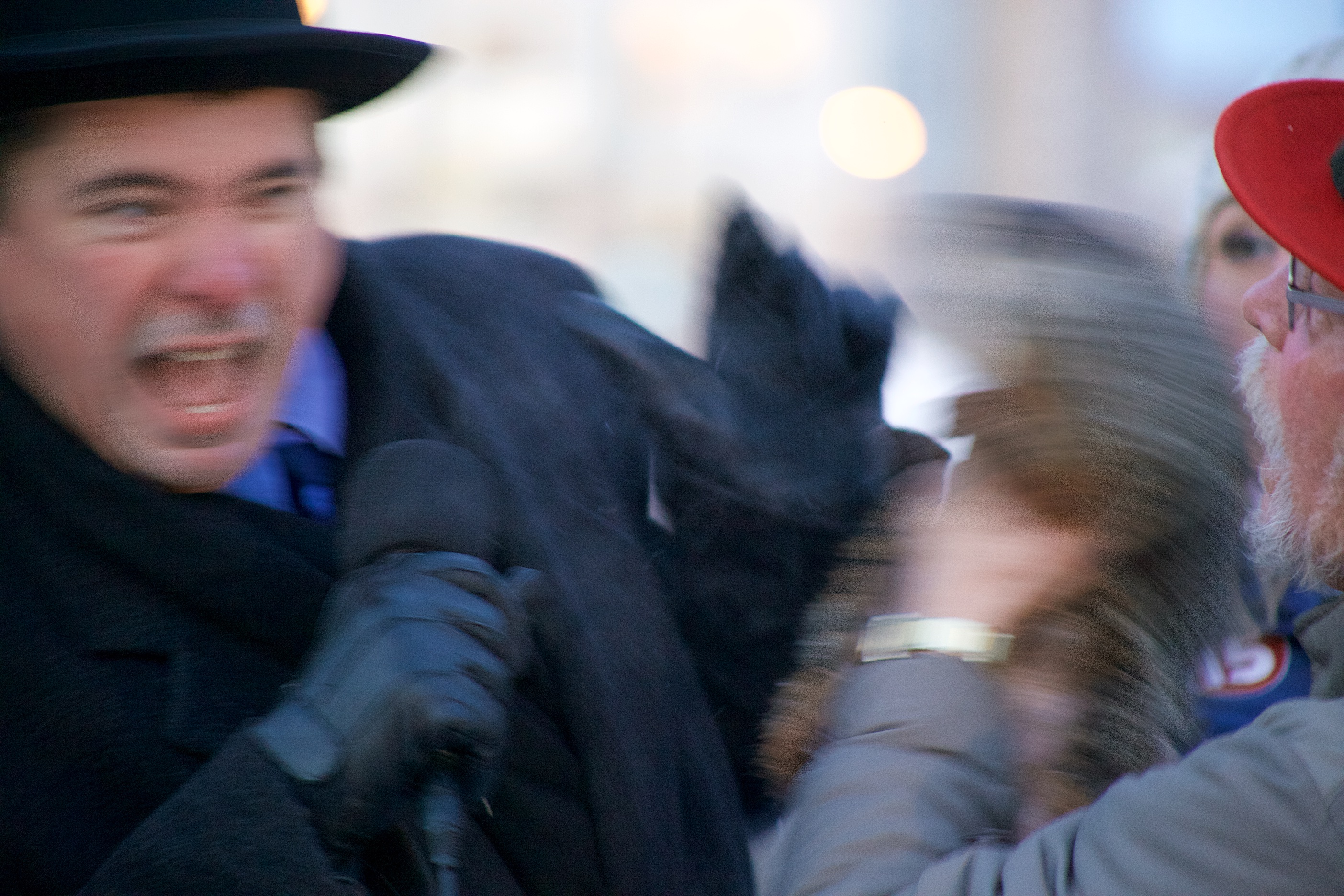
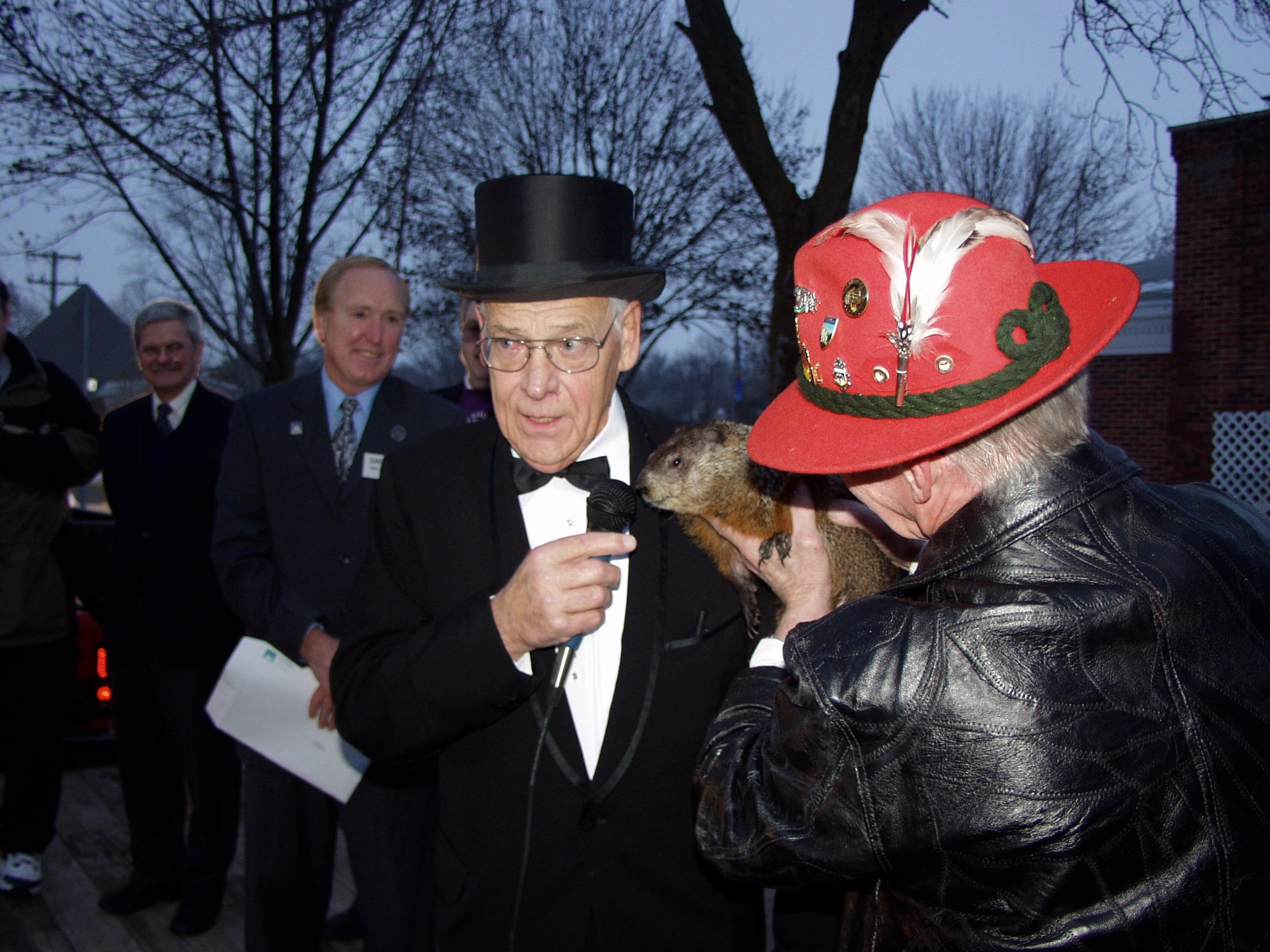
SUN PRAIRIE, Wisconsin — With a temperature of minus 2 degrees and a fresh coating of 8 inches of snow on the ground, you might think Jimmy the Groundhog would have predicted six more weeks of winter. But alas, the world-famous weather prognosticator did not see his shadow, meaning an early spring. He did, however, take a vicious bite at Sun Prairie mayor Jon Freund, who served as the official translator for the esteemed Jimmy.
Sun Prairie Mayor Jon Freund recoils after being bitten on the ear by Jimmy the Groundhog.Freund wasn’t too pleased with the bite from Jimmy, but the ceremony continued.
A modest crowd of hearty Groundhog Day fans gathered on Cannery Square to witness the 67th annual weather prognostication from Jimmy. Just after 7 a.m. Central time, Jimmy whispered to Freund that spring was coming. But before he did that, Jimmy bit the ear of the mayor, who recoiled in pain but quickly recovered his composure. After a quick apology from Jimmy, the ceremony continued.
Despite the clear skies, Freund said Jimmy did not see his shadow. A few minutes after the ceremony, the sun rose and cast February shadows on both man and beast. A Madison television station quoted Hahn as saying Jimmy did see his shadow. The city of Sun Prairie later issued a statement saying the mayor made the right call. The controversy led to speculation from some corners that video replay officials would be in attendance at next year’s Groundhog Day ceremony.
Folklore says that if a groundhog (also called a woodchuck or marmot) emerges from its burrow and sees its shadow, it will return to slumber in expectation of six more weeks of winter. If the day is cloudy and no shadow appears, spring will come early. According to a roundup on Wikipedia, predictions are pretty well split across North America for Groundhog Day 2015. Sun Prairie’s result is listed as “disputed.”
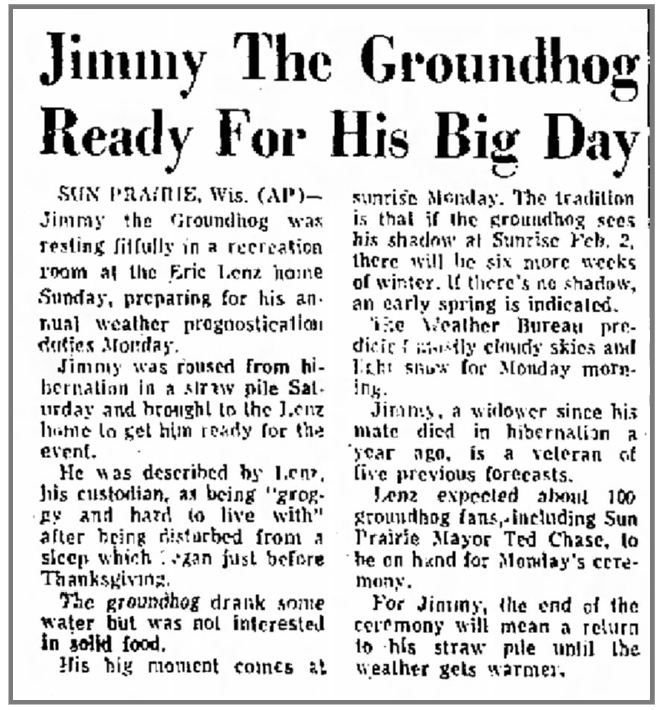
Jimmy made front-page news in The Troy Record in New York in February 1970.
Jimmy arrived in a stretch limousine with a Sun Prairie Volunteer Fire Department escort. Like a Hollywood star, Jimmy emerged from his limo to camera flashes and blaring lights from two television stations. He was accompanied by his handler, Jerry Hahn, who is retiring from the groundhog business after today. Hahn shed tears as Freund and others paid him tribute for serving as Jimmy’s caretaker since 2003. Jimmy will now be cared for by Jeff Gauger, owner of the Beans ’n Cream coffee house on Cannery Square. Gauger has a hobby farm.
Jerry Hahn pets Jimmy the Groundhog, who has been in his care since 2003.
Jimmy has been predicting weather in the Groundhog Capital of the World since 1948. The current Jimmy is the 11th burrowing rodent to serve as Sun Prairie’s weather forecaster. And while a certain East Coast groundhog gets most of the national media attention, Jimmy has a better than 80 percent accuracy rating. According to legend, he’s always accurate. It’s just the mayor does not always translate correctly from “groundhogese” to English.
Even with the bitter cold, I had to see for myself what all the fuss was about. When my late father, David D. Hanneman, was mayor from 2003-2005, he presided over two such ceremonies (see video above). In February 2005, Dad wore a tuxedo to go along with the mayor’s official groundhog top hat. The year before, Dad interviewed Jimmy before a large crowd. “What? You don’t like to be kissed? Well OK, I won’t kiss you then,” Dad said to laughter from the crowd.
Mayor David D. Hanneman with Jimmy the Groundhog in 2005. (Sun Prairie Star Photo)
View a complete photo gallery from today’s event below:
The book about my father’s battle with lung cancer and his final months on this earth has been in print for nearly five years. It seems a good time to update the book’s official video trailer. The new version, posted below, is in high definition. Back when the original trailer was created, HD video was still fairly novel. But now HD is the norm on home televisions and computers, so it was time to upgrade this important promotional video. You can also view the video in a larger format here.
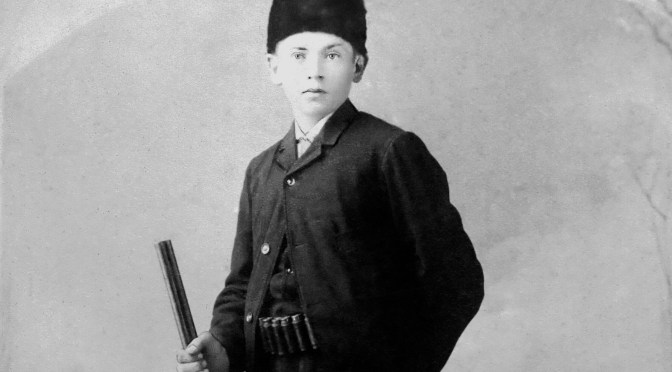
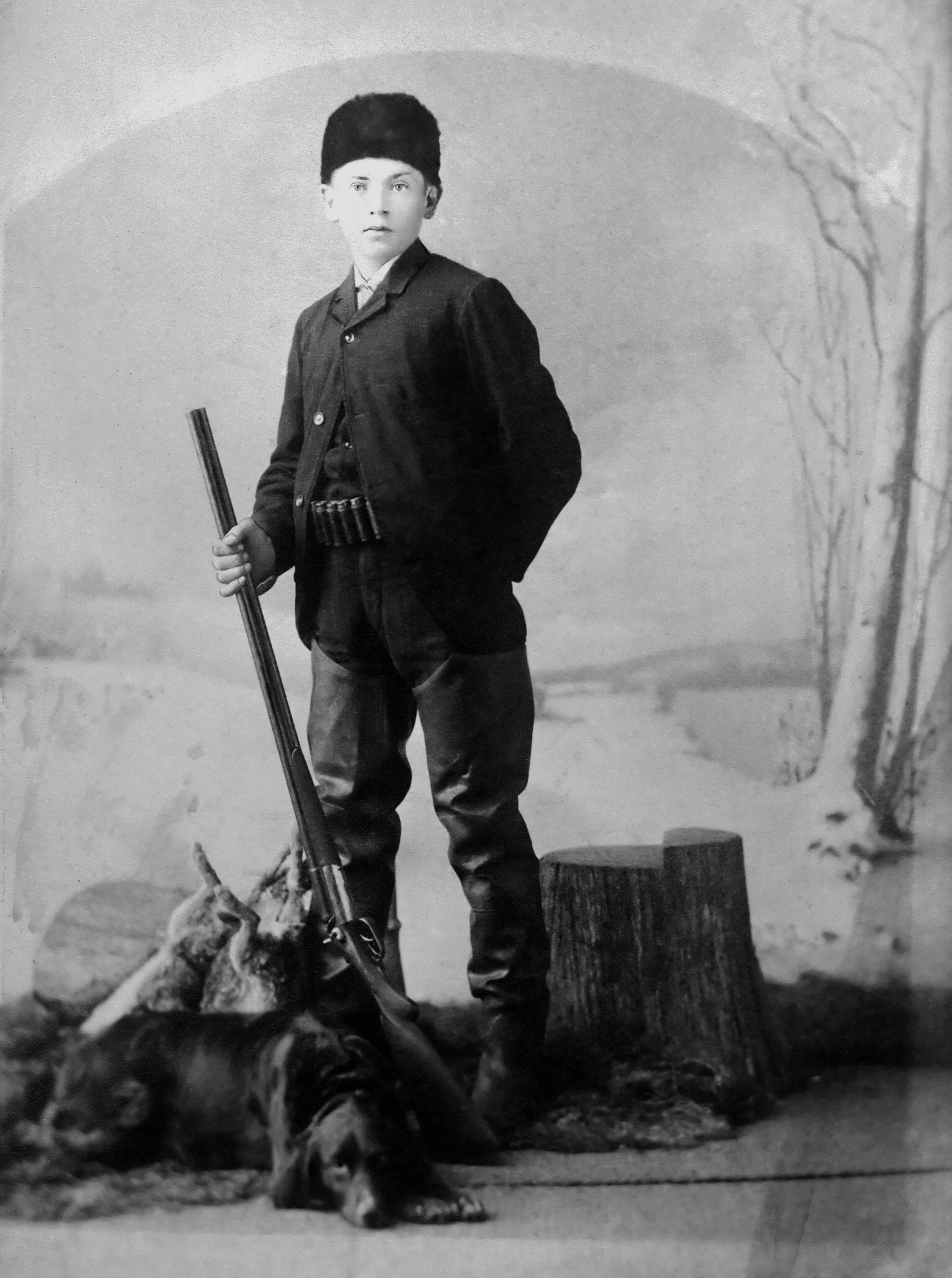
The more than century-old photo shows a stoic, proud young man wearing an ammunition belt and holding a shotgun in his right hand. At his feet lays a loyal hunting dog, seemingly tired from a day in the field. The young man is identified in the corner of the photo as Frank Hanneman, age 14. That dates the photo to 1909 or 1910.
The paper-mounted and framed portait, in nearly perfect condition, survived all of these years in the possession of Carl F. Hanneman, Frank’s brother, and later in the collection of David D. Hanneman, Carl’s son. It is one of the oldest existing photos of a Hanneman from Wood County, Wisconsin.
Frank Hanneman, 14, posed for this photo around 1910.
What do we know about this young hunter? Frank Herman Albert Hanneman was born July 7, 1895 near Grand Rapids, Wisconsin, the son of Charles and Rosine Hanneman. In his early years the family lived and worked on the farm of his uncle, William Hanneman, in the Town of Grand Rapids in Wood County. The 1900 U.S. Census lists Charles Hanneman, 33, as a farm laborer on the farm of William Hanneman. By 1905 the Charles Hanneman family moved to Baker Street in Wisconsin Rapids when Charles got work at the Consolidated Water Power & Paper Co.
The Hanneman boys enjoyed the great outdoors of central Wisconsin. We might assume by the photo, Frank enjoyed hunting birds. We have plenty of photos of a young Carl Hanneman fishing. On June 11, 1916, Frank married Irma Wilhelmine Louise Staffeld, and the couple took up residence on Baker Street in Wisconsin Rapids – a block away from his parents. The couple had five children between 1916 and 1929: Dorothy, Marjorie, Robert, Elizabeth and Joyce. Like his father, Frank had a long career working at Consolidated Water Power & Paper Co.
On July 14, 1947, Frank suffered a heart attack at home, and died shortly after arriving at Riverview Hospital. He was 52. His brother, Carl, was vacationing with his family in North Dakota, but returned for the funeral before rejoining the family vacation.
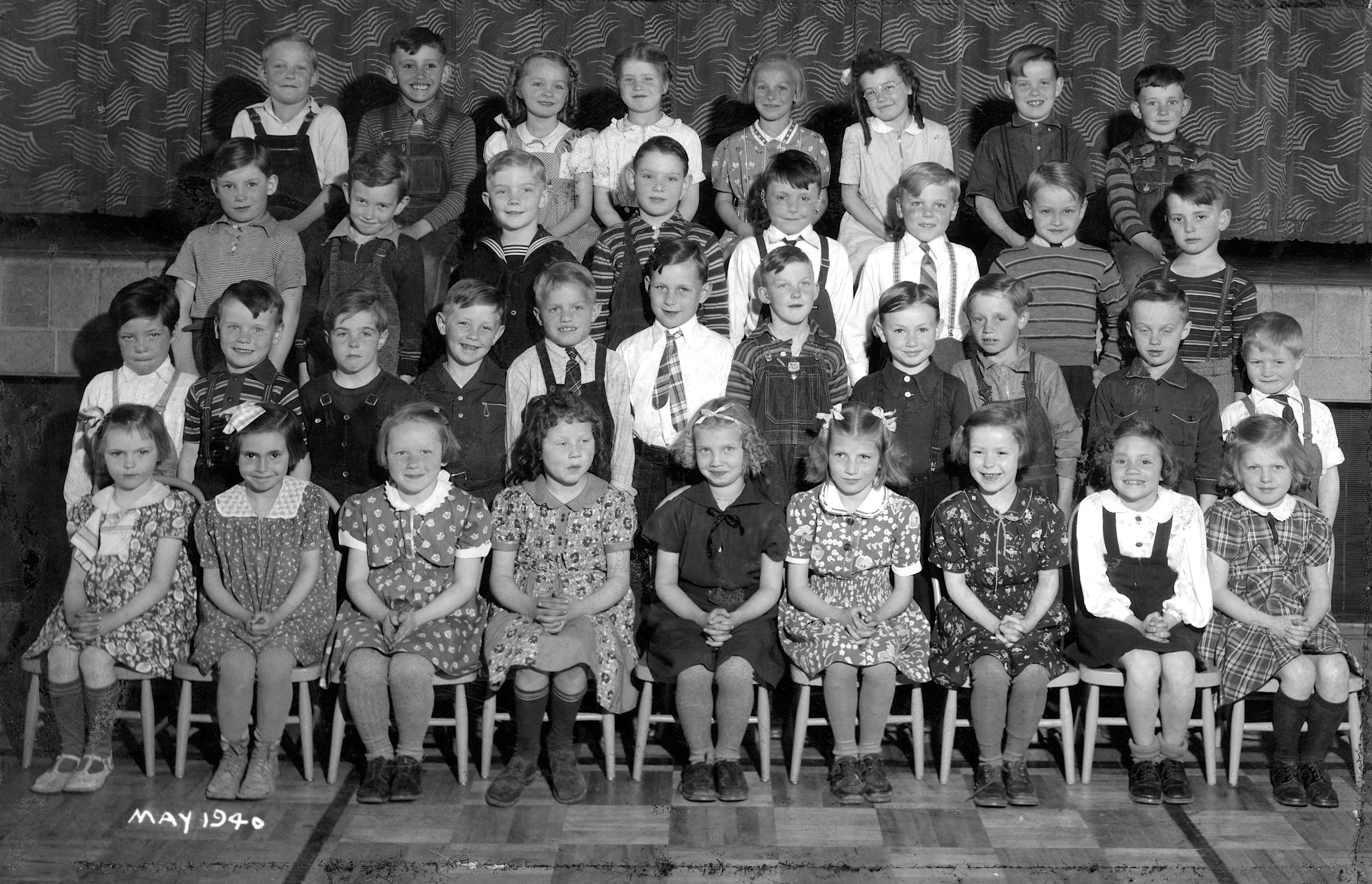
Many in this group photo from May 1940 would spend their entire pre-secondary education together in Mauston, Wisconsin. A few of the children in this MaustonGrade School photo had moved from Mauston by the time the 1940 U.S. Census was taken a month later. But many graduated together in the Class of 1951 at Mauston High School.
Bottom Row: Leah Reynolds, Clara Minor, Carol Quamme, Arlene Naglus, Alice Chilson, A. Longsdorf, Gladys Baldwin, Patricia Lane, Mary Crandall.
Second Row: Gerald Stout, S. Jones, Norman Pelton, Arnold Beghin, Almeron Freeman, Tommy Rowe, E. Roberts, Donald Millard, Harold Webster, George Lyons, Robert Randall.
Third Row: Donald Jax, Bernard Solberg, Wendell Smith, David Hanneman, Clayton ‘Ty’ Fiene, Robert Beck, Robert Firlus, Donald Clickner.
Fourth Row: H. Faulkner, Erhard Merk, Joy Smith, Lillian Ackerman, Jessie Hauer, Edith Shaw, Edwin Booth, O. Boldon.
By Joe Hanneman PROFESSOR RICHARD T. ELY WAS AN ANARCHIST. Ely was a socialist, an author of “utopian, impracticable and pernicious doctrines.” He was a pro-union rabblerouser who preferred “dirty, dissipated, unmarried, unreliable and unskilled” workers. He was a threat to the American way of life. So you might believe if you read the scathing charges leveled against the University of Wisconsin economics professor in a national magazine by the outspoken Wisconsin superintendent of public instruction.
Professor Ely stood accused in 1894.
The clash between Ely and school teacher Oliver E. Wells in 1894 led to a highly publicized trial. The professor was eventually cleared, but what was remembered for generations was the statement issued by the Board of Regents after the trial — words so powerful and timeless they were cast into bronze.
A ‘Magna Carta’
The words used to clear Ely — which the professor later called the “pronunciamento of academic freedom” and “part of the Wisconsin Magna Carta” — were ensconced on a large bronze tablet and eventually bolted to Bascom Hall at the University of Wisconsin-Madison. The plaque reads:
“Whatever may be the limitations which trammel inquiry elsewhere, we believe that the great State University of Wisconsin should ever encourage that continual and fearless sifting and winnowing by which alone the truth
can be found.”
Those words became more important for the University of Wisconsin-Parkside in 1998, when two duplicates of the famed plaques were freed from a 25-year dormancy in the basement archives, restored and prepared for installation on campus (see related story). The plaques are symbols not only linking the university to a proud tradition, but also a modern beacon defending the creation of knowledge that is at the heart of University of Wisconsin education.
The Oliver Wells letter set off a firestorm of controversy.
“The principles of academic freedom have never found expression in language so beautiful, words so impressive, phrases so inspiring,” said UW President Charles Van Hise at the plaque’s dedication in June 1915. Theodore Herfurth, a member of the class of 1894 who later wrote a definitive history of the Sifting and Winnowing story, said the memorial plaque “stands as a sentinel” to guard the spirit of the university.“When time and the elements shall have effaced every resistive letter on the historic bronze tablet, its imperishable spirit shall still ring clear and true,” Herfurth wrote in 1948, just two years before his death. The Sifting and Winnowing story still rings across time. In December 1964, it was the subject of the short-lived Profiles in Courage television series, starring Daniel O’Herlihy as Ely and Edward Asner as Wells.
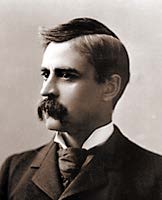
Ely probably couldn’t have imagined such an outcome when Wells, a teacher and former superintendent of schools in Waupaca County, attacked him in a 535-word letter to the editor of The Nation titled “The College Anarchist,” published in the July 12, 1894 issue. In his role as Wisconsin superintendent of public instruction (1891-95), Wells was an ex-officio member of the Board of Regents.
Oliver Wells leveled scandalous accusations at Professor Ely.
Ely, a distinguished political economist, had among his concerns the welfare of the working class and organized labor. He interacted with the labor movement, and wrote about socialism in his textbooks. A founder of the American Economic Association and the Christian Social Union, Ely helped develop the reform ideology that was central to the Progressive movement in America.
A Covert Socialist?
Wells’ frontal attack accused Ely of fomenting strikes at the Democratic Printing Company and the Tracy-Gibbs Printing Company in Madison, and of boycotting a non-union printing company. When Wells got no traction on those issues by complaining to UW President Adams and fellow Regents, he went public. Wells said Ely’s writings masked a covert socialism that constituted an “attack on life and property such as this country has already become too familiar with.” Herfurth described Wells’ letter as “scathing, excoriating and denunciatory,” making Wells Ely’s “antagonist and violent public accuser.”
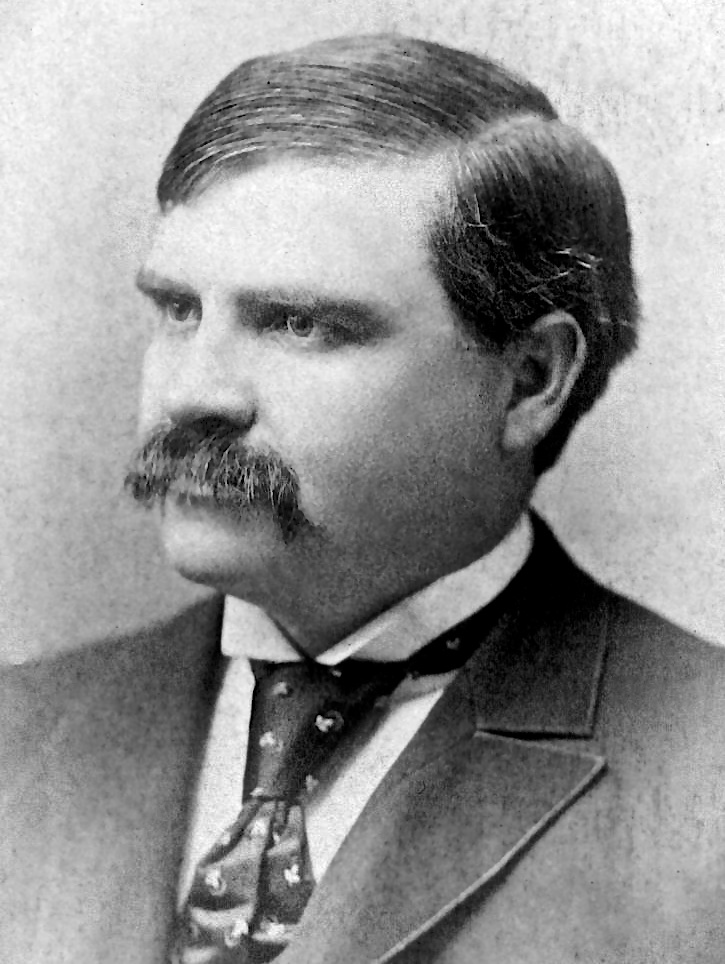
The embarrassing national publicity that followed forced the Board of Regents to appoint a three-member trial panel to investigate Ely. The inquiry was chaired by Herbert W. Chynoweth, former Wisconsin assistant attorney general and a prominent Madison attorney. Other panel members included Dr. Harvey B. Dale, former four-term mayor of Oshkosh, and Milwaukee banker John Johnston. During a three-day hearing that began Aug. 20, 1894, Wells’ accusations began to unravel as exaggerations, half-truths and misrepresentation. Chynoweth made a key ruling on the second day of the hearing that the panel would not examine all of Ely’s writings, but would focus on specific allegations in Wells’ letter to The Nation.
Regent Herbert W. Chynoweth of Madison chaired the Ely inquiry panel.
Testimony showed that Ely did not coerce or direct strikers, boycott non-union shops or promote anarchy. In fact, Ely was hailed as one of America’s foremost minds on political economy. He voiced support for unionization of printing company employees, but was not involved in the ongoing labor disputes.
E. Benjamin Andrews, president of Brown University, wrote that to dismiss Ely would “be a great blow at freedom of university teaching.” UW President Charles Kendall Adams, after reviewing Ely’s writings, said not even “a paragraph or sentence…can be interpreted as an encouragement of lawlessness or disorder.” Albion Woodbury Small, founder of the sociology department at the University of Chicago, said “no man in the United States has done so much as he to bring economic thought down out of the clouds and into contact with actual human concerns. Nothing could be more grotesque than to accuse him of encouraging a spirit of lawlessness and violence.”
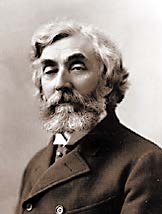
UW President Charles Kendall Adams found no basis for the charges.
As the hearing entered its third day, Wells admitted that he could not prove his accusations. At this point, the panel dropped from trial mode into that of a fact-finder. Ely’s exoneration was secured. The panel’s report, issued to the Board of Regents on Sept. 18, 1894, went beyond exoneration. Regents unanimously adopted the document and its poetic language, sending a signal through the ages of its commitment to freedom of inquiry.
“We feel that we would unworthy of the position we hold if we did not believe in progress in all departments of knowledge,” read the report, believed to be written by UW President Adams. “In all lines of academic investigation, it is of the utmost importance that the investigator should be absolutely free to follow the indications of truth wherever they may lead.” There was later ongoing debate as to who coined the “Sifting and Winnowing” phrase. In June 1942, an aged Professor Ely insisted the credit belonged to Alfred T. Rogers, the son-in-law of Regent Chynoweth.
Yet Another Threat
While the poetic words made a memorable statement, they were not resurrected for nearly 20 years when yet another UW professor stood accused of impropriety. Sociology professor Edward Alsworth Ross was implicated for allegedly consorting with anarchist Emma Goldman and giving a speaking platform to sexual liberation proponent Parker Sercombe, a man said to promote immorality.
Accusations against Professor E.A. Ross led to the casting of the plaque in 1910.
Regents were so incensed with the 1910 allegations against Ross that they approved a statement of censure. Suggestions were made that Ross be fired. UW President Van Hise led a vigorous defense of Ross against what again proved to be somewhat dubious allegations. Regents did not take action against Ross. The professor never attended Goldman’s talk in Madison, but when she paid a visit to his office, he gave her a tour of campus. “Promptly the newspapers shrieked that I was an anarchist,” Ross said. Van Hise privately told Ross that his real indiscretion was publishing Sin and Society: An Analysis of Latter-Day Iniquity. Some on the Board of Regents sought a pretext to oust Ross because of the book, Van Hise said.
Journalist Lincoln Steffens suggested casting the “Sifting and Winnowing” statement into a plaque.
Fearing that academic freedom was again in jeopardy, the Class of 1910 decided to have the famed Sifting and Winnowing statement cast into bronze and presented to the university as a gift. The idea for the memorial came from Lincoln Steffens, the “muckraking” journalist from American Magazine. Steffens discovered the 1894 Regents report while researching the University of Wisconsin and was deeply impressed by the Sifting and Winnowing statement. Steffens became a great admirer of Sen. Robert Marion La Follette, leader of the Progressive movement, while writing his 1909 article, “Sending a State to College.” Students at the time were largely unaware of Steffens’ involvement. Class leaders kept this fact close to the vest. However, conservative members of the Board of Regents were aware of it. Many of them were not fond of Steffens, whom they referred to with great derision as “Stinkin’ Leffins.”
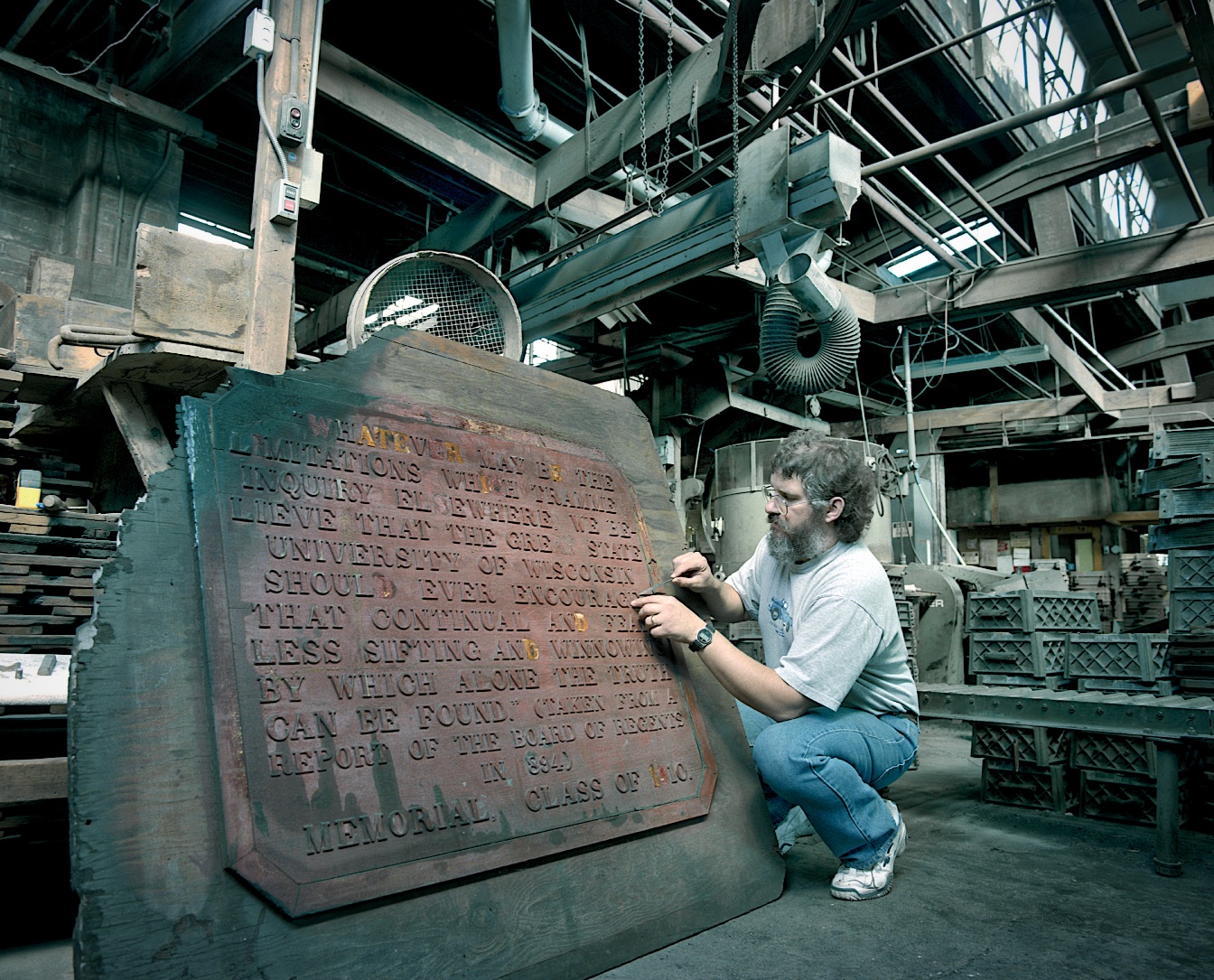
Using scrap plywood and pattern maker’s letters, student Hugo H. Hering created the somewhat crude plaque pattern and had it cast at Madison Brass Works Inc. foundry for $25. “It was purely a hand-made job,” Hering said, “in which I used a three-ply wood veneer panel as a background. I bought white metal letters, such as used by Pattern Makers, and fastened these letters to the veneer back.” Hering carted the form to Madison Brass and Henry Vogts cast the tablet for the students.
Tom Pankratz examines what is believed to be the original wooden “Sifting and Winnowing” form at the old Madison Brass Works foundry in 1998. (Duzynski Photo)
Feeling the plaque was a political statement and a slap in the face, Regents rejected it in June 1910. The board at the time was dominated by Stalwart Republicans, at least some of whom believed the students were being used by Progressives to cast aspersions on conservative members of the Board of Regents. “It was the entire situation and spirit of it all that was resented,” Regent Charles P. Cary later said. “The spirit as Regents interpreted it was something like this: ‘There, dern ye, take that dose and swallow it. You don’t dare refuse it even if it gags you, and it probably will.’ ”
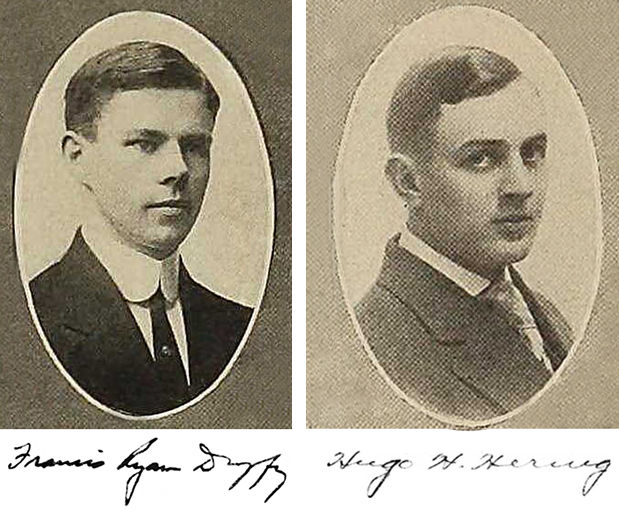
There was a public perception that the students were trying to dictate to the Regents. Indeed, student leaders had plans to erect the bronze tablet themselves near campus if Regents rejected it. Class President Francis Ryan Duffy petitioned the Board of Regents to place the plaque at any “suitable” campus location. Publicly, Regents said rejection of the tablet came from not wanting to set a precedent that could “mutilate” the facades of university buildings. According to the account by Herfurth, however, the real reason was they despised Lincoln Steffens.
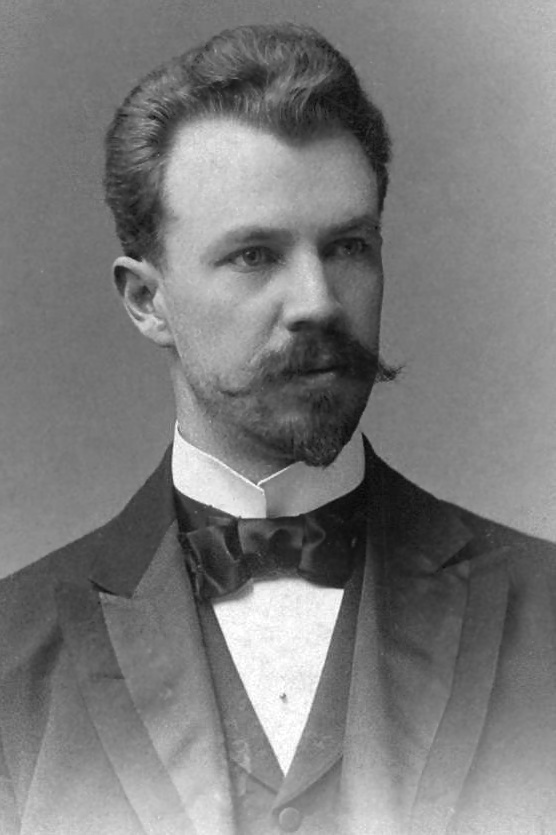
Student Francis Ryan Duffy petitioned the Regents to accept the plaque in 1910. Hugo H. Hering was chairman of the memorial committee and designed the plaque.
After the kerfuffle, the plaque, as one newspaper put it, came to repose “in a dry goods box in the basement of the administration building.” Regents formally accepted the tablet in April 1912, but had no plans to affix it to a building. It wasn’t until 1915 when tempers had cooled (and the makeup of the Board of Regents had changed) that the plaque was rescued from storage, bolted to the door post of Bascom Hall and formally dedicated. President Van Hise had to broker a solution between zealous Class of 1910 alumni and Regents who were still stung at the suggestion they had harmed academic freedom in 1910.
The location of the plaque was more than mere symbolism. Bascom Hall “is the citadel of power of the University of Wisconsin,” Herfurth wrote in 1948. It was long the meeting place of the Board of Regents, a body Herfurth said has “the prerogative and the responsibility to establish, to defend and to preserve the spiritual, the ethical and the cultural values which comprise the essence of a great university.”
INSPIRING WORDS: UW President Charles Van Hise speaks at the original plaque dedication in June 1915.
“It was one of the cases that defined academic freedom in this country,” said W. Lee Hansen, professor emeritus of economics at UW-Madison and editor of Academic Freedom on Trial: 100 Years of Sifting and Winnowing at the University of Wisconsin, a 1998 book about the plaque and the issues behind it. “I don’t know of any other schools that have statements that are that concise and expressive.”
Plaque Stolen in 1956
The plaque stood as a symbol of freedom for 41 years before pranksters removed it from its hallowed spot on Bascom Hall in 1956. Just as a fund was being established to recast it, police found the 255-pound plaque near a trail on campus. It was rededicated with great pomp and ceremony on February 15, 1957. More than 325 members of the Class of 1910 were honored at the event, attended by Wisconsin Gov. Vernon Thompson and former Gov. Oscar Rennebohm. Duffy, now chief judge of the U.S. Court of Appeals in Chicago, was among the honored guests. Hering, who went on from his university days to become assistant Wisconsin state treasurer, died in 1946.
Regent Kenneth L. Greenquist of Racine proposed creating duplicates of the Sifting and Winnowing plaque.
In 1964, Racine attorney Kenneth Greenquist, a member of the Board of Regents, sponsored a resolution to create duplicates of the plaque for the UW Center campuses around the state. Plaques were installed at the Racine and Kenosha campuses in 1965 and 1966 on what is now Gateway Technical College’s Lake Building and Bradford High School in Kenosha. UW-Parkside took possession of the plaques at its founding in 1968, and thus began their long residence in storage.
At the 1967 dedication of the Sifting and Winnowing plaque at the UW Center in Green Bay, Wisconsin Gov. Warren Knowles said the plaque contains a bold idea — and a challenge. “The idea embodied in the words of the plaque we will dedicate today is as old as the concept of freedom itself: the right of free inquiry, the right to dissent, the right of free speech, the right of minorities to be heard in the forums of public opinion,” Knowles said. “All of this and more is contained in the famous ‘Sifting and Winnowing’ statement of the 1894 Board of Regents of the University of Wisconsin. These are freedoms that must be fought for and won anew by each generation.” ♦
— A shorter version of this article appeared in the winter 1998-99 issue of Perspective magazine at the University of Wisconsin-Parkside. Special thanks to the UW-Madison Archives for research assistance, materials and photos used in preparation of this article. On Wisconsin!
—
Postscript
Richard T. Ely taught at the University of Wisconsin until 1925, when he left for Northwestern University. More than 70 years after his death, his writings continue to draw spirited debate. He died on October 4, 1943 in Connecticut. He was 89. He is buried at Forest Hill Cemetery in Madison.
Oliver E. Wells served as Wisconsin superintendent of public instruction from 1891 to 1895. He was previously a teacher in Appleton and the superintendent of Waupaca County schools. In September 1899, he became principal of Wisconsin’s first teacher training school, located at Wausau. He served in that role until 1915. Wells died on December 26, 1922 at age 69.
Charles Kendall Adams served as University of Wisconsin president from 1892 until 1901, when he resigned due to failing health. He was previously president of Cornell University from 1885 to 1892 and a professor at the University of Michigan. During the Civil War, he commanded Michigan’s Tappan Guards. He died on July 28, 1902 in Redlands, California. He was 67.
Herbert W. Chynoweth was a chief lieutenant and legal adviser to Robert M. La Follette. He served as assistant Wisconsin attorney general and later conducted a longstanding legal practice in Madison. He died on October 14, 1906 from arterial sclerosis. He was 58.
Charles R. Van Hise was the first University of Wisconsin alumnus to serve as is president. He was named successor to Charles Kendall Adams in 1903 and served until 1918. Under his leadership, the university sought to move beyond instruction to help improve the lives of everyone in the state. This led to the “Wisconsin Idea,” that the borders of the university are the borders of the state. Built in 1967, Van Hise Hall on the UW campus is named in his honor. Van Hise died on November 19, 1918 in Milwaukee.
Francis Ryan Duffy was U.S. senator from Wisconsin from 1933-1939 and later a federal judge. After graduating from the University of Wisconsin in 1910, Duffy earned his law degree at UW in 1912. He established a law practice, served in World War I, then returned to practicing law. After serving in the Senate, Duffy was appointed federal judge for the Eastern District of Wisconsin in June 1939. He was named an appeals court judge in the U.S. Court of Appeals (Seventh Circuit) in 1949. Duffy died on August 16, 1979.
It was the moving definition of a close call. A semi-trailer truck being driven by John N. Post flipped over in late June 1946 and slid right into the front of the Tourist Hotel on State Street in Mauston, Wisconsin. The semi ripped off the hotel’s screened porch and pushed it down the block.
The truck pushed parts of the porch 20 feet to the west.
Breaking glass exploded into the only unoccupied room at the inn. The room’s regular resident, a truck driver himself, was away on vacation. Post, 25, told police that he pulled out in order to pass a car driven by Charles A. Petrowitz, 15. Petrowitz started to make a left turn, forcing Post to veer and lose control of the truck. Post was treated at the Mauston hospital and released. No citations were issued in the accident. In addition to building damage, the truck also knocked over a light post, a mailbox and a fire hydrant.
Truck driver John N. Post suffered only minor injuries in the crash.
The photos were taken by Carl F. Hanneman for The Wisconsin State Journal, which ran two images and a short story on its State Page on June 25, 1946.














 The Hanneman Archive