It was one of those days that heightens the senses, tests emotions and really brings home the meaning, beauty and challenges of life. The first day of school in Racine was arguably like countless other August days in Wisconsin. Except this time it was my 6-year-old son Stevie heading off to a new life.
Much to my surprise, it was I who felt the impact. And ironically, I was the one who learned the most that warm August day.
While I had worked all summer to prepare Stevie for what it would be like to start first grade, I wasn’t ready for how it would affect me. I’d never thought much about it, frankly. Why should it be any different than kindergarten, or day care? But by the end of this hallmark day, I came to realize many things, not the least of which was just how much I love and admire my children and my wife.
As I watched Stevie get dressed for his first day of first grade at Racine Montessori School, he seemed to grow up right there before my eyes. His nervous look as he slung his backpack over his shoulders and walked to the car stirred old feelings in me, memories of stiff new outfits, hairspray and early morning front-porch pictures. As we drove the 5 miles to school and chatted about what first grade would be like, I saw myself in the back seat. Only braver. Still shy, but more sure.
Things were changing this day. Big things.
I walked Stevie to his new classroom and watched him put his lunchbox on the hall shelf. I felt proud of him. But I was nervous because I knew he was about to pass into a new phase of his life. I stood in the comer of the polished hardwood floor as his new teacher showed him his school supplies and sat at the table explaining the new routine. He looked apprehensive — just how I felt. But he was OK. I gave him a quick hug and kissed the top of his head, just like I’ve always done. I wanted to cry. I wanted to take him back home, roll back time and replay our years together. Iwanted to once again play blocks, to have him crawl on my back, or run to me when I got home from work, shouting, “Daddy!”
Instead I stood in the doorway of this magnificent old brick schoolhouse and watched as the teacher’s aide snapped Stevie’s picture. More kids entered the room. A new school year. Time to go, Dad. It’s OK. We’ve got many more milestones ahead.
Until my dying day I will not forget that scene, a picture of my little boy sitting at that little table in a big place. It’s burned into my memory like a favorite page in a scrapbook, only this page is marked with a teardrop.
As I drove back home, I listened to Elton John sing, “Don’t Go Breakin’ My Heart” on the radio and laughed. Too late. I realized our baby was on his way in life, a journey that would take him through science camps and football games, sleepovers, Boy Scouts and someday, dating. It had never hit me like this before. He’d be home by 4, still my boy. But older. Taller. More handsome.
He’s growing up. Didn’t I see it before? Never like today.
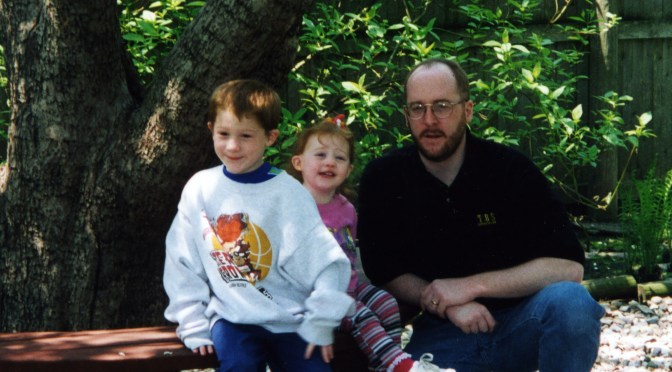
Stevie on a Racine Montessori School field trip.
This was quickly becoming a day of epiphany for me. I got home and our 2-year-old, Samantha, ran to give me a hug with her enthusiastic shout, “Dada!” I realized more than ever how much I loved being father, a Dad. I treasured the morning, as Sam and I read books and played Dolly House. “Don’t read your paper, Dada,” she said. Okay, honey. Okay. Let’s read your books. Let’s play horsey. Let’s just sit. One day when I walk you to first grade I’ll stand in the doorway and remember today. And I’ll smile because I was here. I experienced it — and I appreciate it.
I’ll remember.
After Samantha and my wife Sue left to run some errands, I had more time to think. Clear and vivid thoughts. Almost revelations. Surely I knew all of these things before, but God chose today for me to really see them.
As I looked out our front bay window at the perfect blue sky and sunshine, I felt in my heart how blessed I am. I thought how much I admired Sue. The night before she and Stevie set up orange cones in the back yard and practiced soccer kicks for his upcoming foray into youth soccer. She’djust spent three hours in a clinic for new volunteer coaches for Stevie’s new team, the Bears. No hesitation for her. She and the other would-be coaches waddled around the practice field with soccer balls stuck between their legs, learning creative coaching techniques. I need to take on more things like that with such enthusiasm and energy. I draw strength from her.
I folded laundry, did some work on the computer and listened to CDs. Now James Taylor was singing to me, but this time I didn’t laugh. I listened to the soothing vocals:
Only for a minute, to find yourself in it, to wait by the stream, to drop out of your dream. Look on up, look up from your life. Look up from your life.
I keep hearing the song. I think it’s telling me something, especially on this day.
When Stevie got home from school, he looked different— and I felt different. He excitedly told me about volcanoes and melting ice and magic potion and Frisbee golf. Wow. Keep telling me, buddy. I’m here. I’m listening. All the while, Samantha sat on my lap, chiming in, “I go to school too, Dada. I do that, too.”
Stevie and Samantha at school, a couple of years later.
We ate ice cream sundaes and celebrated our momentous day. I was certain that I was the one who learned the most that day. For not since Samantha’s birth two years prior or Stevie’s in 1992 have I felt like this. The world stood still for just a moment. Just long enough for me to step off, step back and look.
While I saw many things I see every day, I thank God because on this day, I saw many, many things that I don’t. •
(This article was written in August 1998 with my intention of submitting it to my former employer, the Racine Journal Times. That didn’t happen, and I forgot about it until 22 years later, as I was digitizing some old journals found in the garage. Quite a find, indeed.)
Death is a mighty test of faith, just as much so when the beloved is of the four-paw variety as with one of our departed human family members. I learned this painful lesson anew when saying goodbye to my best little canine buddy, Mr. Puggles.
He came into our lives on October 15, 2004, fresh off of a plane ride from Colorado. He jumped from the laundry basket in the back seat of my car and nipped the noses of our three children. He was a little wild man. We knew right then that our Mr. Puggles would be a larger-than-life part of our family. I’ll never forget that first day home, when the little sprout climbed up on my head as I lay on the floor and pasted my face with wet kisses.
From the start, Mr. Puggles put himself in charge.
We learned quickly that he needed limits set, as he bolted across the street in our suburban neighborhood and led us on a merry chase. He was fast and would not be captured until he was good and ready. The kids were able to teach him a few things, but Mr. Puggles was usually going to do things his way. We just needed to figure that out.
As a growing puppy, he loved to ride in the car. This was before he learned about trips to the vet’s office. The kids would sometimes tease him, “You want to go for a ride in your very own car?” Yeah-yeah-yeah oh-boy-do-I-ever!!” So we usually piled into the car or the minivan and took him for a ride “in his very own car.”
Mr. Puggles could be naughty. He even had a “naughty face” that often gave a clue that chances were high for mischief. He once chewed a hole in our denim couch and proceeded to pull out much of the white bunting in the cushions. This exercise came to be known as “puff clouds” and, my oh my, did Mr. Puggles like puff clouds. He needed good exercise, but he barked so incessantly at everyone in the neighborhood, we had to do our walks after dark. He still barked.
The famous Mr. Puggles “Naughty Face.”
His personality changed a bit in October 2006 when we adopted Madison, a fawn Pug who was rescued from one of those hoarder hell homes we all read about now and then. Madison was a street tough; used to having to fight for food. She attacked him a few times, and the sounds created nearly caused some of us cardiac arrest. Eventually they found common ground, as long as Mr. Puggles gave up his toys on demand. They ate in separate rooms under supervision. In time they both mellowed and became best buddies.
Mr. Puggles was not one to be bothered with niceties such as going to the bathroom outside. He started by jumping from the bed at night and going into the closet to relieve himself on the carpeting. Frequent trips outside were the only solution. Over the years, the carpeting in most rooms was replaced with hardwood flooring. Much easier to clean! We had to keep him away from the bottom of the Christmas tree, since he would drink the water and then have to pee more. I recall one time outside when I was talking to my daughters and Mr. Puggles was standing nearby. A minute later I looked down and he was peeing on my shoes and pant leg. At least he didn’t tell me it was raining.
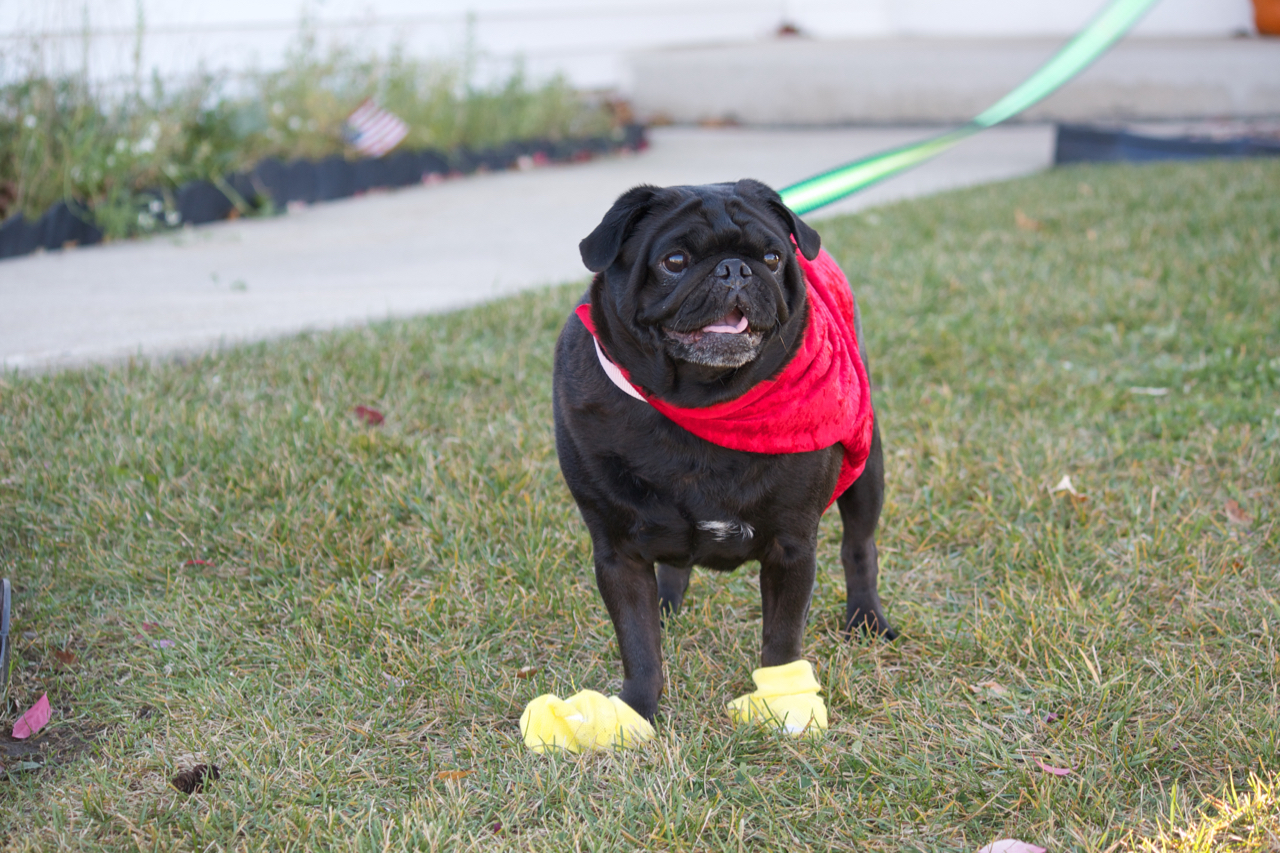
Mr. Puggles was a pretty good sport. Samantha and Ruby sometimes tried to dress him up for Halloween, but any costumes were short lived. Stevie dressed him up as a character from the television show Futurama, with a cape and boots. Less than 5 minutes into the Halloween celebration and the boots were history and the cape was wound around his neck. Mr. Puggles and Madison were kid-friendly dogs who liked to sit in laps, or better yet, fed a stream of doggie treats.
Wearing his parka one cold winter.
Perhaps Mr. Puggles’ most valued role was that of comforter. Through many very difficult times, he was my God-given solace. There’s nothing quite like curling up in bed and having one Pug nestled just behind my legs and the other with her rear right against my neck. I wasn’t going anywhere without them knowing it. He was generous in affection, quick to forgive a harsh word, and always there with a wagging curly tail when I returned from a business trip.
The first signs that he was aging came when I lived in Georgia in 2012 and 2013. We’d be out for a walk and he would start dropping poops out like a Pez dispenser while he walked. It took me quite a while to figure out this was not intentional. Some of that nerve control was weakening. I noted it with concern, but quickly convinced myself that he would not have to worry about aging.
Mr. Puggles and Madison came with me on quite a few changes of address. They were good sports and didn’t complain about the uncertainty. During some very difficult times, we lived in hotel rooms and even spent a few crazy weeks camped in our car. None of it fazed them. If we were fed and stayed warm, it was all good. Dogs are such selfless companions. I thank God for that.
Oh, what a face!
Even as Mr. Puggles’ rear legs began to fail, we still found ways to enjoy the outdoors. I bought a hip harness from a web store that caters to disabled pets. It gave his Pug caboose just enough help to still be able to roam about the yard, marking every tree and barking at falling acorns and the occasional brave squirrel. I felt slight pangs of dread as his face turned from jet black to salt and pepper. I would not want to face losing him, so I pushed those thoughts aside.
He had terrible health scares over the past year and a half. In March 2018, he stopped being able to pee and I had to rush him to Madison Veterinary Specialists. They did surgery on his bladder, which was almost completely full of what they described as “sand.” Eventually I learned those were “struvite stones,” which often form as the result of an infection. Since he wasn’t as able to fully empty, his risk of infection rose. The surgery was successful. To keep him from dribbling, I put a belly band with a bladder pad in it around his lower mid-section. He didn’t mind at all.
Over the past year, he and his new little sister Mickey had to get used to me coming and going a lot. Evenings it was off to spend a few hours watching television and visiting with Mom, who was in her final months with us. Back home after 10 and it was a late dinner, and sometimes, rawhide treats while camped out on the bed. It’s an incredible comfort having canine companions who hang on my every word like it’s REALLY interesting; who cuddle up close when I’m sick and act like I’m the best each time I come home.
The past two months were a drain. Bladder infections and upper respiratory troubles had us back and forth into the emergency hospital. This caused Mr. Puggles’ back legs to weaken a bit more. But I’d pick him up, go outside and hook up those hip holsters and he still did OK. (Later on I sat and watched security camera footage of me carrying him back and forth across many weeks.) He had trachea surgery at the University of Wisconsin to relieve his worsening breathing problems. The operation was a great success and I hoped we’d get him back to health.
Saturday, July 27 was destined to be one of the saddest and most difficult of my 55 years on this earth. I had rushed him back to the UW with labored breathing. He was placed in an oxygen cage. Scans showed pneumonia caused by him aspirating food or water into his lungs. It would be touch and go to battle yet another infection. But it wasn’t to be. With breathing getting harder, I either had to authorize a ventilator (which rarely ends well) or make another decision.
Mr. Puggles laid quietly on the exam table at the UW vet hospital. Tears streamed down my face as I petted his head and said his name. When he heard my voice, he lifted up his little head and looked at me. My heart broke into a million pieces. I kissed his soft little ear and whispered, “I love you so much, little buddy. You’re going to go home to God.” He lifted his head and looked at me again with big brown eyes. I’ve never seen that look before. It seemed to carry deep meaning; something you would not expect from a pet. The look seemed to say to me, “It’s OK. You took good care of me. Take heart. I will be here in God’s time.”
The salt-and-pepper Mr. Puggles, Fall 2018.
As he closed his eyes in sleep, I sobbed so hard I thought I might vomit. Tears flowed like they never have before. I felt this deeper than just about anything else in my life. It is said that St. Peter cried so hard and often after betraying Jesus that furrows developed on his face where the tears flowed. I might just have those same furrows before my grief subsides at the loss of my best buddy.
I later received a sympathy card from the staff at UW Veterinary Care. They took great care of him. One of the interns who cared for Mr. Puggles during his two stays ended her note with this thought:
“All good dogs go to Heaven — and Mr. Puggles was a very good dog.”
We decided to bury him at my sister Marghi’s house. She has a nice wooded back yard; the kind of place he loved to spend time in. I went to the UW clinic again to pick up his body. They had placed him in a little cardboard box that resembled a casket. On the cover, written in marker, was “Mr. Puggles” along with a hand-drawn red heart. I carried him to my car and started to drive to the pet memorial company to have terra cotta paw prints made.
I opened the box and looked at his little Pug self, motionless as if frozen in time. The whole drive I had my right hand on him, petting him and talking to him as if he were still here. I apologized for times I lost my temper, like when he’d wake me at 3 a.m. and want to have an early breakfast. But mostly I said “thank you” for nearly 15 years of companionship and unconditional love and support. As I stroked his soft little ear, I recalled all of the nicknames I had for him, and how often I made up little songs about him that probably drove him batty.
“Hey, we gonna get dinner soon?”
We had a good final conversation. Those who have pets will understand the depth of pain one feels in losing a friend so giving and innocent. More tears flowed and we made that drive to his final resting spot, under a maple and a pine tree. I set his box on the ground, took off the lid and tucked him in with a new dog blanket. I told him something I said every morning when he tried to get up early: “It’s OK, buddy, you can keep sleeping.” I put his favorite lion toy up near his head. On his blanket I placed a St. Benedict crucifix and a green scapular.
As I sprinkled Holy Water on the grave and on his box, it all welled up inside me. This would be a great test of faith. We are taught that our pets are not endowed with souls. Yet they stand watch over us and care for us like the angels. They love with the brave and sacrificial love of the great saints. Mr. Puggles gave everything to me and my children. He spent himself to make our lives brighter. I just have to believe Our Blessed Lord has made provisions for such a beautiful life.
My consolation came as I read prayers that are typically used to bless Catholic burial grounds:
God, Creator of the world and Redeemer of mankind, who wondrously dispose the destinies of all creatures, visible and invisible, we humbly and sincerely beseech you to hallow, purify and bless this cemetery, where the bodies of your servants are duly laid to rest, after the labor and fatigue of this life come to and end…”
There is was in the first line of the prayer. God, who “wondrously dispose the destinies of all creatures.” All creatures. God gave us animal companions for a reason. These selfless beings become an invaluable part of the family. I believe in His goodness, God will give us back our canine and feline companions in eternity. For he made them as part of his wonderful creation, which he declared from the beginning to be good.
On this day, that thought brought a measure of comfort to a grieving, wounded heart. Requiescat in pace, Mr. Puggles. May we meet again one day in an unending field filled with warmth and love.
The hospital staff wrote this on his burial box.
Tucking him in for the last time.
A new blanket and a favorite toy for the journey home.
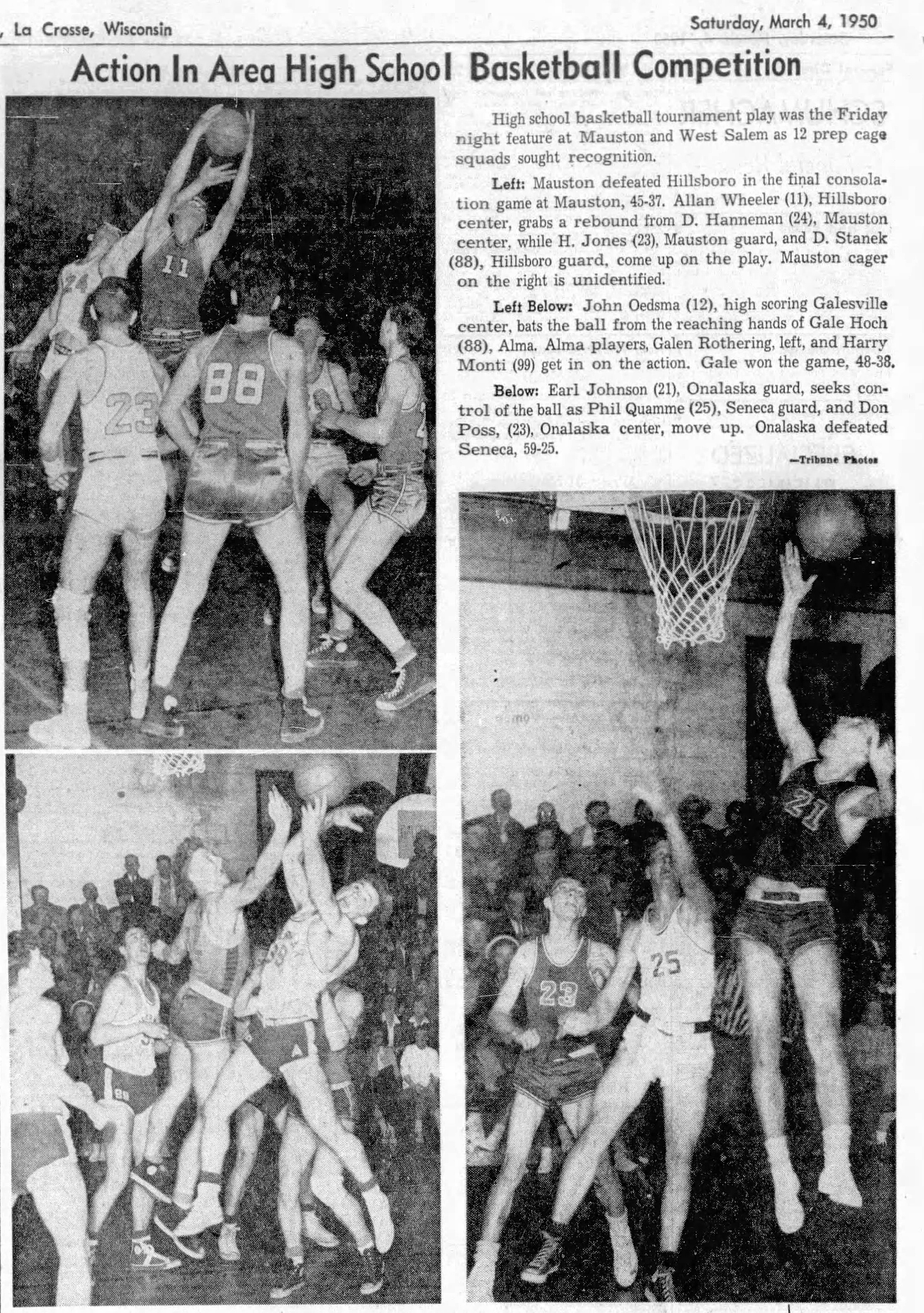
A reader flipping through the pages of the La Crosse Tribune on March 4, 1950 might just have missed a great sports action photo buried on Page 10, the back cover. It’s a great photo because it shows real action — and it doesn’t hurt that one of the key players is David D. Hanneman of Mauston High School.
Allan Wheeler grabs a rebound from Dave Hanneman of Mauston.
March 1950 was high school basketball tournament time. Mauston High School was one of the host venues for sub-regional tournament play for Wisconsin’s public schools. The action photo was actually from March 3, 1950, the second day of the sub-regionals; a game in which Mauston knocked off Hillsboro 45-37. In the photo, Hillsboro center Allan Wheeler grabs a rebound over the outstretched arm of Hanneman, wearing No. 24 for the Mauston Bluegold. Although he did not score in the contest, Hanneman, the Mauston center, held the prolific scorer Wheeler to just 9 points. Just a day prior, Wheeler scored 22 points in Hillsboro’s loss to La Crosse Central.
Mauston ended its season after going 1-1 at the sub-regional tournament. In the first game on March 2, Tomah stormed back from an 11-point deficit to clip Mauston 40-36. Tomah won the sub-regional title the next day by whipping La Crosse Central 67-47.
The photo appeared in the March 4, 1950 issue of the La Crosse Tribune.
We know that Johann Adam Treutel and the former Katharina Geier had eight children who came to America between 1849 and 1854. We’ve now learned more about the life and death of their oldest child, Adam John Treutel (1821-1900).
Thanks to the recent work of a volunteer at the grave database FindAGrave.com, we now know that Adam and eight relatives are buried at Union Cemetery on North Teutonia Avenue in Milwaukee. Also buried at this cemetery are his wife, Anna Maria (Zang) Treutel (1825-1872) and four of their children.
According to Milwaukee County death records, Adam John Treutel died on July 23, 1900. That’s exactly 77 years to the day before the death of our own Ruby V. (Treutel) Hanneman. (My Dad descends from Johann Adam Treutel this way: Philipp Treutel >> Walter Treutel >> Ruby V. (Treutel) Hanneman.) We searched The Milwaukee Journal for that entire week in 1900 but could find no obituary or death notice. Adam Treutel had lived in Milwaukee for at least 45 years before his death.
Adam Treutel declared intent to become a U.S citizen in 1853.
As far as we know, Adam was the firstborn of Johann Adam and Katherina Treutel. He was born Nov. 21, 1821 in or near Königstädten, Hesse-Dartmstadt, Germany. He was baptized three days later in Königstädten. We have not located emigration records, except for a reference in the Hessiches Archiv, which said he emigrated to America in May 1849. Adam consistently indicated on the U.S. Census that he came to America in 1849 and settled in New York City. On June 10, 1853, he filed his declaration of intent to become a U.S. citizen. His naturalization was finalized on July 11, 1855 in Superior Court of the City of New York.
Adam Treutel’s naturalization was finalized in July 1855.
Adam married Anna Maria Zang, also a native of Hesse-Darmstadt. She died in Milwaukee on Feb. 29, 1872 and is also buried at Union Cemetery. Their firstborn, Lisette, was born in New York in April 1853. Their second child, Margaretha, was born July 21, 1854 in New York. Adam’s parents and some of his siblings arrived in America in July 1854 and proceeded to Milwaukee. Adam and his family followed in short order. The 1857 Milwaukee City Directory lists Adam as a tallow chandler; someone who made candles and soap from animal fat. Over the years, he was also a tailor (1879) and railroad laborer (1865). His longtime home was at 791 7th Street in Milwaukee. His son Adam Jr. became a lithographer and some of his daughters were dressmakers.
We still have some important Treutel family questions that need answers. Johann Adam Treutel, the family patriarch, died in Milwaukee in 1859, but we have no record of his death or burial. There is a good chance whatever cemetery in which he was buried has been moved in the years since. We also don’t know the burial place of the one Treutel brother who went south, Johann Peter Treutel. We know he lived in Louisiana and Alabama and fought for the Confederacy in the Civil War. We’ve located information on all of his children, but still hope to find out more about his life.
Since we’re always keeping track, here is a list of the children of Johann Adam Treutel (1800-1859) and Elizabetha Katharina Geier (1800-1886):
Adam John Treutel (1821-1900) Milwaukee
John Treutel (1831-1908) West Bend, Wis.
Philipp Treutel (1833-1891) North Prairie, Wis.
Twin Baby Boy (1833-1833) Burial Uknown
Sebastian Treutel (1834-1876) West Bend, Wis.
Peter Treutel (1837-unknown)
Anna Margaretha (Treutel) Bredel (1839-1898) Milwaukee
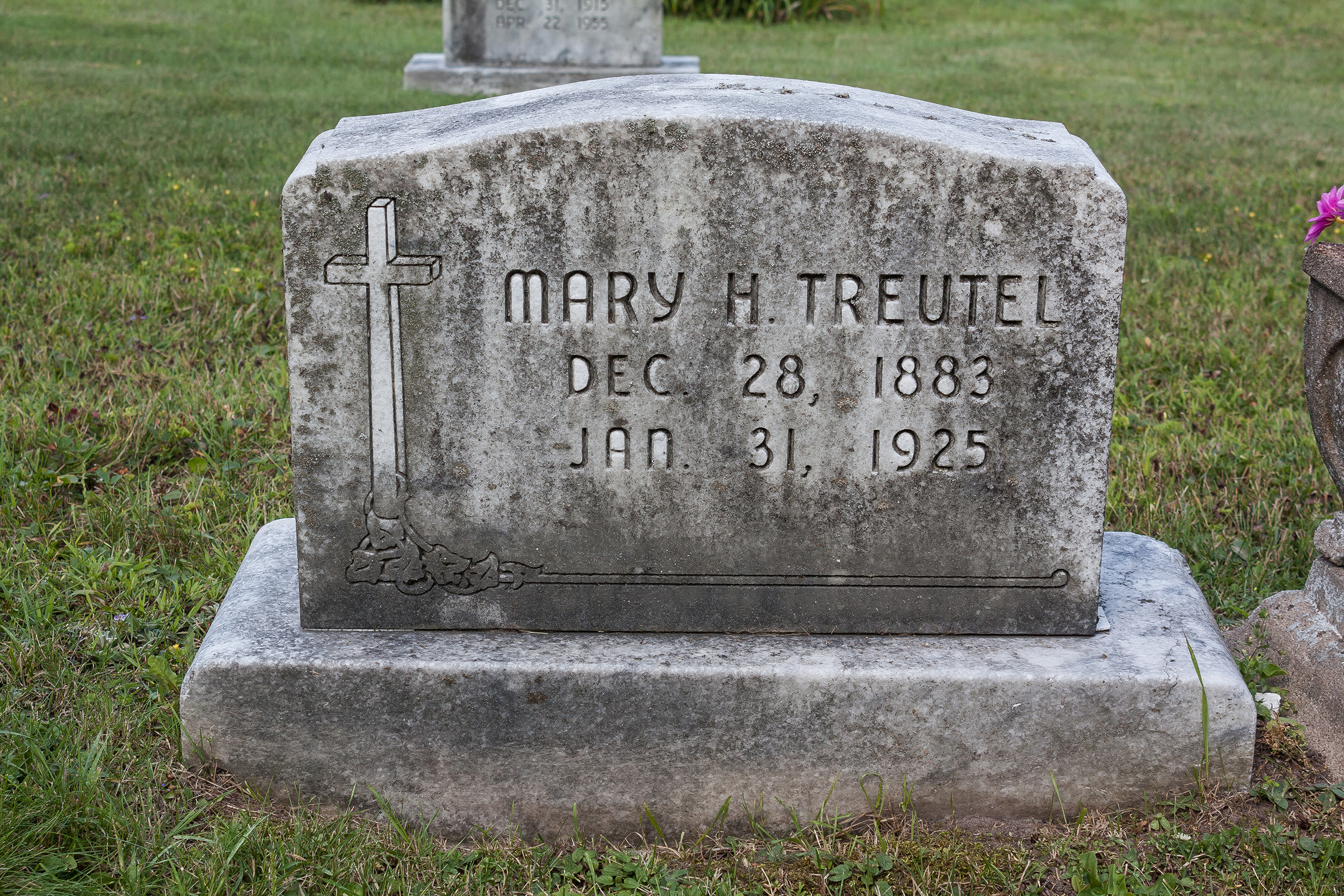
Over the past several years, I’ve done restoration and cleaning of many grave monuments across Wisconsin. Since the special chemicals used to clean the monuments can take a month or more to take full effect, I don’t often see the final, final product. So I was very impressed with a photograph of the monument of my great-grandmother, Mary Helen (Ladick) Treutel, sent by a dear cousin, Shirley (Ladick) Oleson.
I treated and cleaned this stone at St. James Catholic Cemetery in Vesper, Wis., in the summer of 2017. Mary Treutel’s monument was badly stained by black mold, which was even more apparent on the white stone surface. During the cleaning process, this became apparent with the many color changes caused by the cleaning chemicals. Many people don’t realize that mold, lichens and other growths are very harmful to the often-delicate headstones.
Before cleaning: black mold deeply stained this monument.
When I last saw this headstone in August 2017, it still had a bit of an orange glow. The D/2 cleaning chemical (the only one approved for use at Arlington National Cemetery) continues to work with rain and sun for three to four weeks. You can see the progression in the photo gallery below:
The “before” photo shows deep staining by black mold.
The cleaning chemical quickly attacks the harmful growths.
After a few minutes, the stone turns a brown-orange.
After treatment, the stone has an orange hue, which will fade with time
Nearly two years later, the stone looks almost flawless.
The video below shows how this monument looked as it was given a final rinse:
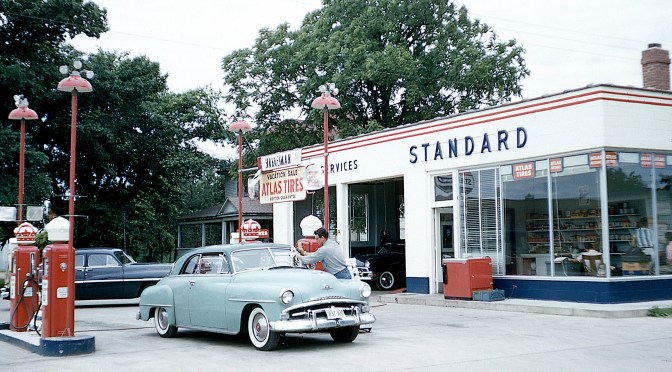
Back in 1951, David D. Hanneman owned and managed a Standard Oil service station in his hometown, Mauston, Wisconsin. When I wrote about that back in 2014, a few readers raised questions about where the station was actually located. We finally have the answer — and it’s different than any of the locations suggested earlier.
David D. Hanneman stands outside his Standard Oil station in Mauston in 1951.
Mauston-based author and historian Richard Rossin Jr. says the Standard station was at 241 W. State Street in Mauston, at the corner of West State Street and Beach Street. It is not far from the current Hatch Public Library. The neighborhood along Mauston’s main drive looked a little different back then. To the left (or west) of the station, there are large trees in the 1951 photos. The lot immediately adjacent to the station was later cleared. That site contained an IGA grocery store at one time and is now home to a CarQuest auto parts store.
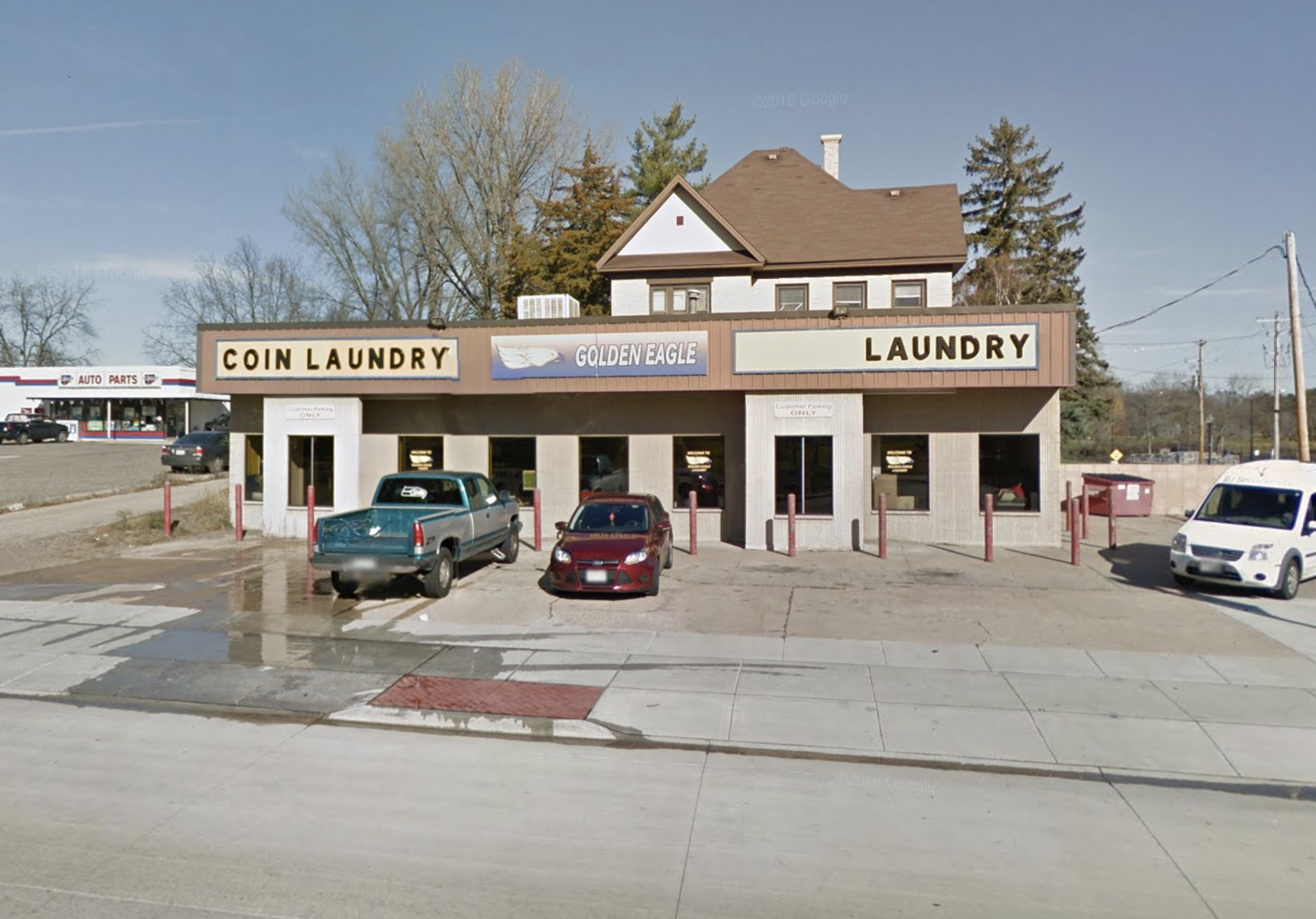
“As that station was just down the street from my boyhood home, it was a favorite hangout for me when I was young,” Rossin said. “It was Larry’s Mobil in the late 1970s. Jim Bires ran it from 1982 to 1988. Soon after that, it became a laundromat, and still is today. It’s a real treat for me to see such an early view of the place.” Rossin said in 1965, the business was called Slim’s Mobil, which it remained until Larry Dyal took it over in the 1970s.
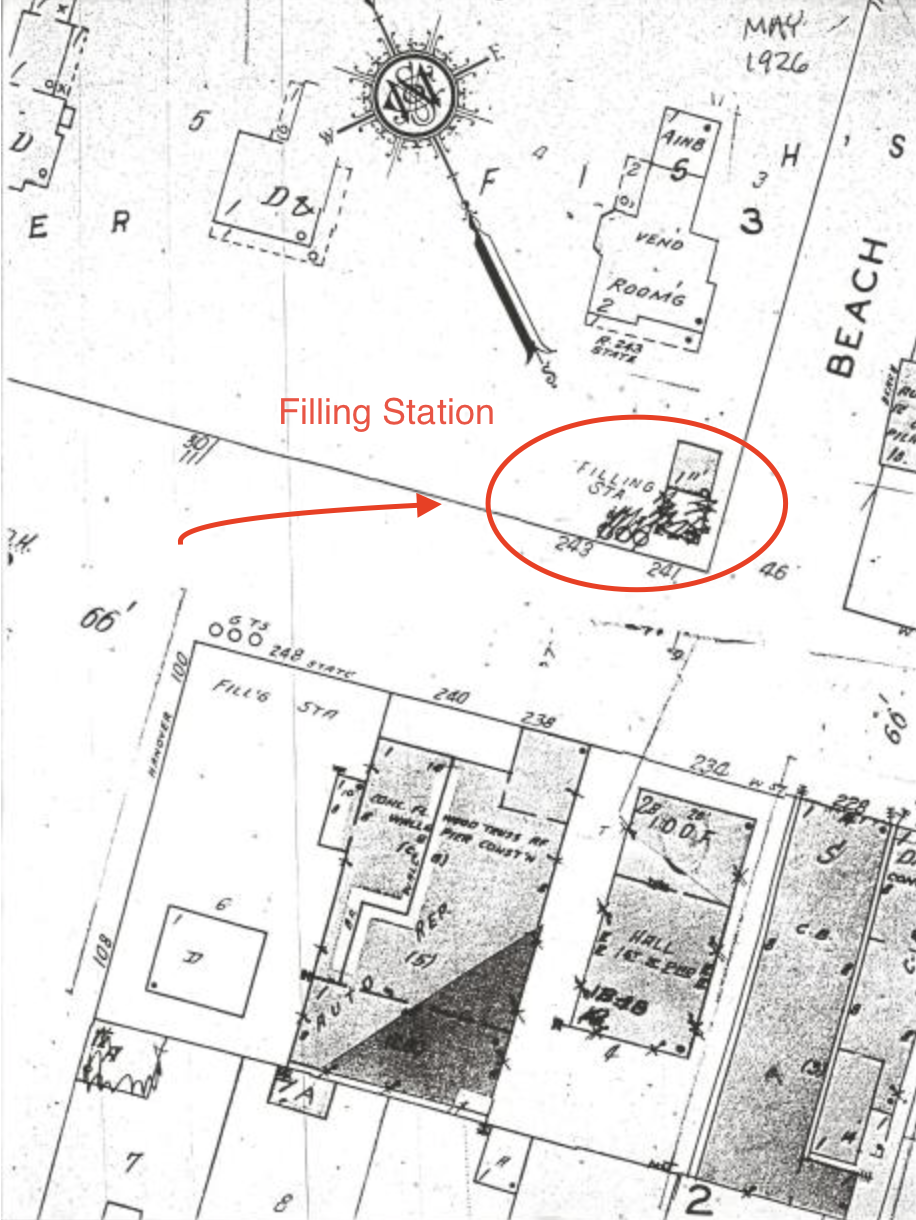
Rossin estimated the original Standard station was built in the late 1940s. The situate the corner of State and Beach streets earlier housed a small gasoline filling station, according to a May 1926 Sanborn fire insurance map (see below). Sanborn maps from 1894 and 1909 show no structures on the site. The brick rooming house behind the filling station was shown on all three Sanborn maps. That home is still there today.
A 1926 fire map shows a small filling station at the corner of West State and Beach streets.
A quick look at Google Maps shows the former service station building is still there, now called Golden Eagle Laundry. Rossin said the original laundromat owners added onto the service station building, so it’s the same structure as the one shown in the 1951 photos.
This 2016 Google Maps street-view image shows what used to be Hanneman’s Standard station in Mauston. (Screen capture of Google Maps)
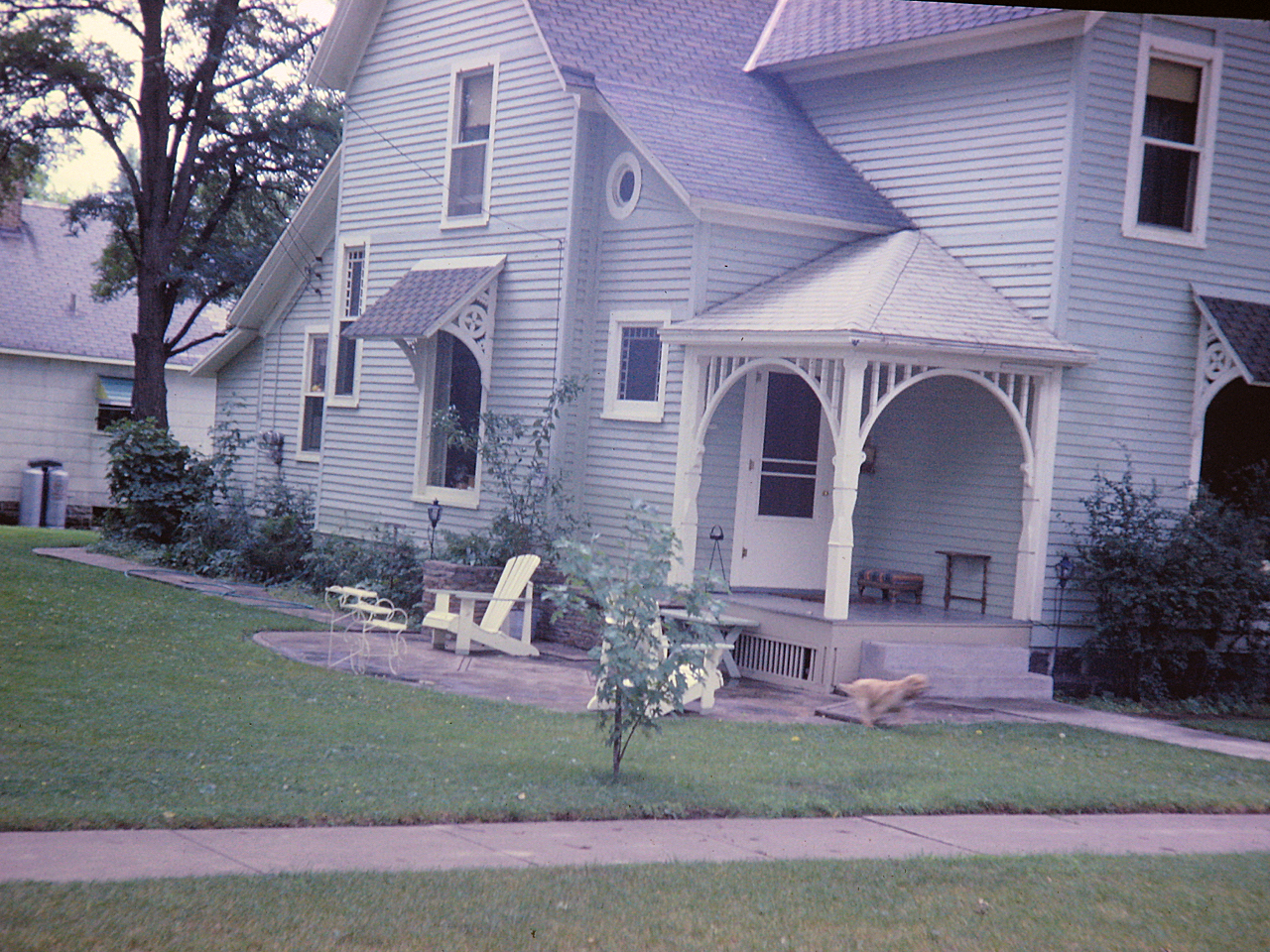
The West State Street location meant Dad probably walked to work. The Hanneman homestead at 22 Morris Street was just a few blocks up State and then a turn northeast onto Morris. I distinctly remember the IGA grocery store in the 200 block of West State Street. I recall going there with my Grandpa Carl Hanneman in the early 1970s — probably sent there by Grandma Ruby to grab a loaf of bread or a dozen eggs. Now I know the building next to it was my Dad’s old service station.
The Hanneman house in Mauston, circa 1959. The little brown blur in the lower part of the photo is my parents’ dog, Cookie.
“…The time of my departure is at hand. I have competed well; I have finished the race; I have kept the Faith. From now on the Crown of Righteousness awaits me, which the Lord, the Just Judge, will award to me on that day…”— 2 Timothy 4: 6-8
Suddenly, the world will never, ever be the same.
Mary K. Hanneman stepped gently into eternity Wednesday, Dec. 26, 2018, after a long struggle with vascular dementia and congestive heart failure. Our Blessed Lord summoned his precious daughter, my mother, at 11:50 p.m. from her home at Brookdale Senior Living. She was 86 years 2 months and 5 days young. Mary was a loving wife, mother, grandmother and longtime Catholic school teacher in Sun Prairie, where she has lived since 1965.
Mary Katherine Mulqueen was born in Cudahy, Wisconsin, on Oct. 21, 1932 — the seventh of 11 children of Earl J. Mulqueen Sr. and the former Margaret Madonna Dailey. On Aug. 9, 1958, she married David Dion Hanneman at St. Veronica Catholic Church in Milwaukee, beginning a more than 49-year marriage. He preceded her in death on April 14, 2007. He was 74.
For Mary, every day was a good day to teach. She had the heart of an educator, the discipline and courage of a gunnery sergeant and, under it all, the strong yet soft heart of an Irish grandmother. Above the entrance to her kitchen hung a sign that read Failte, — an Irish welcome. Over the years, countless relatives, friends and strangers were welcomed within those walls to incredible cooking, good cheer and, very likely, a game or two of sheepshead, Kings in the Corner or cribbage.
“The mediocre teacher tells. The good teacher explains. The superior teacher demonstrates. The great teacher inspires.”
― William Arthur Ward.
Like most things in the Hanneman family, good teaching started at home. Mary’s kitchen table was just as likely to serve up arithmetic flash cards and sentence diagrams as it did Thanksgiving turkeys or chocolate chip cookies. She imparted many life lessons in her kitchen, from the academic (long division and phonics) to the culinary (corned beef with cabbage, lasagna and state-fair-quality bread and cinnamon rolls). Through the chaos and bustle of the annual Thanksgiving dinner, we came to appreciate the gift of family — warts and all.
David D. Hanneman and the former Mary K. Mulqueen were married for more than 49 years.
Mary’s academic career began at St. Frederick’s Catholic School in Cudahy and St. Mary’s Academy in St. Francis, from which she graduated high school in 1950. After a brief postsecondary discernment at the suburban Franciscan convent, she took courses at Cardinal Stritch College and Marquette University. She studied reading literacy for elementary students for two years in Madison. Mary began practice teaching in the Catholic Schools in the Archdiocese of Milwaukee. She eventually became a full-time teacher in the newly built 17-room St. Veronica Catholic School on East Norwich Avenue in Milwaukee.
After their marriage in 1958, Mary and Dave moved to Grand Rapids, Michigan, where he held a job with E.R. Squibb & Co. She paused her teaching career to start and raise a family that came to include two boys and two girls. As a doctorate-level domestic engineer, she honed her skills wrangling hungry toddlers through the bedlam of birthday parties, sewing costumes, darning socks and hosting couples’ bridge. She set high standards for her children and expected them to reach even higher. Especially at school. She modeled her own saintly mother’s family virtuosity with things like bunny-shaped birthday cakes topped with coconut flakes and jellybeans. Or trips to Devil’s Lake and Storybook Gardens with four children in tow.
Mary learned her lessons well from “Ma,” Margaret M. Mulqueen. Her mother went out of her way to make family events special for her husband Earl, who lost both of his parents young and was denied most of childhood’s delectations. “Every year, we always celebrated Christmas. My mother made Christmas really special,” Mary said in an oral-history interview with granddaughter Ruby in 2009. “But especially his birthday. He never had a birthday cake growing up. Isn’t that sad? And yet grew up to be such a nice man.”
In 1965 Mary and Dave built their dream home in Sun Prairie’s then-new Royal Oaks neighborhood. Seventeen stately oak trees towered over the property. Much love went into building and maintaining the family homestead that stayed in the Hanneman family for 53 years. She spent those years caring for her family with special birthday meals, wonderful Christmas mornings and a thrifty way with money that allowed her and Dave to put four children through Madison Edgewood High School.
In 1980, Mary resumed her teaching career at Sacred Hearts of Jesus and Mary Catholic School. She started as a substitute, but before long was a full-time reading specialist. She helped along the students who otherwise would fall behind. It was her passion to teach reading, and she opened the world of books to many hundreds of children. Students came to Mrs. Hanneman for extra help in reading, math and other subjects. She sent them back with the skills and desire to learn. Her career at Sacred Hearts stretched nearly three decades. Even after retirement, Mary tutored students several days a week for many years.
When her husband was dying of cancer in 2006 and 2007, she helped make his last wish come true. The couple donated four sections of beautiful stained-glass windows back to St. Mary’s Hospital in Madison, where they were incorporated into the design of a new wing of the hospital that opened in 2007.
Her penultimate lessons were largely delivered in the silence of advancing dementia, which eventually crippled her ability to thinkclearly and communicate verbally. Yet she showed patience in this frustrating infirmity. If she could not form the words to say what was on her mind, she sighed deeply and simply said, “Oh, dear.” As illness struck its blows through a heart attack and repeated cardiac events, she rallied time and again to regain strength and show a smile. When hospice nurse Heidi leaned close and told Mary it was almost Christmas, she smiled and said, “I love Christmas.”
Mary’s final and lasting lesson was delivered over days of speechless suffering. Her body conspired to drain her energy. Yet she trusted. She lay still. She prayed. During her final hour, she opened her eyes, lifted her head and looked intently — at something. She tried to speak, but words were not needed. The look of awe on her face explained it all: she had a glimpse of Heaven. All things wouldsoon be new. That realization was reflected on her face. It was her final gift. She spoke in deeds what words could not say:
My work here is complete. My struggles were never in vain. Even in my brokenness, my trials fit in His design and served His redemptive plans. Watch! Hold fast to your Catholic faith — and you will one day follow me.
Mary is survived by her children: David (Lisa) Hanneman of Naperville, Ill., Joe Hanneman of Sun Prairie, Margret Mary of DeForest, Amy Bozza of Woodstock, Ill.; and special niece, Laura (Doug) Curzon of New Berlin, Wis. She is further survived by nine grandchildren: Abby, Maggie and Charlie Hanneman; Stevie, Samantha and Ruby Hanneman; and Justin, Kyle and Claire Bozza. She leaves two sisters, Ruth (Tom) McShane and Joan (Dick) Haske, both of Cudahy; a sister-in-law, Elaine Hanneman of Minneapolis; and brother-in-law Gordon Wellman of Sun Prairie. She was preceded in death by her husband, her parents and eight brothers and sisters.
A visitation will be held from 10:00 a.m. until 11:45 a.m. on Saturday, Jan. 5, 2019 at Tuschen-Newcomer Funeral Home, 302 Columbus St., Sun Prairie. The Mass of Christian Burial will be held at noon Saturday, Jan. 5 at Sacred Hearts of Jesus and Mary Catholic Church, 227 Columbus St., Sun Prairie. Monsignor Duane Moellenberndt will preside. Burial will be at Sacred Hearts Cemetery. In lieu of flowers, memorials are suggested to the Sacred Hearts School Endowment Fund, 221 Columbus St., Sun Prairie, WI 53590.
Jane Hanneman’s 3rd Birthday October 1958
David D. and Mary K. Hanneman, wedding day 1958
Mary K. Hanneman feeds son David Carl Hanneman in Grand Rapids, Mich.
Mary K. Hanneman with daughter Margret Mary, 1967.
Mary with daughter Amy Jo, 1969.
Hanneman Family portrait for the St. Albert’s parish directory.
Family trip to Ormond Beach, Fla.
The 1975 Mulqueen family reunion in Cudahy.
Mary and Dave with son Joe, Dec. 1, 1990.
David D., David C. and Mary Hanneman at Amy Hanneman Bozza’s wedding.
Grandma Mary holding new granddaughter Ruby, 1999. Samantha Hanneman is at left; Abby Hanneman is at right.
David D. and Mary K. Hanneman at their Sun Prairie home.
A great photo! Mary’s birthday in 2014.
Mary with her little buddy, Chewie.
Mary’s birthday 2017.
Mary’s birthday 2017.
Looking over a recently discovered photo from her 1958 engagement party.
Son Joe hold’s Mary’s hand on the day she was born to eternal life.
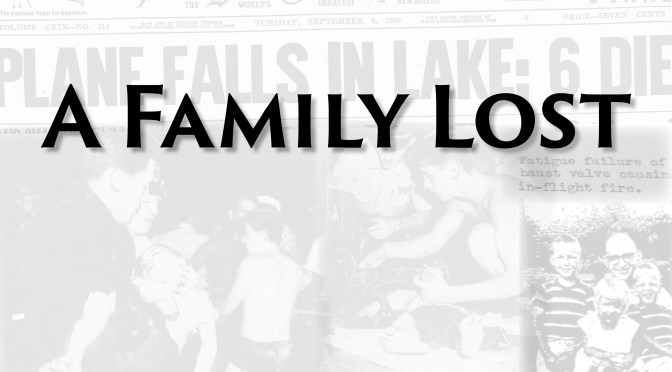
The September 1960 Chicago plane crash that killed all six members of the Richard Rickman family was caused by a faulty engine valve and an intense oil fire, according to a federal investigation report obtained through the National Archives.
Richard E. Rickman, 34, was flying his wife and four children from Wisconsin Rapids to Detroit on Labor Day 1960 when his Beechcraft C35 Bonanza (tail number N-5816C) plunged into Lake Michigan with flames trailing from the engine. Rickman, his wife Helen and children Richard, Robert, Catherine and Patricia were killed in the crash. The plane and its passengers sunk into the dark waters of Lake Michigan off Chicago’s Oak Street Beach. [See related:Entire Rickman Family Killed in 1960 Plane Crash]
It was a horrific, haunting tragedy. The Rickmans, native to central Wisconsin, were returning home to the Detroit area after a Labor Day vacation. Following the advice of the airport manager in Wisconsin Rapids, Rickman flew across Wisconsin and then along the Lake Michigan shoreline to Chicago. That’s where the trouble started. Rickman radioed the tower at Meigs Field in Chicago that he had an emergency and needed to land. [See an aerial view of Meigs Field] He never got the chance. The plane nose-dived into the water about 1 mile offshore from a crowded Oak Street Beach. All six Rickmans were killed.
The Civil Aeronautics Board began investigating the crash just as the sections of damaged plane were recovered from the depths of Lake Michigan. The wings were sheared off on impact. Witnesses on the beach reported seeing flames coming from the engine as the single-engine plane dove into the water. The probe was led by Clifford G. Sheker, the CAB’s air safety investigator. The 205-horsepower Continental engine was recovered and sent off for analysis. Sheker testified before a Cook County coroner’s inquest jury twice — in September and October 1960. His preliminary finding in October was that engine trouble caused the crash.
That’s where the public attention stopped. The probe continued and led to a report of findings in April 1961, but there was no media coverage on the final cause of the crash. The Hanneman Archive began a search for Sheker’s report back in 2015. It was not on the Federal Aviation Administration’s online database of old CAB crash investigations. The CAB was a predecessor to the National Transportation Safety Board.
We enlisted the help of the National Archives and Records Administration in College Park, Maryland. After several months, an archivist named Amy R. found the answer in April 1961 meeting minutes from the Civil Aeronautics Board. She was kind enough to snap digital photos of the report narrative and send them via email. As far as we can tell, these details were not published by news outlets at the time.
The report said Rickman was about a mile offshore headed south at 7:26 p.m. when he broadcast a Mayday call: “I have an engine failure or something – I am coming in!” The flight was immediately cleared for emergency landing at Meigs Field, a single-runway airport on Northerly Island, a peninsula along Chicago’s lakefront. Sheker’s report described what happened:
“About this time ground witnesses and the occupants of another plane saw the aircraft afire in flight. They observed the plane make a left turn and go out of control twice before it crashed into Lake Michigan and exploded.”
The Continental Motors E-185 engine became disabled by an “intense oil fire” that originated in the area of the exhaust heater muff. The No. 3 exhaust valve showed “fatigue failure” that led to the fire. The engine crankcase was broken open and the Nos. 3 and 4 pistons and connecting rods were broken. The “intense, in-flight fire” entered the cabin in the area of the rudder pedals and “subjected the entire cabin to fire.”
Rickman was an experienced pilot with 379 total flight hours, including 228 hours with the Beechcraft C35. His Beechcraft was manufactured in 1951 and licensed to Rickman in 1957. It’s unknown if the CAB or later the FAA took any action as a result of the Rickman crash, such as issuing an airworthiness letter. There was no indication in the CAB report of the maintenance history of the plane, or if the No. 3 exhaust valve had caused other engine fires.
Just 18 months before, superstar singers Buddy Holly, Ritchie Valens and J.P. “The Big Bopper” Richardson were killed when the Beechcraft C35 Bonanza in which they were traveling crashed near Clear Lake, Iowa. February 3, 1959 became known as “The Day the Music Died,” memorialized in Don McLean’s 1971 song, “American Pie.” The Civil Aeronautics Board faulted the pilot for taking off in poor weather when he was restricted to visual flight rules.
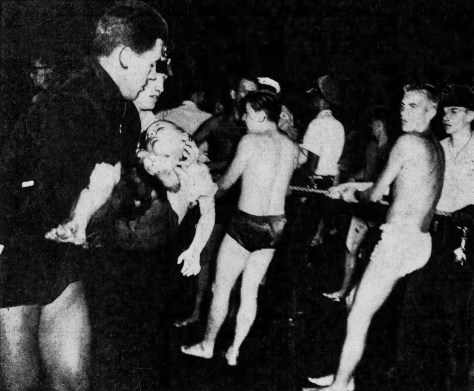
Lifeguard Fred Rizzo carries the lifeless body of little Catherine Rickman from a police marine boat to a Chicago Fire Department ambulance on Sept. 5, 1960. Efforts to revive the girl were unsuccessful. (Screen grab: Chicago Tribune Photo by James O’Leary)
One of the most heartbreaking scenes from Sept. 5, 1960 was the sight of little Catherine Rickman, 4, being carried from a rescue boat to an ambulance by lifeguard Fred Rizzo. Boaters found her floating in the water shortly after the crash. She had burns on her face, legs and feet. The girl was revived briefly in the ambulance on the way to the hospital, but she died a short time later. Her grandparents, Edwin and Renata Rickman of Saginaw, Mich., identified her body. The search for her parents and siblings went on for days.
A lifeguard gives oxygen to Catherine Rickman in a Chicago Fire Department ambulance on Sept. 5, 1960. (Screen grab: Chicago Tribune photo by James O’Leary.)
The diver who first found the bodies was Jeffrey Daxe, 34, a Chicago pilot and lifeguard. Daxe lived just across Lakeshore Drive near the beach. He was able to quickly gather his diving gear and have a lifeguard row him out to the crash site. The experience haunted Daxe for decades, according to his son, Jeff Daxe of Dayton, Ohio:
“As he told the story of the recovery of the victims, his face would transform to one with a look of concern. He would look away from his outstretched hand almost as if he could see, or didn’t want to see, the faces of the victims as he brought them to the surface.”
The senior Daxe went on to a career in aviation, and moved to Valparaiso, Ind. He told the story of the Rickman crash often. Even in recent years, when visiting Lake Michigan, his son said, he spent a long time gazing out on the water, expressing concern for the safety of boaters and windsurfers. “I believe the experience had a tremendous impact on his life.”
Pilot Jeffrey Daxe in the 1950s with his Stearman biplane. Daxe, who was also a lifeguard and diver, was the first to find the bodies of Richard E. Rickman, his wife and three of their four children. (Photo courtesy of Jeff Daxe)
Tom Metcalf remembers the Rickmans well, growing up for a time in the same neighborhood in Redford Township, a western suburb of Detroit. “I remember playing with Richard and Robert,” said Metcalf, who was 6 at the time of the crash. “I also remember flying with them in their aircraft. My father was a military pilot and he and Mr. Rickman were friends with a common interest in flying. I also remember my mother chasing some news reporter out of our back yard after catching him trying to ask me questions after the accident.”
Like Daxe, Metcalf was deeply affected by the Rickman tragedy. He said he hopes to visit the family’s graves at Forest Hill Cemetery in Wisconsin Rapids, Wis. “I have thought of them often and sent prayers their way throughout my life,” Metcalf said.
Richard E. Rickman, the son of longtime shoe-store proprietor Edwin J. Rickman, grew up in Wisconsin Rapids. He was a descendant of pioneer resident Matthias Hanneman, who came to Wisconsin in 1866 from Pomerania. He served in the U.S. Naval Reserve in World War II. His father had served in WWI. A factory representative for the Ogden Manufacturing Co., Rickman married the former Helen Anderson in December 1949 and they later moved to Michigan. Their first child, Richard Edward, was born in Lansing in May 1953. Robert John was born in Lansing in March 1955. Catherine Helen was born in Detroit in June 1956; and Patricia Ann joined the family in Detroit in September 1957.
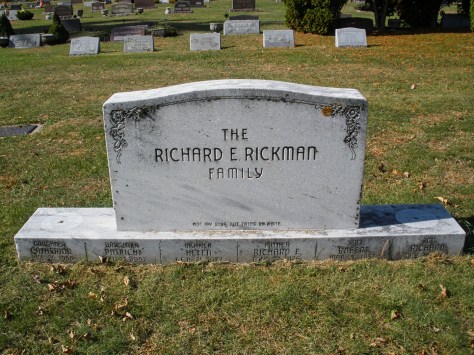
The epitaph on the Rickman Family monument at Forest Hill says simply: “Not my will, but Thine be done.”
Dozens of fire trucks and other emergency vehicles escorted the body of fallen Sun Prairie Volunteer Fire Department Capt. Cory Barr from the medical examiner’s office to the funeral home late Wednesday.
The 15-year fire department veteran was killed Tuesday evening July 10 when a gas leak set off a massive explosion in the 100 block of West Main Street. The blast leveled several buildings and triggered a five-alarm fire that required mutual assistance from area fire departments. Sections of downtown Sun Prairie were still off limits four days later.
Fire engines, squad cars and rescue vehicles from around southern Wisconsin formed a long memorial procession from McFarland to Sun Prairie. The hearse carrying Barr’s body processed through fire station No. 1 before arriving at the Tuschen-Newcomer Funeral Home. Ladder trucks from the Waunakee and Columbus fire departments formed an arch under which the procession traveled.
The following departments were represented in the procession: Belleville-Exeter-Montrose, Black Earth, Burke-Bristol-Sun Prairie, Cambridge, Columbus, Cottage Grove, Cross Plains-Berry, Deerfield, DeForest, Fitchburg, Footville, Madison, Maple Bluff, Marshall, McFarland, Milwaukee, Monona, Mount Horeb, Oregon, Stoughton, Sun Prairie, Town of Madison, Verona, Waunakee and Wonewoc.
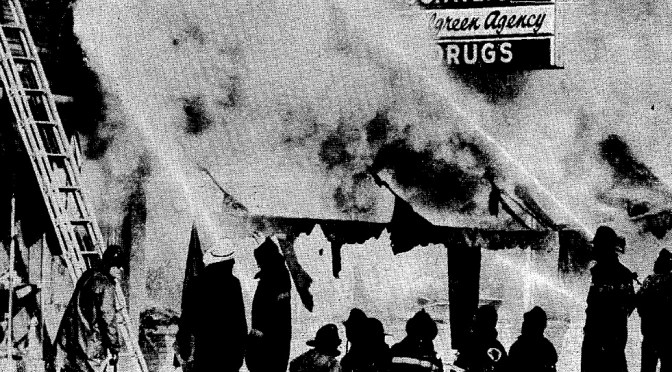
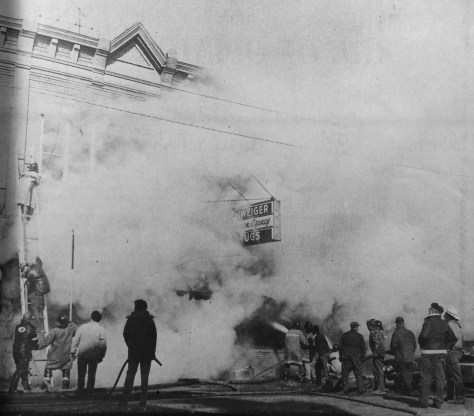
The huge explosion and fire that leveled numerous buildings in Sun Prairie on July 10 and 11 reminded me of another massive fire in the same area more than 40 years ago. On March 3, 1975, a fast-moving fire destroyed the Schweiger Walgreen Drug Store and Hillenbrand’s shoe store in the 200 block of East Main Street.
The fire alarm was sounded at 1:51 p.m. that day, bringing 33 firemen from the Sun Prairie Volunteer Fire Department to the scene. They were shortly joined by another 25 firefighters and trucks from Stoughton, DeForest and Marshall. The fire was discovered in the basement of the Schweiger Walgreen’s store, 214 E. Main St., and quickly spread to the adjacent Hillenbrand’s and apartments above both buildings. It took more than five hours to fully contain the blaze. The last crews left the scene at around 11 p.m.
Firefighters battle a blaze at the Schweiger Walgreen Drug Store in Downtown Sun Prairie on March 3, 1975. (Sun Prairie Star-Countryman photo)
Margaret McGonigle, 75, became trapped on the roof of the drug store building when the stairs down from her apartment were blocked by fire. She was rescued by the snorkel truck from the Sun Prairie Fire Department, according to the March 6, 1975 issue of the Sun Prairie Star-Countryman. Mrs. McGonigle was the widow of pharmacist John M. McGonigle, whose family owned and operated McGonigle’s Drug Store for more than 50 years before Robert Schweiger purchased it in 1970. She was also postmaster of Sun Prairie for 38 years before retiring in 1966. John McGonigle died in September 1965.
I distinctly recall going downtown with my father to view the aftermath of the fire. I recall the outriggers on the snorkel truck, and large amounts of road salt around the tires of the fire engines. The pharmacy held special memories for us, since my grandfather, Carl F. Hanneman, was a reserve pharmacist who occasionally worked for McGonigle’s. The Hillenbrand clothing and shoe stores were run by John Hein, a good friend of my parents, and the shoe store was managed by Roger Reichert, also a family friend. Reichert lived above the store and lost all of his belongings in the fire.
Volunteers move boxes of shoes from the Hillenbrand clothing and shoe store, 206 E. Main St., Sun Prairie. (Sun Prairie Star-Countryman photo)
The state fire marshal investigated the blaze, but was unable to determine a cause. Damage to the structures and contents was estimated by Fire Chief Milton Tester at $200,000. Within a week, Schweiger’s opened in temporary quarters on Bristol Street. The buildings were a total loss and had to be demolished.
“Many fine things have been said about our volunteer firemen before. But last week’s fire had to be one of their finest efforts,” read the “Shavings from the Editor’s Pencil” column in the Star-Countryman. “I spent nearly three hours in that biting cold watching those magnificent, heroic firemen work. Not once did I see anyone so much as flinch at going into a burning building or otherwise approaching a dangerous situation.”
Both the 2018 fire that claimed the life of Capt. Cory Barr and the 1975 fire had one thing in common: a pharmacy. The Barr House tavern at the corner of Bristol and Main streets, owned by Capt. Barr and his wife, once housed the Crosse and Crosse Drug Store, according to the Sun Prairie Public Museum. The building dates to the 1890s.
The Schweiger fire was one of three major blazes in Sun Prairie in 1975. On Aug. 10 that year, fire swept through the Moldrem Furniture store at 13 N. Bird St. in the Bird Street Centre. The fire did about $185,000 damage to the 34-year-old business. The store was a total loss. A backdraft blew two firefighters out the front doors of the store. Retiring assistant fire chief Arnie Kleven described the fire as his most frightening in an August 2017 interview with The Star. Kleven said the doors probably saved his life that day. Wiring in the air conditioning system was cited as the cause of the fire.
In July 1975, shorted wiring sparked a major fire in the garage and offices of Bill Gawne Ford Inc., 425 W. Main St. That fire caused an estimated $85,000 damage.
(This post has been updated with details on the Moldrem and Gawne fires.)
Firefighters battled fire, smoke and bitter cold weather. (The Capital Times/Dave Sandell)
It took more than five hours to contain the blaze. (Wisconsin State Journal/Edwin Stein)
A snorkel truck was used in the dramatic rescue of Margaret McGonigle, owner of the drug store building, who was trapped on the roof. (Sun Prairie Star-Countryman photo)
Fire crews from Sun Prairie, DeForest, Stoughton and Marshall battled the blaze. (Sun Prairie Star-Countryman photo)
Shelby Beers behind the counter of the Crosse and Cross Drugstore, circa 1920s. (Sun Prairie Public Museum photo)






















 The Hanneman Archive