I have nothing but good memories of Halloween. Growing up in the late 1960s and early 1970s, October 31 was a date we looked forward to. Whether we got to buy a costume at the dime store or made our own, it was always an exciting night.
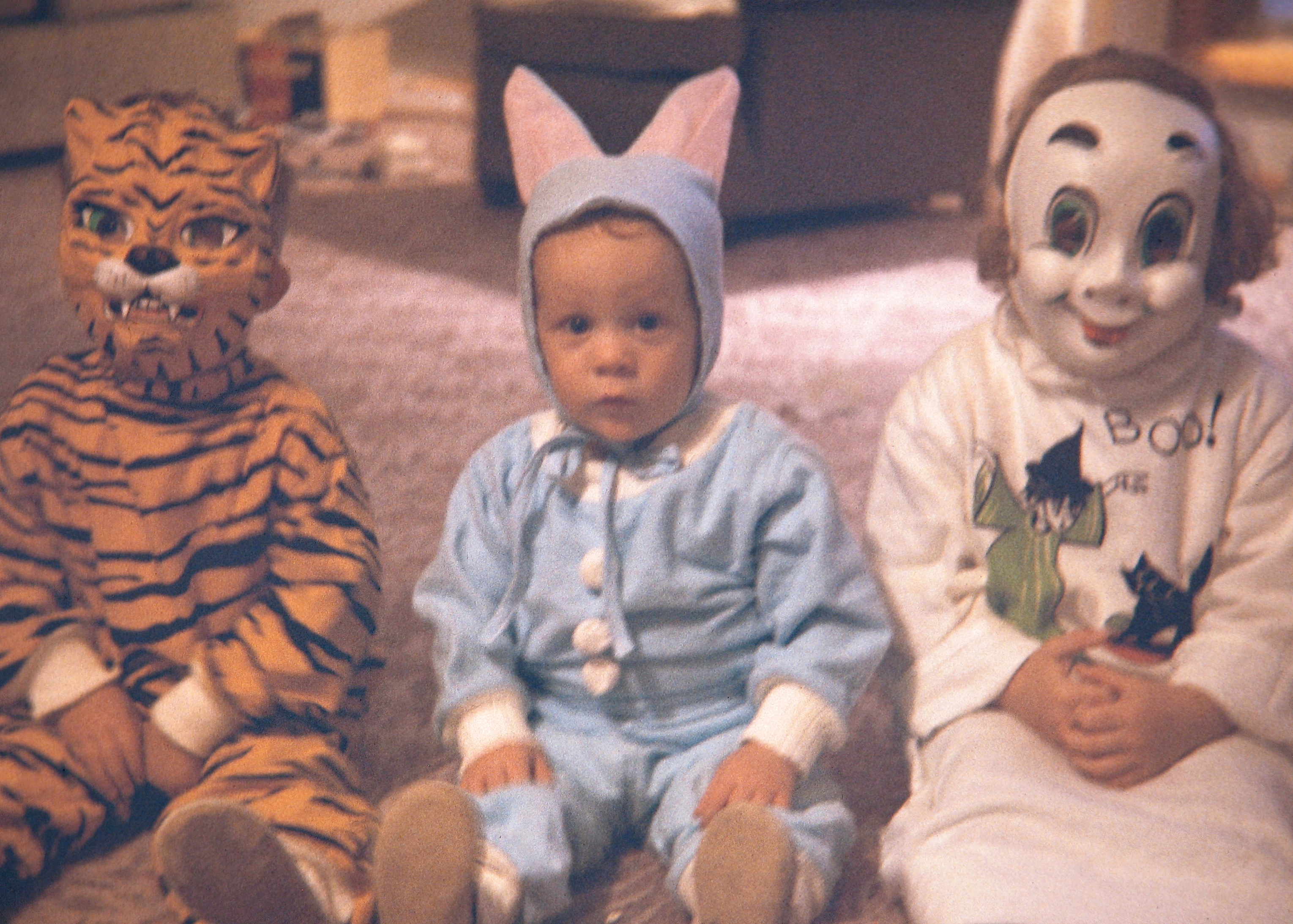
My brother David (left), yours truly at center at cousin Laura all set for Halloween at our home in Grand Rapids, Mich., circa 1964.
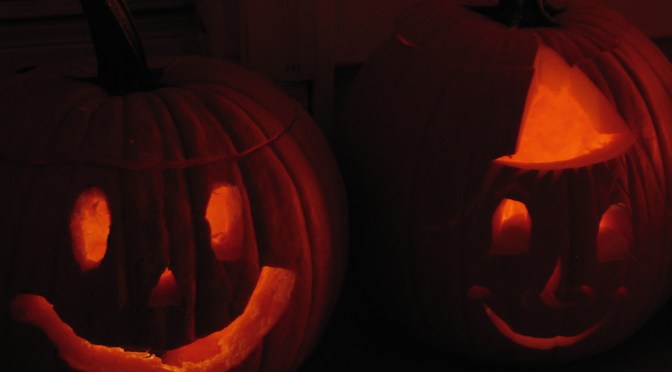
One of my most vivid Halloween memories was documented in my book, The Journey Home. I recall Dad tearing out the front door in his sock feet. I wondered what was happening. We figured it out a few minutes later when he dragged two teenagers into the front door and made them apologize for smashing our lit pumpkins. He then turned them over to Sun Prairie police.
We had one sad Halloween when my brother David fell into the neighbors tree well and spilled all of his candy. We all shared to make up for it. Another year, we went across town to “trick or treat” at a few houses of family friends. At one door, I was shocked that the lady who answered called me by name. “How does she know me with this costume on?” I wondered. My brother chimed in, “You forgot to put your mask down.” D’oh!
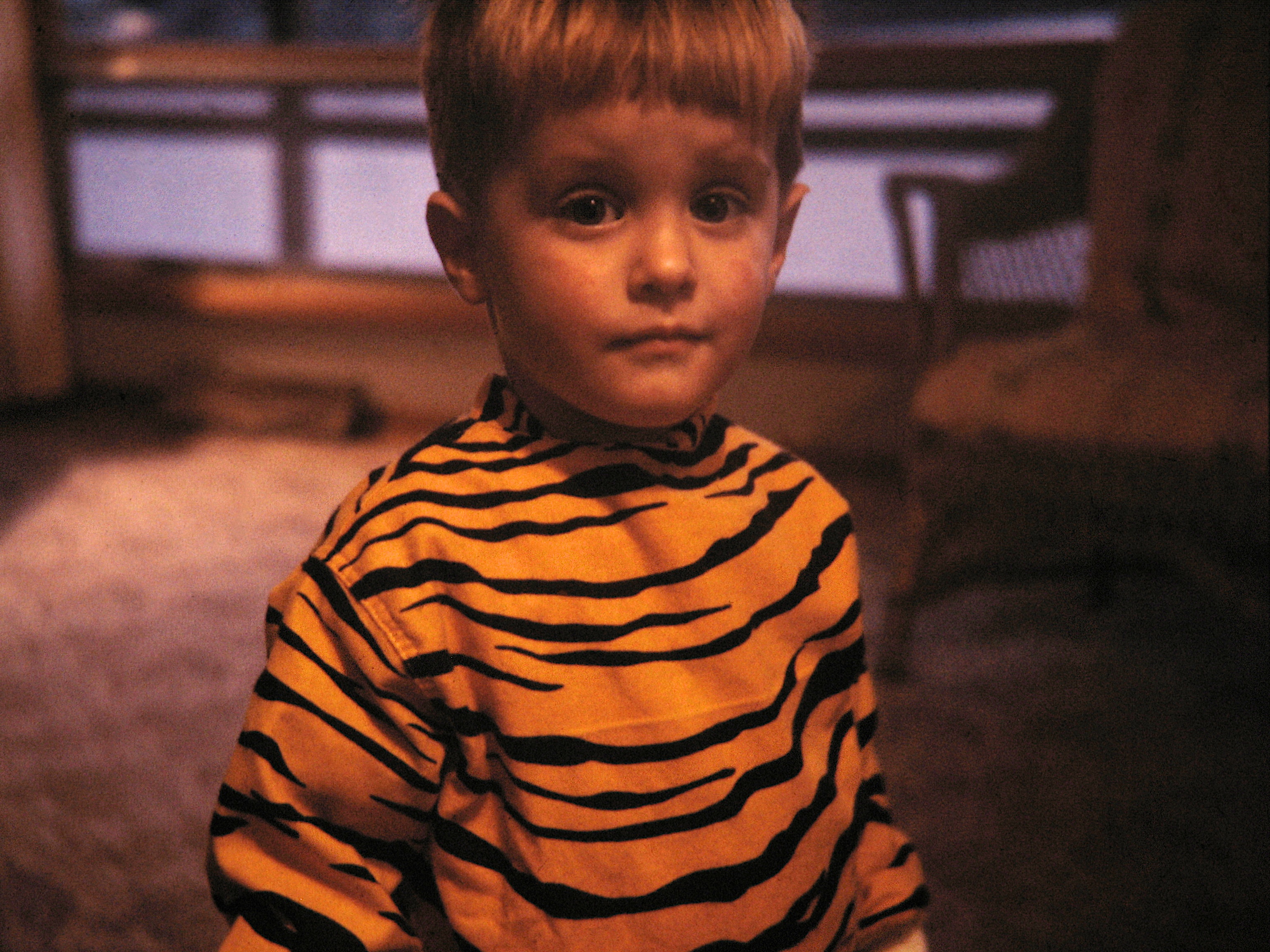
David C. Hanneman was a tiger for Halloween 1964.
Perhaps the most fun we had was creating our own costumes. Lighting the end of a cork on fire, then using the charred remains to paint black whiskers on our faces. Stuffing pillows up an oversized shirt helped complete the hobo look.
It wasn’t until toward the end of my trick-or-treating days that the scare over supposed razor blades in candy apples occurred. Hospitals offered to X-ray candy bags to check for pins or razor blades. That made me wonder if the candy would then glow? Ah, as it turned out the whole thing was a fraud that took on the sheen of urban legend.
Son Stevie watches Grandpa Dave Hanneman prepare to carve, circa 1993.
Once I had my own children, Halloween took on a new dimension. Our firstborn was too shy to go door to door, so we made our main stop at Grandma and Grandpa’s house. Eventually, Halloween became a major event. French onion soup or chili simmered in a crock pot while we took the kids around the neighborhood collecting goodies. Then we retreated into the warmth of the house for good food, warm apple cider and pie. The kids also ate candy.
With the more recent controversies claiming Halloween as un-Christian or even satanic, it was refreshing to read this article on About.com regarding the Catholic roots of Halloween.
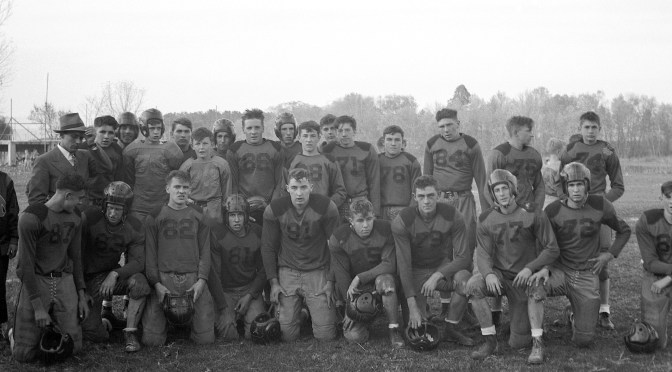
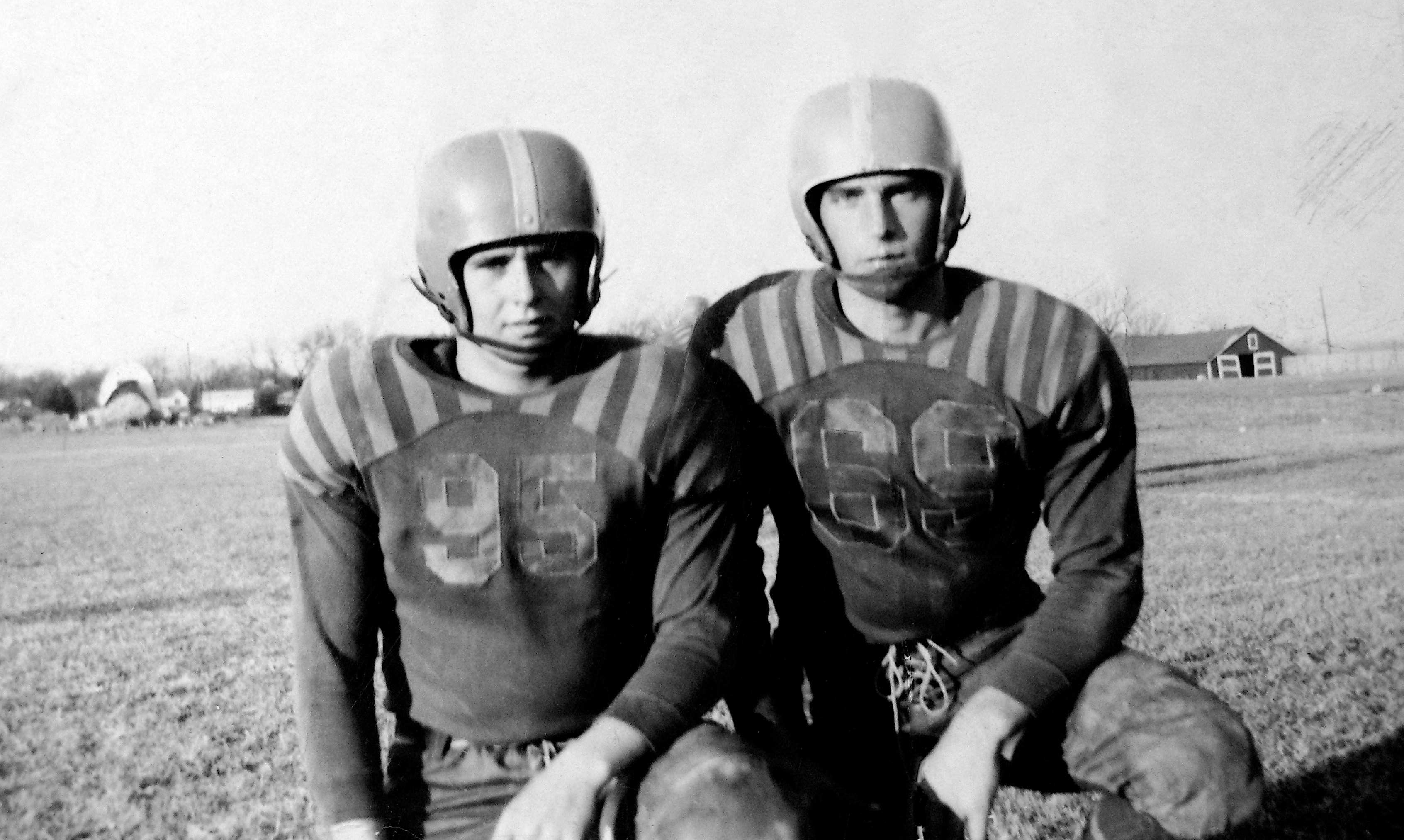
The 1947 football campaign was destined to be one for the ages at Mauston High School. The photo gallery below could be from that championship season, based on the youthful appearance of my Dad, David D. Hanneman (1933-2007). Dad was a starter for the Mauston Bluegold, even in his freshman year.
David D. Hanneman (center) played tackle, guard and on occasion, running back, for Mauston High School during the 1947-50 football seasons.
Dad played guard and tackle throughout his high school football career. But as is the case on small-town football teams, boys play both offense and defense. Many of the players would switch positions, depending on the opponent and game conditions.
Mauston ran up a 7-1 record in the 1947 football campaign, gaining them a share of the West Central Conference championship crown. Mauston was 3-1 in conference play. Midway through the season, Mauston ranked as one of the state’s highest-scoring teams. Here’s the 1947 season recap:
Sept. 12 Mauston 12, Reesdburg 0
Sept. 19 Mauston 25, Middleton 6
Sept. 26, Mauston 20, New Lisbon 12
Oct. 3, Mauston 13, Tomah 0
Oct. 10, Mauston 45, Westby 6
Oct. 17 Sparta 14, Mauston 7
Oct. 24 Mauston 37, New Lisbon 0
Nov. 1 Mauston 13, Viroqua 0
Dave Hanneman (at right) in one of his early years in Mauston football.
Bob “Jigger” Jagoe, who played quarterback for Mauston starting in the 1948 season, recalls how Dave’s mother, Ruby V. Hanneman, was zealous in her cheering.
You could hear her in the stands, shouting. She was so proud. Of course we used to kind of make a mockery of it, because she was so adamant, letting everybody know who her son was out there who made the tackle. They announced, ‘Tackle made by Dave Hanneman’ and she said, ‘That’s my Davey!’
In the 1950s, home football games were played at Veterans Memorial Park on the south end of Mauston. This locale looks much closer to downtown, so I’m betting these 1940s games were played in Riverside Park along the Lemonweir River. In several of the photos you can see the distant spire of St. Patrick’s Catholic Church.
— This post has been updated with quotes and other information.
Dave Hanneman can be seen in the last row at left, second in from Coach McKenzie. Bob Jagoe is on his left. Front and center (91) is Dick Hale.
Mauston coach Doug McKenzie and players follow the on-field action.
A great view of the crowd at Riverside Park in Mauston.
It’s not clear if this galloping ghost is David D. Hanneman. He usually played at the line.
The Mauston Bluegold huddle before the play.
This appears to be a victory celebration.
Game action from this 1947 football contest at Mauston.
A good look at the spectators at Riverside Park. Recognize anyone?
Game action from this 1947 football contest at Mauston.
Dad’s conference crown medal from the 1947 championship season.
Another group shot of the team. On this one, Dave Hanneman (back row left, second from coach) has his tongue sticking out. Front and center (91) is Dick Hale.
A U.S. Navy recruit, probably a graduate of Mauston High School, watches the action.
A Mauston game program from September 1950. Note the team plays at Veterans Park instead of Riverside as in earlier years.
Our photo library is a bit thin on photos from my mother’s Mulqueen side of the family, but we do have some nice images worth sharing. My Mom grew up in Cudahy (we always pronounced it coo-da-hi, although it’s actually cuh-dah-hay) and comes from a family of 10. The matriarch and patriarch were Margaret Madonna (Dailey) Mulqueen (1895-1982) and Earl J. Mulqueen Sr. (1895-1965).
Left to right are Uncle Joe Mulqueen, Aunt Lavonne (Hanneman) Wellman, Uncle Patrick Mulqueen, Grandma Ruby Hanneman and (I believe) Uncle Pat’s wife Ruth.
In the foreground is Grandma Margaret Madonna (Dailey) Mulqueen (1895-1982), and in the back is Grandpa Earl J. Mulqueen Sr. (1895-1965)
Grandma Margaret M. Mulqueen and Grandpa Earl J. Mulqueen Sr., on a visit to my folks’ house in Grand Rapids, Mich.
Sunday dinner at the Mulqueen house in Cudahy.
David C. Hanneman and Laura Mulqueen Curzon, circa 1965.
David C. Hanneman and Laura Mulqueen Curzon, circa 1965.
Looks like Laura Mulqueen Curzon got what she wanted for Christmas. In the background is Grandma Ruby Hanneman.
Looks like a dinner party at my parents house in Greenfield in the late 1950s.
I’m ashamed to say I’m not sure which of cousin Laura Mulqueen Curzon’s brothers this is. Taken in Colorado.
Grandma Margaret M. Mulqueen along with Aunt Evelyn Mulqueen.
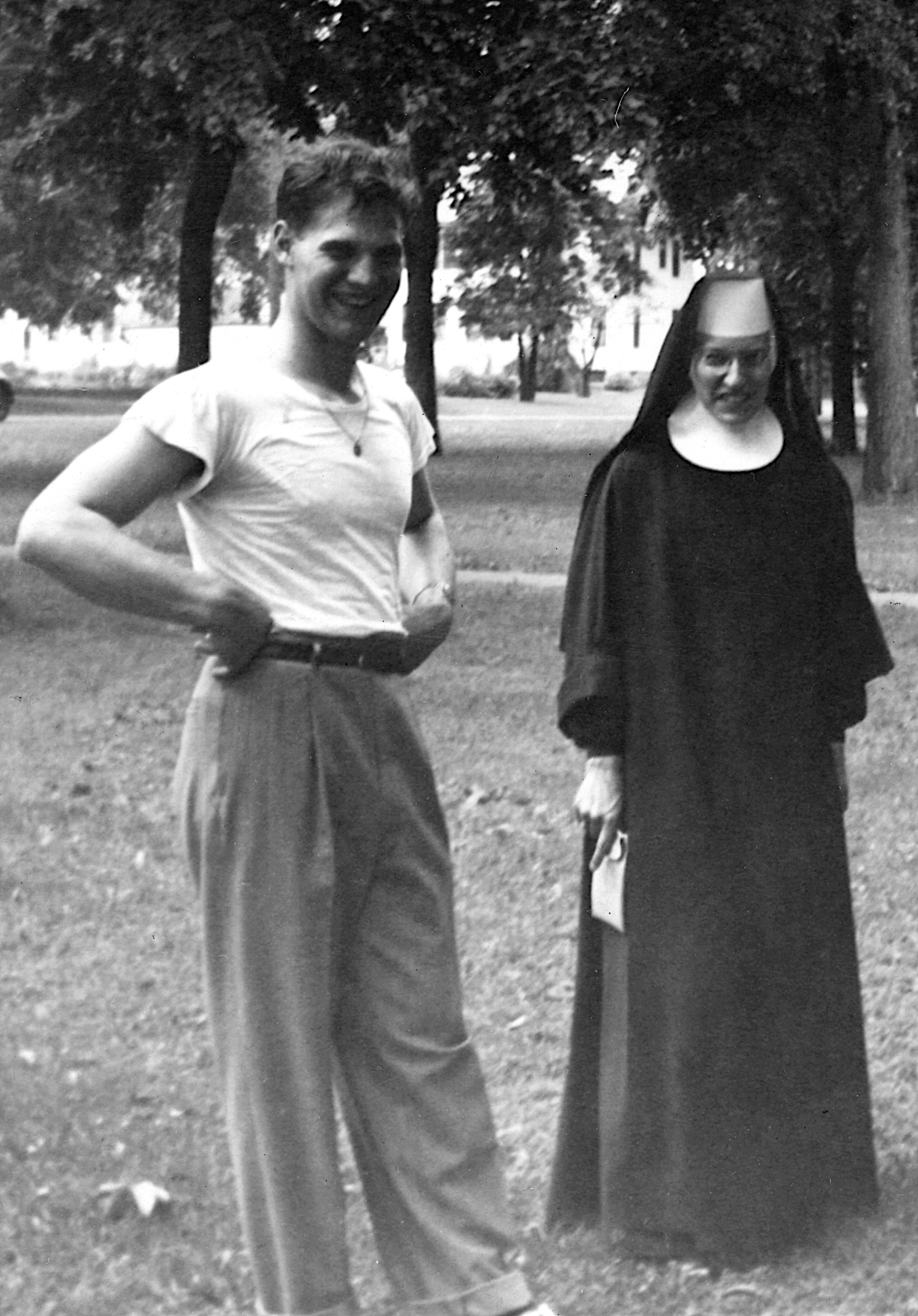
Sister Madonna Marie Mulqueen holds baby David C. Hanneman, while Laura Mulqueen Curzon looks bored.
One of the last Mulqueen family reunions. Back row left to right are Aunt Ruth (Mulqueen) McShane, Uncle Patrick Mulqueen, Uncle Joe Mulqueen and Aunt Joanie (Mulqueen) Haske. Front row includes Sister Madonna Marie Mulqueen and Mom, Mary K. Hanneman.
A nice artsy shot of Mom, Mary K. (Mulqueen) Hanneman at the Hanneman house in Mauston, Wis.
Coming in the door are Grandma Margaret Mulqueen and Grandpa Earl J. Mulqueen Sr., along with Mom and Dad, David D. and Mary K. Hanneman.
Easter Sunday in the 1970s with Grandma Margaret Mulqueen, Laura Mulqueen Curzon, Mary Hanneman, yours truly, David C. Hanneman, and in front Margret Hanneman and Amy Hanneman Bozza.
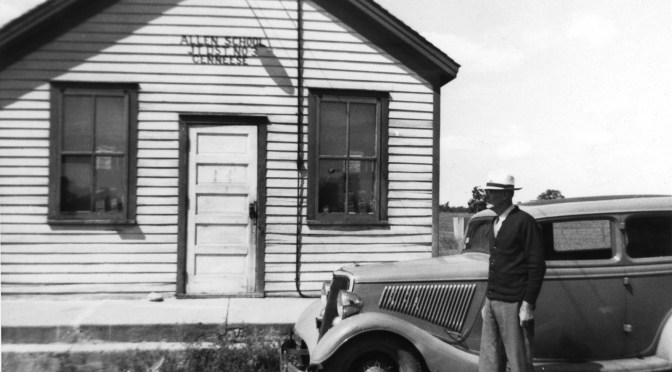
School must have seemed just a bit smaller when Oscar Treutel went back for a visit on August 24, 1942. In the 1880s, Oscar was a student at “Allen School” in Joint District No. 3 in the Town of Genesee in Waukesha County, Wisconsin. Let’s hope Oscar wasn’t returning for a spelling lesson, since the building has Genesee misspelled as “Genneese.” Perhaps the building lettering was a class project.
A young Oscar Treutel, circa 1899, when he was a college student in Waukesha, Wisconsin.
The school was in the southwest corner of the town on the E. Allen property, near the Saylesville Mill Pond. We should distinguish this one-room school from the Ethan Allen School for Boys, a reformatory in nearby Delafield that operated from 1959-2011.
Oscar traveled to school from the Treutel home in nearby North Prairie. He was the fifth child of Philipp and Henrietta Treutel, born Oct. 9, 1874 in Waukesha County. He moved with his family to Vesper in Wood County just after the turn of the century. He spent his sunset years in nearby Arpin. He died in 1967 at age 92.
I just learned with sadness of the death of my Dad’s older brother, Donn Gene Hanneman, who died in Minneapolis at age 88. Uncle Donn was the last of the Mauston Hanneman family to pass away. My Dad, David D. Hanneman, died in 2007 at age 74.
I have many memories of my uncle. He was foremost the father of nine wonderful human beings, my cousins Diane, Caroline, Tom, Jane, Mary Ellen, John, Jim, Nancy and Thomas Patrick (March 1-4, 1949). The cousins were raised by a saintly mother, my aunt Elaine Hanneman.
Donn G. Hanneman
Donn was a veteran of World War II and served as a seaman-second class on the USS Hoggatt Bay. The USS Hoggatt Bay (CVE-75) was a Casablanca-class escort carrier (crew of 860) commissioned in December 1943.
Donn G. Hanneman lounges outside his Grandpa Treutel’s home in Vesper, Wisconsin.
Donn was born on August 20, 1926, in Wisconsin Rapids to Carl Henry Frank Hanneman (1901-1982) and the former Ruby Viola Treutel (1904-1977). In 1936, the Hanneman family moved to Mauston in Juneau County, where Carl took a job as a pharmacist attached to the Mauston hospital and clinic. By that time, my father had come along (March 1933). In August 1937, the family expanded to include Lavonne Marie Hanneman Wellman (1937-1986).
As a boy, Donn had his share of illnesses and injuries. He spent more than a week in the Marshfield hospital in September 1929, then returned there in April 1930. Just before my Dad was born in March 1933, Donn was hospitalized in Wisconsin Rapids for more than a week, after an operation for appendicitis.
Donn Gene Hanneman sits in an indoor baby swing at the Hanneman home in Fond du Lac, Wisconsin, ca. 1927. Carl Hanneman was a pharmacist for the Staeben Drug Co. in Fond du Lac at the time.
Just after his 11th birthday in August 1937, Donn was standing on the running board of a moving vehicle while leaving the Juneau County Fairgrounds when he fell and suffered a head injury. He was seen at the Mauston clinic and taken home, but soon after “lost his power of speech and all consciousness,” according to an account in The Daily Tribune in Wisconsin Rapids. “He was then rushed to the hospital.” Donn was diagnosed with a concussion and put on two weeks of bed rest, although that was extended. The September 8 edition of The Daily Tribune said Donn “is making a satisfactory recovery, although he will be confined to his bed for two more weeks.”
Back in those days, a family’s every move ended up in the newspaper. In the case of the Hannemans, it was thanks to the faithful correspondence of Ruby Hanneman. “Mr. and Mrs. Carl Hanneman and little son Don Gene were completely taken by surprise last evening when forty friends arrived to give them a house warming on the occasion of moving into their new home on Hale Street,” the Wisconsin Rapids Daily Tribune reported on April 8, 1932.
Some of the most charming photographs in our library are of a 5-year-old Donn dressed up as a cowboy playing with friends on the sidewalks on the 1200 block of Washington Avenue in Wisconsin Rapids. We detailed those photos in a previous post.
Donn in his cowboy threads at Wisconsin Rapids.
As a youth Donn enjoyed books, and collected enough that his father built him a bookcase that held up to 175 volumes. Carl wrote to my then 6-year-old father about it in August 1939. Dad was staying with an aunt and uncle in Waukegan, Illinois. “Say David, I made a book case for Donn for his birthday, and you know that you still have something coming,” Carl wrote, “so what would you like to have Dad make something for you too, if so tell mother and I will try to start it as soon as I can.”
Donn G. Hanneman with Sister Emeric Weber of St. Patrick’s Catholic Grade School, 1948.
For a time Donn attended St. Patrick’s Catholic Grade School in Mauston, then run by the Benedictine Sisters. He was among the graduates attending the school’s 100th anniversary in 1995. At the event, he ran into one of his teachers, Sister Emeric Weber, who was just 19 when she started teaching at St. Patrick’s.
“Sister Emeric, I’m sorry I’m late,” he quipped, to which the aged nun replied, “What’s your excuse now? What’s your excuse?”
Like his brother David and father Carl, Donn was a longtime Fourth-Degree member of the Knights of Columbus, the world’s largest Catholic fraternal and service organization. He most recently belonged to Council 1013 in Rochester, Minnesota.
There are many others better qualified to provide more recent stories about Donn. And even though he tossed my father through the bay window of their Mauston home when they were boys, my Dad didn’t hold it against him. When he was ill with cancer in the fall of 2006, Dad put it simply and succinctly: “He’s my brother and I love him.”
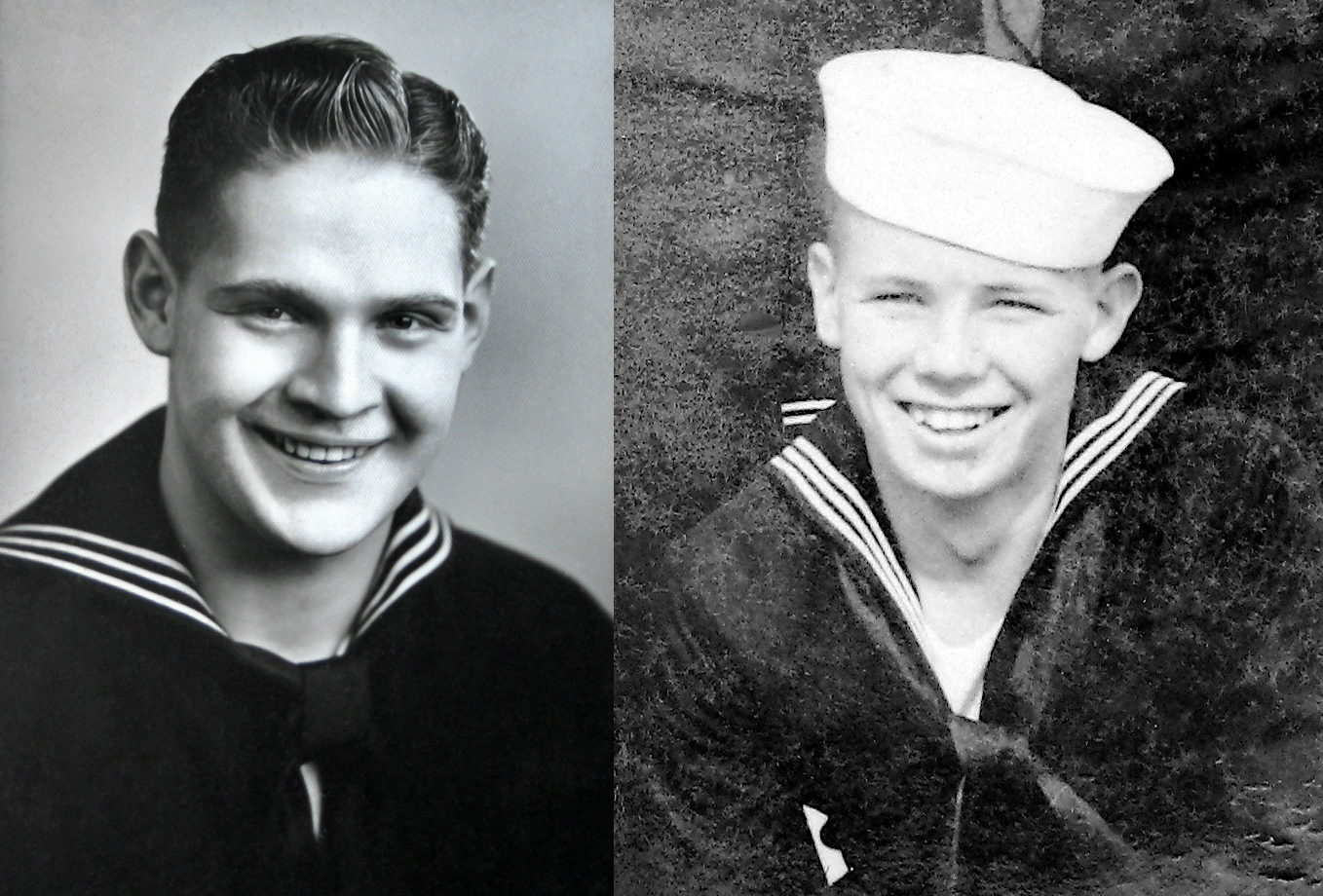
Donn G. Hanneman (center) in his U.S. Navy uniform, with sister Lavonne and brother David in 1944.
David D. Hanneman and older brother Donn G. Hanneman, circa 1935. Read more about the photo: http://wp.me/p4FxQb-v7
Donn G. Hanneman lounges outside his Grandpa Treutel’s home in Vesper, Wisconsin, circa 1930.
Donn G. Hanneman in the world’s smallest swimming pool.
Donn at the family home in Fond du Lac.
Donn Gene Hanneman, son of Carl F. Hanneman (1901-1982) and Ruby V. (Treutel) Hanneman (1904-1977), sits in an indoor baby swing at the Hanneman home in Fond du Lac, Wis, ca. 1927. Carl Hanneman was a pharmacist for the Staeben Drug Co. in Fond du Lac at the time.
Donn in his cowboy threads at Wisconsin Rapids.
Donn G. Hanneman wears a convincing looking police uniform, perhaps a Halloween costume.
Donn G. Hanneman looks like a lonely cowpoke with his wagon, circa 1930.
David D. Hanneman on the shoulders of brother Donn.
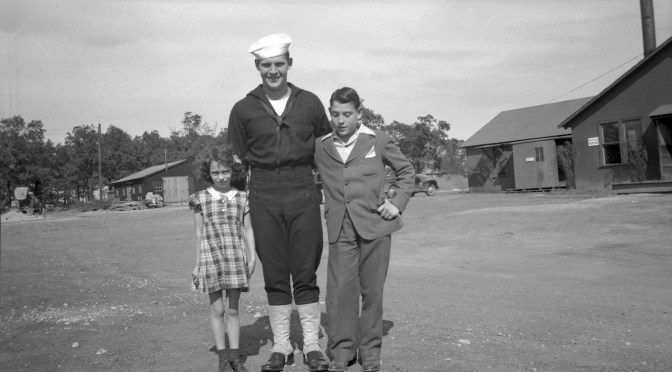
Donn G. Hanneman towers over his little sister, Lavonne Marie, circa 1941.
Donn G. Hanneman at the Mauston rail station, circa 1944.
Donn G. Hanneman in his U.S. Navy uniform in 1944.
CRACK! The sound of the first rifle shot left an echo that trailed onto the horizon. We flinched just a bit when the first volley was fired, then heard the barely audible jingle of the ejected brass shell dancing across the pavement. Then silence, followed by orders to fire again. CRACK! A third report rumbled across the landscape. Men and women alike clutched tissues and dabbed tears at the sights, sounds and emotion of the military honor guard that paid tribute Tuesday to my father-in-law, Ronald C. LaCanne.
Ronald C. LaCanne served in the U.S. Army from 1958-1961.
Darkness had already fallen outside of the Draeger-Langendorf Funeral Home in Racine, Wisconsin, adding to the drama. Everyone stood motionless as two uniformed veterans folded the American flag and presented it to my mother-in-law, Eileen. The slow, steady salute they gave before the flag was a sign of deep respect. It was followed by the playing of Taps. Everyone was choked up to witness such a moving ceremony.
Ron served in the United States Army in the late 1950s and early 1960s, the height of the Cold War era. He was an intelligence officer stationed somewhere in the hinterlands of Alaska, within listening distance of the Soviet Union. He never talked about the work he did there, not wanting in any way to betray national secrets, even 50 years later. He took his commitment that seriously. That is a man of honor.
If you know a veteran, take time today to thank them for serving the United States of America. It’s important that they know our nation is grateful for their sacrifices.
Ron LaCanne was entombed Wednesday at Southern Wisconsin Veterans Memorial Cemetery in Union Grove. Grandchildren Ruby Hanneman and Joshua LaCanne pause at the columbarium wall.
At the close of Ron’s visitation and the impressive military honors, my thoughts turned to things eternal. Considering his moving journey of faith while dying from cancer, I thought of two passages from the Gospels.
John Chapter 16 offers encouragement to those who have watched a loved one struggle with terminal illness. Jesus said, “In the world you will have trouble, but take courage. I have overcome the world.” Matthew Chapter 25 seemed so fitting as we turned to leave the memorial service. I could almost hear the words echo from Heaven: “Well done, my good and faithful servant. …Come, share your master’s joy.”
I remember well the first and last times I saw my father-in-law, Ron LaCanne.
In the nearly 25 years between these two events, I came to respect and love this man, whose story late in life became one of remarkable faith. I was incredibly moved by his quiet and steady faith in Christ and his hope of attaining glory in Heaven after his earthly journey, which ended earlier today at age 74.
It was such a long road away from the day I first met him. That was in early 1990, when I stopped at the LaCanne home on North Wisconsin Street in Racine to pick up his daughter Sue for a date. I was more than a bit nervous, because I had been told he was not fond of newspaper reporters. At the time, I was a reporter at The Journal Times, Racine’s daily newspaper. I sat on the couch and we chatted about the story I’d worked on that day, dealing with a Caledonia teenager who killed a dog, reportedly due to listening to heavy metal music. Somehow I survived the discussion and made a decent first impression on the man I would come to spend countless hours with over the next nearly 25 years.
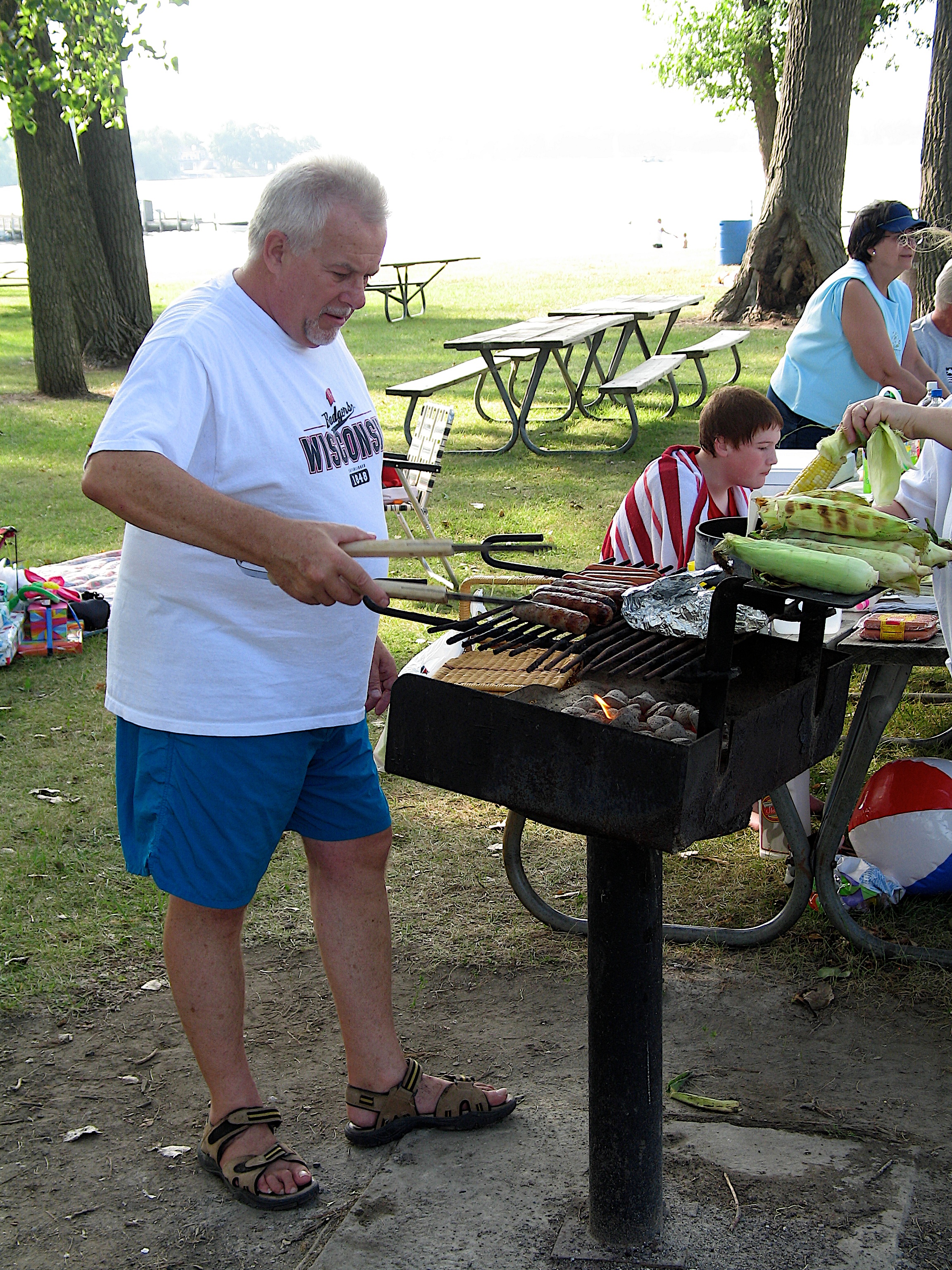
Ron in his favorite spot, working the grill.
My final and lasting impressions of him came in a series of visits this summer at the LaCanne apartment in Racine. Ron was thin, frail and dying from cancer. And although we’d been estranged in recent years, this time I was not nervous to visit. I presented him with a very special Rosary given to me by Catholic filmmaker Steve Ray. The Rosary had been placed on nearly a dozen sites in the Holy Land. This included Golgotha, the place of the crucifixion of Christ. He picked up the Rosary and felt the intricate carvings, then carefully laid it back in its olive wood box. I didn’t fully understand how much this touched him until a while later when the fire alarm went off in the apartment complex. He struggled to stand up from his recliner and grabbed two things: a hand-carved “comfort cross” given to him by a priest friend, and that Rosary. I struggled to hold back tears as my mother-in-law Eileen helped him out the door.
Two weeks later I visited again. This time he was confined to bed and drifted in and out of consciousness. We still had a nice talk, recalling stories and memories from across the years. I told him that many people were praying for him on his journey and that God would remain very close to him. “I sure hope so,” he said, squeezing my hand. A few minutes later, this solemn moment was replaced by laughter and joy. I told him that our oldest daughter Samantha was going to a concert that night. “A concert?” he said. He swung his hands out into the air and started singing the Alleluia Chorus from George Frideric Handel’s Messiah.We laughed at the joy and spontaneity of it. It seemed so appropriate, and so very beautiful. Wow.
Samantha, Stevie and Ruby with Gramps.
Several times we sat alone and talked about his final days on earth. He spoke freely and with stark honesty about his impending death. I encouraged him not to be afraid, since all of those who love him have complete faith that Jesus will not forsake him. “I’m not afraid to die,” he said. Then he asked me to do him a favor. “Can you help me identify the gentleman sitting on the couch over there?” There was no one on the couch. And since Ron had lost his sight over the past year, he would not have seen anyone there in the first place. But I could tell he was seeing something profound, even if it was beyond my vision. “Describe him to me,” I said. The visitor had dark hair and wore a cap. His expression was calm, peaceful and friendly. “He has been sitting there for the past two days,” Ron said. We talked a little more, and I suggested his visitor was a guardian angel sent by God to protect and comfort him. The idea was not foreign to me, as I’ve read a number of accounts by hospice workers of dying patients seeing angels.
We were on guard for weeks expecting Ron’s death, but he wasn’t about to follow any script. Just when we feared the worst, he would rally and have a great day or two. I recall one day pulling up to the apartment center and seeing him sitting outside in the sunshine, facing Lake Michigan. I asked him how he felt. “Doing great,” he said. “I feel really good.” On another visit, after listening to a preseason Packers game, we talked again about death and dying. “The time is near,” he said. I thanked him for the incredible witness he was providing to his grandchildren (and all of us). The Cross is heavy, and he knew it. But in his final months, weeks and days, he found peace. And now he is at peace.
I’ve always believed life is well-reflected in pictures, both on paper and ink and in the mind’s imagination. Many images of Ron come to me as I recall the last 25 years. Let me share just a few.
I remember the early afternoon of October 5, 2002. It was a very difficult day. I was driving Ron back to Racine from Children’s Hospital of Wisconsin in Wauwatosa. A short time before, his oldest son, Patrick, had died at the too-young age of 37. Ron exhaled loudly and struggled to find some words. “I’ll tell you, Joe, this is so hard. So hard. No one should have to experience the death of their child.” So very true. We drove and recalled favorite memories of Patrick. By the end of that drive, we both better understood the impact Pat had made on the family. It continues to this day. I can only imagine the embrace the two shared at their reunion earlier today!
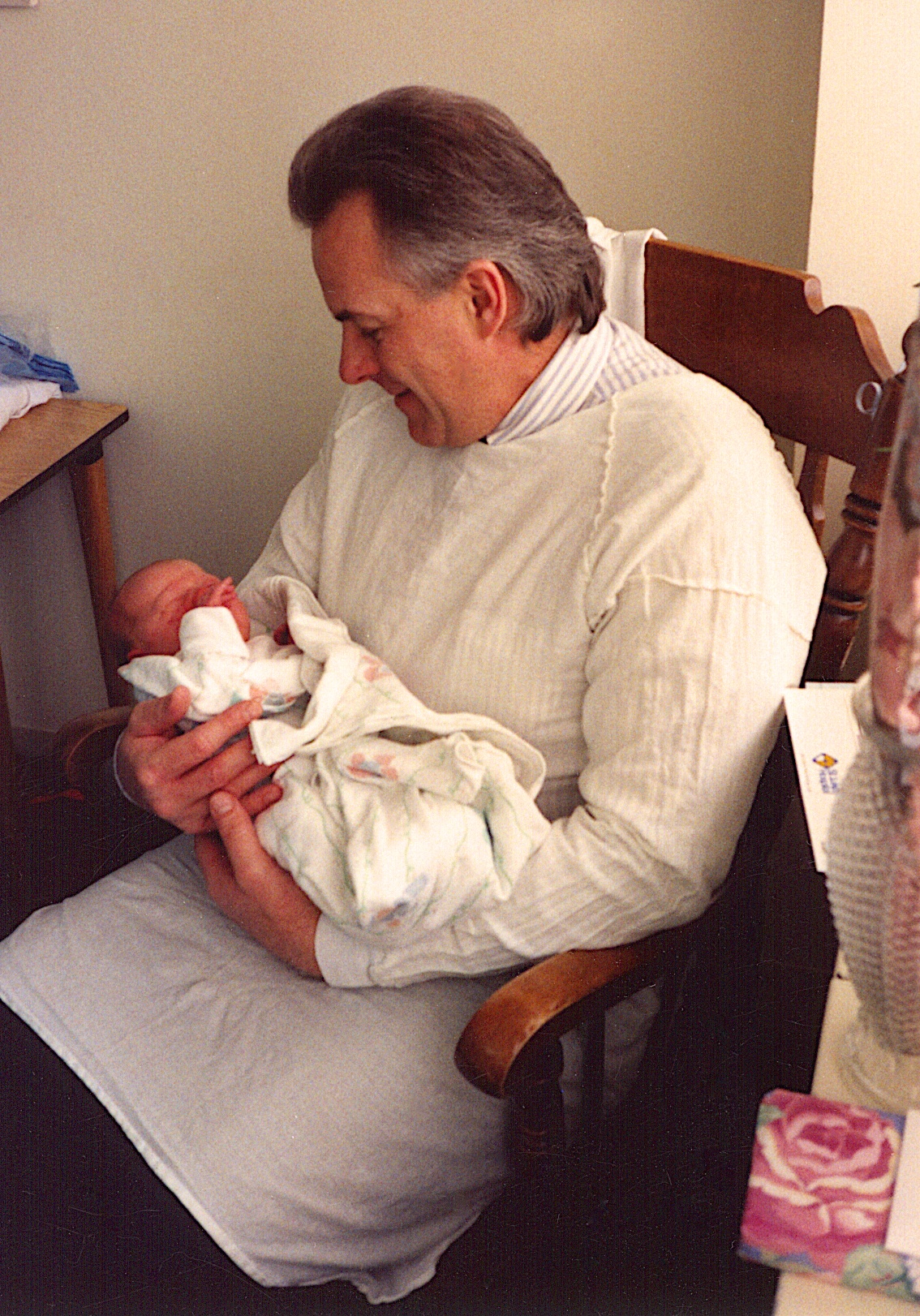
Ron LaCanne holds his first grandchild, Stevie, on January 21, 1992.
My mind rolls back to January 1992, when a well-dressed Ron stopped at St. Luke’s Hospital in Racine. He was on his way to his job at S.C. Johnson Wax, but had to stop first for some quality time with his first grandson, Stephen Patrick Hanneman. The photo my wife Sue snapped that morning tells of the joy and pride of a new grandpa. That day Ron earned the moniker he later awarded himself: “Gramps.”Gramps. He wore that title as well as anyone could, loving his five grandchildren like no one else.
Everyone always enjoyed July 4 at the LaCanne residence. While the grandkids were little, Ron went all out with a fireworks show as good as you’d see at the lakefront in Milwaukee or Racine. There were toy soldiers launched 100 feet in the air, returned to earth via parachute. And the Titanic, a huge brick of sound and color that should have come with its own fire department. On one occasion, one of the fireworks tipped over, firing projectiles across the gathered relatives. We all dove for cover under tables. “Incoming!” Over the years, Ron gave up the fireworks duty, but none of us could ever match those incredible displays.
Ron with grandchildren Samantha, Ruby, Josh and Geoffrey.
Speaking of displays, Ron was also the master of Christmas decorating. He always got two trees, one for the living room and one for the basement. His main tree was usually the tallest, fattest one on the lot, which he covered every square inch with ornaments, lights and beads. The rest of the house was festooned with lighted villages, Santa statues and a Nativity set that could reside at the Vatican. One year after a few seasons of collecting ceramic lighted Norman Rockwell houses, we put up an entire village on an expansive shelf space over our front door. After plugging it in, I danced down the upstairs hallway, singing, “Ron LaCanne, eat my dust!” Silly to be sure, but in a way, it was my own tribute to the master.
Every year, Ron played Santa at the LaCanne Christmas eve party. This was an event attended by dozens of family members. The food was diverse and plentiful, half the punch was spiked and the kids were all antsy in anticipation of Santa’s arrival. About 9 p.m., Ron would slip out of the living room, duck into a phone booth and emerge as Santa, always coming in through the front door. It was tradition that “Santa” would pick up the youngest grandchild for a photo. This often lead to either wide-eyed amazement or quivering tears. This was all followed by an orgy of gift opening for the kids. One year, an eagle-eyed granddaughter Samantha noticed that Grandpa was gone for a while, and when he returned, his hair was wet and he wore different shoes. Hmmmm. Another year, after Ron had retired from being Santa, youngest grandchild Josh LaCanne was determined to let Santa know the best gifts should be for him and not his brother, Geoffrey. When the red-clad bearded one (played by Ron’s son Chris) appeared at the party, young Josh got wide eyed and shouted, “Brother wants rocks!”
Ron and Eileen during an outing with Samantha and Stevie.
Ron and Eileen were always faithful attendees at the grandkids’ activities. Countless soccer games on chilly, windswept fields in Franksville, Christmas concerts, track meets, graduations. Ron was there with either a video camera or a still camera. Over the years he took thousands of photos and hours of video, often making commemorative books that he would present at birthdays or Christmas. I recall a time seeing a video that showed the family watching videos of the grandkids. Life imitates art.
As time went on and events in the world became more troubling, Ron decided he wanted his grandchildren to know about a simpler time, when right and wrong were easy to spot and traditional values where championed. So he started writing, tales of his childhood growing up as a Catholic boy in Racine. Stories, anecdotes and just things he wanted the kids to know, they were all included in this growing 100-page tome of Ronaldian wisdom. Occasionally he would share bits and pieces. What a gift these writings will be to his grandchildren and their children. I hope one day to be able to digitize them and format them into a book.
Ron was always willing to help out with a project. In 2007, after my father died of lung cancer, he helped me install a new floor in the upstairs hallway at my parents’ home in Sun Prairie. During my Dad’s illness, his little dog Chewy didn’t get as much attention and didn’t get put out as often. The result was he used the baseboards and the carpet for a bathroom. It was awful work pulling out the carpet, only to realize the baseboard, plaster and parts of the subfloor were contaminated. We worked for two days, first removing the mess, then treating the walls and subfloor with pure bleach to neutralize the smell. My eyes are still burning. When we were done, my Mom had a new wood floor and no more doggie smell.
We all gathered for a portrait at Nicholson’s in 2000.
When I was running my own marketing business, I tapped Ron’s business expertise and we worked together on some major projects for my client, Volvo Construction Equipment. I hired Ron to help me evaluate company financials, stock reports, annual reports and other business intelligence on prospective customers for Volvo. His analysis and detailed input allowed me to present market studies that were so well-received I still hear compliments about them, nearly a decade later.
I could go on for pages, but time is fleeting. Ron lived a very full 74 years. He gave much of his time, from his days in the U.S. Army, to volunteering in the community to groups such as the Opportunity Center and United Way. He rose high in the ranks at one of America’s great brand companies, SC Johnson Wax. But it was and is his family that was the love of his life. On Sunday evenings when everyone gathered in the living room after another of Eileen’s great dinners, Ron would pat his stomach and look around the room. “Mi familia!” he would say. Nothing can top having your family surrounding you. How he loved his wife Eileen, daughter Sue, sons Patrick and Chris (and wife Elise); and his grandkids, Stevie, Samantha, Ruby, Geoffrey and Josh.
My thoughts return to the man with the Rosary, clutching it and the Cross like an anchor during a time of fear and uncertainty. This will be Ron’s everlasting lesson and legacy. To carry the Cross through good and bad times in life, maintaining the hope of things unseen. As his life came to a close, Ron returned to his roots and his embraced his Catholic faith. It was his comfort and salvation. To use a phrase from his ancestors’ native tongue, La fede mi da vita:Faith gives me life.
Few things in the American experience are held so dear by so many as the parade. From the smallest rural towns to the heart of New York City, Americans have long held celebrations by parade.
Members of the American Legion prepare to march in a parade in Mauston, circa 1942.
Reasons for parades are as varied as the communities in which they take place. Perhaps the most widely celebrated type of parade is the Independence Day or July 4 parade. New York has its St. Patrick’s Day Parade and the famous Macy’s Thanksgiving Day Parade. The Left Coast has its parades of bacchanalia and pride. America’s heartland gathers for high school homecomings, Memorial Day, Christmas, Thanksgiving and special-themed parades such as the old Circus World parade in Milwaukee.
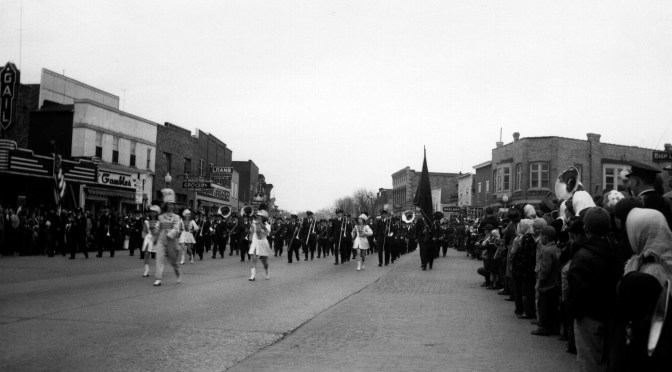
The Wisconsin Dells marching band parades down State Street in Mauston, circa 1942.
High school and college marching bands are a frequent source of parade entertainment. Other favorite parade participants include brigades of toddlers on tricycles, doll buggies pushed by little girls and the myriad parade floats and displays honoring the nation’s military.
Parades have long been used as a way to project military might, such as the goose-stepping Nazis of Germany or the show of ballistic missiles in Communist Russia. In America, ticker-tape parades became a favorite way to welcome home troops and war heroes such as Gen. Dwight D. Eisenhower and Admiral Chester Nimitz. The original ticker-tape parade was held in New York to celebrate dedication of the Statue of Liberty. A memorable parade in summer 1969 honored the Apollo 11 astronauts.
David D. Hanneman prepares to ride a horse in a Mauston parade, circa 1942.
David D. Hanneman (at right) and other boy scouts before a parade in Mauston in the early 1940s.
Mauston Boy Scouts enter the parade line, circa 1943. The town’s military honor roll can be seen on the side of the building.
A marching band in downtown Mauston in the late 1960s.
A fire truck heads down the parade route in Mauston in the late 1960s.
Residents of Mauston, Wis., mill about the downtown area during a parade or community festival in the mid-1940s. Smith’s IGA market is visible across the street.
David D. Hanneman (1933-2007), a member of the Mauston High School Marching Band, poses outside his Mauston home in 1948. Hanneman, who later in life became mayor of Sun Prairie, Wis., played bass drum and trumpet.
The Mauston High School Marching Band performs in a parade in downtown Portage, Wis., ca. 1948. In the foreground is bass drummer David D. Hanneman (1933-2007) of Mauston.
Sun Prairie Mayor David D. Hanneman waits to enter the parade route in Sun Prairie, circa 2003.
Sun Prairie Mayor David D. Hanneman rides in a local parade, circa 2004.
David D. Hanneman in what appears to be a drum and bugle corps uniform, circa 1948.
The Mauston High School Band after leaving the football field during a homecoming game in the 1940s.
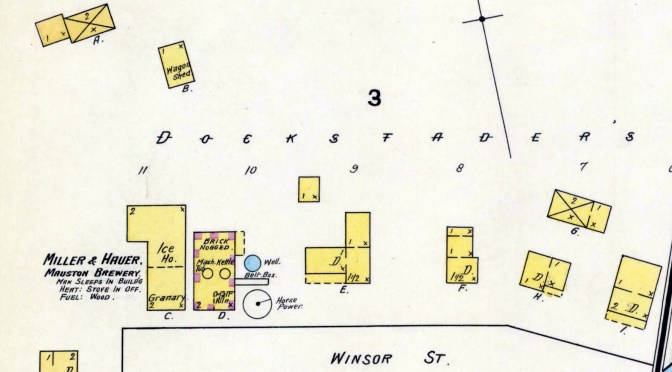
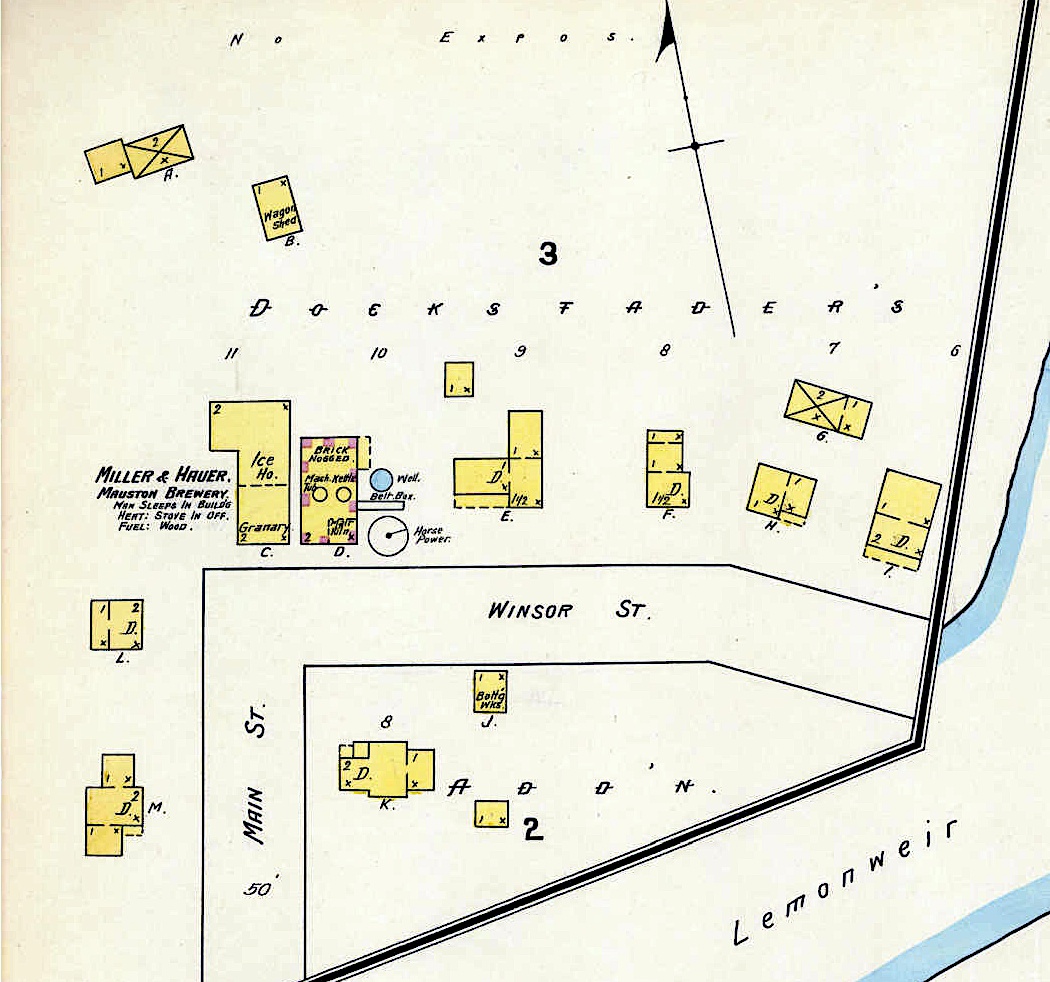
Newly digitized Sanborn Fire Insurance maps of Mauston, Wisconsin, provide more detail of the sprawling Mauston Brewery complex that once covered much of the land at the corner of Morris and Winsor streets along the Lemonweir River.
We previously wrote about the Mauston Brewery as detailed in a book by Mauston native Richard D. Rossin Jr. The Wisconsin Historical Society recently digitized hundreds of maps from the Sanborn Map Company that show intricate detail of the brewery complex. “Sanborn Fire Insurance maps are meticulously detailed, large-scale lithographed, color-keyed street maps,” the Wisconsin Historical Society wrote on its web site. “Sanborn Maps helped insurance agents in the late 19th and early 20th centuries determine the degree of fire hazard associated with a particular property.”
The 1894 fire map shows two Mauston Brewery buildings near the home at 22 Morris.
The old Hanneman home at 22 Morris Street was built around 1893 by Charles F. Miller, owner of the Mauston Brewery. Many of the details he put in the home — stained glass, hand-carved woodwork — remain to this day. The Sanborn maps show that the land around the home once included a bottling works and another out building related to the brewery. It is interesting that Morris Street is incorrectly labeled as Main Street on the 1894 version of the Sanborn map. By 1909, the bottling building near the Miller home was gone.
Across Winsor Street, the map shows a malt kiln, mash kettles, a well, a granary, an ice house and other outbuildings. The map notes that the buildings area heated by a wood stove, and a brewery employee sleeps in the building. The 1909 version of the Sanborn map shows addition of a second ice house on the shore of the Lemonweir River. Brewery workers cut ice blocks on the river in the winter, then moved them on a slide to the ice house.
The 1909 version of the map shows a second ice house near the river.
Charles Miller died in 1907, ending that family’s involvement in the brewery. Charles Ellison continued operating the brewery. By 1916, the brewery had ceased operation, according to Rossin’s book. A pickle factory started operation on the property, but it burned to the ground in 1922. Dr. J. Samuel Hess Jr. bought the land and built a brick ranch home in 1928.
The spring of 1854 must have seemed full of promise for the Johann Friedrich Krosch family. After 55 years growing up and raising a family in the Kingdom of Saxony, Frederick Krosch prepared to leave his home at Jessnitz and set out for America. Two of his sons, William, 29, and Karl, 30, came to Wisconsin in 1850, and now it was time to join them.
So in May 1854 the Krosch family left their hometown along the Mulde River and began the long journey to America. When the sailing ship Bertha left the Port of Bremen around June 12, there were six Kroschs among the 218 passengers onboard: Frederick, wife Christiana, 53, sons Augustus Frederick, 20; Reinhold, 16; and Gustav, 11; and daughter Henrietta, 16.
August F. Krosch
Officially known as the Barque Bertha, the ship was a multi-mast sailing vessel. It was very likely a rough journey, with the ship both dependent on, and at the mercy of, the North Atlantic winds. The Krosch family started the voyage in steerage, the least comfortable part of the ship.
During the journey passengers noticed a shark following the ship for days, according to family stories passed down through generations. This was most upsetting, since a shark following a vessel was believed to signal impending death on board. Old sailors’ lore held that sharks had the ability to sense if someone on board was near death.
At one point a severe storm blew up and damaged the ship’s rigging. The carpenter aboard the Bertha refused to scale the mast to make repairs. So Augustus Krosch hoisted himself up and fixed the mast, allowing the Bertha to be back underway. Shortly after, the Krosch family was moved from steerage to a cabin for the rest of the journey. Augustus and Reinhold then got jobs working as carpenters aboard the Bertha.
The family sold everything to make the journey to America. The Krosch men kept their money in money belts worn under their clothing. Although the belts painfully chafed the skin, no one dared remove them for fear of being robbed.
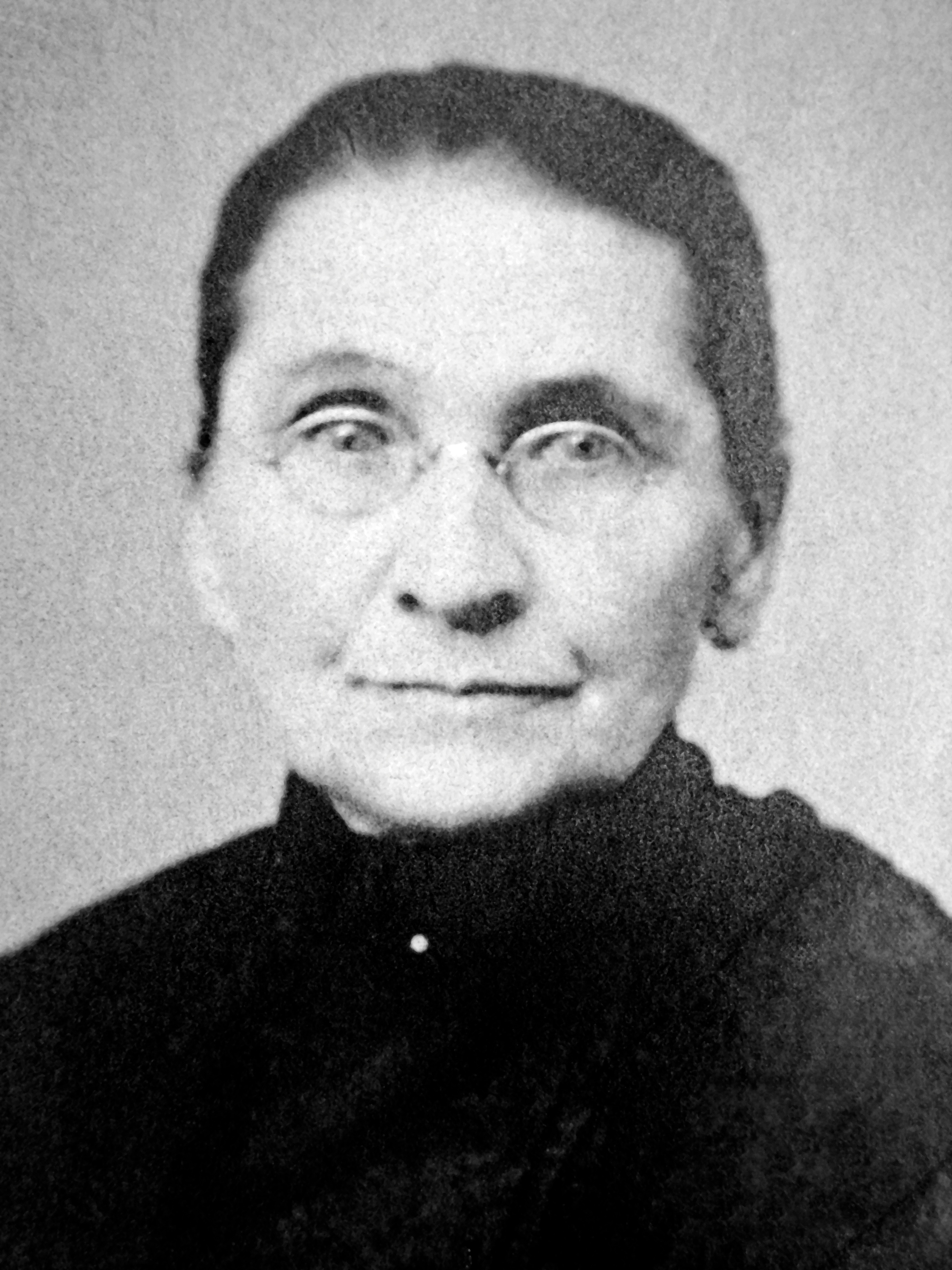
Portrait of Henrietta (Krosch) Treutel (1838-1908). Henrietta Krosch came to America in July 1854 at age 16 from the town of Jessnitz, Saxony, Germany.
Brisk trade winds pushed the ship backward, delaying arrival in New York by a week. About two-thirds of the way across, the Bertha encountered “large quantities” of ice, according to voyage record filed in New York by the ship’s master, named Klamp.
On Thursday, July 20, 1854, the Bertha arrived at the Port of New York after 40 days at sea. The Kroschs then traveled to Chicago, likely by steamboat and railroad. Hotel accommodations in Chicago were scarce, so the family took the only room they could find. But an infestation of bedbugs forced them to flee the hotel for a livery stable, where they spent the night.
From there they likely rode the train to Milwaukee, and then continued on until reaching East Troy in Walworth County, where Karl and William were living. Frederick purchased land in nearby Mukwonago and started a farm. His daughter, Henrietta, met and married a blacksmith named Philipp Treutel. They first established their home in Mukwonago and later moved to North Prairie.
Frederick Krosch is buried in Oak Knoll Cemetery at Mukwonago, Wisconsin.
William Krosch settled near the village of Eagle, and married Christiana Naumann in 1857. “My father’s farm was only 80 acres. It was mostly woodland, so he worked very hard to clear some for farming,” wrote Amelia Krosch Richardson in a 1940 memoir. “There was but my brother Will and myself at that time. We had a sister, Ida, who died when she was four years old of diphtheria and one baby sister that did not live. Both are buried near our home in Wisconsin.” The story of Ida Krosch was chronicled in an earlier article.
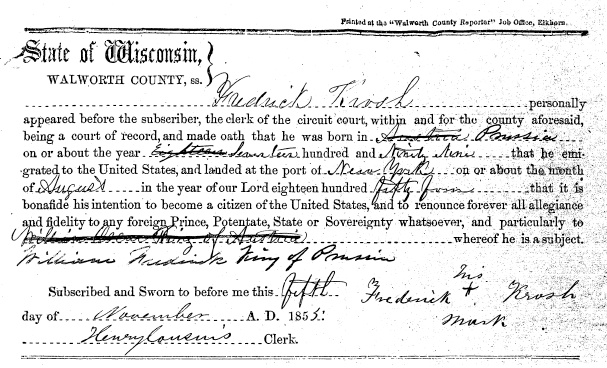
On November 5, 1855, Frederick Krosch (1799-1876) filed his declaration of intent to become a U.S. Citizen.
Eventually, William, Augustus and Gustave Krosch moved west and settled around Blue Earth, Minnesota. After Frederick Krosch died in 1877, his wife Christiana moved to Minnesota, where she died in 1881. Reinhold and Karl stayed on their farms near Lake Beulah in Walworth County, Wisconsin.
FAMILY LINE:John Frederick Krosch >> Henrietta (Krosch) Treutel >> Walter Treutel >> Ruby V. (Treutel) Hanneman >> Donn, David and Lavonne Hanneman.





















 The Hanneman Archive