I have nothing but good memories of Halloween. Growing up in the late 1960s and early 1970s, October 31 was a date we looked forward to. Whether we got to buy a costume at the dime store or made our own, it was always an exciting night.
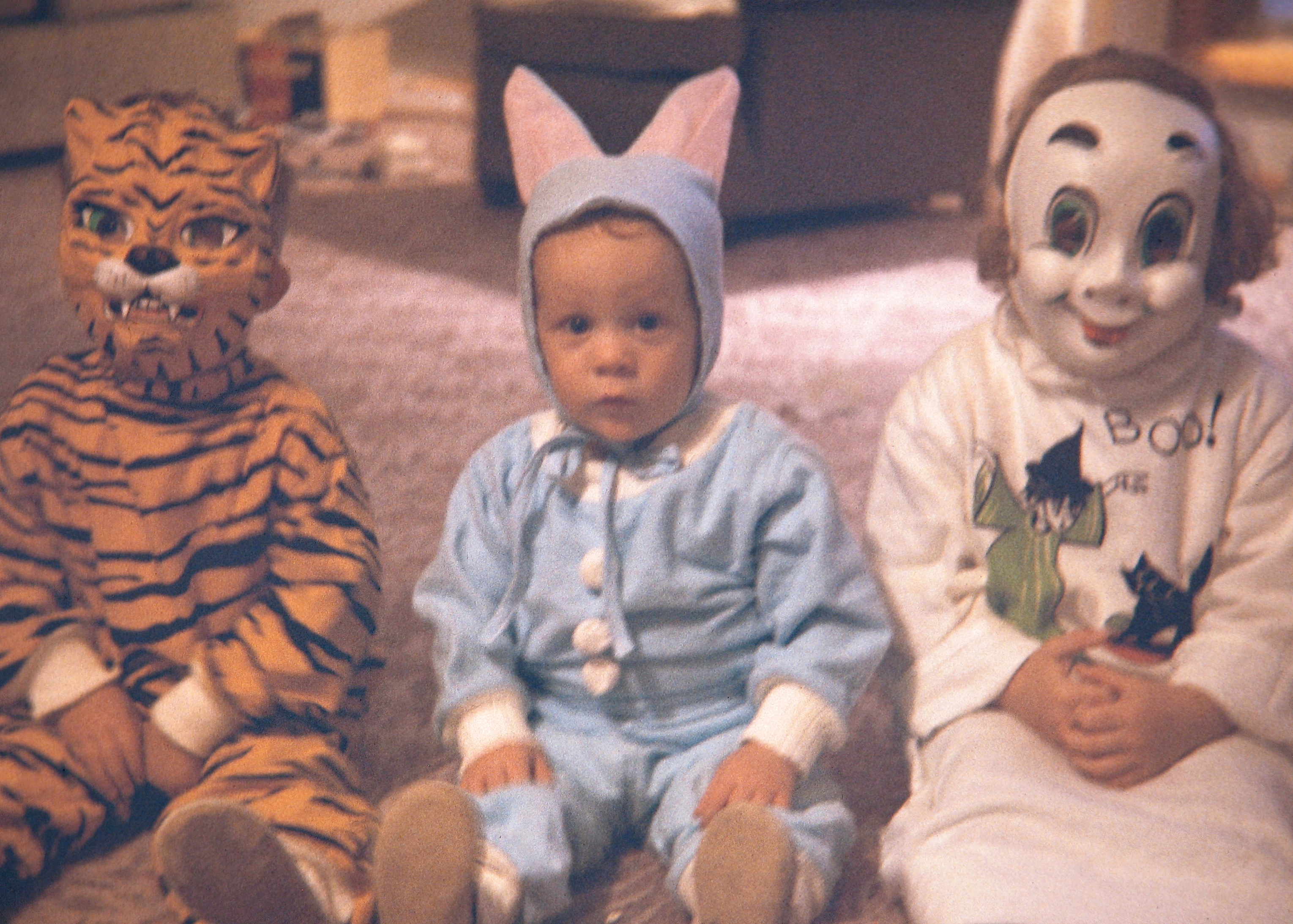
My brother David (left), yours truly at center at cousin Laura all set for Halloween at our home in Grand Rapids, Mich., circa 1964.
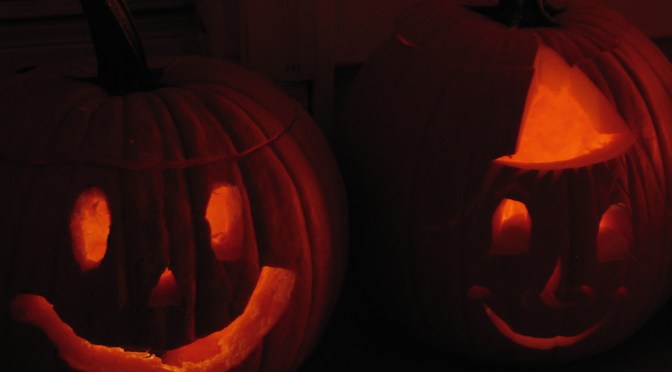
One of my most vivid Halloween memories was documented in my book, The Journey Home. I recall Dad tearing out the front door in his sock feet. I wondered what was happening. We figured it out a few minutes later when he dragged two teenagers into the front door and made them apologize for smashing our lit pumpkins. He then turned them over to Sun Prairie police.
We had one sad Halloween when my brother David fell into the neighbors tree well and spilled all of his candy. We all shared to make up for it. Another year, we went across town to “trick or treat” at a few houses of family friends. At one door, I was shocked that the lady who answered called me by name. “How does she know me with this costume on?” I wondered. My brother chimed in, “You forgot to put your mask down.” D’oh!
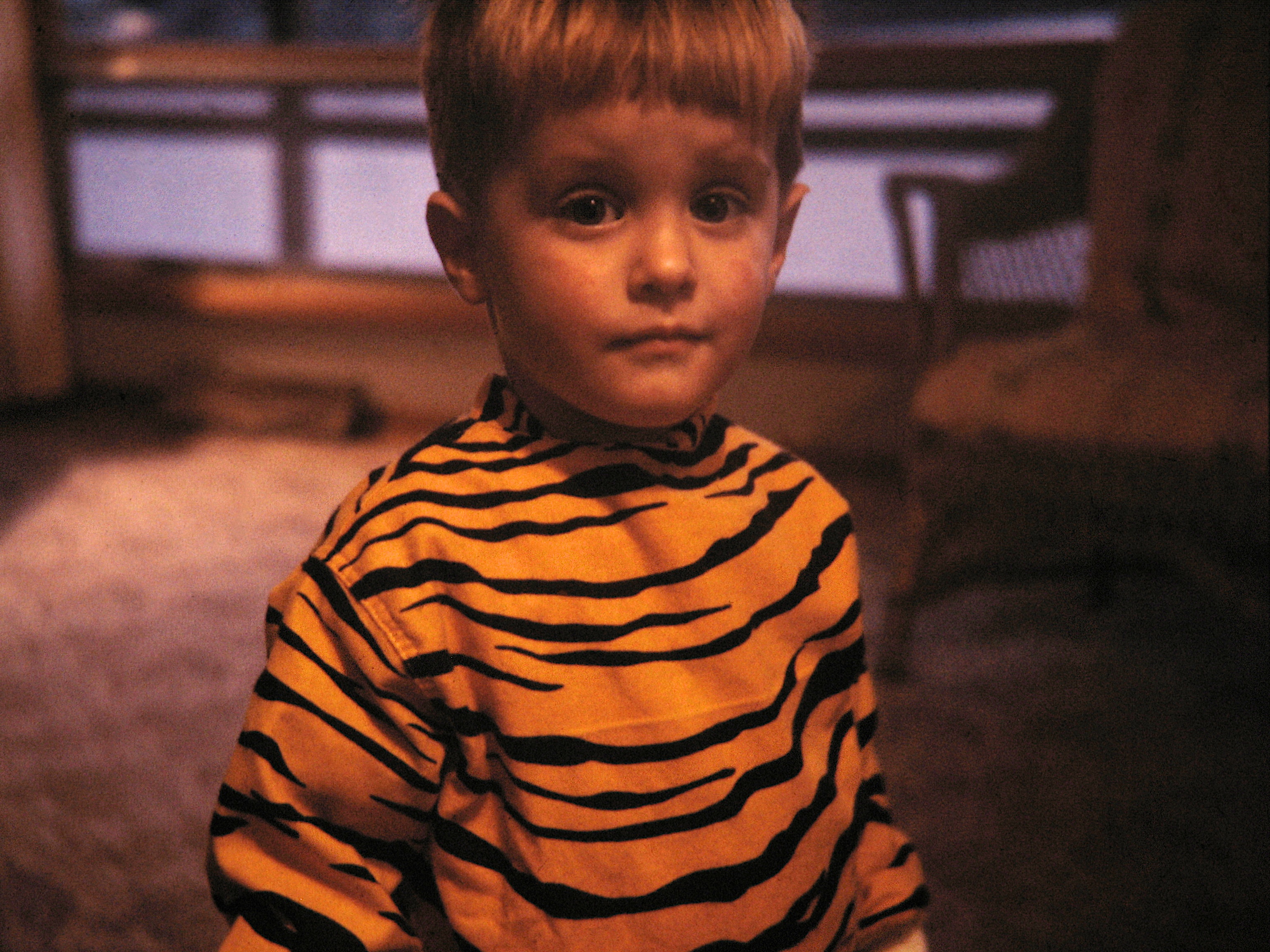
David C. Hanneman was a tiger for Halloween 1964.
Perhaps the most fun we had was creating our own costumes. Lighting the end of a cork on fire, then using the charred remains to paint black whiskers on our faces. Stuffing pillows up an oversized shirt helped complete the hobo look.
It wasn’t until toward the end of my trick-or-treating days that the scare over supposed razor blades in candy apples occurred. Hospitals offered to X-ray candy bags to check for pins or razor blades. That made me wonder if the candy would then glow? Ah, as it turned out the whole thing was a fraud that took on the sheen of urban legend.
Son Stevie watches Grandpa Dave Hanneman prepare to carve, circa 1993.
Once I had my own children, Halloween took on a new dimension. Our firstborn was too shy to go door to door, so we made our main stop at Grandma and Grandpa’s house. Eventually, Halloween became a major event. French onion soup or chili simmered in a crock pot while we took the kids around the neighborhood collecting goodies. Then we retreated into the warmth of the house for good food, warm apple cider and pie. The kids also ate candy.
With the more recent controversies claiming Halloween as un-Christian or even satanic, it was refreshing to read this article on About.com regarding the Catholic roots of Halloween.
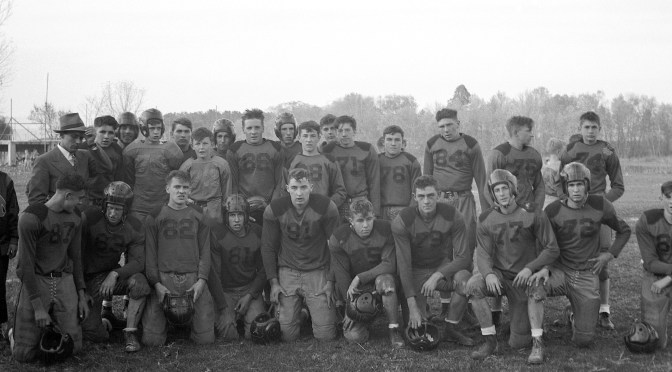
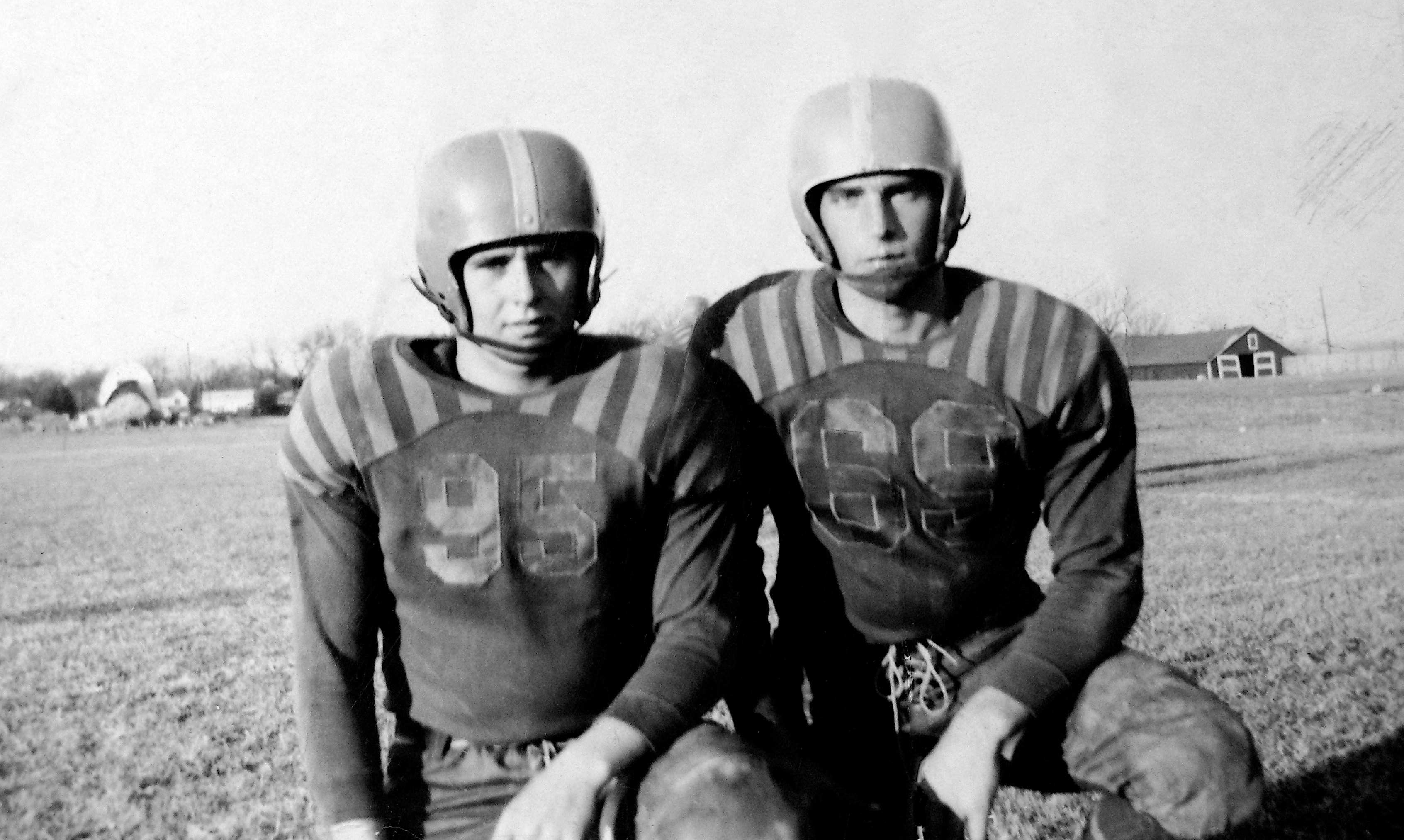
The 1947 football campaign was destined to be one for the ages at Mauston High School. The photo gallery below could be from that championship season, based on the youthful appearance of my Dad, David D. Hanneman (1933-2007). Dad was a starter for the Mauston Bluegold, even in his freshman year.
David D. Hanneman (center) played tackle, guard and on occasion, running back, for Mauston High School during the 1947-50 football seasons.
Dad played guard and tackle throughout his high school football career. But as is the case on small-town football teams, boys play both offense and defense. Many of the players would switch positions, depending on the opponent and game conditions.
Mauston ran up a 7-1 record in the 1947 football campaign, gaining them a share of the West Central Conference championship crown. Mauston was 3-1 in conference play. Midway through the season, Mauston ranked as one of the state’s highest-scoring teams. Here’s the 1947 season recap:
Sept. 12 Mauston 12, Reesdburg 0
Sept. 19 Mauston 25, Middleton 6
Sept. 26, Mauston 20, New Lisbon 12
Oct. 3, Mauston 13, Tomah 0
Oct. 10, Mauston 45, Westby 6
Oct. 17 Sparta 14, Mauston 7
Oct. 24 Mauston 37, New Lisbon 0
Nov. 1 Mauston 13, Viroqua 0
Dave Hanneman (at right) in one of his early years in Mauston football.
Bob “Jigger” Jagoe, who played quarterback for Mauston starting in the 1948 season, recalls how Dave’s mother, Ruby V. Hanneman, was zealous in her cheering.
You could hear her in the stands, shouting. She was so proud. Of course we used to kind of make a mockery of it, because she was so adamant, letting everybody know who her son was out there who made the tackle. They announced, ‘Tackle made by Dave Hanneman’ and she said, ‘That’s my Davey!’
In the 1950s, home football games were played at Veterans Memorial Park on the south end of Mauston. This locale looks much closer to downtown, so I’m betting these 1940s games were played in Riverside Park along the Lemonweir River. In several of the photos you can see the distant spire of St. Patrick’s Catholic Church.
— This post has been updated with quotes and other information.
Dave Hanneman can be seen in the last row at left, second in from Coach McKenzie. Bob Jagoe is on his left. Front and center (91) is Dick Hale.
Mauston coach Doug McKenzie and players follow the on-field action.
A great view of the crowd at Riverside Park in Mauston.
It’s not clear if this galloping ghost is David D. Hanneman. He usually played at the line.
The Mauston Bluegold huddle before the play.
This appears to be a victory celebration.
Game action from this 1947 football contest at Mauston.
A good look at the spectators at Riverside Park. Recognize anyone?
Game action from this 1947 football contest at Mauston.
Dad’s conference crown medal from the 1947 championship season.
Another group shot of the team. On this one, Dave Hanneman (back row left, second from coach) has his tongue sticking out. Front and center (91) is Dick Hale.
A U.S. Navy recruit, probably a graduate of Mauston High School, watches the action.
A Mauston game program from September 1950. Note the team plays at Veterans Park instead of Riverside as in earlier years.
Our photo library is a bit thin on photos from my mother’s Mulqueen side of the family, but we do have some nice images worth sharing. My Mom grew up in Cudahy (we always pronounced it coo-da-hi, although it’s actually cuh-dah-hay) and comes from a family of 10. The matriarch and patriarch were Margaret Madonna (Dailey) Mulqueen (1895-1982) and Earl J. Mulqueen Sr. (1895-1965).
Left to right are Uncle Joe Mulqueen, Aunt Lavonne (Hanneman) Wellman, Uncle Patrick Mulqueen, Grandma Ruby Hanneman and (I believe) Uncle Pat’s wife Ruth.
In the foreground is Grandma Margaret Madonna (Dailey) Mulqueen (1895-1982), and in the back is Grandpa Earl J. Mulqueen Sr. (1895-1965)
Grandma Margaret M. Mulqueen and Grandpa Earl J. Mulqueen Sr., on a visit to my folks’ house in Grand Rapids, Mich.
Sunday dinner at the Mulqueen house in Cudahy.
David C. Hanneman and Laura Mulqueen Curzon, circa 1965.
David C. Hanneman and Laura Mulqueen Curzon, circa 1965.
Looks like Laura Mulqueen Curzon got what she wanted for Christmas. In the background is Grandma Ruby Hanneman.
Looks like a dinner party at my parents house in Greenfield in the late 1950s.
I’m ashamed to say I’m not sure which of cousin Laura Mulqueen Curzon’s brothers this is. Taken in Colorado.
Grandma Margaret M. Mulqueen along with Aunt Evelyn Mulqueen.
Sister Madonna Marie Mulqueen holds baby David C. Hanneman, while Laura Mulqueen Curzon looks bored.
One of the last Mulqueen family reunions. Back row left to right are Aunt Ruth (Mulqueen) McShane, Uncle Patrick Mulqueen, Uncle Joe Mulqueen and Aunt Joanie (Mulqueen) Haske. Front row includes Sister Madonna Marie Mulqueen and Mom, Mary K. Hanneman.
A nice artsy shot of Mom, Mary K. (Mulqueen) Hanneman at the Hanneman house in Mauston, Wis.
Coming in the door are Grandma Margaret Mulqueen and Grandpa Earl J. Mulqueen Sr., along with Mom and Dad, David D. and Mary K. Hanneman.
Easter Sunday in the 1970s with Grandma Margaret Mulqueen, Laura Mulqueen Curzon, Mary Hanneman, yours truly, David C. Hanneman, and in front Margret Hanneman and Amy Hanneman Bozza.
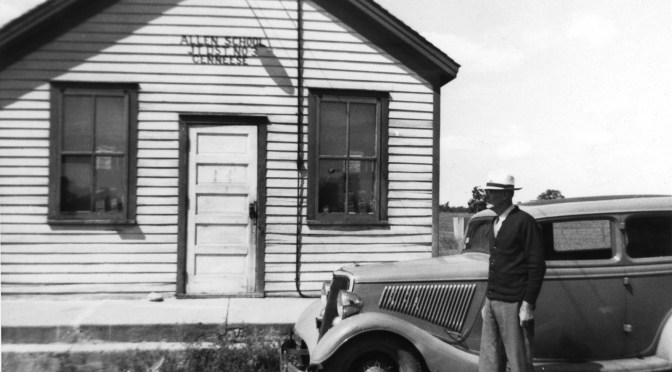
School must have seemed just a bit smaller when Oscar Treutel went back for a visit on August 24, 1942. In the 1880s, Oscar was a student at “Allen School” in Joint District No. 3 in the Town of Genesee in Waukesha County, Wisconsin. Let’s hope Oscar wasn’t returning for a spelling lesson, since the building has Genesee misspelled as “Genneese.” Perhaps the building lettering was a class project.
A young Oscar Treutel, circa 1899, when he was a college student in Waukesha, Wisconsin.
The school was in the southwest corner of the town on the E. Allen property, near the Saylesville Mill Pond. We should distinguish this one-room school from the Ethan Allen School for Boys, a reformatory in nearby Delafield that operated from 1959-2011.
Oscar traveled to school from the Treutel home in nearby North Prairie. He was the fifth child of Philipp and Henrietta Treutel, born Oct. 9, 1874 in Waukesha County. He moved with his family to Vesper in Wood County just after the turn of the century. He spent his sunset years in nearby Arpin. He died in 1967 at age 92.
I just learned with sadness of the death of my Dad’s older brother, Donn Gene Hanneman, who died in Minneapolis at age 88. Uncle Donn was the last of the Mauston Hanneman family to pass away. My Dad, David D. Hanneman, died in 2007 at age 74.
I have many memories of my uncle. He was foremost the father of nine wonderful human beings, my cousins Diane, Caroline, Tom, Jane, Mary Ellen, John, Jim, Nancy and Thomas Patrick (March 1-4, 1949). The cousins were raised by a saintly mother, my aunt Elaine Hanneman.
Donn G. Hanneman
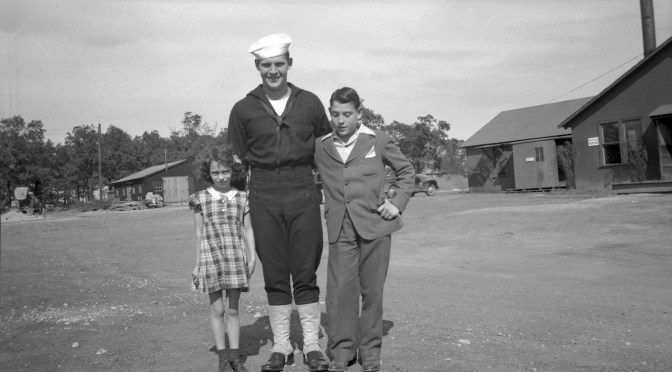
Donn was a veteran of World War II and served as a seaman-second class on the USS Hoggatt Bay. The USS Hoggatt Bay (CVE-75) was a Casablanca-class escort carrier (crew of 860) commissioned in December 1943.
Donn G. Hanneman lounges outside his Grandpa Treutel’s home in Vesper, Wisconsin.
Donn was born on August 20, 1926, in Wisconsin Rapids to Carl Henry Frank Hanneman (1901-1982) and the former Ruby Viola Treutel (1904-1977). In 1936, the Hanneman family moved to Mauston in Juneau County, where Carl took a job as a pharmacist attached to the Mauston hospital and clinic. By that time, my father had come along (March 1933). In August 1937, the family expanded to include Lavonne Marie Hanneman Wellman (1937-1986).
As a boy, Donn had his share of illnesses and injuries. He spent more than a week in the Marshfield hospital in September 1929, then returned there in April 1930. Just before my Dad was born in March 1933, Donn was hospitalized in Wisconsin Rapids for more than a week, after an operation for appendicitis.
Donn Gene Hanneman sits in an indoor baby swing at the Hanneman home in Fond du Lac, Wisconsin, ca. 1927. Carl Hanneman was a pharmacist for the Staeben Drug Co. in Fond du Lac at the time.
Just after his 11th birthday in August 1937, Donn was standing on the running board of a moving vehicle while leaving the Juneau County Fairgrounds when he fell and suffered a head injury. He was seen at the Mauston clinic and taken home, but soon after “lost his power of speech and all consciousness,” according to an account in The Daily Tribune in Wisconsin Rapids. “He was then rushed to the hospital.” Donn was diagnosed with a concussion and put on two weeks of bed rest, although that was extended. The September 8 edition of The Daily Tribune said Donn “is making a satisfactory recovery, although he will be confined to his bed for two more weeks.”
Back in those days, a family’s every move ended up in the newspaper. In the case of the Hannemans, it was thanks to the faithful correspondence of Ruby Hanneman. “Mr. and Mrs. Carl Hanneman and little son Don Gene were completely taken by surprise last evening when forty friends arrived to give them a house warming on the occasion of moving into their new home on Hale Street,” the Wisconsin Rapids Daily Tribune reported on April 8, 1932.
Some of the most charming photographs in our library are of a 5-year-old Donn dressed up as a cowboy playing with friends on the sidewalks on the 1200 block of Washington Avenue in Wisconsin Rapids. We detailed those photos in a previous post.
Donn in his cowboy threads at Wisconsin Rapids.
As a youth Donn enjoyed books, and collected enough that his father built him a bookcase that held up to 175 volumes. Carl wrote to my then 6-year-old father about it in August 1939. Dad was staying with an aunt and uncle in Waukegan, Illinois. “Say David, I made a book case for Donn for his birthday, and you know that you still have something coming,” Carl wrote, “so what would you like to have Dad make something for you too, if so tell mother and I will try to start it as soon as I can.”
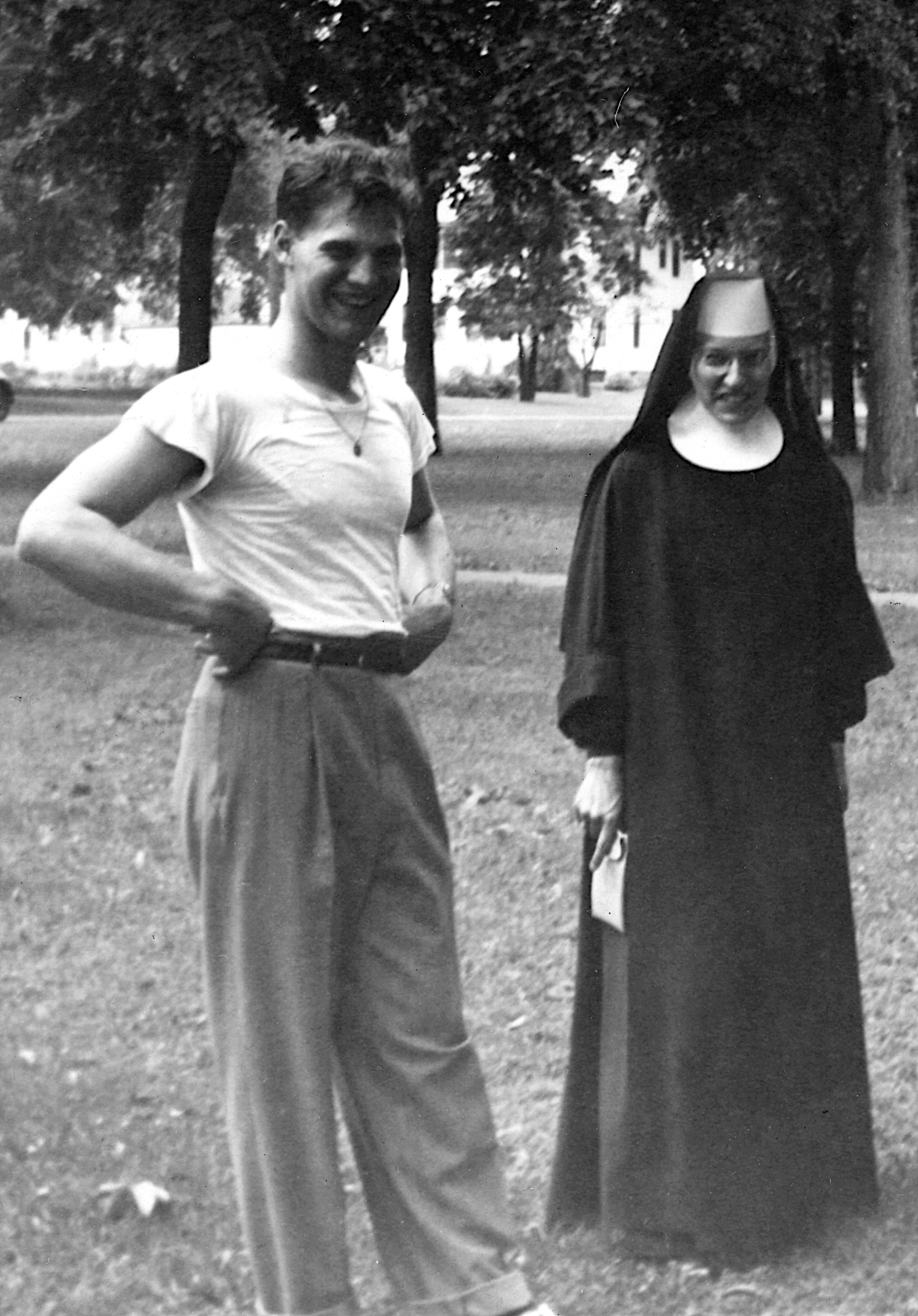
Donn G. Hanneman with Sister Emeric Weber of St. Patrick’s Catholic Grade School, 1948.
For a time Donn attended St. Patrick’s Catholic Grade School in Mauston, then run by the Benedictine Sisters. He was among the graduates attending the school’s 100th anniversary in 1995. At the event, he ran into one of his teachers, Sister Emeric Weber, who was just 19 when she started teaching at St. Patrick’s.
“Sister Emeric, I’m sorry I’m late,” he quipped, to which the aged nun replied, “What’s your excuse now? What’s your excuse?”
Like his brother David and father Carl, Donn was a longtime Fourth-Degree member of the Knights of Columbus, the world’s largest Catholic fraternal and service organization. He most recently belonged to Council 1013 in Rochester, Minnesota.
There are many others better qualified to provide more recent stories about Donn. And even though he tossed my father through the bay window of their Mauston home when they were boys, my Dad didn’t hold it against him. When he was ill with cancer in the fall of 2006, Dad put it simply and succinctly: “He’s my brother and I love him.”
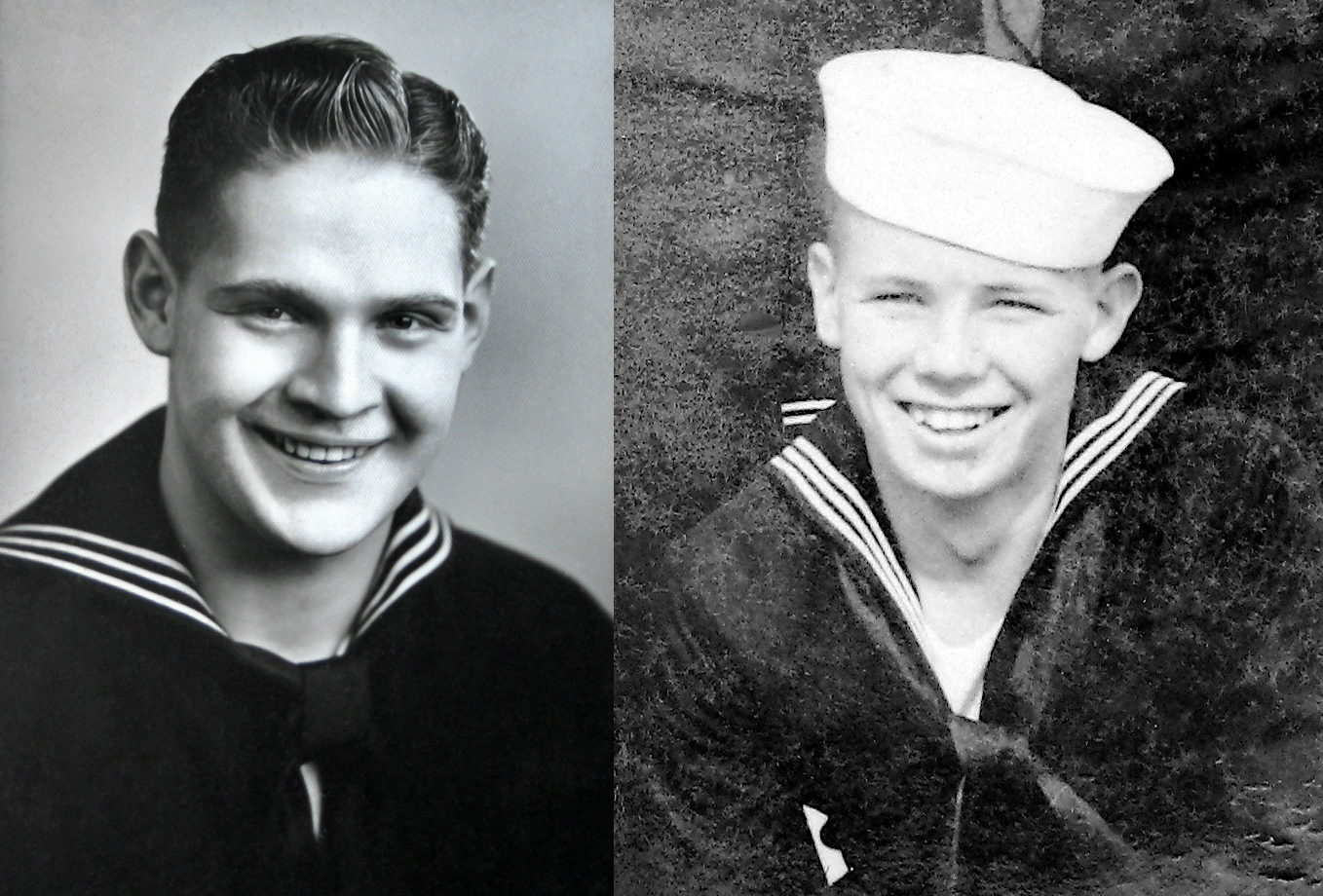
Donn G. Hanneman (center) in his U.S. Navy uniform, with sister Lavonne and brother David in 1944.
David D. Hanneman and older brother Donn G. Hanneman, circa 1935. Read more about the photo: http://wp.me/p4FxQb-v7
Donn G. Hanneman lounges outside his Grandpa Treutel’s home in Vesper, Wisconsin, circa 1930.
Donn G. Hanneman in the world’s smallest swimming pool.
Donn at the family home in Fond du Lac.
Donn Gene Hanneman, son of Carl F. Hanneman (1901-1982) and Ruby V. (Treutel) Hanneman (1904-1977), sits in an indoor baby swing at the Hanneman home in Fond du Lac, Wis, ca. 1927. Carl Hanneman was a pharmacist for the Staeben Drug Co. in Fond du Lac at the time.
Donn in his cowboy threads at Wisconsin Rapids.
Donn G. Hanneman wears a convincing looking police uniform, perhaps a Halloween costume.
Donn G. Hanneman looks like a lonely cowpoke with his wagon, circa 1930.
David D. Hanneman on the shoulders of brother Donn.
Donn G. Hanneman towers over his little sister, Lavonne Marie, circa 1941.
Donn G. Hanneman at the Mauston rail station, circa 1944.
Donn G. Hanneman in his U.S. Navy uniform in 1944.
Few things in the American experience are held so dear by so many as the parade. From the smallest rural towns to the heart of New York City, Americans have long held celebrations by parade.
Members of the American Legion prepare to march in a parade in Mauston, circa 1942.
Reasons for parades are as varied as the communities in which they take place. Perhaps the most widely celebrated type of parade is the Independence Day or July 4 parade. New York has its St. Patrick’s Day Parade and the famous Macy’s Thanksgiving Day Parade. The Left Coast has its parades of bacchanalia and pride. America’s heartland gathers for high school homecomings, Memorial Day, Christmas, Thanksgiving and special-themed parades such as the old Circus World parade in Milwaukee.
The Wisconsin Dells marching band parades down State Street in Mauston, circa 1942.
High school and college marching bands are a frequent source of parade entertainment. Other favorite parade participants include brigades of toddlers on tricycles, doll buggies pushed by little girls and the myriad parade floats and displays honoring the nation’s military.
Parades have long been used as a way to project military might, such as the goose-stepping Nazis of Germany or the show of ballistic missiles in Communist Russia. In America, ticker-tape parades became a favorite way to welcome home troops and war heroes such as Gen. Dwight D. Eisenhower and Admiral Chester Nimitz. The original ticker-tape parade was held in New York to celebrate dedication of the Statue of Liberty. A memorable parade in summer 1969 honored the Apollo 11 astronauts.
David D. Hanneman prepares to ride a horse in a Mauston parade, circa 1942.
David D. Hanneman (at right) and other boy scouts before a parade in Mauston in the early 1940s.
Mauston Boy Scouts enter the parade line, circa 1943. The town’s military honor roll can be seen on the side of the building.
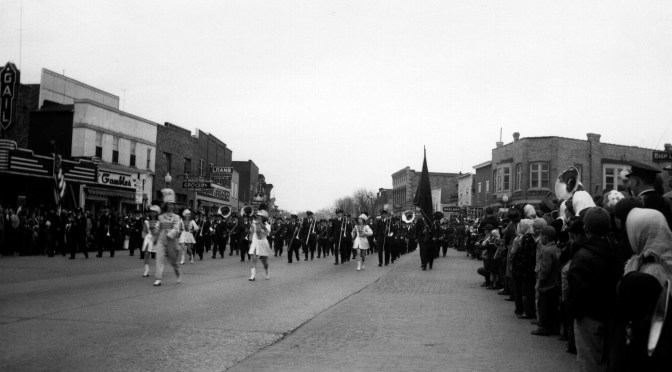
A marching band in downtown Mauston in the late 1960s.
A fire truck heads down the parade route in Mauston in the late 1960s.
Residents of Mauston, Wis., mill about the downtown area during a parade or community festival in the mid-1940s. Smith’s IGA market is visible across the street.
David D. Hanneman (1933-2007), a member of the Mauston High School Marching Band, poses outside his Mauston home in 1948. Hanneman, who later in life became mayor of Sun Prairie, Wis., played bass drum and trumpet.
The Mauston High School Marching Band performs in a parade in downtown Portage, Wis., ca. 1948. In the foreground is bass drummer David D. Hanneman (1933-2007) of Mauston.
Sun Prairie Mayor David D. Hanneman waits to enter the parade route in Sun Prairie, circa 2003.
Sun Prairie Mayor David D. Hanneman rides in a local parade, circa 2004.
David D. Hanneman in what appears to be a drum and bugle corps uniform, circa 1948.
The Mauston High School Band after leaving the football field during a homecoming game in the 1940s.
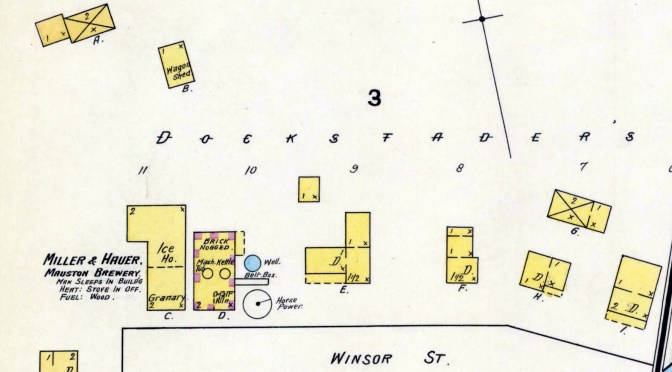
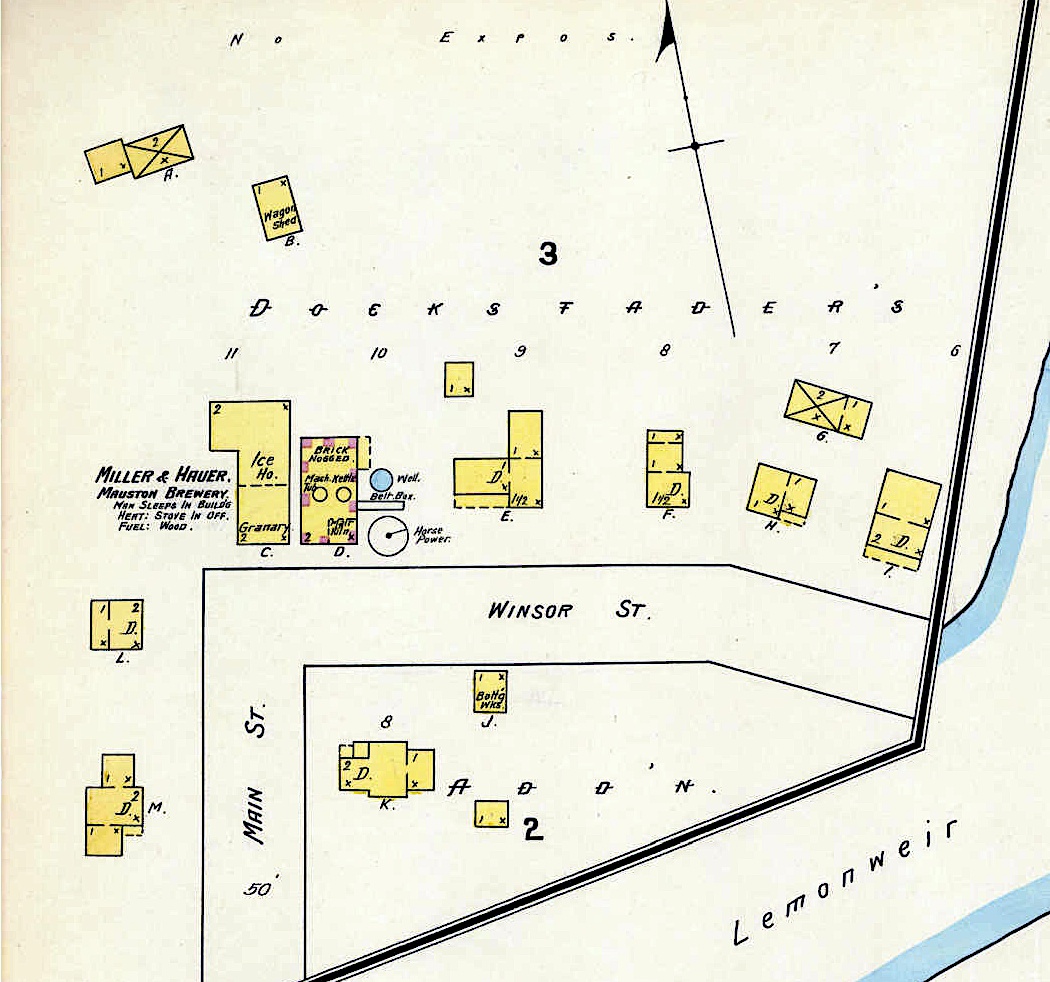
Newly digitized Sanborn Fire Insurance maps of Mauston, Wisconsin, provide more detail of the sprawling Mauston Brewery complex that once covered much of the land at the corner of Morris and Winsor streets along the Lemonweir River.
We previously wrote about the Mauston Brewery as detailed in a book by Mauston native Richard D. Rossin Jr. The Wisconsin Historical Society recently digitized hundreds of maps from the Sanborn Map Company that show intricate detail of the brewery complex. “Sanborn Fire Insurance maps are meticulously detailed, large-scale lithographed, color-keyed street maps,” the Wisconsin Historical Society wrote on its web site. “Sanborn Maps helped insurance agents in the late 19th and early 20th centuries determine the degree of fire hazard associated with a particular property.”
The 1894 fire map shows two Mauston Brewery buildings near the home at 22 Morris.
The old Hanneman home at 22 Morris Street was built around 1893 by Charles F. Miller, owner of the Mauston Brewery. Many of the details he put in the home — stained glass, hand-carved woodwork — remain to this day. The Sanborn maps show that the land around the home once included a bottling works and another out building related to the brewery. It is interesting that Morris Street is incorrectly labeled as Main Street on the 1894 version of the Sanborn map. By 1909, the bottling building near the Miller home was gone.
Across Winsor Street, the map shows a malt kiln, mash kettles, a well, a granary, an ice house and other outbuildings. The map notes that the buildings area heated by a wood stove, and a brewery employee sleeps in the building. The 1909 version of the Sanborn map shows addition of a second ice house on the shore of the Lemonweir River. Brewery workers cut ice blocks on the river in the winter, then moved them on a slide to the ice house.
The 1909 version of the map shows a second ice house near the river.
Charles Miller died in 1907, ending that family’s involvement in the brewery. Charles Ellison continued operating the brewery. By 1916, the brewery had ceased operation, according to Rossin’s book. A pickle factory started operation on the property, but it burned to the ground in 1922. Dr. J. Samuel Hess Jr. bought the land and built a brick ranch home in 1928.
The spring of 1854 must have seemed full of promise for the Johann Friedrich Krosch family. After 55 years growing up and raising a family in the Kingdom of Saxony, Frederick Krosch prepared to leave his home at Jessnitz and set out for America. Two of his sons, William, 29, and Karl, 30, came to Wisconsin in 1850, and now it was time to join them.
So in May 1854 the Krosch family left their hometown along the Mulde River and began the long journey to America. When the sailing ship Bertha left the Port of Bremen around June 12, there were six Kroschs among the 218 passengers onboard: Frederick, wife Christiana, 53, sons Augustus Frederick, 20; Reinhold, 16; and Gustav, 11; and daughter Henrietta, 16.
August F. Krosch
Officially known as the Barque Bertha, the ship was a multi-mast sailing vessel. It was very likely a rough journey, with the ship both dependent on, and at the mercy of, the North Atlantic winds. The Krosch family started the voyage in steerage, the least comfortable part of the ship.
During the journey passengers noticed a shark following the ship for days, according to family stories passed down through generations. This was most upsetting, since a shark following a vessel was believed to signal impending death on board. Old sailors’ lore held that sharks had the ability to sense if someone on board was near death.
At one point a severe storm blew up and damaged the ship’s rigging. The carpenter aboard the Bertha refused to scale the mast to make repairs. So Augustus Krosch hoisted himself up and fixed the mast, allowing the Bertha to be back underway. Shortly after, the Krosch family was moved from steerage to a cabin for the rest of the journey. Augustus and Reinhold then got jobs working as carpenters aboard the Bertha.
The family sold everything to make the journey to America. The Krosch men kept their money in money belts worn under their clothing. Although the belts painfully chafed the skin, no one dared remove them for fear of being robbed.
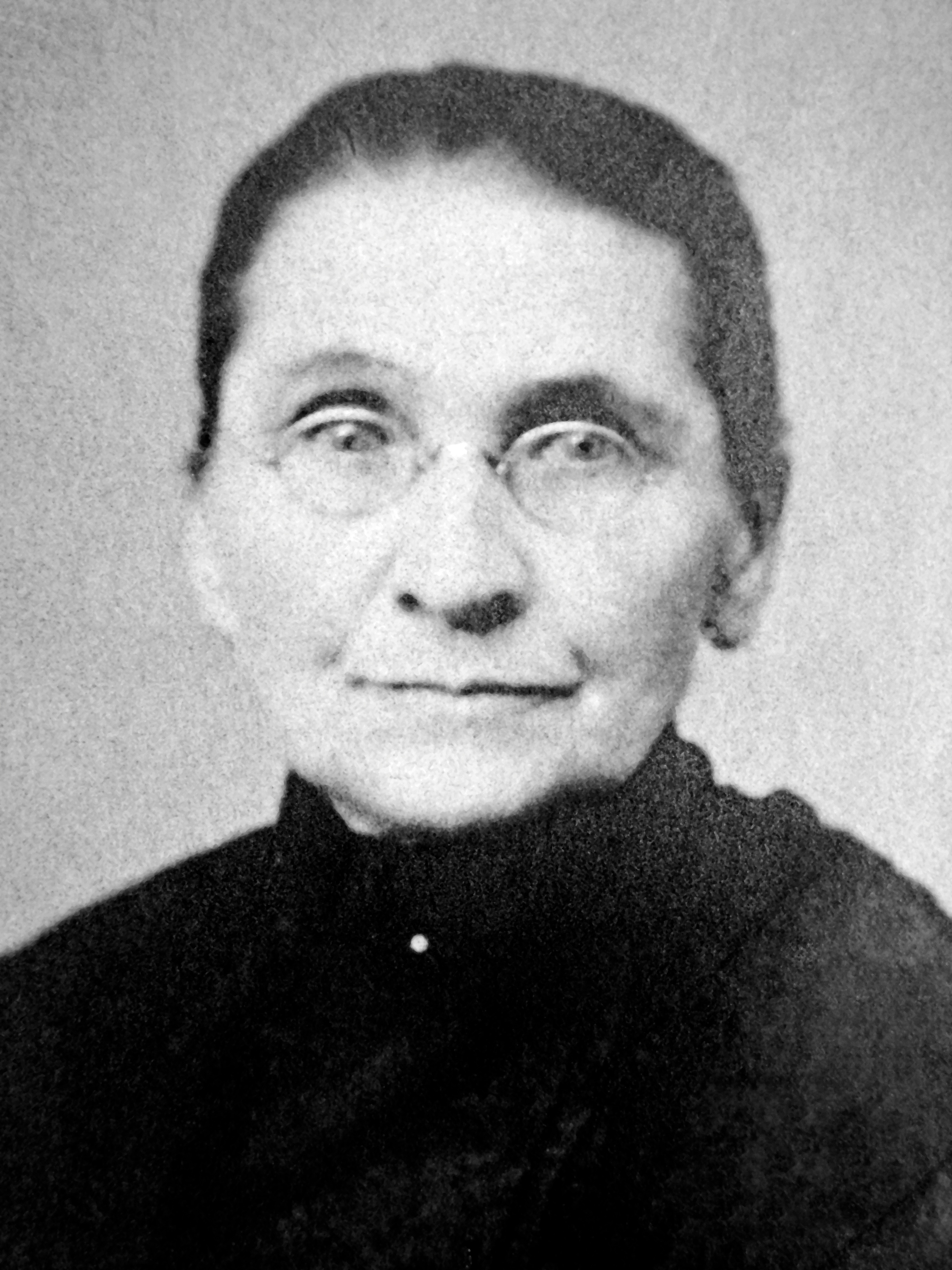
Portrait of Henrietta (Krosch) Treutel (1838-1908). Henrietta Krosch came to America in July 1854 at age 16 from the town of Jessnitz, Saxony, Germany.
Brisk trade winds pushed the ship backward, delaying arrival in New York by a week. About two-thirds of the way across, the Bertha encountered “large quantities” of ice, according to voyage record filed in New York by the ship’s master, named Klamp.
On Thursday, July 20, 1854, the Bertha arrived at the Port of New York after 40 days at sea. The Kroschs then traveled to Chicago, likely by steamboat and railroad. Hotel accommodations in Chicago were scarce, so the family took the only room they could find. But an infestation of bedbugs forced them to flee the hotel for a livery stable, where they spent the night.
From there they likely rode the train to Milwaukee, and then continued on until reaching East Troy in Walworth County, where Karl and William were living. Frederick purchased land in nearby Mukwonago and started a farm. His daughter, Henrietta, met and married a blacksmith named Philipp Treutel. They first established their home in Mukwonago and later moved to North Prairie.
Frederick Krosch is buried in Oak Knoll Cemetery at Mukwonago, Wisconsin.
William Krosch settled near the village of Eagle, and married Christiana Naumann in 1857. “My father’s farm was only 80 acres. It was mostly woodland, so he worked very hard to clear some for farming,” wrote Amelia Krosch Richardson in a 1940 memoir. “There was but my brother Will and myself at that time. We had a sister, Ida, who died when she was four years old of diphtheria and one baby sister that did not live. Both are buried near our home in Wisconsin.” The story of Ida Krosch was chronicled in an earlier article.
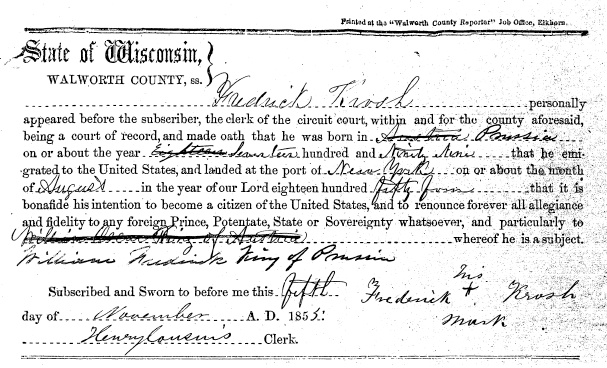
On November 5, 1855, Frederick Krosch (1799-1876) filed his declaration of intent to become a U.S. Citizen.
Eventually, William, Augustus and Gustave Krosch moved west and settled around Blue Earth, Minnesota. After Frederick Krosch died in 1877, his wife Christiana moved to Minnesota, where she died in 1881. Reinhold and Karl stayed on their farms near Lake Beulah in Walworth County, Wisconsin.
FAMILY LINE:John Frederick Krosch >> Henrietta (Krosch) Treutel >> Walter Treutel >> Ruby V. (Treutel) Hanneman >> Donn, David and Lavonne Hanneman.
Sometimes a photograph will strike you in a certain way that makes it memorable. It has some intangible quality that makes it almost timeless. Of the thousands of images in our library, a handful qualify for this kind of distinction. Not for their physical clarity or skill of the photographer, but that certain look. You might describe it just a bit like looking at a Rockwell painting, or a black and white photograph by Ansel Adams.
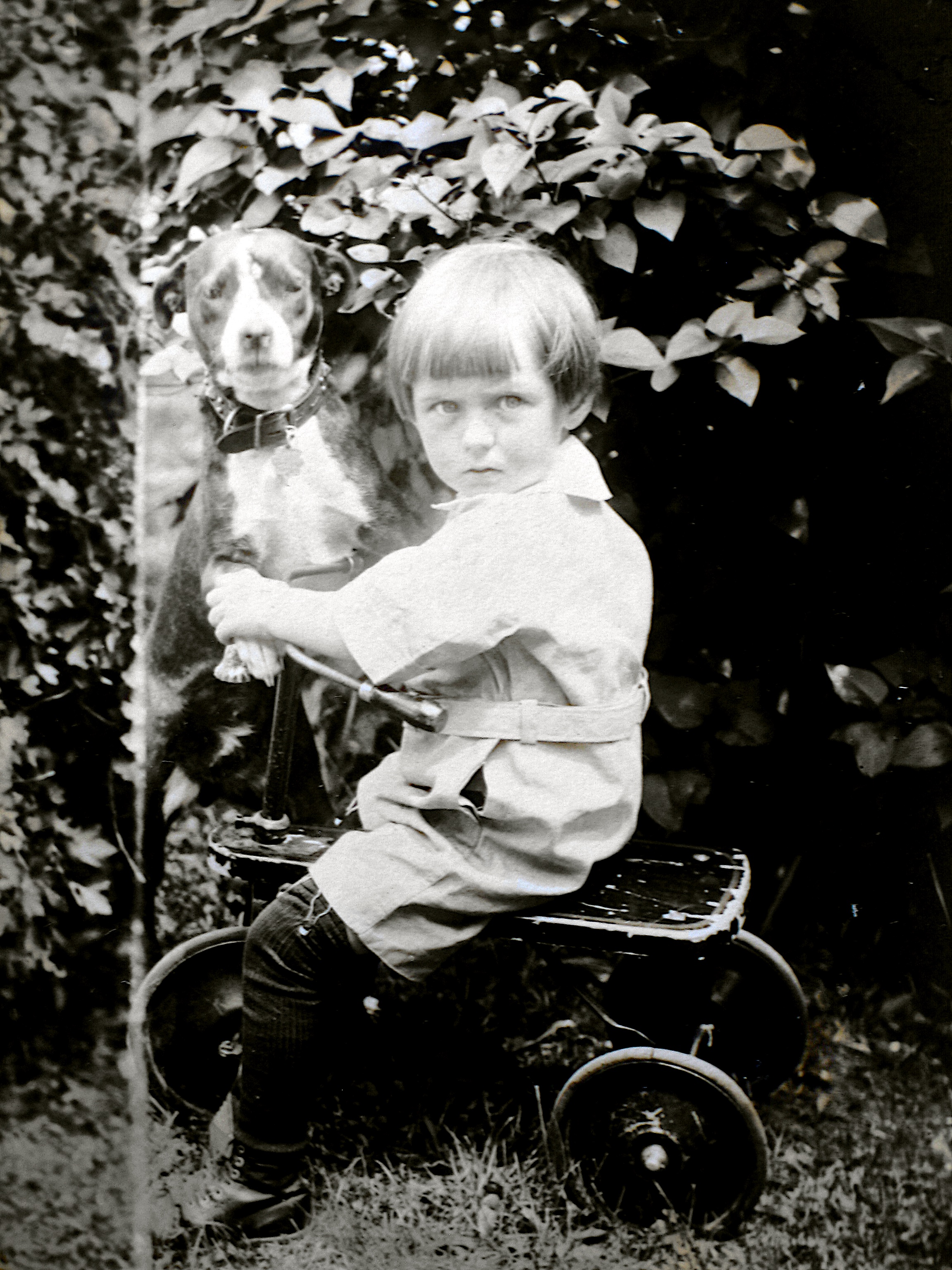
This image has a Little Rascals look and feel to it. Originally thought to be toddler Elaine Treutel and the family dog on her tricycle, circa 1922. Turns out this was actually one of the sons of Harry Cole.
View the whole collection in the gallery below:
Elaine Treutel poses with the family dog in this ca. 1923 photo near Vesper, Wis. Directly behind her is older sister Ruby V. Treutel. Sitting on the bumper of the car is father Walter Treutel (1879-1948). The others are unidentified.
This image has a Little Rascals look and feel to it. Toddler Elaine Treutel and the family dog on her tricycle, circa 1922.
David D. Hanneman with his toe in the sand at Madeline Island, circa 1942.
Ruby V. Treutel (center) relaxes with the Sunday paper near Milwaukee’s Juneau Park in 1924. Ruby was visiting her fiance, Carl F. Hanneman (1901-1982), who was studying pharmacy at Marquette University. At front is Ruby’s sister, Nina H. Treutel (1914-2005). The woman near the car is unidentified.
A formal portrait of Elaine Treutel of Vesper, Wis., circa 1938. Born in January 1920 to Walter and Mary (Ladick) Treutel of Vesper, Elaine attented Lincoln High School in Wisconsin Rapids. She married Max Clark in October 1938. The couple lived for many years in Madison, then relocated to suburban Phoenix, Arizona.
Frank Herman Albert Hanneman (1895-1947) of Grand Rapids, Wis., posed for this studio photo with a shotgun, ammunition belt and even a hunting dog. The photo was taken ca. 1909. Frank was the son of Carl Frederick Christian Hanneman (1866-1932) and Rosine B. H. Ostermann (1874-1918).
Nina Treutel of Vesper, Wis., is about 18 months old in this circa 1916 photograph. Nina’s parents are Walter Treutel and Mary Helen (Ladick) Treutel.
A beautiful portrait of Lavonne Hanneman, circa 1955.
Ruby Treutel poses for an informal photo, circa 1922.
Ruby Treutel with her siblings Marvin, Elaine and Nina, circa 1921.
Carl F. Hanneman’s high school portrait, 1921.
Lavonne and David Hanneman examine a monument on a vacation trip to South Dakota in 1947.
Ruby Treutel holds her baby brother Gordon, circa 1910. Gordon died of pneumonia in February 1911.
Patricia Treutel is having a great time on the tree swing, circa 1943.
We don’t have an ID on this beautiful young lady. Photo appears to be from 1920s.
David D. Hanneman watches over his little sister, Lavonne, circa 1938.
David D. Hanneman and sister Lavonne Marie Hanneman, circa 1942.
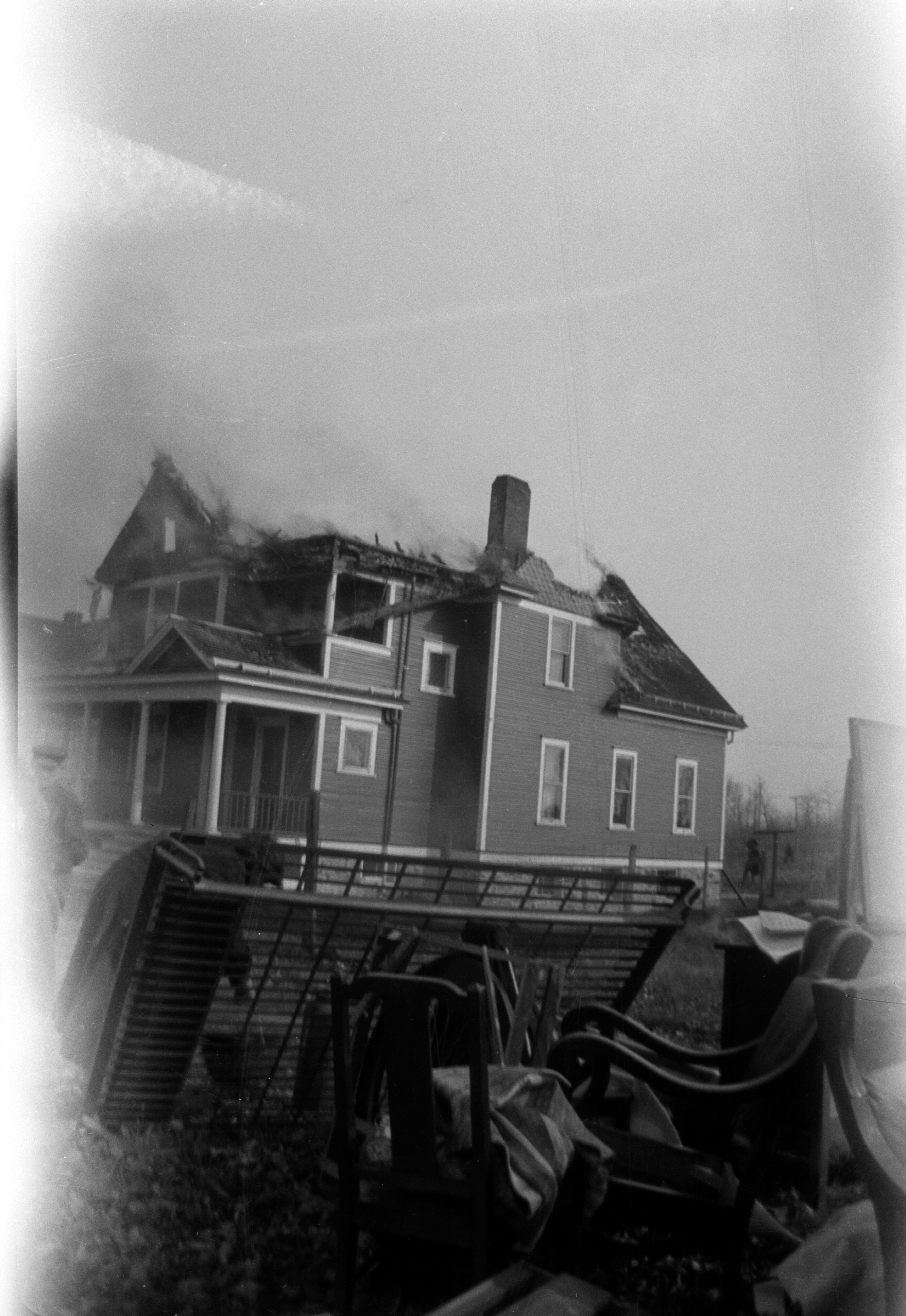
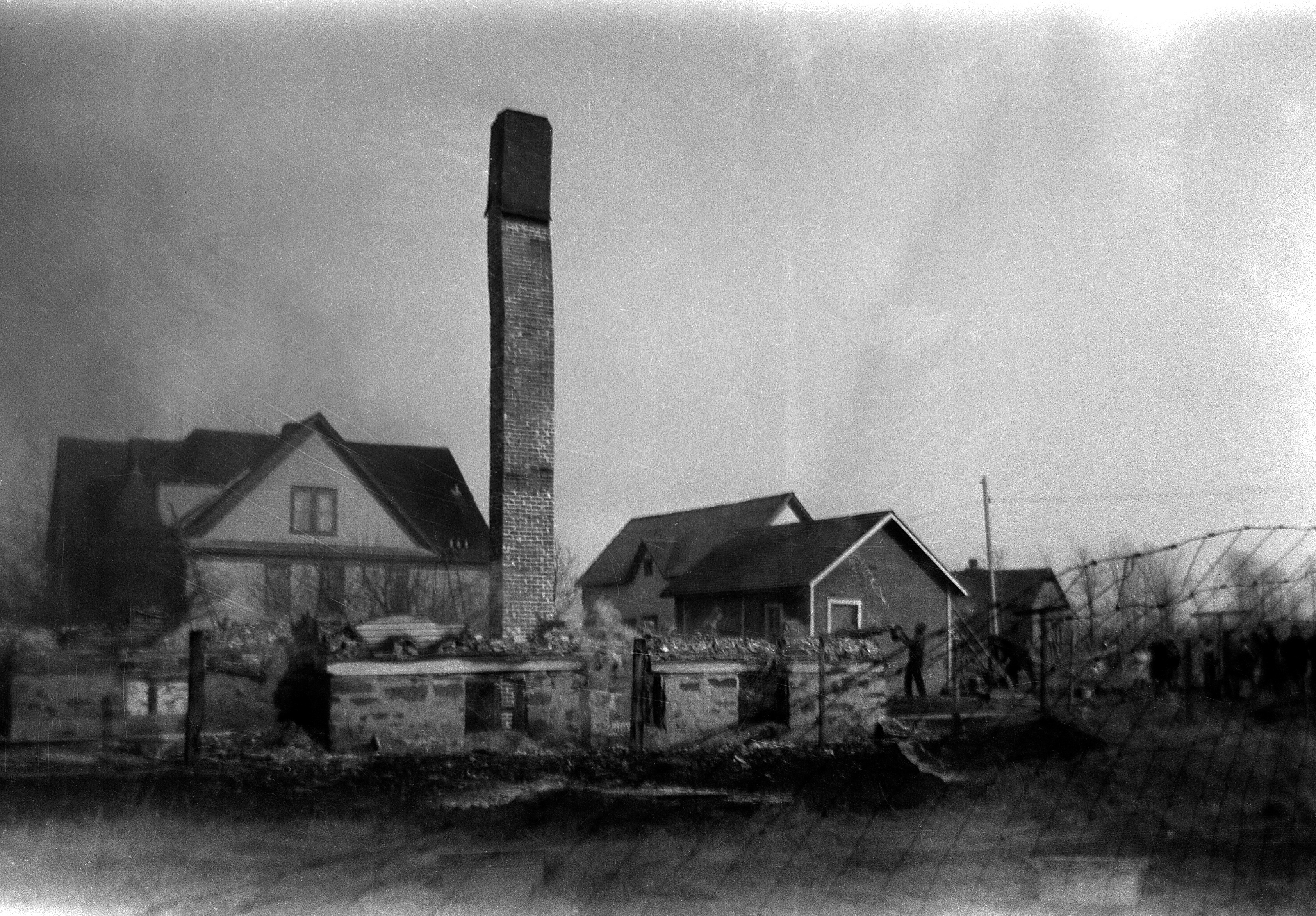
A fire in April 1926 at the parish priest’s residence in Vesper, Wisconsin, spread so fast that the building was reduced to its foundation before firefighters arrived.
Rev. Charles W. Gille
Fire broke out in the rectory of St. James Catholic Church on Monday, April 19, 1926. Calls went to the Wisconsin Rapids fire department, but its firemen were all out battling grass fires. Villagers were on their own.
Belongings from the burning home can be seen in the foreground.
Neighbors rushed into the burning building to pull out as much as possible before the home was lost to the flames. It’s not known if the parish priest, Rev. Charles W. Gille, was at home when the fire broke out. Within a matter of minutes, the home was, as firefighters say, “totally involved.” The buckets of water thrown at it were of no use. By the time firemen from Marshfield arrived, it was too late.
As the fire reduces the home to its foundation, a man is seen tossing water on the roof of a nearby building.
The former residence of the Henry Stahl family on Benson Avenue was purchased by the St. James parish in 1919 to serve as a home for the parish priest. The loss from the fire was estimated at more than $4,000. The photos were taken by Carl F. Hanneman, whose father-in-law, Walter Treutel, lived just down the block from the fire scene.
This double exposure appears to show a man walking through the remains of the fire.






















 The Hanneman Archive