Category Archives: Historic Photos

Remembering the Real Christopher Columbus

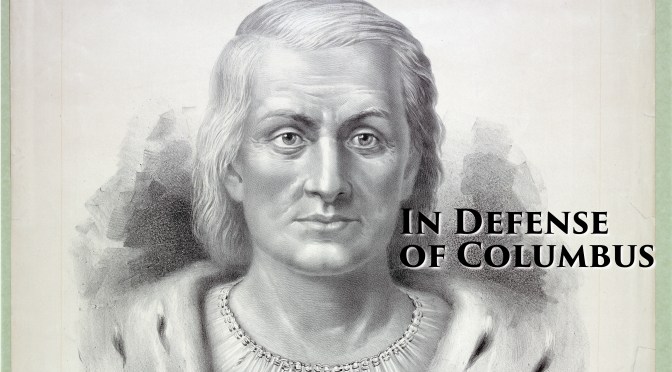
It seems every year the politically correct trot out a growing list of indictments against the great explorer Christopher Columbus. As we observe Columbus Day in the United States this October 12, some will claim Columbus was an oppressor. Others will wrongfully accuse him of racism. To get a real sense of why Columbus is under constant attack, remember that while he was a great explorer, he was first and foremost a faithful Catholic.

Some of the greatest minds in the history of the Church and the have spoken eloquently about the meaning of Columbus and his discovery of the New World in October 1492.

Christopher Columbus was "the destined herald of the true faith," according to Rev. John Hardon S.J.
Christopher Columbus was “the destined herald of the true faith,” according to Columbus scholar Rev. John Hardon S.J.

Father John M. Naughtin, who served as Wisconsin state chaplain of the Knights of Columbus in the opening years of the 20th century, preached an eloquent sermon on Columbus on October 16, 1910 at St. Rose Catholic Church in Racine. Naughtin’s audience at that 8 a.m. Mass was a large gathering of Racine Knights of Columbus and their families. (See below for the full text.)

“The very name Christopher is symbolic of the man’s character and deeds — Christopher mean- ing ‘Christ bearer’ — a messenger of peace,” Naughtin said. “Our great patron was a messenger bringing the knowledge of Christ from the old world to the new. What better name could God have selected for the man who was to do so much good for the universe?”

Pope Leo XIII issued an encyclical, Quarto Abeunte Saeculo, on the 400th anniversary of Landing Day. The Holy Father said this of Columbus: “The greatness of his mind and heart can be compared to but few in the history of humanity.”

The late Father John Hardon, S.J., an expert on Columbus, said the Genoa native  “was the instrument of extraordinary grace.” “It is one thing to say that Columbus discovered America,” Hardon said in 1992 on the 500th anniversary of Columbus’ discovery of the New World. “It is something else to realize that he opened the door to the most phenomenal spread of Christianity since the time of St. Paul.”

Hardon said Columbus’s “phenomenal career on earth was a heroic response to a sublime vocation. He was the destined herald of the true faith to half of the human race.”

Let’s remember this year to celebrate the real Columbus and ignore the nattering of the revisionists.

Homily of Rev. John M. Naughtin, October 16, 1910:

In the annals of history and tradition, no man stands forth more prominently than the man whose deeds we are commemorating today. For although Columbus has been dead about four hundred years, he is just beginning to be appreciated now. Only the infinite knowledge of God himself can grasp the meaning of the work of Columbus.
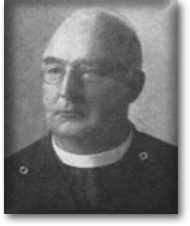
Father John M. Naughtin said Columbus "worked that the whole world might benefit from his deeds."
Father John M. Naughtin (1854-1921) said Columbus “worked that the whole world might benefit from his deeds.”

Think of what this western world has developed into since Columbus’s time — the home of millions and the homes of millions yet to come — all the work of a simple, practical Catholic man, Christopher Columbus, the Genoese. A man who was not understood in his own country; who many times did not have enough to eat. Italy would not have him; it jeered at him and practically turned him out to find in Spain a welcoming hand and the substantial aid that made his great work possible.

America owes a tremendous debt of gratitude to Spain. We are told of the deeds of the Caesars, of Napoleon and of Wellington, but all these figures were simply national — striving for one country, but Columbus is a worldwide character; he worked that the whole world might benefit from his deeds.

The very name Christopher is symbolic of the man’s character and deed: Christopher meaning ‘Christ-bearer’ — a messenger of peace. Our great patron was a messenger bringing the knowledge of Christ from the old world to the new. What better name could God have selected for the man who was to do so much good for the universe? In his youth, Columbus often sat by the seashore and wondered where and whence the great white winged ships came from. No doubt some had been on trips to the Holy Land and the Sepulchre and to follow in their footsteps became his one desire and that one thought dominated his life.
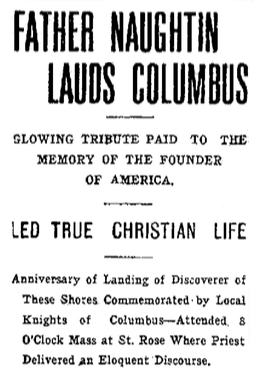
The Racine newspaper carried the account of Father Naughtin's sermon in its Oct. 17, 1910 editions.
The Racine newspaper carried the account of Father Naughtin’s sermon in its Oct. 17, 1910 editions.

Columbus did not belong to the 20th century class of explorers; he did not seek for material gain, but his great Catholic heart was filled with an overwhelming charity and love of God. He founded a home for people from every part of this world’s surface—for all colors, all races and conditions of men. His first act, upon reaching land, true, to his faith, was to fall upon his knees in devotion, dedicating this new world to the Almighty God. He did not crave acres of this new country, but rather that to the souls of these strangers might be brought the knowledge of God. Columbus was great — there have been none greater — but Columbus the Catholic was still greater. It was his faith which gave him the strength and the courage to undergo the trials of his explorations; to undergo, as Christ had undergone, the misrepresentations, the calumnies, the backbiting of his enemies and even to his returning to Spain in shackles after his wonderful trip which resulted in the discovery of a new land.

It is a good thing in this world of ours to have some model. The model we, the Knights of Columbus, have to imitate was, to be sure, a mere man, but great enough and powerful enough to do as God willed. The name Knights of Columbus is very appropriate—the word “knight” typifying everything that is admirable in a man, embracing all the manly qualities and this coupled with the name Columbus, has a wonderful significance.

Even as the attention of the stranger entering New York harbor is arrested by the Statue of Liberty towering for hundreds of feet and standing for the freedom of the new land, so does the greatness of Columbus tower im- measurably above that statue so that the whole world may gaze upon him, and gazing upon him, do him honor.
©2015 The Hanneman Archive

FURTHER READING:

WWII Vet Escorts British Bride and Son to Furnished New Home

The feature story below was written by my grandfather, Carl F. Hanneman, and published in The Wisconsin State Journal on February 21, 1946. It relates the tale of a U.S. army medic, his British bride and baby, who were separated from him for more than six months at the end of World War II. Below the story I provide some more detail on Charles D. Grinolds and his World War II service.

Mauston Vet Escorts British Bride and Son
Into New Home Replete Even to Food on Table

By Carl F. Hanneman
State Journal Correspondent

MAUSTON — Thrilled with a surprise house, new and completely furnished, Mrs. Charles Grinolds, Ashwell, England, has joined her husband here and introduced him to his son, Charles Victor, who was born after his staff sergeant father left England last July.

The Wisconsin State Journal story featured the happily reunited Grinolds family.

When Mrs. Grinolds entered her new home at 4 a.m. Tuesday she found it furnished even to pictures and books, but in the basement were 187 quarts of fruit, 30 quarts of canned chicken, and other canned goods.

On the table in the modernistic kitchen was a large angel food cake with the inscription, “Welcome,” while the percolator was sputtering its tune upon a recently installed new electric range.

It all climaxed a separation which began early last July, when Grinolds left England just before his son was born. The long wait ended happily , too, for Charles Victor, Jr., was no worse off from the long, tedious journey, and laughed and cooed in his father’s arms as father and son inspected the comforts of their five-room bungalow.

The mother, the former Margaret Eley, although totally exhausted, prepared the baby’s formula before tucking him into his new little bed.

Charles, Margaret and baby Charles Victor Grinolds enter their new home at Mauston in 1946.

The couple was married in St. Mary’s church in Ashwell, the first Anglo-American wedding in the community during the war. The father served overseas for 33 months, then had to leave before his son was born.

Mrs. Grinolds left England on the American “Santa Paula,” formerly a hospital ship, and was on the water 11 days, arriving in New York last weekend four days overdue because of storms. She was confined to her quarters by seasickness for three days, but the baby appeared to enjoy the trip.

The sight of land, any land, was a great thrill after the rough voyage during which seas rolled over the decks. Upon leaving the ship in New York, the war brides and babies were taken on a sightseeing tour to acquaint the new Americans with their adopted land.

Grinolds, recently discharged, was waiting anxiously in a Chicago railroad station when his family arrived. His wife, who was not expecting her husband in Chicago and had never seen him in civilian clothes, was following a military police assigned to her and became frightened when her husband came up from behind and took the baby from her arms.

But then she was home. ♦


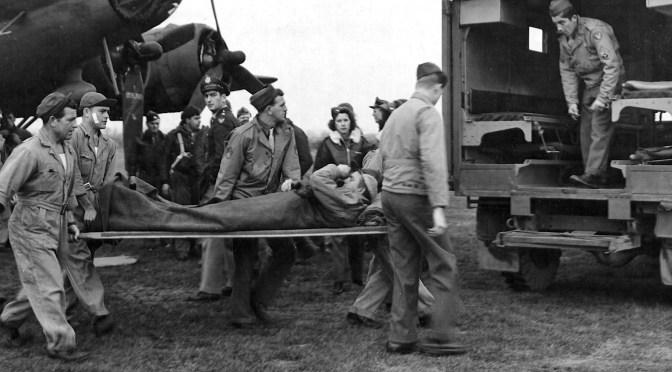
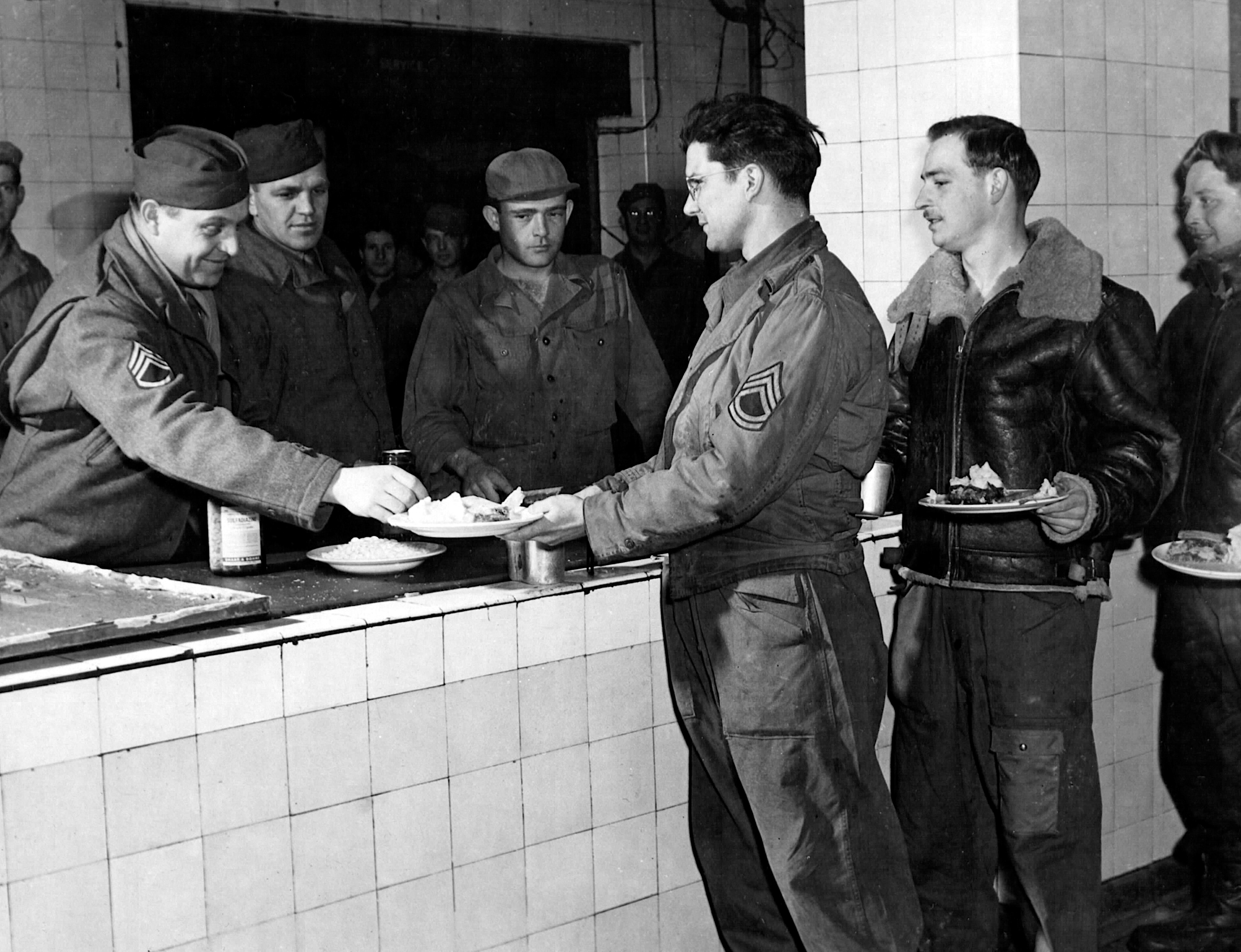
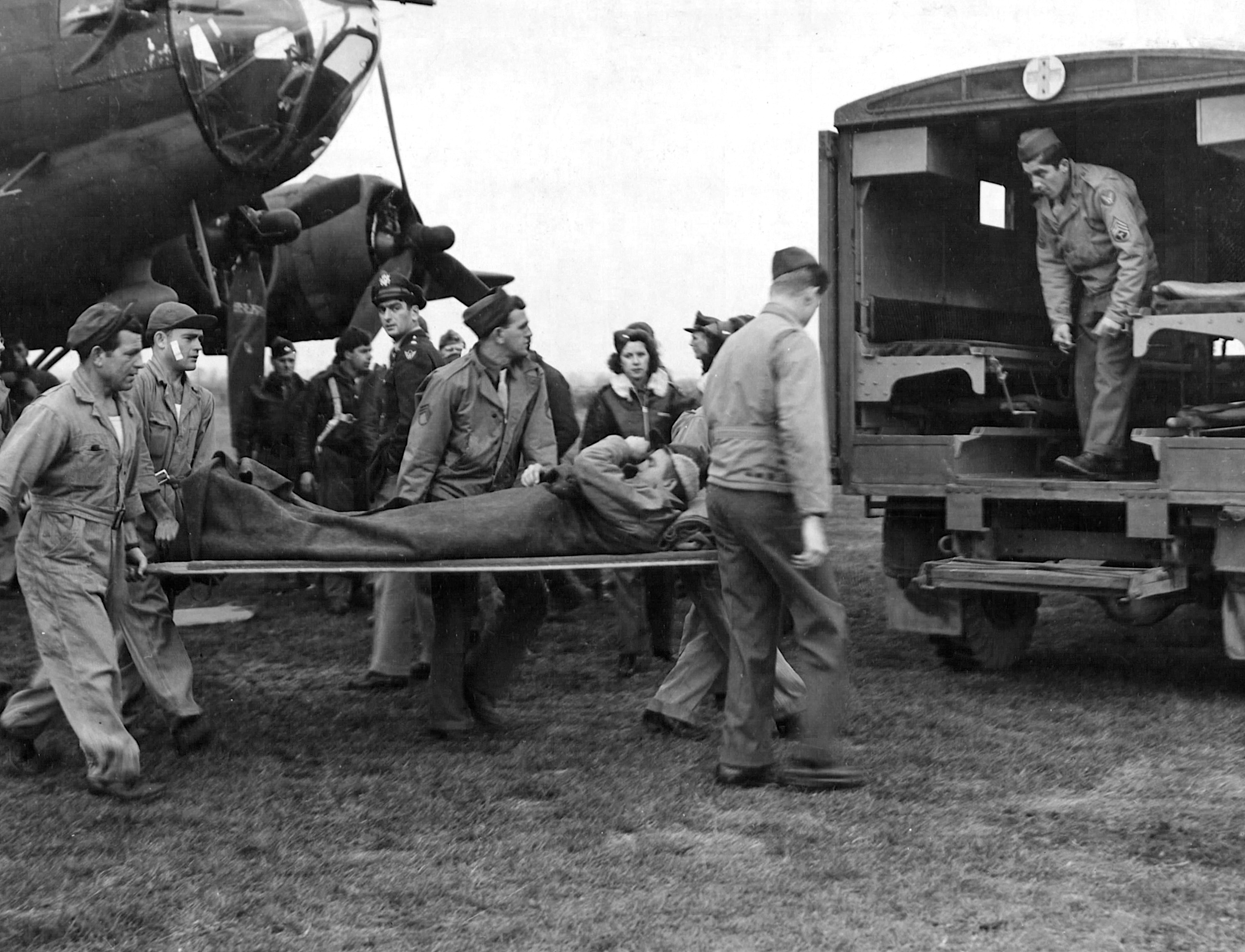
Richard Dockstader Grinolds was drafted into the U.S. Army in February 1942 at Fort Sheridan, Illinois. He became a staff sergeant in the Army Air Force and was stationed in England with the 324th Bomb Squadron, 91st Bomb Group. His specialty was medical technician. He was featured several times in U.S. Army news photos; twice carrying wounded and once for a feature on a rash of illnesses among troops in England. The 91st Bomb Group was home to the famous “Memphis Belle” B17 Flying Fortress.

Staff Sgt. Charles D. Grinolds of Mauston (second in line) waits to be administered a sulfa pill, part of a U.S. Army Air Force effort to reduce illness at the 91st Bomb Group in England during World War II.
Staff Sgt. Charles D. Grinolds of Mauston (second in line) waits to be administered a sulfa pill, part of a U.S. Army Air Force effort to reduce illness at the 91st Bomb Group in England during World War II. (U.S. Army photo)

Grinolds lost his father, McClellan Grinolds, in 1918, when the boy was just 4. He and his brother were raised by their mother, the former Ruby Elizabeth Dockstader. The Grinolds and Dockstaders were both pioneer Juneau County families. The Hanneman family lived just around the corner from Dockstader Street, named for pioneer Benjamin Dockstader.

Staff Sgt. Charles D. Grinolds (far right) helps carry Staff Sgt. Marion M. Walshe to an ambulance after the bombardier was injured on a mission over Europe.

The baby featured in the story above, Charles Victor Grinolds, was born in England on July 29, 1945, as his father was headed back to the United States. He was one of four children born to the couple. Sadly, Charles D. Grinolds died on July 30, 1950. He was just 36. He is buried at Oakwood Cemetery in Mauston. The firstborn son grew up to have a distinguished military career, serving in the U.S. Air Force in Vietnam, the Persian Gulf War and the Iraq War. He died on June 10, 2006 in Modesto, California. He was the father of six children.

©2015 The Hanneman Archive

Ruby V. Hanneman was a Real Fashion Icon

From very little on, my grandmother, Ruby Viola Hanneman, had a beauty that radiated in the many photographs taken of her. Her grandchildren no doubt recall the housecoat-type of outfits she often wore around the house. But make no mistake, Ruby was a fashion icon in her day. Our photo gallery bears ample testimony. Ruby in Color

My grandparents were anything but wealthy. They worked hard to provide a middle-class home to their three children, Donn, David (my Dad) and Lavonne. Grandpa Carl F. Hanneman was a pharmacist at the Hess clinic and hospital. As we detailed in another post, he wrote to the attorney general of Wisconsin for help in upgrading his pharmacist license so he could better care for his family.

Regardless of the family’s financial circumstances, the Hanneman children were always dressed in nice clothing. Carl had nice suits for work and Sunday Mass. If you met Ruby at a family event, you might think she descended from royalty. Actually, there was a longstanding family yarn that said the Treutel family from which Ruby came was from a royal line in Europe. I’m still researching that one. Nevertheless, Ruby was always sharply dressed. The main photo above shows her in a Life Magazine pose during a 1950s trip out West. Classic stuff.

Far be it for me to offer detailed commentary on women’s fashion, but I am struck by Ruby’s fashion sense as shown in the photo gallery below. Dresses, hats, gloves, shoes and coats, nicely coordinated. This was evident at different events, from weddings to the common Sunday visit to family and extended family in the Wisconsin Rapids area. So many decades later, these photos are a real treat, although also reminders of the hole in our lives left by the absence of loved ones like Dad (1933-2007) and Grandma Ruby (1904-1977).

Ruby E. Hanneman has her great-grandmother's keen sense of fashion.
Ruby E. Hanneman has her great-grandmother’s keen sense of fashion.

I am quite tickled that my youngest daughter, not coincidentally named Ruby, is also very interested in fashion and interior decorating, just like her great grandma. I marvel at her discussions of colors, styles and fabrics — things I know little about. One thing is for sure: Ruby V. Hanneman is no doubt pleased to look down and see Ruby E. Hanneman, a young lady after her own heart.

©2015 The Hanneman Archive


Eye on the Past: Rudolph Grotto Shrine 1958

As many times as I’ve traveled to central Wisconsin, I was not aware of a beautiful, sprawling religious shrine built by a Catholic priest in thanksgiving for having his health restored after a visit to Lourdes, France in the early 1900s. The Rudolph Grotto Gardens near Wisconsin Rapids were the dream fulfilled of Father Philip Wagner, who developed and dedicated the site to the Blessed Virgin Mary in 1927.

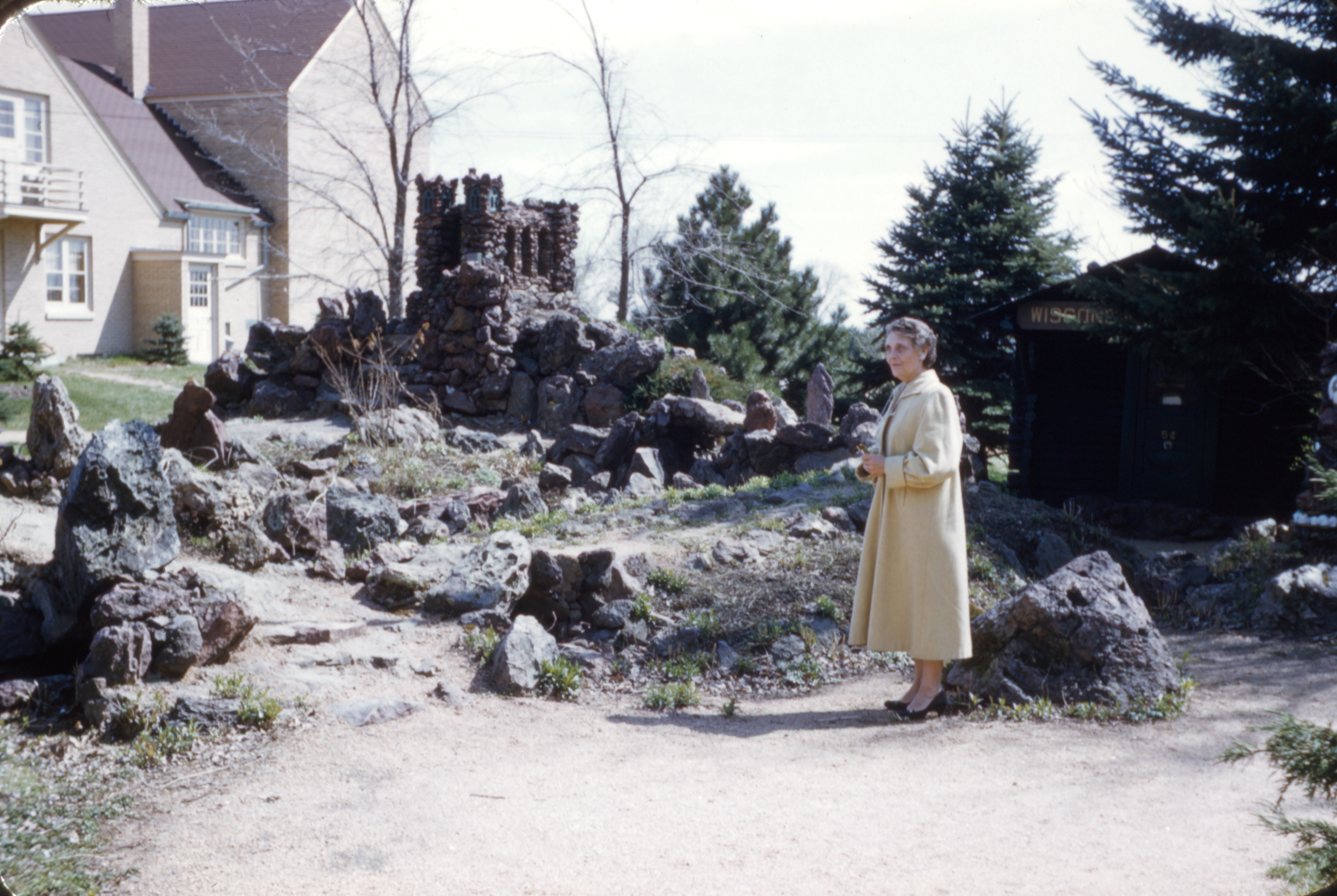
I learned of Rudolph Grotto Gardens while researching a photo of my grandmother, Ruby V. Hanneman, standing near a statue of St. Philomena in 1958 or 1959. St. Philomena, who was martyred at age 13, is known as the Patroness of the Living Rosary. Her shrine at Rudolph Grotto Gardens was built in 1957 by Edmund Rybicki, Father Wagner’s right-hand man.

The first grotto shrine at the Rudolph site, dedicated to the Our Lady of Lourdes, was completed in 1928. When a young and sick Philip Wagner visited the famous shrine at Lourdes, he promised the Blessed Virgin Mary that if he were healed of his illnesses so he could become a priest, he would build a shrine to her in America. And so he was healed, and was ordained a priest in 1915. He was assigned to St. Philomena Catholic Church in Rudolph in 1917.

Ruby V. Hanneman stands at the St. Philomena shrine in Rudolph in the late 1950s.

Over the years, the site expanded to include the Stations of the Cross, the Ten Commandments, a Last Supper Shrine, A “Wonder Cave” modeled after the catacombs, a Shrine of the Resurrection, a soldier’s monument and more.

Father Wagner and Rybicki labored on the site for decades. After Father Wagner died in 1959, Rybicki became the site caretaker. In 1961, St. Philomena Church was rededicated and renamed St. Philip the Apostle in honor of Father Philip Wagner. The last project at the grotto gardens was finished in 1983. Read more about the site here.

Lavonne Hanneman stands near an arch at the Rudolph Grotto Gardens in 1958 or 1959.
Ruby V. Hanneman at Rudolph Grotto Gardens in 1958 or 1959.


Eye on the Past: Wash Tub Baby 1933

This photograph has perplexed me for years. A baby in a diaper, lying on a pillow inside a steel wash tub. I strongly suspect this is my father, David D. Hanneman (1933-2007). The image raises many questions but provides no answers.

A strange place for a nap, circa 1933.
A strange place for a nap. This might be David D. Hanneman in the summer of 1933.

Why stick a baby in a wash tub? Was this the poor family’s playpen? The Depression-era bassinette? A brutal pre-Dr. Spock time-out? Freshly picked from the vine? In this day and age, such a photo might get you a visit from Child Services. I’m guessing my Grandma Ruby (Treutel) Hanneman (1904-1977) just thought it made a cute photo. She was known to dote on her “little Davey.”

If this was Dad in the tub, the photo was likely taken in Wisconsin Rapids, Wisconsin, where he was born in March 1933. The family did not move to Mauston until early 1936. Usually I can confirm my Dad’s ID in photos by the ears, but they are not visible in this image.

My memories of such a steel container at the house in Mauston had nothing to do with babies. I recall bluegill, sunfish and bass in such a tub, waiting for Grandpa Carl’s skilled fillet knife. Or the tub filled with ice and bottles of orange and grape soda (known as “pop” by some of you). But no babies.

This one is destined to remain a mystery. I’m sure it would tickle my grandma to know it was a conversation piece some 80 years later, and that no one called Child Services.

©2015 The Hanneman Archive

Eye on the Past: Walter Treutel Family 1918

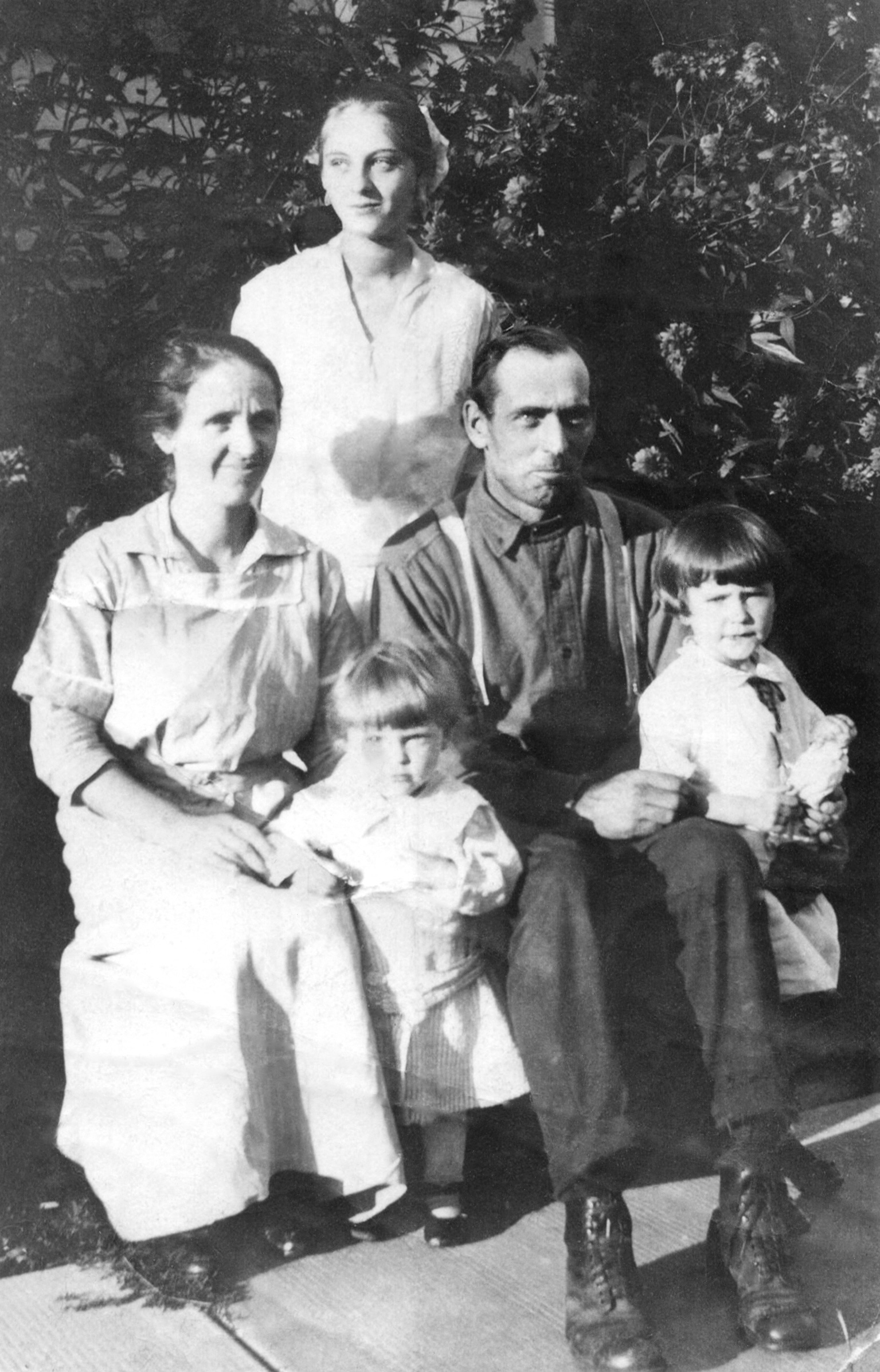
A simple family snapshot taken around 1918 is the only photograph we have showing Walter Treutel and his wife Mary (Ladick) Treutel together. Taken at the Treutel home in the village of Vesper, Wisconsin, the photo shows a teenaged Ruby along with younger siblings Marvin, 2, and Nina, 4. Elaine Treutel would come along in 1920. Baby Gordon Treutel died in 1910.

Walter was a rural route postal carrier for the U.S. Postal Service, while Mary tended to the family home on Anderton Avenue. The couple were married on December 29, 1902 in Vesper. Walter had recently relocated to Vesper from North Prairie in Waukesha County. Our Grandma Ruby Viola (Treutel) Hanneman was their first child, born June 22, 1904. Ruby was born at 1 p.m., delivered by Dr. F.A. Goedecke.

We learned recently that Mary’s nickname was Molly. That factoid came from none other than cousin Mary “Mollisu” Clark, the daughter of Elaine (Treutel) Clark and Max Clark.

Mrs. Treutel died at just 42 years old in January 1925. She had an operation in nearby Marshfield, but a post-operative infection claimed her life on January 31. She did not live to see her daughter Ruby get married that summer, and she did not get to see her other three children grow into adulthood.

The uncropped version of the photo shows Ruby V. Treutel standing at rear. Mary and Walter Treutel are seated. In front are Marvin and Nina Treutel.

Catholic Faithful Plant the Cross on Wisconsin Ground in 1863

In every community you will find inspiring stories of courage, faith and perseverance. And so it was the case when I researched the 1863 founding of my hometown parish, Sacred Hearts of Jesus and Mary Catholic Church in Sun Prairie, Wisconsin. The project lasted several months, and turned up many fascinating stories from the mission-territory days of Wisconsin in the mid-1800s.

Stained-glass depiction of St. Paul, from Sacred Hearts of Jesus and Mary Catholic Church.

Full confession (pun intended): I served as an altar boy for years at Sacred Hearts in the 1970s, and graduated in spring 1978 from the fine Sacred Hearts School. The current church, the third edifice in parish history, has some of the most stunning stained-glass windows you will find outside of a cathedral. That’s what initially drew me to the history of Sacred Hearts.

So what did I learn?

  • The church was founded during the second expansion of Catholicism in Wisconsin (the first being black-robed Jesuit missionaries who explored the territory in the 1600s). Much of the area at the time was untamed wilderness, now being colonized by immigrants from Ireland, Germany and other parts of Europe.

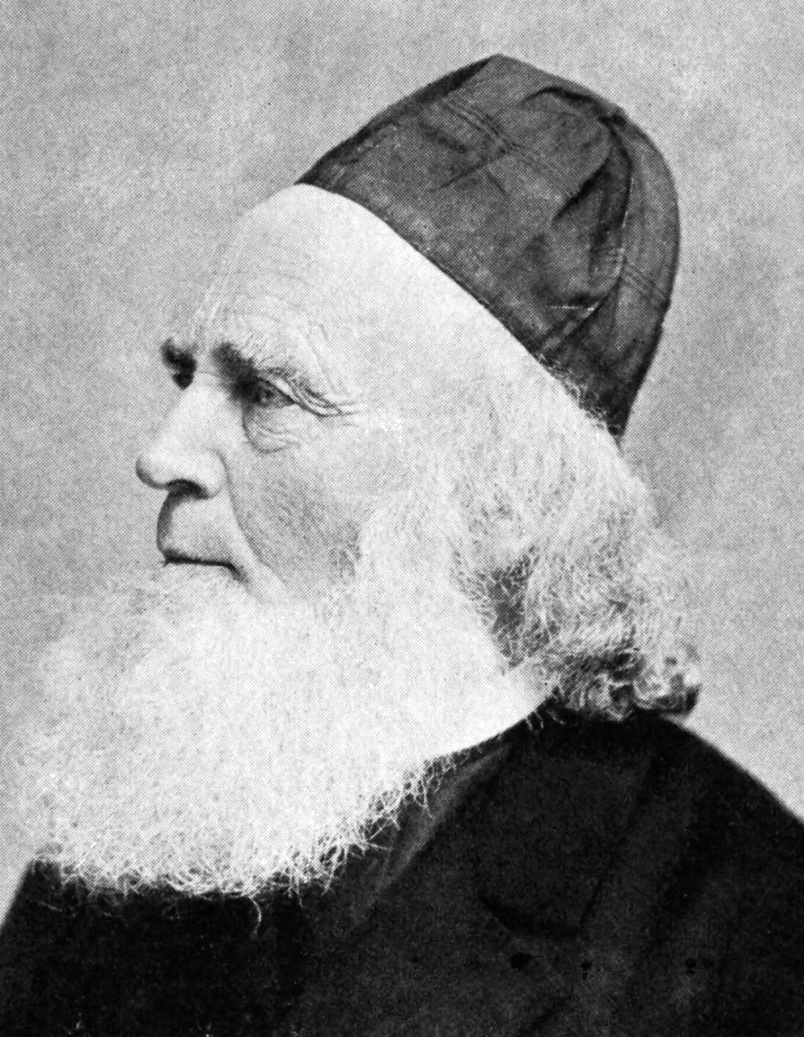
    Rev. Francis Xavier Etschmann said the first Mass in Sun Prairie at the home of James Broderick.
    Rev. Francis Xavier Etschmann said the first Mass in Sun Prairie at the home of James Broderick.
  • The early missionary priests rode circuits hundreds of miles long, often saying Mass in private homes or rustic buildings with no roof. Father Martin Kundig, an indefatigable traveler and founder of many Catholic parishes in Michigan and Wisconsin, had an uplifting experience in 1843. The faithful gathered in a private home for Mass overloaded the floor, and everyone except Father Kundig crashed into the cellar. The people reached up and supported the priest, standing on a narrow plank, so he could finish saying Mass.
  • These pioneers led often difficult lives. The John Sprengel family lost three children to diphtheria within one week in 1882. Emerand Aschenbrucker lost his first wife during the birth of their daughter, Anna, in February 1867. Nicholas Mosel lost his wife to typhoid fever at age 54. The church brought comfort to these grieving families, offering the sacraments and a reverent burial for the departed.

    Founding Sacred Hearts parishioners Mary and Michael Conley.
    Founding Sacred Hearts parishioners Mary and Michael Conley.
  • The Civil War affected every aspect of life during Sacred Hearts’ early years. Two young parishioners died during their wartime service, including one who was wounded in the 1862 Battle of Shiloh and died in a Confederate prison camp. Another died on a furlough in 1864. He was just 15. A third was wounded in the Siege of Petersburg, Virginia, in June 1864.
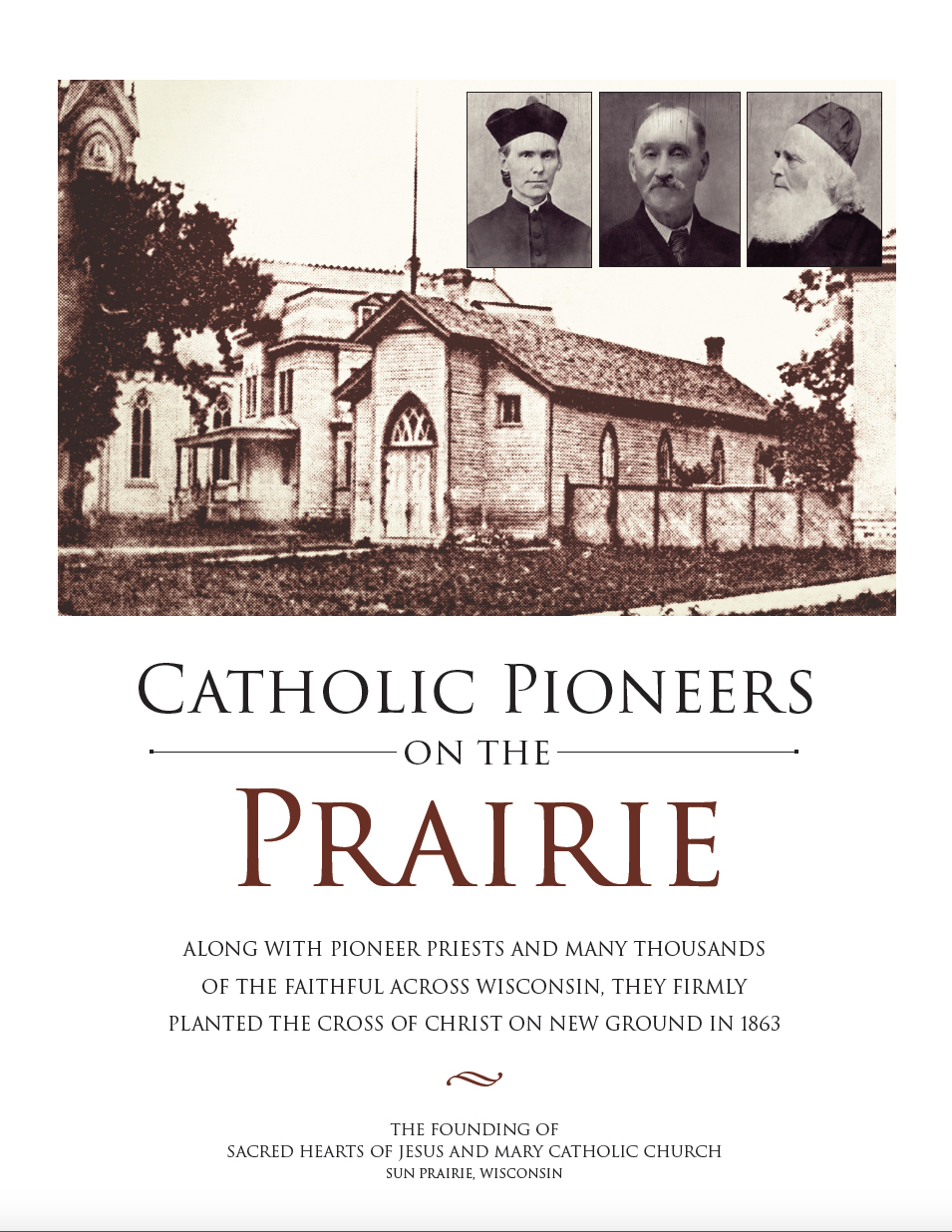
The 28-page e-book can be found at catholicpioneers.com.
The 28-page e-book can be found at http://www.catholicpioneers.com.

When you set out to research a topic, you never know just what you will find. I found a very fascinating story in the “Catholic Pioneers on the Prairie,” which is what I titled the 28-page e-book that grew out of my research. I invite you to read the whole thing at Catholic Pioneers. View it online or download the e-book as a PDF file.

©2015 The Hanneman Archive

Eye on the Past: Cool Threads at the Ortman Hotel

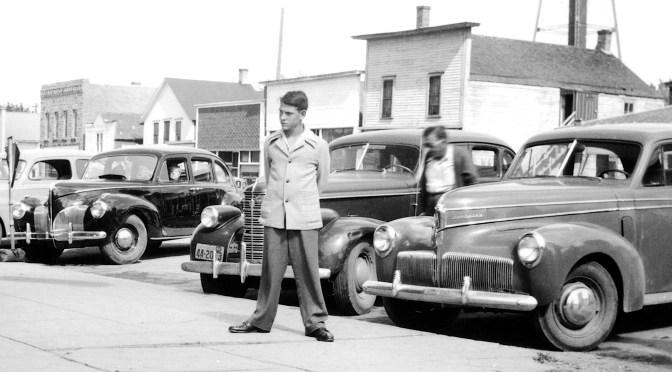
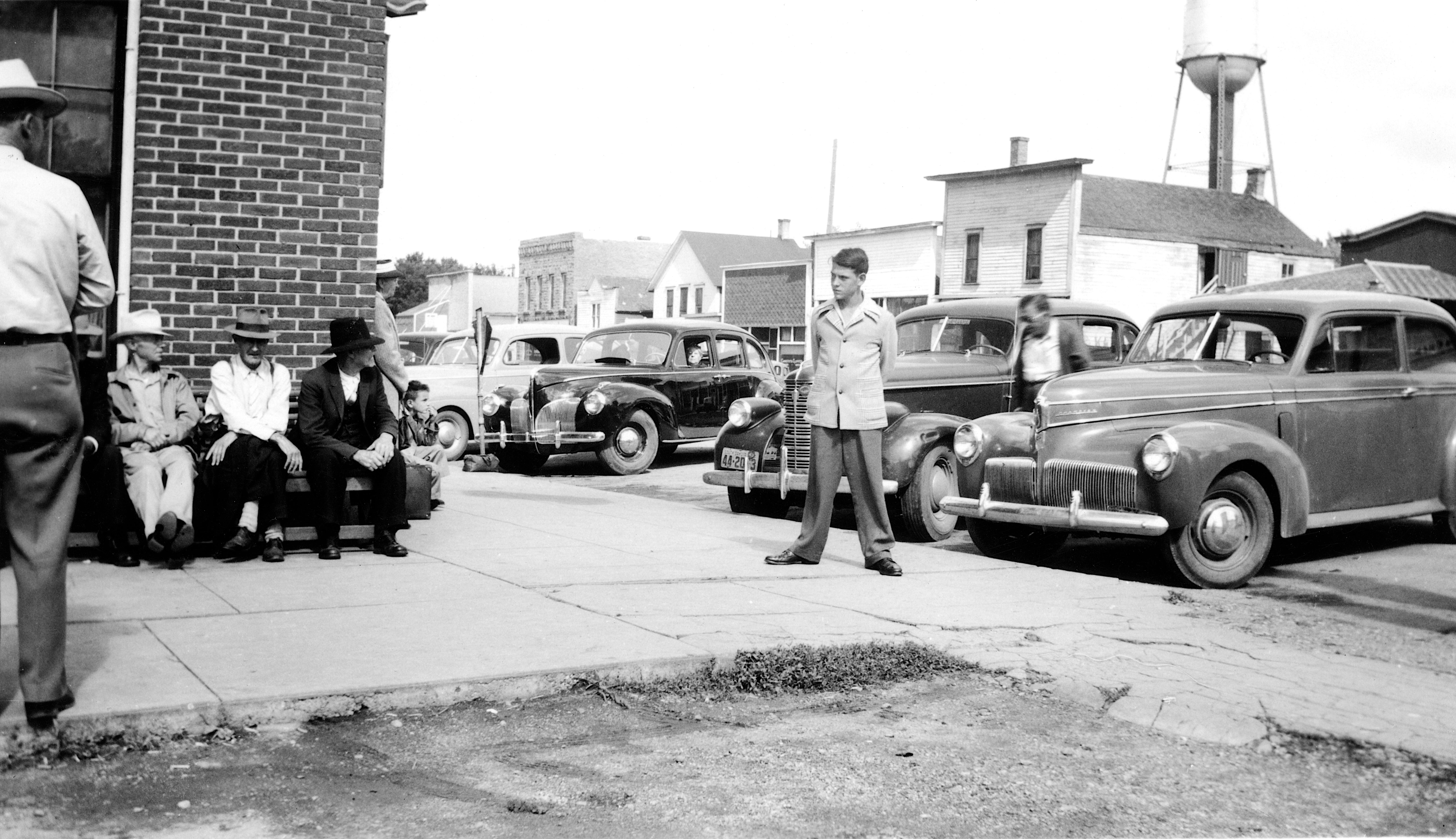
One thing I’ve always noted is how well-dressed my father is in photos from his youth. Among my favorites are these photos shot outside the Ortman Hotel in Canistota, South Dakota. The Hanneman family vacationed in the Dakotas several times. Another visit was detailed in this post about cowboy Hiram Greene.

The uncropped version of the main photo shows David D. Hanneman in front of the Ortman Hotel in Canistota, South Dakota.

These photos are likely from 1946 or 1947. The Ortman Hotel is right next to the famous Ortman chiropractic clinic. The hotel is still there today. The interior has been remodeled, but the exterior looks remarkably the same.

David D. Hanneman leans on the family car in front of the Ortman Hotel.

Eye on the Past: Foresters Drill Team

Eight uniformed, ax-wielding men and their sword-bearing commander grace this photograph from Vesper, Wisconsin, circa 1910. The men were Foresters, a ceremonial drill team from a fraternal group called the Modern Woodmen of America. The Woodmen organization dates to the 1880s. It was formed to provide financial relief when the family breadwinner died. Drill teams would participate in parades and at other public functions to promote the group and show patriotism.

At farthest left in the photo is Walter Treutel (1879-1948), father of our Ruby (Treutel) Hanneman (1904-1977). The fourth man from the left is Orville Carlin (1874-1934), Ruby’s uncle. Walter was the longtime rural-route postal carrier in Vesper. Orville operated a butcher shop and meat market at Vesper before moving his business to nearby Arpin. He was the husband of Walter’s sister, Emma (Treutel) Carlin (1877-1962).

©2015 The Hanneman Archive

Eye on the Past: Frank Hanneman, Frontier Hunter

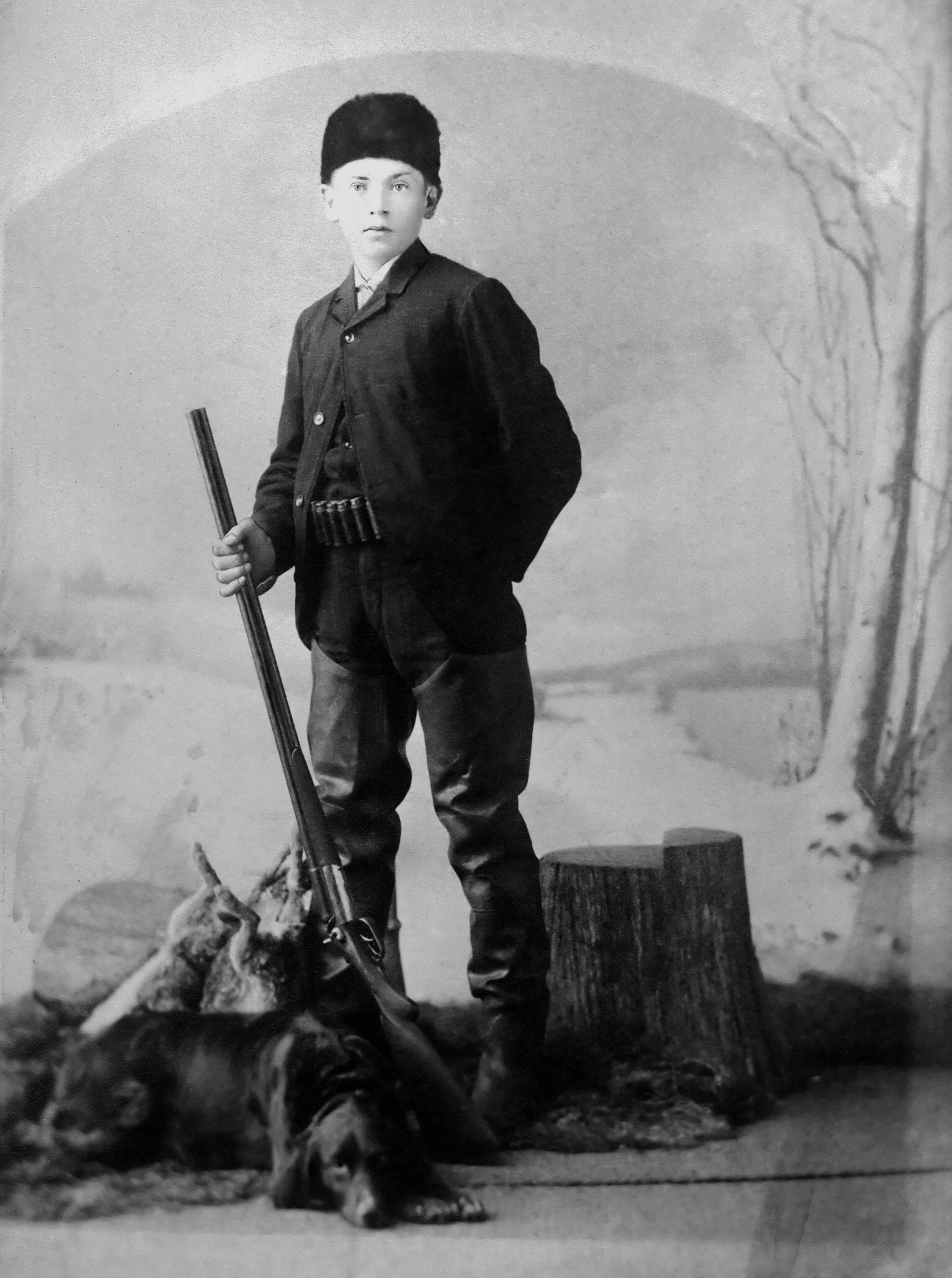
The more than century-old photo shows a stoic, proud young man wearing an ammunition belt and holding a shotgun in his right hand. At his feet lays a loyal hunting dog, seemingly tired from a day in the field. The young man is identified in the corner of the photo as Frank Hanneman, age 14. That dates the photo to 1909 or 1910.

The paper-mounted and framed portait, in nearly perfect condition, survived all of these years in the possession of Carl F. Hanneman, Frank’s brother, and later in the collection of David D. Hanneman, Carl’s son. It is one of the oldest existing photos of a Hanneman from Wood County, Wisconsin.

Frank Hanneman, 14, posed for this photo around 1910.

What do we know about this young hunter? Frank Herman Albert Hanneman was born July 7, 1895 near Grand Rapids, Wisconsin, the son of Charles and Rosine Hanneman. In his early years the family lived and worked on the farm of his uncle, William Hanneman, in the Town of Grand Rapids in Wood County. The 1900 U.S. Census lists Charles Hanneman, 33, as a farm laborer on the farm of William Hanneman. By 1905 the Charles Hanneman family moved to Baker Street in Wisconsin Rapids when Charles got work at the Consolidated Water Power & Paper Co.

The Hanneman boys enjoyed the great outdoors of central Wisconsin. We might assume by the photo, Frank enjoyed hunting birds. We have plenty of photos of a young Carl Hanneman fishing. On June 11, 1916, Frank married Irma Wilhelmine Louise Staffeld, and the couple took up residence on Baker Street in Wisconsin Rapids – a block away from his parents. The couple had five children between 1916 and 1929: Dorothy, Marjorie, Robert, Elizabeth and Joyce. Like his father, Frank had a long career working at Consolidated Water Power & Paper Co.

On July 14, 1947, Frank suffered a heart attack at home, and died shortly after arriving at Riverview Hospital. He was 52. His brother, Carl, was vacationing with his family in North Dakota, but returned for the funeral before rejoining the family vacation.

©2015 The Hanneman Archive