All posts by Joe Hanneman

Investigative reporter, Blaze Media LLC. Father of 3. Tradition-minded Catholic. “Unless there is a Good Friday in your life, there can never be an Easter Sunday.” —Archbishop Fulton J. Sheen

Catholic Faithful Plant the Cross on Wisconsin Ground in 1863

In every community you will find inspiring stories of courage, faith and perseverance. And so it was the case when I researched the 1863 founding of my hometown parish, Sacred Hearts of Jesus and Mary Catholic Church in Sun Prairie, Wisconsin. The project lasted several months, and turned up many fascinating stories from the mission-territory days of Wisconsin in the mid-1800s.

Stained-glass depiction of St. Paul, from Sacred Hearts of Jesus and Mary Catholic Church.

Full confession (pun intended): I served as an altar boy for years at Sacred Hearts in the 1970s, and graduated in spring 1978 from the fine Sacred Hearts School. The current church, the third edifice in parish history, has some of the most stunning stained-glass windows you will find outside of a cathedral. That’s what initially drew me to the history of Sacred Hearts.

So what did I learn?

  • The church was founded during the second expansion of Catholicism in Wisconsin (the first being black-robed Jesuit missionaries who explored the territory in the 1600s). Much of the area at the time was untamed wilderness, now being colonized by immigrants from Ireland, Germany and other parts of Europe.
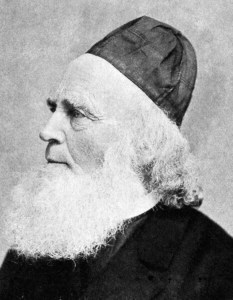
    Rev. Francis Xavier Etschmann said the first Mass in Sun Prairie at the home of James Broderick.
    Rev. Francis Xavier Etschmann said the first Mass in Sun Prairie at the home of James Broderick.
  • The early missionary priests rode circuits hundreds of miles long, often saying Mass in private homes or rustic buildings with no roof. Father Martin Kundig, an indefatigable traveler and founder of many Catholic parishes in Michigan and Wisconsin, had an uplifting experience in 1843. The faithful gathered in a private home for Mass overloaded the floor, and everyone except Father Kundig crashed into the cellar. The people reached up and supported the priest, standing on a narrow plank, so he could finish saying Mass.
  • These pioneers led often difficult lives. The John Sprengel family lost three children to diphtheria within one week in 1882. Emerand Aschenbrucker lost his first wife during the birth of their daughter, Anna, in February 1867. Nicholas Mosel lost his wife to typhoid fever at age 54. The church brought comfort to these grieving families, offering the sacraments and a reverent burial for the departed.

    Founding Sacred Hearts parishioners Mary and Michael Conley.
    Founding Sacred Hearts parishioners Mary and Michael Conley.
  • The Civil War affected every aspect of life during Sacred Hearts’ early years. Two young parishioners died during their wartime service, including one who was wounded in the 1862 Battle of Shiloh and died in a Confederate prison camp. Another died on a furlough in 1864. He was just 15. A third was wounded in the Siege of Petersburg, Virginia, in June 1864.
The 28-page e-book can be found at catholicpioneers.com.
The 28-page e-book can be found at http://www.catholicpioneers.com.

When you set out to research a topic, you never know just what you will find. I found a very fascinating story in the “Catholic Pioneers on the Prairie,” which is what I titled the 28-page e-book that grew out of my research. I invite you to read the whole thing at Catholic Pioneers. View it online or download the e-book as a PDF file.

©2015 The Hanneman Archive
Eye on the Past: Cool Threads at the Ortman Hotel

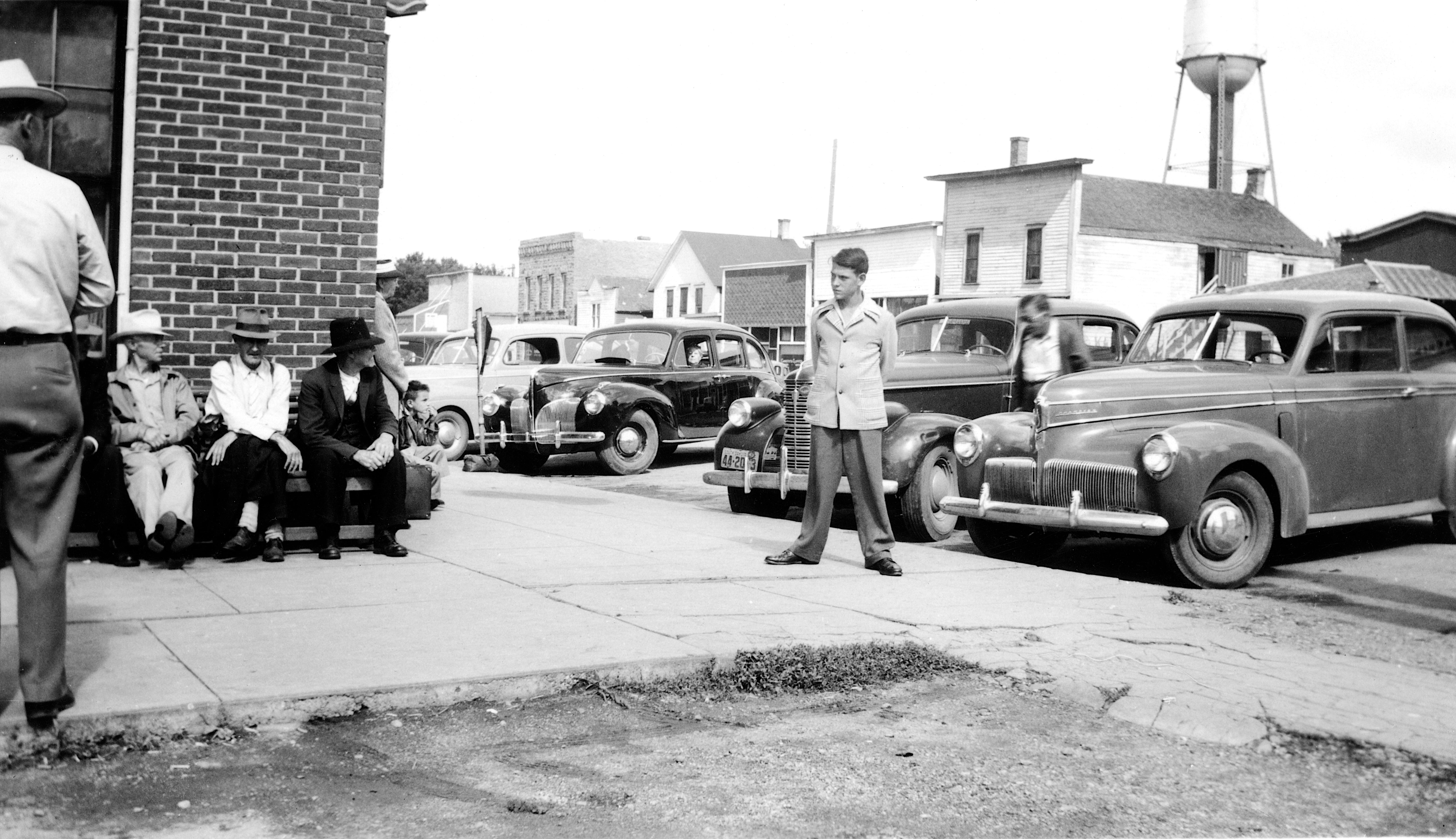
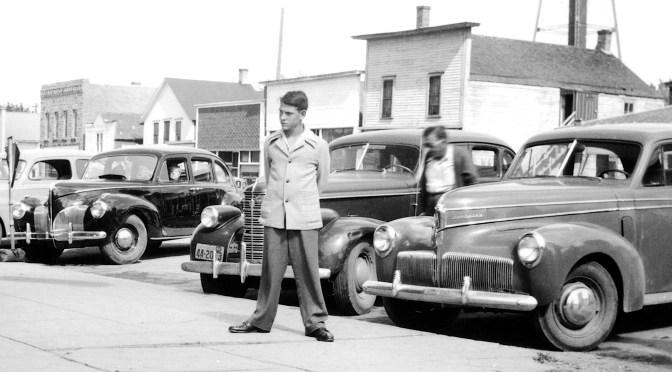
One thing I’ve always noted is how well-dressed my father is in photos from his youth. Among my favorites are these photos shot outside the Ortman Hotel in Canistota, South Dakota. The Hanneman family vacationed in the Dakotas several times. Another visit was detailed in this post about cowboy Hiram Greene.

The uncropped version of the main photo shows David D. Hanneman in front of the Ortman Hotel in Canistota, South Dakota.

These photos are likely from 1946 or 1947. The Ortman Hotel is right next to the famous Ortman chiropractic clinic. The hotel is still there today. The interior has been remodeled, but the exterior looks remarkably the same.

David D. Hanneman leans on the family car in front of the Ortman Hotel.

Hospital Chart Documents 1939 Pneumonia Scare

It might seem a very odd thing to save, the pages of a hospital chart from 1939. But I suspect my father viewed his battle with pneumonia at age 6 as a defining moment. Perhaps his parents, Carl F. and Ruby Hanneman, feared they would lose their youngest son to an illness with a reputation for being deadly.

The trouble all started on Thanksgiving Day, November 23, when David D. Hanneman took ill with a high fever. The hospital chart says my Grandma Ruby “took care of him alone until Tues. night Dec. 5.” It’s not clear if this means Grandpa Carl, pharmacist at the Mauston clinic and hospital, was away on business or just working. Either way, on December 5, Caroline Denzien came to the Hanneman house on Morris Street to care for Dad and give Ruby a break.

David D. Hanneman (center, in striped shirt) shown six months after his pneumonia scare.

Early on Wednesday, December 6, they took him to the Hess Memorial Hospital in Mauston. Upon arrival, his fever was 104.2 degrees. Dr. J. Samuel Hess Jr. ordered a course of calcidine, a decongestant, and quinine, a potent germicidal drug known today as an anti-malaria treatment. They had reason for concern, since the pneumonia had festered for nearly two weeks. That first day, Dad drank frequently, but he was restless and had a “considerable” cough. He was “perspiring freely” as a result of the fever, which stayed above 104 degrees all day.

Dad responded quickly to the treatment. By midday on December 7, he was eating sherbet and sipping on some broth. He even felt bright enough to play a little bit of checkers. The fever was down below 100 degrees, but still shot back up on occasion. By nighttime, he was drinking lemonade, tomato juice and some tea. Overnight, the nurse noted he was “irritable” and had several coughing spells. On December 8, the fever dropped below 99 degrees and Dad graduated to eating noodles and rice, and custard.

By the December 10-11 period on the chart, Dad’s fever was gone and he was resting comfortably. Nourishment included chicken broth, Jello and Ovaltine. It appears he stayed at the hospital into the late afternoon of Wednesday, December 12, since there are no other pages beyond that time.

©2015 The Hanneman Archive


Back from the World’s Ends, ‘Lucky 13’ Meet at Home Again

By Carl Hanneman
State Journal Correspondent

MAUSTON, Wisconsin — Mauston residents don’t believe in the “unlucky 13” superstition anymore. They can’t after seeing 13 familiar faces that have been absent so long once again through their city streets.

These 13 familiar faces belong to Mauston servicemen, all of whom have seen service overseas and all of whom arrived home at about the same time to vi‘sit their families.

The 13, whose service abroad totals 240 months, were feted at an informal dinner and dance at the Mauston American Legion hall, under the joint sponsorship of the American Legion post and the Mauston Rod and Gun Club, and for a time they once again became “that kid next door” or that “Joe’s boy” as they let the cares of the war drop from their uniformed shoulders.Part of Lucky 13

Their Record
The group includes a man who went through the entire New Guinea campaign with the famed 32nd Division; a man who stood guard over the Japanese at a prison camp overseas; a man who was taken a prisoner of war only to be released at the capitulation of Romania; a man who went through the invasions of Italy and Sicily with the Navy, and others whose heroic deeds were written in most any theater imaginable.

It also includes four airmen who have completed a total of 118 missions. The Lucky 13 are:

Capt. Riley D. Robinson, 31, whose wife and child live in Mauston, who served as supply officer and battery commander with the 32nd Division in Australia and throughout the New Guinea campaign for 30 months.

Corp. Edward Dwyer, 30, son of Mr. and Mrs. Burt Dwyer, a veteran of three and one-half years of service, two and a half years of which were spent in the southwest Pacific area.

Pfc. Harold Hagemann, 48, whose wife and child live in Mauston, who served 25 months in the south Pacific as a military policeman at a Japanese prisoner of war camp.

Pvt. Arnold L. Jobs, 20, son of Mrs. Emil Jobs, veteran of 21 months of service, of which from June 1943 to October 1944 was spent in Iceland.

First Lieut. Warren L. Hasse, 21, son of Mr. and Mrs. Louis Hasse, who completed 35 missions as a Flying Fortress bombardier navigator while serving seven months with the Eighth Air Force in England.

Corp. Clifford J. Flentye, 27, son of Mr. and Mrs. Henry Flentye, a veteran of 32 months in the southwest Pacific.

First Lieut. William R. Holgate, 21, son of Mrs. Roy Holgate, a Flying Fortress pilot who was taken prisoner in Romania after being shot down on his 13th mission and then released at the capitulation of that country.

Apprentice Seaman Robert Loomis, son of the late Gov. Orland and Mrs. Loomis, who has been in the Navy for two years, serving nine months of that time in the southwest Pacific.

First Lieut. Kenneth G. Buglass, 25, son of Mr. and Mrs. G.D. Buglass, a veteran of three years of service, who completed 50 missions as a bomber pilot in the North African and Italian theaters during 12 months of overseas duty.

Ripley Was Around
Ensign Burdette Ripley, 26, son of Mr. and Mrs. Eugene Kranz, who entered service in 1939, and went overseas in March 1943, hitting ports in England, Persia, Africa, Sicily, Italy, Australia, Arabia and Ceylon.—

Staff Sgt. Earl Standish, 30, son of Mr. and Mrs. Myron St. Claire, who entered service in October 1940 and spent two and a half years in the southwest Pacific.

Tech Sgt. Joseph A. LaBelle, 30, son of Mr. and Mrs. A.J. LaBelle, who completed 20 missions as engineer-gunner while service for a year with the Air Force is England.

Jack Downing, 20, yeoman third class, son of Mrs. Louis Hale, who entered the Navy in July 1942 and has been in active duty for the past year sailing in the Atlantic, Pacific and Mediterranean. He was engaged in the invasions of Sicily and Italy and had one destroyer sunk under him.

— Originally published in the November 6, 1944 editions of The Wisconsin State Journal in Madison.

Eye on the Past: Foresters Drill Team

Eight uniformed, ax-wielding men and their sword-bearing commander grace this photograph from Vesper, Wisconsin, circa 1910. The men were Foresters, a ceremonial drill team from a fraternal group called the Modern Woodmen of America. The Woodmen organization dates to the 1880s. It was formed to provide financial relief when the family breadwinner died. Drill teams would participate in parades and at other public functions to promote the group and show patriotism.

At farthest left in the photo is Walter Treutel (1879-1948), father of our Ruby (Treutel) Hanneman (1904-1977). The fourth man from the left is Orville Carlin (1874-1934), Ruby’s uncle. Walter was the longtime rural-route postal carrier in Vesper. Orville operated a butcher shop and meat market at Vesper before moving his business to nearby Arpin. He was the husband of Walter’s sister, Emma (Treutel) Carlin (1877-1962).

©2015 The Hanneman Archive

Jimmy the Groundhog Predicts Early Spring

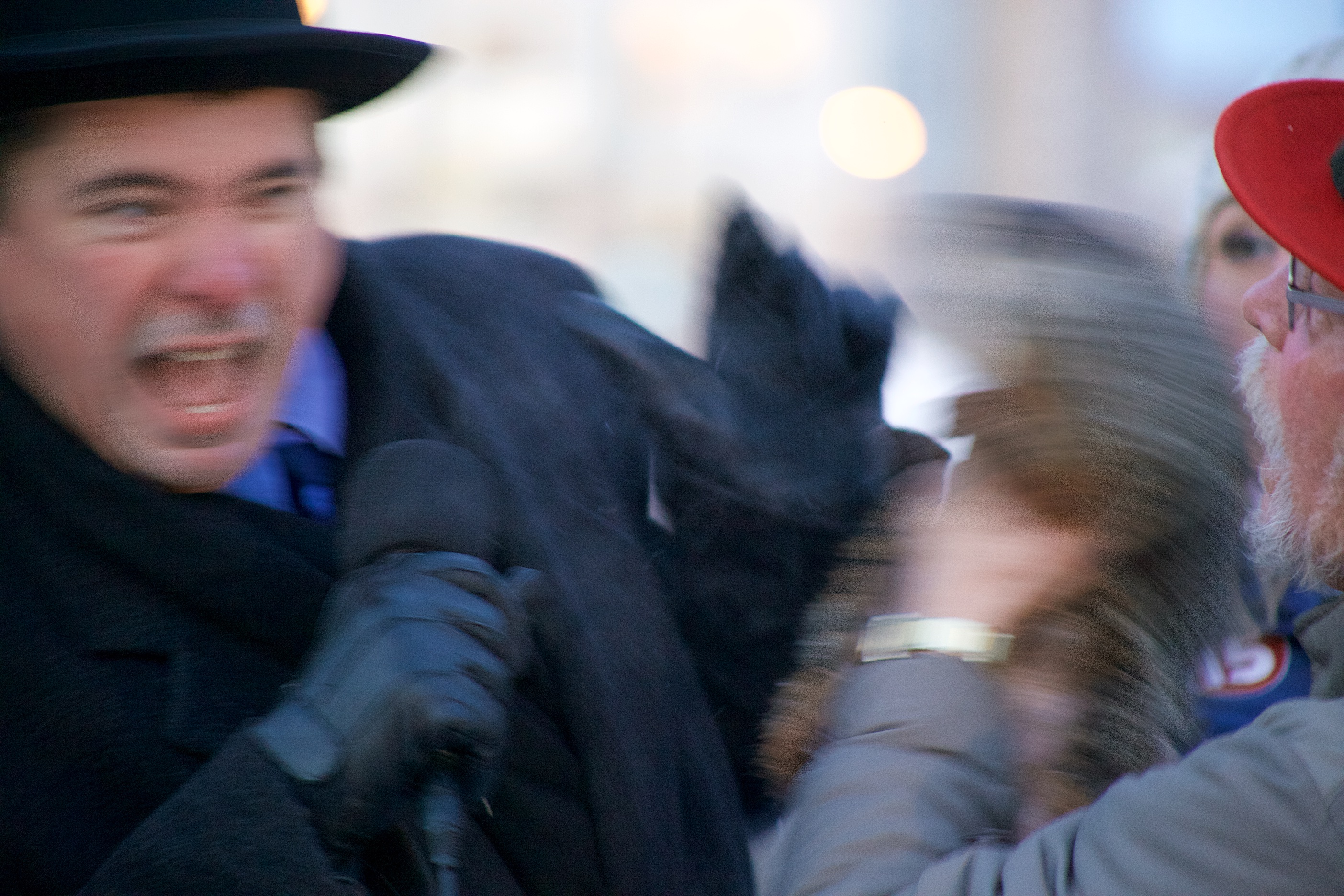
SUN PRAIRIE, Wisconsin — With a temperature of minus 2 degrees and a fresh coating of 8 inches of snow on the ground, you might think Jimmy the Groundhog would have predicted six more weeks of winter. But alas, the world-famous weather prognosticator did not see his shadow, meaning an early spring. He did, however, take a vicious bite at Sun Prairie mayor Jon Freund, who served as the official translator for the esteemed Jimmy.

Sun Prairie Mayor Jon Freund recoils after being bitten on the ear by Jimmy the Groundhog.
Freund wasn't too pleased with the bite from Jimmy.
Freund wasn’t too pleased with the bite from Jimmy, but the ceremony continued.

A modest crowd of hearty Groundhog Day fans gathered on Cannery Square to witness the 67th annual weather prognostication from Jimmy. Just after 7 a.m. Central time, Jimmy whispered to Freund that spring was coming. But before he did that, Jimmy bit the ear of the mayor, who recoiled in pain but quickly recovered his composure. After a quick apology from Jimmy, the ceremony continued.

Despite the clear skies, Freund said Jimmy did not see his shadow. A few minutes after the ceremony, the sun rose and cast February shadows on both man and beast. A Madison television station quoted Hahn as saying Jimmy did see his shadow. The city of Sun Prairie later issued a statement saying the mayor made the right call. The controversy led to speculation from some corners that video replay officials would be in attendance at next year’s Groundhog Day ceremony.

Folklore says that if a groundhog (also called a woodchuck or marmot) emerges from its burrow and sees its shadow, it will return to slumber in expectation of six more weeks of winter. If the day is cloudy and no shadow appears, spring will come early. According to a roundup on Wikipedia, predictions are pretty well split across North America for Groundhog Day 2015. Sun Prairie’s result is listed as “disputed.”

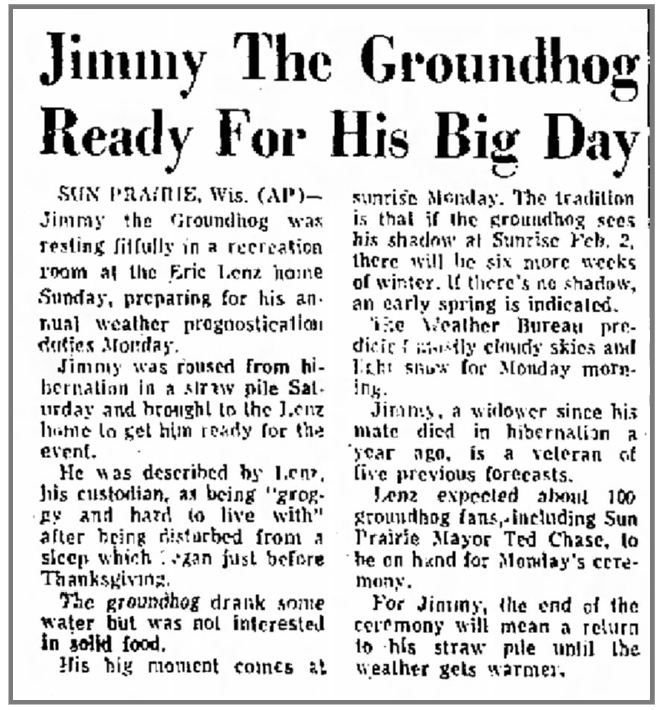
Jimmy made front-page news in The Troy Record in New York in 1970.
Jimmy made front-page news in The Troy Record in New York in February 1970.

Jimmy arrived in a stretch limousine with a Sun Prairie Volunteer Fire Department escort. Like a Hollywood star, Jimmy emerged from his limo to camera flashes and blaring lights from two television stations. He was accompanied by his handler, Jerry Hahn, who is retiring from the groundhog business after today. Hahn shed tears as Freund and others paid him tribute for serving as Jimmy’s caretaker since 2003. Jimmy will now be cared for by Jeff Gauger, owner of the Beans ’n Cream coffee house on Cannery Square. Gauger has a hobby farm.

Jerry Hahn pets Jimmy the Groundhog, who has been in his care since 2003.

Jimmy has been predicting weather in the Groundhog Capital of the World since 1948. The current Jimmy is the 11th burrowing rodent to serve as Sun Prairie’s weather forecaster. And while a certain East Coast groundhog gets most of the national media attention, Jimmy has a better than 80 percent accuracy rating. According to legend, he’s always accurate. It’s just the mayor does not always translate correctly from “groundhogese” to English.

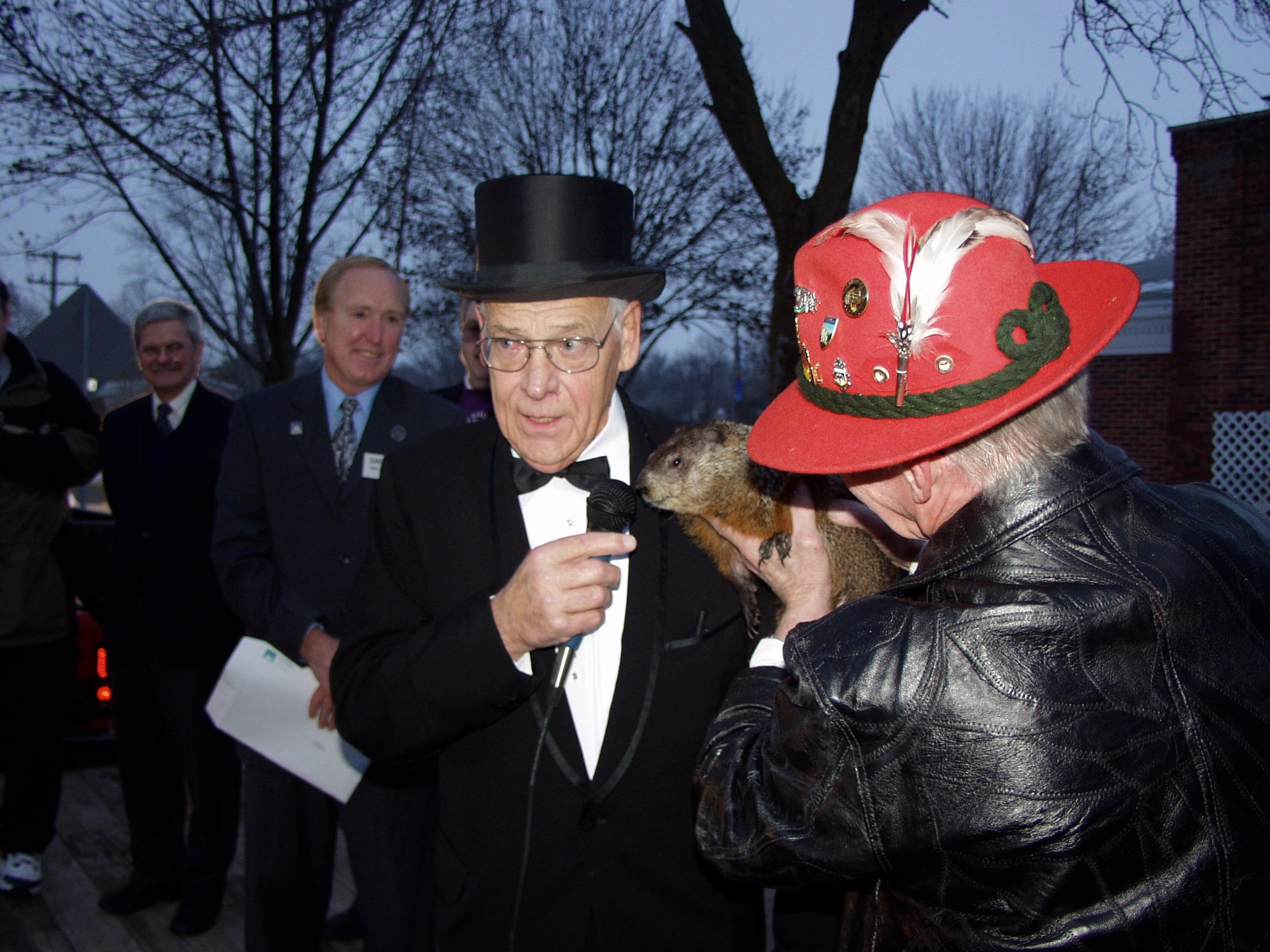
Even with the bitter cold, I had to see for myself what all the fuss was about. When my late father, David D. Hanneman, was mayor from 2003-2005, he presided over two such ceremonies (see video above). In February 2005, Dad wore a tuxedo to go along with the mayor’s official groundhog top hat. The year before, Dad interviewed Jimmy before a large crowd. “What? You don’t like to be kissed? Well OK, I won’t kiss you then,” Dad said to laughter from the crowd.

Mayor David D. Hanneman with Jimmy the Groundhog at the February 2005 event. (Sun Prairie Star Photo)
Mayor David D. Hanneman with Jimmy the Groundhog in 2005. (Sun Prairie Star Photo)

View a complete photo gallery from today’s event below:

 ©2015 The Hanneman Archive

New Video Trailer for ‘The Journey Home’

The book about my father’s battle with lung cancer and his final months on this earth has been in print for nearly five years. It seems a good time to update the book’s official video trailer. The new version, posted below, is in high definition. Back when the original trailer was created, HD video was still fairly novel. But now HD is the norm on home televisions and computers, so it was time to upgrade this important promotional video. You can also view the video in a larger format here.

Eye on the Past: Frank Hanneman, Frontier Hunter

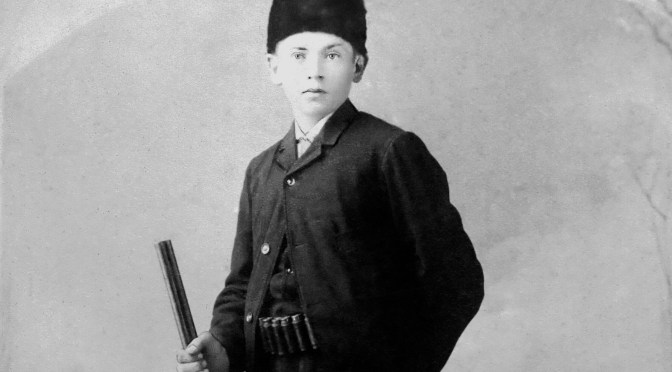
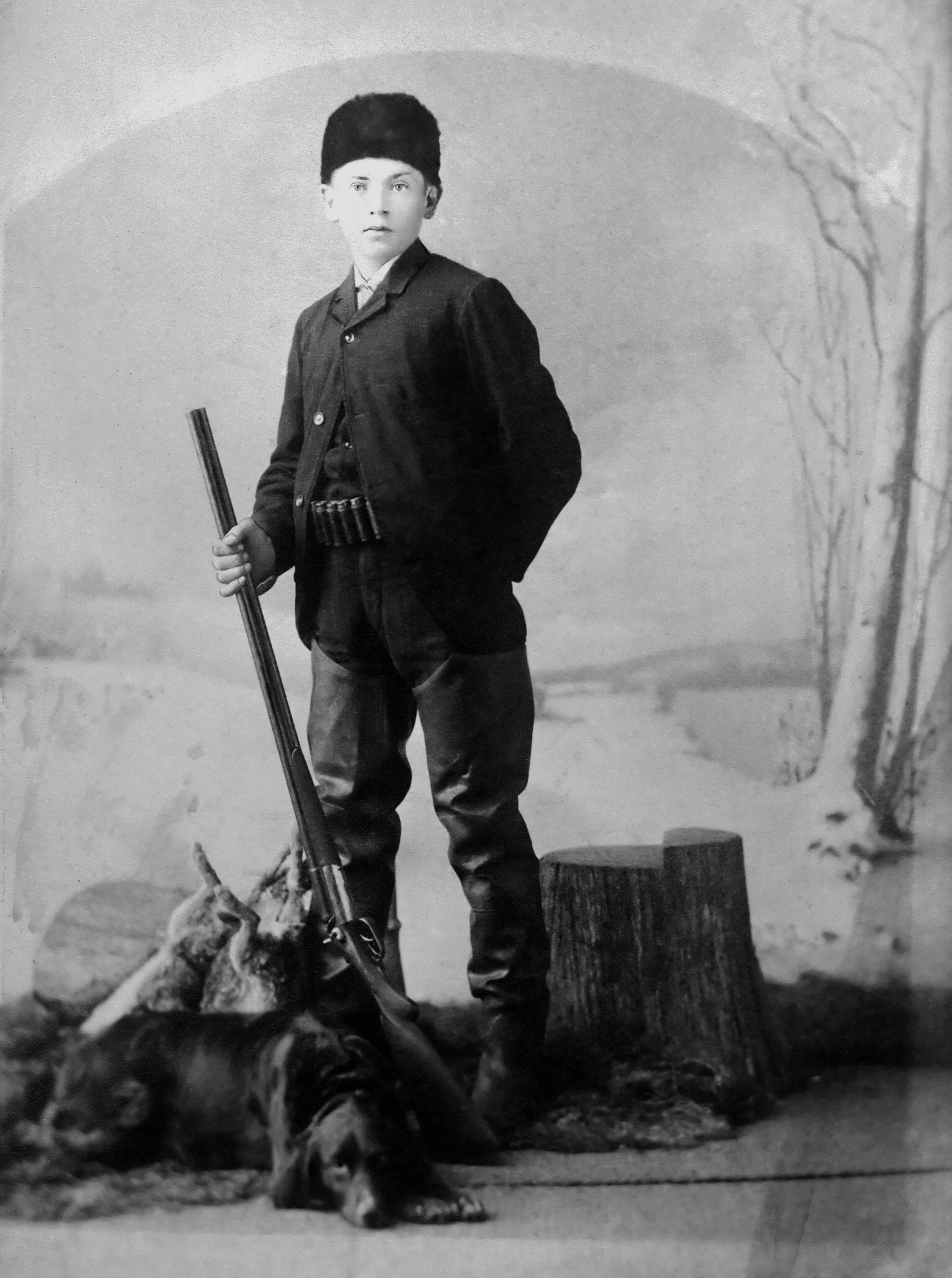
The more than century-old photo shows a stoic, proud young man wearing an ammunition belt and holding a shotgun in his right hand. At his feet lays a loyal hunting dog, seemingly tired from a day in the field. The young man is identified in the corner of the photo as Frank Hanneman, age 14. That dates the photo to 1909 or 1910.

The paper-mounted and framed portait, in nearly perfect condition, survived all of these years in the possession of Carl F. Hanneman, Frank’s brother, and later in the collection of David D. Hanneman, Carl’s son. It is one of the oldest existing photos of a Hanneman from Wood County, Wisconsin.

Frank Hanneman, 14, posed for this photo around 1910.

What do we know about this young hunter? Frank Herman Albert Hanneman was born July 7, 1895 near Grand Rapids, Wisconsin, the son of Charles and Rosine Hanneman. In his early years the family lived and worked on the farm of his uncle, William Hanneman, in the Town of Grand Rapids in Wood County. The 1900 U.S. Census lists Charles Hanneman, 33, as a farm laborer on the farm of William Hanneman. By 1905 the Charles Hanneman family moved to Baker Street in Wisconsin Rapids when Charles got work at the Consolidated Water Power & Paper Co.

The Hanneman boys enjoyed the great outdoors of central Wisconsin. We might assume by the photo, Frank enjoyed hunting birds. We have plenty of photos of a young Carl Hanneman fishing. On June 11, 1916, Frank married Irma Wilhelmine Louise Staffeld, and the couple took up residence on Baker Street in Wisconsin Rapids – a block away from his parents. The couple had five children between 1916 and 1929: Dorothy, Marjorie, Robert, Elizabeth and Joyce. Like his father, Frank had a long career working at Consolidated Water Power & Paper Co.

On July 14, 1947, Frank suffered a heart attack at home, and died shortly after arriving at Riverview Hospital. He was 52. His brother, Carl, was vacationing with his family in North Dakota, but returned for the funeral before rejoining the family vacation.

©2015 The Hanneman Archive
 

Eye on the Past: Mauston First-Grade Class of 1940

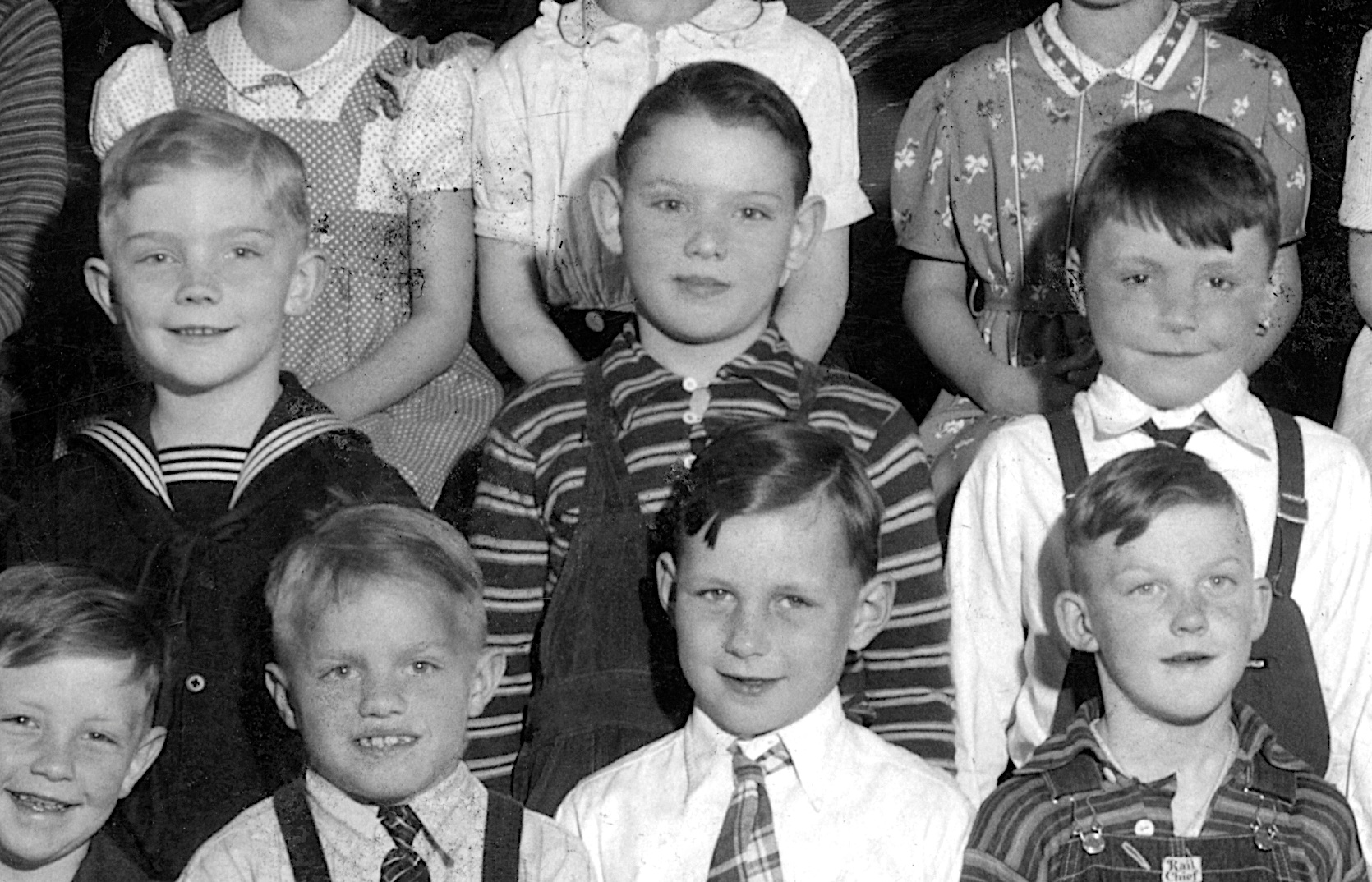
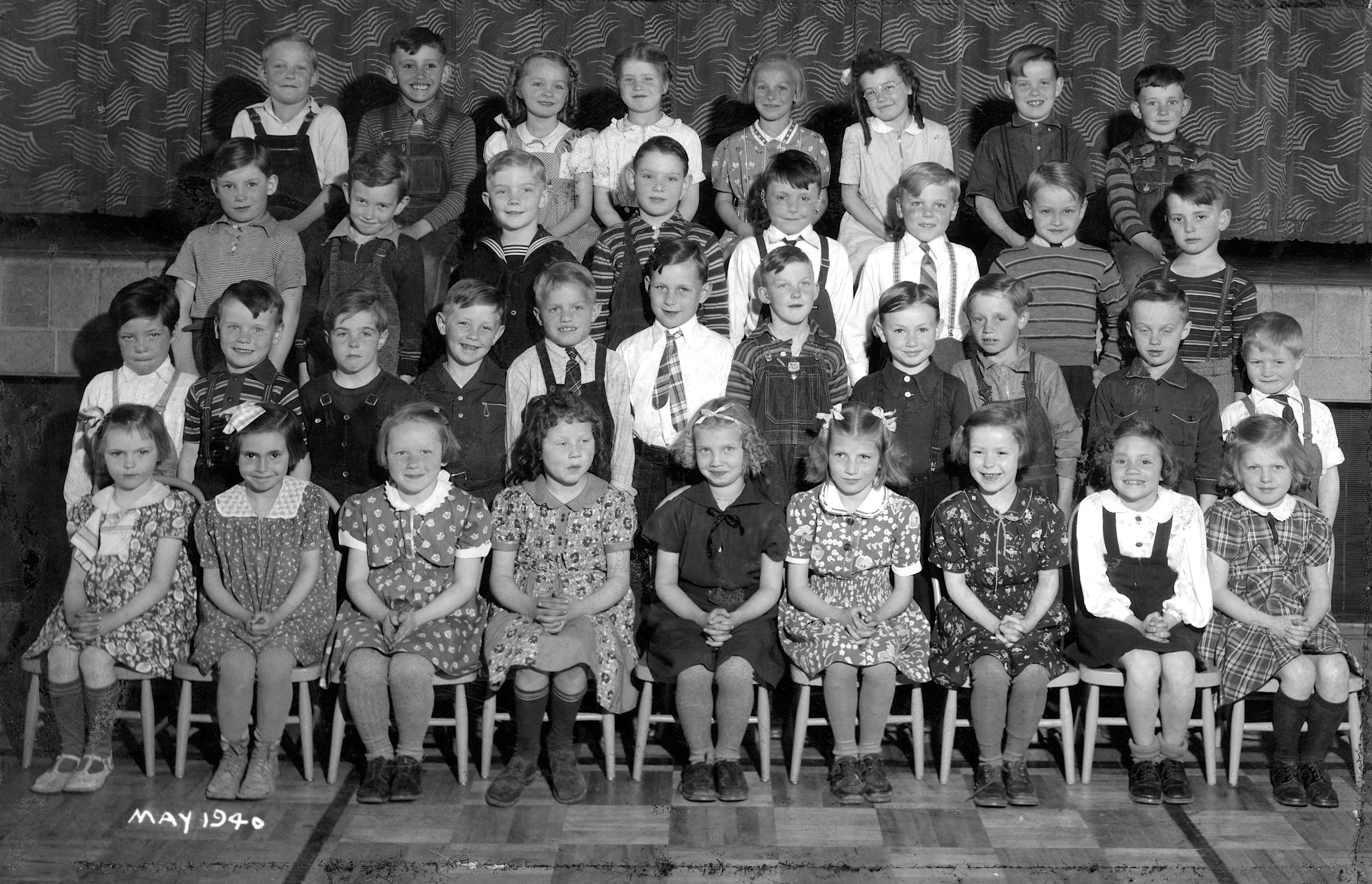
Many in this group photo from May 1940 would spend their entire pre-secondary education together in Mauston, Wisconsin. A few of the children in this Mauston Grade School photo had moved from Mauston by the time the 1940 U.S. Census was taken a month later. But many graduated together in the Class of 1951 at Mauston High School. First Grade 1940

Bottom Row: Leah Reynolds, Clara Minor, Carol Quamme, Arlene Naglus, Alice Chilson, A. Longsdorf, Gladys Baldwin, Patricia Lane, Mary Crandall.

Second Row: Gerald Stout, S. Jones, Norman Pelton, Arnold Beghin, Almeron Freeman, Tommy Rowe, E. Roberts, Donald Millard, Harold Webster, George Lyons, Robert Randall.

Third Row: Donald Jax, Bernard Solberg, Wendell Smith, David Hanneman, Clayton ‘Ty’ Fiene, Robert Beck, Robert Firlus, Donald Clickner.

Fourth Row: H. Faulkner, Erhard Merk, Joy Smith, Lillian Ackerman, Jessie Hauer, Edith Shaw, Edwin Booth, O. Boldon.

©2015 The Hanneman Archive

Here is a 1992 Letter for Your 23rd Birthday

Jan. 20, 2015

Dear Stevie,

I wish I could get you a big birthday gift this year, like prepaid college tuition or a new car. But I can’t. I think I have something much more valuable to share, though. I wrote the letter below almost 23 years ago, when you were barely two weeks old.
Much has changed in our lives and in the world since then. You grew up and overcame big challenges on your way to high school, and then college. You’ve gone out into the work work and supported yourself as you pay for your own education. I know that has been hard, but it is a great credit to you, and I’m very proud of you.

When I wrote the letter, we had no idea who you would become. You were at times a cranky baby, with lots of colic. But you were mostly happy. It was a sheer delight watching you grow up. As I see you ready to celebrate your 23rd birthday, I can say that I could not be a more proud Dad of my only son. Just like the letter says, you’ve grown up to be a good man. I love you.

Dad


Feb. 2, 1992

Dear Stevie —

You probably don’t like us calling you Stevie anymore, but right now, it fits you perfectly. It’s 10:30 p.m. on a Sunday. I’m watching a rerun of M*A*S*H on television as your Mom naps on the couch. You are asleep in your crib down the hall. I can hear you breathing over the nursery monitor.

There are a lot of things I want to say to you. The first is that your Mom and I love you very  much. You’re only 2 weeks old, but you’ve added so much to our lives. And now we sit and imagine what kind of a person you will grow up to be. We know you’ll be a good boy, and eventually, a good man.

The letter sat in the bottom of my dusty Sentry safe for 23 years.

First, some history. You were born at 8:41 p.m. on Jan. 20. You weighed 7 pounds 13 ounces. I’ll never forget your little hand clutched around my finger as you lay on the incubator table. You were so alert as you waited to be put in a blanket.

The day you were born, George Bush was President of the United States. Tommy Thompson (a good friend of your great Grandpa Carl) was governor of Wisconsin. Your Dad works as a reporter for the Racine Journal Times, covering state government and politics. Your Mom works for Communications Concepts in Racine, doing graphic arts on a computer. The top TV shows are Cheers, Murphy Brown and L.A. Law.

You are a beautiful baby. You have dark eyes, red hair and soft, rounded cheeks. You’re only 2 weeks old, but already you can lift your head in the crib. I wonder what you are thinking when you gaze up at us while you’re feeding or playing. We nicknamed you “Popeye” because when you want your bottle, you look up with only 1 eye open and open your mouth.

You were conceived at the end of the 1991 Persian Gulf War. Your Mom was in the Army Reserves and was called off to war in Dec. 1990. She was stationed in Augsburg, Germany, as a food inspector. When she came home from war in April 1991, we had you. You were part of what was called “Operation Desert Stork,” named after the war, “Operation Desert Storm.”

As I write this your Mom and I are looking forward to seeing you crawl, take your first steps, and all the things that come after. But for now, there’s one thing we’re sure of — how happy we are you’re here.

Love,

Dad