SUN PRAIRIE, Wisconsin — After a journey of 114 years along a path that remains shrouded in mystery, the ornate gold chalice used by a young priest at his first Holy Mass has come back to his home parish just in time for Christmas.
Henry Joseph Kraus, who was known as Otto, was 22 years old when he said his first Mass at Sacred Hearts of Jesus and Mary Catholic Church on Sept. 7, 1905. He was ordained to the priesthood four days earlier by Archbishop Sebastian G. Messmer at St. Augustine Catholic Church in Milwaukee.
Parishioners at Sacred Hearts gifted Kraus with a gold chalice, which held the Precious Blood at the Solemn High Mass said by the newly ordained Father Kraus. Along the outside of the foot of the chalice, the inscription reads: “In Memory of My First Mass September 7, 1905 — Presented by Sacred Hearts Congregation, Sun Prairie, Wis.”
Some 114 years andthree months later, the chalice was held up next to the rectory Christmas tree by Msgr. Duane Moellenberndt,pastor of Sacred Hearts of Jesus and Mary. “It’s a wonderful gift to the parish,” he said, reflecting on how such a precious, blessed artifact made its way back to Sun Prairie. “It’s a marvelous gift.”
The 1905 card for the first Mass of Rev. Otto Kraus at Sacred Hearts of Jesus and Mary Catholic Church. (Photos courtesy of Sacred Hearts/Mary Gehrmann)
Otto Kraus studied for the priesthood at St. Francis de Sales Seminary near Milwaukee, under its longtime rector, Msgr. Joseph Rainer. He went to the seminary just before the turn of the 20th century from his family’s 115-acre farm a few miles east of Sacred Hearts church. His parents, Engelbert and Emma Kraus, eventually sent two sons into the priesthood.
Otto was the only priest ordained in the Archdiocese of Milwaukee on Sunday, Sept. 3, 1905. The following Thursday, the new Fr. Kraus celebrated Solemn High Mass at Sacred Hearts, using the inscribed gold chalice to hold the Precious Blood of Christ.
The chalice has engraved and extruded details on the foot, stem and node. The bowl has an engraved band halfway down from the lip. The foot of the chalice is hexagonal with slightly in-curved sides. The top of the foot features debossed images of vegetation. The foot is inscribed, but not with Fr. Kraus’ name; something that later presented a challenge in determining its original owner.
Sacred Hearts of Jesus and Mary Catholic Church as it appeared in the early 1900s. The current church was built in 1921. (Photo courtesy of Sacred Hearts)
Atop the first-Mass remembrance cards given out that day were two scriptural references: “By the grace of God I am what I am” (1 Cor. 15:10), and “A priest forever” (Psalm 110:4). The bottom of the card read, “I will sacrifice to thee O Lord the sacrifice of praise” (Psalm 115:17).
The Mass was just the joyous occasion the parish badly needed, coming just weeks after the sudden death of its longtime pastor, Rev. Alouis J. Kuehne. Father Kuehne, 48, had led the Sun Prairie parish since 1880. Otto Kraus served as sub-deacon for Kuehne’s Solemn Requiem Mass on Aug. 16, 1905. Also assisting at the Mass was Aloysius M. Gmeinder, a parishioner who lived on the farm immediately south of the Kraus property. Gmeinder was a year behind Kraus at St. Francis Seminary.
Moellenberndt said the current practice is for a seminarian to receive the chalice for his first Mass from family. “I don’t know if it was true in those years, but when I was ordained, typically your parents gave you the chalice,” he said. “So it’s important not only because of what it’s used for, but also because normally it’s your parents or your family that gives you the chalice that you use for your first Mass.”
The chalice has a hexagonal foot with curved sides, accented with debossed artwork. (CWR photo by Joseph M. Hanneman)
Father Kraus’ first assignment was at Holy Trinity Catholic Church, one of the oldest parishes in Milwaukee. After 18 months, he was named pastor of St. George Catholic Church near Sheboygan Falls, Wis. It’s not clear exactly how long his pastorate lasted, but ill health forced Fr. Kraus into a very early retirement. By mid-1910, he was back home on the family farm near Sun Prairie.
For nearly two decades, Fr. Kraus lived with his mother. After his father died in 1912, the family moved to Sun Prairie, settling in a home just a few blocks from Sacred Hearts. Monsignor Moellenberndt said it’s possible Fr. Kraus celebrated Masses at his home parish during those years, a practice followed by other retired priests over the decades.
Henry J. “Otto” Kraus and his younger brother, Aloysius, both became priests in the Archdiocese of Milwaukee. Both men are buried at Sacred Hearts of Jesus and Mary Catholic Cemetery.
After Fr. Kraus’ mother died in October 1926, he moved to Oshkosh, Wis., and became a resident at Alexian Brothers Hospital. That is where he died on Jan. 17, 1929. He was just 46. His younger brother, Rev. Aloysius P. Kraus, sang the Solemn Requiem Mass at Sacred Hearts on Jan. 21, 1929. Aloysius was ordained to the priesthood in 1912 and was pastor at St. Joseph Catholic Church in Waupun, Wis., at the time of his brother’s death. Father Otto suffered from goiter, an enlargement of the thyroid gland at the base of the neck, according to Mary Gehrmann, a longtime Sacred Hearts parishioner and grand-niece of the Krauses.
The stem, node and bowl have detailed engraving. (CWR photo by Joseph M. Hanneman)
Monsignor Moellenberndt said it’s anyone’s guess what became of the chalice after Father Kraus’ death. In 2019, it was discovered in one of 40 boxes of materials donated to the Green Bay Diocesan Museum, located some 125 miles northeast of Sun Prairie. A museum staff member noticed the inscription on the chalice and contacted Sacred Hearts. Since there was no name with the inscription, they had to do some sleuthing. With help from the archives at the Archdiocese of Milwaukee, Moellenberndt determined that Fr. Otto Kraus was the owner of the chalice. Sacred Hearts parishioners Gary and Julia Hanson drove to Green Bay and brought the chalice back to Sun Prairie.
“The archivist in Green Bay said she’s happy that we found the priest that it belonged to and doubly happy that it has found its way back home,” Moellenberndt said. “So it’s wonderful to have it back, because this is where it came from. There’s that historical connection to the parish.”
Moellenberndt said once the chalice is polished, it will again be used in the Holy Sacrifice of the Mass. That could be the first time the chalice has been a part of Mass at Sacred Hearts since that 1905 Thursday when a brand new priest spoke these words and elevated it before the crucifix: Hæc quotiescúmque fecéritis in mei memóriam faciétis — “As often as ye shall do these things ye shall do them in memory of Me.”
(This story appeared on the Catholic World Report magazine web site on Dec. 24, 2019. The author’s family has been a part of Sacred Hearts parish since the early 1970s. His mother, Mary K. Hanneman, taught at Sacred Hearts school for nearly three decades.)
Death is a mighty test of faith, just as much so when the beloved is of the four-paw variety as with one of our departed human family members. I learned this painful lesson anew when saying goodbye to my best little canine buddy, Mr. Puggles.
He came into our lives on October 15, 2004, fresh off of a plane ride from Colorado. He jumped from the laundry basket in the back seat of my car and nipped the noses of our three children. He was a little wild man. We knew right then that our Mr. Puggles would be a larger-than-life part of our family. I’ll never forget that first day home, when the little sprout climbed up on my head as I lay on the floor and pasted my face with wet kisses.
From the start, Mr. Puggles put himself in charge.
We learned quickly that he needed limits set, as he bolted across the street in our suburban neighborhood and led us on a merry chase. He was fast and would not be captured until he was good and ready. The kids were able to teach him a few things, but Mr. Puggles was usually going to do things his way. We just needed to figure that out.
As a growing puppy, he loved to ride in the car. This was before he learned about trips to the vet’s office. The kids would sometimes tease him, “You want to go for a ride in your very own car?” Yeah-yeah-yeah oh-boy-do-I-ever!!” So we usually piled into the car or the minivan and took him for a ride “in his very own car.”
Mr. Puggles could be naughty. He even had a “naughty face” that often gave a clue that chances were high for mischief. He once chewed a hole in our denim couch and proceeded to pull out much of the white bunting in the cushions. This exercise came to be known as “puff clouds” and, my oh my, did Mr. Puggles like puff clouds. He needed good exercise, but he barked so incessantly at everyone in the neighborhood, we had to do our walks after dark. He still barked.
The famous Mr. Puggles “Naughty Face.”
His personality changed a bit in October 2006 when we adopted Madison, a fawn Pug who was rescued from one of those hoarder hell homes we all read about now and then. Madison was a street tough; used to having to fight for food. She attacked him a few times, and the sounds created nearly caused some of us cardiac arrest. Eventually they found common ground, as long as Mr. Puggles gave up his toys on demand. They ate in separate rooms under supervision. In time they both mellowed and became best buddies.
Mr. Puggles was not one to be bothered with niceties such as going to the bathroom outside. He started by jumping from the bed at night and going into the closet to relieve himself on the carpeting. Frequent trips outside were the only solution. Over the years, the carpeting in most rooms was replaced with hardwood flooring. Much easier to clean! We had to keep him away from the bottom of the Christmas tree, since he would drink the water and then have to pee more. I recall one time outside when I was talking to my daughters and Mr. Puggles was standing nearby. A minute later I looked down and he was peeing on my shoes and pant leg. At least he didn’t tell me it was raining.
Mr. Puggles was a pretty good sport. Samantha and Ruby sometimes tried to dress him up for Halloween, but any costumes were short lived. Stevie dressed him up as a character from the television show Futurama, with a cape and boots. Less than 5 minutes into the Halloween celebration and the boots were history and the cape was wound around his neck. Mr. Puggles and Madison were kid-friendly dogs who liked to sit in laps, or better yet, fed a stream of doggie treats.
Wearing his parka one cold winter.
Perhaps Mr. Puggles’ most valued role was that of comforter. Through many very difficult times, he was my God-given solace. There’s nothing quite like curling up in bed and having one Pug nestled just behind my legs and the other with her rear right against my neck. I wasn’t going anywhere without them knowing it. He was generous in affection, quick to forgive a harsh word, and always there with a wagging curly tail when I returned from a business trip.
The first signs that he was aging came when I lived in Georgia in 2012 and 2013. We’d be out for a walk and he would start dropping poops out like a Pez dispenser while he walked. It took me quite a while to figure out this was not intentional. Some of that nerve control was weakening. I noted it with concern, but quickly convinced myself that he would not have to worry about aging.
Mr. Puggles and Madison came with me on quite a few changes of address. They were good sports and didn’t complain about the uncertainty. During some very difficult times, we lived in hotel rooms and even spent a few crazy weeks camped in our car. None of it fazed them. If we were fed and stayed warm, it was all good. Dogs are such selfless companions. I thank God for that.
Oh, what a face!
Even as Mr. Puggles’ rear legs began to fail, we still found ways to enjoy the outdoors. I bought a hip harness from a web store that caters to disabled pets. It gave his Pug caboose just enough help to still be able to roam about the yard, marking every tree and barking at falling acorns and the occasional brave squirrel. I felt slight pangs of dread as his face turned from jet black to salt and pepper. I would not want to face losing him, so I pushed those thoughts aside.
He had terrible health scares over the past year and a half. In March 2018, he stopped being able to pee and I had to rush him to Madison Veterinary Specialists. They did surgery on his bladder, which was almost completely full of what they described as “sand.” Eventually I learned those were “struvite stones,” which often form as the result of an infection. Since he wasn’t as able to fully empty, his risk of infection rose. The surgery was successful. To keep him from dribbling, I put a belly band with a bladder pad in it around his lower mid-section. He didn’t mind at all.
Over the past year, he and his new little sister Mickey had to get used to me coming and going a lot. Evenings it was off to spend a few hours watching television and visiting with Mom, who was in her final months with us. Back home after 10 and it was a late dinner, and sometimes, rawhide treats while camped out on the bed. It’s an incredible comfort having canine companions who hang on my every word like it’s REALLY interesting; who cuddle up close when I’m sick and act like I’m the best each time I come home.
The past two months were a drain. Bladder infections and upper respiratory troubles had us back and forth into the emergency hospital. This caused Mr. Puggles’ back legs to weaken a bit more. But I’d pick him up, go outside and hook up those hip holsters and he still did OK. (Later on I sat and watched security camera footage of me carrying him back and forth across many weeks.) He had trachea surgery at the University of Wisconsin to relieve his worsening breathing problems. The operation was a great success and I hoped we’d get him back to health.
Saturday, July 27 was destined to be one of the saddest and most difficult of my 55 years on this earth. I had rushed him back to the UW with labored breathing. He was placed in an oxygen cage. Scans showed pneumonia caused by him aspirating food or water into his lungs. It would be touch and go to battle yet another infection. But it wasn’t to be. With breathing getting harder, I either had to authorize a ventilator (which rarely ends well) or make another decision.
Mr. Puggles laid quietly on the exam table at the UW vet hospital. Tears streamed down my face as I petted his head and said his name. When he heard my voice, he lifted up his little head and looked at me. My heart broke into a million pieces. I kissed his soft little ear and whispered, “I love you so much, little buddy. You’re going to go home to God.” He lifted his head and looked at me again with big brown eyes. I’ve never seen that look before. It seemed to carry deep meaning; something you would not expect from a pet. The look seemed to say to me, “It’s OK. You took good care of me. Take heart. I will be here in God’s time.”
The salt-and-pepper Mr. Puggles, Fall 2018.
As he closed his eyes in sleep, I sobbed so hard I thought I might vomit. Tears flowed like they never have before. I felt this deeper than just about anything else in my life. It is said that St. Peter cried so hard and often after betraying Jesus that furrows developed on his face where the tears flowed. I might just have those same furrows before my grief subsides at the loss of my best buddy.
I later received a sympathy card from the staff at UW Veterinary Care. They took great care of him. One of the interns who cared for Mr. Puggles during his two stays ended her note with this thought:
“All good dogs go to Heaven — and Mr. Puggles was a very good dog.”
We decided to bury him at my sister Marghi’s house. She has a nice wooded back yard; the kind of place he loved to spend time in. I went to the UW clinic again to pick up his body. They had placed him in a little cardboard box that resembled a casket. On the cover, written in marker, was “Mr. Puggles” along with a hand-drawn red heart. I carried him to my car and started to drive to the pet memorial company to have terra cotta paw prints made.
I opened the box and looked at his little Pug self, motionless as if frozen in time. The whole drive I had my right hand on him, petting him and talking to him as if he were still here. I apologized for times I lost my temper, like when he’d wake me at 3 a.m. and want to have an early breakfast. But mostly I said “thank you” for nearly 15 years of companionship and unconditional love and support. As I stroked his soft little ear, I recalled all of the nicknames I had for him, and how often I made up little songs about him that probably drove him batty.
“Hey, we gonna get dinner soon?”
We had a good final conversation. Those who have pets will understand the depth of pain one feels in losing a friend so giving and innocent. More tears flowed and we made that drive to his final resting spot, under a maple and a pine tree. I set his box on the ground, took off the lid and tucked him in with a new dog blanket. I told him something I said every morning when he tried to get up early: “It’s OK, buddy, you can keep sleeping.” I put his favorite lion toy up near his head. On his blanket I placed a St. Benedict crucifix and a green scapular.
As I sprinkled Holy Water on the grave and on his box, it all welled up inside me. This would be a great test of faith. We are taught that our pets are not endowed with souls. Yet they stand watch over us and care for us like the angels. They love with the brave and sacrificial love of the great saints. Mr. Puggles gave everything to me and my children. He spent himself to make our lives brighter. I just have to believe Our Blessed Lord has made provisions for such a beautiful life.
My consolation came as I read prayers that are typically used to bless Catholic burial grounds:
God, Creator of the world and Redeemer of mankind, who wondrously dispose the destinies of all creatures, visible and invisible, we humbly and sincerely beseech you to hallow, purify and bless this cemetery, where the bodies of your servants are duly laid to rest, after the labor and fatigue of this life come to and end…”
There is was in the first line of the prayer. God, who “wondrously dispose the destinies of all creatures.” All creatures. God gave us animal companions for a reason. These selfless beings become an invaluable part of the family. I believe in His goodness, God will give us back our canine and feline companions in eternity. For he made them as part of his wonderful creation, which he declared from the beginning to be good.
On this day, that thought brought a measure of comfort to a grieving, wounded heart. Requiescat in pace, Mr. Puggles. May we meet again one day in an unending field filled with warmth and love.
The hospital staff wrote this on his burial box.
Tucking him in for the last time.
A new blanket and a favorite toy for the journey home.
“Man’s days are like those of grass; like a flower of the field he blooms; the wind sweeps over him and he is gone, and his place knows him no more.”
—Psalm 103:15, from the St. Michael church bulletin, Feb. 22, 1998
By Joseph M. Hanneman MADISON, Wis. — Sheriff’s investigators are exploring the possibility that the man who brutally murdered Father Alfred J. Kunz in March 1998 is dead, and they are urging the public to come forward with tips and clues needed to break the case and solve one of the most vexing killings in Wisconsin history.
After a 20-year investigation involving more than 50 detectives and thousands of interviews, the Dane County Sheriff’s Office has “multiple” persons of interest in the murder of the traditionalist Catholic priest. Dane County Sheriff David J. Mahoney said investigators believe it’s possible the killer himself is dead. This has added urgency to law enforcement appeals for the public to come forward with more information.
Father Alfred J. Kunz celebrates the Traditional Latin Mass at St. Michael Catholic Church in Dane, Wis. (Photo courtesy of Mark Nelson)
“We have to look at the possibility that the person responsible, or others who might have been aware, are dead,” Mahoney said in an interview with Catholic World Report. “If that’s the case, we’ll never solve it unless somebody comes forth with evidence.”
Father Kunz, 67, was found with his throat slashed on the morning of March 4, 1998, in a hallway of St. Michael School in the rural enclave of Dane, about 15 miles northwest of Madison. He died from blood loss suffered when his carotid artery was cut during a brief but ferocious struggle with his killer. The massive murder investigation is the most extensive in Dane County history, but has yet to yield an arrest or assignment of blame.
“Where we’re at today, we have multiple people of interest, where 12 years ago we were concentrating our efforts on one individual,” Mahoney said in an extensive interview at the Dane County Public Safety Building. “We have multiple individuals who we would consider to be persons of interest, who either have motive or had a pattern of practices, maybe in the area of burglaries. We’ve looked at this as a crime of passion, we’ve looked at this as being a crime of opportunity — a burglary that was interrupted.”
New leads developed in the case over the past year have expanded the list of persons of interest. This development comes as one of the early persons of interest, a former St. Michael teacher who found Kunz’s body, has now been cleared of involvement in the crime. Mahoney wants members of the public who might have information to take a fresh look at memories from 1998 and in the years after. Investigators are hoping someone comes forward with information that can tip the case to a solution.
“Over the years, some of our witnesses and people with knowledge have died, and with them goes the information,” Mahoney said. “That’s one of the reasons we pushed more information out on the 20th anniversary. If there were family members of people who passed (away), or friends or associates or even somebody who heard something, we want to try to try to bring them out into the open at this point. Before we lose more people.”
Father Kunz was a sign of contradiction; a tradition-minded priest in the shadow of the liberal state capital. He was a 20th century fidei defensor, upholding Catholic teachings amid a sea of post-Vatican-II modernism. He preached the truth, no matter how unpopular. A sharp critic of homosexual corruption in the Church, he worked at the highest levels to expose priestly pederasty in rectories and chanceries. He saw the coming storm of sexual-abuse allegations that would swamp the Church years later and lead to more than $3.3 billion in victim settlements and attorney fees in the United States alone. “You will find no justice in the Church today,” he told a friend not long before his death. He worried the pederasty scandals would destroy the diocesan priesthood.
St. Michael School as it appeared on March 4, 1998. (Dane County Sheriff’s Office Photo)
His celebration of the Usus Antiquior, or the Traditional Latin Mass, drew congregants from three states. Even though he also celebrated the NovusOrdo Mass, some locals left for other churches. Kunz had a soft pastoral touch and a generous heart. He fixed up old cars and provided them to his cash-strapped teachers. He took no salary. His sister sent him boxes of socks when his became worn. He ran successful fish-fry fundraising dinners to support his parish and school. A typical day for Kunz started at 5:30 a.m. and didn’t end until well after midnight. In between, he was a whirlwind of activity at church, in school, at diocesan offices in Madison, at hospitals and among his parishioners. His sudden, violent death left a trail of tears that still flows 20 years later.
Kunz was last seen alive about 10 p.m. on March 3, 1998, when his friend, Father Charles C. Fiore, dropped him off at St. Michael’s. The pair just took part in a recording session in Monroe for the “Our Catholic Family” radio program that aired on Sunday mornings across southern Wisconsin. Kunz fixed himself some dinner at the rectory and spoke by phone with another priest at 10:23 p.m. He then retired to his sparse one-room office that doubled as living quarters in the adjacent school. Police believe Kunz encountered his killer shortly after. His body was found the next morning, face down in a pool of blood at the foot of a statue of St. Michael the Archangel. Kunz was barefoot, dressed in dark slacks and a white T-shirt.
There were no signs of forced entry, so the killer gained access without leaving evidence behind, had a key or was let in by Father Kunz. Police said the attack was sudden and unexpected. Kunz, a Golden Gloves boxer in his youth, put up quite a fight and might have gained the upper hand on the suspect before being knocked to his knees by a blow from a weapon, Mahoney said. His throat was then cut with some kind of sharp-edge instrument, severing the artery that carries blood to the brain. No weapons were recovered.
Police believe the killer was a man, who might have been familiar with Kunz and St. Michael parish. While an FBI profile suggested the killer might have had an argument or altercation with Kunz in the 72 hours before the murder, Mahoney said it is possible the priest simply interrupted a burglary. The killer was likely shocked by the amount of blood that flowed when he cut Kunz’s throat. When he escaped from the school, the murderer was covered in blood and bearing noticeable injuries to his face, Mahoney said. Based on the wounds on Kunz’s hands, police believe the priest landed serious blows to the head of his attacker. An autopsy photo released by the sheriff’s office in 2018 shows Kunz’s right hand with major bruising along the index finger, bruises on three of the four knuckles and several small puncture-type wounds across the back of the hand.
“Father Kunz did engage physically with his murderer,” Mahoney said. “We believe whomever was in fact involved probably had some significant facial injuries and probably was visibly injured.” The assailant would have “looked like he had been beaten up,” Mahoney said. “Father Kunz had hand injuries. He knew how to land a punch.”
Profilers said the killer did not go to St. Michael’s that night intending to kill Kunz. Investigators believe the killer felt regret afterward. He went home with clothing soaked in blood that he would seek to wash or destroy. Family or friends would have noticed facial injuries. The suspect might have missed work the next day. The killer could have used a favorite hunting knife, box cutter or other instrument that he then discarded. Friends or co-workers could have noticed he no longer carried the cutting instrument and that he had a story for what happened to it. In the weeks, months and years afterward, the person could have had mental health issues, or struggled with alcohol abuse, police said.
Could something as simple as a burglary be the answer in this case? Kunz’s office was burglarized in 1994. The priest’s late-night routine was predictable, a fact that could be crucial if a burglar was watching the property. Kunz was security conscious and the school doors were always locked at night, friends said. Some collection money went missing in the weeks before the murder, police said. It was not unusual for bags of Sunday collection money to sit at the church, undeposited, sometimes for weeks. Large amounts of money had been moved between parish accounts in the months before the murder, and some large checks were cut, police said.
Early in the investigation, detectives questioned two men with ties to Kunz who were involved in burglaries. Jeffrey L. Maas of Pewaukee, Wis., pilfered statues, chalices, candles, books and artifacts from churches in five Wisconsin counties, police said. He was convicted in 1999 of four misdemeanor and five felony counts of theft and receiving stolen property. Robert M. Pulvermacher of Dane was arrested shortly after the Kunz murder and later sentenced to nearly four years in prison for burglary. He escaped from a prison work camp in December 1998. While on the lam, he attacked a local constable and wrestled his gun away, police said. During a massive search of central Wisconsin, a deputy confronted and disarmed Pulvermacher. He was sentenced to 11 years in prison on escape-related charges. Investigators concluded the men were not involved in the priest’s murder. The burglary motive, however, remains an active focus.
The Father Kunz murder series was the top story at Catholic World Report on Aug. 8, 2018.
The Kunz homicide was the first in the village of Dane since March 1971, when William C. Chambers shot and killed his 22-year-old son, Kenneth D. Chambers, during a long-simmering family feud. The father fired three bullets into the heart, brain and lungs of his son. He was later acquitted of first-degree murder. Kenneth Chambers was a member of St. Michael Catholic Church. Father Kunz officiated at his funeral Mass on March 13, 1971.
(Matt C. Abbott contributed to this report. Anyone with information on Father Kunz’s murder should contact the Dane County Sheriff’s Office, (608) 284-6900 or tips@danesheriff.com.)
An escaped federal prisoner from Indiana was captured by Racine County sheriff’s deputies early Saturday after he took a hostage, went on a three-state crime spree and shot an Oak Creek police officer, authorities said.
Ronald R. Plummer, 39, a federal prisoner awaiting sentencing in Indianapolis, and his alleged accomplice, Elizabeth Bonvillain, 31, a jail social worker, were captured in a town of Raymond barn after they took an apparent drug overdose.
Both were in critical condition early today at St. Luke’s Hospital in Racine. A nursing supervisor said the couple were starting to come out of drug-induced comas they had been in much of the day.
A bullet tore through the patrolman’s badge. (Charles S. Vallone photo)
The couple are under armed guard. If they regain consciousness, they will be turned over to Oak Creek authorities to face charges of attempted murder of a police officer, police said
They also face a long list of charges in other jurisdictions-so many that police had not sorted them all out late Saturday. Charges could include kidnapping, federal escape, attempted murder and possession of firearms by a felon.
Meanwhile, Oak Creek Police Patrolman John Edwards, 26, was treated at a Milwaukee hospital, then released after he was shot in the hand and nearly shot in the chest, police said.
Sidebar that ran with the Page 1 news article on Ronald Plummer’s crime spree.
Edwards was shot about 4:15 a.m. in the parking lot of the Union 76 Milwaukee Truck Stop, at Highway 100 and Interstate 94, as he routinely checked what he believed to be a suspicious vehicle.
“The driver of the car got out and had two guns pointed at officer Edwards — one in each hand,” said Oak Creek Police Lt. Gerald Stahl.
Plummer ordered Edwards to lie on the ground, but the patrolman turned sideways and started to run, Stahl said. Plummer fired a shot at Edwards.
“The bullet came from the side and hit his badge,” Stahl said. The bullet ripped a hole in the badge, which was knocked off, but the bullet did not enter Edwards’ body. A second bullet struck Edwards’ right index finger.
The escaped bank robber then got back in his car and fled south on I-94 with Edwards in pursuit.
Police lost sight of Plummer and Bonvillain as they headed west on 7 Mile Road in Racine County. About 6 a.m., Racine County sheriff’s deputy Jeff Holmes spotted Plummer’s car parked in a driveway at 3526 7 Mile Road.
Authorities from Racine County, Milwaukee County, the State Patrol and the U. S. Marshal’s office surrounded the barn next door after the Racine Police Department’s dog, Bonny, picked up the couple’s scent.
Bonny was sent into the barn at 3516 7 Mile Road ahead of officers and bit Plummer on the arm. Police found Plummer and Bonvillain in an animal stall, covered with hay, and semi-comatose from an apparent barbiturate overdose, authorities said. Two .38-caliber pistols were found.
Bonnie Falkowski, co-owner of the barn, said she found three “really big” prescription pill bottles and a bottle of water next to where the fugitives were found.
The bottles, which apparently had a woman’s name on them, were empty, Falkowski said. “It makes sense,” she said. “They probably had the water to take the pills.”
Spree started in Indiana
Plummer’s bizarre journey to Racine County began Friday in Indianapolis, where he was awaiting sentencing for a June 1987 robbery of an Evansville, Ind., bank.
He was brought to Indianapolis from the federal penitentiary in Lewisburg, Pa., where he was serving a sentence for robbing two Ohio banks and a federal savings and loan, police said.
Plummer apparently self-inflicted a hand injury at the jail and was taken to Wishard Memorial Hospital in Indianapolis for treatment, according to the Marion County (Ind.) Sheriff’s Department and the Indianapolis office of the FBI.
Plummer was shackled to a gurney in the X-ray room when Bonvillain, wearing a nurse’s coat and armed with the pistols and a bolt cutter, burst in and tried to give the gun to Plummer, police said.
“Evidently, the gun was on a table,” said Garry Schoon, FBI special agent in Indianapolis “Both the deputy and Plummer went for it. The deputy grabbed the top of it.”
Schoon said Plummer attempted to fire the weapon at the deputy, but the officer’s hand blocked the gun’s hammer from making contact with the bullet. Confronted with the loaded pistol, the deputy backed off. Plummer and Bonvillain took X-ray technician Donald Elsner hostage, and fled to a waiting car.
Fled in rental car
About three blocks away, on the Indiana University campus, they dumped the escape car and got into a rental car and fled north on Interstate 65, police said. Elsner was released unharmed in the Chicago area and the duo continued north on I-94 into Wisconsin.
Police believe there was “a considerable amount of planning” involved, said Sgt. Randy Russell of the Marion County Sheriff’s Department. “It looked to be fairly well thought out,” Russell said.
Police found a sketch of the hospital’s layout in the original escape car, Russell said.
Schoon said Bonvillain apparently met Plummer at the Hamilton County, Ohio, jail in Cincinnati, where she worked as a counselor. “They did have some contact in the Hamilton County Jail,” Schoon said.
Hamilton County authorities said Bonvillain was acting coordinator of the mental health unit at the Hamilton County Justice Center in Cincinnati. She was employed by Correctional Medical Services Inc., which provides service to the county.
She apparently met Plummer in February 1988 while he was awaiting trial on two Ohio bank robbery charges, police said. She called in sick on March 17 then began a vacation last week, Hamilton County authorities said. Last Monday, she purchased the two pistols in Cincinnati, police said.
On Thursday, she checked in to the Inntowner Motor Lodge in Indianapolis. Shortly before leaving for Wishard Hospital she took three calls from Plummer, who was in the jail, police said.
If the couple survive the drug overdose, they could face a long list of charges and warrants from numerous law enforcement agencies.
“He would be considered for kidnapping charges, probably federal and state,” said Jon Wendt, FBI special agent in charge of Wisconsin. “Traditionally, you look at the more violent crime first.” Marion County will consider “five or six” charges against the pair, Russell said, on top of charges being considered by the U.S. Attorney. ♦
EPILOGUE: In December 1990, Plummer was sentenced to 100 years in prison for the kidnapping of X-ray technician Elsner. He was earlier sentenced to more than 130 years in prison for a series of bank robberies. ….Bonvillain pleaded guilty to armed escape and conspiracy to commit kidnapping. In September 1990 she was sentenced in Marion County, Indiana, to 20 years in prison.
If you want a prosperous new year, make sure to eat some cabbage before going to bed on New Year’s Eve. And be careful not to sneeze.
Oh, and if the first man you meet on New Year’s Day is a priest, make sure your will is up to date, for death may soon follow.
Superstitions? Folklore? Exactly, but if you believe them, you’re not alone.
Humans have practiced and believed New Year’s superstitions for centuries, says a University of Wisconsin-Madison expert on folklore.
“Many of the things we celebrate have their origin in ancient practices,” said Harold Scheub, professor of African languages and literature. “There are hundreds of them. Some of them are really weird.”
“The Old and the New Year,” by Joseph Ferdinand Keppler, depicting the old year 1885 changing to 1886. (Library of Congress photo)
For instance, Scheub said, it is believed a person who drops and breaks a light bulb on Christmas day will face financial ruin in the coming year. If a colored bulb is broken, a close relative will die, he said.
Sneezing on New Year’s is said to bring misfortune.
In many European countries, the first person to set foot in a home on New Year’s Day — dubbed the “first footer” — will determine what the new year will hold.
In Scotland, if the first footer is a redheaded man, the year will hold misfortune. A dark-haired man is preferable, Scheub said.
In years past, a lump of coal brought by a first footer was a good sign. “A lump of coal traditionally was something that was valued,” he said.
Many New Year’s superstitions and celebrations are rooted in the belief that the last week of the year is when spirits, fairies and witches roam the earth and the forces of nature can be influenced, he said.
“The Old Year’s Legacy to the New,” pencil drawing by William Allen Rogers, showing the year changing from 1891 to 1892. (Library of Congress photo)
“At midnight on New Year’s Eve, strange things will happen,” Scheub said, relating the folklore. “It is one of the most magic times of the year.
“These are times nature is going through great stress,” he said. “We human beings are trying to have an influence on it.”
The noisemakers that sound off at parties when the clock strikes 12 were traditionally used to frighten off the evil spirits of the old year, he said.
“Trying to undo the horrors we’ve committed in the past — this seems to be what New Year’s always was,” Scheub said.
It is also said that anyone who ventures into the pasture at midnight will hear the cattle speaking the names of people who will die in the new year, he said.
New Year’s has also been the time that wishes were made for good crops and pregnancy. On New Year’s Eve in Germany, young boys would cut fresh boughs from a tree and ritually “beat” young girls. On New Year’s Day, the girls would reciprocate. It was thought to increase fertility, Scheub said.
Professor Harold Scheub in the classroom in 2013. (University of Wisconsin-Madison photo)
In Java and some African countries, sham fights were staged between people representing the new year and those representing the old. Today’s bowl games are a similar representation, he said.
Even many Christmas traditions pre-date the time of Christ, according to Scheub.
The Christmas tree could have its origin in Norse countries, where people would place lighted candles in pine trees to keep the spirit of the forest alive until spring. Holiday candles could come from an old English tradition of extinguishing the hearth fire at New Year, then relighting the fires from a community bonfire.
“People all over the world practice these things in their own way,” Scheub said.
“All of these in one way or another are filled with hope,” he said. “We seem to need a period in our year when we say goodbye to the past.”
One last thing. If you wake up on January 1 with a splitting headache, what does that foretell for the New Year?
Have a little less to drink next year. ♦
– This article originally appeared on Page 1 of the December 31, 1988 issue of the Racine Journal Times.View the original newspaper pages.
Postscript: After a 43-year career, Scheub retired from the University of Wisconsin-Madison in 2013.
— The images in the illustration atop this post are from the Library of Congress collections.
MILWAUKEE – Herman “Rocky” Espinoza has always wanted to be a police officer, but he will never get the chance to realize that dream.
“He’ll wear his police shirts every day,” says his mother, Deborah Exner of Monroe. “I even bought him a police siren for his bike.”
Rocky, 12, a Racine native, counts several police officers among his good friends and owns a toy gun and authentic handcuffs.
“He’s the good guy,” Exner said. “That’s probably straight from his mouth. He really holds that status so high.”
Deborah Exner holds her son’s hand at Children’s Hospital of Wisconsin. (Racine Journal Times photo by Mark Hertzberg)
Rocky has always been a boy full of life, rarely complaining and always looking out for his mother. But for seven years, Rocky has battled an inoperable cancerous tumor growing at the base of his brain.
Time after time he fights back from the effects of the tumor, but there is little doctors can do for him.
“I don’t think I ever put it to him that he’s going to die,” Exner said. “I put it to him that this is just a kind of stopping ground. The next stop is heaven. He understands that.”
Despite the troubles that have fallen upon him, Rocky shows the courage and optimism many adults would envy. On Friday, he lay in his bed at Children’s Hospital of Wisconsin, resting.
Pinned to his hospital gown was one of his favorite police badges. On the cassette stereo, a song from his idol, John Schneider, played softly.
Nice and simple, just how he likes it.
Exner walked around the side of the bed, leaned over and kissed him softly on the cheek. She took his hand, looked into his half-open eyes and said a few reassuring words.
Behind Exner’s kind eyes and smile lie the thoughts of a woman who knows her son’s illness is beyond her control. All she can do now is make him comfortable.
Threat of death
Last month, Rocky had to return to Milwaukee after he began having seizures caused by the pressure the tumor exerted on his brain.
“All through the seven years there’s always been the threat of death,” Exner said. “No matter how bad the doctors thought it was, he popped out of it. (Doctors) don’t believe it. They are just amazed.”
The disease is to the point that doctors cannot keep up with an expanding cyst caused by the tumor. He has had three operations in three weeks to relieve the pressure.
Despite Rocky’s strong will to live, the cancer is exacting its toll.
“He’s been through so much,” Exner said. “I think he’s just real tired of fighting. He’s not giving up – he’s just tired.”
Rocky has trouble responding when people talk to him, but not always. “When I came into the room, I bent over and kissed him and said, ‘I love you,’ ” Exner said. “He said, ‘I love you, mom.’ “
Herman picked up the nickname “Rocky” because his cancer was diagnosed when the “Rocky” movies were popular. Besides, Exner said, he has been a real fighter.
“I took it worse than he did. I cried,” she said. “He took it really well. He has always just said, ‘It’s OK, mom.’ He knew he was real sick. He knew it was something he would have to deal with the rest of his life.
“He used to wake up in the middle of the night, just screaming with incredible headaches. I thought it was nightmares.”
When the headaches would not go away, she took Rocky to a Racine doctor, who referred him to a neurosurgeon at Children’s Hospital.
“Dr. Dunn could tell that the tumor was quite large,” she said. “He told me right away that there wasn’t any hope at all. There wasn’t anything they could do.”
But Rocky kept fighting back and giving himself extra time.
‘I’m not a wimp’
Outgoing and charismatic, Rocky lever lets on if he has any fear of his illness, relatives say. Before he went in for a recent operation, he told the doctors, “I’m Rocky – I’m not a wimp.”
Bob Pitts, of Mount Pleasant, Rocky’s uncle, said he told the boy to get better so they could arm wrestle. But Rocky couldn’t wait – he stuck his arm out and put up a pretty good fight.
“When he was first diagnosed,” Pitts said, “he wasn’t supposed to make it three months. He’s fighting every inch of the way.”
Rocky also enjoys riding a bicycle. “He was just learning to ride the bike again, then he had to come back here,” she said.
Schneider, who played Bo Duke on the “Dukes of Hazzard” television series, met Rocky at a Janesville concert last year and gave him his ID bracelet, which is now one of Rocky’s “most prized possessions,” Exner said.
On Friday, Schneider heard Rocky was back in the hospital and telephoned the family to check on him, relatives said.
A former student at Trinity Lutheran School, Rocky was not real big on the books, but he did like school.
Financial toll, too
Exner said she has accepted Rocky’s illness, but admits it has been hard for her in many ways.
“I don’t work, because I stay home and take care of Rocky,” she said. “It’s very hard. Right now I’m trying to find some ways of getting some more financial support.”
Rocky’s medical bills are paid mostly by Medicaid. But Exner has to pay her way to Milwaukee and back, which she said is difficult on a very limited income.
“Financially, I’m very strapped,” she said. “I couldn’t get any help to buy a car” and had to take a loan. “Now, I’m a little worried about that.”
‘Going to heaven’
The biggest toll is emotional.
“It’s hard to face it,” Exner said. ‘What puts me at peace with death (is) he is definitely going to heaven. That gives me peace.
“Sometimes I just wish I could trade places,” she said. “God has always made me a promise that says ‘I’m not going to push you any more than you can handle.’ “
Exner’s adjustment to Rocky’s terminal illness has included hysteria, a lot of tears and anger. But she said her main concern is seeing that Rocky does not suffer.
“If his life is going to hurt him any more, with the love I have for him, I’d rather see him at peace in heaven, ” she said.
“If he does die, I guess a part of me will die too. But I don’t want to be selfish. He’s been through enough. We’ve done as much as we possibly can and now its time to stop.”
Exner’s pain seemed well hidden on Friday. She and her relatives were able to laugh and recall their favorite stories about Rocky. She knows the pain is not over.
“When he actually does die, I think I’m going to fall apart,” she said.
Instead of focusing on the bad things that have happened, Exner counts the good times she has had with her son.
“I’ve had 12 of the hardest but most wonderful years with that young man,” she said. “I’m just thankful for that.”
She said the mother-son bond between them could not be stronger.
“I think that kid is a miracle,” Exner said. “I’m just proud to be his mom. I don’t know what I did, but I’m glad he’s mine.” ♦
– Originally published on Page 1 of the October 10, 1987 edition of the Racine Journal Times. View the original news pages.
By Joseph Hanneman
Journal Times
Herman “Rocky” Espinoza, the former Racine boy who battled an inoperable brain tumor for several years, died Sunday in a Milwaukee hospital, wearing his favorite police shirt and badge.
Rocky, 12, who dreamed of growing up to be a police officer, died in his sleep Sunday morning at Children’s Hospital of Wisconsin.
Herman “Rocky” Espinoza
“I was able to hold him, just like I wanted,” said Deborah Exner, Rocky’s mother, who now lives in Monroe. “When it came right down to it, it was just Rocky and I.”
Exner said she was sleeping on a cot next to Rocky’s bed when a friend noticed his breathing getting shallow. Exner said she got up, put music from Kenny Rogers and John Schneider – two of Rocky’s favorites – on the cassette stereo, then held his hand and waited.
Rocky wore the police uniform Exner had trouble getting off him at home. He will be buried in it, she said.
“l just held his hand and tried to talk to him,” Exner said. “I believe he was very, very peaceful ….I talked him into heaven.”
Diagnosed with cancer at age 5, Rocky was in and out of the hospital many times, fighting the effects of a cancerous brain-stem tumor. Only expected to live months after the tumor was diagnosed, Rocky bounced back time and again
Most every day he would wear the police shirt and badge given to him by a family friend. He also owned a toy gun and a pair of authentic handcuffs.
Even in the hospital, dressed in only a green gown, he wore one of his badges. This time, it seems, the badge was one of courage.
He got the nickname “Rocky” because the Sylvester Stallone movies were popular at the time and because his family felt he was a fighter. Exner said Rocky dealt with the disease without much fear.
“He was a very brave boy,” she said. “There were no tears.”
Rocky’s corneas were donated to the Lion’s Club eye bank and doctors removed his brain to study the large tumor they were unable to stop, she said. Funeral arrangements are pending in Racine.
Relatives described Rocky as an a eternal optimist who was always looking out for other people. On Sunday, Exner recalled one such occasion.
Rocky was being examined at the Shriner’s Hospital in suburban Chicago, Exner said, when the doctor asked to speak to her in the hallway.
“Rocky just spoke up and said, ‘Wait a minute, I’ve got something to say,’ ” Exner said. ” ‘It doesn’t matter if you can do something for me. You just keep on helping all the other kids.’ “
Exner said although the seven-year ordeal has been painful for her, she was doing pretty well on Sunday.
“I’m very much at rest right now,” she said. “He went out like a champ and I was proud of him.”
Bob Pitts of Mount Pleasant, Rocky’s uncle, said, “I’m going to miss him very much. I think he was just a brave little boy. Now he’s at peace.
Late last week, Exner sat in the cafeteria at Children’s Hospital and described how Rocky would wake up screaming in the middle of the night, with what she thought were nightmares. When his headaches persisted, they sought medical help and the tumor was diagnosed.
At times on Friday, Exner laughed when recalling the good times she had with Rocky. At other times, pain seemed to well just beneath the surface when she discussed their pending separation.
“I get real angry sometimes,” she said. “At first I think, ‘Why me? Why not someone else?’ Then I get realistic about it, because who would I want to wish that on? Nobody.”
Exner, who described her son as “a miracle,” said she wants to write a book about the experience.
Family members attributed Rocky’s long survival with the massive tumor to a strong character, medical help and love.
“I think he made it this long because of his doctor (David Dunn) and this hospital,” Pitts said.
Exner thought about that statement for a moment, then added her own reason Rocky fought so hard:
“Because he loved me,” she said. ♦
– Originally published on Page 1 of the October 12, 1987 edition of the Racine Journal Times. View the original news pages.
By Joseph Hanneman
Journal Times
Herman “Rocky” Espinoza never realized his dream of becoming a police officer, but on Thursday, local police will give him a funeral escort usually reserved for their distinguished comrades.
At least four squad cars and officers from the Racine Police Department, the Racine County Sheriff’s Department and the Sturtevant Police Department will escort Rocky’s procession from the funeral home to the church and cemetery.
After reading newspaper accounts of Rocky’s seven-year fight with a brain-stem tumor, several officers had planned to present him with police badges and hats Monday at Children’s Hospital of Wisconsin.
Rocky died early Sunday in his mother’s arms.
Deputy Chuck Kwapil said officers then decided on the escort “to have an opportunity to show how he touched our lives.”
“I think it was the bravery,” Kwapil said. “He was a fighter all the way through. He cared about other people and I think that was touching.
“He would have been one heck of a policeman,” Kwapil said “It would have been nice to work with someone like that.”
Racine police provided an Officer Friendly hat and badge that will be placed in Rocky’s casket. The sheriff’s department will also present the family with an officer’s hat and badge.
“It has just been unbelievable,” said Bob Pitts, Rocky’s uncle, of the police response. “I think he would be the happiest little boy on earth.”
Pitts said when the family heard of the police offer of an escort, “We all had tears in our eyes.”
Pitts said Rocky “was always the good cop. To have a will that strong is something.”
A Racine native who most recently lived in Monroe, Rocky spent nearly every day at home wearing a Sturtevant police shirt he got from a family friend.
When a relative recently gave Rocky a bicycle, his mother bought him a police siren. Even when he was struggling for his life in the hospital, his favorite badge was pinned to his hospital gown. And the day he died, he wore the uniform in which he will be buried.
“I don’t know of anybody that read (news articles) that couldn’t be moved by his courage, what he was facing and his concern for others,” said Racine Police Sgt. Thomas Cooper.
“If somebody cared that much about being a police officer, it’s the least we can do, to show him the same respect we would show an officer,” said Sheriff’s Deputy Jim Aiello.
“I’ve never come across anything like this, and I’ve been on this department 14 years,” said Sturtevant Police Sgt. Robert Mallwitz.
“There you’ve got a real, legitimate hero.”
The escort will begin about 10 a.m. at Strouf-Sheffield Funeral Home, 1001 High St., then proceed to Trinity Lutheran Church, 2065 Geneva St. After a funeral service, the procession will head to Calvary Cemetery, 2510 Kinzie Ave. ♦
– Originally published on Page 1 of the October 14, 1987 edition of the Racine Journal Times. View the original news pages.
Racine area law enforcement officers form an honor guard for Rocky Espinoza. (Racine Journal Times photo by Mark Hertzberg)
By Joseph Hanneman
Journal Times
Herman “Rocky” Espinoza did not win his seven-year struggle with an inoperable brain tumor, but on Thursday, his dream came true.
The buoyant 12-year-old’s strongest wish in life was to serve the public as a police officer, but terminal cancer ended his life Sunday. Even in death, his wish was not forgotten.
Dressed in a blue police shirt, tan pants, badge, handcuffs and holster. Rocky was escorted to Calvary Cemetery by a procession of 13 law enforcement officers and eight squad cars.
The officers, representing the Racine County Sheriff’s Department and police from Racine, Mount Pleasant, Sturtevant and Caledonia, said they were not just honoring a courageous boy, but one of their own.
“He’s one of us now,” said Sturtevant police Sgt. Robert Mallwitz, a member of the escort. “It was just an honor to help a kid realize a dream.
“I was very proud, very honored to be there,” Mallwitz said.
At the funeral home, one officer stood at attention in a silent watch outside the visitation room. Others passed through the room in a show of solemn respect.
The procession to the church and cemetery was complete with a line of squad cars with emergency lights flashing. Nobody would have been prouder than Rocky.
At the cemetery, a police honor guard stood watch as Rocky was moved to his final resting place under a sugar maple. Atop the casket was perched a lone hat with the Racine Police Department logo on the front.
Inside the casket was Rocky’s collection of badges and hats from several other police departments. Even a teddy bear tucked inside wore a sheriff’s hat and miniature badge.
These were the symbols of a child’s very existence.
The officers who attended did not know Rocky, but the pain of loss was visible in their faces. They knew what their presence meant.
“We’re thinking that his dream did come true – finally,” said Racine Patrolman Scott Barrows, known to many children as Officer Friendly.
“He probably did see us there,” said Caledonia police dispatcher Pam Vanko. “I was glad that we could kind of help him with that dream.”
Mount Pleasant Patrolman Steve Swanson said he was proud that a young boy had such strong feelings for police.
“He came as close to being an officer as anyone has come without being sworn,” Swanson said. “(We) were in awe of his courage and strength.”
The escort was a fitting end to the story of a boy who, from the time he knew what the word police meant, wanted to be an officer. Despite a cancer that for seven years grew in his brain stem, Rocky spent his days and nights thinking of a time when he could wear the real uniform.
Officers in attendance Thursday believed Rocky wore the real thing.
“If he would have pulled through, he would have been one hell of a cop,” Mallwitz said. “It just seems unfair, a kid that’s so good gets taken so early.”
“I don’t think I could have gone through what Rocky went through for as long as he went through it and have the attitude he had,” Swanson said.
Students from Rocky’s former school, Trinity Lutheran, said goodbye with several songs at a funeral service. The school’s bell choir played music that for a brief moment drew a smile from Rocky’s mother, Deborah Exner.
The Rev. Patrick Baynes, of Trinity Lutheran Church, summed up what many in the church were undoubtedly feeling.
“Death can leave us helpless, because for once there is nothing we can do,” Baynes, said. “No treatments. And more frustratingly, no more words.” ♦
– Originally published on Page 1 of the October 16, 1987 edition of the Racine Journal Times. View the original news pages.
Deborah Exner visits the grave of her son, Rocky, at Calvary Catholic Cemetery. (Racine Journal Times photo by Paul Roberts)
By Joseph Hanneman
Journal Times
Deborah Exner knelt over her son’s grave, quietly arranging the fresh flowers she placed in a decorative orange jack-o’-lantern.
She carefully plucked blades of grass from around the small wooden cross that marks the site, pulled a daisy from the planter and slowly walked away.
The mixture of pain and acceptance on her face went a long way toward explaining what her life has been like for the past eight years.
For the mother who one year ago lost her only son, Rocky Espinoza, to an inoperable brain tumor, it is still hard to come to Calvary Cemetery. “I don’t go to the cemetery very often,” she said. “It doesn’t do anything for me at all. It’s a very empty feeling.”
Rocky died of cancer after a seven-year fight with the slow-growing tumor that expanded at the base of his brain.
An optimistic 12-year-old Racine native, Rocky lived a dream of one day becoming a police officer. He wore a police shirt, hat and holster every day at home. His bicycle was proudly outfitted with a siren. Even while at Children’s Hospital of Wisconsin, he wore a badge on his green gown.
But despite his strong dreams, the cancer proved to be stronger, claiming his life on Oct. 11, 1987.
Racine County’s law enforcement community was touched by Rocky’s respect for the badge. At the visitation service, dozens of Racine police officers filed past the boy’s casket during shift change.
And 13 officers gave him a police escort to the cemetery and a full honor guard – the kind of respect usually reserved for fallen colleagues.
Rocky was buried in his favorite police uniform.
Exner said she saw her son’s death coming, but was not prepared for the pain that would rack her existence and lead her to question the worth of her own life.
“I don’t think I really believed it was going to happen,” she said. “I felt, ‘It can’t happen to us – we’ve succeeded too many times.’ “
Those successes included Rocky’s recovery from numerous operations to relieve pressure from the tumor.
Exner recalled one day after Rocky was home from the hospital, he fought with determination to push his “police” bicycle up a steep hill in order to keep riding. Dreams of being an officer “motivated his whole life,” she said.
But trips to the hospital got more frequent. The tumor began exerting a heavy toll. One day, Exner told doctors enough was enough. She told her son it was OK to die.
Grieving process
Nearly one month after Rocky died in his sleep, that decision sparked doubts and guilt in Exner’s mind and began a tumultuous grieving process.
“I really felt like I was selfish,” Exner said. “I should have kept on doing everything I possibly could.
“Sometimes I even felt like he cheated me,” she said. “He shouldn’t have went, he should have fought harder “
After seven years of caring for a terminally ill child, the death left Exner without direction.
“I didn’t know what I was supposed to do with my life, and I still don’t,” she said. “He was all I knew.”
In November 1987, Exner hit rock bottom. All the calm she experienced directly after Rocky’s death gave way to painful emotions and thoughts of suicide.
“I felt there was nothing left in this world for me,” she said. “Everything I fought for and lived for was gone.”
Guilt continued to plague her.
“Did I do the right thing?” she asked rhetorically. “I felt like I had been selfish, because I wanted it to be over. I felt it was time to just stop and let God take over.”
Period of escape
There was a period she didn’t want to think about Rocky or be near children or hospitals.
She sought to have her fallopian tubes tied, but her doctor asked her to wait. She backed away from the idea and now says she might someday adopt children.
It took months to realize there was no blame to be laid for the cancer, Exner said. She became comfortable that she made the right decisions.
“The doubt is still there at moments,” she said. “But Rocky and I had this understanding about the whole thing. He trusted me and I trusted him.”
The healing has come slowly, but Exner said the grief is starting to ebb. She’s now able to remember the good times and can read news articles about Rocky without crying.
On his birthday last month, she bought toys and gifts – the kind Rocky liked – and gave them to sick children at a hospital in Monroe, where she now lives.
She cleaned out his room and donated much of his belongings to charity. She saved some favorite mementos, however.
‘Not really gone’
“Whenever I still feel real, real low, I’ll go in and open the trunk and look through that stuff,” she said. “I realize he’s not really gone, he’s inside of me.
“I think, ‘If I could have one more hug, or say, I love you, one more time,’ ” she said.
While it was Rocky’s illness and death that led to the pain Exner continues to endure, he may well be the key to healing.
Sense of pride
“The main thing that keeps me above water is that his life was for the good,” Exner said. “It makes me proud, he was such an understanding and caring child. It makes me feel I did my job as a mother. I don’t think I’ll ever meet anyone like him in my life.”
Asked whether she was starting to heal, Exner looked away in careful thought, seeming for a long moment to be somewhere else. “I feel more stable. I don’t think Rocky would have wanted me to quit,” she said. “He was always proud of me – it always made me feel good. I still have to go on.”
The future might well hold opportunities for working with the terminally ill and their families, she said. But for now, Exner is trying to remember.
She wants to someday write a book about her son and what they went through together. But first there are questions and conflicts to be resolved.
“I’m still searching for the reason all this happened to me,” she said. “I couldn’t see it being for nothing.” ♦
– Originally published on Page 1 of the October 16, 1988 edition of the Racine Journal Times. View the original news pages.
The house was silent and the wooden bookshelves were empty, yet a small something caught my eye. In the corner of one shelf stood a tiny metal figurine: an Indian in headdress, from a cowboys and Indians play set from long ago. The man was kneeling with a rifle pointed off in the distance. The figurine was hand-painted; possibly made from lead. It was just the kind of little toy I recall seeing in the house in which my father grew up in Mauston, some 70 miles from where I now stood. There was a box in my Grandpa’s den office that contained cowboys and Indians, toy soldiers, wooden blocks and other assorted goodies that we grandkids played with.
The toy Indian figurine sat alone on the edge of the bookcase shelf.
I looked around the room, amazed that this one little item remained hidden after all of the furnishings were gone. The house I grew up in was nearly ready for market, mostly empty of content but not of memories. After days helping clean and polish the house, I found myself saying goodbye. Yet here, some 52 years after first setting foot in this place, the house was saying something to me as well.
The Indian figurine was the second surprise of the day as I made my way around my parents’ home. A few minutes before, I noticed some crumpled salmon-colored construction paper jammed into the corner of a cupboard beneath the basement bar. I figured it was a random scrap that should be out in the trash. But as soon as I picked it up, I realized it was anything but. It was a play program from Mauston High School’s January 1950 production of The Atomic Blonde, a play my father starred in. As I carefully opened the brittle paper, I recognized my Grandmother Ruby’s handwriting across the top of the first inside page: “Jan. 6 – 1950.”
Inside pages of the program from The Atomic Blonde, put on by the Mauston High School junior class of 1950.
This sure was a treat. The Atomic Blonde, the program read, “takes place in the lobby of Bob Nickerson’s and Skid Weiling’s hotel and and healthitorium in Silver Springs, a summer resort town in the mid-west.” On the other inside page was the cast listing for the play, “presented by the junior class of 1950.” Dad played Skid Weiling, one of the main characters. I recognized many of the cast names from when I helped Dad design a program for his 55th high school reunion in 2006. Mary Crandall, Carol Quamme, Roger Quick, Robert “Jigger” Jagoe, Clayton “Ty” Fiene, Bob Beck and others.
The Mauston Star: Jan. 12, 1950.
I dug around in my news clippings and found an article, “Atomic Blonde Scores Hit Here,” from the January 12, 1950 issue of The Mauston Star. That article made the play sound more interesting: “Take a couple of love-sick guys, one of their pals masquerading as a blonde glamour gal, a headless ghost, a gigolo or two, an ambitious mother and several lovely gals and stir them into a broken-down resort hotel warmed by a steam bath.” Pretty spicy stuff for 1950. The paper was effusive in its praise of the student actors. “Heading the cast were Dave Hanneman and Pat Dougherty, who were well chosen and able in their resort-operator roles.”
It appeared that my late father, who died in April 2007, was here in this empty house, reminding me there are still memories to be preserved and celebrated. So, as I did years ago when I said goodbye to my own home,I walked the three levels and tried to unearth as much as I could from 52 years of memories.
The Hanneman house was built and then occupied in 1965. It was one of the first homes in the Royal Oaks subdivision of Sun Prairie. And royal the oaks were, with 17 of them towering over the rear of the half-acre property. The house’s blueprints came from Better Homes & Gardens magazine and its signature home design for 1965. While the house was under construction, we lived in a rented home on Lake Wisconsin in Columbia County. Dad made frequent stops at the house and often found things on site not to his liking. One day he was so disgusted by the builder’s sloppiness, he redid an entire window frame. Dad complained for many years that the builder messed up the plans. One room was too big and another too small. We couldn’t tell the difference, but Dad was very exacting.
Over the years, many hundreds of people came and went through the front door, including grandparents, neighbors, school friends, card buddies, bridge club members, foster children, cousins, a couple of reigning Misses Wisconsin, doctors and, in later years, paramedics. I won’t describe here about the events surrounding Dad’s lung cancer and death, since I wrote about that extensively in my book The Journey Home.
The house in 1967, 2006 and 2017.
I was now standing in the family room, which was the heart of group activity. On one side I could see my Grandpa Carl, rocking in the mahogany recliner. On this day, he looked rather sad. It was probably 1978, not long removed from the July 1977 death of Grandma Ruby. Many a Friday we drove from Sun Prairie to Mauston to bring Grandpa back for a visit. He was so sad and lonely after losing his wife of 52 years. It always started the same way. One of us would pick up the phone on a Friday afternoon and hear a long pause before Grandpa burst into tears. He couldn’t even get the words out. “It’s OK Grandpa, we’ll come get you! Don’t be sad!” I still get a lump in my throat thinking about it. A few of those calls took on serious urgency, like the time Grandpa said he was laying on the floor and could not get up or walk. Dad quickly drove to Mauston to retrieve him, discovering Grandpa had a case of gout that needed attention. Our home became a haven for Grandpa Carl up until he fell to liver cancer in 1982.
A few feet away stands the white-brick fireplace with double mantle. What a treat it was when Dad would bring some firewood from the woodpile out back and build a roaring fire. We would lay in front of it, propping our bare feet on the lower mantle and toasting our toes. Each kid jockeyed for position to get the best “seat” for the fire. I noticed the upper mantle was decorated with greens for Christmas, interspersed with fake fruit covered in glitter. I can still see the Christmas stockings. Most of them were not hung but set on the lower mantle due to the weight of the oranges and apples always at the bottom of each. The fireplace became a critical asset one spring week in the 1970s when a massive ice storm hit Dane County. We had no heat or power for three days. Dad was gone on business and could not get back due to the icy weather. Mom kept things going. The experience was surreal, especially the creepy groans and creaks the tree branches made under weight of the ice. Then came cracks like thunder just before branches fell to the ground. We used the fireplace for heat. We took turns bailing out the basement sump pump to prevent the house from flooding.
The television set always stood under the bookcase to the left of the fireplace. I vividly recall watching one of the Apollo moon landings with the Greens, our next-door neighbors. Way back then, the television was a black-and-white console with vacuum tubes that glowed in the back of the cabinet. The TV had to “warm up” before it showed a picture. Every so often, repairman Phil Wedige came over to replace a tube or some other part. We watched countless hours of programs as a family. Among the most memorable were “Jesus of Nazareth,” the “Roots” miniseries and the four-part “Holocaust” miniseries recounting the Shoah. Dad loved his Jimmy Stewart and John Wayne westerns, and we all enjoyed Clint Eastwood in High Plains Drifter and Pale Rider.
Grandpa Carl Hanneman rests in the seat of honor in the Hanneman family room.
Televised Green Bay Packers games were always memorable, even when the Packers were forgettable. The kids sat on the floor and the adults had the real seats for the Sunday spectacle. Our usual guests for the games were Dr. and Mrs. Joseph Behrend. Dr. Joe was our family physician. I remember more groans of pain from him and Dad during those games than I ever heard at the medical clinic he founded in Sun Prairie. I was too young to really remember the Lombardi glory years, but I sure remember the painful seasons under Dan Devine, Bart Starr, Forrest Gregg and Lindy Infante. It wasn’t until 1992 that the Pack really was back, and those sad little bumper stickers we put on the car finally meant something.
A Love of Reading
A couch once stood in various places in the family room. We went through several couches over the years, from one with solid green upholstery to a truly gaudy scotch plaid number that made up for its appearance with comfort and extra length. I recall Mom reading to me from toddler age on. Even busy with five kids, she found time to read to each of us. My favorites included “Harry the Dirty Dog,” by Gene Zion. “Harry was a
white dog with black spots who liked everything … except getting a bath,” the story went. Then there was “Crictor” by Tomi Ungerer, a story about an old lady and her boa constrictor. Perhaps my favorite, though, was “Are You My Mother?” by P.D. Eastman. The charming illustrations in this book (edited by Dr. Seuss) captured my imagination. They detailed in colored pencil the adventure of a baby bird who fell out of the nest and went on a grand search for his mother. Mom read these books countless times. I never tired of the stories.
When the house was first built, it had a back patio under roof with posts that supported the overhang. Eventually, Dad framed it in and installed screen panels. That was a luxury, having a screened-in porch. It was quite a treat to dine al fresco, without Wisconsin’s state bird (the mosquito) interfering. My most vivid memory of the screened porch came in July 1975, when we hosted a reception for Grandpa Carl and Grandma Ruby for their 50th wedding anniversary. Grandpa wore a dark blue blazer, crisp white dress shirt and silver-blue patterned tie. Grandma wore a pearlescent seafoam green dress. Her corsage was a lily; his was a yellow rose. I stood at the entrance to the back porch and noticed how the late afternoon sun cast itself warmly across the happy faces of people no longer with us, such as Uncle Wilbert, the “rock hound,” and my dear Aunt Lavonne, who was taken from us just 11 years later at age 48.
Grandma Margaret Mulqueen with Mom, circa 1976.
The kitchen of course held a special place in our hearts. As I walked in on this day, I saw Grandma Mulqueen, Mom’s mother. For some reason, we never called her by her beautiful given name, Margaret Madonna. She was just Grandma Mulqueen. She rode the Greyhound bus from Cudahy to Sun Prairie to spend a few days. Her visits meant fresh bread and cinnamon rolls; her own secret recipe. She and Mom mixed up huge batches of dough in a green plastic tub, then tucked it away under the sink, where heat from the dishwasher and water pipes helped the dough to rise. Of course we couldn’t resist pulling back the dish towel that covered the green tub and taking a pinch of dough. “Don’t touch that bread or it will never rise!” came the admonition from another room. Too late.
I sat in Grandma Mulqueen’s lap and she told stories. About what I don’t recall, but I do remember her voice was kind and soothing. We begged her to make us a big pot of oatmeal, acting like Mom never fed us. At night, after Grandma retired to her guest room, we peeked into the bathroom to see if her dentures were sitting in a glass of water. They always were. We always looked. It was always gross. Such memories!
Dad plays cards with grandchildren Samantha and Stevie.
The kitchen was also the main spot for playing board games and cards. It was the site of many bitter losses in Monopoly. Bitter for us children, who were almost always bankrupted by landowner Dad. Usually you could tell the game was nearing an end when Dad said to one of us, “I’ll tell you what I’m going to do.” This was usually followed by confiscation of property, and for some players like my sisters Marghi and Amy, occasional tears. Dad laughed, but not in a mean way. It was more of an “evil but loving” thing. He was competitive like that.
Other games that graced the kitchen table included cribbage (which I regret never learning), poker and dirty clubs. It was the latter card game that was responsible for some epic battles. One night, Grandpa Carl got especially upset, slammed his cards on the table and stormed away. He then uttered words that will forever live in Hanneman lore: “Baby bullcrap! I’m walking home!” If Grandpa Carl lost that game, it was a rare letdown for the veteran card shark. He was every bit as competitive as Dad. One night in high school, I sat at that table until midnight and took an unparalleled pounding at dirty clubs. When the smoke cleared, it was Carl with 80 wins, Joe with 1. One. Win. Every time he won, Grandpa patted my hand, giggled and said, “I’m so sorry.” Ha. He enjoyed every one of those 80 wins.
Back to Nature
One of the great features of our home was the huge backyard. At one time, there were 17 huge oak trees creating a dense canopy. It’s down to about six now. When I was a preschooler, I hauled my bedroom pillow down into the yard, lay in the grass and just looked up. The giant limbs swayed in the breeze, only occasionally letting a ray of sunlight pierce the cover to reach the ground. The high canopy provided a test to us budding athletes, too. If one of us could punt a football high enough to hit one of those high limbs, an offer from the Green Bay Packers was sure to await us. I’m still waiting.
Fewer than half of the oaks from 1965 are still there, but the back yard still has a nice canopy.
In the early days before neighboring houses were built, my brother David and I liked to make our own “snow” in the back woods. We rubbed Styrofoam on the bark of the oak trees. One time we got bawled out by some nosy lady who happened upon us. She yelled that we were going to kill the trees. Pah! Never happened. On one side of the lawn near the house, Dad built an incredible rock patio out of sandstone. It included a horseshoe-shape wall and a patio surface that was probably 10-by-20 feet. The borders between the rocks were filled with tiny pebbles, which we were forbidden to mess with. Of course we did, although quickly discovering the unpleasant duty of sweeping them back into place.
During at least a few winters, Dad poured an ice surface in the back yard. It wasn’t as smooth as the local ice rink, but heck, who else could say they had a skatable ice sheet in the back yard? In the fall, we all worked to rake up what seemed like millions of oak leaves. We never had a fancy lawn vacuum like some of the neighbors. So it was a bamboo rake, blisters and arm aches for all. Our efforts created a leaf mountain that we all jumped in, which at least partially made up for the pain of raking. The video below shows my firstborn child, Stevie, romping in the leaves on a 1990s fall afternoon at Grandma and Grandpa’s house, along with Bailey the golden retriever. Aunt Marghi was behind the camera.
Back inside the house, I continued my tour with the dining and living rooms. We usually were not allowed in either unless it was a special occasion like Thanksgiving or Christmas. Thanksgiving was a big deal in our house. I recounted in my book The Journey Homehow exacting Dad was in preparing for and then carving the turkey. Those celebrations changed over the years as grandparents left us and grandchildren appeared on the scene. Eventually, the dining spread spilled onto several tables, with the grandkids assigned to the card tables. I never felt so adult as when I carved the turkey one of the first years after Dad’s death. It just wasn’t the same. The large group in a smallish space created lots of chaos, noise and stress. One of the last years we had a large Thanksgiving gathering around that table, Mom’s nerves were a bit frayed. During a particularly loud time during the meal, she snapped at my youngest daughter, Ruby, “Would you shut up and eat your dinner?” Whoa. Poor Ruby looked around the table in stunned silence, since she hadn’t said a peep.
Merry Christmases
Christmas was another chaos-inducing holiday at the Hanneman home. Everybody talked at the same time, which is evident on the video below from December 1994. When we were little, my parents made sure we had lots of things to open. I don’t know how they did it, especially when money was tight. One of my favorite Christmas gifts was a die-cast metal Batmobile with a missile launcher. It actually shot tiny plastic missiles off the back. Perhaps the most lasting, beautiful gift was an art print by Wisconsin wildlife artist Owen Gromme, which Dad exquisitely framed and signed on the back. When my son Stevie was 11 months old, my brother David taught him a disgusting skill on Christmas Day. Grandpa Dave walked in to the bathroom to discover Stevie flushing toilet paper and splashing in the water. “Don’t teach him that,” grandpa boomed. Watch below and chuckle.
Basement Refuge
Back in the 1970s, Mom and Dad decided to turn the basement into a rec room. About two-thirds of the basement was covered with a commercial-grade red carpet. Dad put wallpaper on the east wall. The pattern showed chess pieces on a board. That was OK, but the way it hung on the wall made the whole wall appear to be tilted. Even though the paper was hung with total precision. I know this bothered Dad to no end.
The pool table served as great entertainment for more than 50 years.
The centerpiece of the basement was always the pool table. I don’t know where he got it, but Dad in the 1960s put in a gorgeous full-size billiards table from the Sydney Laner & Co. of Chicago. Sydney Laner established his billiards firm in 1918. It operated in Chicago until 2010. Dad carefully laid the huge slate on the supporting beams of the table, then leveled the entire table using playing cards as shims to ensure every area of the playing surface was level. Even after 50 years, the green felt has no wear marks, and the cushions have just as much pop as the day they were installed.
Playing cards were used as shims to balance the pool table.
As was the case with cards, action on the pool table was dominated by Dad and Grandpa Carl. Both wielded the cue stick with power and precision. There was nothing like the sharp cracking sound when the cue ball hit the racked pool balls to open each game. I learned all I know about pool from them: how to line up a shot, figure angles on the bumpers, properly chalk the cue tip, etc. My skill never rose to the level of our resident pool sharks, but it was so fun to play against them. I’ve not played pool in many years. I have fond memories of my own children playing “rollin’ bowling” with the pool balls. I will miss that table.
During the early years, the basement frequently got rainwater and an occasional sewer backup. Dad got into an epic battle with Sun Prairie city hall over the drainage for the entire subdivision. One backup was awful. It burped brown sludge 3-4 inches deep across the entire basement. This was just after the new carpet was installed. Outfitted in rubber boots, gloves and masks, we used shop vacs to slurp up the mess. We each got a 2-by-4 to squeegee the filth from the carpet. Dad used Nolvasan, a surgical scrub, to help disinfect the entire basement. What a horrid mess. I vaguely recall there was litigation over the sewer backup.
Coverage by the late Bob Richards of NBC-15 television in Madison was instrumental in solving the problem of sewer backups in Sun Prairie.
Eventually, Dad contacted NBC 15 television about the drainage controversy. They sent Bob Richards, the ‘Contact 15’ consumer affairs reporter, to city hall to cover hearings on the issue. Dad, a former Sun Prairie alderman, was interviewed on TV. The publicity helped pressure the city to put in new drainage pipes and tiles at Main Street and Thompson Road. Ultimately that solved the issue for the entire subdivision. I was so impressed with the TV reporter, I went to watch him in the studio during a 6 p.m. newscast. It was a major influence in my decision to become a journalist.
The final memory I have of the basement was of the beautiful stained-glass windows that stood hidden across from the furnace for decades. Dad obtained them from St. Mary’s Hospital as the hospital demolished its old chapel in 1973. The two tall windows included four sections. When Dad was being treated for lung cancer at St. Mary’s in November 2006, he got the idea to donate the windows back to the hospital. It was providential timing, since St. Mary’s was in the midst of a $182 million expansion. The hospital not only accepted the donation, it asked the architects to incorporate the windows into the new hospital wing. Today, there are four waiting areas at St. Mary’s graced by the windows, backlit with beautiful dramatic effect. “I want these windows to come home to St. Mary’s,” Dad said at the time. And so they did. You can read more about the windows in The Journey Home and on the Hanneman Archive website.
I walked the house a final time, impressed by how many memories flooded back to me. They could fill a book. This home has ably done its duty for more than five decades. The man of the house has gone back to God, and Mom needs the sale proceeds to ensure good ongoing healthcare. How do you say goodbye to such a special place? I thought I accomplished that by quietly pulling shut the door into the garage. On second thought, no goodbyes. Only memories, written here and displayed in the photo gallery below. My hope for this place is it takes such good care of another family for many decades to come.
At some point in the long journey of family history research, it seems a given that you will likely never know what your earliest ancestors looked like. Through the donations of others, I’ve been blessed to discover photos of my Hanneman great-great grandparents. I never thought I’d see a photograph of Philipp Treutel, my great-great grandfather who died in 1891. Now, through the kindness of a stranger from Ohio, that has all changed.
Through an incredible set of circumstances, earlier this week I received a 2.5-by-4-inch photo card labeled “Phillip Treutel.” In my research, I’ve never encountered another Philipp Treutel from the 1800s, so this very much got my attention. Philipp Treutel is my great-great grandfather, via my grandmother, Ruby V. (Treutel) Hanneman. As documented elsewhere on this site, Philipp came to America in 1854 from Königstädten, Germany, and settled in Waukesha County, Wisconsin. The photo image was almost ghosted it was so light. The pigments on the card stock had flaked away and faded, but the face was still visible.
There were two things I immediately wanted to do. One was to scan the image and see if I could darken the pigments and bring out more facial detail. The other was to investigate the photography studio, based on the photographer’s stamp on the back side. To accomplish the first goal, I ran the digital photo through several software programs and experimented with different tonal adjustments, filters and special effects. Many were useless or did little more than amplify the photo’s defects. But a few did improve the image, bringing out just enough detail to see his face better.
The stages of digital editing show how more detail was brought from the original scan.
I then turned to the photographer, listed on the back as Bankes Gallery of Photographic Art in Little Rock, Arkansas. The photo was printed on what was called a carte de visite, or visiting card. These affordable, pocket-size calling cards were popular in the Civil War era. Thomas W. Bankes, owner of the photo studio, was a Civil War photographer who initially was based in Helena, Arkansas, documenting many of the gunboats along the Mississippi River. He photographed the overloaded steamboat SS Sultana the day before it sank, killing as many as 1,800 people, including Union soldiers returning home from the war.
In late 1863, Bankes moved his studio to Little Rock. He continued to photograph many Union soldiers during the federal occupation of the city in the latter part of the Civil War. This begged the question: what was Philipp Treutel doing in Little Rock? Was it during the Civil War or years after? Bankes operated a studio in the city well into the 1880s. Based on the carte de visite style of photo, it is a reasonable bet that Philipp’s photo was taken between 1864 and the late 1870s.
There are a couple possible explanations for Philipp being in Arkansas. Perhaps he was there to meet up with his younger brother, Sebastian Treutel, a Union soldier from Wisconsin who was discharged from the war with a disability in August 1863. We don’t know if Sebastian was ever sent to Little Rock, or when he returned to Wisconsin after his discharge. We don’t believe Philipp Treutel served in the Civil War, since his name does not appear in any of the state or federal veterans databases. Two of his brothers, Sebastian and Henry, both served with the 26th Wisconsin Infantry Regiment. Sebastian served in Company A, the “Flying Rangers,” and Henry was a member of Company G, the “Washington County Rifles.”
Thomas W. Bankes, who photographed Philipp Treutel, also took this famous picture of the SS Sultana in April 1865. The photo was taken just a day before the steamer sunk, killing as many as 1,800 people. (Library of Congress photo)
Perhaps Philipp was visiting another brother, Peter Treutel, whom we believe settled in Louisiana or Alabama after the family arrived in America. We know almost nothing about Peter. He was born on May 14, 1837 and baptized on May 17 at the Lutheran church in Königstädten, a village south of Russelsheim, Germany. A scrapbook kept by Emma (Treutel) Carlin, Philipp’s granddaughter, says Peter Treutel settled “in the South.” So far we have no documentary evidence of this, although we have records of a man we believe to be his son living near Mobile, Alabama.
Civil War records list a Confederate soldier named Pierre Treutel, who served with the Sappers and Miners. It’s unclear if this could be our Peter. Pierre Treutel enlisted in 1861 in Louisiana. Sappers built tunnels and miners laid explosives. According to Confederate military records found at Fold3.com, Pierre Treutel was a sapper in Captain J.V. Gallimard’s company of sappers and miners. Even if Pierre is the same person as Peter, it seems unlikely that Philipp Treutel would visit his younger brother during this time. As a Confederate soldier, Peter would have been subject to capture by Union forces in Arkansas. If Peter was a Confederate soldier, it could explain why the Treutel family in Wisconsin did not stay in touch with the Treutels of the South.
What do we know about Philipp Treutel? He was born Johann Philipp Treutel on August 7, 1833 and baptized on August 9 in the Lutheran church at Königstädten, Germany. He had a twin born the same day, although the twin was baptized a day earlier than Philipp. This most likely means the twin died on August 8, 1833. Church records don’t list a first name for the twin, only “Treutel.” Their parents were Johann Adam Treutel and the former Elizabeth Katharina Geier. In July 1854, Adam and Katharina left Germany for America with at least several of their children. It appears that some of the Treutel boys left Germany for America between 1849 and 1852. Shortly after arriving in Wisconsin, Philipp settled in the village of Mukwonago, where he worked as a blacksmith. By 1860, he had married Henrietta Krosch and they had their first child, Adeline Barbara.
At some points during and just after the Civil War years, Philipp lived and worked as a blacksmith in downtown Milwaukee. The 1863 Milwaukee city directory shows Philipp living and working at the southwest corner of Fifth and Prairie in Milwaukee. The 1867 Milwaukee directory shows him working as a blacksmith and living at 517 Cherry, right next door to his brother Henry. It is possible the Treutel family stayed in Mukwonago and Philipp shuttled back and forth, working in blacksmith shops in Milwaukee and Mukwonago.
The Daily Milwaukee Sentinel in July 1863 published Philipp’s name among Civil War enrollees from Milwaukee.
While we don’t know of any official evidence Philipp was a soldier during the Civil War, the July 22, 1863 issue of the Daily Milwaukee Sentinel lists Philipp as a Civil War enrollee in “Class One” from Milwaukee’s Second Ward. His name appears along with his brothers Sebastian and Henry. It’s unclear what the listing means, since Sebastian and Henry were already fighting in the South with the 26th Wisconsin. It might have merely been a draft listing. More research will be needed, since this provides at least a hint that Philipp might have been involved in the war.
Philipp and Henrietta Treutel raised seven children:Adeline (1859), Lisetta (1861), Henry (1864), Charles (1869), Oscar (1874), Emma (1877) and Walter (1879). The family lived in the village of Mukwonago, where Philipp plied his trade as a blacksmith. His shop is found on the 1873 map of Mukwonago, located along the north side of what is now called Plank Road, just east of Highway 83. The family at some point moved from Mukwonago to the town of Genesee, near the hamlet of North Prairie in Waukesha County.
Philipp Treutel’s blacksmith shop was located on what is now called Plank Road in the village of Mukwonago.
We have little documentary evidence of their time in Genesee. The 1890-91 Waukesha city directory lists him as “P.O. North Prairie.” Philipp died there on June 15, 1891 from “la grippe,” which is what they often called influenza at that time. His brief death notice in the June 25, 1891 issue of the Waukesha Freeman was listed under Genesee Depot, which is northeast of North Prairie. The newspaper misspelled his name as “Mr. Tradel,” while a nearby condolence notice under the town of Genesee said, “In the death of Trendall we have lost a good neighbor.” Is it too late to request a correction?
Philipp’s youngest child, Walter (1879-1948), is the father of our own Ruby Viola (Treutel) Hanneman. I placed the enhanced photo of Philipp Treutel next to one of Walter and noticed a strong resemblance.
Discovery of Philipp’s photo is a big development for Treutel family history. Our source for the photograph said she purchased the photo card at an estate sale in Minnesota or Wisconsin. Right now we’re examining other photos in her collection to determine if any show the Treutels or their relatives from Waukesha County. Stay tuned.
This photo from 1926 or 1927 has always intrigued me. At first glance, it looks like the man passing before the camera was the famed architect Frank Lloyd Wright. For years, I could not figure out who was in the photo or where it was taken.
One day I opened the digital file in Adobe Photoshop and zoomed in on the details. There, hidden to the left of the man’s suit lapel, was my grandmother, Ruby (Treutel) Hanneman. Now the photo made some sense. No doubt my grandfather, Carl F. Hanneman, was taking a picture of his lovely bride when someone pulled the 1920s equivalent of a photobomb. Wearing a hat and fur coat, Ruby is facing the camera, but looking to her right. The photo intruder’s identity remains a mystery.
Ruby Hanneman looks to her right just before being obscured by the belly and suit coat of this strolling gentleman in 1926.
I concluded the photo was most likely taken on the streets of Janesville, Wisconsin in 1926. At the time, Carl was a pharmacist for the McCue & Buss Drug Co., 14 S. Main Street, Janesville. Ruby was wearing her Sunday best, so perhaps the couple were going to lunch after Mass. The other possible location for the photo is Fond du Lac, where Carl once worked as a druggist for the Staeben Drug Co.
It seems natural that Carl and Ruby were pioneers of the photobomb (or at least early victims of it). As we wrote on these pages in 2014, they took “selfies” on their honeymoon in July 1925, generations before invention of the iPhone or the selfie stick. “Photobombing” is a somewhat recent term referring to the practice of inserting oneself into a photo scene, usually to play a joke on the photographer.
Carl was an avid photographer. His photo collection includes a number of Janesville street scenes from the mid-1920s (see samples below). Early in his career, he had short stints working in Janesville and Fond du Lac before returning to his hometown, Wisconsin Rapids. In 1936, he moved his young family to Mauston, where the couple spent the rest of their lives. He was a pharmacist for more than 50 years.
Doing research on family history is an exciting journey. That is the whole idea behind Treasured Lives, a small business dedicated to helping you map out and progress on your history journey. We invite all of the readers of the Hanneman Archive to visit and follow Treasured Lives.
There are lots of online databases and services out there dedicated to genealogy and history. If that all seems overwhelming to you, Treasured Lives is a good place to start. If you’ve started your research and need a boost from a professional researcher, Treasured Lives is also for you. Even if you’re an expert and want to put some more brawn behind your projects, we can help.
We not only offer a full-range of services, but we will also deliver interesting, useful content on our blog. We specialize in:
Genealogy Research
Biographical Writing
Photo Restoration & Retouching
Tribute Videos
Oral History
Gravestone Preservation
Collections Care
Photography
Treasured Lives grew out of a love for history. Joe Hanneman, our chief researcher and owner, has been doing genealogy research for more than a decade. He runs the popular Hanneman Archive web site, and has been a professional writer and communicator for more than 30 years. In 2010, he published his first book, The Journey Home: My Father’s Story of Cancer, Faith and Life-Changing Miracles. His first history project was helping his father start piecing together his family roots from Germany and Pomerania. That grew into a major undertaking. The Hanneman Archive holds more than 15,000 images and thousands of historic documents.
History is a journey and an ever-changing destination. As we like to say, every story deserves a voice, and a champion. We are here to be your partner in history.



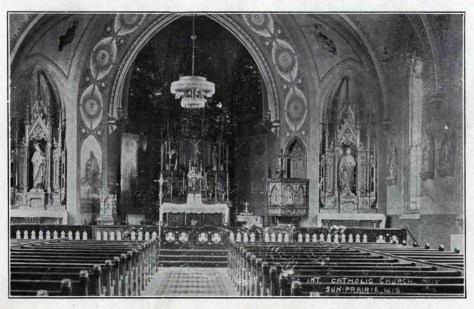
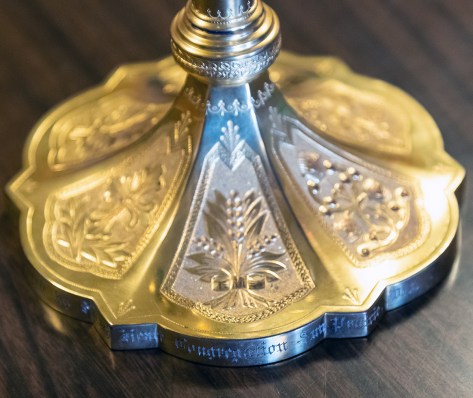
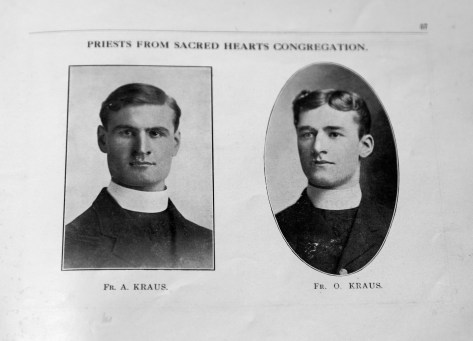
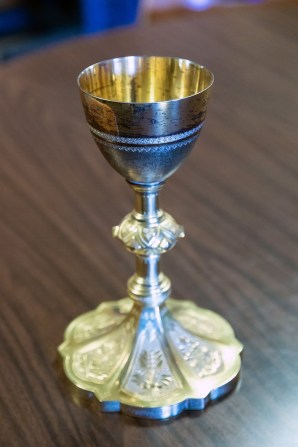


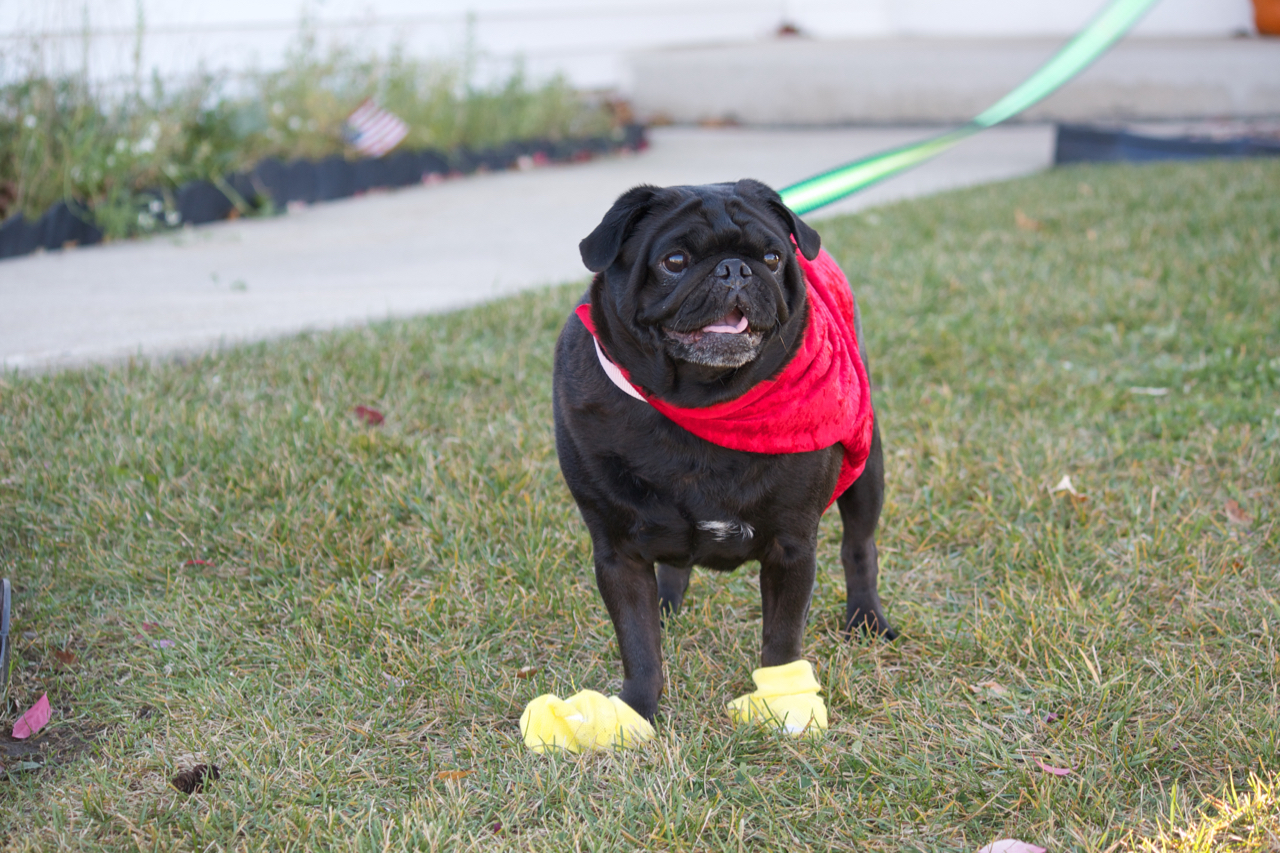


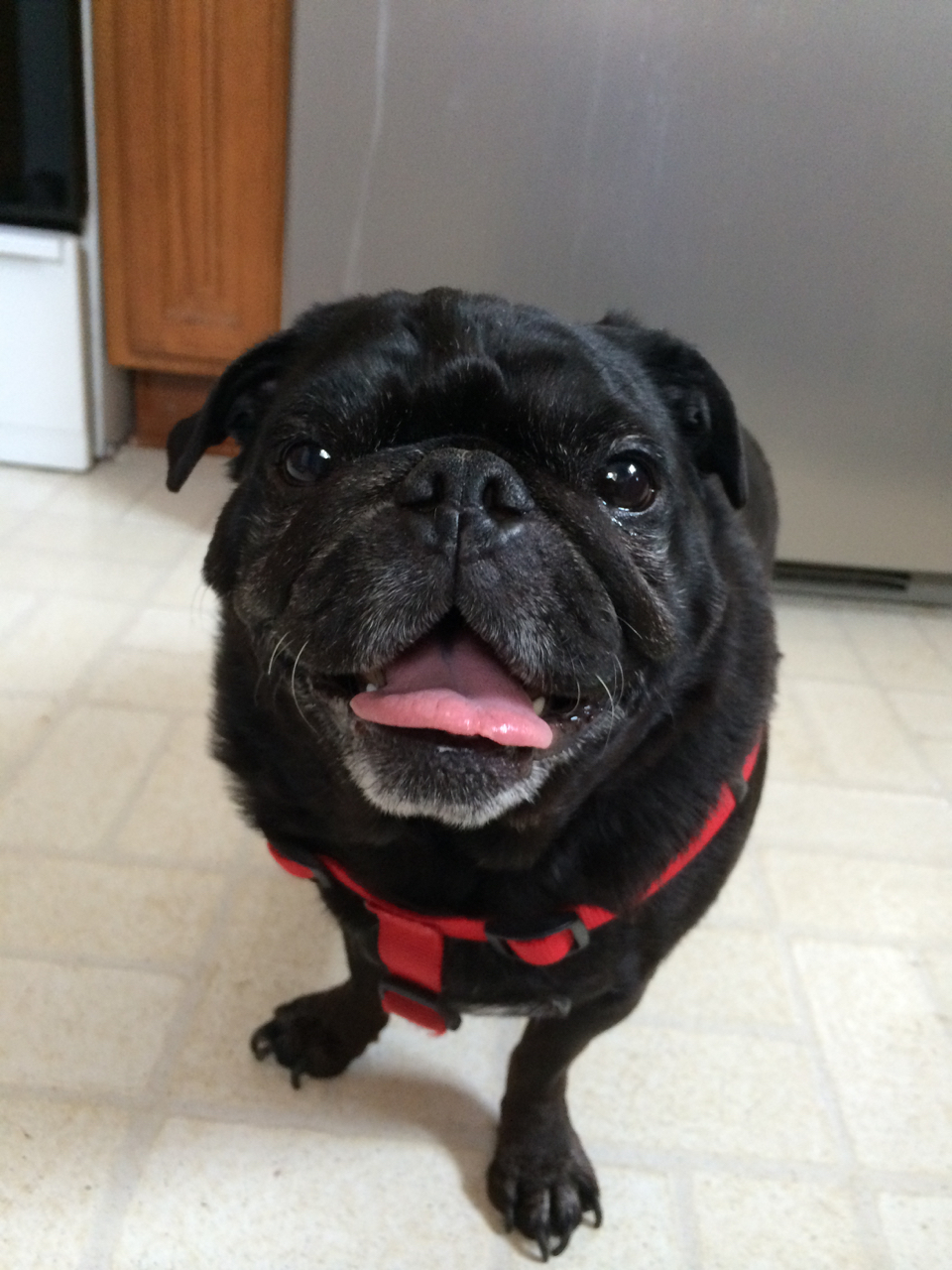


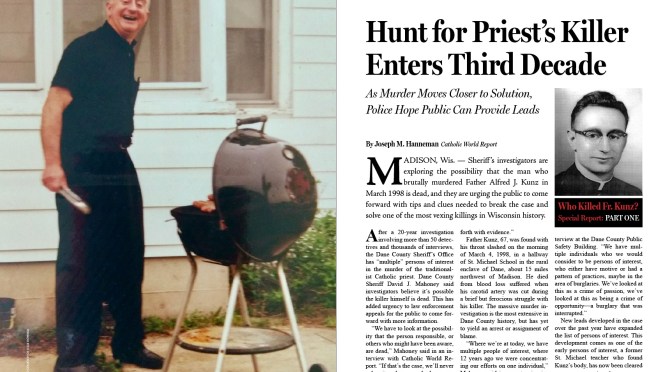
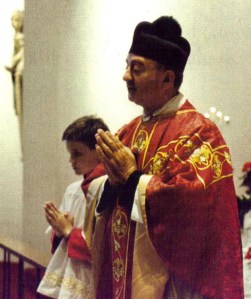
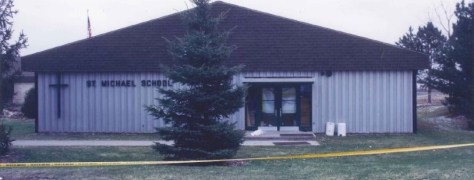



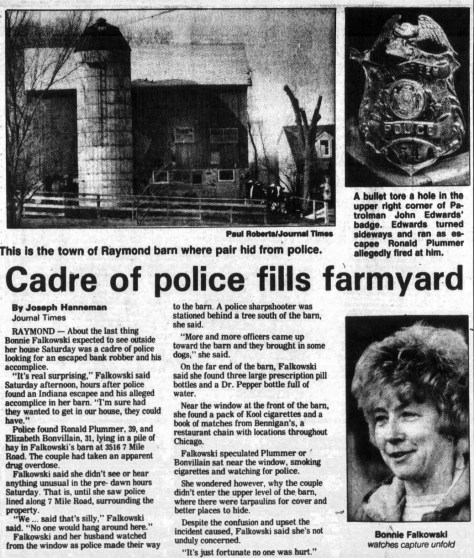


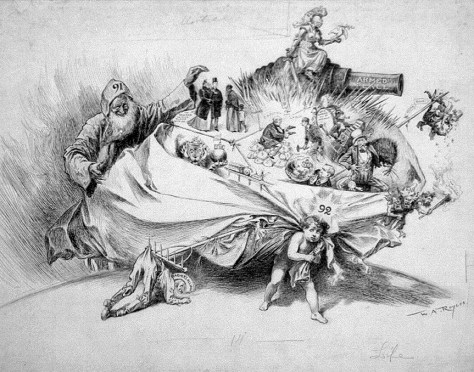

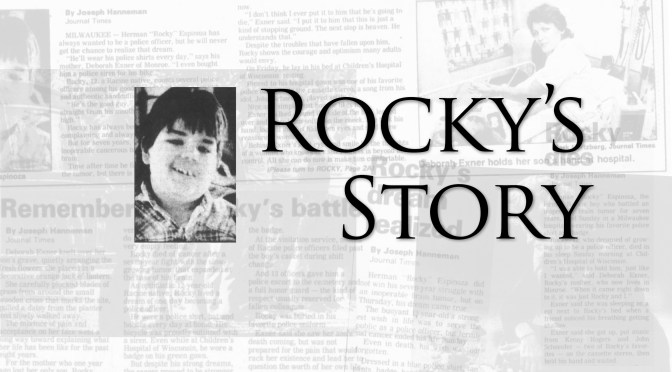
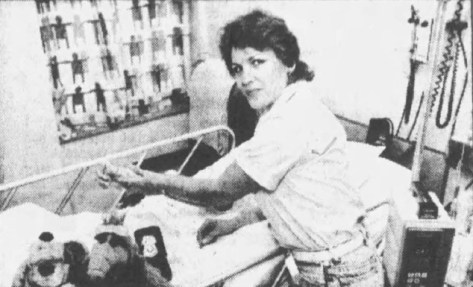


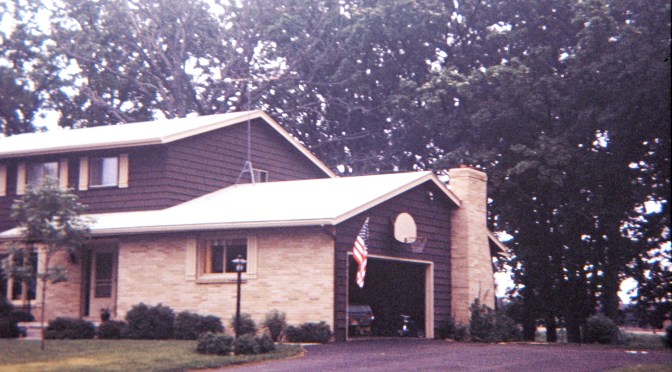


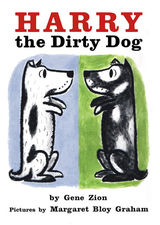 reading to me from toddler age on. Even busy with five kids, she found time to read to each of us. My favorites included “Harry the Dirty Dog,” by Gene Zion. “Harry was a




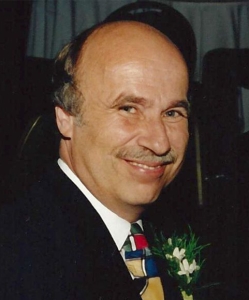


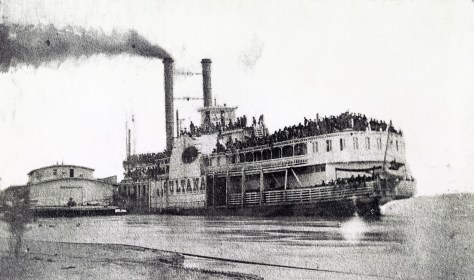





 The Hanneman Archive