I just love this image. Back in 2007 I was photographing a variety of things from Mom and Dad’s house, at my mother’s request. I came across this birthday card from October 1979. It was from my grandfather, Carl F. Hanneman, to my Mom, on her 47th birthday.
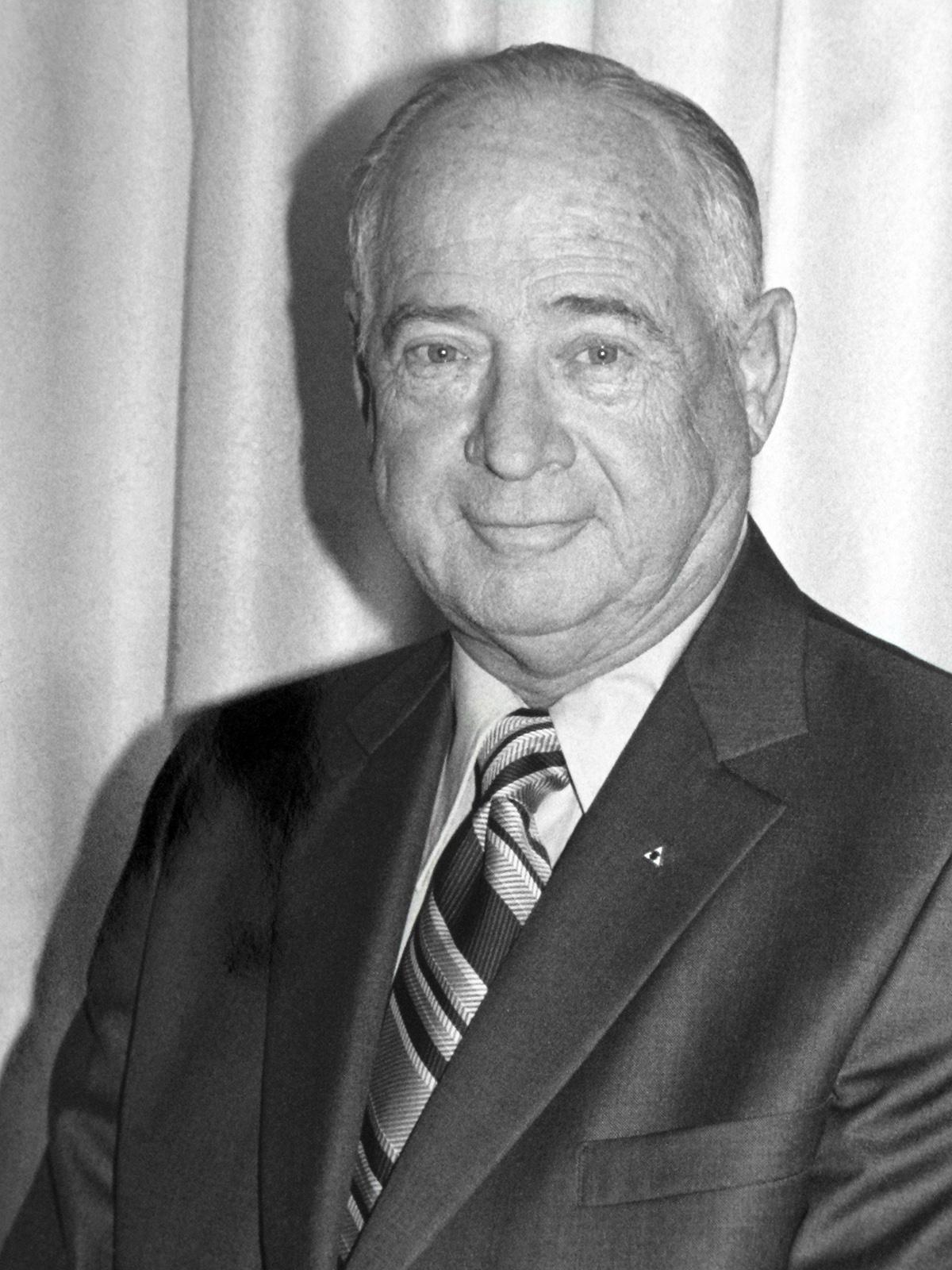
Carl F. Hanneman (1901-1982)
What I found touching was that Grandpa Carl still sent a little cash gift to a daughter-in-law who was nearly 50. He signed the card “Grandpa” even though he was her father-in-law. I loved that my mother never cashed the check — not wanting Carl to spend the money from his very fixed income. She kept the card and the check. Precious.
It’s funny how these memories pop up so unexpectedly. I saw this photo two days ago while searching for something totally unrelated. Mom has been gone to Heaven for 18 months. Grandpa Carl for 38 years. Yet finding this photo brings them right back to me, just as if this card were received earlier today.
Television reporter Tom Hanneman thought he was going to die on May 19, 1979 when a combatant in a violent feud between factions of the Red Lake band of the Chippewa Indians held a gun to his head and threatened to pull the trigger.
Hanneman and cameraman Keith Brown of WCCO-TV Channel 4 in Minneapolis were getting video footage of a fire on the Red Lake Indian Reservation when they were attacked by an armed 20-year-old man. While Hanneman sat in a rental car, his cameraman was outside. “We came to the main road and wanted to get a final shot,” he said at the time. “A short time later I heard a ‘smack’ like a rock hitting the pavement.
“It was a bullet. Keith said it missed his head by about two inches.”
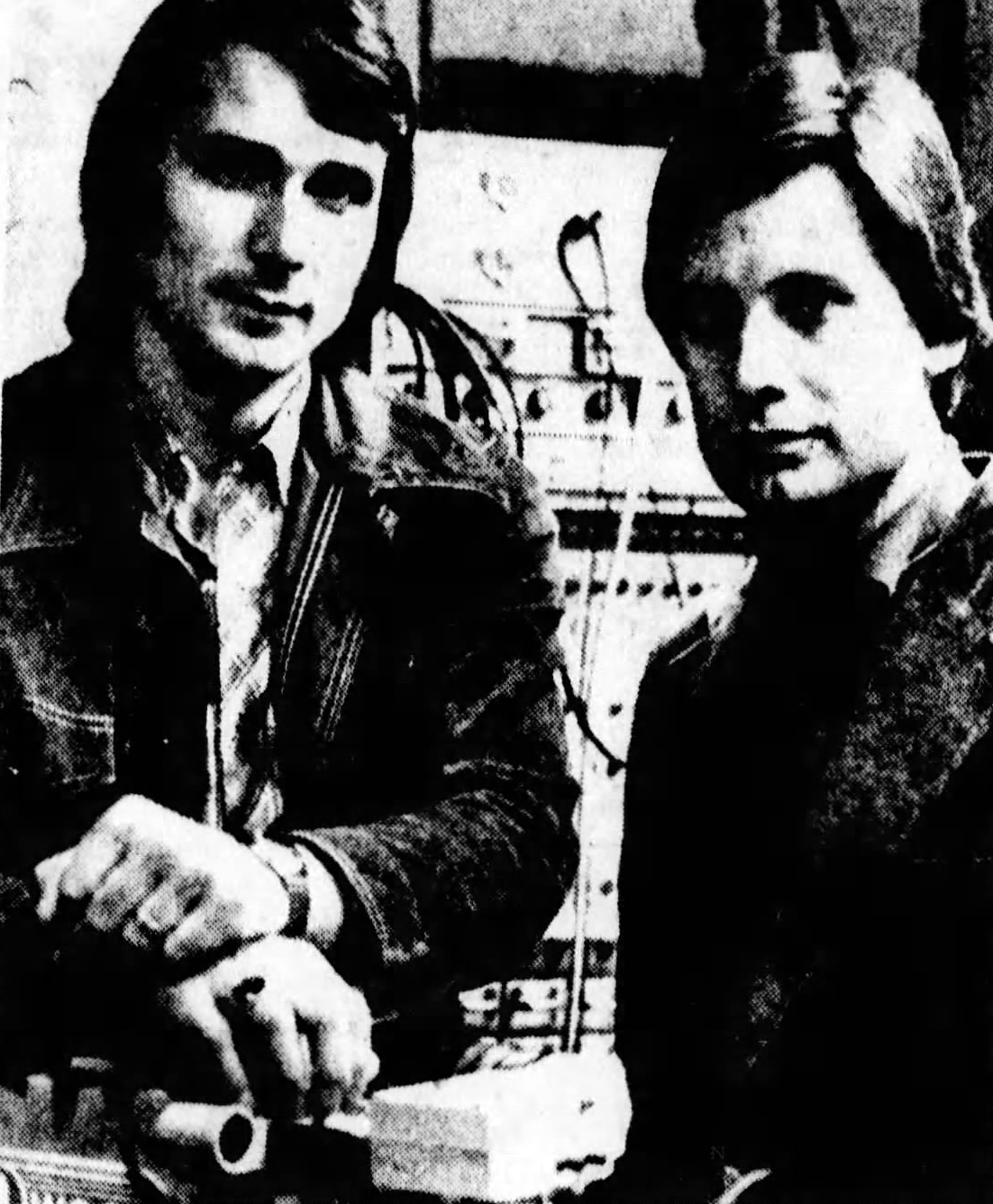
Cameraman Keith Brown and Reporter Tom Hanneman (Minneapolis Star photo by William Seaman)
A tribal member armed with a pistol approached the journalists and ordered Brown to smash WCCO camera equipment valued at $60,000. He then ordered the men to lie down on the road. “He tormented them by holding the gun at their heads ‘cocked back and saying he is going to blow our heads off, how would we feel,'” Hanneman said, according to an account in the Minneapolis Star. “I thought I had had it.”
While Hanneman and Brown were prone on the pavement, the man got in their car and tried to run them over. “He got in the car and started coming at us,” Hanneman said. “I got up and put my hand up and tried to talk to him. He told me to get back down. But when someone tells you to lie down and is trying to run over you, I didn’t want to stay down.”
The gunman eventually left with the rental car. A nearby family offered the journalists refuge, and then helped them get to Bemidji, Minn.
Earlier that day, an armed faction of dissidents raided the Indian Bureau of Law Enforcement building on the Red Lake reservation and took four police officers hostage. They later set fire to the building and a number of law enforcement vehicles.
Dramatic Newscast
On the WCCO 10 p.m. news that night, Hanneman recounted the terrifying day. A transcript of the dramatic interview is below. A video of the newscast (from TC Media) is at the end of this story.
***
WCCO Anchor Don Shelby: Tom, tell us your story.
Hanneman: “We found the main road leading into Red Lake was blocked by a Red Lake fire truck. We got out of the car to shoot some scenes at the police station, which was still smoldering. At that time we heard shots fired and some ricochets off the fire truck that we were standing next to. Obviously we were being shot at. We threw our hands up and a group of Indians came over and wanted to know what we were doing and we explained.
“We left that area to go and shoot some more scenes. Keith Brown drove to a back route to shoot the police station, and also a police car that was aflame, an abandoned police car. He went into the woods and came running back a few minutes later. They had fired on him and the bullets hit the water right in front of his feet.
“We had three incidents that happened this afternoon, Don, the third was by far the worst. We were about ready to leave the area and Keith was going to shoot the final shot of the main street. I was in the car. Keith was outside with the door, the back door open. At that moment I heard what sounded like a rock hitting the car. It was a bullet. It hit the door, ricocheted up and Keith said it missed his head by no more than two inches. A man again came at us with a pistol, ordered us out of the car, and at gunpoint had Keith smash our videotape camera and the tape recorder onto the road.
“He then had us lay in the road in the median, threatened to blow our heads off holding the gun at our heads, tormented us for a while and then got into our rented car, turned around toward the road, sped up — what seemed to be an obvious attempt to run us over. I got up. I just couldn’t sit there and let him go at me and he told me to lay down, and drove by and again threatened us many times with a gun to our heads. He finally left the area, telling us to stay. A short time later he drove off a few blocks and parked, went into an area.
“We got up, just, we were afraid if nothing else that a passing car might hit us. Didn’t really know what to do until someone that lived right in the area, in a trailer home, yelled for us to come over. We were a little concerned that, we didn’t know what we were getting into at the time, Don. We went into hishome and (he) gave us refuge. A half-hour later took us, swept us out of town into Bemidji and we got out safely.
Don Shelby: How does it look up there now Tom, your last sight of the place?
Hanneman: “Most of the residents of Red Lake have left the area. It seems that a group of maybe 100, 150 Indians are in town. They’re all armed. It seemed to be a deserted town with just a few people running around firing guns.”
Don Shelby: How about the FBI? Have they arrived on the scene?
Hanneman: “They are there now. They have blocked off the main road into Red Lake at this time. They were nowhere to be seen at 3:30, 4 o’clock this afternoon.”
Don Shelby: You have not told your story to the FBI.
Hanneman: “No I have not. Not yet. We have just really gotten here and just starting unravel now.”
***
A few weeks later, the FBI arrested Gordon Wayne Roy, 20, and charged him with assault with a deadly weapon. On July 30, 1979, Roy pled guilty to one charge of assault with a deadly weapon. Five other assault charges were dismissed as part of a plea deal. Police said Roy had been in jail on the reservation when the dissidents stormed the building. They released him, and later that day he accosted Hanneman and Brown.
Five other men were convicted of various crimes in association with the armed takeover of the law enforcement building and the shooting deaths of two youths. Sentences ranged from 10 to 26 years in prison. The violence that day stemmed from a running dispute the dissidents had with long-time tribal chairman Roger Jourdain, according to news accounts.
Seven years later, in September 1986, Roy was arrested again; this time for murder. In early 1987, he was convicted of stabbing and slashing Edward White with a machete after a dispute. Roy was sentenced to life in prison.
Hanneman is a first cousin to the proprietor of this web site. He is a well-respected sportscaster in the Minneapolis TV market and beyond. For more than 20 years he was play-by-play announcer for the Minnesota Timberwolves of the National Basketball Association. He has also worked as reporter and sports anchor for CBS affiliate WCCO-TV and as an analyst for Fox Sports North. Here’s where he fits in the Hanneman tree: Matthias Hannemann >> Charles F.C. Hannemann >> Carl F. Hanneman >> Donn G. Hanneman >> Tom Hanneman.
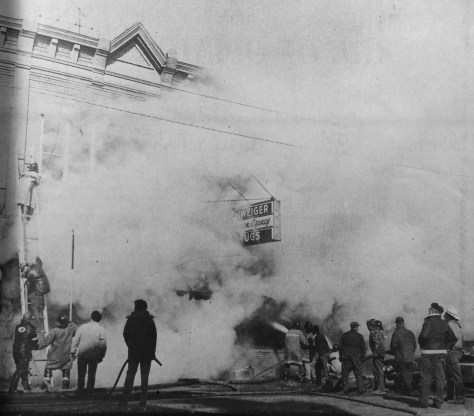
The huge explosion and fire that leveled numerous buildings in Sun Prairie on July 10 and 11 reminded me of another massive fire in the same area more than 40 years ago. On March 3, 1975, a fast-moving fire destroyed the Schweiger Walgreen Drug Store and Hillenbrand’s shoe store in the 200 block of East Main Street.
The fire alarm was sounded at 1:51 p.m. that day, bringing 33 firemen from the Sun Prairie Volunteer Fire Department to the scene. They were shortly joined by another 25 firefighters and trucks from Stoughton, DeForest and Marshall. The fire was discovered in the basement of the Schweiger Walgreen’s store, 214 E. Main St., and quickly spread to the adjacent Hillenbrand’s and apartments above both buildings. It took more than five hours to fully contain the blaze. The last crews left the scene at around 11 p.m.
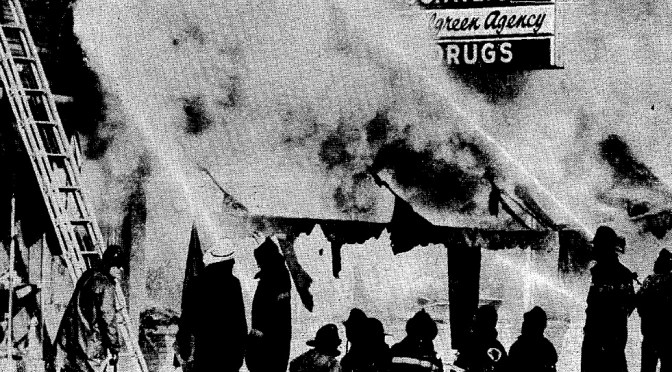
Firefighters battle a blaze at the Schweiger Walgreen Drug Store in Downtown Sun Prairie on March 3, 1975. (Sun Prairie Star-Countryman photo)
Margaret McGonigle, 75, became trapped on the roof of the drug store building when the stairs down from her apartment were blocked by fire. She was rescued by the snorkel truck from the Sun Prairie Fire Department, according to the March 6, 1975 issue of the Sun Prairie Star-Countryman. Mrs. McGonigle was the widow of pharmacist John M. McGonigle, whose family owned and operated McGonigle’s Drug Store for more than 50 years before Robert Schweiger purchased it in 1970. She was also postmaster of Sun Prairie for 38 years before retiring in 1966. John McGonigle died in September 1965.
I distinctly recall going downtown with my father to view the aftermath of the fire. I recall the outriggers on the snorkel truck, and large amounts of road salt around the tires of the fire engines. The pharmacy held special memories for us, since my grandfather, Carl F. Hanneman, was a reserve pharmacist who occasionally worked for McGonigle’s. The Hillenbrand clothing and shoe stores were run by John Hein, a good friend of my parents, and the shoe store was managed by Roger Reichert, also a family friend. Reichert lived above the store and lost all of his belongings in the fire.
Volunteers move boxes of shoes from the Hillenbrand clothing and shoe store, 206 E. Main St., Sun Prairie. (Sun Prairie Star-Countryman photo)
The state fire marshal investigated the blaze, but was unable to determine a cause. Damage to the structures and contents was estimated by Fire Chief Milton Tester at $200,000. Within a week, Schweiger’s opened in temporary quarters on Bristol Street. The buildings were a total loss and had to be demolished.
“Many fine things have been said about our volunteer firemen before. But last week’s fire had to be one of their finest efforts,” read the “Shavings from the Editor’s Pencil” column in the Star-Countryman. “I spent nearly three hours in that biting cold watching those magnificent, heroic firemen work. Not once did I see anyone so much as flinch at going into a burning building or otherwise approaching a dangerous situation.”
Both the 2018 fire that claimed the life of Capt. Cory Barr and the 1975 fire had one thing in common: a pharmacy. The Barr House tavern at the corner of Bristol and Main streets, owned by Capt. Barr and his wife, once housed the Crosse and Crosse Drug Store, according to the Sun Prairie Public Museum. The building dates to the 1890s.
The Schweiger fire was one of three major blazes in Sun Prairie in 1975. On Aug. 10 that year, fire swept through the Moldrem Furniture store at 13 N. Bird St. in the Bird Street Centre. The fire did about $185,000 damage to the 34-year-old business. The store was a total loss. A backdraft blew two firefighters out the front doors of the store. Retiring assistant fire chief Arnie Kleven described the fire as his most frightening in an August 2017 interview with The Star. Kleven said the doors probably saved his life that day. Wiring in the air conditioning system was cited as the cause of the fire.
In July 1975, shorted wiring sparked a major fire in the garage and offices of Bill Gawne Ford Inc., 425 W. Main St. That fire caused an estimated $85,000 damage.
(This post has been updated with details on the Moldrem and Gawne fires.)
Firefighters battled fire, smoke and bitter cold weather. (The Capital Times/Dave Sandell)
It took more than five hours to contain the blaze. (Wisconsin State Journal/Edwin Stein)
A snorkel truck was used in the dramatic rescue of Margaret McGonigle, owner of the drug store building, who was trapped on the roof. (Sun Prairie Star-Countryman photo)
Fire crews from Sun Prairie, DeForest, Stoughton and Marshall battled the blaze. (Sun Prairie Star-Countryman photo)
Shelby Beers behind the counter of the Crosse and Cross Drugstore, circa 1920s. (Sun Prairie Public Museum photo)
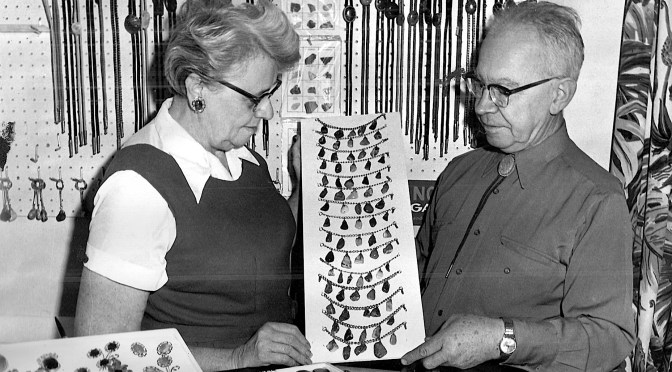
As a boy, I often got to travel with my Dad on his sales routes across Wisconsin to sell veterinary pharmaceuticals and supplies. One of his routes took him to Wausau, so we got to pay a visit to Hanneman’s Rock and Gift Shop, run by my great uncle and aunt, Wilbert G. and Irma Hanneman. Visits to the shop always resulted in getting to pick out something made from the most exquisite polished rocks and colorful crystals.
Over the years, I developed a nice collection of treasures from the rock shop. I came to believe that Uncle Wilbert (nicknamed “Wib”) had made a career out of selling rocks and crystals. Actually, he and Aunt Irma took it up as a post-retirement labor of love after Wib’s long career in banking. They sold gifts from the shop in their home at 130 Ninth Avenue in Wausau in the 1960s and early 1970s, but also attended craft shows and other events to peddle their intricately patterned wares.
Wilbert G. Hanneman uses a diamond saw to cut slabs of Australian imperial red rhodonite.
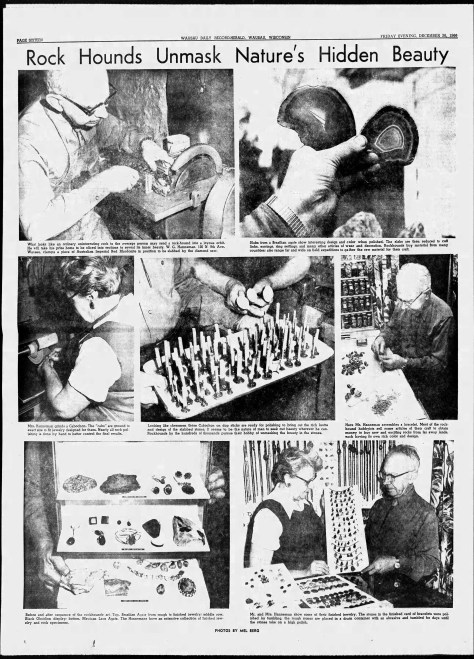
In December 1966, the Wausau Daily Herald-Record ran a photo page featuring the Hannemans and their rock shop. “What looks like an uninteresting rock to the average person may send a rock-hound into a joyous orbit,” read one of the captions. The photo showed Wib using a diamond saw to slice Australian red rhodonite into slabs. Another photo showed polished slabs of Brazilian agate, which were later used to make cuff links, ring settings and other items.
Although Wib and Irma used tumblers to polish many of the smaller rocks, much of the rock polishing was done by hand “to better control the final results,” the newspaper wrote. The craft has its aim to “unmask the beauty in the stones.”
Wilbert G. Hanneman was born May 1, 1899 in Merrill, Wisconsin, the third of five boys born to Charles and Rosina Hanneman. He was the older brother of my grandfather, Carl F. Hanneman. In June 1923, Wib married Irma Pagels and the couple moved to Wausau. Wib had a long career working for the Citizens State Bank and Trust Co., from which he retired in 1964. Wib was a graduate of the School of Banking at the University of Wisconsin-Madison.
Wib overcame a bout of polio that left him with a pronounced limp. Late in life he suffered a heart attack that forced him to give up his beloved cigars. Wib and Irma celebrated their 50th wedding anniversary in 1973. Carl, who was the best man, attended the anniversary doings. The couple had two children, Richard D. Hanneman and Lynn (Hanneman) Swanson Zarnke. Wib died in 1987 and Irma died in 1996.
(This post has been updated with the full newspaper page image)
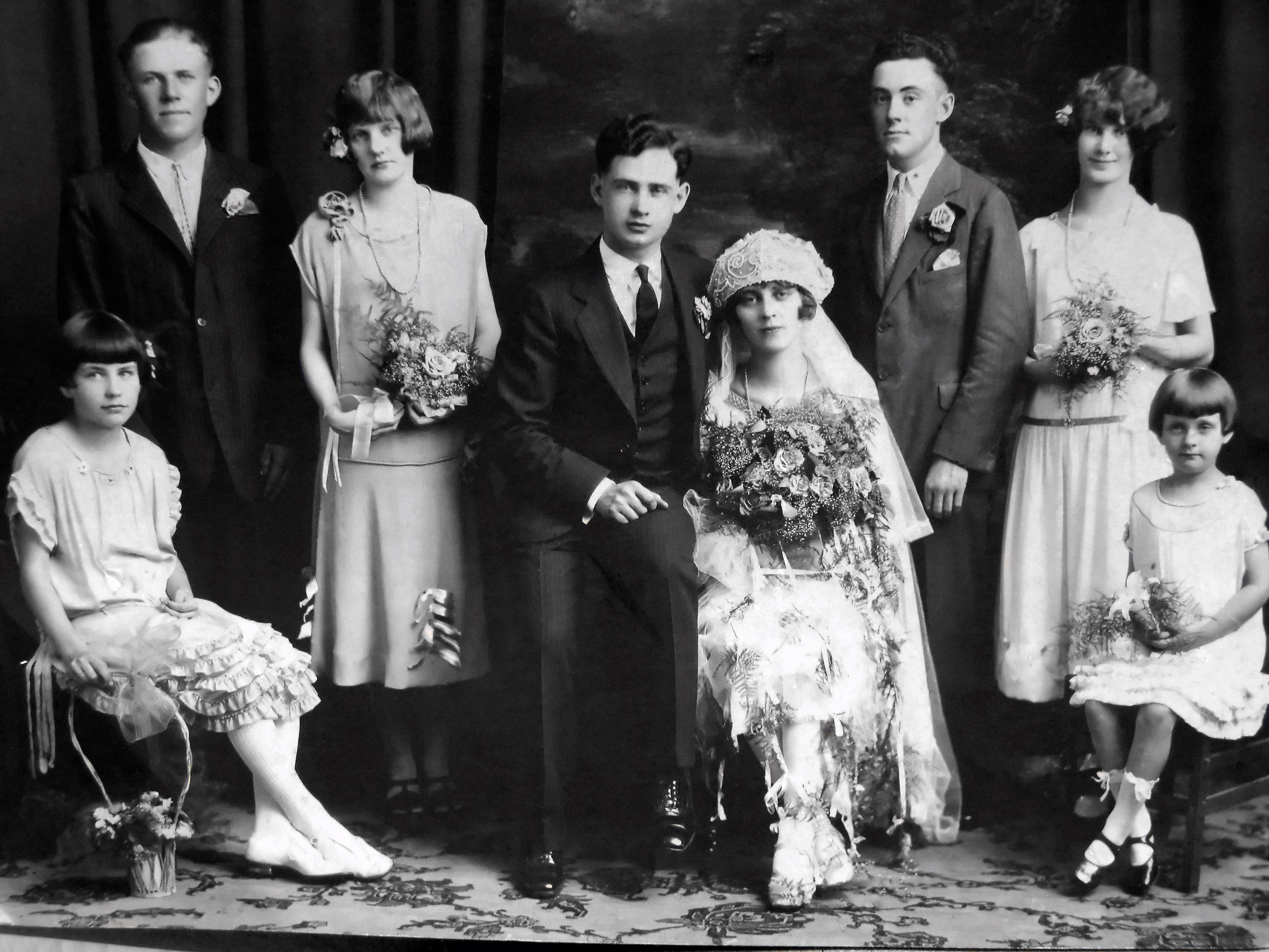
Nearly 90 years ago on a summer Tuesday morning, Ruby Viola Treutel and Carl Henry Frank Hanneman joined in marriage at St. James Catholic Church in Vesper, Wisconsin. The marriage, which would live on for more than 50 years and produce three children and 16 grandchildren, was described in detail in a story in the July 15, 1925 edition of the Wisconsin Rapids Daily Tribune:
TREUTEL-HANNEMAN One of the prettiest weddings of the summer was solemnized yesterday morning at nine o’clock at St. James church, Vesper, when Miss Ruby Treutel, daughter of Walter Treutel of Vesper, became the bride of Carl F. Hanneman, son of Mr. and Mrs. Charles Hanneman of this city. Rev. Father Gille officiated at the nuptial Mass.
The wedding party of groom Carl Henry Frank Hanneman, 23, and Ruby Viola Treutel, 21. Wedding was July 14, 1925 at St. James Catholic Church, Vesper, Wis. At front left is flower girl Nina Treutel, 11, sister of the bride. At front right is ring-bearer Elaine Treutel, 5, sister of the bride. Across the back, left to right, are Joe Ladick (bride’s cousin), Gladys Cole (bride’s cousin), groom Carl Hanneman, bride Ruby V. Hanneman, best man Wendell Miscoll, and maid of honor Esther Allbrecht.
The church was beautifully decorated with greens and the season’s flowers, making an appropriate setting for the wedding party. Miss Velma Doering of Stratford played the wedding march as the party entered the church and proceeded to the altar. Miss Gladys Cole of Nekoosa, and the groom’s attendant, Joseph Ladick, of Vesper, both cousins of the bride, were followed by two little sisters of the bride, Nina and Elaine, who acted as flower girl and ring bearer. The maid of honor, Miss Esther Albright, came next and was followed by the bride and her father, who gave her away.
Mr. Hanneman and his best man, Wendell Miscoll,awaited the party at the altar. The bride was very beautiful in her gown of white georgette trimmed with gold lace. She wore a coronet of pearls, with her veil falling from a beaded butterfly. She carried a shower bouquet of pink rose buds.
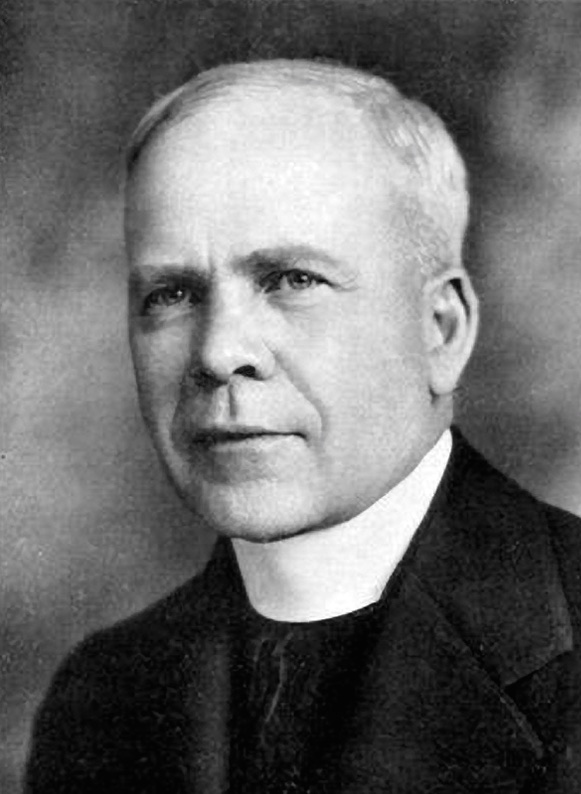
Rev. Charles W. Gille of St. James Catholic Church officiated at the wedding.
Miss Albright, the maid of honor, was gowned in orchid georgette and carried an arm bouquet of rose. Miss Cole, the bridesmaid, wore a gown of orange georgette, and also carried roses. Nina, the little flower girl, was in a little frock of yellow georgette, and Elaine completed the delightful color ensemble in a dress of pink georgette. She carried the ring in a white lily.
Following the service at the church, the bridal party and relatives came to this city, where the ten-thirty breakfast was served at the Witter Hotel. The bride is a graduate of Lincoln High School and the Stevens Point Normal. Since her graduation from the normal school she has been teaching at Vesper. The groom was graduated from Lincoln High and for some time following was employed at the Church Drug store. He later graduated from the pharmacy department of Marquette University at Milwaukee and is at present holding a position with Whitrock and Wolt.
Following a week’s outing in the northern part of the state, part of the time being spent as guests of Mr. and Mrs. Armand Bauer at their cottage at Hayward, they will return here and for the present make their home with Mr. Treutel at Vesper.
The bridal photo, hand retouched to restore color to the roses.
The bridal portrait of Ruby V. Hanneman in its original frame.
For their honeymoon in July 1925, Carl F. Hanneman (1901-1982) and Ruby Viola (nee: Treutel) Hanneman (1904-1977) took a camping trip to Wisconsin’s north woods. The couple are pictured at a camp site near Hayward, Wis. They were married July 14, 1925 at Vesper, Wis.
He could be carrying milk from the barn, but Carl F. Hanneman (1901-1982) is actually on a honeymoon camping trip in this July 1925 photo. Carl and bride Ruby (nee: Treutel, 1904-1977) took a camping trip near Hayward, Wis., after their wedding on July 14, 1925.
An unidentified boy sits outside of a cottage near Hayward, Wis., with Ruby V. (Treutel) Hanneman (1904-1977) in July 1925. Ruby and new husband Carl F. Hanneman (1901-1982) were on their honeymoon.
Carl F. Hanneman (at right) leans on his Ford near the camp where he and bride Ruby spent their honeymoon.
Carl F. Hanneman and an unidentified boy at the Hanneman picnic table.
The Hanneman honeymoon had a rustic theme at a cottage near Hayward, Wis.
Carl F. and Ruby V. Hanneman took these selfies on their honeymoon in July 1925.
Carl F. and Ruby V. Hanneman on their 25th wedding anniversary in July 1950.
Back of the photo: Carl F. and Ruby V. Hanneman on their 25th wedding anniversary in July 1950.
Carl F. and Ruby V. Hanneman on their 50th wedding anniversary, celebrated at Sun Prairie in July 1975.
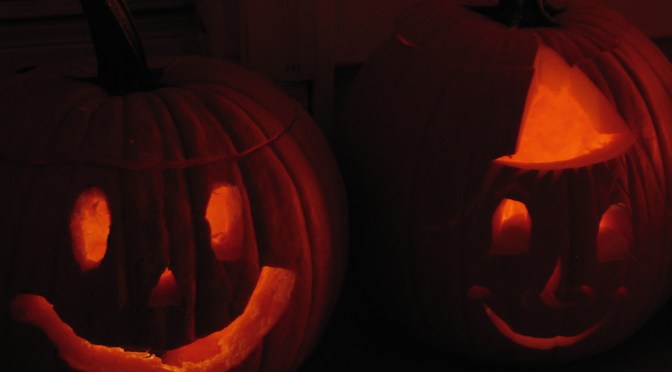
I have nothing but good memories of Halloween. Growing up in the late 1960s and early 1970s, October 31 was a date we looked forward to. Whether we got to buy a costume at the dime store or made our own, it was always an exciting night.
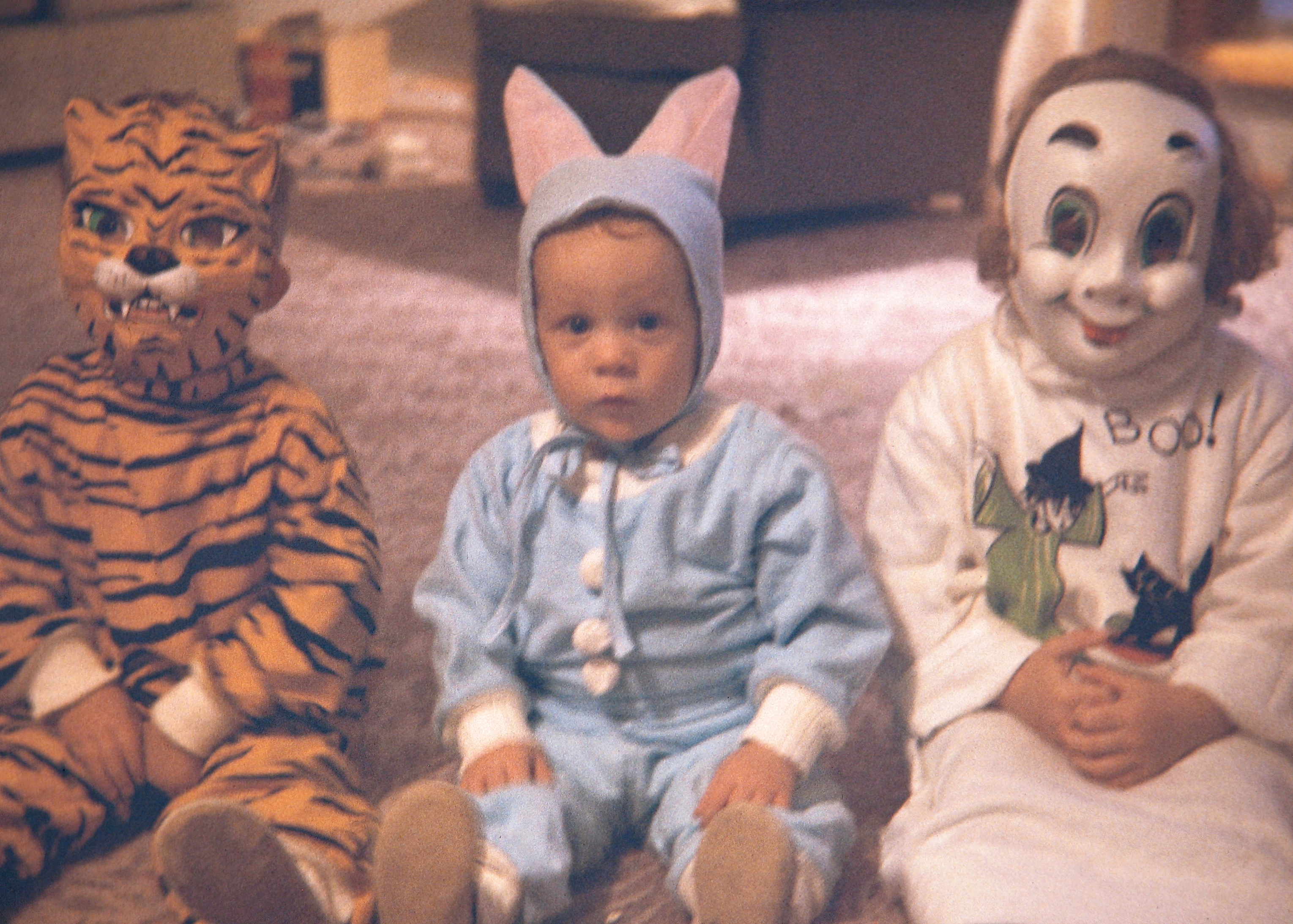
My brother David (left), yours truly at center at cousin Laura all set for Halloween at our home in Grand Rapids, Mich., circa 1964.
One of my most vivid Halloween memories was documented in my book, The Journey Home. I recall Dad tearing out the front door in his sock feet. I wondered what was happening. We figured it out a few minutes later when he dragged two teenagers into the front door and made them apologize for smashing our lit pumpkins. He then turned them over to Sun Prairie police.
We had one sad Halloween when my brother David fell into the neighbors tree well and spilled all of his candy. We all shared to make up for it. Another year, we went across town to “trick or treat” at a few houses of family friends. At one door, I was shocked that the lady who answered called me by name. “How does she know me with this costume on?” I wondered. My brother chimed in, “You forgot to put your mask down.” D’oh!
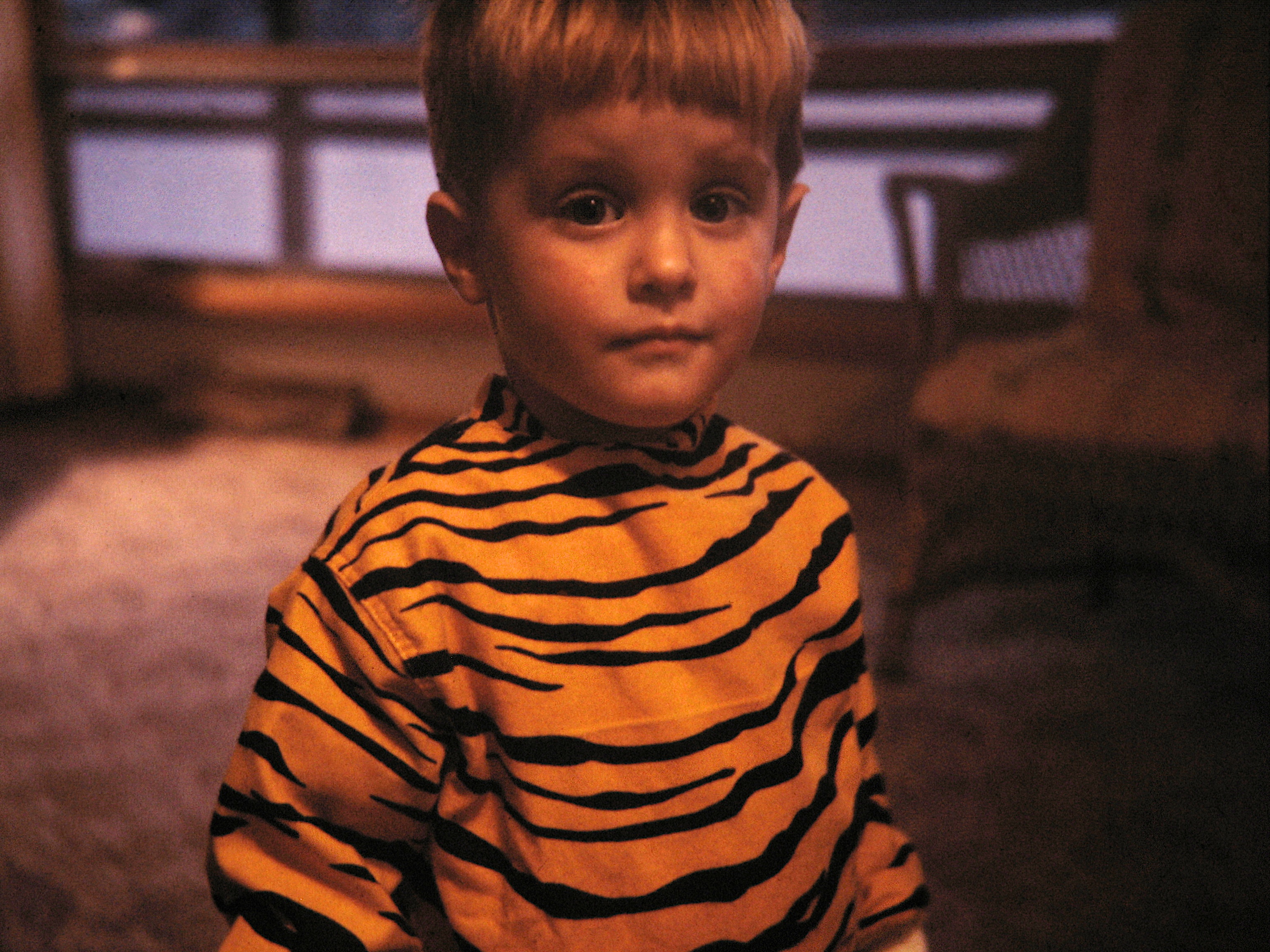
David C. Hanneman was a tiger for Halloween 1964.
Perhaps the most fun we had was creating our own costumes. Lighting the end of a cork on fire, then using the charred remains to paint black whiskers on our faces. Stuffing pillows up an oversized shirt helped complete the hobo look.
It wasn’t until toward the end of my trick-or-treating days that the scare over supposed razor blades in candy apples occurred. Hospitals offered to X-ray candy bags to check for pins or razor blades. That made me wonder if the candy would then glow? Ah, as it turned out the whole thing was a fraud that took on the sheen of urban legend.
Son Stevie watches Grandpa Dave Hanneman prepare to carve, circa 1993.
Once I had my own children, Halloween took on a new dimension. Our firstborn was too shy to go door to door, so we made our main stop at Grandma and Grandpa’s house. Eventually, Halloween became a major event. French onion soup or chili simmered in a crock pot while we took the kids around the neighborhood collecting goodies. Then we retreated into the warmth of the house for good food, warm apple cider and pie. The kids also ate candy.
With the more recent controversies claiming Halloween as un-Christian or even satanic, it was refreshing to read this article on About.com regarding the Catholic roots of Halloween.













 The Hanneman Archive