Over the past several years, I’ve done restoration and cleaning of many grave monuments across Wisconsin. Since the special chemicals used to clean the monuments can take a month or more to take full effect, I don’t often see the final, final product. So I was very impressed with a photograph of the monument of my great-grandmother, Mary Helen (Ladick) Treutel, sent by a dear cousin, Shirley (Ladick) Oleson.
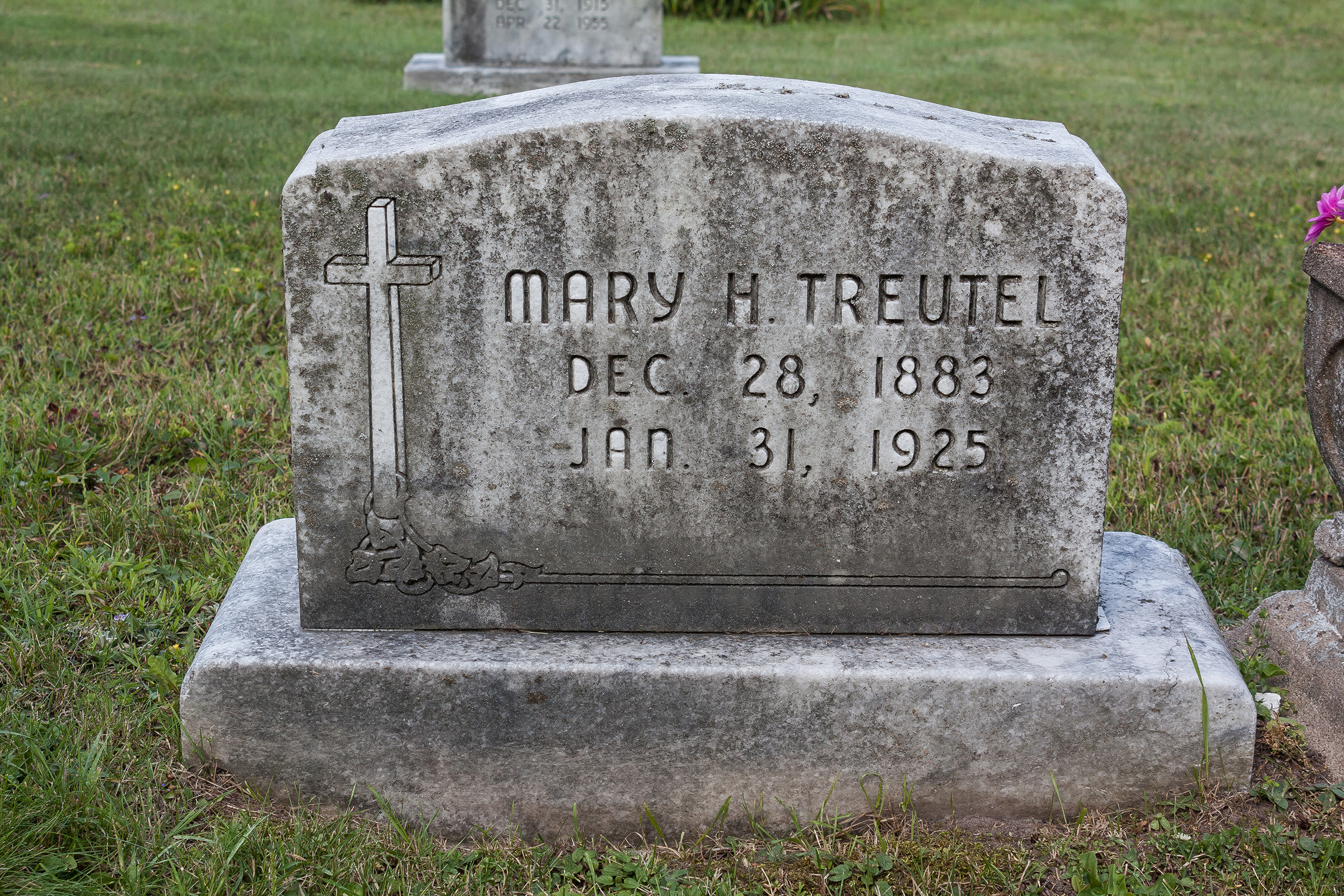
I treated and cleaned this stone at St. James Catholic Cemetery in Vesper, Wis., in the summer of 2017. Mary Treutel’s monument was badly stained by black mold, which was even more apparent on the white stone surface. During the cleaning process, this became apparent with the many color changes caused by the cleaning chemicals. Many people don’t realize that mold, lichens and other growths are very harmful to the often-delicate headstones.
Before cleaning: black mold deeply stained this monument.
When I last saw this headstone in August 2017, it still had a bit of an orange glow. The D/2 cleaning chemical (the only one approved for use at Arlington National Cemetery) continues to work with rain and sun for three to four weeks. You can see the progression in the photo gallery below:
The “before” photo shows deep staining by black mold.
The cleaning chemical quickly attacks the harmful growths.
After a few minutes, the stone turns a brown-orange.
After treatment, the stone has an orange hue, which will fade with time
Nearly two years later, the stone looks almost flawless.
The video below shows how this monument looked as it was given a final rinse:
The rectangular grave stone sits quietly among thousands of others at Calvary Catholic Cemetery in Racine, Wisconsin. Its granite lettering pays tribute to the man who lies beneath it, but his real story has never been fully told. Lt. Edmund Richard Collins was a young lawyer and Knight of Columbus who went to war in 1917 as a leader of men. He returned home 100 years ago in a casket, a war hero with the distinction of being among the first U.S. soldiers to engage Communist Russians on the battlefield.
Most people do not know that an expeditionary force of American and Allied troops were diverted from World War I’s European theater and sent to North Russia and Siberia to fight the Bolsheviki, the Red Communist Russians who seized power during the Russian Revolution. It became known as the Polar Bear Expedition.
The grave of Lt. Edmund R. Collins at Calvary Catholic Cemetery, Racine.
American and Allied troops landed in August 1918 at Archangel, a key port on the White Sea in the northern part of European Russia. The Allies were commanded by British Maj. Gen. Edmond Ironside. When Allied forces took Archangel, the Bolsheviki fled south. Over the next nine months, American troops faced brutal conditions such as minus-20 degrees Farenheit temperatures and chest-high snow. Troops moved on foot and equipment moved via sled or sleigh. Before the winter set in, commanders urgently requested 1,000 pairs of skis, 5,500 pairs of snow shoes, and 7,500 pairs of moccasins to aid the men in advancing on the battlefield. Other requested equipment included 50 long cross saws and tongs for obtaining ice blocks for drinking water, and 100 sledges with dogs and harnesses.
Just as the Armistice ended World War I in Europe on Nov. 11, 1918, the action in North Russia was just getting started. The U.S. Army’s 339th Infantry Regiment brought more than 4,000 soldiers to the many battlefields across North Russia. They fought an enemy that was often well entrenched; defended by batteries of machine guns. The Bolsheviki used the deep snow as cover. U.S. patrols reported Bolsheviki suddenly emerging from massive snow banks to open fire on Allied troops or take prisoners.
A French-designed 155-mm long gun used in the North Russia campaign.
Allied troops fought and died in places with names like Obozerskaya, Chinova, Onega and Bolshie Ozerka (also spelled Bolshie Ozerki). Collins led his men in some of the fiercest fighting of the North Russia campaign. On March 17, 1919, Collins and some 30 men and one Lewis gun left Chekuevo and a traveled all night to reach Chinova. They advanced toward Bolshie Ozerka and had come within 1 verst (about two-thirds of a mile) of that place when they were fired upon by five or six machine guns at once. “It was only through the enemy’s high shooting that the whole detachment was able to slowly withdraw, crawling through the deep snow,” wrote Lt. Col. N.A. Lawrie in his battle summary.
On March 23, 1919, Collins led a detachment that engaged the enemy at Bolshie Ozerka. His men covered a front of about 300 yards, most of which ran through the woods. During the battle, the Bolsheviki laid down heavy machine gun fire, striking Lt. Collins and a sergeant from Company H of the 339th Infantry. Collins was shot through the lungs, while his compatriot suffered wounds to the shoulders and arms. Another lieutenant took command and advanced the troops 500 yards under heavy fire in waist-deep snow. The Allies returned heavy fire and held their ground for five hours until reinforcements arrived, according to a summary written by Capt. Richard W. Ballensinger of the 339th Infantry.
Troops and material were often moved by sled, pulled by horses or reindeer.
Badly wounded, Collins was evacuated to a dressing station. On March 24 he was being transported toward the hospital at Chekuevo. “He died from the effects of his wounds before he reached this station,” Ballensinger wrote. “I consider it my duty, since the weather permitted, to send his body at once to Archangel.” Lt. Edmund Richard Collins would be forever 28.
“Officers and men in this engagement did extremely well under trying conditions. I am sorry that I am forced to report the loss of a good officer.” –Capt. Richard W. Ballensinger
Collins was one of nearly 100 Americans killed as a result of combat before the campaign ended in May 1919. The men, who had been buried in various places around North Russia, were retrieved and sent to Archangel for transport home to the United States. Word of his son’s death reached Dr. William P. Collins in Racine over the weekend of April 5, 1919. The Racine Journal-News account said Collins died on March 29, five days after being shot. However, battlefield records indicate he died March 24, the same day he was wounded. The family would have to wait seven months for Collins’ body to return home for a funeral and final burial.
Page 1 of the Racine Journal-News from April 7, 1919.
Dr. Collins would have his heart broken again in November 1919, when a series of mistakes resulted in the wrong body being sent to Racine for burial. More than 100 soldiers’ bodies were aboard the Army transport Lake Daraga when it docked at Hoboken, N.J. on Nov. 12, 1919. Collins’ body arrived at the train station in Racine just before midnight on Nov. 19, surprisingly without military escort. When Collins’ casket was opened the next day, a mistake became immediately apparent. The man in the casket was much taller than Collins and was balding. Collins had a full head of hair. The man’s dog tag read, “Charles O’Dial 2021851.” It was the wrong body. Reports came in of incorrect soldier bodies being received in several other cities. Collins’ funeral was postponed.
In Carlisle, Indiana, the funeral and burial of Odial had already taken place. The body was exhumed and discovered to be that of Frank Sapp of Summitville, Indiana. A frantic Dr. Collins wired military officials in Washington. “Body sent to me belonged at Carlisle, Ind. Body exhumed at Carlisle at my request belonged at Summitville, Ind. Body exhumed at Summitville on my request was not right body,” Collins wrote. “All bodies so far proved to be misplaced. Is it not time to get busy?”
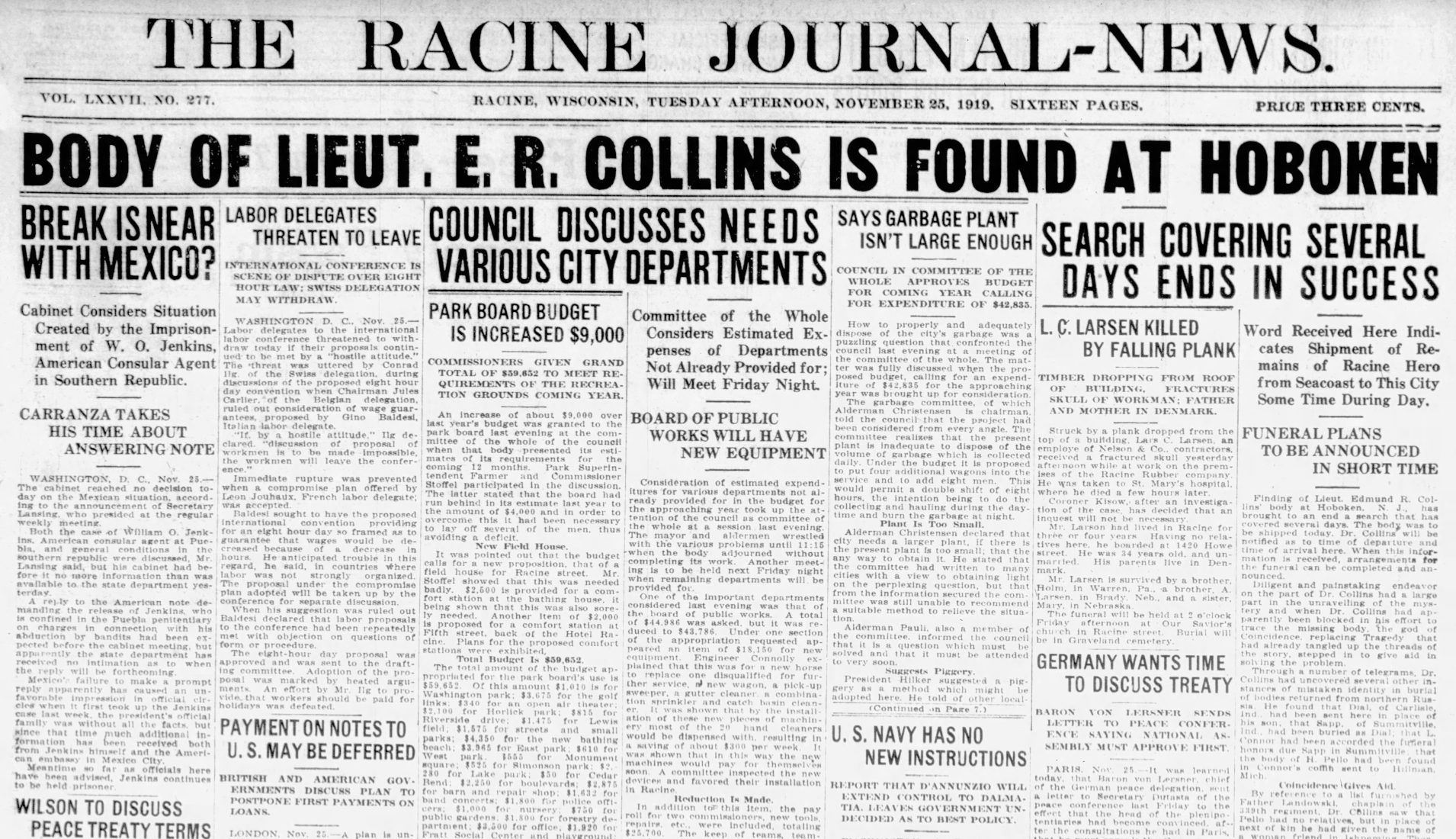
The Racine Journal-News announced the good news on Nov. 25, 1919.
The War Department issued a statement that did little to clear the air, blaming the mistakes on a rush to load the ships when pulling out of Archangel. In the end, Dr. Collins was the one to solve the mess after obtaining a list of the bodies on the ship and the numbered caskets. As it turned out, Collins’ body was still in Hoboken. On Nov. 25, the body was finally shipped via rail to Racine.
The tragedy took on another sad dimension when it was learned the officer who accompanied what was thought to be Collins’ body was killed in an auto crash in Chicago on Nov. 19, 1919. Further muddying an already confused story, the Chicago Tribune reported the dead man was Raymond R. Collins, the brother of Lt. Edmund R. Collins. However, according to U.S. Census records, Edmund Collins had no brother named Raymond, nor a brother who served in WWI.
Rev. John S. Landowski (Ancestry/Sara Ward)
The city of Racine was finally able to say goodbye to its fallen hero on Nov. 28, 1919. His funeral Mass was held at St. Patrick Catholic Church. “When the flag was sent to north Russia, Lieut. Collins unhesitatingly followed, and heroically gave up his life for his country,” said Father John Landowski, chaplain of the 339th Infantry Regiment. “When he was sent out on a hazardous expedition, he hesitated not, for he fully realized that the lives of his men depended on him. He recognized in that order, which proved fatal in the end, the call of the Most High. He fell in service, fell as a martyr of his land.”
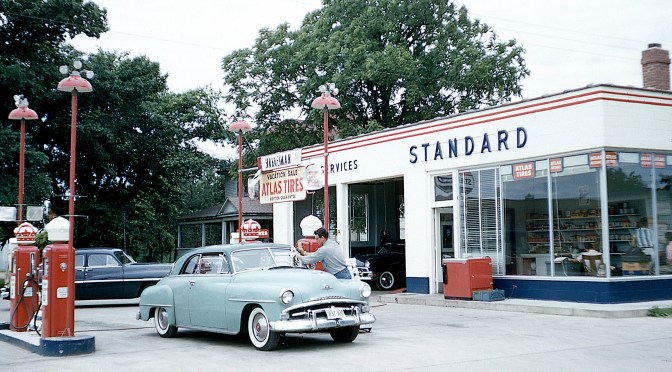
Back in 1951, David D. Hanneman owned and managed a Standard Oil service station in his hometown, Mauston, Wisconsin. When I wrote about that back in 2014, a few readers raised questions about where the station was actually located. We finally have the answer — and it’s different than any of the locations suggested earlier.
David D. Hanneman stands outside his Standard Oil station in Mauston in 1951.
Mauston-based author and historian Richard Rossin Jr. says the Standard station was at 241 W. State Street in Mauston, at the corner of West State Street and Beach Street. It is not far from the current Hatch Public Library. The neighborhood along Mauston’s main drive looked a little different back then. To the left (or west) of the station, there are large trees in the 1951 photos. The lot immediately adjacent to the station was later cleared. That site contained an IGA grocery store at one time and is now home to a CarQuest auto parts store.
“As that station was just down the street from my boyhood home, it was a favorite hangout for me when I was young,” Rossin said. “It was Larry’s Mobil in the late 1970s. Jim Bires ran it from 1982 to 1988. Soon after that, it became a laundromat, and still is today. It’s a real treat for me to see such an early view of the place.” Rossin said in 1965, the business was called Slim’s Mobil, which it remained until Larry Dyal took it over in the 1970s.
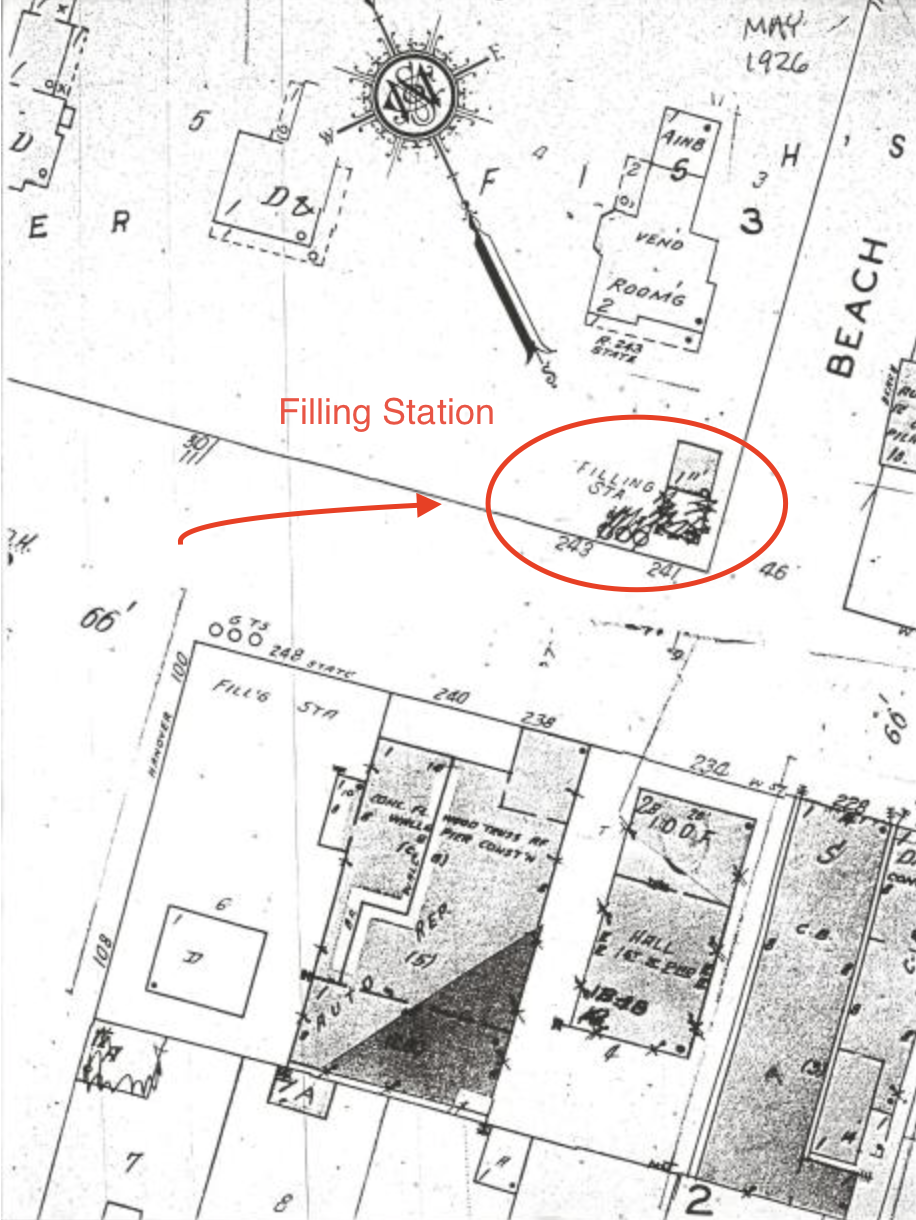
Rossin estimated the original Standard station was built in the late 1940s. The situate the corner of State and Beach streets earlier housed a small gasoline filling station, according to a May 1926 Sanborn fire insurance map (see below). Sanborn maps from 1894 and 1909 show no structures on the site. The brick rooming house behind the filling station was shown on all three Sanborn maps. That home is still there today.
A 1926 fire map shows a small filling station at the corner of West State and Beach streets.
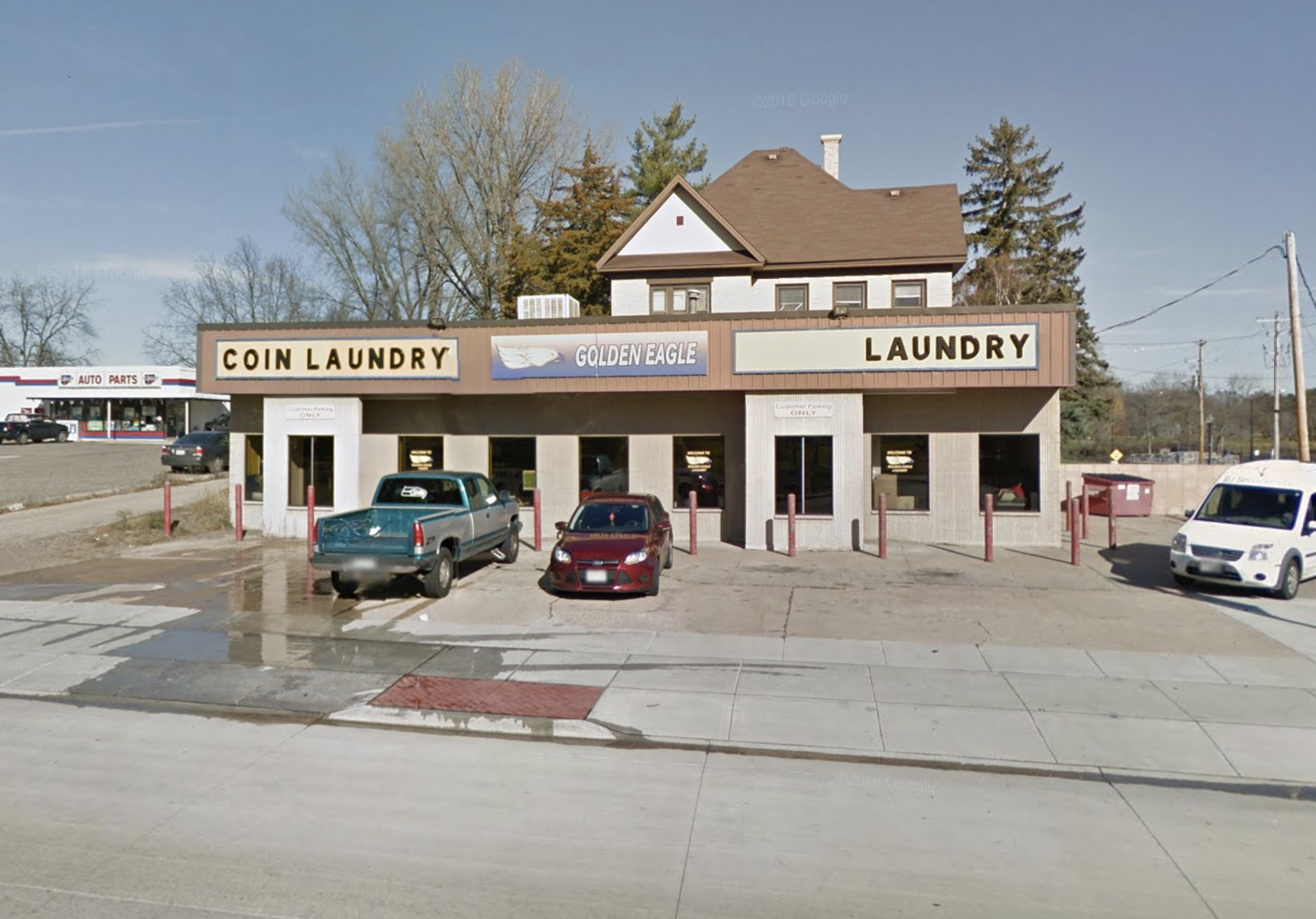
A quick look at Google Maps shows the former service station building is still there, now called Golden Eagle Laundry. Rossin said the original laundromat owners added onto the service station building, so it’s the same structure as the one shown in the 1951 photos.
This 2016 Google Maps street-view image shows what used to be Hanneman’s Standard station in Mauston. (Screen capture of Google Maps)
The West State Street location meant Dad probably walked to work. The Hanneman homestead at 22 Morris Street was just a few blocks up State and then a turn northeast onto Morris. I distinctly remember the IGA grocery store in the 200 block of West State Street. I recall going there with my Grandpa Carl Hanneman in the early 1970s — probably sent there by Grandma Ruby to grab a loaf of bread or a dozen eggs. Now I know the building next to it was my Dad’s old service station.
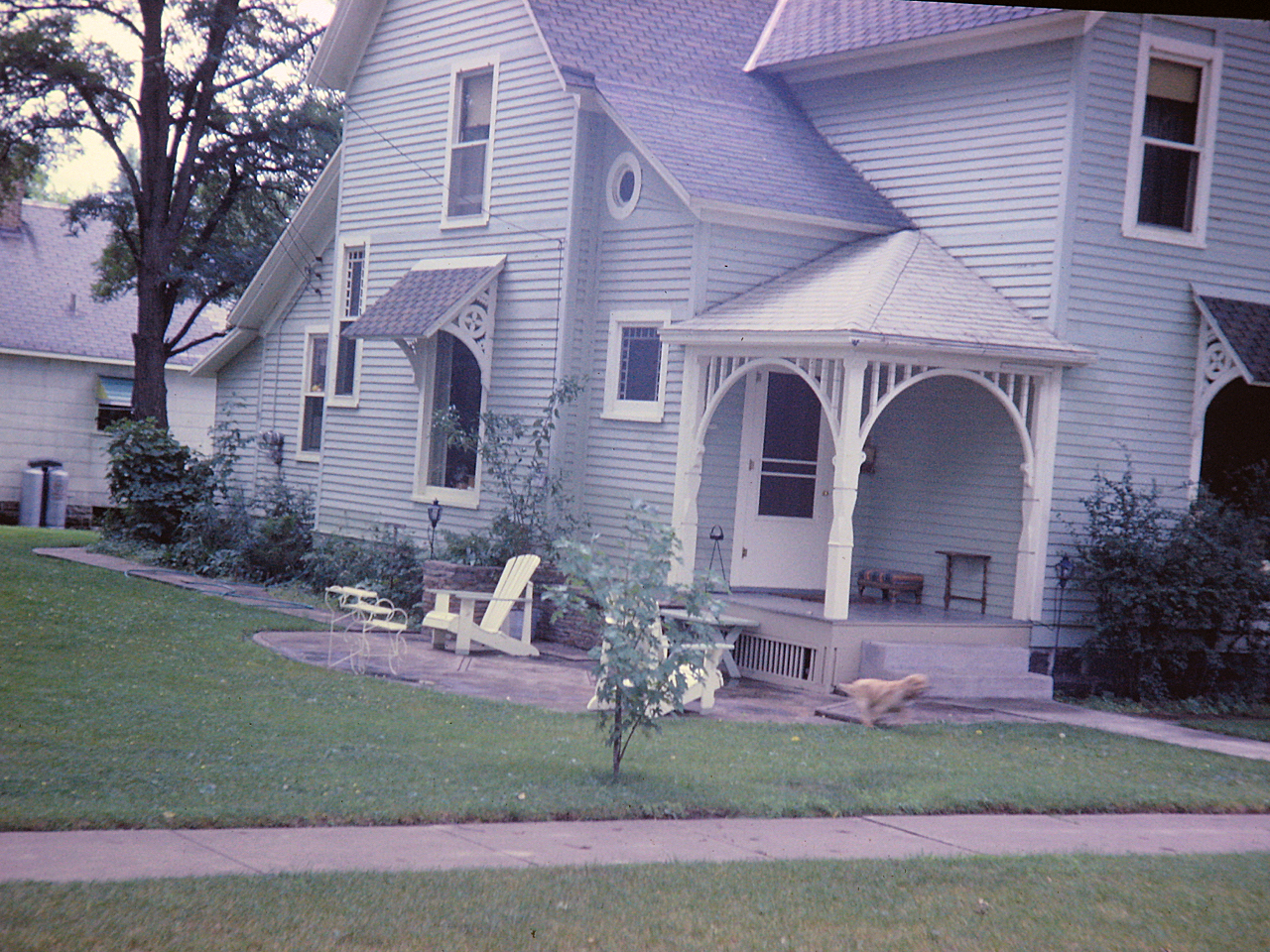
The Hanneman house in Mauston, circa 1959. The little brown blur in the lower part of the photo is my parents’ dog, Cookie.
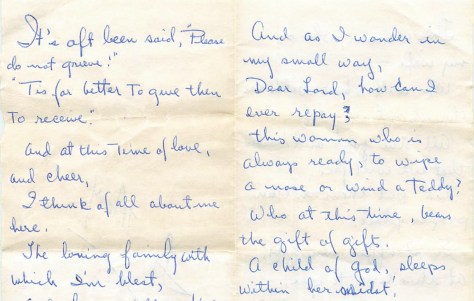
My mother walked into the family room, looking almost sheepish, and said, “I want to show you something.” She was almost beaming as she got out a yellowed sheet of paper, folded into four panels, with a hand-written title on the cover: To Mary. It was evident that this paper, whatever it contained, was precious to her.
She held the document up to her heart and explained that my father had written it for her many years ago. She wanted me to know that they did have their moments of closeness that superseded any of the difficulties during nearly 50 years of marriage. And now, a couple of years removed from Dad’s 2007 death from lung cancer, Mom truly treasured a poem he penned back in the 1960s.
The paper was weathered, but the words were as impactful as the day they were written.
“Go ahead, read it!” she said, turning her head with tears in her eyes. And so I did.
To Mary
It has oft been said, “Please do not grieve.”
‘Tis far better to give than to receive.
And at this time of love and of cheer,
I think of all about me here.
The loving family with which I’m blest,
And know within, I’m not a guest.
That all about me is real and true,
That what I have is because of you.
Daily you give these gifts of love,
Of which I am recipient of.
And I wonder in my small way,
‘Dear Lord, how can I ever repay?’
This woman who is always ready,
to wipe a nose or wind a teddy?
Who at this time bears the gift of gifts,
A child of God sleeps within her midst.
A child who needs loving care,
To grow strong, to know what’s right and fair.
These few reasons and so many more,
Make it easy to see why I adore.
This woman, who is my wife,
Who will share with me throughout my life,
All the joys and troubles that we will face,
And put them in their proper place.
So I offer my gift at this time to you,
My deepest love, which indeed is not new.
Needless to say, I was very touched. My father, despite his tremendous gifts in public speaking and dealing with people, found it difficult to express thoughts in writing. So this definitely came from the heart. Whenever he had a speech to give or a presentation before the Sun Prairie City Council or the Dane County Board of Supervisors, Dad wrote out a draft and Mom helped him polish it with structure and grammar. She was always the reading teacher!
I was tickled that she not only saved the poem, but seemed to get the same thrill as I’m sure she did upon first receiving it four decades earlier. This was a softer side of Mom we didn’t always see growing up, but which became a central part of her as the autumn years turned to winter. I photographed the card and gave it back to Mom, who put it away again for safekeeping.
I thought of the poem again shortly after Mom died in late December 2018. I was given the black-and-white photo atop this story to scan for Mom’s memorial video. I was struck by how young my parents looked, probably shortly after being married in August 1958. It was easy to see the sentiments of the poem in this photograph.
Dad, thank you for writing something that Mom treasured her entire adult life. And Mom, thanks for sharing it, and showing a side of you that you tried to keep hidden. As we observe the first Mother’s Day without you, we are heartened by the thought of you two, together in the company of the angels and saints. Happy Mother’s Day.
I heard the answering machine pick up a call in my office. Normally they are hangups or some robo-call, but I sensed this was different. I strained to hear what the woman was saying. It was clear it was something I needed to attend to, so I played back the message.
The caller was the owner of Suburban Studio in Sun Prairie, a portrait photography business that has been around for a long time. She had noticed my Mom’s obituary recently and realized she had a large, framed portrait of my late father from when he was mayor of Sun Prairie. The portrait hung in the studio for years as a sample of their work. She was calling to see if I would like it.
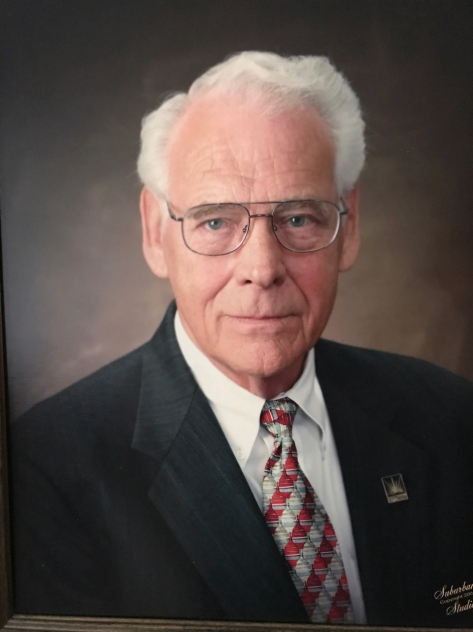
This portrait of David D. Hanneman hung in Sun Prairie City Hall during his term as mayor.
I contacted her right away and made arrangements to pick up the portrait. She did not charge for the 16×20 inch print (although I did buy the frame it was in). When I stopped at the studio the next day to pick it up, I was really taken aback. Not just by the size of the portrait, but the look of it. This was similar to the photo we used in Dad’s obituary in April 2007, but it was different. I stared at the image. Dad seemed so close and alive; almost as if he was about to speak. The studio owner agreed, saying the image had something about it. You almost sense the person is there in the room.
I kept racking my brain trying to think where I’d seen this photo before. Then it struck me. Dad used this photo in his literature when he ran for re-election in 2005. I vaguely recalled seeing his brochure back then and thinking this photo had a different quality.
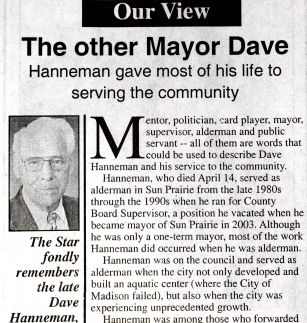
The Sun Prairie Star used the same photo in its editorial when Dad died in 2007.
I rarely believe in coincidences, so I chalk up this whole encounter to Divine Providence. It reminded me of the time I was sitting at my desk in my home office in Mount Pleasant in the early evening. I dozed off and was in and out in one of those semi-conscious sleep states. I was jolted awake though, by the sound of my father’s voice.
Hello? Are you there? Yes, it’s me. I’m still alive!
I sat upright and looked around the room. Where was his voice coming from? Dad kept talking and I recognized it as part of an oral history interview I did with him in November 2006. While we were recording in Dad’s room at St. Mary’s Hospital in Madison, he received a call on the cell phone from his brother, Donn (1926-2014). I have no idea how this recording started playing on my computer while I was half-asleep. My tears flowed freely though, as it seemed Dad was really speaking to me from Heaven. I will never forget that moment.
Listen to a portion of the oral history interview I did with Dad while he was being treated for lung cancer:
Now I have this beautiful portrait, a gift from Louise Floyd at Suburban Studio. I look at Dad’s expression and it, too, speaks to me. Funny, it seems to say just about the same thing as the recording from my computer. “I’m still here, son. I am alive!”
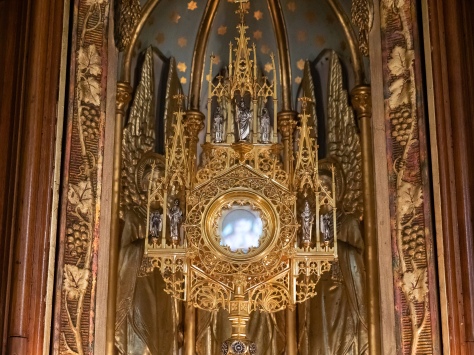
UPDATE!!This will be a little hard to explain, but it brought more tears to my eyes. Yesterday I was at St. Mary of Pine Bluff Catholic Church shooting photographs. The main thing I photographed was the gold monstrance that holds the Blessed Sacrament for exposition and adoration. See my photo below. That holds the body, blood, soul and divinity of Jesus under the appearance of bread. When I was doing closeups, I kept noticing reflected colors in the glass of the monstrance. So I lined up my camera and shot a bunch of images. Later I sent one to Father Richard Heilman and told him to look at the reflection. I thought it looked like a veiled woman in blue.
When Fr. Heilman looked at that photo earlier today, not long before I published the first version of this article, he saw the reflection of a man in a suit and tie with glasses. When Father later read my post and saw Dad’s portrait, he said, “THAT’S THE MAN I SAW!” I saw the Blessed Virgin and he saw this very photo of my father. Let that sink in. What a blessed day this has been!
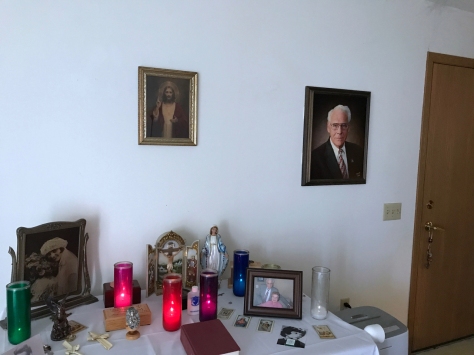
I shot this photo of the monstrance at St. Mary of Pine Bluff Catholic Church on May 3, 2019.I placed Dad’s portrait near what Fr. Richard Heilman calls my “God cave.”
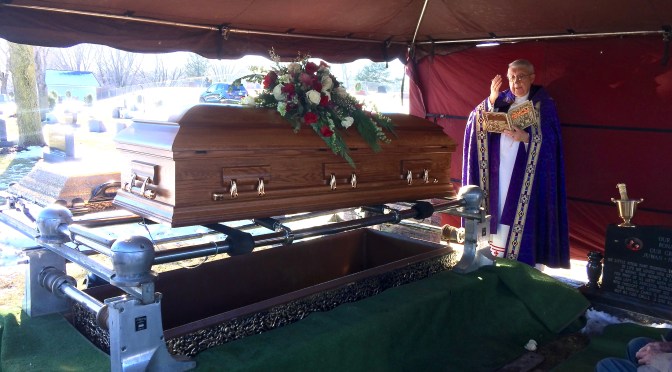
This homily was delivered on Jan. 5, 2019, during the Mass of Christian Burial for Mary K. Hanneman. Below the homily is a video of Msgr. Moellenberndt and the Rite of Committal at Sacred Hearts of Jesus and Mary Catholic Cemetery. Msgr. Duane also gave a wonderful homily at the funeral Mass for David D. Hanneman in April 2007.
By Monsignor Duane Moellenberndt
A sick man turned to his doctor as he was preparing to leave the examination room and said, “Doctor, I am afraid to die.Tell me what lies on the other side.”Very quietly, the doctor said, “I don’t know…”“You don’t know?You are a Christian man and don’t know what’s on the other side?” the man said to the doctor.The doctor was holding the handle of the door; on the other side came a sound of scratching and whining and so the doctor opened the door.A dog sprang into the room and leaped on the doctor with an eager show of gladness.Turning to the patient, the doctor said, “Did you notice my dog?He didn’t know what was on the other side of the door.He knew nothing except that his master was here.And when the door opened, he sprang in without fear.I know little of what is on the other side of death.However, I do know one thing…I know my Master is there and that is enough.”
Mary chose the Gospel for her funeral — John 1: 1-14, also known as the “Last Gospel.”
I think Mary who certainly loved dogs most especially her companion of 10 years Chewy would relate to this story.In the nursing home Mary even had treats in her room for dogs that would be brought to visit patients. As a woman of faith, I believe that when the door opened to eternity for Mary on December 26th that Mary believed with all her heart that her Master Jesus Christ would be on the other side.Our faith promises this to be true.How happy Mary must now be to live in the Presence of the Lord reunited with Dave and all those who preceded her into eternity.The Gospel I just proclaimed was Mary’s favorite.In fact, she called it her “Confirmation of Faith.”The Gospel began, “In the beginning was the Word, and the Word was with God and the Word was God…All things came to be through him.”It is this Eternal Word, this eternal God whom Mary met face to face on the 26th of December.What an awesome encounter. Joe wrote that Mary in her final earthly hour opened her eyes.She lifted her head, looked at something.Mary tried to speak.Mary had a sense of awe on her face.Mary we did believe at that point glimpse heaven—she was entering eternity.Certainly after the last difficult years it was time for Mary to find peace, health and eternal happiness.Thus we believe has happened for Mary.As the Book of Ecclesiastes our first reading said, “There is an appointed time for everything…a time to be born, and a time to die.”
Mary with her beloved companion Chewie (or Chewy), a faithful Yorkshire terrier.
Mary loved to sit in the driveway on a lawn chair or sit on her front porch just talking to people as they went by the family home that Mary so loved.She loved the visits of the mailman who stopped to see Chewy each day.It gave Mary an opportunity to talk with the mailman.Yes, Mary loved people and interacting with people.We can only imagine her joy in all the new people she is encountering in eternity.The Book of Ecclesiastes said, “There is an appointed time for everything and a time for every affair under the heavens….A time to be silent, and a time to speak.”Mary knew the importance of speaking and being with people.People gravitated to Mary because they knew she genuinely had an interest in them and their lives.That is why every visitor was always welcomed to her home with a bit of tea and bread or some other treat.Mary made people feel welcome.
Caring for the family was a joy of Mary’s life.She showed her love for family in so many ways be that the great birthday meals or special Christmas mornings.Isn’t it interesting it was on the day after Christmas that Mary died? When the nurse told Mary that it was almost Christmas, Mary simply smiled and said, “I love Christmas.”She was here in this life for Christmas but then entered eternity.In this Christmas season we believe Mary is with the Lord. In this Christmas Season we celebrate Mary’s Mass of Christian Burial.The Gospel said, “And the Word became flesh and made his dwelling among us.”Mary believed Jesus Christ the Word of God always dwelt with her in this life and now Mary dwells with the Lord in eternity. How joyous must be Christmas in heaven.
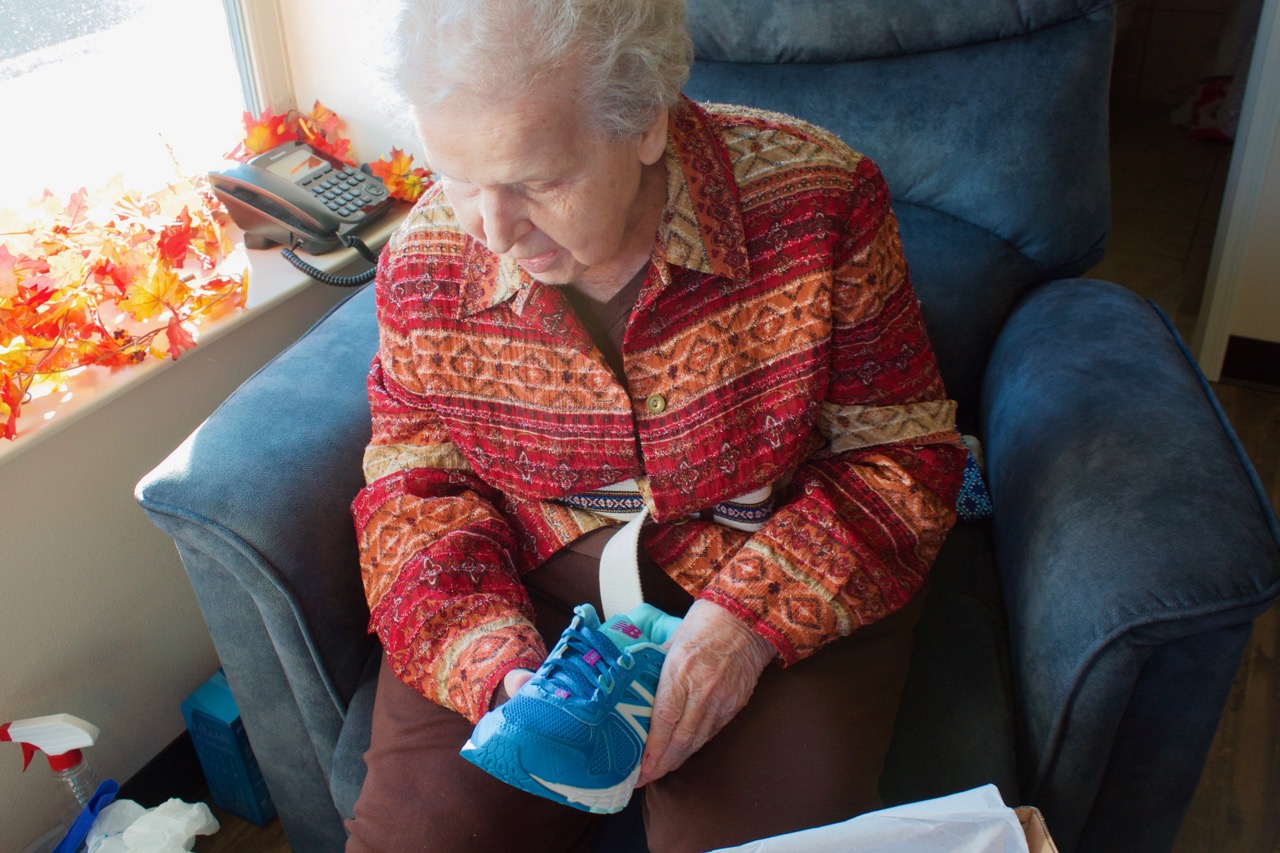
Mary received a snazzy blue pair of sneakers for her 85th birthday from daughter Marghi.Mary’s colorful sneakers were always a topic of conversation.
Mary had a fun side.She even one year with a couple of family members toilet-papered a neighbor’s yard on Christmas Eve.She so loved colorful tennis shoes.Perhaps that is why she enjoyed the Silver Sneakers exercise group so much.Her trip to Ireland with her three sisters was a joy for all of them.Yes, Mary enjoyed life and now we believe that joy is multiplied many times over in eternity.How happy Mary must be. As Ecclesiastes said, “There is an appointed time for everything….A time to weep, and a time to laugh; a time to mourn, and a time to dance.”
Mary enjoyed cooking and baking.She always had a sit down dinner.She enjoyed having people at her home to play cards.Mary didn’t play cards much but it gave her an opportunity to prepare dinner.Mary was a gardener.One of her special treats was her homemade jam that was always present to be enjoyed.St. Paul wrote to the Romans in our second reading, “Hope does not disappoint.”Mary was a woman of hope—hope in the promises of the Lord, hope in other people.It was that hope that led Mary to always think of others before herself.Mary was all about doing for family and friends to bring them happiness.I am sure from eternity Mary will continue to pray for us.Pray for Mary that she pass quickly from Purgatory to the fullness of life with God in heaven.
Mary was first and foremost an educator. Reading was a passion of hers.Mary was a full-time reading specialist here at Sacred Hearts School.Her career in our school lasted for almost three decades.As Joe wrote, “She opened the world of books to many hundreds of children.”After retirement Mary continued to tutor students several days a week.Mary set high standards for her own children and the children she taught.However, she didn’t ask anyone else to do something she herself wouldn’t do.However, now this wonderful Irish grandmother has completed her journey.May she receive the reward of her well-lived life.As St. Paul wrote to the Romans, “The love of God has been poured out into our hearts through the Holy Spirit who has been given to us.”
On behalf of the Catholic Community of Sacred Hearts of Jesus and Mary, we offer to you our sympathy and prayers.We have remembered you in our Masses and prayers these last days and so we will in the days ahead.There is a little reflection that goes as follows, “A builder built a temple.He wrought it with grace and skill; pillars and arches all fashioned to work his will.Men said, as they saw its beauty, ‘It shall never know decay.Great is thy skill, O builder:Thy fame shall endure forever.’ A teacher built a temple with loving and infinite care, planning each arch with patience, laying each stone with prayer.None praised her unceasing efforts, none knew of her wondrous plan; for the temple the teacher built was unseen by the eyes of man.Gone is the builder’s temple, crumbled into dust; low lies each stately pillar, food for consuming rust.But the temple the teacher built will last while the ages roll.For that beautiful unseen temple is a child’s immortal soul.”Touching hundreds of “immortal souls” is what Mary did with her life as a teacher.May she rest in peace.In the words of our Holy Gospel, “And the Word became flesh and made his dwelling among us, and we saw his glory, the glory as of the Father’s only Son, full of grace and truth.”
Video can convey meaning in a story unlike just about anything. Which is why I created a memorial video dedicated to my late mother for use at the visitation back on Jan. 5, 2019. I’ve done three of these previously and found them to be very cathartic.
One of the opening images of this video, showing Mom as a toddler in a snowsuit, was a gift from Mom. We found the photograph in her nightstand about an hour after she died. It is the first image I’ve seen of her younger than 16.
“Memories are time that you borrow, to spend when you get to tomorrow.”
The Life of Mary K. (Mulqueen) Hanneman, 1932-2018
“…The time of my departure is at hand. I have competed well; I have finished the race; I have kept the Faith. From now on the Crown of Righteousness awaits me, which the Lord, the Just Judge, will award to me on that day…”— 2 Timothy 4: 6-8
Suddenly, the world will never, ever be the same.
Mary K. Hanneman stepped gently into eternity Wednesday, Dec. 26, 2018, after a long struggle with vascular dementia and congestive heart failure. Our Blessed Lord summoned his precious daughter, my mother, at 11:50 p.m. from her home at Brookdale Senior Living. She was 86 years 2 months and 5 days young. Mary was a loving wife, mother, grandmother and longtime Catholic school teacher in Sun Prairie, where she has lived since 1965.
Mary Katherine Mulqueen was born in Cudahy, Wisconsin, on Oct. 21, 1932 — the seventh of 11 children of Earl J. Mulqueen Sr. and the former Margaret Madonna Dailey. On Aug. 9, 1958, she married David Dion Hanneman at St. Veronica Catholic Church in Milwaukee, beginning a more than 49-year marriage. He preceded her in death on April 14, 2007. He was 74.
For Mary, every day was a good day to teach. She had the heart of an educator, the discipline and courage of a gunnery sergeant and, under it all, the strong yet soft heart of an Irish grandmother. Above the entrance to her kitchen hung a sign that read Failte, — an Irish welcome. Over the years, countless relatives, friends and strangers were welcomed within those walls to incredible cooking, good cheer and, very likely, a game or two of sheepshead, Kings in the Corner or cribbage.
“The mediocre teacher tells. The good teacher explains. The superior teacher demonstrates. The great teacher inspires.”
― William Arthur Ward.
Like most things in the Hanneman family, good teaching started at home. Mary’s kitchen table was just as likely to serve up arithmetic flash cards and sentence diagrams as it did Thanksgiving turkeys or chocolate chip cookies. She imparted many life lessons in her kitchen, from the academic (long division and phonics) to the culinary (corned beef with cabbage, lasagna and state-fair-quality bread and cinnamon rolls). Through the chaos and bustle of the annual Thanksgiving dinner, we came to appreciate the gift of family — warts and all.
David D. Hanneman and the former Mary K. Mulqueen were married for more than 49 years.
Mary’s academic career began at St. Frederick’s Catholic School in Cudahy and St. Mary’s Academy in St. Francis, from which she graduated high school in 1950. After a brief postsecondary discernment at the suburban Franciscan convent, she took courses at Cardinal Stritch College and Marquette University. She studied reading literacy for elementary students for two years in Madison. Mary began practice teaching in the Catholic Schools in the Archdiocese of Milwaukee. She eventually became a full-time teacher in the newly built 17-room St. Veronica Catholic School on East Norwich Avenue in Milwaukee.
After their marriage in 1958, Mary and Dave moved to Grand Rapids, Michigan, where he held a job with E.R. Squibb & Co. She paused her teaching career to start and raise a family that came to include two boys and two girls. As a doctorate-level domestic engineer, she honed her skills wrangling hungry toddlers through the bedlam of birthday parties, sewing costumes, darning socks and hosting couples’ bridge. She set high standards for her children and expected them to reach even higher. Especially at school. She modeled her own saintly mother’s family virtuosity with things like bunny-shaped birthday cakes topped with coconut flakes and jellybeans. Or trips to Devil’s Lake and Storybook Gardens with four children in tow.
Mary learned her lessons well from “Ma,” Margaret M. Mulqueen. Her mother went out of her way to make family events special for her husband Earl, who lost both of his parents young and was denied most of childhood’s delectations. “Every year, we always celebrated Christmas. My mother made Christmas really special,” Mary said in an oral-history interview with granddaughter Ruby in 2009. “But especially his birthday. He never had a birthday cake growing up. Isn’t that sad? And yet grew up to be such a nice man.”
In 1965 Mary and Dave built their dream home in Sun Prairie’s then-new Royal Oaks neighborhood. Seventeen stately oak trees towered over the property. Much love went into building and maintaining the family homestead that stayed in the Hanneman family for 53 years. She spent those years caring for her family with special birthday meals, wonderful Christmas mornings and a thrifty way with money that allowed her and Dave to put four children through Madison Edgewood High School.
In 1980, Mary resumed her teaching career at Sacred Hearts of Jesus and Mary Catholic School. She started as a substitute, but before long was a full-time reading specialist. She helped along the students who otherwise would fall behind. It was her passion to teach reading, and she opened the world of books to many hundreds of children. Students came to Mrs. Hanneman for extra help in reading, math and other subjects. She sent them back with the skills and desire to learn. Her career at Sacred Hearts stretched nearly three decades. Even after retirement, Mary tutored students several days a week for many years.
When her husband was dying of cancer in 2006 and 2007, she helped make his last wish come true. The couple donated four sections of beautiful stained-glass windows back to St. Mary’s Hospital in Madison, where they were incorporated into the design of a new wing of the hospital that opened in 2007.
Her penultimate lessons were largely delivered in the silence of advancing dementia, which eventually crippled her ability to thinkclearly and communicate verbally. Yet she showed patience in this frustrating infirmity. If she could not form the words to say what was on her mind, she sighed deeply and simply said, “Oh, dear.” As illness struck its blows through a heart attack and repeated cardiac events, she rallied time and again to regain strength and show a smile. When hospice nurse Heidi leaned close and told Mary it was almost Christmas, she smiled and said, “I love Christmas.”
Mary’s final and lasting lesson was delivered over days of speechless suffering. Her body conspired to drain her energy. Yet she trusted. She lay still. She prayed. During her final hour, she opened her eyes, lifted her head and looked intently — at something. She tried to speak, but words were not needed. The look of awe on her face explained it all: she had a glimpse of Heaven. All things wouldsoon be new. That realization was reflected on her face. It was her final gift. She spoke in deeds what words could not say:
My work here is complete. My struggles were never in vain. Even in my brokenness, my trials fit in His design and served His redemptive plans. Watch! Hold fast to your Catholic faith — and you will one day follow me.
Mary is survived by her children: David (Lisa) Hanneman of Naperville, Ill., Joe Hanneman of Sun Prairie, Margret Mary of DeForest, Amy Bozza of Woodstock, Ill.; and special niece, Laura (Doug) Curzon of New Berlin, Wis. She is further survived by nine grandchildren: Abby, Maggie and Charlie Hanneman; Stevie, Samantha and Ruby Hanneman; and Justin, Kyle and Claire Bozza. She leaves two sisters, Ruth (Tom) McShane and Joan (Dick) Haske, both of Cudahy; a sister-in-law, Elaine Hanneman of Minneapolis; and brother-in-law Gordon Wellman of Sun Prairie. She was preceded in death by her husband, her parents and eight brothers and sisters.
A visitation will be held from 10:00 a.m. until 11:45 a.m. on Saturday, Jan. 5, 2019 at Tuschen-Newcomer Funeral Home, 302 Columbus St., Sun Prairie. The Mass of Christian Burial will be held at noon Saturday, Jan. 5 at Sacred Hearts of Jesus and Mary Catholic Church, 227 Columbus St., Sun Prairie. Monsignor Duane Moellenberndt will preside. Burial will be at Sacred Hearts Cemetery. In lieu of flowers, memorials are suggested to the Sacred Hearts School Endowment Fund, 221 Columbus St., Sun Prairie, WI 53590.
Jane Hanneman’s 3rd Birthday October 1958
David D. and Mary K. Hanneman, wedding day 1958
Mary K. Hanneman feeds son David Carl Hanneman in Grand Rapids, Mich.
Mary K. Hanneman with daughter Margret Mary, 1967.
Mary with daughter Amy Jo, 1969.
Hanneman Family portrait for the St. Albert’s parish directory.
Family trip to Ormond Beach, Fla.
The 1975 Mulqueen family reunion in Cudahy.
Mary and Dave with son Joe, Dec. 1, 1990.
David D., David C. and Mary Hanneman at Amy Hanneman Bozza’s wedding.
Grandma Mary holding new granddaughter Ruby, 1999. Samantha Hanneman is at left; Abby Hanneman is at right.
David D. and Mary K. Hanneman at their Sun Prairie home.
A great photo! Mary’s birthday in 2014.
Mary with her little buddy, Chewie.
Mary’s birthday 2017.
Mary’s birthday 2017.
Looking over a recently discovered photo from her 1958 engagement party.
Son Joe hold’s Mary’s hand on the day she was born to eternal life.
The September 1960 Chicago plane crash that killed all six members of the Richard Rickman family was caused by a faulty engine valve and an intense oil fire, according to a federal investigation report obtained through the National Archives.
Richard E. Rickman, 34, was flying his wife and four children from Wisconsin Rapids to Detroit on Labor Day 1960 when his Beechcraft C35 Bonanza (tail number N-5816C) plunged into Lake Michigan with flames trailing from the engine. Rickman, his wife Helen and children Richard, Robert, Catherine and Patricia were killed in the crash. The plane and its passengers sunk into the dark waters of Lake Michigan off Chicago’s Oak Street Beach. [See related:Entire Rickman Family Killed in 1960 Plane Crash]
It was a horrific, haunting tragedy. The Rickmans, native to central Wisconsin, were returning home to the Detroit area after a Labor Day vacation. Following the advice of the airport manager in Wisconsin Rapids, Rickman flew across Wisconsin and then along the Lake Michigan shoreline to Chicago. That’s where the trouble started. Rickman radioed the tower at Meigs Field in Chicago that he had an emergency and needed to land. [See an aerial view of Meigs Field] He never got the chance. The plane nose-dived into the water about 1 mile offshore from a crowded Oak Street Beach. All six Rickmans were killed.
The Civil Aeronautics Board began investigating the crash just as the sections of damaged plane were recovered from the depths of Lake Michigan. The wings were sheared off on impact. Witnesses on the beach reported seeing flames coming from the engine as the single-engine plane dove into the water. The probe was led by Clifford G. Sheker, the CAB’s air safety investigator. The 205-horsepower Continental engine was recovered and sent off for analysis. Sheker testified before a Cook County coroner’s inquest jury twice — in September and October 1960. His preliminary finding in October was that engine trouble caused the crash.
That’s where the public attention stopped. The probe continued and led to a report of findings in April 1961, but there was no media coverage on the final cause of the crash. The Hanneman Archive began a search for Sheker’s report back in 2015. It was not on the Federal Aviation Administration’s online database of old CAB crash investigations. The CAB was a predecessor to the National Transportation Safety Board.
We enlisted the help of the National Archives and Records Administration in College Park, Maryland. After several months, an archivist named Amy R. found the answer in April 1961 meeting minutes from the Civil Aeronautics Board. She was kind enough to snap digital photos of the report narrative and send them via email. As far as we can tell, these details were not published by news outlets at the time.
The report said Rickman was about a mile offshore headed south at 7:26 p.m. when he broadcast a Mayday call: “I have an engine failure or something – I am coming in!” The flight was immediately cleared for emergency landing at Meigs Field, a single-runway airport on Northerly Island, a peninsula along Chicago’s lakefront. Sheker’s report described what happened:
“About this time ground witnesses and the occupants of another plane saw the aircraft afire in flight. They observed the plane make a left turn and go out of control twice before it crashed into Lake Michigan and exploded.”
The Continental Motors E-185 engine became disabled by an “intense oil fire” that originated in the area of the exhaust heater muff. The No. 3 exhaust valve showed “fatigue failure” that led to the fire. The engine crankcase was broken open and the Nos. 3 and 4 pistons and connecting rods were broken. The “intense, in-flight fire” entered the cabin in the area of the rudder pedals and “subjected the entire cabin to fire.”
Rickman was an experienced pilot with 379 total flight hours, including 228 hours with the Beechcraft C35. His Beechcraft was manufactured in 1951 and licensed to Rickman in 1957. It’s unknown if the CAB or later the FAA took any action as a result of the Rickman crash, such as issuing an airworthiness letter. There was no indication in the CAB report of the maintenance history of the plane, or if the No. 3 exhaust valve had caused other engine fires.
Just 18 months before, superstar singers Buddy Holly, Ritchie Valens and J.P. “The Big Bopper” Richardson were killed when the Beechcraft C35 Bonanza in which they were traveling crashed near Clear Lake, Iowa. February 3, 1959 became known as “The Day the Music Died,” memorialized in Don McLean’s 1971 song, “American Pie.” The Civil Aeronautics Board faulted the pilot for taking off in poor weather when he was restricted to visual flight rules.
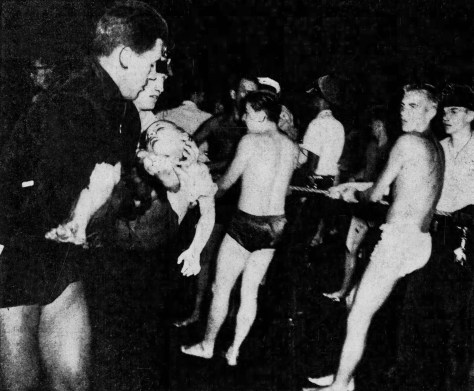
Lifeguard Fred Rizzo carries the lifeless body of little Catherine Rickman from a police marine boat to a Chicago Fire Department ambulance on Sept. 5, 1960. Efforts to revive the girl were unsuccessful. (Screen grab: Chicago Tribune Photo by James O’Leary)
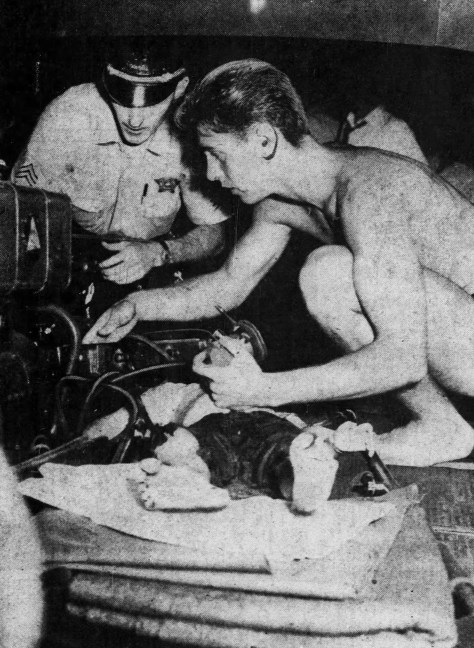
One of the most heartbreaking scenes from Sept. 5, 1960 was the sight of little Catherine Rickman, 4, being carried from a rescue boat to an ambulance by lifeguard Fred Rizzo. Boaters found her floating in the water shortly after the crash. She had burns on her face, legs and feet. The girl was revived briefly in the ambulance on the way to the hospital, but she died a short time later. Her grandparents, Edwin and Renata Rickman of Saginaw, Mich., identified her body. The search for her parents and siblings went on for days.
A lifeguard gives oxygen to Catherine Rickman in a Chicago Fire Department ambulance on Sept. 5, 1960. (Screen grab: Chicago Tribune photo by James O’Leary.)
The diver who first found the bodies was Jeffrey Daxe, 34, a Chicago pilot and lifeguard. Daxe lived just across Lakeshore Drive near the beach. He was able to quickly gather his diving gear and have a lifeguard row him out to the crash site. The experience haunted Daxe for decades, according to his son, Jeff Daxe of Dayton, Ohio:
“As he told the story of the recovery of the victims, his face would transform to one with a look of concern. He would look away from his outstretched hand almost as if he could see, or didn’t want to see, the faces of the victims as he brought them to the surface.”
The senior Daxe went on to a career in aviation, and moved to Valparaiso, Ind. He told the story of the Rickman crash often. Even in recent years, when visiting Lake Michigan, his son said, he spent a long time gazing out on the water, expressing concern for the safety of boaters and windsurfers. “I believe the experience had a tremendous impact on his life.”
Pilot Jeffrey Daxe in the 1950s with his Stearman biplane. Daxe, who was also a lifeguard and diver, was the first to find the bodies of Richard E. Rickman, his wife and three of their four children. (Photo courtesy of Jeff Daxe)
Tom Metcalf remembers the Rickmans well, growing up for a time in the same neighborhood in Redford Township, a western suburb of Detroit. “I remember playing with Richard and Robert,” said Metcalf, who was 6 at the time of the crash. “I also remember flying with them in their aircraft. My father was a military pilot and he and Mr. Rickman were friends with a common interest in flying. I also remember my mother chasing some news reporter out of our back yard after catching him trying to ask me questions after the accident.”
Like Daxe, Metcalf was deeply affected by the Rickman tragedy. He said he hopes to visit the family’s graves at Forest Hill Cemetery in Wisconsin Rapids, Wis. “I have thought of them often and sent prayers their way throughout my life,” Metcalf said.
Richard E. Rickman, the son of longtime shoe-store proprietor Edwin J. Rickman, grew up in Wisconsin Rapids. He was a descendant of pioneer resident Matthias Hanneman, who came to Wisconsin in 1866 from Pomerania. He served in the U.S. Naval Reserve in World War II. His father had served in WWI. A factory representative for the Ogden Manufacturing Co., Rickman married the former Helen Anderson in December 1949 and they later moved to Michigan. Their first child, Richard Edward, was born in Lansing in May 1953. Robert John was born in Lansing in March 1955. Catherine Helen was born in Detroit in June 1956; and Patricia Ann joined the family in Detroit in September 1957.
The epitaph on the Rickman Family monument at Forest Hill says simply: “Not my will, but Thine be done.”
“Man’s days are like those of grass; like a flower of the field he blooms; the wind sweeps over him and he is gone, and his place knows him no more.”
—Psalm 103:15, from the St. Michael church bulletin, Feb. 22, 1998
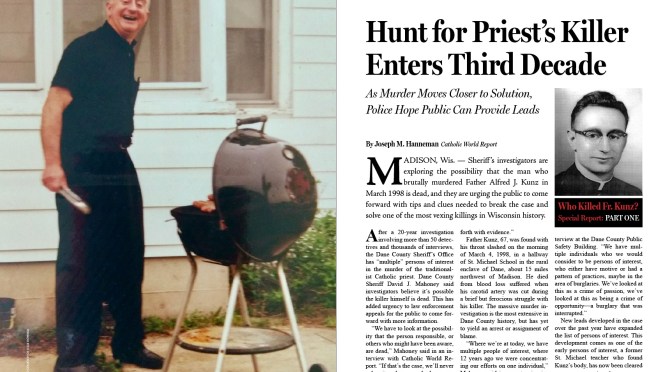
By Joseph M. Hanneman MADISON, Wis. — Sheriff’s investigators are exploring the possibility that the man who brutally murdered Father Alfred J. Kunz in March 1998 is dead, and they are urging the public to come forward with tips and clues needed to break the case and solve one of the most vexing killings in Wisconsin history.
After a 20-year investigation involving more than 50 detectives and thousands of interviews, the Dane County Sheriff’s Office has “multiple” persons of interest in the murder of the traditionalist Catholic priest. Dane County Sheriff David J. Mahoney said investigators believe it’s possible the killer himself is dead. This has added urgency to law enforcement appeals for the public to come forward with more information.
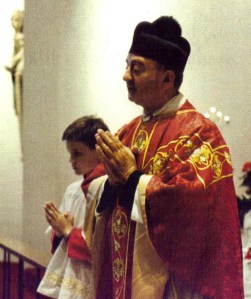
Father Alfred J. Kunz celebrates the Traditional Latin Mass at St. Michael Catholic Church in Dane, Wis. (Photo courtesy of Mark Nelson)
“We have to look at the possibility that the person responsible, or others who might have been aware, are dead,” Mahoney said in an interview with Catholic World Report. “If that’s the case, we’ll never solve it unless somebody comes forth with evidence.”
Father Kunz, 67, was found with his throat slashed on the morning of March 4, 1998, in a hallway of St. Michael School in the rural enclave of Dane, about 15 miles northwest of Madison. He died from blood loss suffered when his carotid artery was cut during a brief but ferocious struggle with his killer. The massive murder investigation is the most extensive in Dane County history, but has yet to yield an arrest or assignment of blame.
“Where we’re at today, we have multiple people of interest, where 12 years ago we were concentrating our efforts on one individual,” Mahoney said in an extensive interview at the Dane County Public Safety Building. “We have multiple individuals who we would consider to be persons of interest, who either have motive or had a pattern of practices, maybe in the area of burglaries. We’ve looked at this as a crime of passion, we’ve looked at this as being a crime of opportunity — a burglary that was interrupted.”
New leads developed in the case over the past year have expanded the list of persons of interest. This development comes as one of the early persons of interest, a former St. Michael teacher who found Kunz’s body, has now been cleared of involvement in the crime. Mahoney wants members of the public who might have information to take a fresh look at memories from 1998 and in the years after. Investigators are hoping someone comes forward with information that can tip the case to a solution.
“Over the years, some of our witnesses and people with knowledge have died, and with them goes the information,” Mahoney said. “That’s one of the reasons we pushed more information out on the 20th anniversary. If there were family members of people who passed (away), or friends or associates or even somebody who heard something, we want to try to try to bring them out into the open at this point. Before we lose more people.”
Father Kunz was a sign of contradiction; a tradition-minded priest in the shadow of the liberal state capital. He was a 20th century fidei defensor, upholding Catholic teachings amid a sea of post-Vatican-II modernism. He preached the truth, no matter how unpopular. A sharp critic of homosexual corruption in the Church, he worked at the highest levels to expose priestly pederasty in rectories and chanceries. He saw the coming storm of sexual-abuse allegations that would swamp the Church years later and lead to more than $3.3 billion in victim settlements and attorney fees in the United States alone. “You will find no justice in the Church today,” he told a friend not long before his death. He worried the pederasty scandals would destroy the diocesan priesthood.
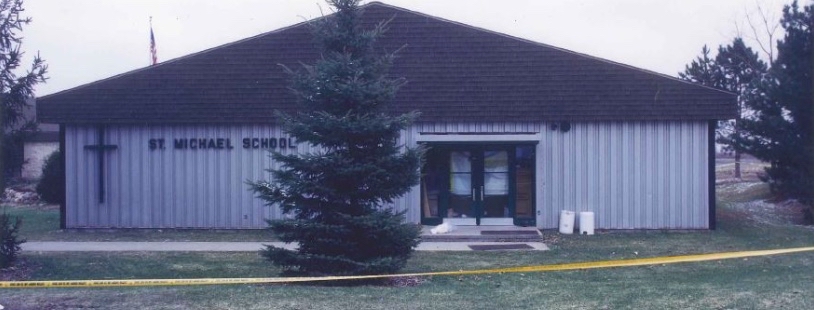
St. Michael School as it appeared on March 4, 1998. (Dane County Sheriff’s Office Photo)
His celebration of the Usus Antiquior, or the Traditional Latin Mass, drew congregants from three states. Even though he also celebrated the NovusOrdo Mass, some locals left for other churches. Kunz had a soft pastoral touch and a generous heart. He fixed up old cars and provided them to his cash-strapped teachers. He took no salary. His sister sent him boxes of socks when his became worn. He ran successful fish-fry fundraising dinners to support his parish and school. A typical day for Kunz started at 5:30 a.m. and didn’t end until well after midnight. In between, he was a whirlwind of activity at church, in school, at diocesan offices in Madison, at hospitals and among his parishioners. His sudden, violent death left a trail of tears that still flows 20 years later.
Kunz was last seen alive about 10 p.m. on March 3, 1998, when his friend, Father Charles C. Fiore, dropped him off at St. Michael’s. The pair just took part in a recording session in Monroe for the “Our Catholic Family” radio program that aired on Sunday mornings across southern Wisconsin. Kunz fixed himself some dinner at the rectory and spoke by phone with another priest at 10:23 p.m. He then retired to his sparse one-room office that doubled as living quarters in the adjacent school. Police believe Kunz encountered his killer shortly after. His body was found the next morning, face down in a pool of blood at the foot of a statue of St. Michael the Archangel. Kunz was barefoot, dressed in dark slacks and a white T-shirt.
There were no signs of forced entry, so the killer gained access without leaving evidence behind, had a key or was let in by Father Kunz. Police said the attack was sudden and unexpected. Kunz, a Golden Gloves boxer in his youth, put up quite a fight and might have gained the upper hand on the suspect before being knocked to his knees by a blow from a weapon, Mahoney said. His throat was then cut with some kind of sharp-edge instrument, severing the artery that carries blood to the brain. No weapons were recovered.
Police believe the killer was a man, who might have been familiar with Kunz and St. Michael parish. While an FBI profile suggested the killer might have had an argument or altercation with Kunz in the 72 hours before the murder, Mahoney said it is possible the priest simply interrupted a burglary. The killer was likely shocked by the amount of blood that flowed when he cut Kunz’s throat. When he escaped from the school, the murderer was covered in blood and bearing noticeable injuries to his face, Mahoney said. Based on the wounds on Kunz’s hands, police believe the priest landed serious blows to the head of his attacker. An autopsy photo released by the sheriff’s office in 2018 shows Kunz’s right hand with major bruising along the index finger, bruises on three of the four knuckles and several small puncture-type wounds across the back of the hand.
“Father Kunz did engage physically with his murderer,” Mahoney said. “We believe whomever was in fact involved probably had some significant facial injuries and probably was visibly injured.” The assailant would have “looked like he had been beaten up,” Mahoney said. “Father Kunz had hand injuries. He knew how to land a punch.”
Profilers said the killer did not go to St. Michael’s that night intending to kill Kunz. Investigators believe the killer felt regret afterward. He went home with clothing soaked in blood that he would seek to wash or destroy. Family or friends would have noticed facial injuries. The suspect might have missed work the next day. The killer could have used a favorite hunting knife, box cutter or other instrument that he then discarded. Friends or co-workers could have noticed he no longer carried the cutting instrument and that he had a story for what happened to it. In the weeks, months and years afterward, the person could have had mental health issues, or struggled with alcohol abuse, police said.
Could something as simple as a burglary be the answer in this case? Kunz’s office was burglarized in 1994. The priest’s late-night routine was predictable, a fact that could be crucial if a burglar was watching the property. Kunz was security conscious and the school doors were always locked at night, friends said. Some collection money went missing in the weeks before the murder, police said. It was not unusual for bags of Sunday collection money to sit at the church, undeposited, sometimes for weeks. Large amounts of money had been moved between parish accounts in the months before the murder, and some large checks were cut, police said.
Early in the investigation, detectives questioned two men with ties to Kunz who were involved in burglaries. Jeffrey L. Maas of Pewaukee, Wis., pilfered statues, chalices, candles, books and artifacts from churches in five Wisconsin counties, police said. He was convicted in 1999 of four misdemeanor and five felony counts of theft and receiving stolen property. Robert M. Pulvermacher of Dane was arrested shortly after the Kunz murder and later sentenced to nearly four years in prison for burglary. He escaped from a prison work camp in December 1998. While on the lam, he attacked a local constable and wrestled his gun away, police said. During a massive search of central Wisconsin, a deputy confronted and disarmed Pulvermacher. He was sentenced to 11 years in prison on escape-related charges. Investigators concluded the men were not involved in the priest’s murder. The burglary motive, however, remains an active focus.
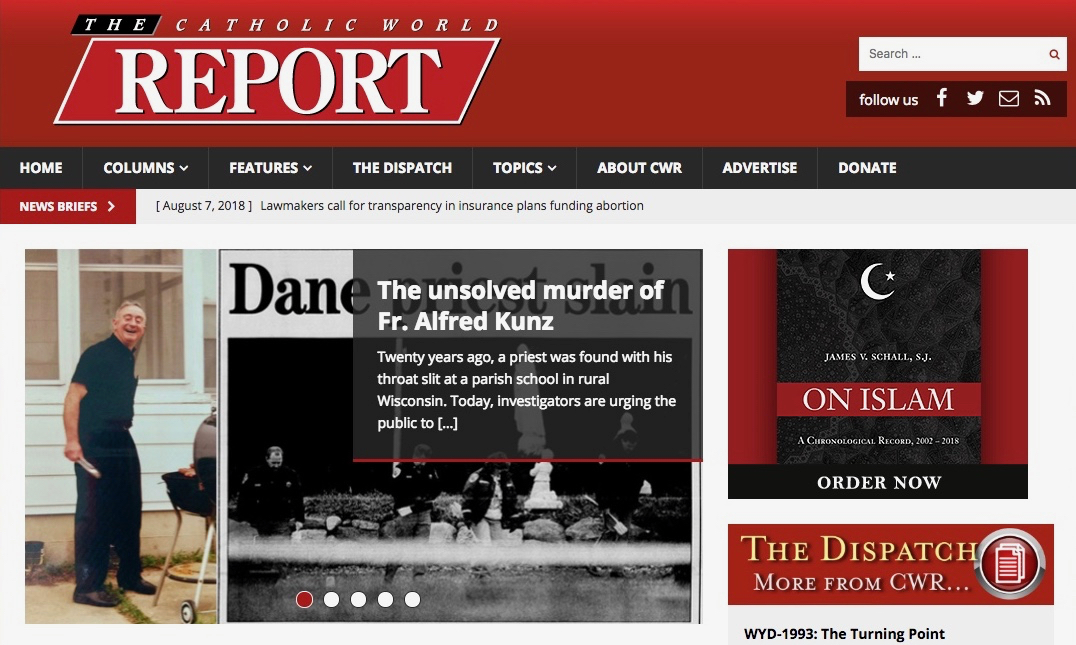
The Father Kunz murder series was the top story at Catholic World Report on Aug. 8, 2018.
The Kunz homicide was the first in the village of Dane since March 1971, when William C. Chambers shot and killed his 22-year-old son, Kenneth D. Chambers, during a long-simmering family feud. The father fired three bullets into the heart, brain and lungs of his son. He was later acquitted of first-degree murder. Kenneth Chambers was a member of St. Michael Catholic Church. Father Kunz officiated at his funeral Mass on March 13, 1971.
(Matt C. Abbott contributed to this report. Anyone with information on Father Kunz’s murder should contact the Dane County Sheriff’s Office, (608) 284-6900 or tips@danesheriff.com.)














 The Hanneman Archive