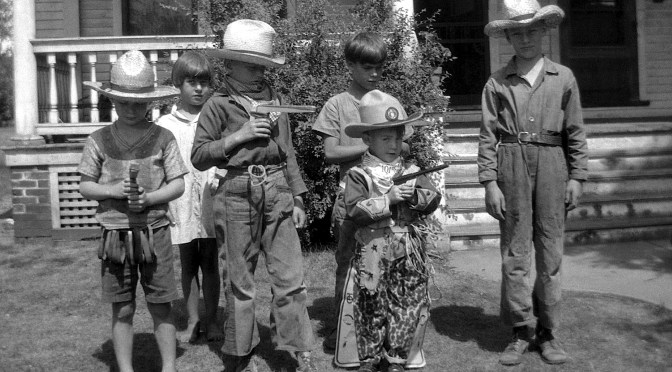
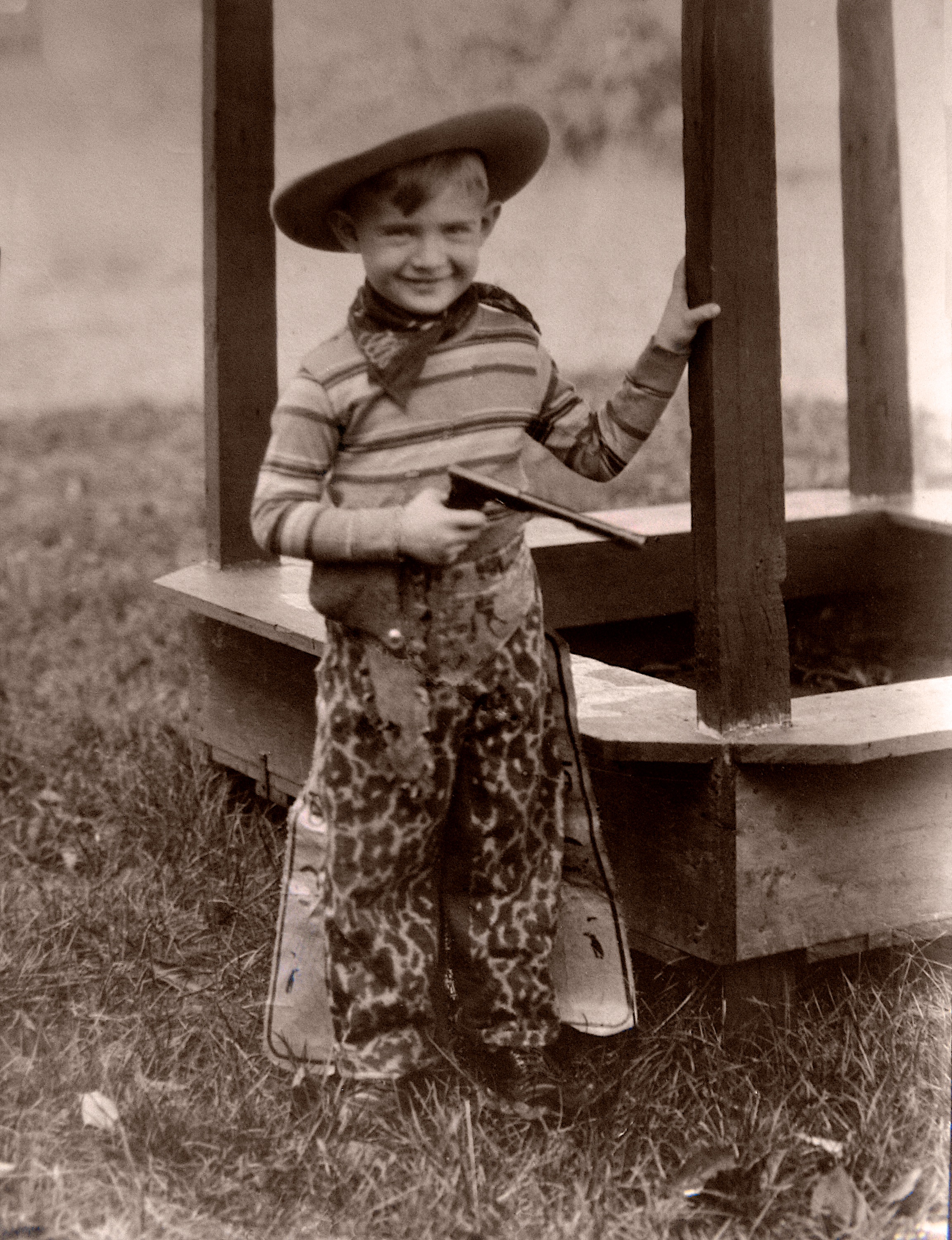
Even in the late 1920s, it was a time-honored tradition for the neighborhood boys to dress up as their favorite cowboy hero. The priceless image above shows a group of youthful cowpokes hard at play on Wisconsin Avenue in Wisconsin Rapids. The smallest cowpoke in front is Donn G. Hanneman, and judging by his spiffy cowboy getup, it might have been sometime near his August birthday.
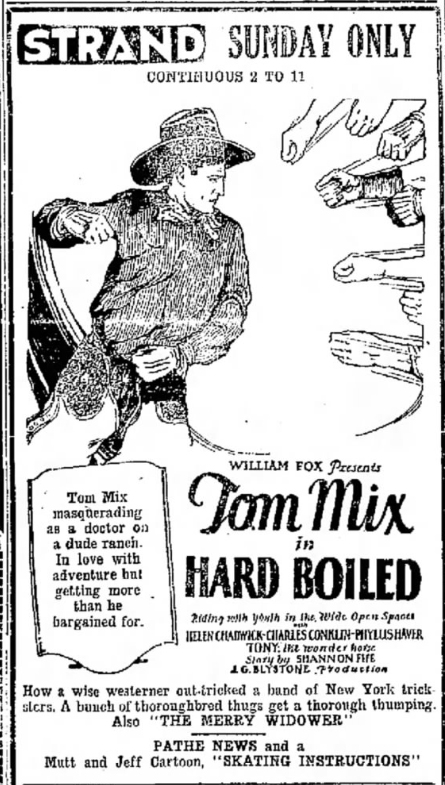
Youth flocked to see their hero Tom Mix and his steed, Tony the Wonder Horse.
So just which movie stars would these boys (and one perplexed young lady) be imitating while hard at play? The photo dates to around 1930, so it was well before the days of Red Ryder played by Red Barry and Rocky Lane, and long before the Lone Ranger. But no worries, the cowboy genre was well established at the movie house by such stars as Hoot Gibson, Tom Mix and even a very young John Wayne. These tykes might have gone off to see Fred Thompson in The Two-Gun Manor John Wayne in The Big Trail. It was still a few years before Gene Autry would be the star of In Old Santa Fe.
A bit older Donn Hanneman in his latest cowboy getup, circa 1933.
So here’s a tip of our 40-gallon hat to all of the aspiring cowboys of that era, with their chaps, shiny lawman’s badge, wooden gun and all the swagger a 5-year-old could muster. Let’s ride!
Army Pvt. Rudolph Mika Jr. (at left) of Mauston, Wisconsin, talks to livestock buyer John Randall at the Juneau County Fair at Mauston in the summer of 1942. Mika went into the Army glider corps and took part in the invasion of North Africa during World War II. He was taken prisoner by German troops in Holland in September 1944 and repatriated in June 1945.
Army Pvt. Rudolph Mika (at left) of Mauston, Wis., talks to livestock buyer John Randall at the Juneau County Fair at Mauston in the summer of 1942.
The 1940 U.S. Census showed Mika working at the Mauston pickle factory and living at home with his parents, Rudolph Mika Sr. and Anna Mika. The elder Mika was a carrier for the local ice dealer. The Mikas lived on Winsor Street, just a few houses away from the Carl F. Hanneman family and the home of Dr. J. Samuel Hess Jr. Hanneman was on the Juneau County Fair Board for many years. He snapped the photo of Mika and Randall.
Rudy Mika enlisted in the U.S. Army in March 1942 at Madison. His occupation was listed as a carpenter. After the war, he returned to Mauston. He died on January 6, 2001 at Mauston, age 89. Randall died in January 1971 at age 74.
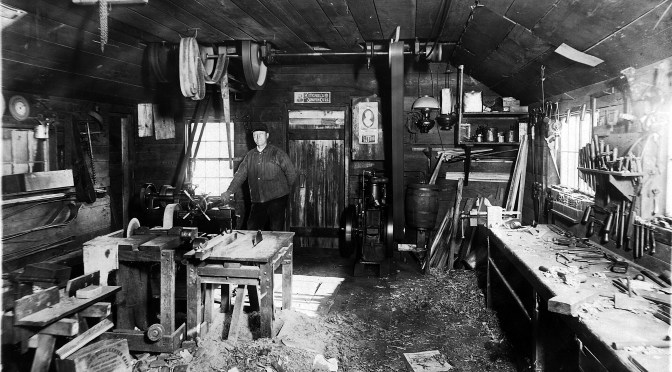
Charles Treutel (1869-1958) poses in the Treutel Bros. Shop at Vesper, Wisconsin, in 1911. Charles and his brother Henry A. Treutel (1864-1962) opened a blacksmith operation in Vesper after moving to Wood County from Mukwonago, Wis., in 1901. As can be seen in the photo, the Treutels also did carpentry work. The brothers later expanded their shop and made the transition from shoeing horses to tuning up engines and selling agricultural implements.
A 1911 book, Vesper, Wisconsin: A Sketch of A Model City, described the business this way:
Charles and Henry Treutel, skilled mechanics, have operated the blacksmith and wagon shop at Vesper since Nov. 1901 and have built up a large and prosperous business by courtesy and excellent workmanship. They are masters of every line of their business and are especially skilled in horseshoeing and repair work. In addition to their shop work the Messrs Treutel carry a large line of farm implements and their mechanical knowledge has enabled them to select the best makes in all the lines of machines they carry. They have a model shop fully equipped for their work.
The Treutel Bros. learned their trade from their father, Philipp Treutel (1833-1891), who came to America from Germany in 1854. As detailed in a previous post, the Treutels were blacksmiths, carpenters, tallow chandlers and tailors from near Darmstadt, Germany. Philipp Treutel is buried at North Prairie, Wisconsin.
— This post has been updated with additional information.
The tiny village of Vesper in Wood County, Wisconsin engendered such good feelings among its early residents that someone penned a tribute song to the village along the Hemlock Creek. The Hemlock Creek runs from just north of Arpin and flows south to the Wood County line. It includes more than 80 miles of streams.
The Treutel family enjoys a picnic lunch on their property along the Hemlock Creek at Vesper, Wisconsin, circa 1924. Pictured, L to R, are Elaine Treutel, Walter Treutel and Ruby Treutel. Marvin Treutel is partially hidden.
From the ashes of a massive sawmill fire in 1894, Vesper became a prosperous farming and manufacturing village 10 miles northeast of Wisconsin Rapids. Many of our relatives found work here and raised families. The village had a number of factories, general stores, a meat market, a locally owned bank, blacksmith shops, a community theater, a roller rink and more.
On warm summer days in the early 1900s, folks came from miles around to gather at the bandstand in Cameron Park. They enjoyed a variety of live music by the Vesper Cornet Band and other area musicians. It is not surprising such a place would win the hearts of its 300 residents.
The old Goldsworthy’s Store in Vesper, which later became the Treutel Bros. store.
We don’t know the author of the Vesper song, or even the musical score. But its lyrics tell a story of how the pioneer residents believed in their little community on the winding creek. And if you need confirmation that it is a genuine Wisconsin song, just look at the pronunciation of the word “creek.” Or is that “crick?”
Vesper, Wisconsin on the Hemlock Creek
1) You can rave about your cities with their glitter and their show,
And the interesting places where people like to go
But to come to solid comfort we can show you all a trick,
Where? Vesper, Wisconsin on the Hemlock Creek
Chorus
Vesper for mine, yes it’s Vesper for mine,
She isn’t very big, but she’s the best on the line,
They can travel where they want to
But we’ll try our best to stick,
Where? Vesper, Wisconsin, on the Hemlock Creek.
2) It’s the home of dandy people and their children not a few,
It’s the home of cheese and butter and a big condensery, too,
They make drainage tile and silos, have a band and park that’re slick
Where? Vesper, Wisconsin, on the Hemlock Creek.
3) Now the people are so busy that it keeps them on the go,
So they haven’t got a bit of time to stop and watch her grow,
It’s the town where things are doing and we aim to do them quick,
Where? Vesper, Wisconsin, on the Hemlock Creek.
4) To each stranger who is seeking for a place to build his roost,
We extend an invitation to the town for which we boost,
We’ll be glad to have you with us and we know you’ll want to stick,
Where? Vesper, Wisconsin, on the Hemlock Creek.
The Vesper Cornet Band performed at the Cameron Park band shelter and other locales around Vesper, Wisconsin. Oscar, Charles and Henry Treutel were band members.
In a state where the one-room schoolhouse was quite the norm in the early 1900s, tiny Vesper, Wis., boasted an impressive two-story brick school building that was the center of learning for area children for decades.
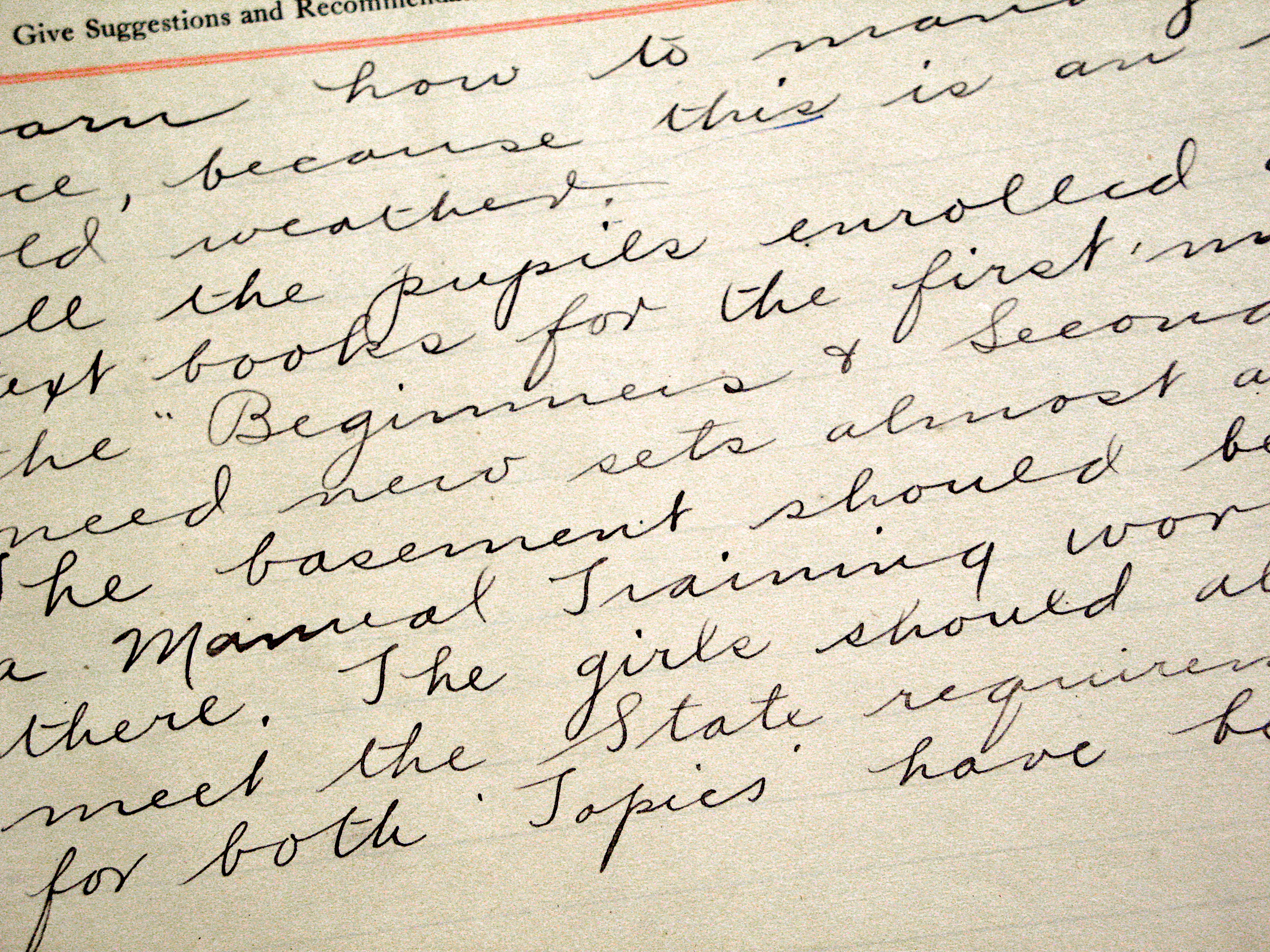
Built in 1906 just off of Main Street in Vesper, the Vesper Graded School was home to students of District No. 1, Town of Hansen. We get an interesting look at life inside the school from a teacher’s record book covering the years 1911-1917. The “Welch’s System Attendance, Classification, Gradation and Close Supervision” book belonged to Ruby (Treutel) Hanneman, who attended Vesper school starting in 1913 and later taught at the school.
The teacher kept detailed notes on conditions at the school, in addition to records of student performance and attendance.
The detailed notes in the book make one thing very clear: the teacher had her hands full each school year. Not only did one woman handle teaching duties for lower and upper grades, but she had to manage the building and contend with a cranky, bulky coal furnace each winter.
During the years covered in the record book, Vesper had three teachers: Mabelle Rowland in 1911-1912, Ella H. Hessler from 1912-13 to 1914-15, and Sara Icke in 1915-16 and 1916-17. Teachers were paid between $50 and $60 per month. Ruby’s uncle, Henry Treutel, served on the school board in early years (his son Harold attended classes during that time). In the late 1920s, another uncle, Charles Treutel, was also on the board.
It seems the biggest challenge for the teachers was not in the classroom but the furnace room. The coal-fired furnace often belched smoke and gases into the clean-air intake and into the classrooms. “Before you begin school learn how to manage the drafts of furnace and cold air shafts,” wrote Mabelle Rowland in her 1912 “Teacher’s Report to Successor.” “The inspector is very critical on this work.” Teacher Ella Hessler wrote one year later: “The furnace needs repair. The smoke enters the fresh air. The furnace work in cold weather is too heavy for a woman.” Similar notations were made in subsequent years.
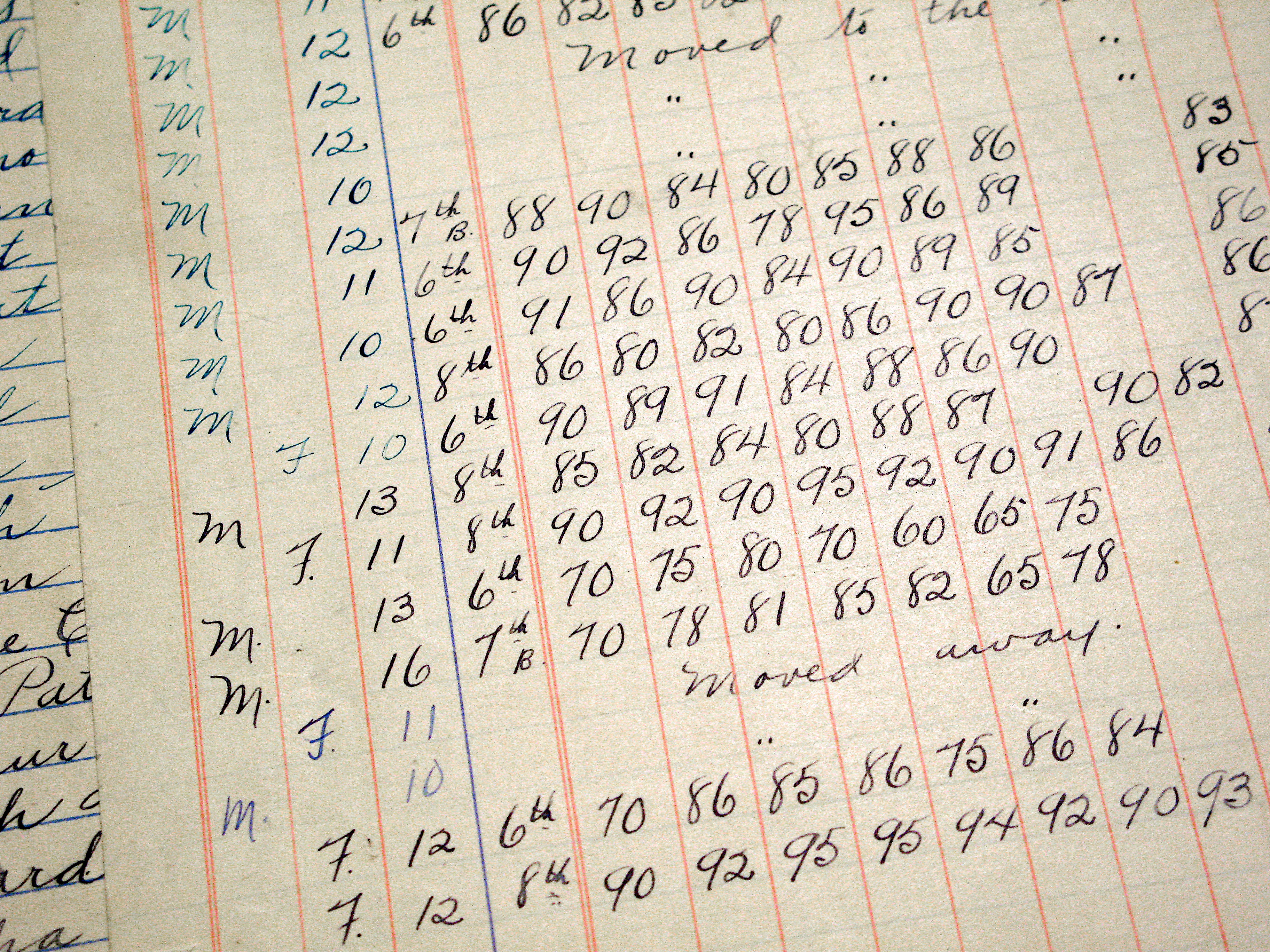
Each student’s attendance and academic performance were tracked in detail.
The school typically served from 25 to 40 students per term. Primary grades were on one level and upper grades on the other. The teacher staggered the subjects so she could get lessons started for one group and then move to the other.Classes started at 9 a.m. and students were dismissed for the day at 4 p.m. Course work included arithmetic, history, language, reading, grammar, physiology, domestic science for girls, manual training for boys, civics and geography.
Some of the children walked to school from homes nearby in the village, while others came in from the countryside. Tardiness was common, due to distance walked, duties at home or a pokey walking pace. In 1911-1912, Alfred and Agnes Peterson were the brother-sister tardiness champs with 20 and 17 instances, respectively. Clara Zieher had 18 tardy notations, followed by Erma Dassow with 15 (her brother Elmer had just 4). Absence from school was also common due to illness or duties helping at home. On occasion a student or two left school for a month or two to perform farm work. Arnold Conklin had best attendance in 1911-1912, only missing one day out of 180.
Absences were common from illness or need to stay home and work on farm chores.
The book tracked each student’s attendance and progress on a range of subjects. Teachers made notations for some students that ranged from “fair worker,’“weak eyes” and “slow” to “hard worker,” “irregular and very nervous,” and “dull.”
In the 1911-1912 school year, the school library had a mere 50 volumes. The school invested in books each year, and by June 1917 the library’s holdings included 144 books. For obvious reasons, the boys’ and girls’ out buildings regularly needed repairs and painting. The number of trees on school grounds that were in “thrifty condition” ranged from four to seven.
Ruby Treutel enrolled at Vesper Graded School in November 1913, when she was 10. There was some indication she had attended a parochial school prior to that. During her first year, Ruby missed 21.5 days and was tardy six times. Her cousin Harold Treutel had a mere three sick days. Ruby received good grades for the term: orthography, 91; reading, 95; writing, 90; arithmetic, 70; grammar, 89; geography, 83; and constitutions, 90. During the 1914-1915 school year, Ruby was out sick 20 days, but she still maintained As and Bs in all of her subjects.
The teacher’s annual summary provides interesting detail on all conditions at the school.
During the 1915-1916 term, Ruby excelled in all of her courses, scoring solid ‘A’s in orthography, reading, grammar, U.S. history and physiology. Her lowest grade was a ‘B’ in geography and arithmetic.
Harold Treutel graduated from Vesper Graded School in 1917 and enrolled at Lincoln High School in Grand Rapids.Ruby graduated from Vesper in 1918, also enrolling at Lincoln High School. That may be where she first met Carl F. Hanneman, whom she would marry in July 1925.
The old Vesper Graded School is now a private home, shown here in 2006.
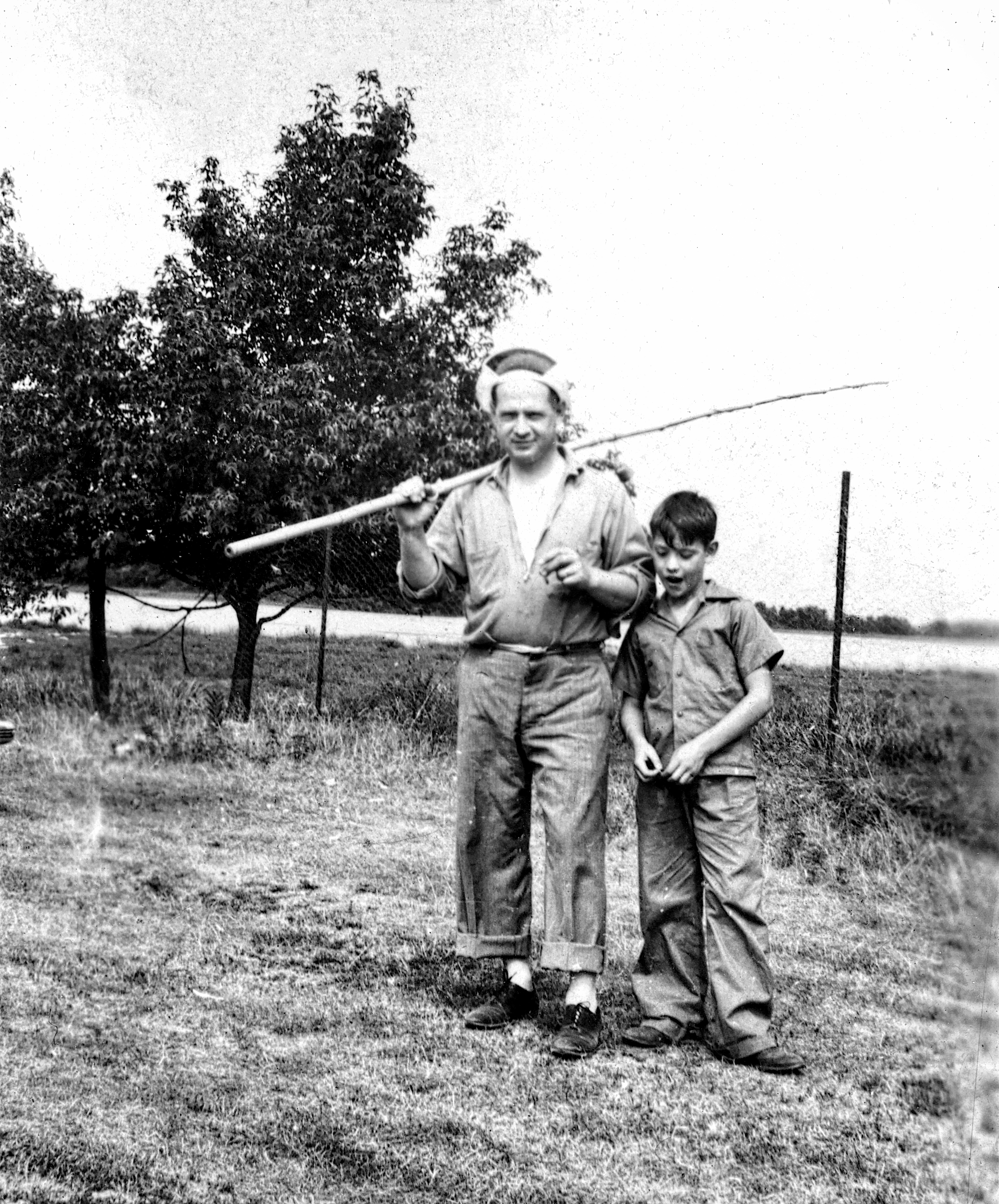
Photographs can document history in many ways, so it’s fun to look deeper into historical images to learn what they can tell us. The image atop this post shows a man and a boy. The man has a cane pole, so we can assume the pair has gone or is going fishing. Look a little deeper. The photo has a Rockwell-esque quality to it. Set in the summer of 1942, the photo shows Carl Henry Frank Hanneman (1901-1982) and his youngest son, David D. Hanneman (1933-2007). You can see Carl’s love for fishing — something he shared with his children and grandchildren who learned to fish on Mauston’s Lemonweir River.
The son is following along, asking questions of the fishing expert. What is he asking? Perhaps, “Hey, Dad, why don’t I have a cane pole?” It’s a time-honored tradition,passing on a love for fishing from one generation to the next. We’ll cover more of that in a future installment.
When the Johann Adam Treutel family emigrated to America from Darmstadt, Germany, they spread out across Eastern Wisconsin. Young Philipp Treutel and his wife settled in rural Waukesha County and became neighbors of some of the area’s best known pioneers. The young blacksmith set up shop in the heart of the village of Mukwonago, former Potawatomi Indian lands on the banks of what was then called Mill Pond.
Sewall Andrews
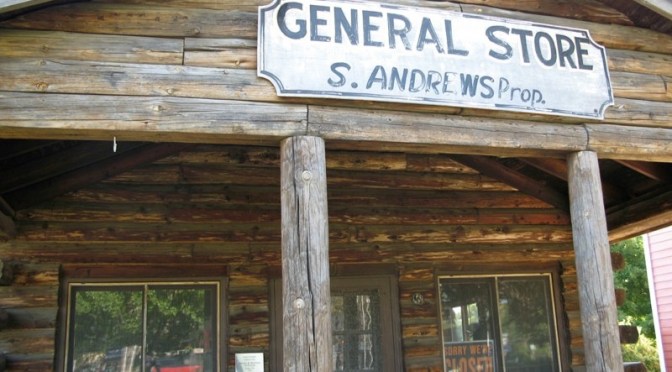
According to the 1860 U.S. Census, Philipp, Henrietta and baby Adeline Treutel lived in the same area as Sewall Andrews, the founder of Mukwonago and a major Wisconsin land owner. Andrews built a general store in 1837 that became a major trade center for the county. He built his own red brick house at the village center in 1842. The brick house still stands today along Main Street in Mukwonago and now houses the local museum. It is listed on the National Register of Historic Places.
Sewall Andrews built his red brick house in Mukwonago in 1842.
The Treutel residence is listed as No. 379 made during census visits in Mukwonago. The Andrews’ home was No. 372. Other nearby residents included Samuel Worthman, the village cooper (barrel maker); Martin Field, who owned the saw mill; Hezekiah Job, the tailor; and Melvin Gibson, who ran the livery stable. Field was also an attorney who became town justice of the peace and later a Waukesha County judge. The village park is named in his honor.
Judge Martin Field
The 1870 plat map for Waukesha County shows Philipp Treutel’s blacksmith shop and residence mere blocks from Andrews’ famous red brick home. The Treutel shop was near the intersection of Fox and Mill streets, close to the office of H.A. Youmans M.D., the town’s physician and surgeon. Nearby was Mukwonago House, the hotel run by Adolph Platner. Just to the south were the E.H. Kellogg saw mill and grist mill on the banks of the Mukwonago River.
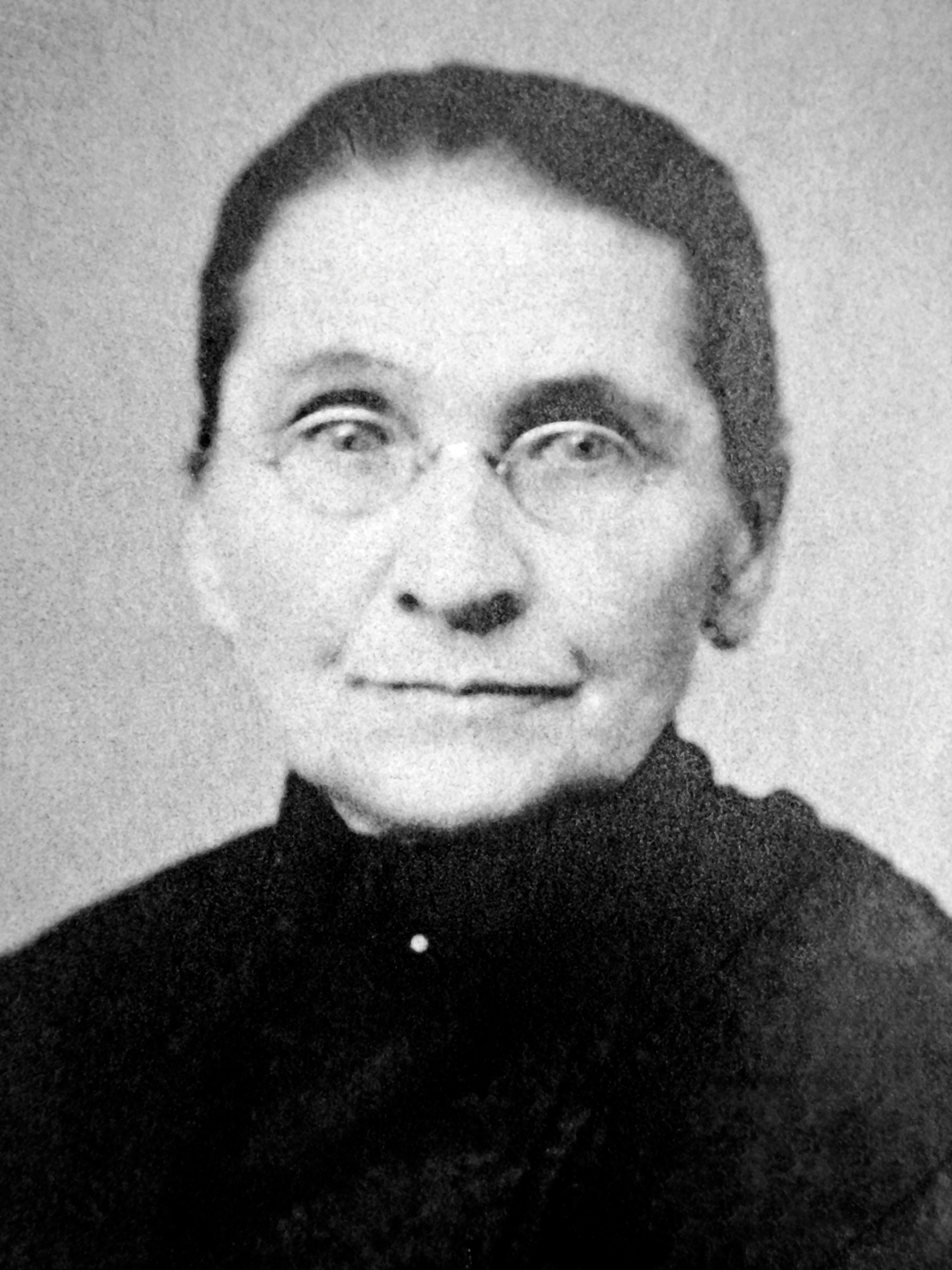
Cropped view of portrait of Henrietta (Krosch) Treutel (1838-1908). Henrietta Krosch came to America in July 1854 at age 16 from the town of Jessnitz, Saxony, Germany. Her family settled at Mukwonago, where her father, John Frederick Krosch, became a well-known farmer. She met and married blacksmith Philipp Treutel and lived the next 35 years in Mukwonago and North Prairie. Widowed in 1891, she moved her family to Vesper in Wood County in 1901, where she died on Feb. 6, 1908. She is buried at North Prairie Cemetery.
We know the Treutel family moved from Mukwonago to the crossroads village of North Prairie, since obituaries and other newspaper accounts referred to the family homestead at North Prairie. However, the family name is not shown on the 1891 plat map for North Prairie. It is possible they had a homestead on some of the property owned by the Carlin family.
The family included Adeline Barbara (1859-1928), Lisetta (1861-1931), Henry Adam (1864-1962), Charles (1869-1958), Oscar (1874-1967), Emma (1877-1962) and Walter (1879-1948).
After Philipp Treutel died in June 1891, his widow moved the family north to tiny Vesper, in Wood County. Her sons worked as blacksmiths, retail merchants and a U.S. Postal Service carrier. Emma Treutel Carlin served as postmistress of Vesper in the early 1900s. Henrietta Treutel died in 1908. Philipp and Henrietta are buried at North Prairie Cemetery.
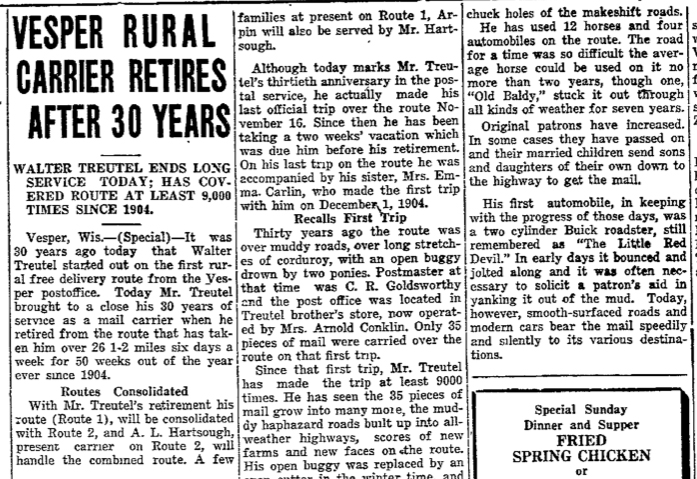
It would be hard not to respect a man who worked diligently at his job six days a week for 30 years. For Walter Treutel, the job record was even more impressive. His career as a rural letter carrier took him on a nearly 240,000-mile journey making sure the people of Vesper, Wisconsin received their mail and packages from 1904 to 1934.
Walter Treutel of Vesper, Wisconsin.
“The new rural mail carriers who will begin carrying mail on the 10 new routes on December 1st received their appointment from Washington last week,” the local Grand Rapids, Wis., newspaper announced in November 1904. “These carriers all took the competitive examination in this city four weeks ago and those fortunate to receive an appointment will now only have to file their bond for the faithful performance of their duty.” Walter’s first day as a letter carrier was Dec. 1, 1904. He was just two years married to the former Mary Ladick, and their firstborn child, Ruby, was just six months old.
His first trip over Rural Route 1 was made in an open buggy pulled by two ponies. He and his sister, Emma Carlin, rode that first 26.5-mile run together to deliver just 35 pieces of mail. At the time, the Vesper postal station was located inside the Treutel Bros. store, run by Walter’s brothers, Charles and Henry Treutel. Walter’s official postal substitute was his wife, Mary.
Walter Treutel picnics with children Nina, Elaine and Marvin, circa 1925. Behind the camera is Ruby (Treutel) Hanneman.
The dirt roads were rough and filled with chuckholes. The buggy rode over corduroy — soft or swampy sections that were shored up by placing logs across the path. Roads were so punishing in those early days that horses typically lasted only two years in service.
The first open postal buggy was eventually replaced by a covered postal wagon. Walter used a dozen horses on his route over the years. One of the toughest, “Old Baldy,”served for seven years in all sorts of weather. His first automobile, a two-cylinder Buick roadster, was nicknamed “The Little Red Devil.” Three other postal vehicles served on the route during his tenure.
He served under five postmasters during his 30 years, including his sister Emma Carlin, who was Vesper postmistress for nine years starting in 1906. In November 1934, Walter took his overdue two-week vacation, then returned for one final route on Dec. 1 — thirty years to the day after his first day on the job.
Walter Treutel with second wife Vera (at left), sister Emma Carlin, daughter Ruby Hanneman and grandchildren Lavonne and David D. Hanneman.
Walter was born July 23, 1879 in Mukwonago, Wisconsin, the son of Philipp and Henrietta (Krosch) Treutel. Walter’s wife, the former Mary Helen Ladick, died in 1925 after suffering a post-operative infection. She was just 41. They had five children, four of whom (Ruby, Nina, Marvin and Elaine) survived into adulthood. Walter died Feb. 15, 1948 of lingering heart disease. He was 68.
The Wisconsin Rapids Daily Tribune wrote about Walter Treutel’s last day on the job in 1934.
FAMILY LINE:Johann Adam Treutel >> Philipp Treutel >> Walter Treutel >> Ruby (Treutel) Hanneman >> Donn, David and Lavonne Hanneman.
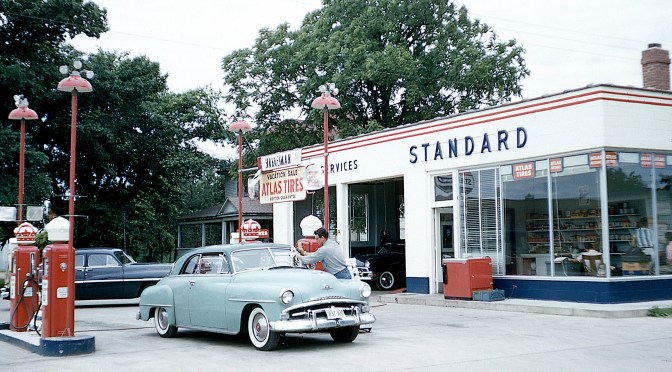
Before embarking on his long sales career, David D. Hanneman (1933-2007) briefly owned and operated a Standard Oil gasoline station at the corner of Union and State streets in Mauston, Wisconsin. Newly discovered color slides show Hanneman working at the Standard station, most likely in the summer of 1951 after his graduation from Mauston High School.
David D. Hanneman poses outside of his Standard Oil station in Mauston in 1951.
The photos show a dapper young attendant (think Clark Kent) posed outside the station, leaning on the soda cooler. Another image shows him cleaning the windshield of a customer’s auto, part of the “full service” treatment that disappeared long ago. The station featured the classic pumps that delivered Red Crown regular and White Crown premium gasoline.
During the 1950s, Standard Oil was the dominant domestic oil company in the United States. Its torch-and-oval logo was instantly recognizable to millions of Americans (even after Standard became Amoco). The Mauston Standard station stood at the busiest intersection in the city. A Kwik Trip station occupies the land today.
Detail shows “Hanneman” on the north side of the Standard Station.
After owning and managing the station, Hanneman realized the job was not for him. He went on to take classes at La Crosse State (now called University of Wisconsin-La Crosse) and worked as a salesman at Dahl Motors in La Crosse, before his career in pharmaceutical and veterinary medical sales.
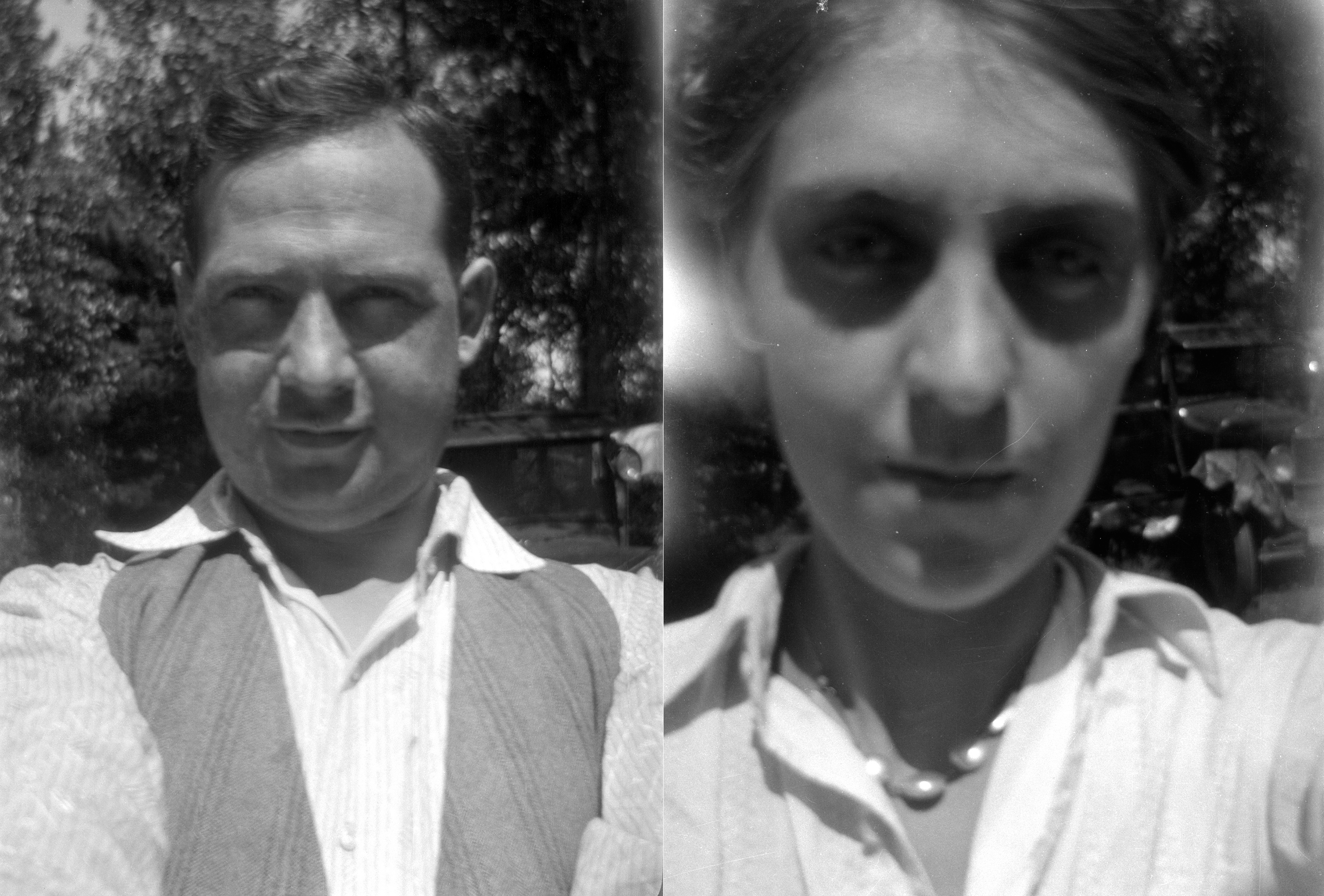
Many decades before the social phenomenon of taking self-portraits or “selfies” became all the rage, a young honeymooning couple in July 1925 predicted the trend by snapping their own photos at a camp site in Hayward, Wisconsin.
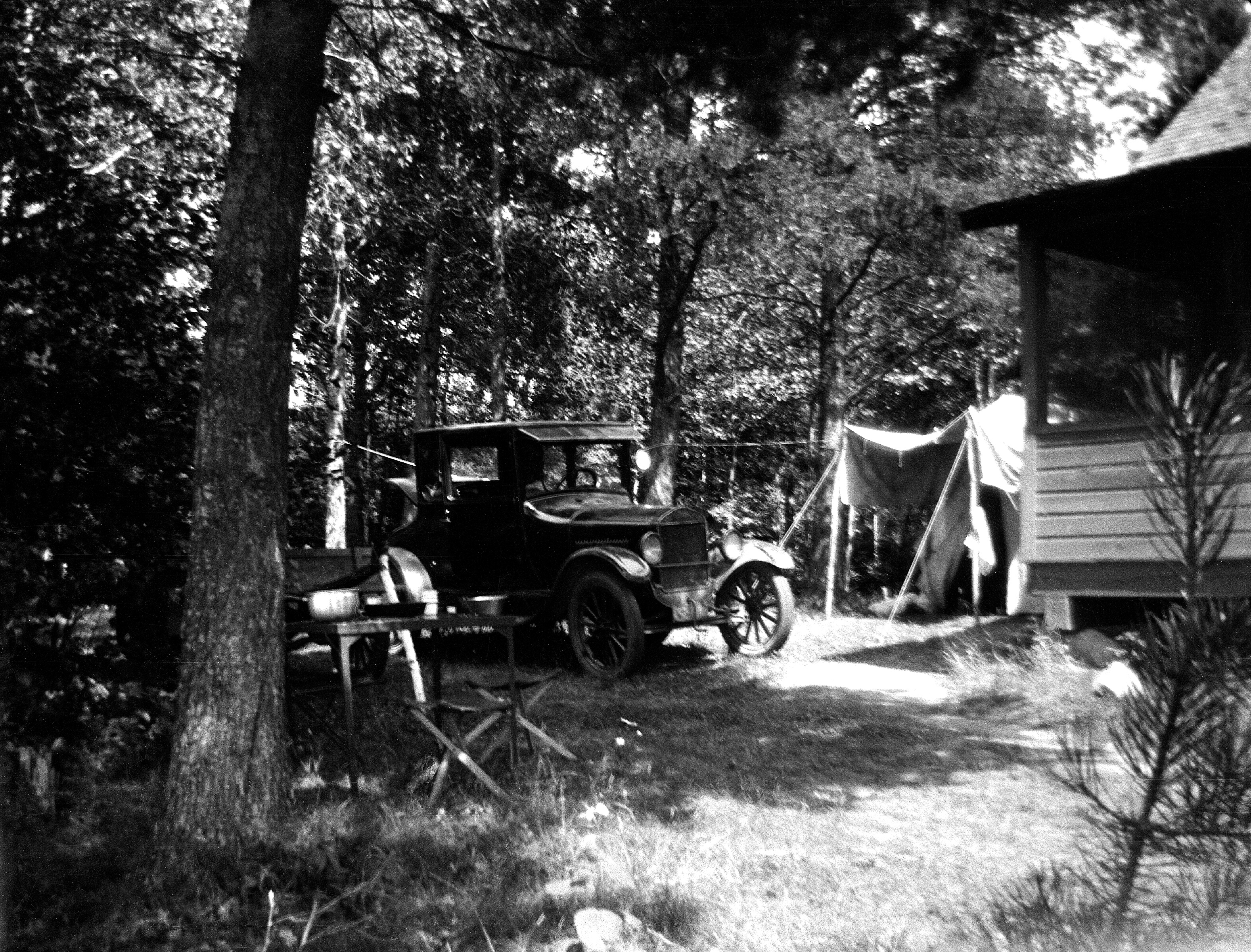
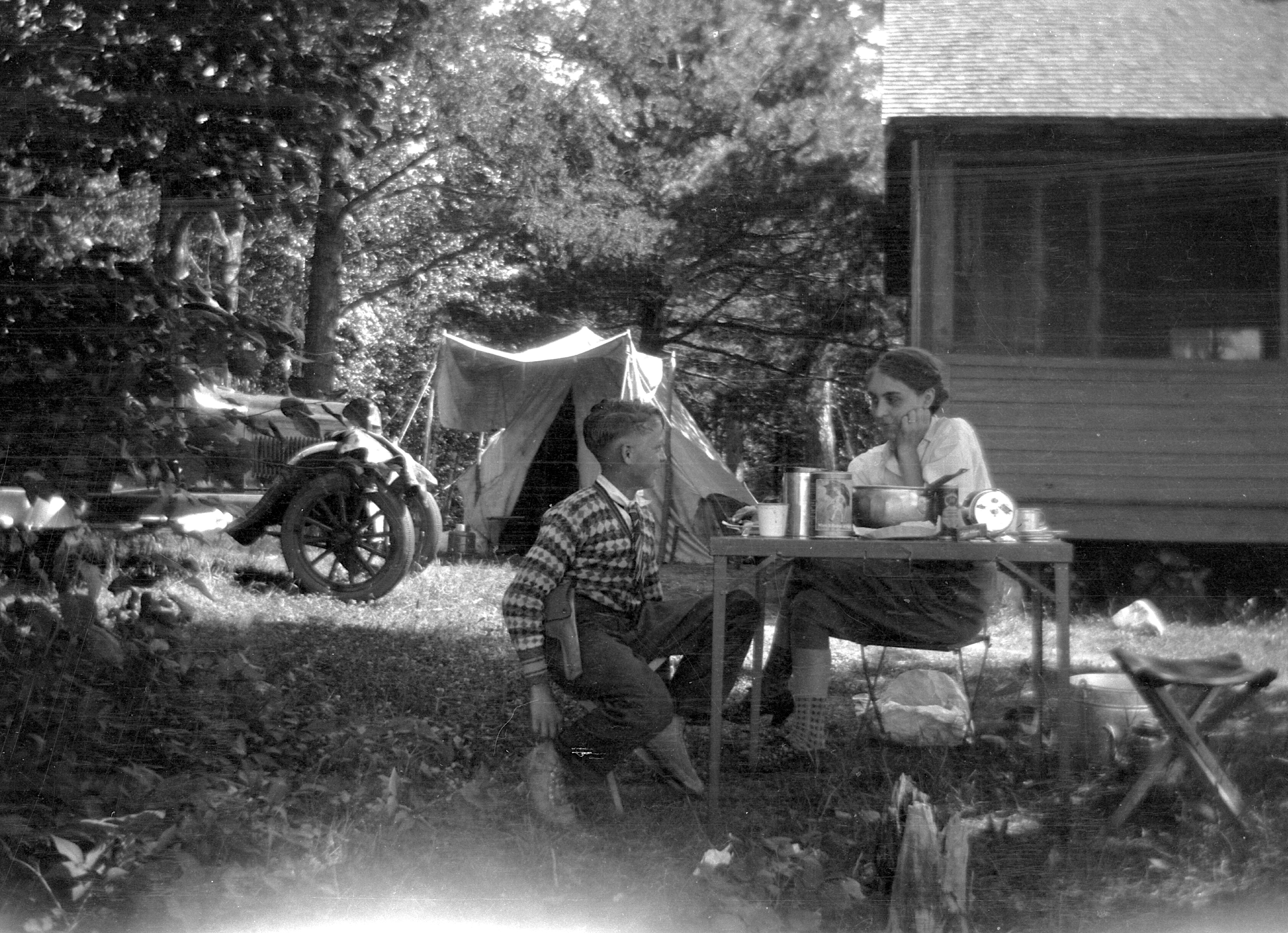
Carl F. Hanneman and the former Ruby Viola Treutel were married on July 14, 1925 at St. James Catholic Church in tiny Vesper, Wisconsin. For their honeymoon, they chose to motor to Wisconsin’s North Woods. Part of their time was spent at a cottage owned by friends, Mr. and Mrs. Armand Bauer, in Hayward.
Carl F. and Ruby V. Hanneman took these selfies on their honeymoon in July 1925.
Being a budding photographer, Carl took lots of photos from their trip, some candid and even playful. Two that stand out are ‘selfies’ taken by Carl and Ruby. Carl’s is at a good distance and quite sharp, while Ruby’s was an ultra-closeup, a bit out of focus. Given the camera technology of the day, these photos were more of a feat than it might seem. Nothing like snapping a quick shot today with an iPhone 6.
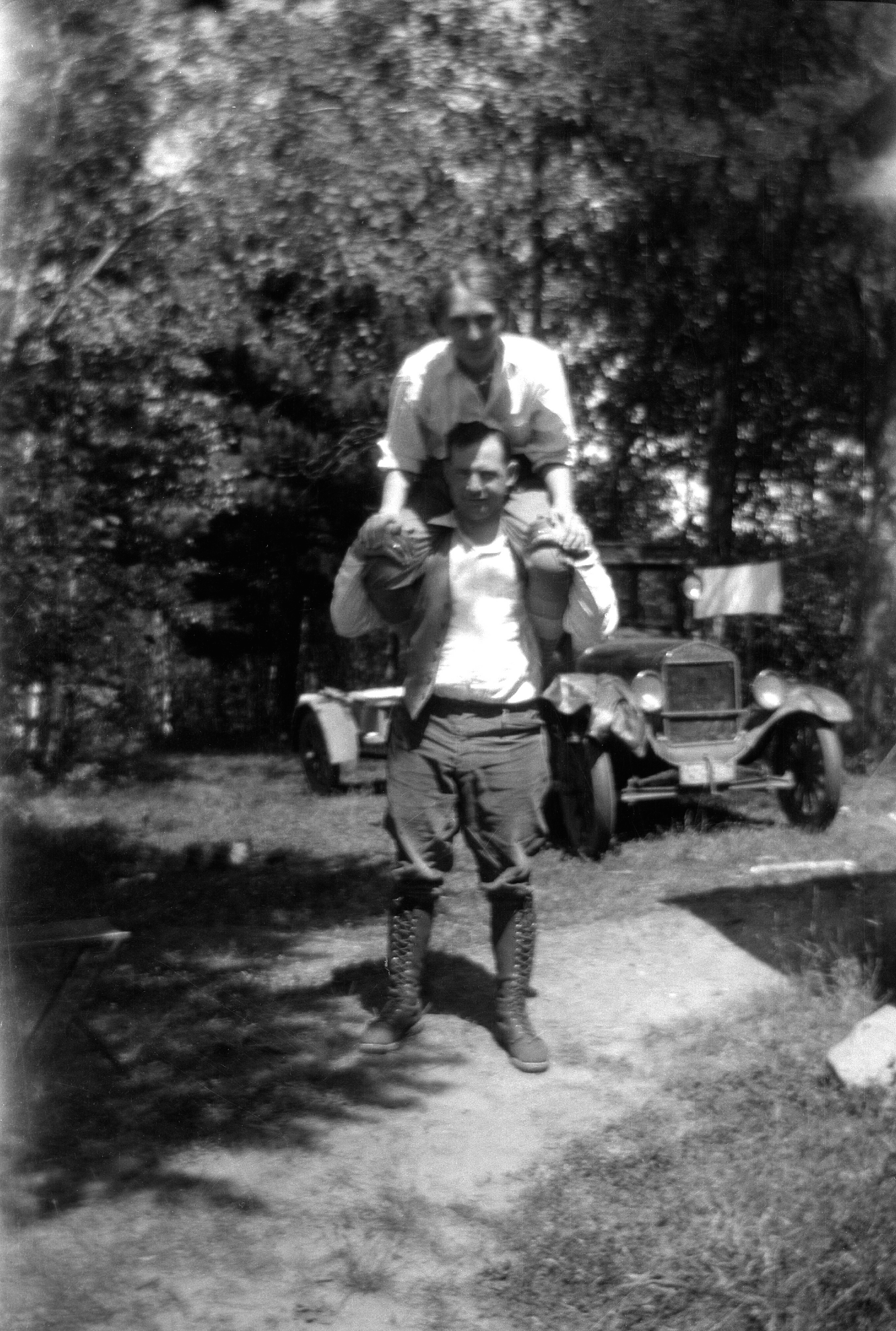
Ruby V. Hanneman rides on the shoulders of new husband Carl at their honeymoon camp at Hayward, Wisconsin.
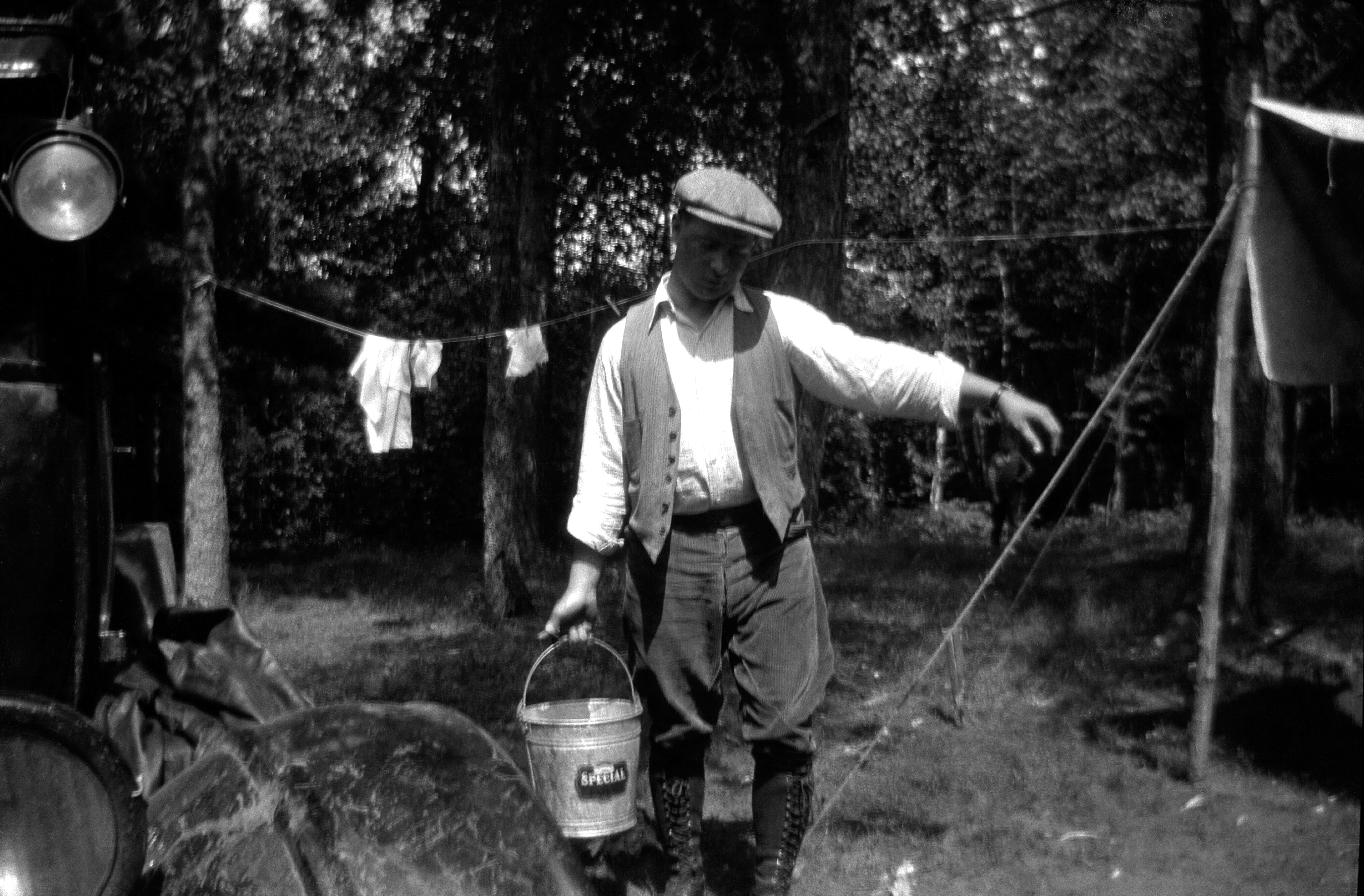
Other photos from the trip showed Carl walking with Ruby on his shoulders, Carl slinging a pail and Ruby sitting at a picnic table with a youngster who resembles her younger brother, Marvin Treutel (but might have been their hosts’ boy).
He could be carrying milk from the barn, but Carl F. Hanneman (1901-1982) is actually on a honeymoon camping trip in this July 1925 photo.Camp scene from near Hayward, Wis. in July 1925. Pictured is the Ford Model T belonging to Carl F. Hanneman (1901-1982) of Wisconsin Rapids, Wis. Hanneman was on his honeymoon with Ruby V. (Treutel) Hanneman (1904-1977) of Vesper, Wis.
Carl and Ruby had no way to know that the ‘selfie’ would become a dominant means of communication among young people around the world, or that the practice would spawn social media platforms, a television series, songs and videos on YouTube.













 The Hanneman Archive