Investigative reporter, Blaze Media LLC. Father of 3. Tradition-minded Catholic.
“Unless there is a Good Friday in your lives, there can never be an Easter Sunday.”
—Archbishop Fulton J. Sheen
The Knights of Columbus has long championed the “Keep Christ in Christmas” message to remind the public that the “holiday season” is really about the birth of the Savior. Each year, the more than 17,000 local K of C councils promote the message with car magnets, yard signs, television ads and radio spots. This Christmas messaging has been going on for decades.
The Nativity mosaic was used on a billboard along Interstate 94 in 2009.
Back in 2010, I wanted to create a 30-second broadcast commercial with this message, but we had no production budget. I found a beautiful mosaic image from the Knights of Columbus Incarnation Dome at the Basilica of the National Shrine of the Immaculate Conception in Washington, D.C. The year before, I used that image to create a billboard we placed alongside Interstate 94 in Racine County, Wisconsin.
Many Knights of Columbus councils distribute “Keep Christ in Christmas” lawn signs.
For the TV spot, we planned to use that still image with a pan-and-zoom effect, but I still needed voice talent and music. I looked no further than my then 11-year-old daughter, Ruby. She only needed a couple of takes to nail the script voiceover. My other daughter, Samantha, then 14, took to her keyboard and recorded a section of “Greensleeves.” That is the tune used for the hymn What Child Is This?
Once I put it all together, we had a very nice broadcast commercial, quite beautiful in its simplicity. The finished spot ran hundreds of times on a wide variety of cable television networks throughout the Archdiocese of Milwaukee.
This beautiful message is needed ever the more in 2025 than it was 15 years go. A secular and increasingly anti-Christian society makes it all the more important to boldly speak the faith and proclaim the coming of the redeemer of mankind, the King of all creation: Jesus Christ.
My daughters’ simple, elegant presentation was and is a perfect complement to the reality that God so loved the world that he sent His only Son through Mary, the Ark of the New Covenant, into the world to save men from their sins.
This Divine rescue mission, envisioned from all eternity, continues today. Welcome Him into your hearts. Ask Him for the faith to truly understand the mission of the Redeemer. For more than two millennia ago, a Child was born and placed in a manger, in Bethlehem the “House of Bread.”
My business donated the cost to place this billboard along Interstate 94 in Racine County, Wis.
Jesus the Bread of Life beckons all to follow him, worship Him and be one with Him through Holy Communion: the Body, Blood, Soul and Divinity of Christ. He is really and truly present in all of the tabernacles around the world, and wherever/whenever Holy Mass is offered.
I am a third-generation Knight of Columbus. In my time as grand knight of Racine Council 697, Captain of Fourth Degree Assembly 1207, and a founder of Racine Council 15659, Christmas projects were always close to my heart. Whether delivering gifts to children whose families could not afford them to helping erect a Nativity creche on Monument Square (see photos above), they all remain precious memories.
I knelt down to pray the Rosary before the 4 p.m. Mass at St. Albert the Great Catholic Church, about 2 miles from my home. My primary Rosary intention on this windy March Saturday was for my mother-in-law Eileen, who was dying of cancer and congestive heart failure some 80 miles away.
As I finished my Rosary, I heard people begin to file in for Mass. Out of the corner of my left eye, I spotted a woman with white hair and eyeglasses, also kneeling in prayer. I’m not sure what prompted me to look her way again, but when I did, I paused my prayers. I looked back a second time and held my gaze.
At that moment, I wondered if Eileen had died, because the woman I saw praying some 50 feet from me looked exactly like her. I thought (almost aloud), “What am I seeing?” I rubbed both eyes and looked again.
I had to move to a different pew because Mass was starting. I didn’t see her again. I didn’t get a chance to look for the white-haired woman during or after Mass. I took her presence at that moment to be a sign that Eileen had either departed for Heaven or would do so shortly. She was at prayer in God’s house.
“His raiment became white and glittering.”
The Gospel reading for the second Sunday of Lent was from Chapter 9 of Luke. It describes how Jesus took Peter, James and John up the mountain, where he was transfigured before them. His “raiment became white and glittering,” the Gospel says. A cloud enveloped them and they heard the voice of God.
It was a very powerful experience for me. God’s perfect time. Some 15 hours later, at 7 p.m. on Sunday, March 16, Eileen Marie LaCanne left for Heaven. She was 85.
I was most blessed to have a chance to spend a few hours with Eileen during her last week. I had not seen her for years. After getting an update on Eileen’s condition from my daughter Samantha, I felt an urgent—almost panicked—need to visit. I wanted to see her again, and to make sure she received the sacraments of the Catholic Church.
The next morning, I brought my good friend, Father RichardHeilman, with me to visit Eileen. He asked her to hold a beautiful St. Benedict Crucifix while he gave her Last Rites, Holy Communion (in this setting called “Viaticum,” or food for the journey to eternal life). He then gave her an Apostolic Pardon.
The former Eileen Eichler at home in Racine during her high school years.
Eileen looked tenderly at Jesus on the Crucifix while Father gave her anointing and prayed over her. She trembled slightly as she held the Crucifix. When Father finished, he blessed her with Holy Water from the springs of Lourdes, France, where the Blessed Virgin Mary appeared in 1858. He gave her a Green Scapular that had been touched to the relics of 165 saints and a relic of the True Cross of Christ.
In that moment—in her own way—Eileen was transfigured. Though days of physical pain and suffering still lay ahead, she was now spiritually ready to meet Jesus, assured of the Catholic Church’s full support and prayers in her final days.
Author, author!
Eileen had the soul of an author and poet. She consumed books voraciously, reading thousands of titles across the decades. Looking at all of her books that filled the shelves in her home, I had a thought that tied my mother and my mother-in-law together. My Mom taught reading for nearly three decades. Eileen taught by example the joy of reading. How strange that this thought never occurred to me before today.
Eileen always said she wanted to write a book. Her life and family stories would make compelling reading. She had the material. Despite her self-doubts, she also had the ability.
Eileen did not write a book during her very busy life. She WAS the book.She IS the book. Her volumes of journals are filled with hundreds of powerful entries on life’s joys and heartaches. Those handwritten notes will one day make a beautiful volume—and her name will adorn a hardcover book, just as she always dreamed.
Ron and Eileen were born at the same hospital seven months apart in 1940.
An author of Eileen’s life story would come to know important things. Despite much suffering and sacrifice, Eileen so often rose above it all with a razor-like wit and a sense of humor that would compel Groucho Marx to tip his hat in admiration. I will remember so many things about this dear woman, but nothing more than her infectious laugh. She admitted it sometimes came out at inappropriate times, like when she was nervous. That was one of her charms.
January 21, 1992, was a case in point. Eileen came to visit her first grandchild at St. Luke’s Hospital in Racine. Sue and I both struggled a bit to change Stevie’s diaper. From across the room came that laugh. She could not hold it in. Eileen seemed to enjoy the scene of us floundering. My ears were steaming. Eileen came over and offered to get the diaper on properly. As soon as she unfastened the front, a stream of pee hit her right in the glasses. I felt an urge to let out at least a mild guffaw, but I stifled it like Edith Bunker.
Stevie had some other incidents at Ron and Eileen’s as a toddler. When it was hot out, he liked to walk around “diaper naked,” as he called it. He even had a little song that accompanied his state of undress: “Diaper-naked, eatin’ candy!”
One day Eileen found him peeing through the screen door leading to the back porch. We have photos of him at Granny’s house, butt naked, spraying Eileen’s car in the driveway. He was also known to chase people with the garden hose while in the buff. What a scene.
Laughter and tears were the bookends of Eileen’s life. One challenged and the other soothed. One tested and the other triumphed. Even on her deathbed, watching home movies, that laughter could not be stifled or suppressed. Almost like laughter from Heaven.
The former Eileen Marie Eichler was born on a Wednesday—February 7, 1940—in Racine, Wisconsin. She was the oldest child of Alex Eichler and the former Gertrude Proeber. She and her five siblings were spread in age across 23 years: Allen, Mike, Don, Liz, and Kevin. At age 5, Eileen sang “Our King” in the Christmas pageant at Christ Congregational church, according to an article in the Racine Journal-Times.
Eileen Eichler (at left) used the power of rhyme to win class office during her junior year.
Eileen’s humor caught the attention of the local newspaper during her junior year at William Horlick High School. She was part of a feature photo atop Page 1 on Dec. 17, 1955. The caption said Eileen “used a play on words to be elected secretary-treasurer.” Her campaign poster featured a character wearing a little cap. The headline read: “Use your beanie. Vote for ‘Enie.”
Her grandchildren would laugh many times when Eileen told them her high school classmates called her “Wiener.” It appears she crafted a version of the nickname herself: “Enie.” Maybe it was “Ener?” I digress.
On June 15, 1963, Eileen was united to Ronald Clarence LaCanne in a marriage that lasted more than 51 years until his death on Sept. 25, 2014. They were blessed with three children: Patrick Ronald, Susan Elizabeth and Christopher Charles. Mothering came naturally to her, a vocation that would literally prove lifesaving during more than 38 years caring for a special-needs child while raising a girl and another boy.
Jesus said that there is no greater love than to lay down one’s life for another. That describes the adult life of Eileen LaCanne, caring for Pat, Sue and Chris. No greater love.
Eileen Eichler and Ronald LaCanne were married at Holy Name Catholic Church, Racine.
But in a most apparent way with Patrick, who was born with a heart defect, survived oxygen deprivation with the umbilical cord wrapped around his neck, and suffered brain damage during a surgery when he was about 2 months old. He developed seizures that were severe and for the most part, beyond medical help.
Miracle treatment
Ron and Eileen took Pat to the Mayo Clinic. In January 1977, he underwent a revolutionary surgery—a hemispherectomy—that removed one lobe of his brain to put an end to the wayward signals that sparked the frequent seizures. Ron called it a “true miracle.” The procedure worked and the seizures stopped.
“He hasn’t had a seizure since,” Eileen told Robert Frahm of the Journal Times in January 1981. “To see him now you wouldn’t believe he came out with no after-effects. I expected him to be somehow an invalid, and he wasn’t at all.”
In 1977, Pat and his classmates in Room 9 at Wadewitz ElementarySchool helped create a book on dealing with seizures. The project was the brainchild of 23-year-old teacher Jan Damaschke. The book—titled “Gripping Tales”—was dedicated to Pat and classmate Keith Bretl (who died in 1992). Eileen wrote her own reflection for the book on mothering a child who suffers from seizures.
Before his life-saving surgery, Patrick had to wear a helmet when he went out to recess. He referred to himself as “Hard Head Harry.”
“It’s hard to write about my feelings as a mother of a boy plagued with seizures, because I’m afraid I may sound bitter and angry,” Eileen wrote in the 1977 “Gripping Tales” book. “I think I was for a long time. …I felt angry at everyone who had a calm life and had no idea of what we were living with and how this was affecting our whole family.”
One of the true low points, Eileen wrote, was at Halloween 1976, when she had to forego taking Chris trick-or-treating because Pat was on the couch suffering seizure after seizure. If he fell and hit his head, she explained, it could trigger a more severe wave of seizures. “It could be anywhere from 20 to 40 seizures at a time,” she wrote.
A seizure book produced by students at Wadewitz Elementary School was dedicated to Patrick and his classmate Keith Bretl. (Images courtesy of Jan Damaschke)
That following Christmas Eve, seizures left Pat “very hyperactive and unpleasant,” Eileen wrote. During one of these moods, Pat struck his father in the face and broke his glasses during the family’s annual Christmas party.
“Aside from the embarrassment this caused in a room full of relatives (most only seen once a year), the feeling of helplessness and frustration on that night about what we were going to do with Pat was almost too much to bear,” she wrote.
Words truly fail when trying to understand and describe what Eileen meant to Patrick and vice versa. It is often said that there is no love like a mother’s love. Yes, this is true. Eileen was absolute proof of that. It was emotional, exhausting and at times heartbreaking duty, but Eileen willed herself to push onward, even when things seemed darkest.
She and Pat made regular outings to area bookstores. Greenfield News & Hobby was a popular stop, not just for its figurines and memorabilia, but for early runs of pop-culture magazines they both liked to read. Our children often went along on weekend retail outings that forged a special bond with Patrick and Eileen. Pat would have been sad if he lived to see his favorite hobby shop close its doors in 2015 after 50 years.
Gallivanting with Pat also included many trips to the movie theater, often within a day or two of a new Hollywood release.The Lion King, Aladdin, Toy Story, Titanic, A Goofy Movie, Beauty and the Beast, Forrest Gump, The Iron Giant, Austin Powers, Mrs. Doubtfire and Jumanji were just some of films on Pat’s scorecard.
Patrick wearing one of his favorite shirts on an outing with “Ma,” as he lovingly called her.
Stevie accompanied Pat and Eileen to the showing ofJumanji, a pretty intense special-effects fantasy film released in 1995. I was bothered a bit that a 3-year-old sat through that film. Granny was not known for saying no.Jumanji was only rated PG for “menacing fantasy action and some mild language.”
On her deathbed last week, Eileen brought up the film again. She told everyone in the room that I was mad at her for letting Stevie see Jumanji. I was dumbfounded that she had held onto such a belief all this time. I told her I certainly wasn’t angry at her. Any reaction I had happened 30 years ago.
It was a running joke in our family that Stevie got carte blanche when he was little. I would not change a thing, Eileen.
It was not all about retail therapy when it came to outings with Pat. There were countless trips to North Beach on Lake Michigan. As a toddler, Stevie used to demand to go to “Meeshigan.” Then there was the Great Circus Parade in Milwaukee, where Pat met Ernest Borgnine. Other events included parish festivals and even celebrity appearances. Pat met actor Larry Linville (Maj. Frank Burns from M*A*S*H) at Festival Hall.
Patrick’s health travails continued. He had two near-fatal heart episodes in 1997 that led to surgery to replace his implanted defibrillator. He also had surgery on his withered foot, which had gotten weak. He ended up in a wheelchair to prevent a broken leg or ankle. Doctors used bone from his hip to fashion a sturdier foot. After recovery from the surgery, his mobility returned.
Sue and Christopher with brother Patrick at Christmas time in the mid-1970s.
Eventually Patrick again needed a wheelchair to get around. He and Eileen continued the outings as best they could. Eileen told of one day that she struggled to get Pat in the car and the wheelchair in the trunk after shopping at Mayfair Mall in Wauwatosa. It was snowy and slushy. She slipped and fell trying to lift the wheelchair into the trunk. She broke down in sobs. This was just too hard.
And yet she persevered.
Eileen made it her mission to give Patrick a happy life. And that she did. Patrick was a kindhearted, beautiful soul who delighted each of our children, Stevie, Samantha and Ruby, and delighted their cousin, Geoffrey.
Pat was a child at heart. Stevie spent many a night sitting on his bed watching World Wresting Federation (WWF) matches and admiring Pat’s museum-like display of collectibles and cartoon memorabilia.
Patrick’s figurine collection was a legend, paying tribute to the Three Stooges, Betty Boop, Bugs Bunny, Daffy Duck, Aladdin, Homer Simpson, Snow White, Mickey and Minnie Mouse, Fred and Wilma Flintstone, Donald Duck, George Jetson, Mufasa from The Lion King, Lucille Ball, and Mrs. Potts the teapot, voiced by Angela Lansbury in Beauty and the Beast. And many others.
Stevie loved to play with his Uncle Patrick’s vast collection of figurines.
The big wrestling events featured such luminaries as Andre the Giant, Ric Flair, Hulk Hogan, Bret “The Hitman” Hart, “Macho Man” Randy Savage, Ric Flair, Rowdy Roddy Piper, The Undertaker, Yokozuna, Stone Cold SteveAustin, and the great Hall of Fame announcer and former wrestler, Bobby “The Brain” Heenan.
Eileen always made sure Pat got to watch the pay-per-view matches on TV, such as WWF WrestleMania 13, held at the Rosemont Horizon on March 23, 1997. The featured match was between Sycho Sid and The Undertaker. Such luxuries pressed on the tight family budget, but these matches brought Patrick such joy it would be understandably difficult to say no.
I loved and revered Patrick from the first time we met. I invited him to my bachelor party in November 1990. A small group of us went to a Milwaukee Bucks game and then to an old-fashioned two-lane bowling alley housed in a Milwaukee tavern.
Patrick was in his glory, talking pro wrestling with the guys. He blew us all away with his bowling skills. It was no small feat for him to master a game like bowling. His right arm was partially paralyzed and curled up a bit from his disabilities. His left arm made up for it when it came to bowling.
That night, Pat took the bowling ball with his left hand and repeatedly fired it down the alley like a missile. He bowled close to a 200 game. I can still see everyone in my group giving Pat high-fives after each frame. He was truly one of the guys. I treasure my memories of that night.
In 2002, Pat’s health failed. Years before, he had a defibrillator implanted in his chest to correct dangerous heart rhythms, including tachycardia. This incredible device shocked his heart back into rhythm more than a few times over the years. The first one wore out and had to be replaced. A hole in his heart since birth led to a general weakening that grew worse in the fall.
In October, Pat was admitted to Children’s Hospital of Wisconsin, where much of his lifelong cardiac care took place. One night during a visit, I could see Pat was declining. I felt an urgency to get our parish priest, Father Joseph Stobba, to anoint Patrick and bless him for his journey back home to God. I asked Sue what she thought. She cleared it with their parents.
Patrick LaCanne in the gift shop at Swan’s Pumpkin Farm in Franksville, Wisconsin.
Father Joseph drove up in a rainstorm and arrived not even an hour after I called him. Father Joseph anointed Patrick and said prayers for the dying. We all prayed the Our Father. What peace God’s presence brought to that hospital room. Everyone was strengthened by Father’s visit and the Blessed Lord’s comfort.
Patrick died the next day, October 5. He was 38. Forever young. Since childhood, Patrick was obsessed with the number 5 and the color purple. So his death date on the 5th was a bit of Divine Providence.
Father Joseph Stobba with our daughter Ruby after her First Communion at St. Rita Catholic Church. Father helped bring Ron and Eileen LaCanne back to the Church.
The loss of a family member can be so devastating that it changes the fabric of life. Nothing feels the same. The world is missing a precious soul. Ron and Eileen felt the loss of their firstborn son more deeply than I could imagine. The bottom dropped out. A deep financial loss due to the collapse of the dot.com economy added to the weight of the crosses Ron and Eileen carried. Depression set in.
At the funeral home, Ron was understandably numb. The funeral director, who had badly botched the long obituary I wrote for the Journal Times, gave an encore in incompetence by getting Patrick’s last name wrong on the prayer cards. “Patrick McCann.” What? Who? Ron told the funeral director it was OK. I don’t know if Ron really comprehended what he saw, but he was not going to make an issue of it.
Sue and I grabbed the funeral guy and explained how not OK it really was. YOU GOT HIS NAME WRONG! YOU MUST REPRINT IT … NOW. Mr. Blunderstumble fixed the mess. He got new cards delivered during the visitation. It was no surprise to us when this funeral home later went out of business.
Ron and Eileen had to sell their house and move into an apartment. A fresh start in Burlington, Wis. The kids loved to visit. The Bridge Street complex sat on the Fox River. The area has a bunch of lakes. Their place was charming and became a new venue for family gatherings. It was a short walk to the Fourth of July parade and fireworks shot over Echo Lake.
My in-laws began coming to Mass with us at St. Rita Catholic Church in Racine. It was a long stretch from their days at the former Holy Name Catholic Church on Grand Avenue in Racine, where they were married June 15, 1963. Eileen had kept her faith alive for many years going to services with her mother Gertrude at Christ Congregational church on North Wisconsin Street. She grew up in that little brick church. Ron had fallen away from the Catholic faith.
“Help! Possible heart attack! I need help!”
Now we all were together at Sunday Mass, followed by what became a tradition: brunch at Douglas Avenue Diner in Caledonia, a mile or so north of St. Rita’s. Family bonds were strengthened during those countless meals. Religion was discussed, along with the news of the day. One of our most memorable weekends came in 2009, when Catholic filmmaker Steve Ray and his wife, Janet, joined us for Mass and brunch afterward. Steve was in town for a talk sponsored by my Knights of Columbus council.
For a time, Ron and Eileen came to live with us in Mount Pleasant after they were forced to leave their Burlington apartment. We had a full house, but it was a blessing. The kids have wonderful memories of having Granny and Gramps all to themselves each day. I would not trade a single minute of it.
They soon moved into a beautiful ranch home on St. Andrews Boulevard, near St. Mary’s Hospital. The house belonged to Ron’s maternal aunt and uncle, Jackie and Lyle Arnes. More memories were made in this new place. One Thanksgiving meal was served in the finished basement. I will never forget the sight of Ron and Eileen dancing. The kids loved it.
Ron’s health began to fail. One Fourth of July, after we all watched the incredible fireworks in Sturtevant, Wis., Ron stepped into traffic as we walked to our van. We grabbed him, as he clearly could not see the vehicle quickly approaching. That was a close call that jolted everyone’s adrenaline.
He was diagnosed with with prostate cancer. He began having attacks of tachycardia that sent his heart racing. One day while Sue, Eileen and the kids were out on errands, Ron called me. He never called me, so I knew something was wrong. The tachycardia was back.
I raced to the house and helped him get into my Honda Element. I was afraid he was going to pass out. Just as we were pulling out for the short drive to St. Mary’s, I called Sue to meet us at the emergency room. While speeding to get there, Sue was pulled over by a police officer. Eileen went into a panic, got out of the van and began pacing back and forth in the street. “You can’t do this!”
Once they explained the situation to the officer, he let them go. In fact he gave them an escort to the hospital. Moments earlier I reached the ER and ran inside, blurting out, “Help! Possible heart attack! I need help!” As medical staff got Ron out of the car into a wheelchair, Sue pulled up. Eileen raced inside with the medical team. Sue parked my car and headed inside while I took the kids home in our van.
Eileen and Sue watched the doctors use medication and a defibrillator to literally stop his heart and re-start it as a way to restore normal rhythm. It was painful. Ron cried out, “Oh God!” as they stopped his heart and shocked his chest. His heart rate was over 200 beats per minute before emergency treatment returned it to normal. These kinds of crises had become all too familiar to Eileen.
Ron and Eileen moved into senior apartments near the DeKoven Center on the south end of Racine, close to Lake Michigan. Another change of address. It was a nice complex and they made a comfortable home there. Ron’s cancer chipped away at his energy. He lost his eyesight. Eileen took good care of him, as she had for decades.
Samantha, Stevie and Ruby Hanneman with their Grandpa Ron shortly before his death.
I was living in Sun Prairie at the time, but I made trips to visit. One day Ron and I sat in recliners and listened to the Packers game on the radio. We talked about his cancer and death. We talked about our Catholic faith. Ron received visits from the chaplain at St. Mary’s Hospital. They had gotten to know this priest by walking to Mass on Sunday at the hospital. He was from Africa. They forged a special bond. During one visit, Father left Ron with a small “comfort cross” carved from wood. Ron kept it in his palm.
I knew time was growing short during one visit. Ron was so weak he could not get out of bed to take a shower. So I carried him from the bed and got him onto a medical chair in the shower. The warm water soothed the pain and exhaustion in a body that was shutting down. As we got him toweled off, Ron apologized. He never wanted his son-in-law to have to carry him. I told him to put that thought out of his mind. I was honored and blessed to be there for him.
Later that evening we set up a CD player in his room and listened to some faith talks by the late Archbishop Fulton J. Sheen. Sheen taught me the Catholic faith. His eloquence was matched only by his dramatic presentation and ability to make the sacred mysteries understandable for everyone.
A good man gone too soon
Just a few days later I got a call around 3 p.m. that Ron had died. My heart sank. But I had hope, because Ron had embraced his faith late in life. The Africa-born priest became a best friend. Father made sure Ron had the sacraments of the Church. He died in a state of Grace on Sept. 25, 2014. He was 74.
I could only imagine the pain Eileen felt after the service at Draeger-Langendorf Funeral Home, as a military honor ceremony took place just outside the entry. The rifle salute was jarring, with each volley followed by the ting-ting-ting sound of the brass shell casings bouncing on the pavement.
The years after that became a blur to me. I saw Eileen at events like graduations, as well as an occasional Christmas Eve. We emailed and communicated on Facebook. But it was never the same again. I buried myself in a return to journalism during Covid and afterward, investigating the untold stories of Jan. 6 at the U.S. Capitol. I got updates from my children about family events. I treasured receiving photos of them with their Mom and Granny Eileen.
Sue, Eileen, Ruby and Samantha share some Christmas cheer.
The real shock came when I was told of Eileen’s cancer diagnosis in 2024, and again in March 2025 as her life was slipping away. She had decided she would not put herself through the regimens of harsh chemotherapy, or endure all of the awful side effects.
I returned for a second visit on Friday, March 14, 2025. As I left the previous Monday, I told Eileen I would visit again. She grabbed my arm and said in a serious tone, “Don’t just promise you will come. Please make sure you do come back.” So I made her a promise to return and bring home movies for us to watch.
“I want you to know how much you mean to me.”
She had been in and out of consciousness all week. I did not know what to expect when I arrived around 6 p.m. Eileen’s high school boyfriend, Jack Christensen, answered the door. They had rekindled their relationship after Ron died. “I thought you were coming at 5 or I wouldn’t have locked the door,” he said. I apologized for my tardy arrival.
After working through some confusion, Eileen recognized me and recalled my visit with Fr. Heilman. I sat down and flipped open my MacBook Pro laptop computer. Jack propped Eileen up in her hospital bed and she watched some 14 minutes of video memories. I wanted to make a longer video but ran out of time. She watched and even laughed a few times.
A still image from the home movies I showed to Eileen 48 hours before her death.
I sat next to the bed and held her hand. We talked about the “good old days.” She remembered it all. Reminiscing can be such a balm for the soul, even when cancer wracks the body with pain.
Our conversation grew serious. “I want to die. I want to die,” she told me.
“No, you’re not ready yet. You are going to outlive me,” Jack told her.
I said when Jesus calls, she should feel free to go ahead and answer. Wanting to go home to God is normal. She lived a good life, suffered much and walked her final steps with her loving family.
After several hours, I was preparing to depart for my two-hour drive home. Eileen squeezed my hand, looked right at me and said, “I want you to know how much you mean to me.” I was overwhelmed with gratitude. I got a lump in my throat. It took a few seconds to regain my composure.
Those are among the most important and meaningful 11 words I ever heard. That was Eileen’s final gift to me.
When I had gathered my things, I leaned over and kissed her on the forehead, just as I had done to my mother on her deathbed Dec. 26, 2018. “I love you, Granny. You have meant the world to me. The children absolutely adore their Granny. … I’m so glad I got to tell you that.”
Forty-eight hours later, Eileen Marie LaCanne drew her last breath.
Sue and two of our three children were with her. Although she had been in pain and restless, at around 7 p.m. she slipped away. Lifted up by angels to meet Jesus and be reunited with Ron, Patrick, her parents and many others who went home before her.
I had already been working on a slideshow to honor Eileen when my daughters called to tell me she had died. [Watch the tribute videoon my JComm website.]
I sat down and began to write this tribute. I did not get far before I was overwhelmed by grief. The sobs came in waves. My little dog Mickey watched me with concern. I regained my composure and reached for the Kleenex box. For a moment, I felt I was watching myself carrying on and wondering, “What is wrong with you? What just happened?”
I came to realize many things reflecting on the 35 years since I first met Eileen. She might have thought I was nuts during my engagement to Sue. One Sunday in 1990 I came over for dinner. Sue was not home from her Army National Guard duty. With war brewing in the Middle East, I was worried her unit would be sent overseas before our December wedding.
The LaCanne family portrait taken in the late 1990s. Ron, Eileen and Pat have since died.
So to burn off my nervous energy, I grabbed the upright vacuum cleaner and zoomed around the expansive carpeted floors of their ranch home. Kitchen, dining room, living room, hallways. Back and forth, back and forth. If I recall, Eileen’s mother commented to her after the vacuum incident that I was “rather peculiar.” Indeed.
I told Eileen many times during those years that she was my second mother. Today I realize that it was even more than that. She was a treasured friend. That’s why we had such fun discussions around the Sunday dinner table. She was easy to talk to and funny—much like someone else in the family that I came to know.
On a Sunday evening in March, I lost my second mother and a dear friend. This kind of person comes along once in life—if one is very fortunate. That’s why Eileen’s death hit me so hard. I’m sure it was much worse for Sue and our children. It’s hard to calculate the depths of this loss.
I left nothing unsaid. I told Eileen I loved her. I thanked her for being a great mother to Pat, Sue and Chris, a very close “Granny” to five grandchildren and a great-grandmother to our two new granddaughters, Gwen and Sabrina.
Eileen’s voice has been stilled.
But just like with Patrick, I can still hear her laughter—all the way from Heaven. •
—Watch the tribute video shown at Eileen’s March 29, 2025, visitation.
They always said it playfully, like it was the best inside joke.
My Dad (1933-2007) and his brother Donn (1926-2014) used to sometimes refer to their pops as “Heinie-Frantz.” I recall an occasion or two they said it directly to him. I don’t think he minded. Maybe his own parents used the pet name.
I was reminded of this nickname recently as my grandfather Carl’s 123rd birthday came and went on the late October 2024 calendar.
Heinie-Frantz almost didn’t have a birthday. Or at least not one he could prove back in 1946 when he needed to.
The David D. Hanneman family with Dad’s parents, Ruby and Carl, on their 50th wedding anniversary, July 14, 1975.
As we documented elsewhere on this site, Carl Henry Frank Hanneman wrote to the Wood County (Wis.) register of deeds on Feb. 22, 1946, asking for a copy of his Oct. 28, 1901 birth certificate.
Register of Deeds Henry Ebbe wrote back to say there was no birth certificate on file. He returned Grandpa’s 50 cents.
There was a record for a Ruben Hanneman born a week earlier. To the same parents, Chas. and Rosine Hannemann. Well, there’s your problem. A week off with the wrong name.
Heinie-Frantz went on a mad scramble to find evidence of his birth. He found an indirect record in the Moravian Church of Wisconsin Rapids. The 1910 U.S. Census incorrectly listed his name as “Harold.”
Wood County Health Officer Frank Pomainville finally fixed the record in 1960, crossing out the errors in red ink and writing in the correct information.
I’m so glad Mr. Pomainville corrected this small but important piece of history.
Cover images: Inset photos show Carl “Heinie-Frantz” Hanneman after a fishing outing in the late 1950s, Carl as a toddler in the early 1900s, and on a fishing expedition with son David in 1942.
I was fortunate growing up to have a large backyard to play in, covered by a canopy of mature oak trees. In the earliest days in our family home (1965-1975), you could walk into the backyard and stroll right into an oak forest untouched by encroaching residential development.
Some of my earliest memories in this wooded wonderland were of summer days when I would take a bedroom pillow, lay down on the grass, and peer up at the giant, leafy limbs swaying in the breeze. I can still hear the whispers of the trees as they gestured, bowed, and danced at the insistence of the summer winds.
I was convinced as a child if I could punt a football high enough to hit those lofty branches, I could try out as a punter for the Green Bay Packers. I never got the chance. Then again, I never kicked the football high enough to bounce off the branches.
We lost quite a few of the original 17 oak trees over the decades, but the backyard still looked resplendent in 2017.
A prominent feature of the property was a limestone patio built into the hill on the north side of the lawn. My Dad built a curved wall out of flat limestone rocks, which also paved the patio floor and served as steps up to the sidewalk that led into the house.
There were small gaps between the rocks on the patio floor. They sprouted weeds every year. We hated being assigned the task to pull weeds in the patio. After picking up the detritus, we had to use a whisk broom to carefully guide the pebbles back into place between the rocks.
At the picnic table on the rock patio, circa 1971.
The ground just beyond the asphalt driveway was home to numerous garden plots over the years. In the 1970s when the economy hit the skids, we had a serious garden stocked with green and yellow beans, green peppers, strawberries, onions, cucumbers, and tomatoes. From those harvests came pickles, strawberry jam, and vegetables for the dinner table.
Land farthest to the west had a couple of buried boulders that peeked out from the ground just enough to make perfect bases for a very tight baseball field. We never dug them up. Perhaps they still serve as bases for another generation of children.
The backyard was host to a wealth of critters from chipmunks and gophers to field mice, occasional deer, and even a snapping turtle. I don’t know if we ever figured out how a large snapping turtle found its way up to the house. A friend of Mom and Dad came over from Carriage Hills and captured the creature. I recall some comments about turtle soup. I did not want to think about that.
The large oak trees needed occasional maintenance. In the 1970s we had one of the worst ice storms ever seen in this part of Wisconsin. The house was without power for three days. My Dad was stranded someplace and could not get home. The eerie calm outside was often interrupted by the sickening crack of a branch giving way under the weight of the ice.
An ice storm for the record books struck Wisconsin in early March 1976.
Later that year I distinctly remember Dad pruning some of the large, dead branches using a rope thrown from below. He attached a fairly hefty rock to a heavy-gauge rope, then swung it like David when he felled Goliath. Up the rock went, the rope wrapped around the branch and Dad pulled the dead weight down.
Dad wore a white terry cloth sweatband on his head. It’s funny the details that stick with me so many years later. That’s how I saw my father while growing up. Slaying the biggest problems, seemingly unafraid of the size or complexity of the task at hand.
For decades we had a “bird feeder” that was in reality a squirrel feeder. It was a wooden box nailed to perhaps the largest oak tree on the property. Sometimes we had bird food to put in it, but more often we were sent out with stale bread.
The backyard was home to improvised ice rinks during a few winters. In the early years, we could peer through the woods all the way to the corner of Wisconsin Avenue and Broadway Drive. At the time it was an empty lot. The city would come and open the fire hydrant to flood the lot and make a perfect ice rink.
I don’t know which shocked me more: Dad zooming around the perimeter of the rink in speed skates, or Mom showing some unexpected skill on her white figure skates. I have an image in my mind of us all skating on that rink under nothing but moonlight. I’m not sure if that ever happened, but that’s how I remember it.
Those skates, like the memories they held, got tucked into boxes in the basement. More than 50 years later, the skates, winter clothes, the house, and the frozen empty lot are all gone.
Yet the images in my mind remain.
The biggest challenge that came with such a wooded lot was the blizzard of leaves that laid down a thick carpet every October and November. A half-acre of fall leaves usually required four to six able-bodied souls armed with bamboo rakes.
Some years we all raked the bounty into a massive pile, then spent an hour romping through the leaf mountain. That practice was eventually abandoned when we had golden retrievers, whose golden nuggets inevitably got mixed in with the leaves.
Our backyard “hill” wasn’t huge, but we always made the most of it for winter fun, circa 1974
With such a bounty of trees, the backyard also attracted a bounty of birds. In later years, Mom had a birdfeeder that looked like a little red schoolhouse atop a 5-foot pole. The cardinals were partial to safflower seeds, so that was the staple stocked in the feeder.
When living at Mom’s house for a year when she was in a care center, I set up a tripod and camera in the sunroom and shot photos of the birds through the windows. It was fascinating to see which ones ruled the roost and which others were able to feed unnoticed when the big guys and gals were around.
Since his creative talents included photography, hand illustration and writing, it only makes sense that Carl F. Hanneman (1901-1982) also showed skill and promise as a painter.
We’ve covered in many places on this site Carl’s ventures in photojournalism,freehand illustration and professional writing. At least two of his framed paintings have also survived, and reside in Hanneman family homes nearly 30 years after his death.
Both paintings depict nature scenes, one in winter and one in late summer or fall. It would make sense that the scenes depicted were in Wisconsin, likely Mauston and Carl’s native home in Wisconsin Rapids.
A winter scene painted by Carl F. Hanneman.
The first shows a winter setting along a stream that is surrounded by a mature forest. A moderately deep snowfall dusts the landscape, although the stream does not appear frozen. The second scene shows a variety of trees hanging over the shore of a lake or river.
It looks like many of the properties along the Lemonweir River in Mauston, where Carl brought his family to live in 1936. The property across the street and down the hill from the Hanneman home looks out onto LakeDecorah, where the river widens before flowing over the dam. It also resembles land along Petenwell Lake and Castle Rock Lake just northeast of Mauston, where Carl was known to fish.
A lake or river scene painted by Carl F. Hanneman (1901-1982). Date of the work is unknown.
It is likely Carl painted other works that found their way into private collections. My Dad believed there were still a number of works in the basement at Mauston at the time of Carl’s death. The fall scene above at one time hung in the study of the Hanneman home in Mauston.
The real estate surrounding Cameron Park in the tiny village of Vesper, Wisconsin, played an important role in the histories of the Hanneman and Treutel families. This village square was the nexus of commerce and family life at the dawn of the 20th century. It was home to a number of Treutel families, who came from Germany through Waukesha County seeking a new start.
A hand-drawn map made by Elaine (Treutel) Clark has surfaced that adds detail to how the town square was laid out and where the family homesteads sat more than a century ago. The map, likely drawn sometime in the 1980s, was provided to us by Elaine’s daughter, MaryClark. Because all of the old Treutel homesteads in Vesper are now gone, the map provides missing detail on what the village looked like in the early 1900s.
As documented elsewhere on this site, the family of Johann Adam Treutel and the former Katharina Geier emigrated from Bremerhaven, Germany, to New York between 1849 and 1854. The family initially settled in Milwaukee before it began to branch out into other areas of Wisconsin and in the deep South of Louisiana, Alabama and Mississippi. Henrietta (Krosch) Treutel, the widow of Philipp Treutel, moved north with her children after Philipp died in 1891 near North Prairie, Wis.
We’ve overlaid photos on the hand-drawn map created by Elaine (Treutel) Clark.
Most of the Treutels lived on properties along Anderton Avenue in Vesper, along the western side of Cameron Park. Most also had their places of business along the same street, including a general store, a butcher shop and a smithy (blacksmith shop). The first of the Treutels to come to Vesper was Adeline B. (Treutel) Moody, who settled on a farm outside of the village. Her family was involved in the Moody-Hinze shootout incident.
In late 1898, Charles W. Treutel made a trip to Vesper to “look after his landed interests,” according to the Wood County Reporter. Charles and his brother Henry A. Treutel later established a blacksmith shop that eventually became a service station and auto-repair shop. Treutel Brothers was located on the Hemlock Creek, just across from the northern edge of Cameron Park.
The former Goldsworthy’s store became the Treutel general store in 1901.
The Treutels purchased what had been known as Goldsworthy’s store at the corner of Anderton and Cameron avenues. Oscar and Walter Treutel bought the store from C.R. Goldsworthy, one of the major land owners in the area. Oscar was the main proprietor, as Walter became a rural mail carrier for the U.S. Postal Service. The post office was originally located in Treutel’s store. Emma (Treutel) Carlin was the seventh postmaster of Vesper, starting her 11-year tenure in the fall of 1906. Just south of the Treutels’ general store was the butcher shop of Orville Carlin, Emma’s husband.
The map also shows the “priest house,” which was the home of Father C.W. Gille in April 1926 when a fast-moving fireleveled the building before firefighters could reach the scene. Carl Hanneman or wife Ruby (Treutel) Hanneman documented the fire in photographs. Father Gille presided at Carl and Ruby’s nuptial Mass on July 14, 1925 at St. James Catholic Church.
Along the east side of Cameron park we see a village hall, the location of a community gathering documented in an “Eye on the Past” feature on this web site. The building hosted a lot of functions over the years. For a time it was home to a roller rink operated by Harry Cole.
A crowd gathers outside the village hall, circa 1914.
The southeast corner of the map shows the Vesper Graded School, where my grandmother, Ruby (Treutel) Hanneman went to school and later taught for a time after earning her teaching license. The well-built structure still stands, now serving as a private home.
The center of the park shows a bandstand, which many times was the center of activity with band and string concerts. The Vesper Cornet Band played in the park on more than a few occasions. The talented group of musicians included Charles Treutel,Henry Treutel and Orville Carlin, the husband of Emma (Treutel) Carlin.
Not far from the bandstand is an indicator where the Ku Klux Klanburned a cross sometime in the mid- to late 1920s. It was one of Elaine’s vivid memories from early childhood. We could find no reference to it in the Wisconsin Rapids papers. The Klan was certainly active during that time period. If this occurred before April 1926, it would have been directly across from the home of Father Charles W. Gille, the pastor of St. James Catholic Church.
The Vesper Cornet Band. Orville Carlin and Charles Treutel are the first two from the left in front; Henry Treutel is second from right in rear.
Last but not least is the Walter Treutel homestead, along the western side of Cameron Park with its rear facing the Hemlock Creek. The Treutel children had lots of space to play in the field behind the house. The map says they went ice skating on the Hemlock Creek on winter days. We have many photos showing the home’s exterior, but no images from the inside of the house.
Mary(Ladick) Treutelon the stepsof the Treutel home with her children Nina, Marvin and Ruby.
(The staple in the corner of the document was rusted. That gave me an idea of how long the story below sat in my paper files, unused. When finding this recently, I chuckled at the list of big publications I wanted to send it to. That never happened. It has been some 30 years since I wrote this. Mom and Dad are gone now. My three children are grown. But the memories of those days are still so vivid, of a cherished canine friend.)
I stood in my bedroom that Sunday night in July, tears rolling off my face and sobs shaking my body. An uncontrollable tide of grief welled up inside me, and although my wife Sue was with me in the room, I suddenly felt very alone.
I wasn’t prepared for how I would feel when you died, probably because I never thought I would have to face the situation. But now the shock of realization hit me with incredible force.
A million thoughts raced through my mind as I tried to come to terms with the news. I was at a loss as to why I was taking it so hard. I wondered if I was abnormal. The same feelings of loss and desperation haunted me as if Mom or Dad had died. But my tears were not for them. I was crying for you, Korby, my big-hearted, beautiful golden retriever.
As I sat down and sobbed into my hands, I remembered you laying on the hallway floor the last time I saw you. You couldn’t get up to play, or to take a walk around the block like you loved to do. I knew you were sick, but I convinced myself you would get better. I was sure that nothing— not old age, not sickness — would get the best of you. But when Mom and Dad called to say they had to put you to sleep, it cut me to the core. I could not accept that your time had come, and I didn’t want to believe that someone who added so much to my life was gone.
His legal name was Korbel: My BrandyMan, but we called him Korby. With me in 1986, college graduation day.
A rush of memories passed in front of me, and I realized just what I would be missing the next time I stepped foot in Mom and Dad’s house.
I remember the day Dad brought you home. You were an adorable, long-eared puppy with huge paws and the enthusiasm to match. You charged across the front lawn and jumped into my lap, chewing on my hand with your baby teeth. I was afraid of dogs, but you seemed different to me. You had boundless energy and limitless affection. It would have been hard not to fall in love with you.
I remembered how strong-willed you were while growing up. You were good at heart, but you always did what you wanted and went where you pleased. I’ll never forget the day you flunked out of dog obedience school because you couldn’t sit still. While other dogs were heeding commands to stay, you opted to run around looking for someone to kiss.
Your playfulness and spunky character quickly became the talk of the neighborhood. I always wondered what the neighbors thought when they rang the bell and you came to the door with an old shoe or pair of underwear from the laundry pile in your mouth. I’d laugh when they reached down to accept the gift you brought them and you ran away. Your face seemed to say “chase me,” and I always did. I never got sick of galloping around the living room until I was able to tackle you and retrieve what you had in your mouth.
The nights I came home late from work or school, no matter what the hour, you always came downstairs from your bed to greet me. Half the time you remembered to bring a gift, like one of Dad’s slippers. Your groggy eyes told me how much of an effort this was for you, but you came just the same. Even if you were sleepy, you always waited for me to go to bed before you went back upstairs. Thanks for watching out for me.
Joe and Korby: Christmas in the mid-1980s
The year after college when I was looking for full-time work, we became constant companions. After Mom and Dad went to work each morning, I waited for you to push my bedroom door open with your nose, then jump on the bed and fall asleep until I was ready to get up. Later in the day, if we had nothing else going (which we usually didn’t), we’d take a walk. I loved your reaction when I looked at you and uttered that golden phrase: “You want to go for a walk?” You cocked your head sideways as if to say, “Really?” Then all I needed to say was walkie to set you barking and dancing by the garage door. You got so excited on our walks, sometimes I thought you’d pull me off my feet.
Then there were the car rides. Sometimes I’d ask you if you wanted to ride in the car, just to see how happy it made you, even if I had nowhere particular to go. You were always first in the car door, pushing your way past me into the front seat. You were quite a sight, with your big head out the window and lazy tongue hanging out. When you sneezed on the window from the cold air blowing up your nose, I’d cringe and make a mental note to buy some Windex. And there was all that dog hair you left on the upholstery.
What I wouldn’t give to hear your “achoo” on one of those rides now.
During the winter, I remember us going into the back yard to play our version of canine football. I took off my hat and threw it like a Frisbee across the frozen yard. Then the race was on. It was too hard to catch you, but I always managed to get in a few good tackles. Thanks for letting me win a few. You were a good sport.
Korby loved to romp in the snow, chasing a football or any other object (hat, mitten, etc.)
One of my favorite games inside the house was when you came over to me with one of those worn out yellow tennis balls in your mouth. Being as coy and you could, you dropped the ball in front of me, but as soon as I made a move for it, you snatched it back. It was really funny how you loosened your grip on the ball just enough to let me think I could get it away, then clamped down on it when I tried. I don’t think I ever laughed so hard as when I rolled the ball down the hall and you chased it so hard you slid on your rear into the kitchen table. Whenever you got frustrated with the game, you took the ball between your paws and pulled the fur off it with your teeth. You gave us an impressive collection of bald tennis balls.
“You were not just my dog, or my pet. You were a part of me.”
You were always a great ally, Korb. I remember that year between college graduation and my first full-time job, when things got so frustrating I sometimes ended up in tears. But you were always there to lick my face and let me know things would be all right. And last Christmas Day, when Sue got called off to war with the Army Reserve, you knew I was upset and stayed by my side all weekend. Thanks for being so supportive.
You gave us plenty to smile about on Christmas mornings. We were all busy with our exchange of gifts, but you wouldn’t stand to play second fiddle to a bunch of wrapped packages. It became a Christmas ritual to watch you dive into the discarded wrapping paper, throw it in the air, then catch it in your mouth before tearing it to bits. Thanks to you, the living room looked like the wake of a paper tornado. I tried to save two or three stick-on bows, because I knew how much you loved pulling them apart. By the end of the morning, you usually found your gift, just by the smell of the rawhide emanating from under the wrapper. I still have a picture of you struggling to carry the 3-foot-long bone we gave you one year.
Korby helping cousin Laura with one of her gifts in the early 1980s.
One of my most vivid memories of you was from dinner time. It seemed that when it came to food, you had no idea you were a dog. Every day was the same story. Your bowl of food was put down at 4:30, but you preferred to wait until 5, when we sat around the dinner table. Like a professional panhandler, you made the rounds. You knew I was a soft touch. I figured that was why you always slid your nose into the crook of my arm and pushed your way in until your face was practically on my plate. I always gave in and slipped you a scrap of meat or a few vegetables. I could never figure out why you loved peas and carrots so much, but that came in handy for both of us. When you didn’t get what you wanted, did you have to knock your bowl of food over onto the floor? Oh well, just part of your strategy, huh?
What I wouldn’t give now to see you make that mess again.
I hope you don’t think we didn’t notice the one night you put your big paws on the kitchen table while we were in the other room and stole half the pizza. And Mom figured out real fast the time you plundered an entire ham from the counter. You probably figured you were doing Mom and Dad a favor the nights they had bridge club, by moving from one snack dish to the next, cleaning out the contents.
After I moved to another city with my job, coming home to visit you was a special treat. You made me feel so important when I came through the door. You grabbed a shoe and headed for the hills, and the chase was on until I tackled you. I always thought I was winning when I caught you, but now I realize that’s what you wanted in the first place. But I got my revenge when I’d take a dog biscuit, put it in my mouth and get down on all fours. You had a hard time getting the bone away from me. Well, at least until you threw your 100-pound frame on my back and knocked me over.
Korby wasn’t so fond of wearing someone else’s ski goggles.
After roughhousing for a while, I liked to lay down next to you and give you a big bear hug. You looked so peaceful as I scratched your ears and petted you. I’ll never forget the feeling of your smooth golden fur or the softness of your floppy ears. Your eyes would drift shut and your breathing grow deep. Then, just as you fell asleep, your paws would wiggle as if you were running. I used to wonder if you dreamed about running in a big, open field. I’ll bet that’s where you are now.
You always broke my heart when Sunday afternoon came and I had to pack up to go home. As I would gather my belongings, you looked up from the couch with big puppy eyes that seemed to say, “Aw, c’mon, don’t leave!” You got me to stay that one time when you grabbed my wrist in your mouth and pulled me back in the door.
Now that you’re gone, I wish I had stayed more back then.
Every time I called home, I got a sense of security and homesickness alike when I heard your bark in the background. Barking was one of your passions. It didn’t matter if it was a squirrel or bird in the back yard, or a common housefly on the sliding glass door that was your window to the world. You let out a resonating “woof!” that jolted anyone within 20 feet and shook the rafters. Just when we thought your eyes might be getting bad, you proved us wrong by barking at someone walking two blocks away.
When your fur started graying, I got a twinge of concern, and for a moment I was afraid you were getting old. But those thoughts always vanished in the face of your still-playful nature.
But last spring, I caught myself again worrying when you gained a lot of weight and had to be put on special medication to flush a buildup of water from your body. You got better for a while, as I was sure you’d be with us for years to come. And even though you were losing weight, I told myself you’d be fine.
Korby in his younger days, with David, who would be there for Korb in the end.
Then came one Friday I was home for a visit. You looked tired as you staggered over to greet me for a moment, then laid back down to nap. When I sat down to eat my lunch, you struggled and almost fell over trying to get up to come get your share. But after that second piece of pepperoni from my pizza you perked up. And again in the face of evidence that you were slowly leaving us, I believed you were fine. I hugged and kissed you extra long before heading home that day.
But the next day, when our brother David was up to see you, you didn’t get up at all. Even your favorite word walkie wasn’t of interest. You didn’t know it then, but Mom and Dad were worried. They had talked about having Dr. Sartori come over during the week and put you to sleep while they were away. They didn’t want to see you go. But David said no, if it was your time, he wanted to be with you.
So David, God bless him, took you outside for a short walk, then put you in his car. I picture the two of you as you drove down all the side streets on the way to the vet’s office. You even had your head out the window, just like old times.
The vet was not surprised to see you. We later found out you had cancer growing in you that caused you to lose weight and age so fast. When the vet came into the waiting room, you slumped to the floor, just like you always did when you didn’t want to go somewhere. You were vintage Korby, right to the end. It was so hard for David as he held you in his arms while the doctor gave you a shot. He could feel you relax as your worldly troubles slipped away.
One of Korby’s favorite spots: his side of the couch. Mom’s feet are in the shot.
But just as your pain was ending, Korb, ours was just starting. Tears flow from me every time I think of you. It’s going to be so hard to go into that house and not hear the click of your nails on the floor, or see that shoe or pair of underwear dangling from your mouth.
But writing this, I finally understand my powerful reaction to your death. You were not just my dog, or my pet, but a part of me. You knew me so well. Your selfless nature and affection did more for me that you probably ever could understand. Until I met my wife, you were my very best friend, whom I grew desperately close to. Even when I got married, you didn’t hold it against me. Thanks for that.
I know that I’ll always shed a few tears when I look at your picture or think about you. But I’ll also smile, because I know you’re somewhere much better now.
I can’t say goodbye to you, Korb. It would hurt too much. So keep that shoe handy. I’ll chase you again someday.
He was the kindest, most decent person I’ve ever known. Tom Hanneman, legendary Minneapolis sports broadcaster, recent Midwest Emmy® award inductee and father of three, died suddenly on Dec. 18 at his home in suburban Minneapolis. He was 68.
A cousin 12 years and 2 days my senior, Tommy enjoyed a storied broadcasting career that would be the envy of any journalist. Tens of thousands will remember him for his calls from the broadcast booth, but his true impact in the world came through his family and the countless one-on-one interactions he had with people in all walks of life. He took interest in them all, treating everyone with respect and kindness. When you talked with Tom Hanneman, you mattered. And he meant it.
The world needs more men like Tom Hanneman. We now must learn to live with one less.
Thomas Donn Hanneman was born in La Crosse, Wis. on June 29, 1952, the third of nine children of Donn G. Hanneman and the former Elaine Kline. He was one of three boys in the Hanneman clan who matched wits and traded lightning fast humorous barbs like they were fired from a Gatling gun. To listen to the Hanneman boys left you with sore ribs from laughing. I don’t know if they rehearsed their act, but Tom, John and Jim, had they not followed the paths they did, could have done a stand-up act worthy of Carson or Leno. Tom and John did great voice imitations, something Tom later employed with great humor as the fictitious basketball announcer Bill Beek (see the video below).
Every encounter with my cousin Tom started the same way. He looked me square in the eyes, put his hand on my shoulder and said, “How are you? Tell me what’s been going on.” He listened, asked insightful questions and gave his appraisal of the things of life . His interest and concern were genuine. That never changed, not once over five decades of our interactions. You can’t teach such things, nor can you force them. Those qualities are a gift from God. Tom made very good use of them.
When God was handing out good looks and talent, Tommy got in line twice. He had the Hanneman face that embodied the young movie-star looks of our then-19-year-old grandfather, Carl F. Hanneman (1901-1982). And that voice. My father was told in high school that he had a stentorian voice. Powerful. Indeed his singing could lift the gabled roof off of Sacred Hearts of Jesus and Mary Catholic Church. Tom had a polished voice made for TV and radio — smooth as tiramisu or a sip of Baileys Irish Cream. His broadcast timbre was like listening to Jim Nantz call the PGA championship or Pat Summerall at the Super Bowl. It never gets old.
Carl Hanneman (left) circa 1920; Tom Hanneman in mid-1970s.
Tom started his career as a radio disc jockey at Minnesota State University. In 1973, he wrote a letter to Dave Moore (1924-1998), the legendary anchorman at WCCO-TV Channel 4, the CBS affiliate in Minneapolis. “Dave helped me get a foot in the door at ‘CCO as a dispatcher,” Tom said in his Emmy® acceptance video just a month before his death. “A lucrative job that paid $1.35 an hour. It didn’t matter. Dave Moore taught me many things certainly about the value of mentorship. It’s a lesson that I’ve never forgotten.”
Tom spent 16 years at WCCO as a sports reporter and anchor, then became a TV and radio host for the Minnesota Timberwolves NBA franchise. He eventually became the Timberwolves’ television play-by-play announcer. The Timberwolves assignment lasted for 23 years. He then became the face of Fox Sports North in 2012, anchoring pre- and post-game coverage of the Twins, Wild, Timberwolves and Minnesota Gophers. Viewers and sports fans affectionally referred to him as “Hanny.” Over his long career, he covered the World Series, Super Bowls and even the Olympic Games. He became known for his quick, dry wit and high jinx with radio partner Kevin Harlan (you can read a beautiful summation here; h/t to Jim Hanneman and his son, Leo).
Tom wasn’t kidding about being a mentor. He played that role to many people. During my freshman year at the University of Wisconsin-Madison, Tom got me tickets to see the Wisconsin Badgers and Minnesota Gophers play hockey in the WCHA Tournament at the old barn, Williams Arena in Minneapolis. Wisconsin swept the series on its way to the 1983 NCAA championship. What a memory! On one of my other visits, Tom invited me to the WCCO studio to watch the 6 p.m. newscast from behind the cameras. Although I was already well along on my road to a degree, that visit helped cement my own intention to make journalism my career.
As Tom described it later, one of the dramatic bookends of his career came in May 1979 when he volunteered to cover a violent uprising of factions of the Red Lake band of Chippewa Indians in northern Minnesota. Tom and cameraman Keith Brown beat the FBI to the scene and walked right into the middle of pure chaos. They were fired upon by 20-year-old Gordon Wayne Roy, then taken hostage by the madman. The men were ordered to lay on the pavement. Roy held a gun to them and “threatened to blow our heads off,” Tom said. After Roy tried to run the pair over with their own car, Tom and Keith escaped with the help of a neighbor. The memory was still vivid in 2020:
“It certainly gave me clarity, when you come close to death, about what’s important and what isn’t. There’s gratitude every day, if you look for it, that you’re simply alive.”
— Tom Hanneman
Tom’s broadcast career reads like something deserving of an Emmy® Silver Circle Award from the Upper Midwest Chapter of the National Academy of Television Arts and Sciences. Watch the tribute produced by the Midwest Emmy Academy:
A beautifully produced look at Tom’s incredible career, as he won an Emmy Silver Circle Award for his five decades in broadcasting. “I wouldn’t be here tonight without help — plenty of help,” he said.
One of my favorite memories of Tom came on Oct. 23, 2013. We met for coffee at the Beyond the Daily Grind Cafe in Mauston, the sleepy little city on the Lemonweir River where our fathers grew up. We reminisced about the trips our families made over the decades to visit Grandpa Carl and Grandma Ruby Hanneman at the green-sided house at 22 Morris Street. Fishing with cane poles off the back of the Dr. Hess property along the river, then cleaning the catch for dinner — there was nothing better. Talking with Tom was like a great conversation with your best friend. I will always treasure that day.
Tommy on a visit to Mauston in October 2013. We always talked about a return trip, but that will have to wait for Heaven.
Tom was a big supporter of my work on the Hanneman Archive, the web-based project to document the family’s historic journey from Germany, Pomerania and the Czech Republic to nearly 170 years of history in north-central Wisconsin. Just about every time I talked to him or exchanged emails, he thanked me for the effort put into family history. That meant a lot. Now it means even more.
“I have thought about our visit to Mauston frequently in the years since,” Tom wrote me back in June 2020.
“That town will always be magical to me.”
“I planned on suggesting a return this summer and then the pandemic hit,” he wrote. We talked about making a visit one day at Christmastime to the Boorman House Museum in Mauston, which proudly displays a beautiful large-format framed pastelthat once hung in the office of Gov.-elect Orland Loomis of Mauston. Loomis gifted the artwork to Carl Hanneman for his work to help elect Loomis in 1942. The pastel later hung in my parents’ living room for more than 50 years.
Minneapolis hockey history: a Fox Sports North story by Tom Hanneman.
As much as his impressive career meant to him, Tom was first and foremost about family. His eyes sparkled when he talked about his children, Adam, Courtney and Kyle; and his five grandchildren. In his Emmy® speech, Tom spoke lovingly of Nancy, his wife of 44 years, and how she put up with his late nights and travel schedule, all while raising the children and managing her own career as a nurse.
I know how grieved he was in August 2017 when his younger brother, John, died after a short battle with cancer. John was just 56. “It breaks my heart,” Tom wrote me in July 2017. “We’ve been able to spend time with him at least once a week, but his cancer continues to grow and has worn him down. The three Hanneman brothers decided years ago that spending time together on Christmas Eve wasn’t good enough. We headed north for a few days every summer and got to know each other. I’m so thankful we spent that time together.”
The other dramatic bookend to Tom’s career came in July 2019. The arteries to his heart were choked off and he was rushed into surgery for six-way bypass surgery. “He said he woke up in the intensive care unit, looked around and thought, ‘Oh, so this is what it’s like when you die,'” the Minneapolis Star Tribune reported. After his recovery, Tom said he was so thankful to get another chance at life. “I’m a lucky man and I know it,” he said in his Emmy presentation just weeks ago.
Of the dozens of tributes posted to social media the afternoon after Tom’s death, one stated it quite beautifully:
“He was just a great pro. He made every day better. When you’d see him, you’d say, ‘OK, everything is good today.'”
— Jeff Munneke, VP, Minnesota Timberwolves
Tom is survived by his wife, Nancy; his son Adam Hanneman (Rachel); daughter Courtney Tapper; son Kyle Hanneman (Ashley); his mother, Elaine; sisters Diane Hanneman, Caroline Balch, Jane Olson (Charlie); Mary Cochrane (Mick); and Nancy Sullivan (Mike); and brother, Jim Hanneman (Margaret). He is further survived by his grandchildren, Shae, Ryn and Laine Tapper; and Jack and Mia Hanneman. Tom was preceded in death by his father, Donn; his brother, John C. Hanneman; his son-in-law, Joseph W. Tapper; and his brother, Thomas Patrick Hanneman. •
Tom’s colleagues at Fox Sports North put together this tribute for a Timberwolves game.
We met only briefly, 55-plus years ago. It was in Grand Rapids, a city on the eastern shore of Lake Michigan, directly across from Milwaukee. It was a Saturday; 9:04 a.m. to be exact. She named me Patrick.
I won’t know on this side of eternity whether she had a chance to hold me or say goodbye before the nurses whisked me away to my new life. After spontaneous labor of 2 hours 14 minutes, there I was, all of 7 pounds 11 ounces, a “normal newborn boy,” according to the obstetrician’s notes.
Just like that, I was gone. So was she, the woman who gave birth to me in June 1964.
I thought of her often while growing up, and especially when I married and had my own children. After on-and-off searching for decades, I finally learned her identity in 2018. I so hoped to have a chance to meet her face to face, or at least to speak via telephone. I sent her letters and photographs of my children. It was not to be.
In August 2020, a Google search brought a real shock: she died in late March at age 78. I sat and stared at her photo in the the online obituary. I felt stunned, like being punched in the solar plexus. This can’t be. A few days earlier, I had decided I would make a cold call to her house and determine once and for all if she would speak with me. Now I can’t.
She was there, and then she was gone.
***
Hello, I must be going. That phrase is the title of a 1930 Marx Brothers song, the 1978 biography of comedian Groucho Marx and the second studio album of British pop icon and singer Phil Collins. The words came into my head and stuck there after I discovered that my birth mother had died.
I would never get a chance to meet her in this life.
My adoption story began in September 1963, when a 21-year-old Michigan State University student unexpectedly became pregnant. After a few months, she moved from her home in East Lansing, Mich., to the Salvation Army Evangeline Home and Hospital in Grand Rapids. It was there she gave birth to me on June 27, 1964. I was turned over to the Catholic Service Bureau of the Diocese of Grand Rapids for adoption.
My first official portrait as a member of the Hanneman family.
After three months in foster care, I was placed with a couple from suburban Milwaukee who had recently moved to the Kentwood section of Grand Rapids. Thus I began my life as Joseph Michael Hanneman, the son of David D. Hanneman of Mauston and the former Mary Katherine Mulqueen of Cudahy. My adoption was finalized on July 7, 1965, just in time for our family to move to Sun Prairie, Wis.
I had a very good upbringing by two faithful Catholic parents, but I was always curious about my birth parents. Who were they? How did I end up in the adoption system? Mom and Dad shared what they knew: my heritage was Irish, Polish and Swedish. One of my biological grandfathers was very tall, maybe even 6 foot 6 inches. That was about it. Not much to go on.
My parents received this August 1965 letter informing them that my adoption was now final.
In 1986, after graduating from the University of Wisconsin-Madison, I moved back home for a time while searching for a full-time job in newspaper journalism. I decided to put my reporting skills to work to learn more about my ancestry. Mom and Dad kept their important papers in a metal 4-gallon cherry can under the sink in the downstairs bathroom. Michigan cherries, of course. I found a packet of information there on my adoption. There was a finalized court order signed by Probate Judge A. Dale Stoppels of Kent County, Mich., and a letter from caseworker Schuyler B. Henehan at the Catholic Service Bureau of the Diocese of Grand Rapids. It wasn’t much, but it was a start.
The final adoption order signed in July 1965 by Probate Court Judge A. Dale Stoppels.
I wrote to the adoption agency and made a request for any and all information they had about my adoption. I also sent a letter to the Adoption Central Registry in Lansing to inquire if either of my biological parents had signed a waiver of privacy stating I could be told about their families. Not wanting my parents to feel hurt that I was doing this research, I rented Post Office Box 1106 at the U.S. Post Office in Downtown Madison. I received my first reply on March 31, 1987, from adoption search specialist Bonnie Kooistra at Catholic Social Services of Kent County. It didn’t provide any real clues to my birth mother or father’s identity, but did fill in some key details.
The letter said my birth mother was 22 at the time of my birth. She had light brown hair, dark brown eyes and a fair complexion. She stood 5 feet 4 inches tall. She was a Roman Catholic in her second term at Michigan State. The case workers at the time described her as “a shy, withdrawn person who was in poor health.” She had some serious medical issues. Her father was 55 and had a white-collar job, and her mother was a housewife, age 54.
A letter arrived from Michigan in March 1987.
My birth father was 25 when I was born, although there was no indication in the correspondence that he had any role in the adoption. That was typical in those days. I couldn’t even know if he was aware of my birth. He had red hair, green-gray eyes and freckles. Sounds familiar. He stood 5 feet 10 inches tall. He was a senior at Michigan State and adhered to no religion. “He was considered easygoing, kind, not temperamental,” the letter stated. His heritage was listed as Irish.
The letter further explained that I was not entitled to any identifying information under Michigan law. So they would not tell me the name of the hospital in which I was born. “I have never heard of a judge ordering a release of information,” Ms. Kooistra wrote. That made me frustrated and angry, but it appeared there was little I could do to obtain more information.
This appears to be my baptism, which is a mystery. I was baptized at the Cathedral of St. Andrew in Grand Rapids in July 1964 under my birth name. Holding me here is my adoptive grandmother, Ruby V. Hanneman, with grandpa Carl F. Hanneman. The priest who baptized me in 1964 was named Rev. Vincent Kamarauskas from the cathedral. The priest pictured is unidentified.
I didn’t make another attempt to learn more about my adoption until December 1994. I was now married with a nearly 3-year-old boy. I looked at his crop of red hair and started to wonder again about my ethnic heritage. I wrote to Catholic Social Services in Grand Rapids. This time, they were able to tell me more, due to changes in the law. The letter from adoption specialist Sandra Recker had a wealth of detail, including the county my birth parents came from (Ingham) and the name of the birth hospital (Salvation Army Evangeline Home and Hospital).
The letter said my birth mother was in her second term of college, and my birth father was a college senior who worked at the campus newspaper. She was in poor health with a chronic medical condition that could be life-threatening. Sandra included a photocopy of my medical record from my time at the hospital and in foster care. It contained four listings, including the day of my birth and three visits to the pediatric clinic. It was difficult to decipher, but eventually I determined the pediatrician was Dr. Donald H. Ter Keurst (1932-2004), a 1957 graduate of the University of Michigan Medical School.
There were four entries in my health records; three of which were signed by a pediatrician, Dr. Donald H. Ter Keurst of Grand Rapids.
I’d made good progress since my search began in the mid-1980s and, for now, this satisfied my curiosity about my personal history. But it continued to nag at me. I became very involved in genealogy research after the 2007 death of my Dad. I was able to trace his family history back to at least 1550 in the Baltic Duchy of Pomerania. But I could only guess at my own roots. That didn’t sit well with me.
During the 2014-2016 time frame, my two daughters began asking questions about their ethnic heritage and history. Now ages 15 and 18, they’d not expressed much interest before. So this gave some motivation for me to set out and hunt for clues to my origins. For the third time in 30 years, I wrote to Catholic Social Services in Grand Rapids, hoping to learn more than in the first two attempts. Based on that correspondence, it appeared my best bet to learn more would be to petition the court for a “confidential intermediary” who would locate the birth parents and see if they would be willing to establish contact.
At this time I was doing freelance writing for a European agency that develops articles and other content for web sites. (You can read their feature article on my search here.) One project was to analyze the variety of home DNA tests being marketed for genealogy. By the time this project was complete, I took a half-dozen DNA tests from vendors such as 23andMe, AncestryDNA, National Geographic, Family Tree DNA and MyHeritage. As it turned out, the writing project brought the breaks I needed to solve my history puzzle.
***
Nov. 27, 2016 was a monumental day. I received an email from 23andMe.com informing me that my DNA test results were available. I would finally get some estimate of my ethnic heritage. Was I really Irish, Polish and Swedish? As it turned out, that information was small potatoes. I clicked on the link for “DNA Relatives” and was confronted with a bunch of matches. Actually there were 1,500 matches, but the one atop the list stuck out: 26.22% DNA shared in 48 segments. Possible relationship: half-brother. What?
I stared at the results for a few minutes, still in shock. I didn’t expect to log in and find a brother atop my list of matches. The web site had a messaging feature. I quickly typed this note and sent it off to someone listed only by his initials:
Hello, my recently acquired DNA results indicate you might be my half brother, possibly on the maternal side. I was adopted in Michigan and have been seeking information on my birth parents.
23andMe Text Message
I logged onto the site every day, but didn’t see a reply until Dec. 5. Based on my new relative’s first note, I don’t think it sunk in that we were so closely related. “John, interesting results,” he wrote. John? A few minutes later, he came back and wrote, “Joe, I was adopted as well in Michigan, 1962. ….I would love to chat with you. It’s Monday Dec. 5, around 4 p.m. …hope to hear from you soon, Brother….!” We were able to talk via cell phone later that night. It was an incredible day. For Sean, I was his only known blood relative (aside from our birth mother and his own children).
It sure was nice to have someone with whom to confab about genealogy. We shared all of our research and looked for commonalities. Sean told me that he enlisted help from a Catholic social worker in 1993. She made contact with our birth mother. Our mother didn’t want to have contact with him at the time, but she filled out a long medical questionnaire. (Sadly, the social worker who spoke with our birth mother did not record her name or contact information, even in the confidential files.)
From that questionnaire I learned that my maternal grandfather was over 6 feet tall and 220 pounds; a “take-charge guy,” according to her notes. His wife was small and rather quiet, but very involved in their Catholic parish. She died tragically in 1965. Her father was a chemist. These clues would all come in handy before too long.
The high school portrait of Mary Patricia Walsh (1942-2020).
During the summer of 2018 we received two key clues from Sean’s relatives. One told us that our birth mother went by her middle name. Another weighed in with a huge clue: she thought our birth mother’s name was Pat Walsh. Whoa! With this bit of information and the other data points, I set off into my genealogy databases. It didn’t take long to find the likely candidate family. Her name was Mary Patricia Walsh, the only daughter of Howard C. Walsh and the former Mary Olive Switalski. She fit every data point from the questionnaire she sent Sean. We had solved the biggest mystery in either of our lives.
At about the same time, my DNA test results from AncestryDNA came in. I was an experienced Ancestry.com user and knew their database of users was huge compared to any other genealogy company. I got another shocker when viewing my DNA matches, another brother. This time, it turns out, it was from my birth father’s side. I sent a message to the account holder and waited.
In the mean time, I had several other matches who were likely second cousins, so I reached out to them while poking around their online family trees. Before the reply came from my new half-brother, I determined the identity of my birth father. Sadly, he died in December 2013 at age 74. Before I had the first phone conversation with my brother Dave, I obtained a letter from the adoption agency confirming my birth father’s identity. I will write more about Bill in a separate post. He was a good man, married for more than 50 years with two great children, Dave and Kelly.
***
It would be difficult to overstate the importance of learning the identity of my birth parents. While it did not lead to any in-person introductions, it opened up my entire genealogy. With hard work and research, I would soon be able to trace my maternal history to a village in County Kilkenny, Ireland; a rural area in Yorkshire, England; a city in Poland and somewhere in Sweden. Both maternal and paternal families had an emigration path that ran through Cincinnati and greater Ohio. Plenty of work to do.
My birth mother got married a little more than a year after my birth. She and her parents were communicants at St. Thomas Aquinas Catholic Church in East Lansing, Mich. A year after she married, her mother died very suddenly at age 55. My birth mother did go by her middle name: Tricia when she was younger, Pat in adulthood and later changed to Trish. She had one sibling, John Howard Walsh Sr., who died in 2015. Her three sons now live in the Carolinas, which is where she died on March 27 after battling cancer.
While my genealogy search did not lead to meeting either birth parent, I am much richer for the effort. I have six “new” half-siblings, three of whom I’ve gotten to know from a distance. I hope to visit Michigan next summer. The hospital where I was born is still there, although it’s no longer a health-care facility. There are many people to meet face to face.
We can start with “hello.” •
Epilogue: On Christmas Day 2020, I received an incredible gift: the remaining contents of my adoption case file. The nearly 20 pages of documents confirmed all I already knew. It added some wonderful detail, too. My full birth name was Patrick Kevin Walsh. It appears my birth mother did spend some time with me before I went into foster care in early July 1964. My foster care was either in a facility named McMillan or with a family with the McMillan surname. There are many other bits of information that are new to me. These documents scanned from microfilm turned out to be a wonderful Christmas present.
Howard C. Walsh ran for City Council in East Lansing.Mary PatriciaTricia exhibited a painting in 1954.July 1965 wedding portrait from the Lansing State Journal.
The 1890s-era carriage stone that has been a fixture outside the old Hanneman home in Mauston, Wis., might have originally been quarried and cut as the base for a cemetery monument.
Mauston author and historian Richard Rossin Jr. said he noticed some cemetery monuments in nearby Elroy looked very similar to the stone in front of the Carl and Ruby Hanneman house at 22 Morris Street.
A monument base at a cemetery in Elroy has similar patterns to the Hanneman carriage stone. (Richard Rossin Jr. photo)
As we’ve documented elsewhere on this site, the carriage stone was most likely installed by brewmaster Charles Miller, who built the 22 Morris house in the early to mid-1890s. Miller owned the Mauston Brewery, which operated across Winsor Street on property that backs up to the Lemonweir River. Miller built the home with the finest materials, including stained-glass windows (which are still present in the house).
The diamond pattern is visible in this photo of David D. Hanneman from the mid-1940s.
Rossin included his speculation about the cemetery base in a revision to his history book on the Mauston Brewery. The cemetery stones have the same diamond pattern carved into the sides as the carriage stone (although the Hanneman stone only had the pattern cut into two sides). Perhaps Miller bought a precut base from the Mauston stonecutter, or had one custom-made from granite for use in front of his home. Rossin said when Morris Street was recently torn up for construction work, the carriage stone was moved. When it was put back, it was turned 90 degrees.
Carl F. Hanneman with grandson David at the carriage stone, circa 1964.
In the late 1800s and early 20th century, it was common for dearly departed citizens to be buried under much larger monuments than is typical today. The weight of the monuments required they be set on a heavy base for stability. The bases were often made of the same type of stone as the top section. Monuments were installed on either gravel or a concrete pad.
Rossin also sent us some historical news clippings that make reference to the home at 22 Morris Street. One tells a great story of some area boys who used the carriage stone to climb onto George Cole’s cows and ride them to the pasture near the Mauston Greenhouse. Another clip says construction of what would later be the Hanneman house began in late summer 1893.
May 1894 news clipping from the Mauston paper. (Courtesy Richard Rossin Jr.)
September 1893 news clip shows the start of home construction at 22 Morris Street.
An early 20th century news clip: Richard Rossin Jr. relates: “The Coles lived down Winsor Street and the cow was pastured on a lot over the railroad tracks a few blocks away.”
The old carriage stone in 2013: covered in lichens and sunken just a bit from its heyday.



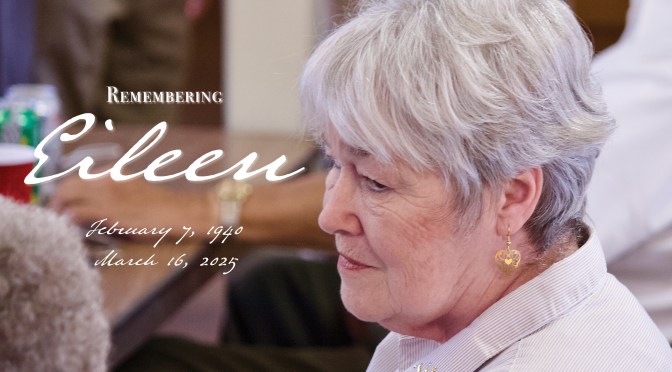


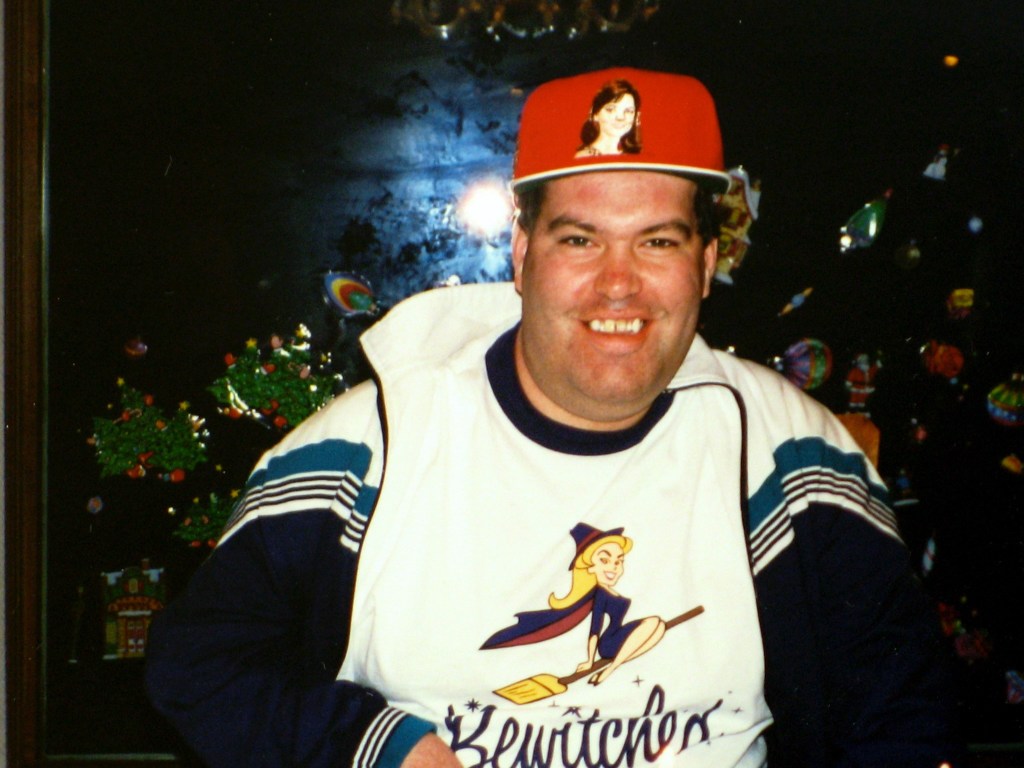


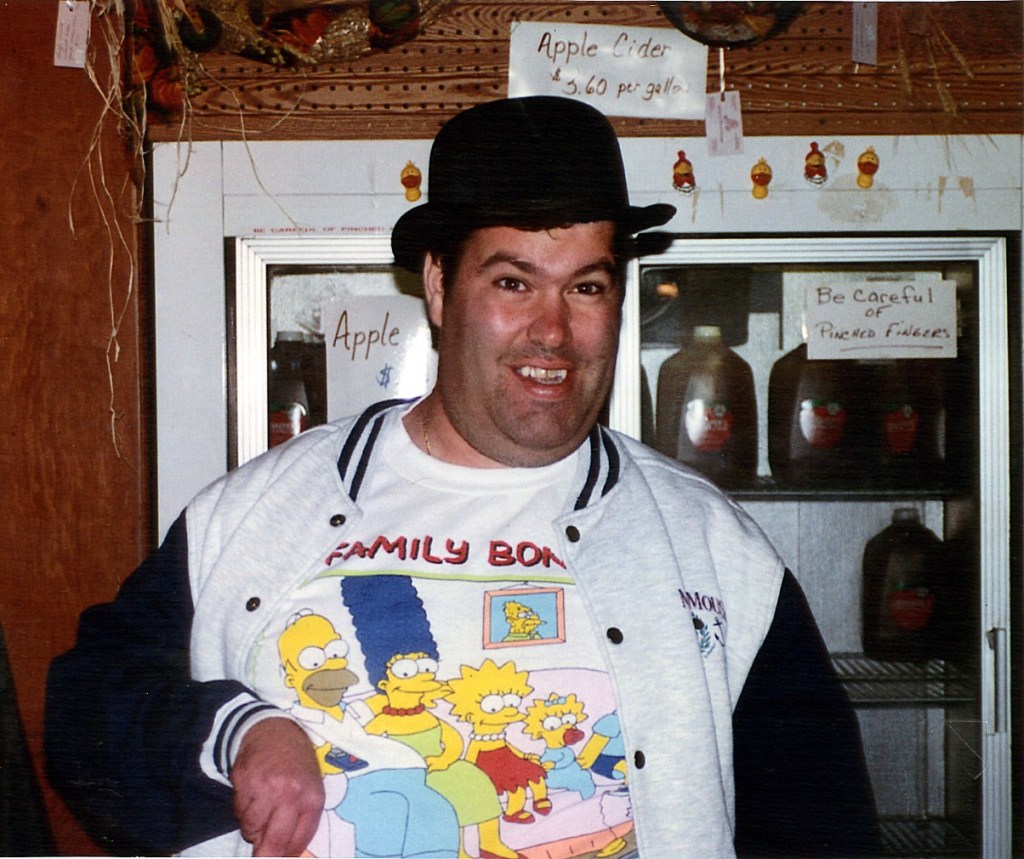
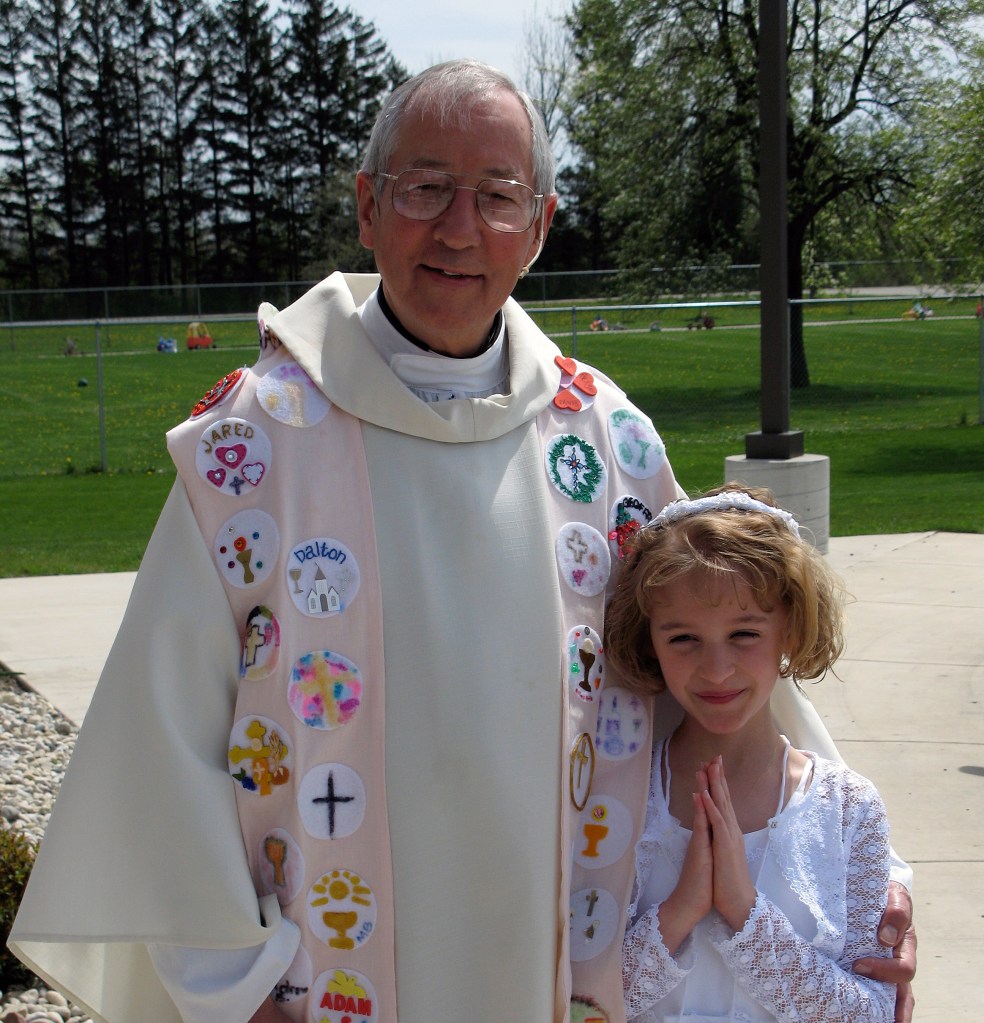

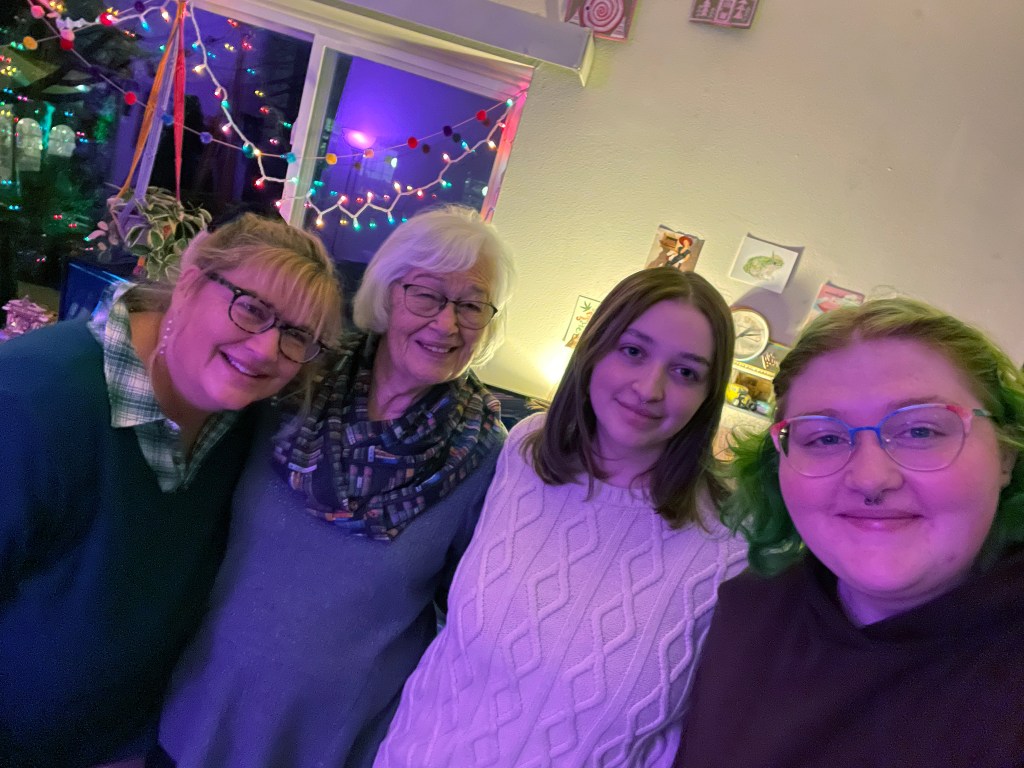


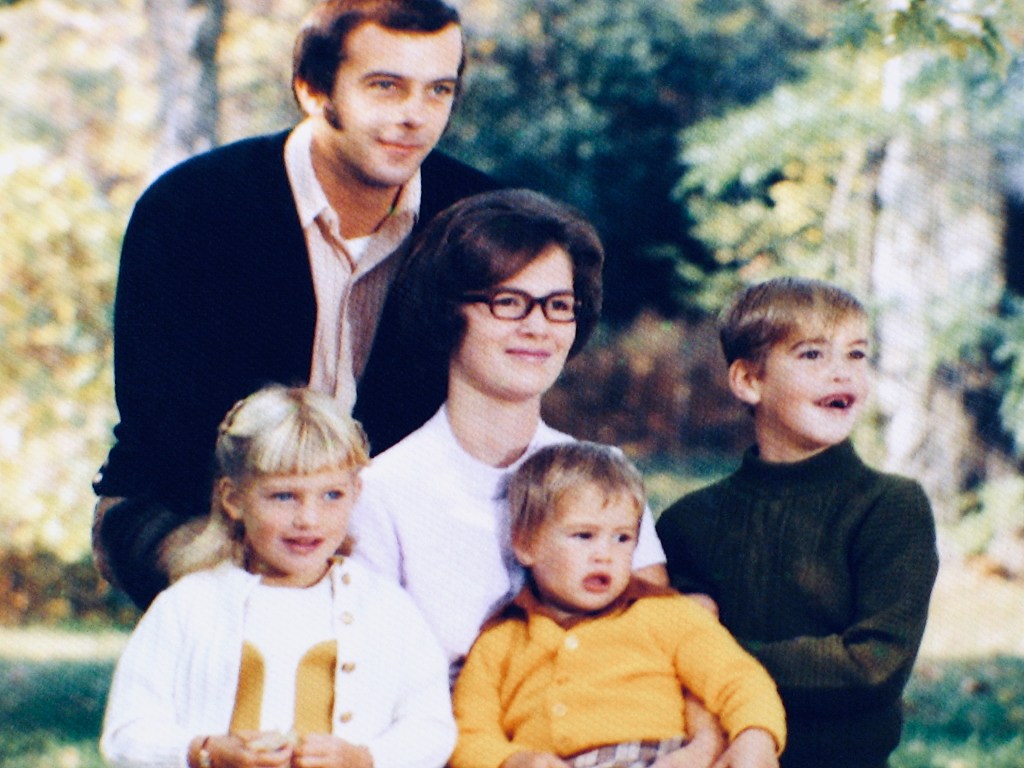



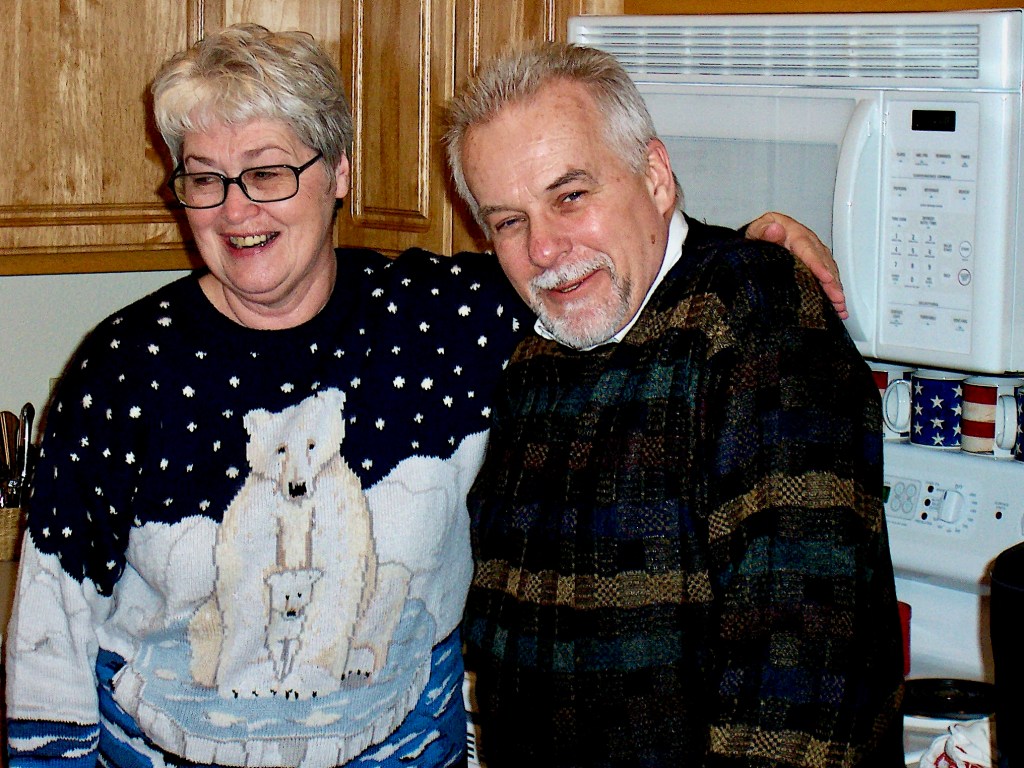


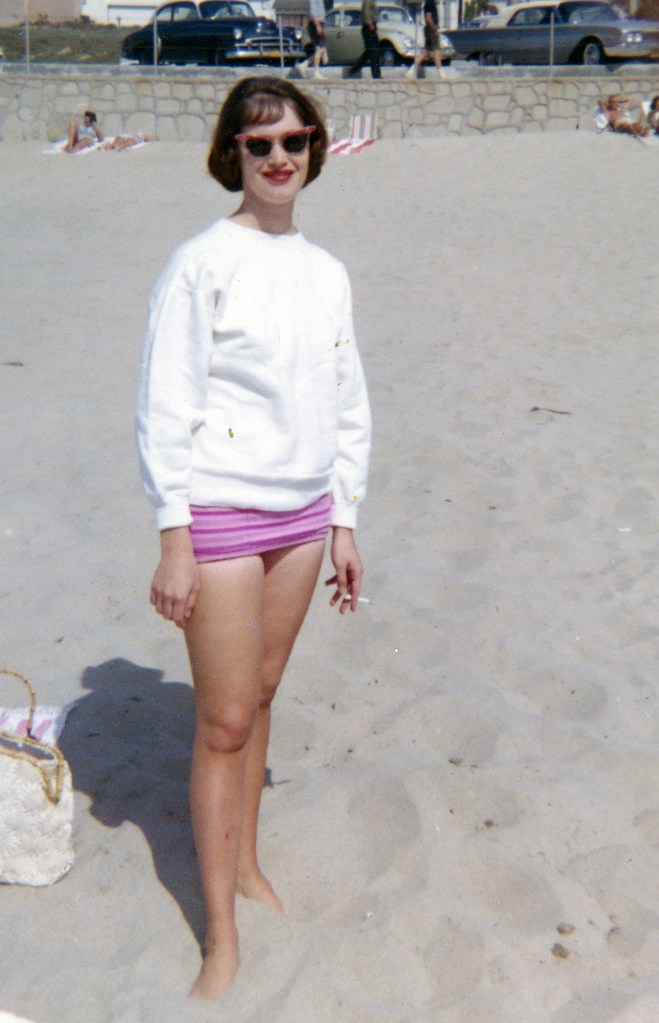
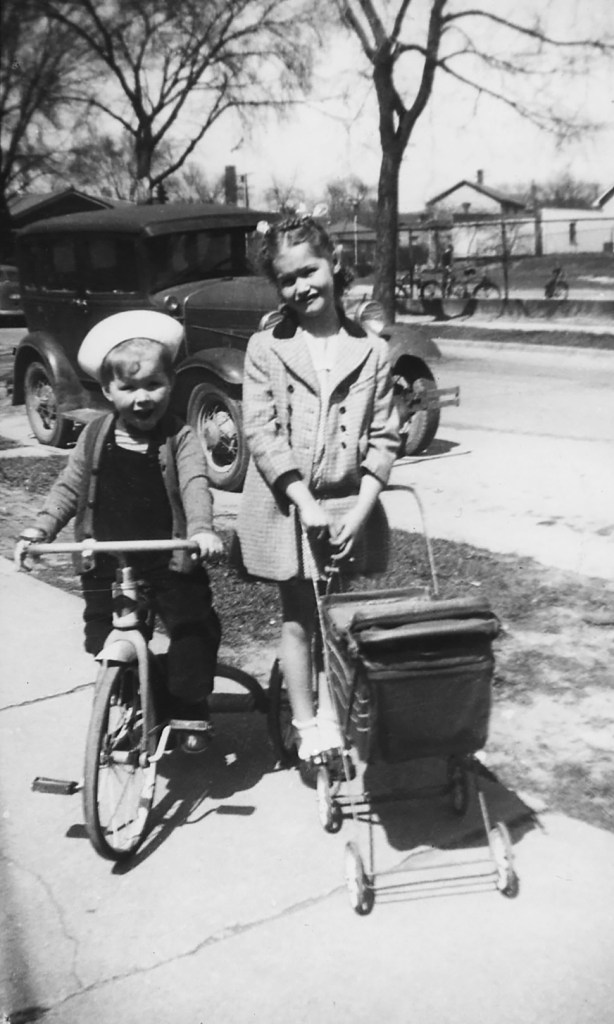


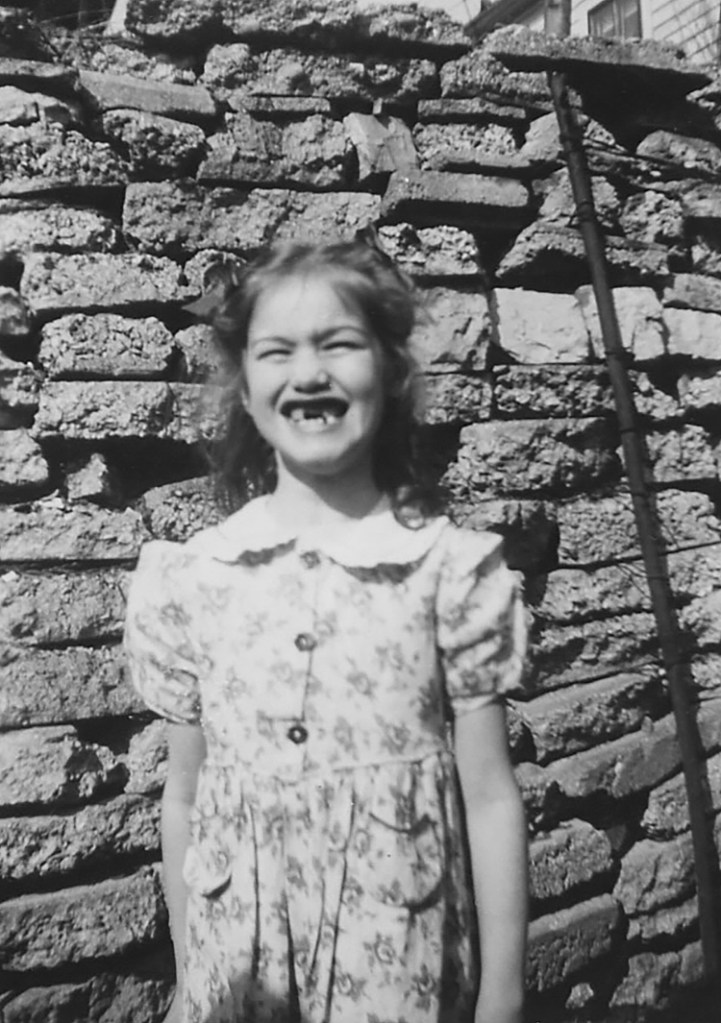
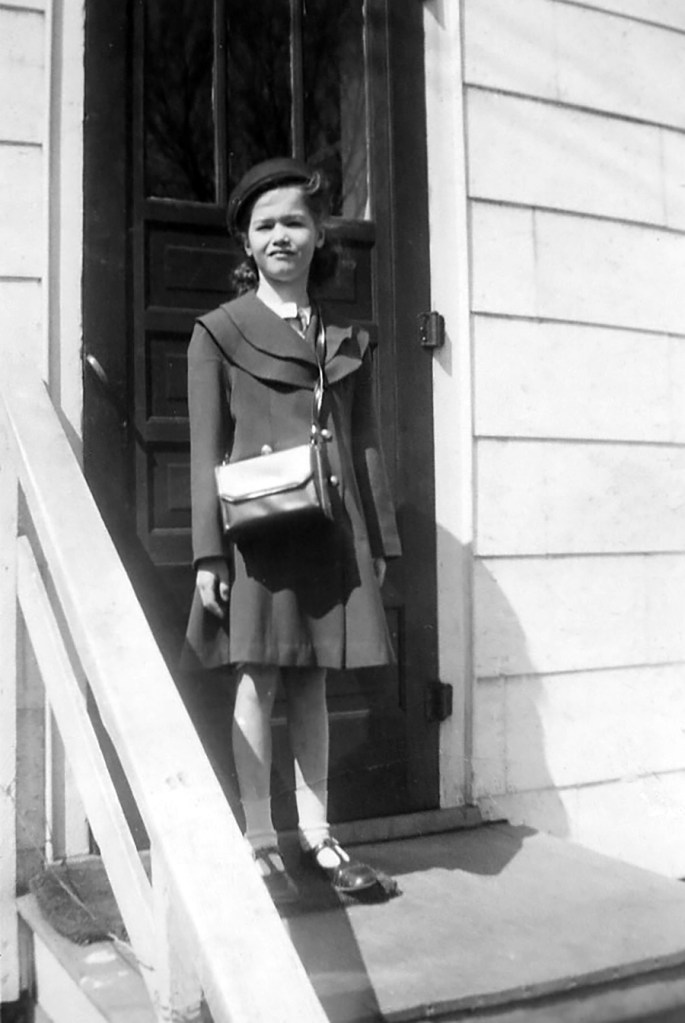


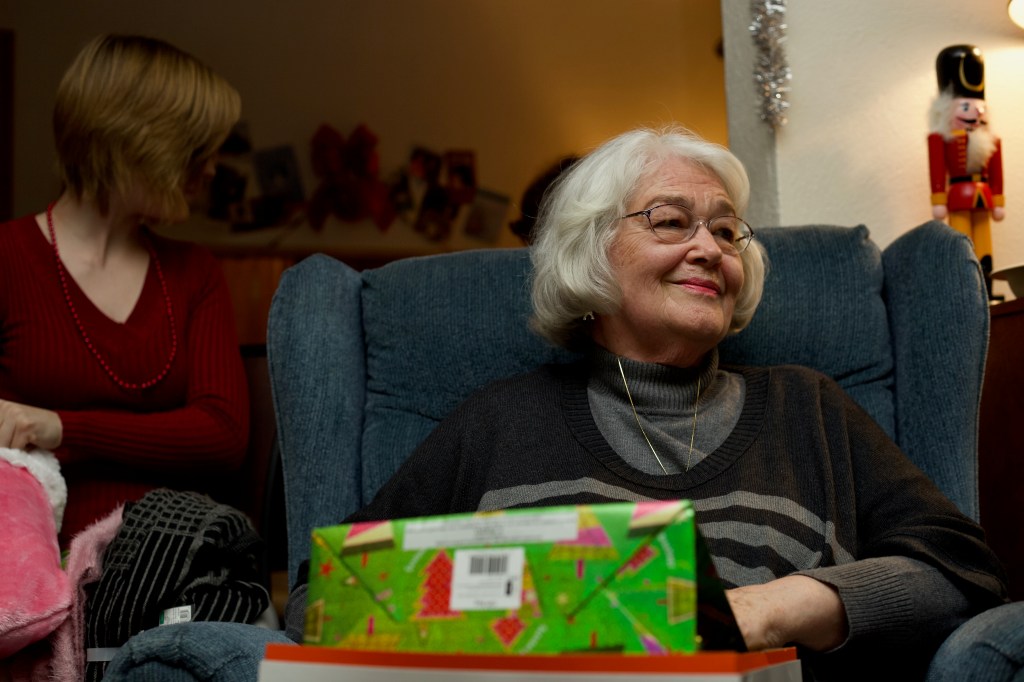


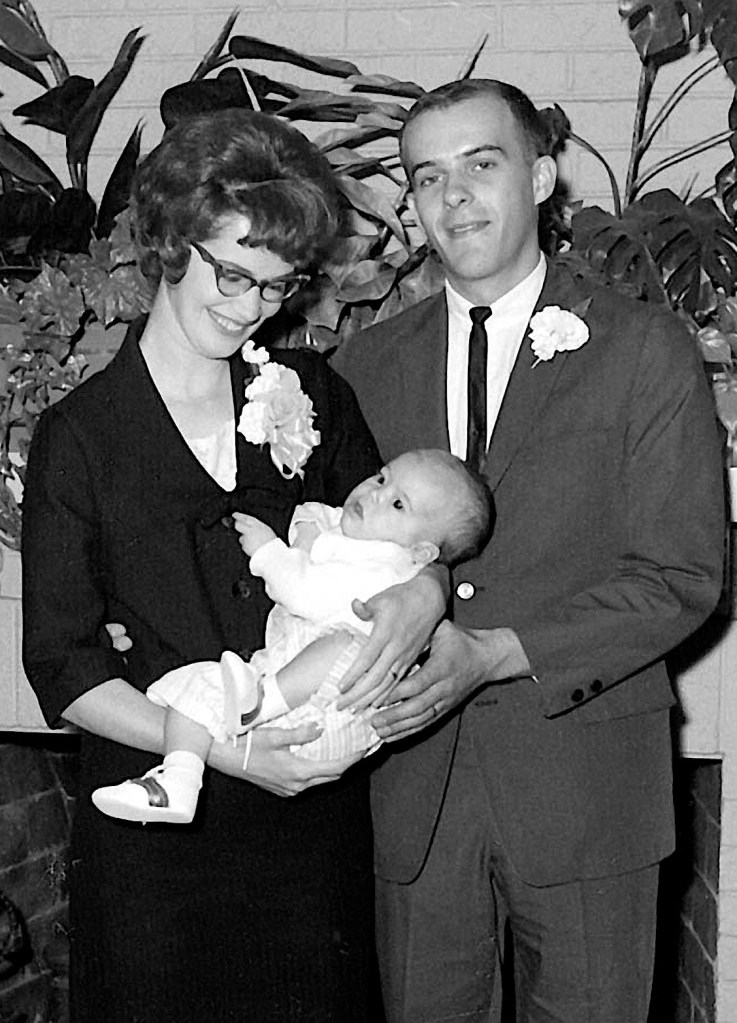
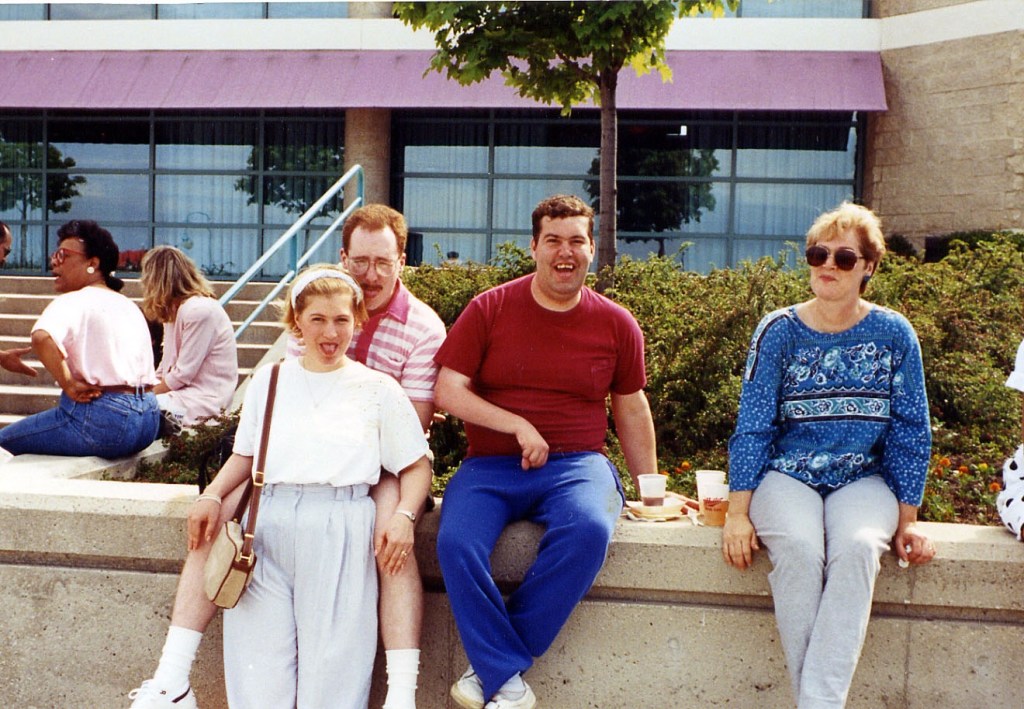


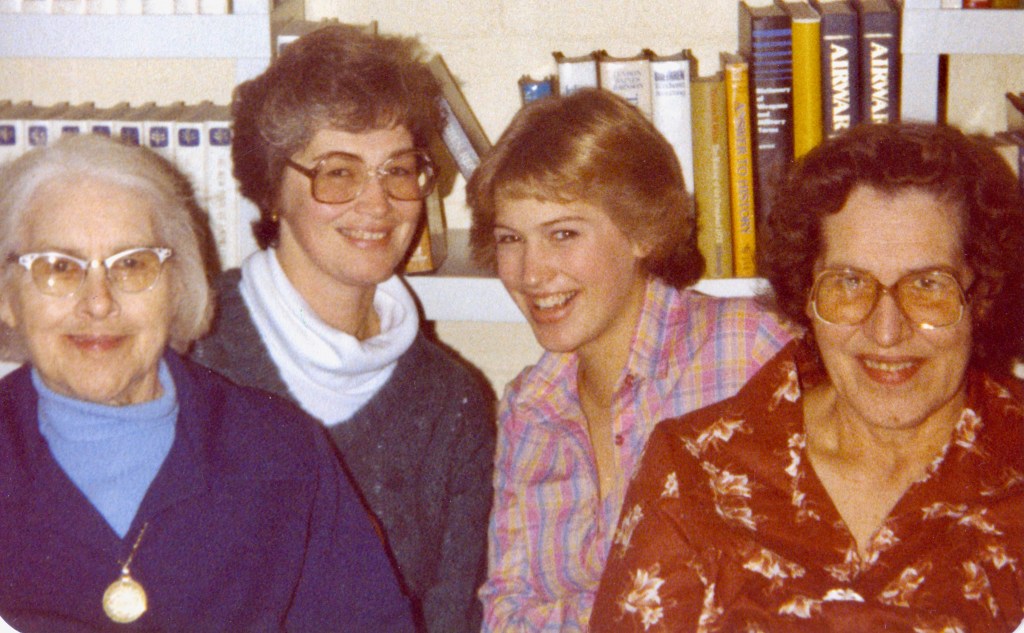
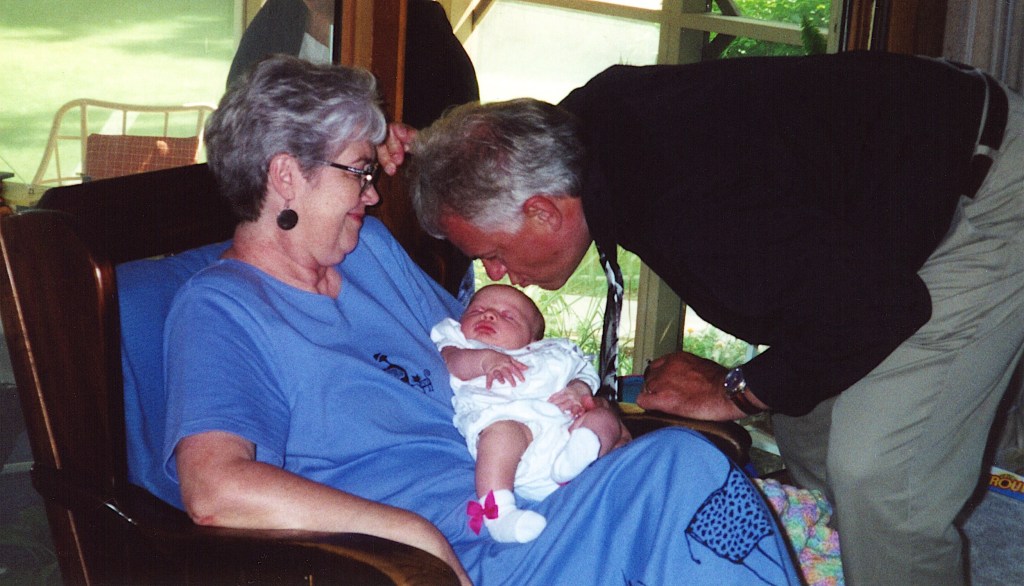


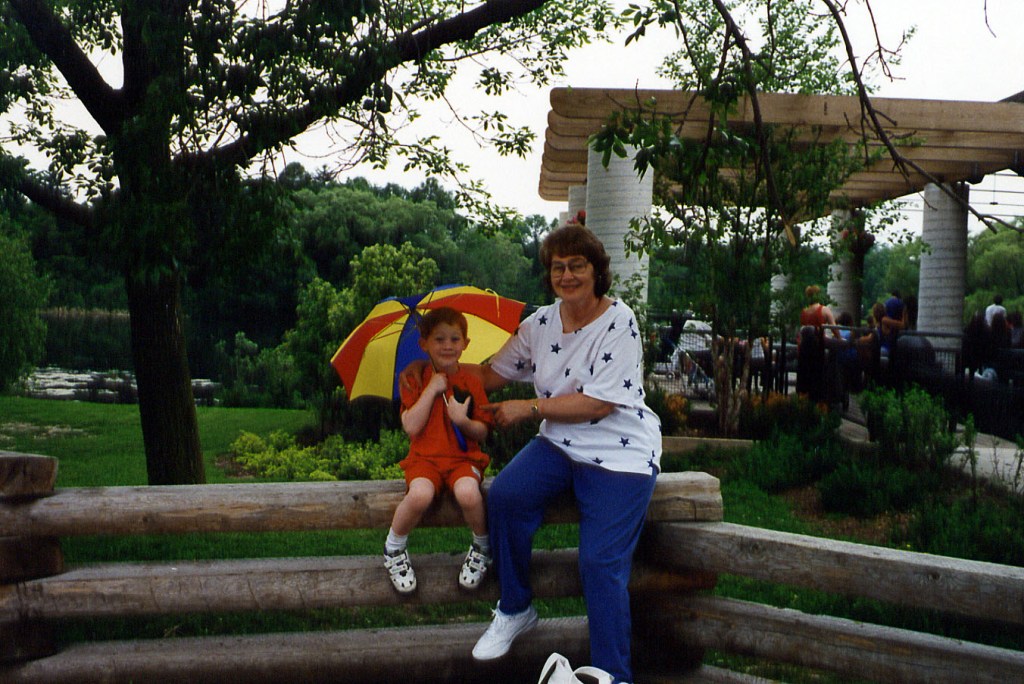


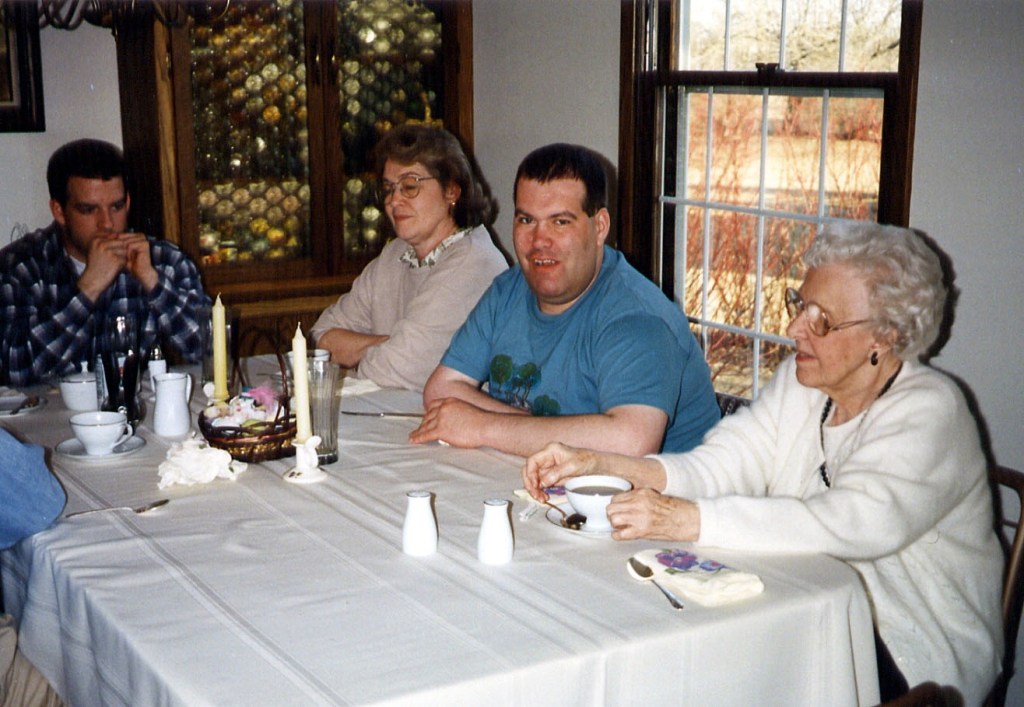
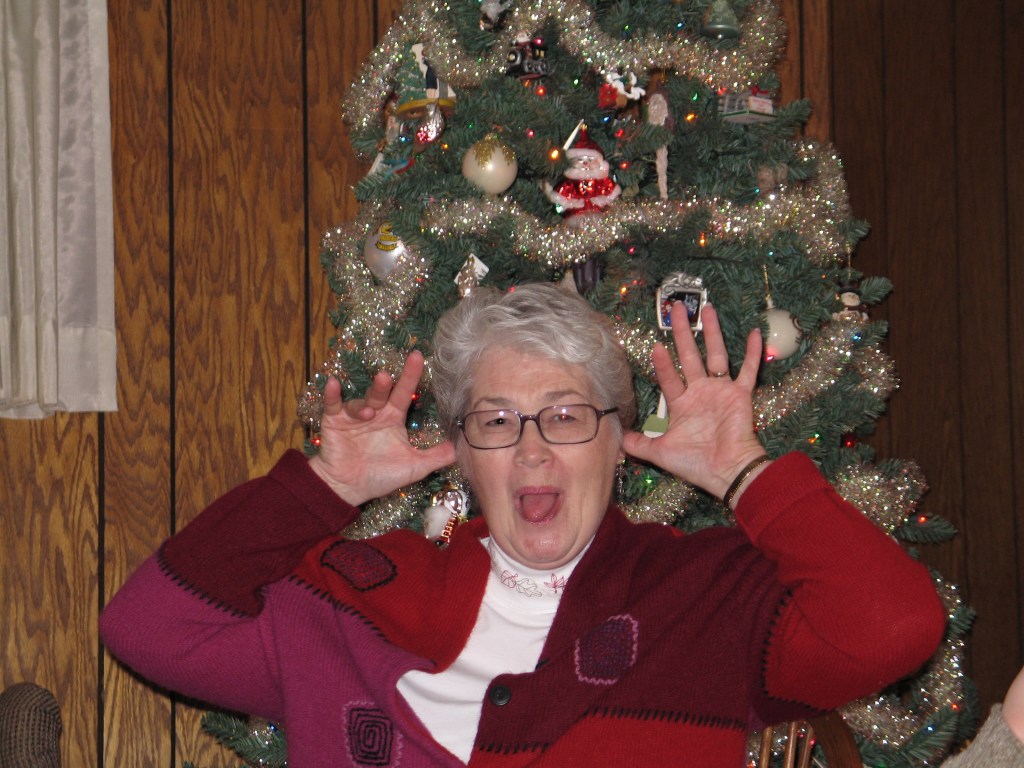

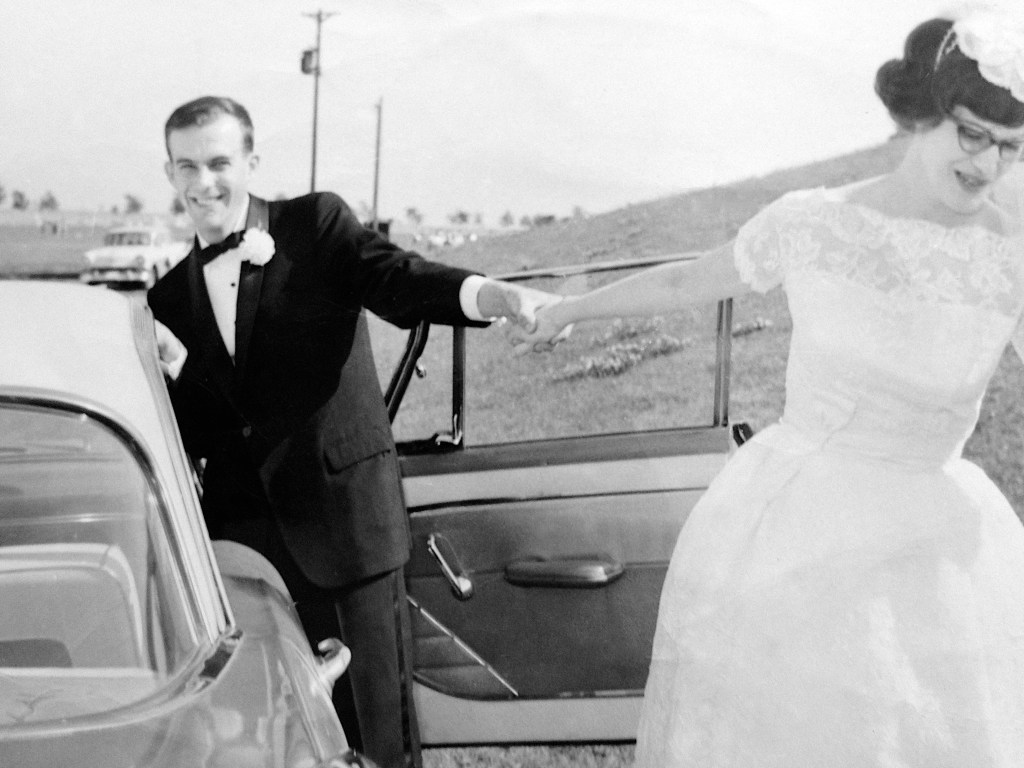
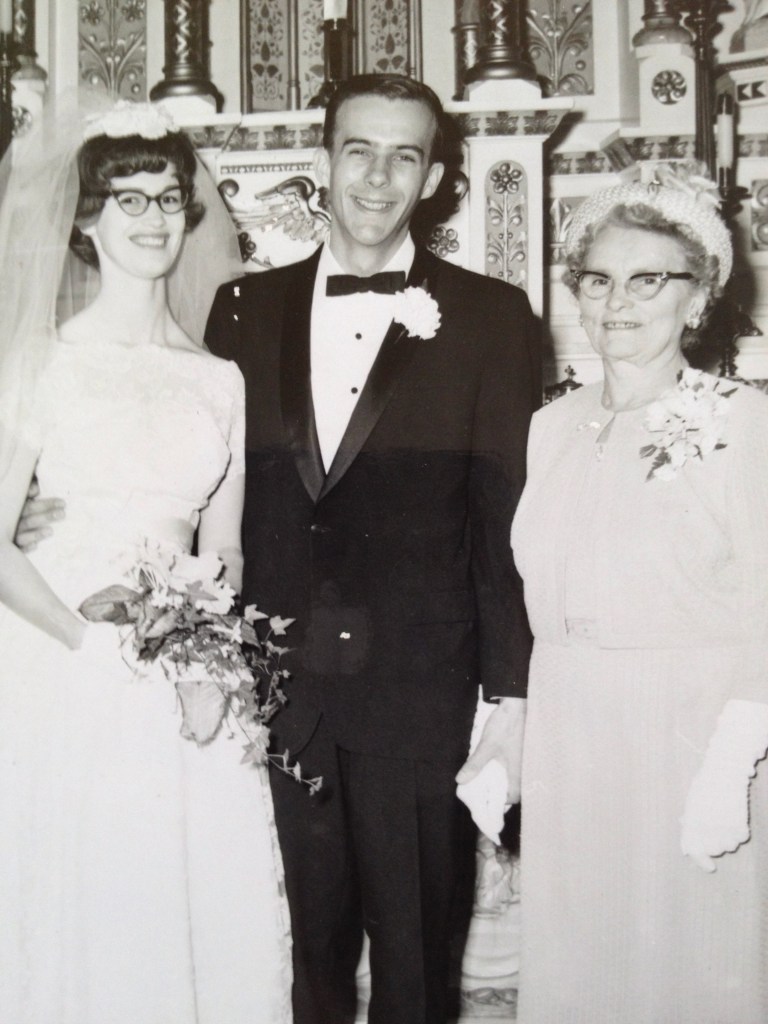
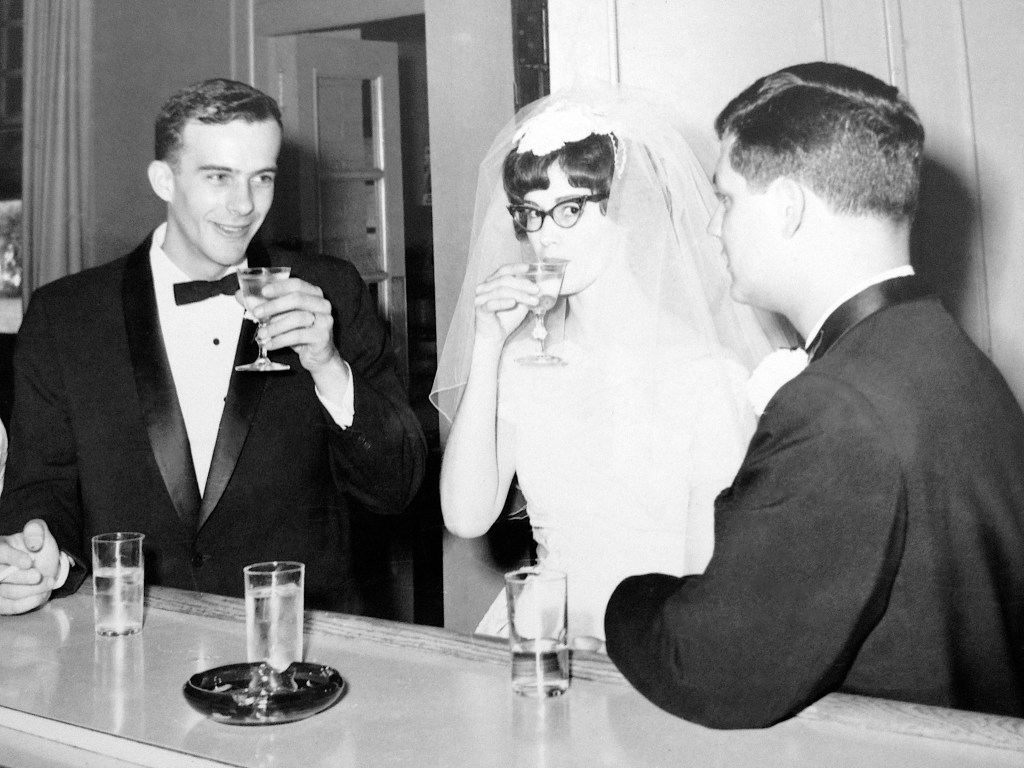
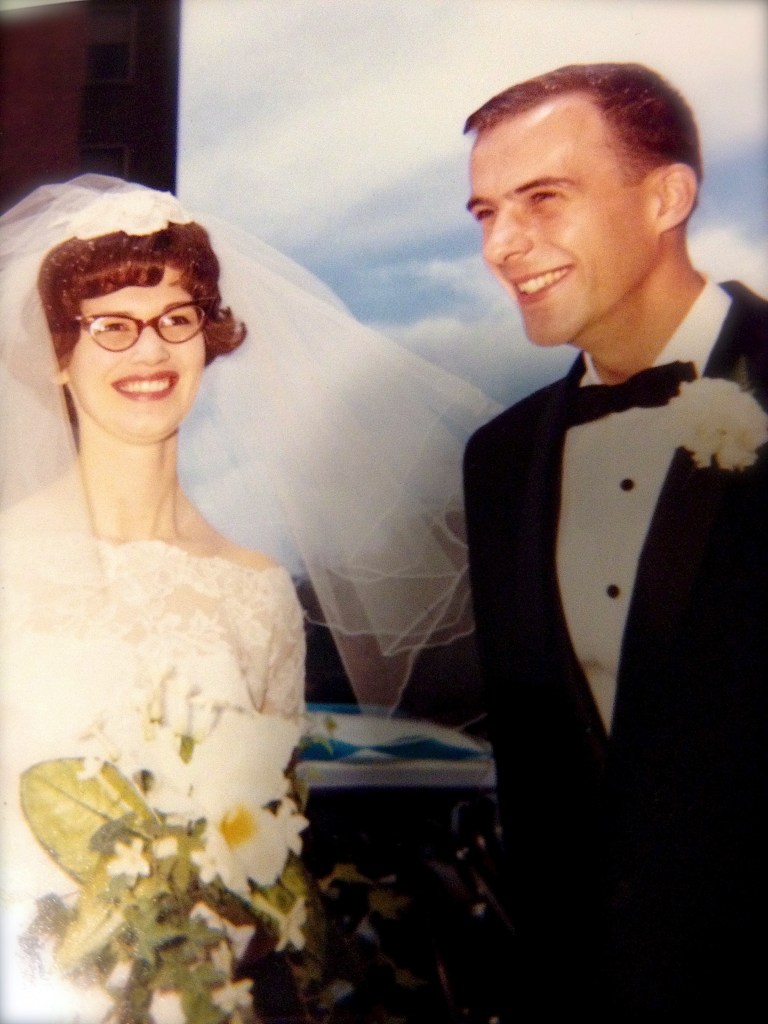


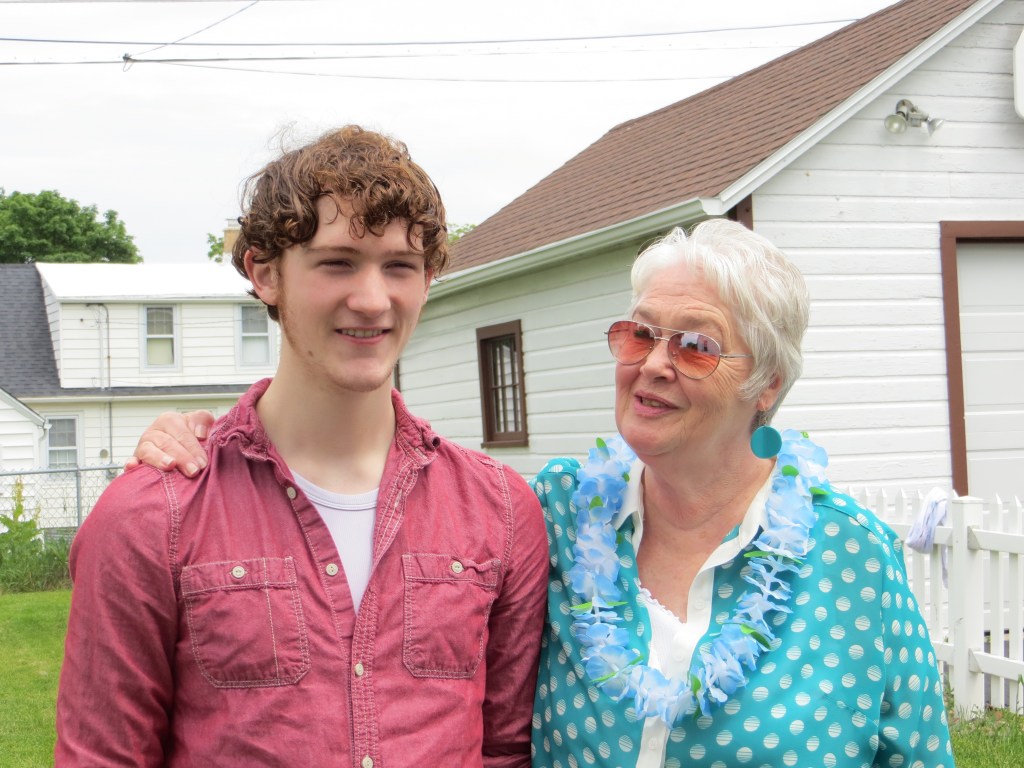
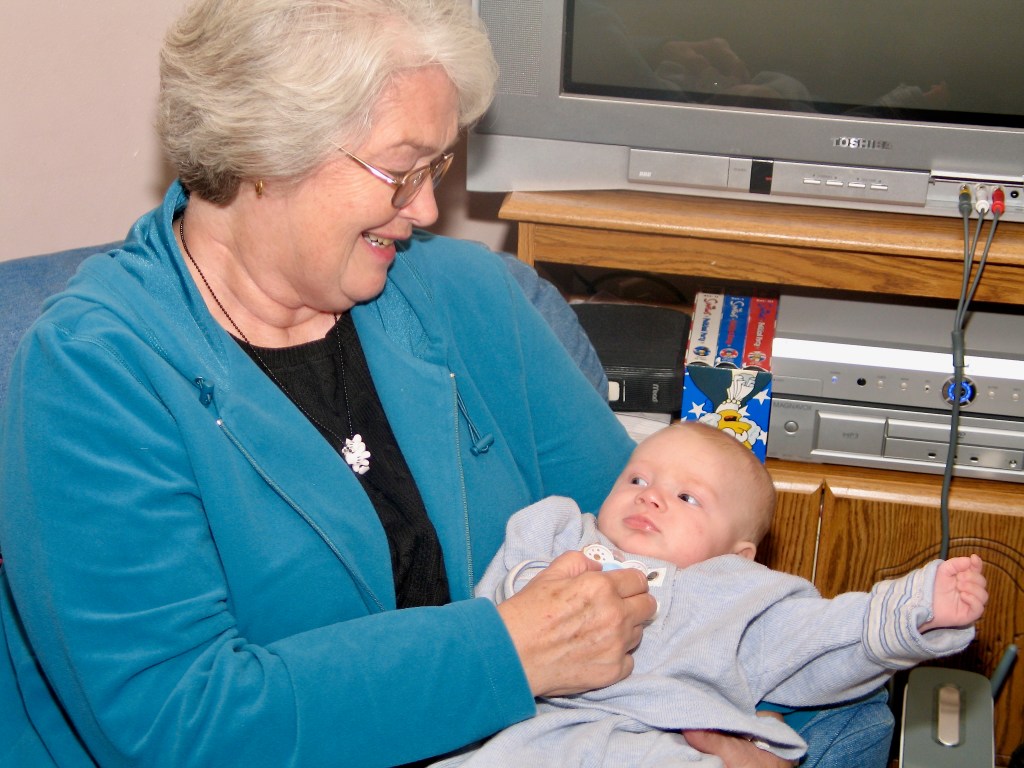


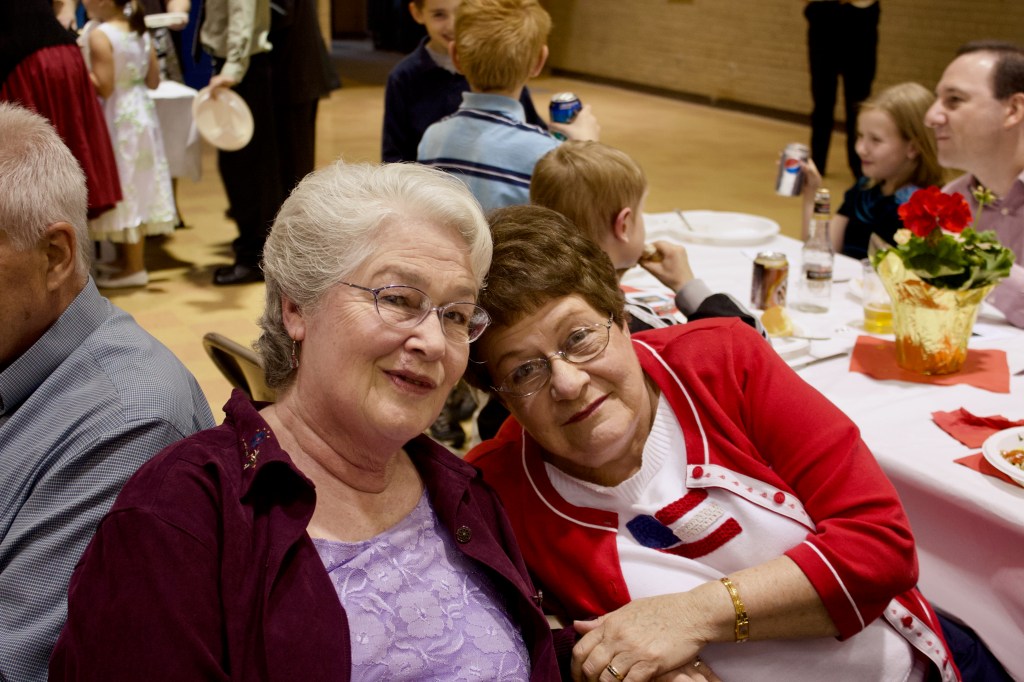

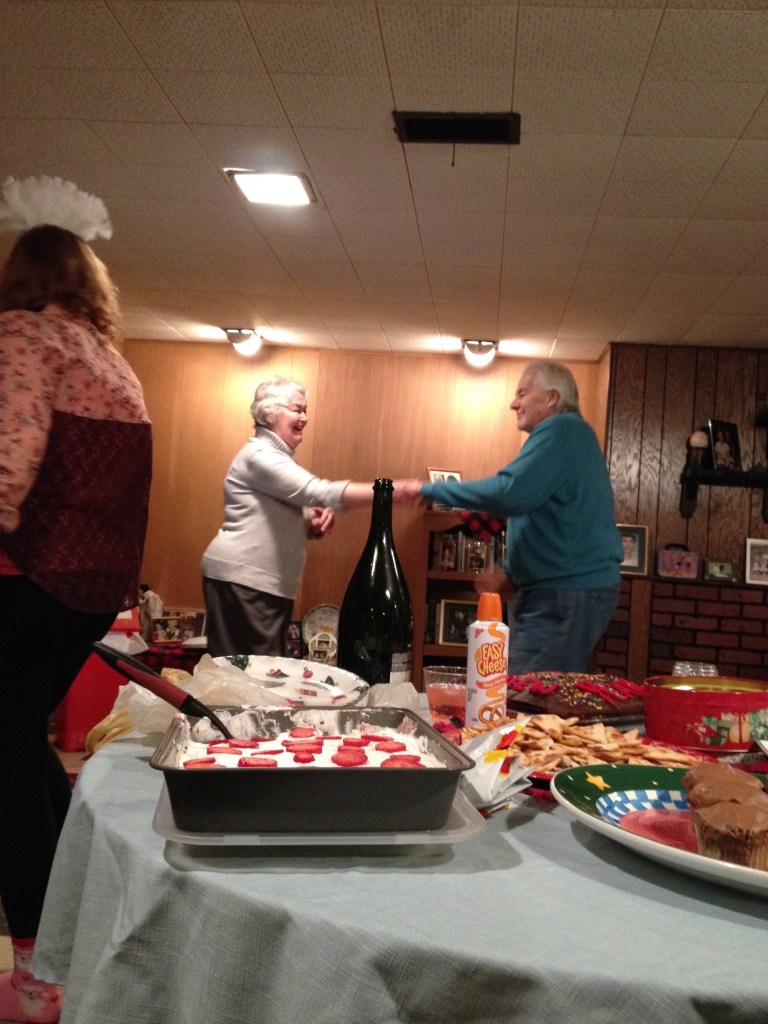



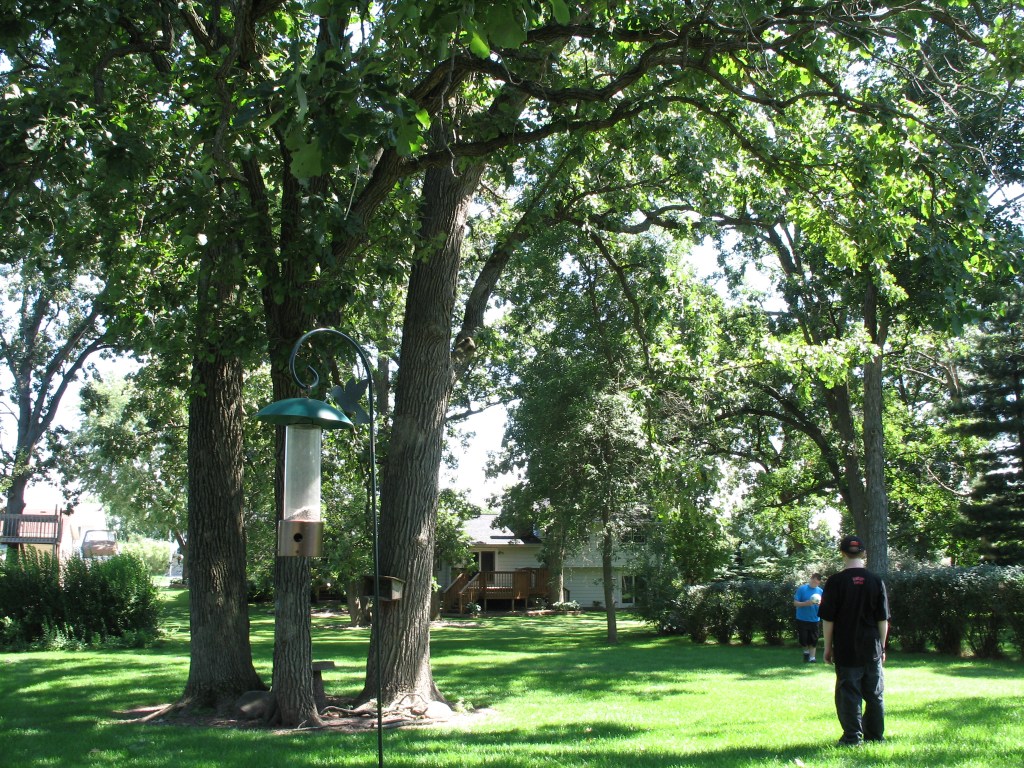


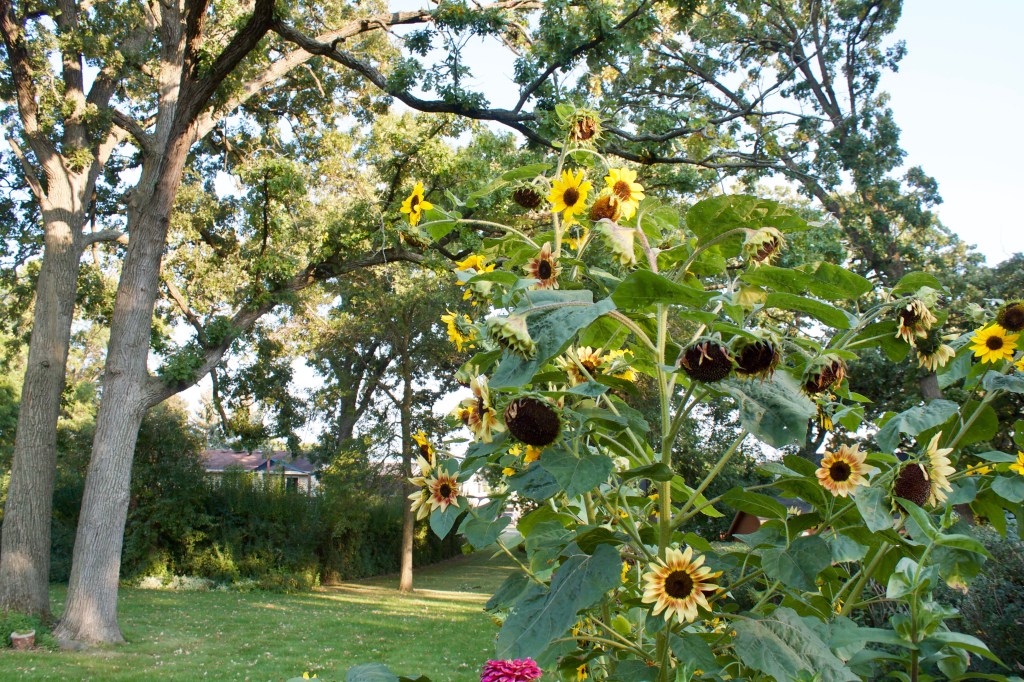


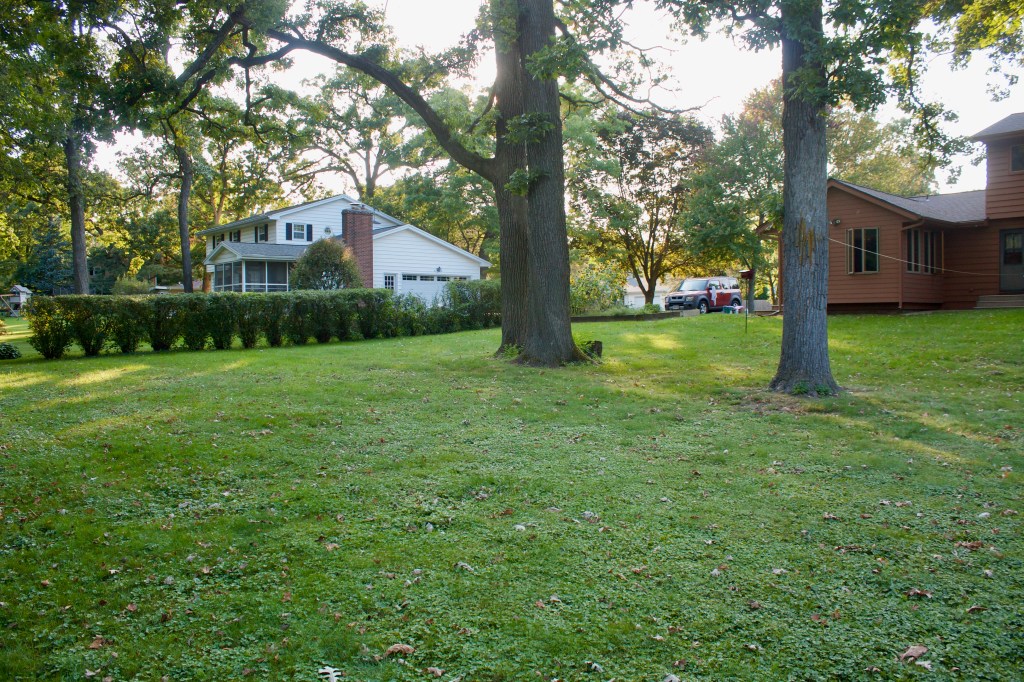




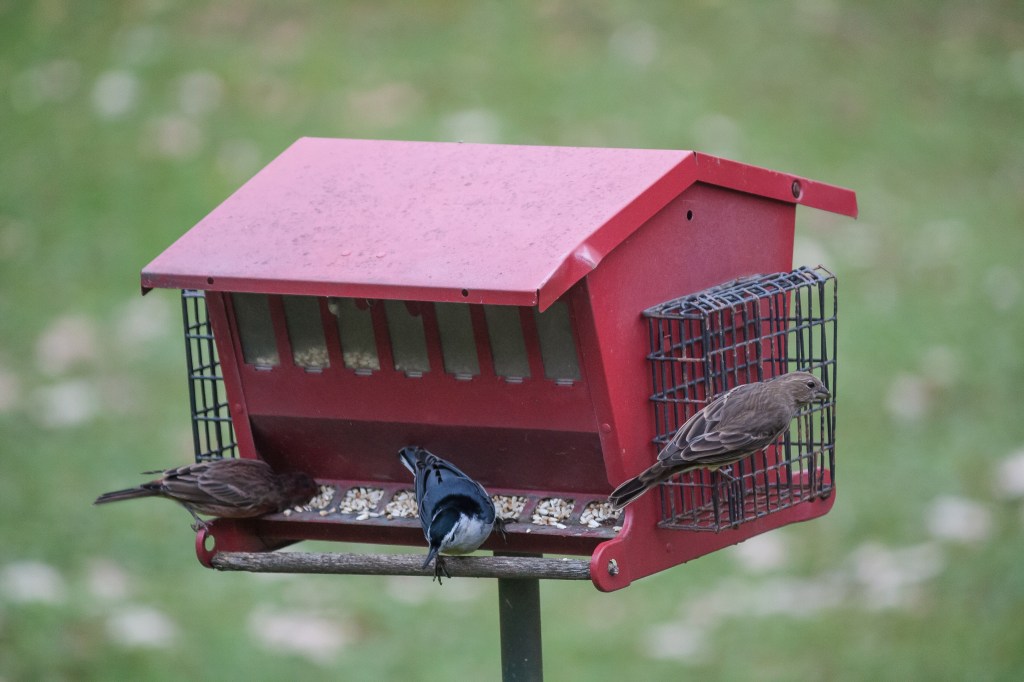












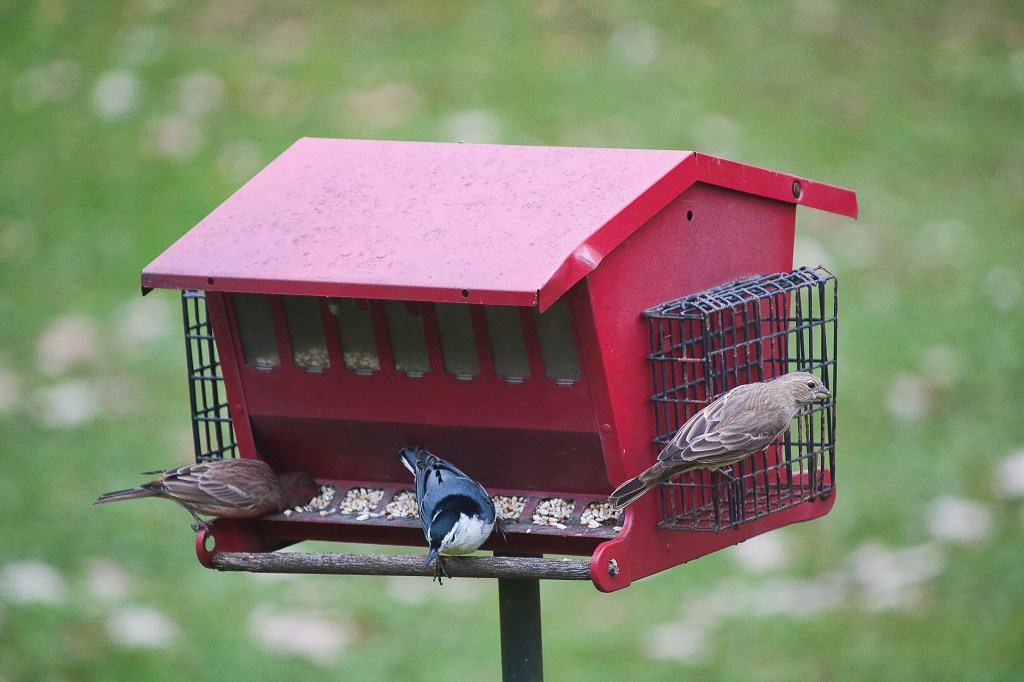




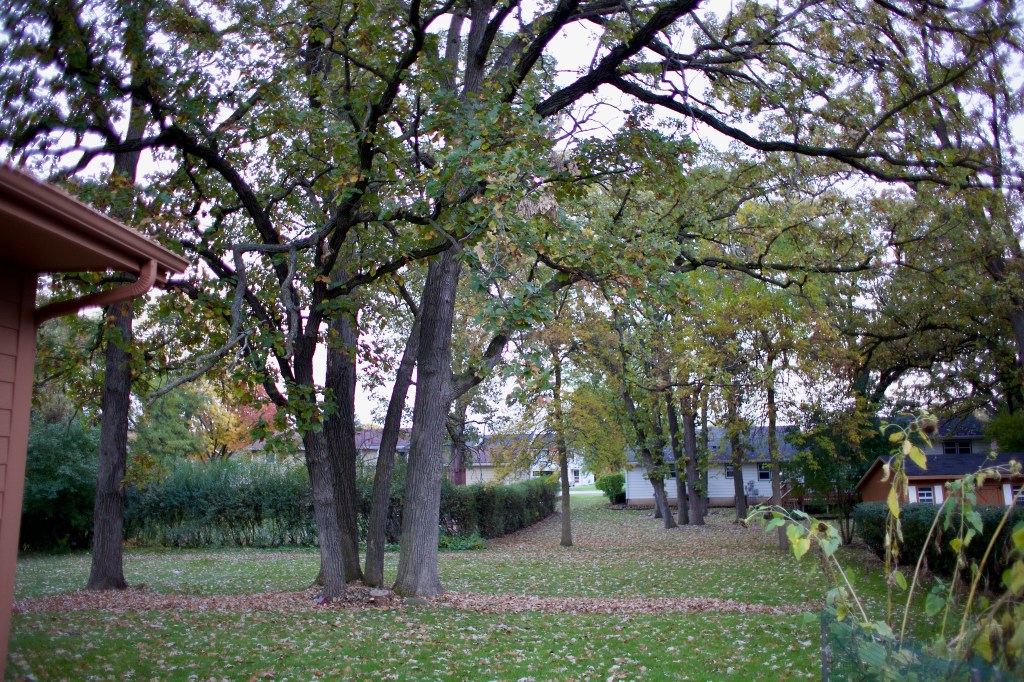






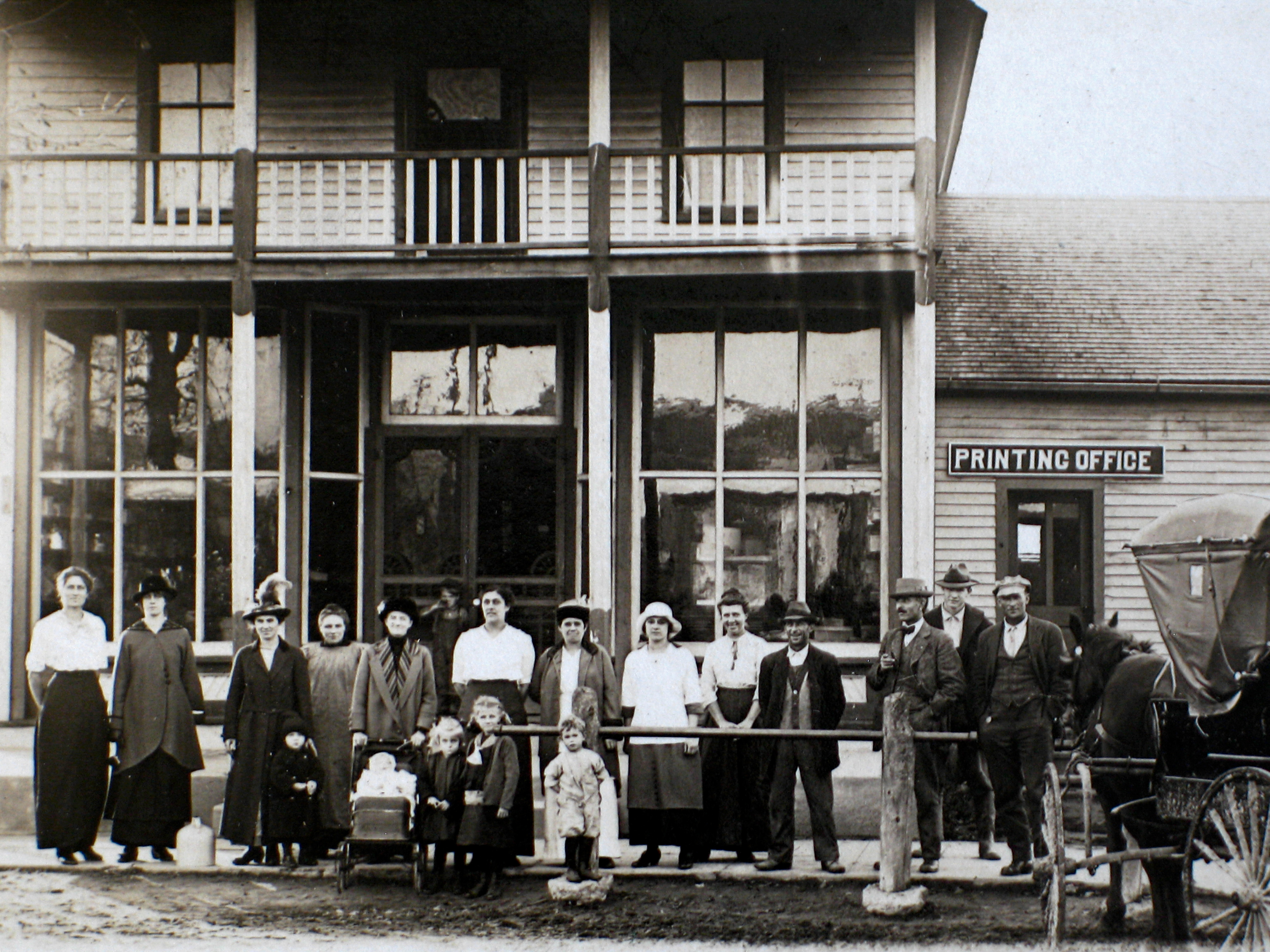


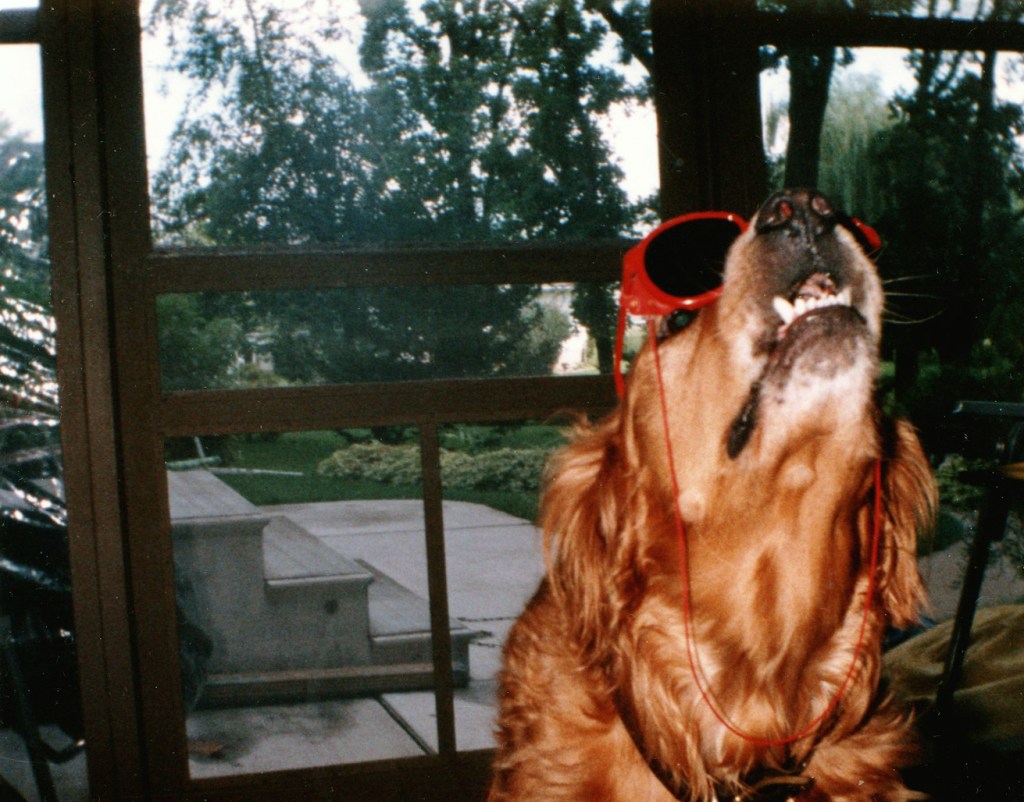


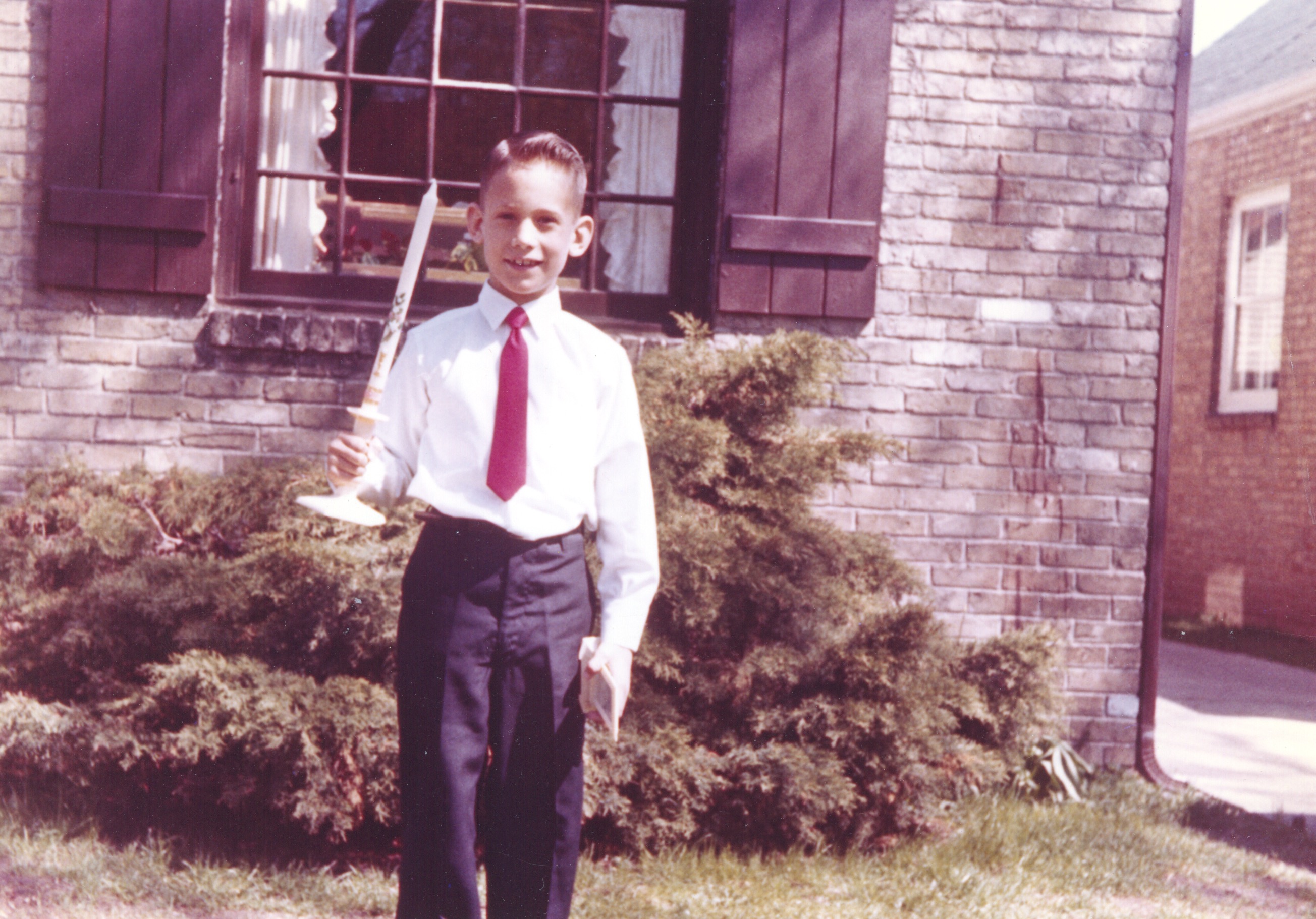


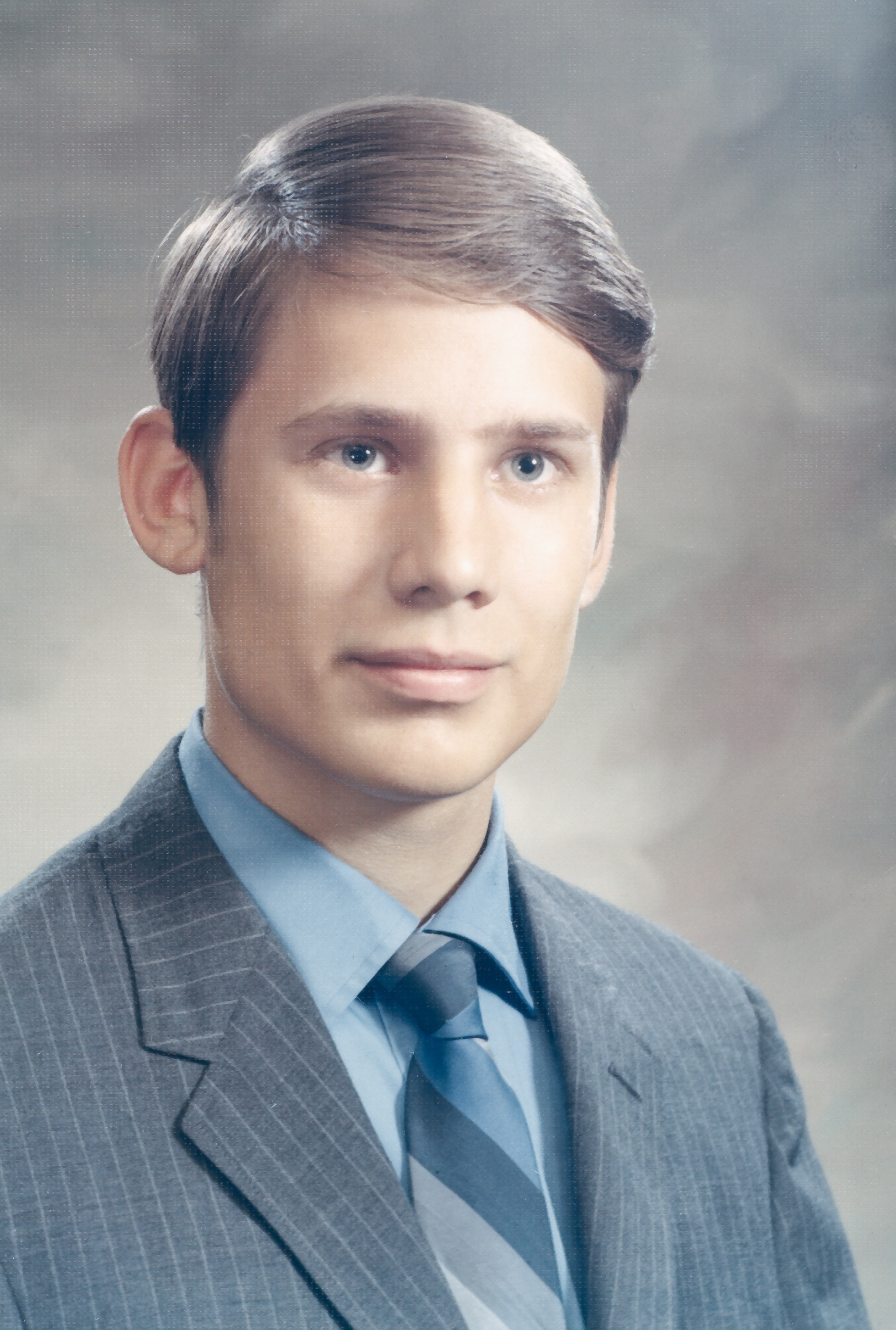
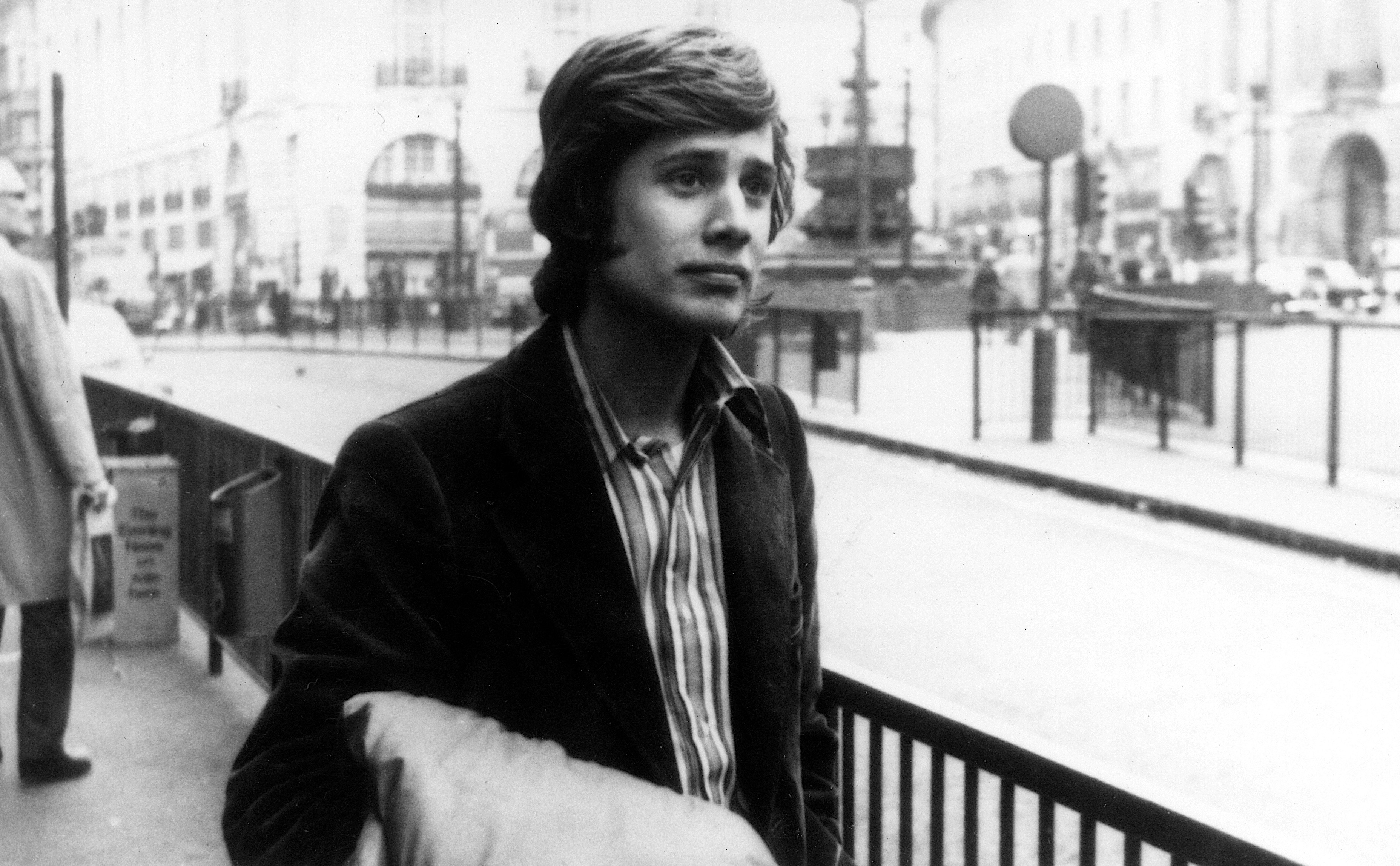


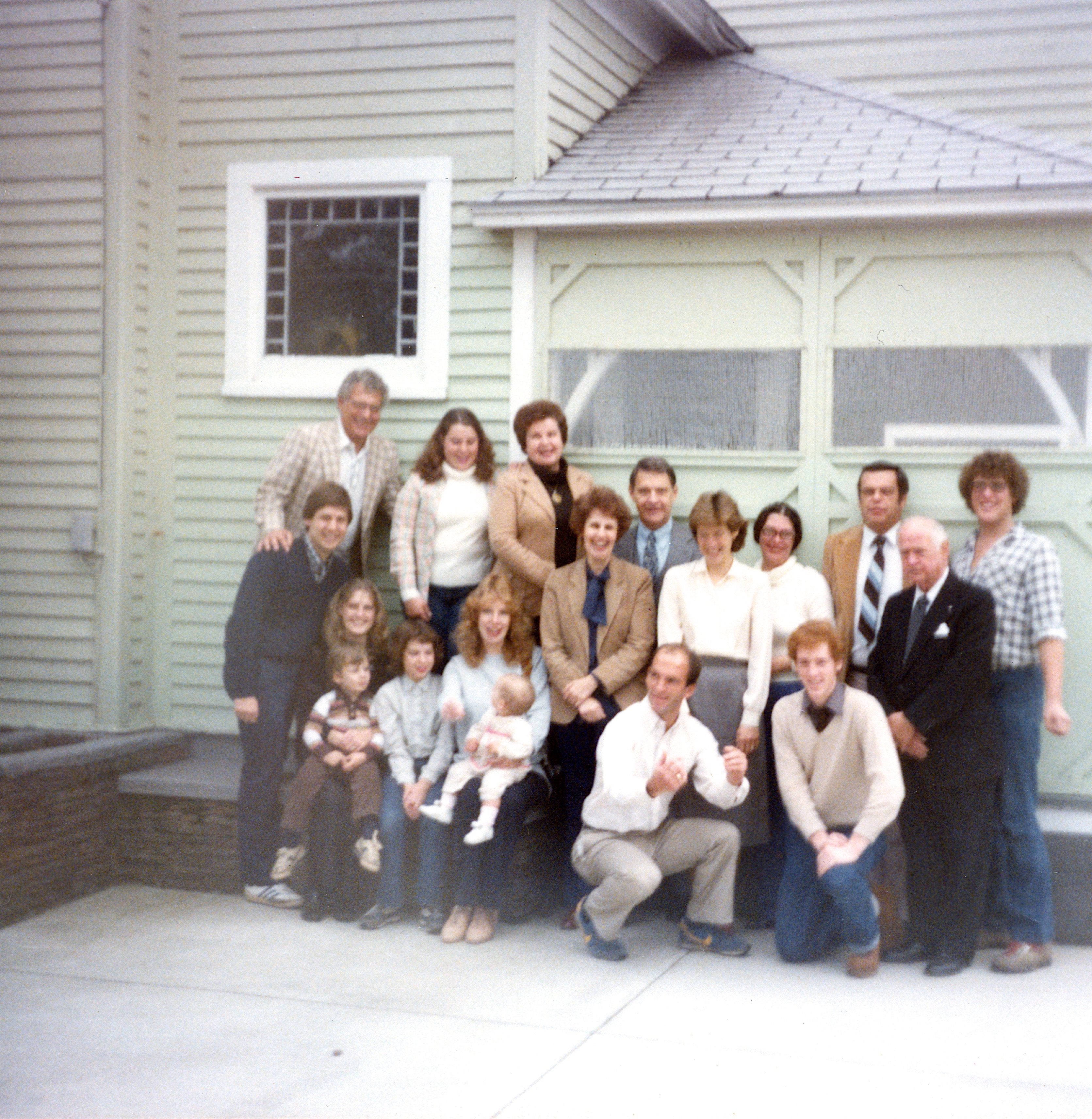


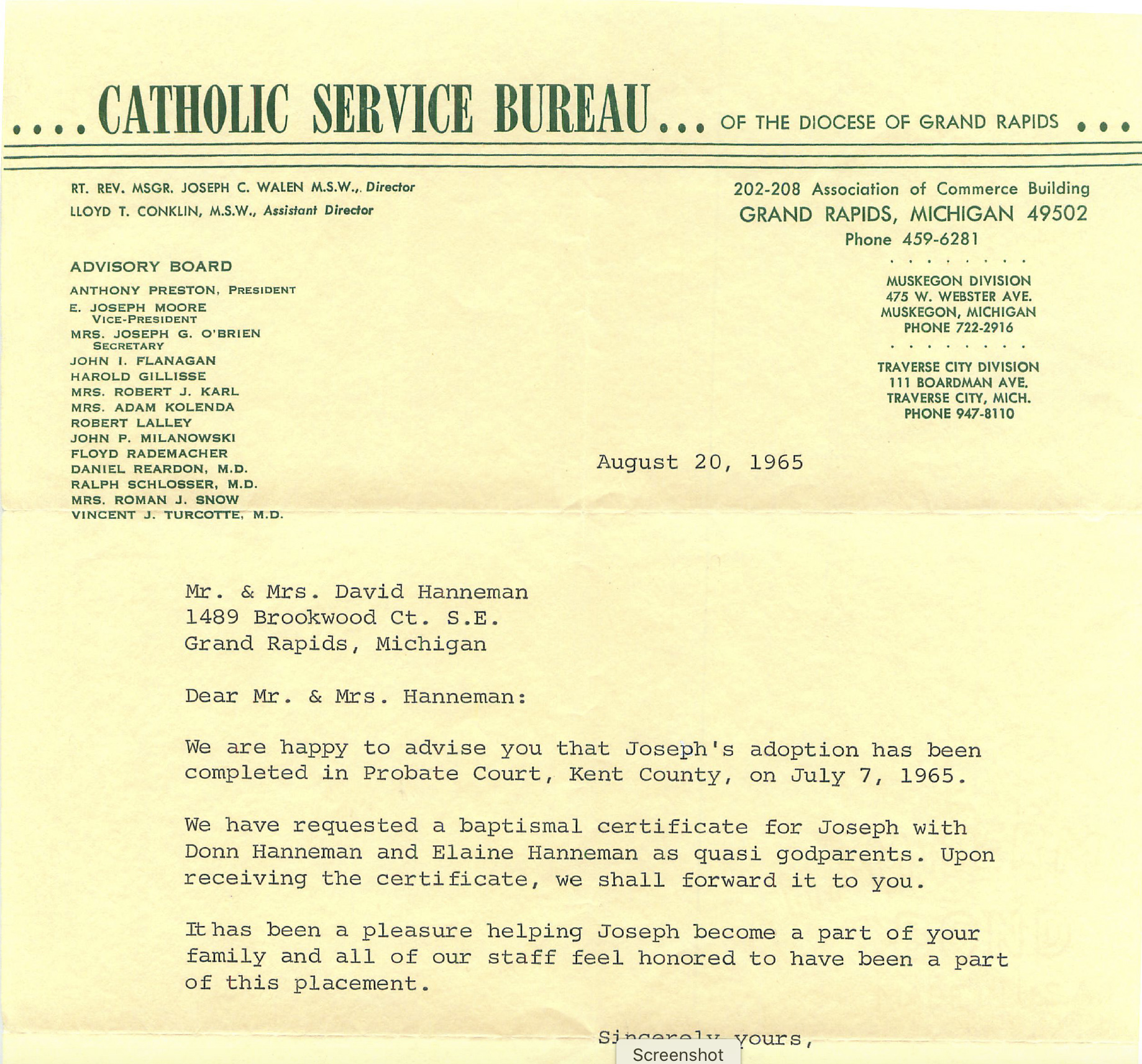


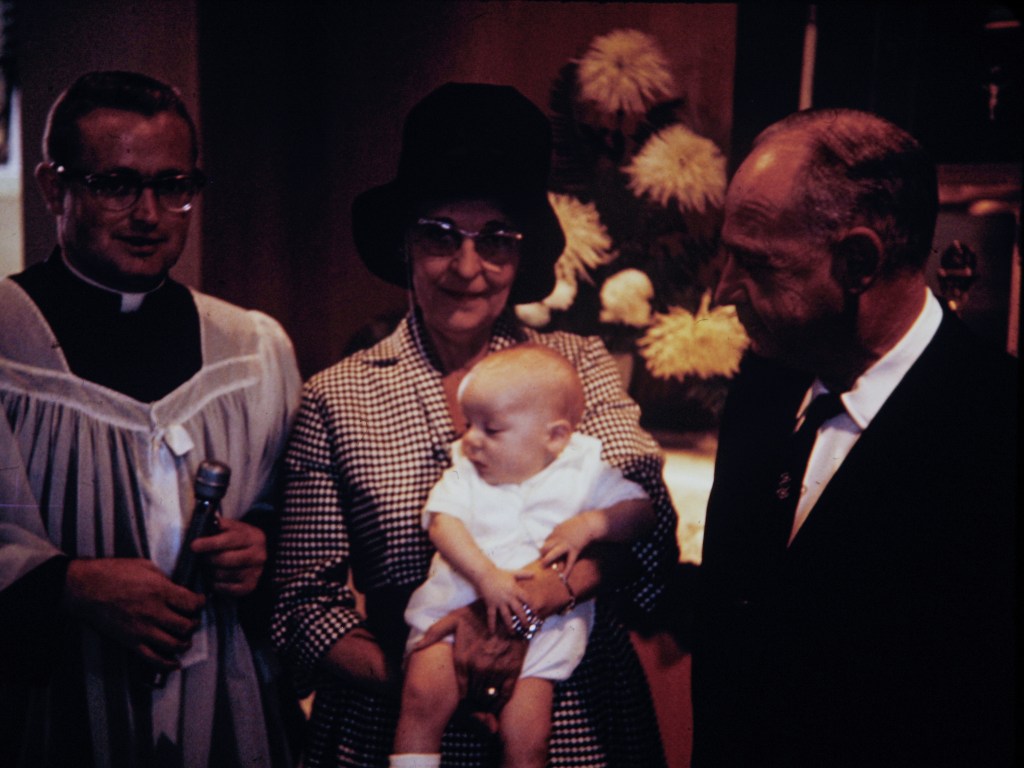
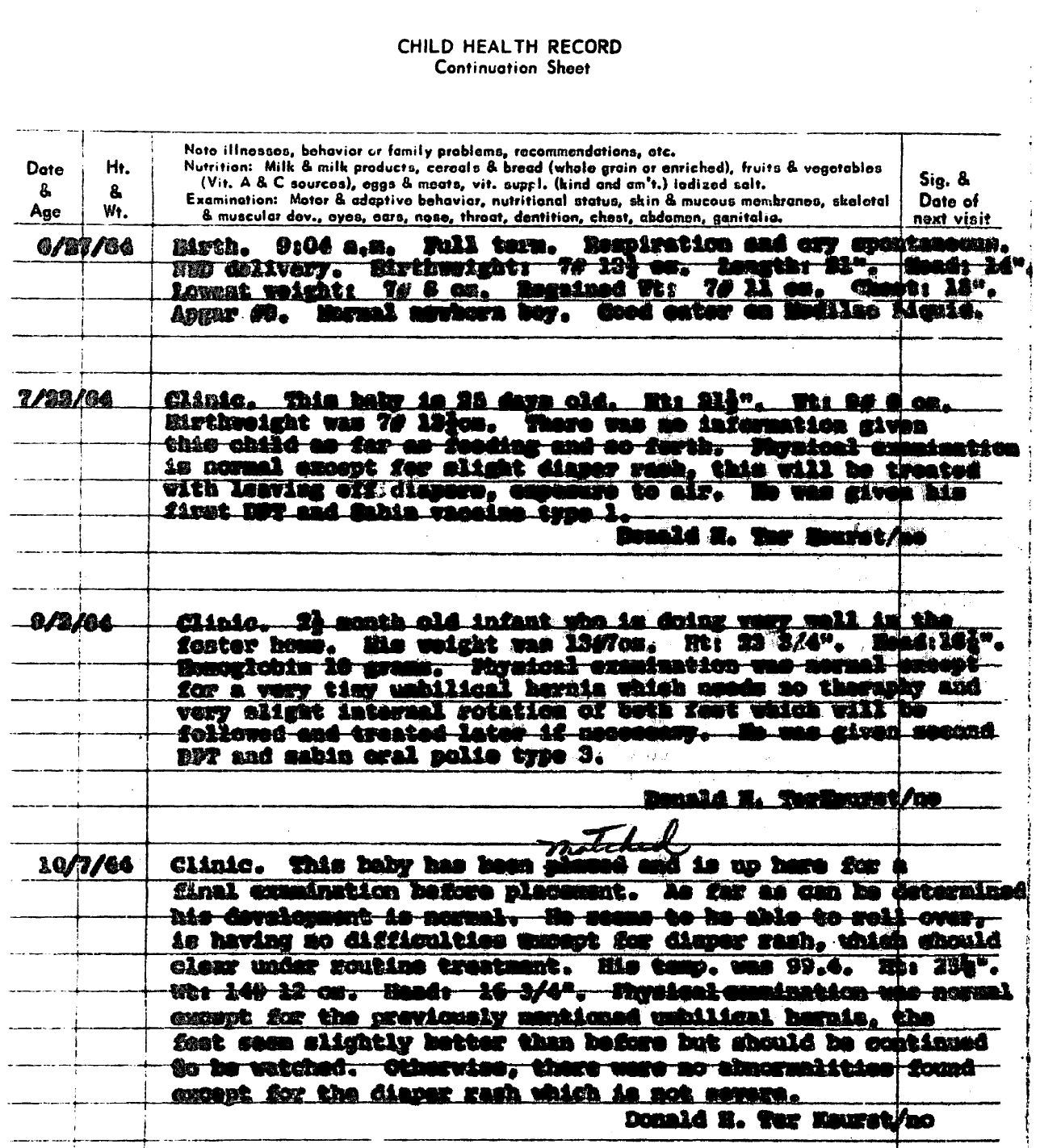
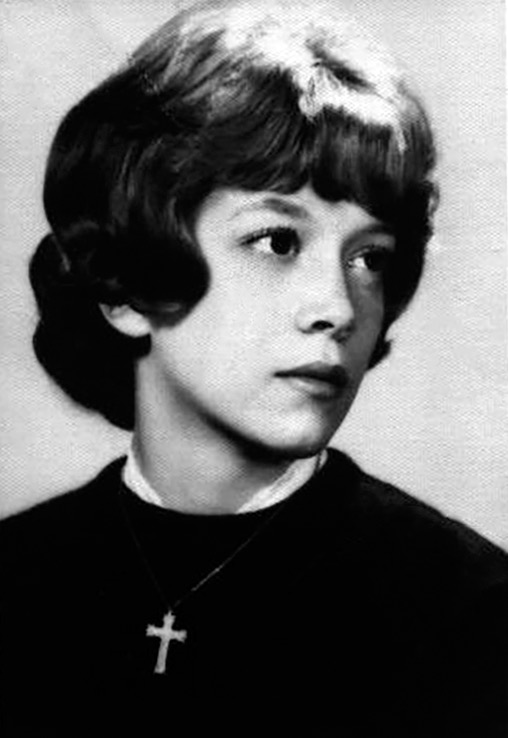


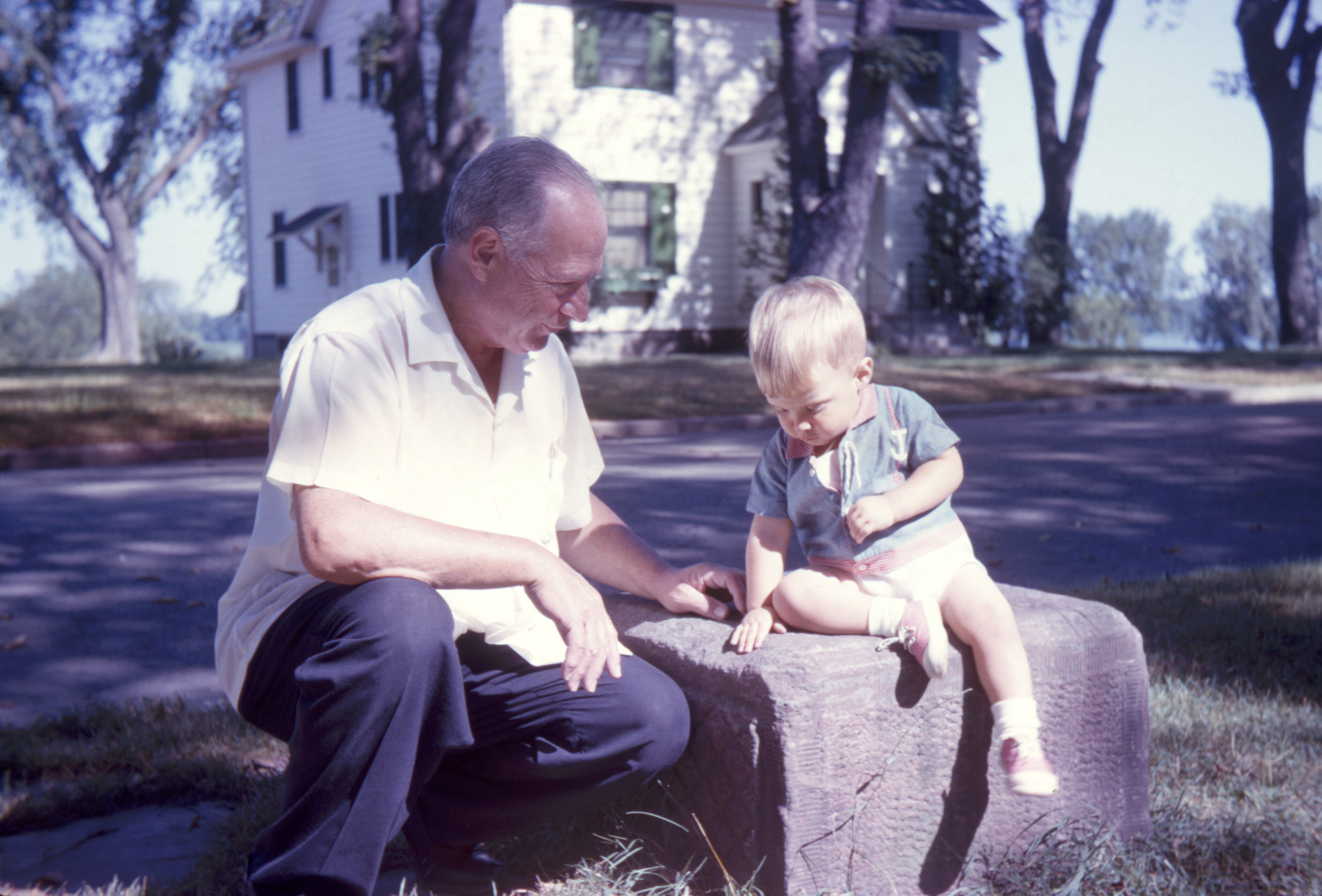

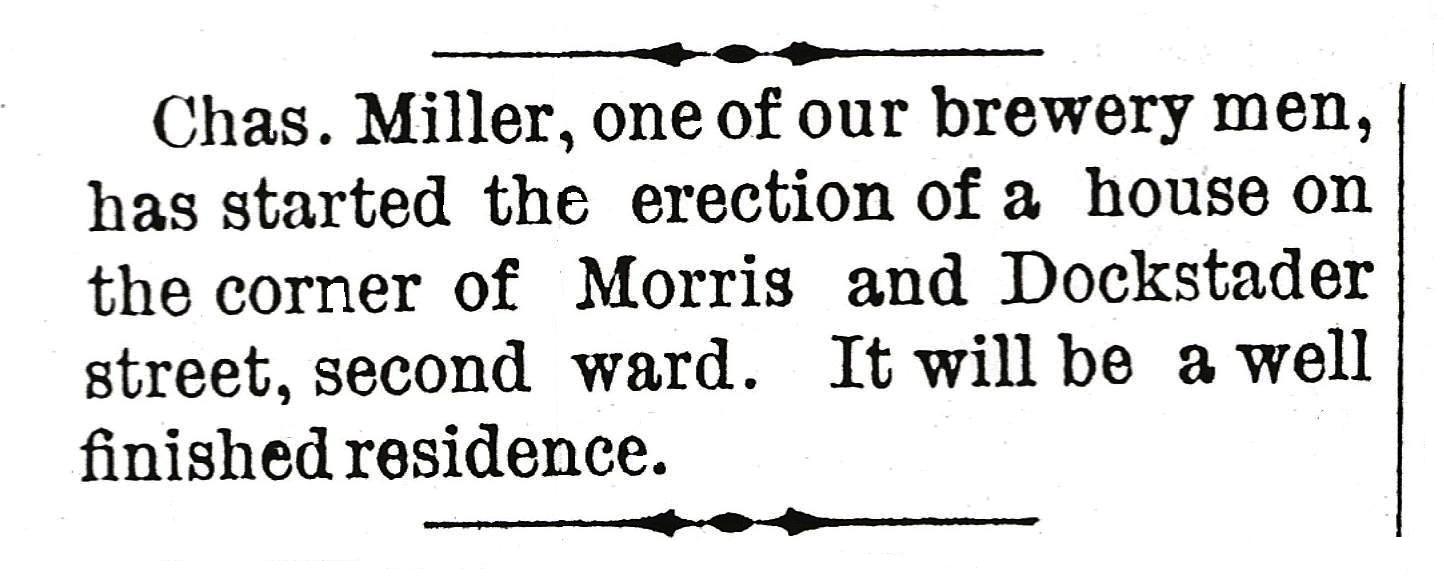


 The Hanneman Archive