Tag Archives: featured

A Look Back at the ‘Plainfield Butcher,’ Grave Robber Ed Gein

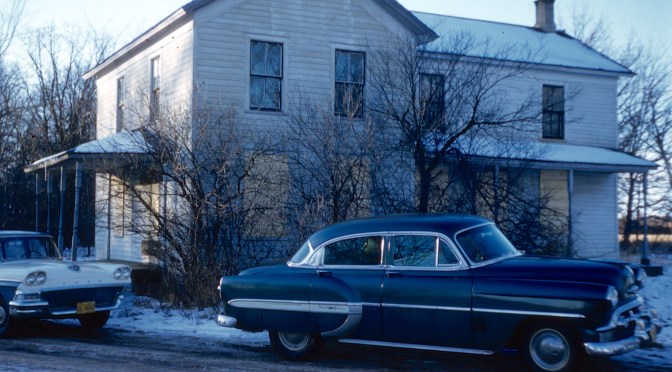
While scanning my grandfather’s old slide collection, I came across two stray images from 1957 marked “Gein’s House.” I couldn’t get the slides on the scanner bed fast enough. It turns out the photos were indeed of the ramshackle farm house of the notorious killer and grave robber, Ed Gein.

For Carl F. Hanneman, the trip to Plainfield would have been a minor detour on one of the family’s many trips from Mauston to Wisconsin Rapids, Wis. He, like thousands of other Wisconsinites in the late fall of 1957, just had to see for himself the home where the unimaginable occurred from 1945 to 1957. For in that decrepit structure at the corner of Acher and 2nd avenues a few miles southwest of Plainfield, the handyman bachelor Gein committed unspeakable acts.

The boarded-up house of Plainfield handyman Ed Gein, who robbed nearby graves and made macabre souvenirs from the stolen remains.
The boarded-up house of Plainfield handyman Ed Gein, who robbed nearby graves and made macabre souvenirs from the stolen remains. The house was burned to the ground by an arsonist in March 1958. (Carl F. Hanneman photo)

The day of Gein’s undoing came on November 16, 1957, the opening day of the gun deer hunting season in Wisconsin. Gein made the trip into Plainfield to buy some anti-freeze at Worden’s hardware store. While there, he took a .22-caliber rifle from the store display and shot to death the owner, Bernice Worden, 58. After slitting her throat, he dragged her body out the back and put it into a truck. Later that day, sheriff’s deputies from several counties were searching for Worden, a well-known local who had run the Plainfield hardware store since her husband’s death in 1931.

Gein’s car had been spotted in the village that day, so police twice stopped at his 160-acre farmstead to talk to him. He wasn’t home. On the second trip, Waushara County Sheriff Arthur Schley peered into a shed that Gein used as a summer kitchen and was shocked. “My God, there she is!” he shouted. There was the body of Worden, hung upside down by the ankles, gutted and dressed out like a deer ready for the butcher. “There was a body hanging in the woodshed by the ankles,” said Captain Lloyd Schoephoester of the nearby Green Lake County sheriff’s department. “Tendons in the ankles had been cut and a rod and been placed through them. The body was drawn up in the air by a block and tackle. The body was dressed out and the head was missing.” Sheriff Schley went outside and vomited.

Police found the remains of nearly a dozen women in Ed Gein's farmhouse near the village of Plainfield, Wis.
Police found the remains of nearly a dozen women in Ed Gein’s farmhouse near the village of Plainfield, Wis.
Worden’s head was later found in a burlap sack nearby. Her internal organs were in a bucket. If that sight wasn’t enough to sicken responding police, a search of Gein’s home would put them over the edge. Inside the filthy and cluttered home they found five human heads wrapped in plastic bags, four skulls and 10 “death masks” made by removing the face and hair from a human head. “Some of them have lipstick on and look perfectly natural,” said Wood County sheriff’s deputy Dave Sharkey. “It you knew them, you’d be able to recognize them.”

There was more. Police found chairs and lampshades fashioned from human skin, four human noses, two sets of lips, a belt made of female nipples, and a collection of female genitals. Two of the vulvas in Gein’s collection belonged to teenage girls, and authorities concluded he likely murdered these girls. On the stove was a saucepan containing a human heart, later identified as belonging to Worden. There was a wastebasket made from skin, and skulls fastened to Gein’s bedposts. Bowls were made from the tops of human skulls.

At first, police thought they might be dealing with a prolific serial killer. After his arrest, Gein admitted killing Bernice Worden, but he said the grotesque artifacts in his home were from grave-robbing visits he made to the nearby Plainfield Cemetery, the Spiritland Cemetery in Portage County and the Hancock Cemetery in the Town of Hancock. Gein also admitted shooting and killing Portage County tavern keeper Mary Hogan on December 8, 1954. Her face was found among Gein’s collection of death masks.

Police were not initially inclined to believe Gein’s tales of grave robbing. On November 25, 1957, they exhumed the caskets of Eleanor Adams and Mabel Everson at Plainfield Cemetery. Both caskets were empty. In the soil above one casket they found dentures and a wedding ring. That was enough to convince police that Gein was indeed a grave robber. He told authorities he made the moonlight grave-robbing visits while in a daze. On some occasions, he awoke from the daze and stopped what he was doing. He said his grave robbing occurred between 1947 and 1952. He said he returned some bodies to their graves after experiencing remorse. Police did not dig up other graves, and ultimately don’t know just how many caskets Gein might have opened.

When interviewed by Wisconsin State Crime Lab officials, Gein said he would dress up with the women’s body parts. He would wear a death mask, a tanned skin shirt including women’s breasts, and a vagina placed over his own genitals, covered by a pair of panties. He would go out in the moonlight and prance about the farmyard in this sick getup. Although Gein was not a deer hunter, he was known to have given packages of “venison” to people in the community, who became sickened after Gein’s arrest at their unwitting cannibalism. Authorities became convinced that Gein practiced cannibalism, among his other grotesque crimes.

After a brief court hearing in January 1958, Gein was committed to the Wisconsin Central State Hospital for the criminally insane at Waupun, where he remained for 10 years. In early 1968, Circuit Court Judge Robert H. Gollmar ruled Gein was able to stand trial for the murder of Bernice Worden. In a November 1968 bench trial, Gein was convicted of first-degree murder for Worden’s death, but in a separate hearing found not guilty by reason of insanity. He was sent back to Waupun. He later was moved to the Mendota Mental Health Institute in Madison, where he died of cancer on July 26, 1984. He was buried next to his mother in the same Plainfield Cemetery that he plundered.

Gein suffered from schizophrenia. The death of his mother on December 29, 1945 apparently pushed him over the edge. Doctors said he had an unnatural Oedipus complex attachment to Augusta Gein. The women he killed and the graves he robbed represented substitutes for his mother. The women were plump and middle aged, doctors said. Gein had nursed his mother through two paralytic strokes. Gein’s father George died on April 1, 1940. His brother Henry was found dead after a marsh fire on the Gein property on May 16, 1944. It is widely believed that Gein killed his brother.

Based on the Worden convinction and Gein’s admission to killing Mary Hogan, Gein could not be considered a serial killer. But he was suspected of killing at least four other people. The teenage genitals found in his farmhouse might have belonged to Evelyn Hartley, 15, of La Crosse, and Georgia Jean Weckler, 8, of Fort Atkinson. Hartley disappeared in October 1953 and Weckler was abducted in May 1947. Neither crime was ever solved and the girls’ bodies were never found. In his 1982 book on the Gein case, Judge Gollmar wrote that if Gein did not kill these girls, then the abducted and killed two runaways, since his grave-robbing could not explain the presence of genitals belonging to young girls in Gein’s home. Gollmar also wrote that Gein might have killed two men who disappeared after visiting a Plainfield tavern. The disappearances of Victor Travis and a male companion were never solved. Travis’ jacket and his dog were found near the Gein farm, and neighbors noted a stench coming from Gein’s garden at the time.

Gein’s gruesome story created a cottage industry in macabre spinoffs. It was the inspiration for the book Psycho by Robert Bloch. The book was adapted into the 1960 Alfred Hitchcock film of the same name. Gein was said to be the inspiration for fictional characters in films including The Texas Chain Saw Massacre and Silence of the Lambs.

The Hanneman family has one link to Plainfield other than the photos of Gein’s house snapped by Carl Hanneman. Lisetta (Treutel) Moody (1861-1931), aunt of Ruby Hanneman, moved her family to Plainfield after living in Vesper in Wood County. She and her husband, Lewis Winfield Moody, are buried at Plainfield Cemetery. She testified at the trial of Frank Hinz after the 1902 shootout between the Moody and Hinz families.

This post has been updated with details from the 1982 book on Gein by Circuit Judge Robert H. Gollmar. The book, Edward Gein: America’s Most Bizarre Murderer, is a fascinating insider’s account of the Gein case.

©2014 The Hanneman Archive

A Good Man Goes Home to Heaven: Ron LaCanne

I remember well the first and last times I saw my father-in-law, Ron LaCanne.

In the nearly 25 years between these two events, I came to respect and love this man, whose story late in life became one of remarkable faith. I was incredibly moved by his quiet and steady faith in Christ and his hope of attaining glory in Heaven after his earthly journey, which ended earlier today at age 74.

It was such a long road away from the day I first met him. That was in early 1990, when I stopped at the LaCanne home on North Wisconsin Street in Racine to pick up his daughter Sue for a date. I was more than a bit nervous, because I had been told he was not fond of newspaper reporters. At the time, I was a reporter at The Journal Times, Racine’s daily newspaper. I sat on the couch and we chatted about the story I’d worked on that day, dealing with a Caledonia teenager who killed a dog, reportedly due to listening to heavy metal music. Somehow I survived the discussion and made a decent first impression on the man I would come to spend countless hours with over the next nearly 25 years.

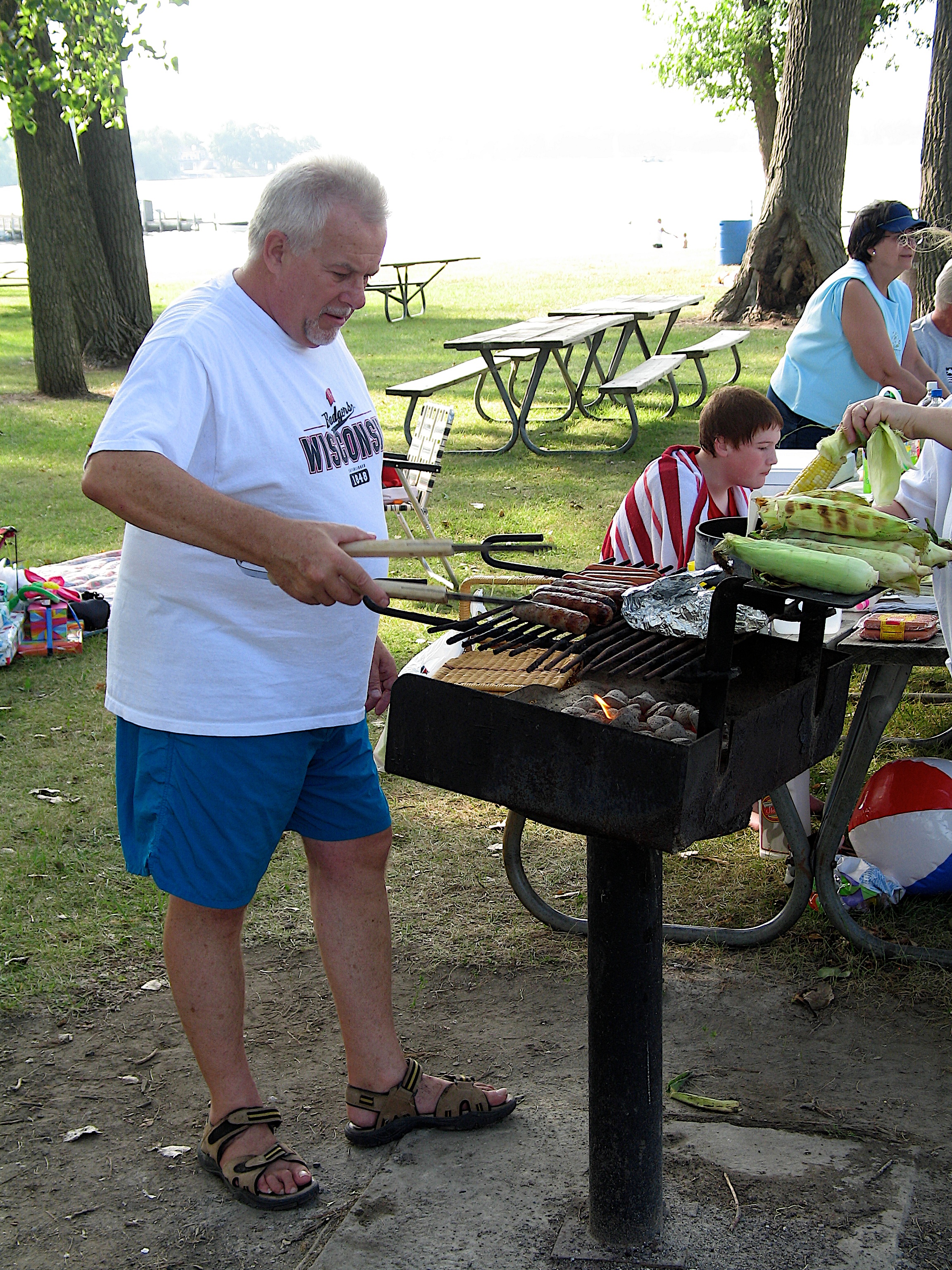
Ron in his favorite spot, working the grill.

My final and lasting impressions of him came in a series of visits this summer at the LaCanne apartment in Racine. Ron was thin, frail and dying from cancer. And although we’d been estranged in recent years, this time I was not nervous to visit. I presented him with a very special Rosary given to me by Catholic filmmaker Steve Ray. The Rosary had been placed on nearly a dozen sites in the Holy Land. This included Golgotha, the place of the crucifixion of Christ. He picked up the Rosary and felt the intricate carvings, then carefully laid it back in its olive wood box. I didn’t fully understand how much this touched him until a while later when the fire alarm went off in the apartment complex. He struggled to stand up from his recliner and grabbed two things: a hand-carved “comfort cross” given to him by a priest friend, and that Rosary. I struggled to hold back tears as my mother-in-law Eileen helped him out the door.

Two weeks later I visited again. This time he was confined to bed and drifted in and out of consciousness. We still had a nice talk, recalling stories and memories from across the years. I told him that many people were praying for him on his journey and that God would remain very close to him. “I sure hope so,” he said, squeezing my hand. A few minutes later, this solemn moment was replaced by laughter and joy. I told him that our oldest daughter Samantha was going to a concert that night. “A concert?” he said. He swung his hands out into the air and started singing the Alleluia Chorus from George Frideric Handel’s Messiah. We laughed at the joy and spontaneity of it. It seemed so appropriate, and so very beautiful. Wow.

Samantha, Stevie and Ruby with Gramps.

Several times we sat alone and talked about his final days on earth. He spoke freely and with stark honesty about his impending death. I encouraged him not to be afraid, since all of those who love him have complete faith that Jesus will not forsake him. “I’m not afraid to die,” he said. Then he asked me to do him a favor. “Can you help me identify the gentleman sitting on the couch over there?” There was no one on the couch. And since Ron had lost his sight over the past year, he would not have seen anyone there in the first place. But I could tell he was seeing something profound, even if it was beyond my vision. “Describe him to me,” I said. The visitor had dark hair and wore a cap. His expression was calm, peaceful and friendly. “He has been sitting there for the past two days,” Ron said. We talked a little more, and I suggested his visitor was a guardian angel sent by God to protect and comfort him. The idea was not foreign to me, as I’ve read a number of accounts by hospice workers of dying patients seeing angels.

We were on guard for weeks expecting Ron’s death, but he wasn’t about to follow any script. Just when we feared the worst, he would rally and have a great day or two. I recall one day pulling up to the apartment center and seeing him sitting outside in the sunshine, facing Lake Michigan. I asked him how he felt. “Doing great,” he said. “I feel really good.” On another visit, after listening to a preseason Packers game, we talked again about death and dying. “The time is near,” he said. I thanked him for the incredible witness he was providing to his grandchildren (and all of us). The Cross is heavy, and he knew it. But in his final months, weeks and days, he found peace. And now he is at peace.

I’ve always believed life is well-reflected in pictures, both on paper and ink and in the mind’s imagination. Many images of Ron come to me as I recall the last 25 years. Let me share just a few.

I remember the early afternoon of October 5, 2002. It was a very difficult day. I was driving Ron back to Racine from Children’s Hospital of Wisconsin in Wauwatosa. A short time before, his oldest son, Patrick, had died at the too-young age of 37. Ron exhaled loudly and struggled to find some words. “I’ll tell you, Joe, this is so hard. So hard. No one should have to experience the death of their child.” So very true. We drove and recalled favorite memories of Patrick. By the end of that drive, we both better understood the impact Pat had made on the family. It continues to this day. I can only imagine the embrace the two shared at their reunion earlier today!

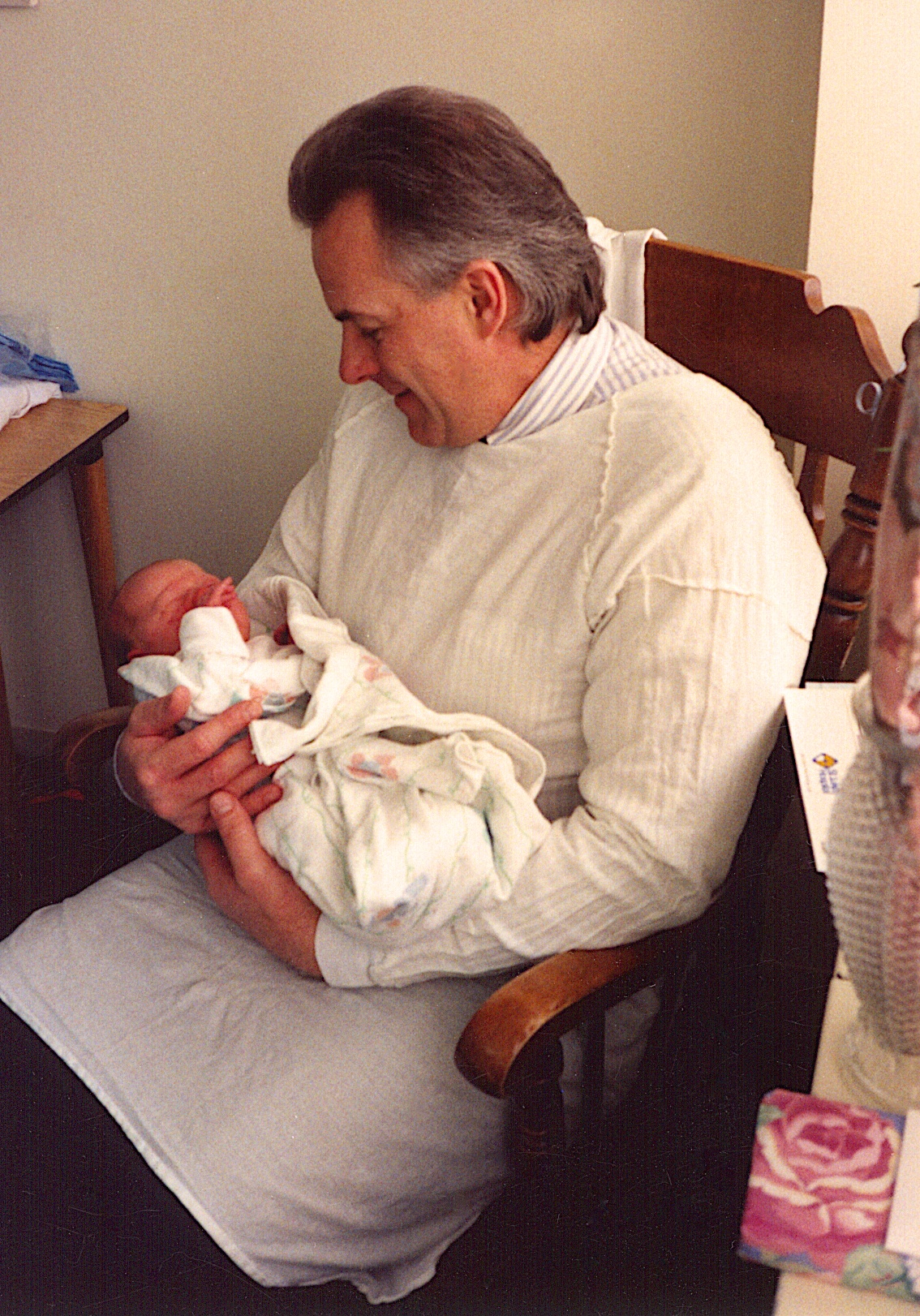
Ron LaCanne holds his first grandchild, Stevie, on January 21, 1992.

My mind rolls back to January 1992, when a well-dressed Ron stopped at St. Luke’s Hospital in Racine. He was on his way to his job at S.C. Johnson Wax, but had to stop first for some quality time with his first grandson, Stephen Patrick Hanneman. The photo my wife Sue snapped that morning tells of the joy and pride of a new grandpa. That day Ron earned the moniker he later awarded himself: “Gramps.” Gramps. He wore that title as well as anyone could, loving his five grandchildren like no one else.

Everyone always enjoyed July 4 at the LaCanne residence. While the grandkids were little, Ron went all out with a fireworks show as good as you’d see at the lakefront in Milwaukee or Racine. There were toy soldiers launched 100 feet in the air, returned to earth via parachute. And the Titanic, a huge brick of sound and color that should have come with its own fire department. On one occasion, one of the fireworks tipped over, firing projectiles across the gathered relatives. We all dove for cover under tables. “Incoming!” Over the years, Ron gave up the fireworks duty, but none of us could ever match those incredible displays.

Ron with grandchildren Samantha, Ruby, Josh and Geoffrey.

Speaking of displays, Ron was also the master of Christmas decorating. He always got two trees, one for the living room and one for the basement. His main tree was usually the tallest, fattest one on the lot, which he covered every square inch with ornaments, lights and beads. The rest of the house was festooned with lighted villages, Santa statues and a Nativity set that could reside at the Vatican. One year after a few seasons of collecting ceramic lighted Norman Rockwell houses, we put up an entire village on an expansive shelf space over our front door. After plugging it in, I danced down the upstairs hallway, singing, “Ron LaCanne, eat my dust!” Silly to be sure, but in a way, it was my own tribute to the master.

Every year, Ron played Santa at the LaCanne Christmas eve party. This was an event attended by dozens of family members. The food was diverse and plentiful, half the punch was spiked and the kids were all antsy in anticipation of Santa’s arrival. About 9 p.m., Ron would slip out of the living room, duck into a phone booth and emerge as Santa, always coming in through the front door. It was tradition that “Santa” would pick up the youngest grandchild for a photo. This often lead to either wide-eyed amazement or quivering tears. This was all followed by an orgy of gift opening for the kids. One year, an eagle-eyed granddaughter Samantha noticed that Grandpa was gone for a while, and when he returned, his hair was wet and he wore different shoes. Hmmmm. Another year, after Ron had retired from being Santa, youngest grandchild Josh LaCanne was determined to let Santa know the best gifts should be for him and not his brother, Geoffrey. When the red-clad bearded one (played by Ron’s son Chris) appeared at the party, young Josh got wide eyed and shouted, “Brother wants rocks!”

Ron and Eileen during an outing with Samantha and Stevie.

Ron and Eileen were always faithful attendees at the grandkids’ activities. Countless soccer games on chilly, windswept fields in Franksville, Christmas concerts, track meets, graduations. Ron was there with either a video camera or a still camera. Over the years he took thousands of photos and hours of video, often making commemorative books that he would present at birthdays or Christmas. I recall a time seeing a video that showed the family watching videos of the grandkids. Life imitates art.

As time went on and events in the world became more troubling, Ron decided he wanted his grandchildren to know about a simpler time, when right and wrong were easy to spot and traditional values where championed. So he started writing, tales of his childhood growing up as a Catholic boy in Racine. Stories, anecdotes and just things he wanted the kids to know, they were all included in this growing 100-page tome of Ronaldian wisdom. Occasionally he would share bits and pieces. What a gift these writings will be to his grandchildren and their children. I hope one day to be able to digitize them and format them into a book.

Ron was always willing to help out with a project. In 2007, after my father died of lung cancer, he helped me install a new floor in the upstairs hallway at my parents’ home in Sun Prairie. During my Dad’s illness, his little dog Chewy didn’t get as much attention and didn’t get put out as often. The result was he used the baseboards and the carpet for a bathroom. It was awful work pulling out the carpet, only to realize the baseboard, plaster and parts of the subfloor were contaminated. We worked for two days, first removing the mess, then treating the walls and subfloor with pure bleach to neutralize the smell. My eyes are still burning. When we were done, my Mom had a new wood floor and no more doggie smell.

We all gathered for a portrait at Nicholson's in 2000.
We all gathered for a portrait at Nicholson’s in 2000.

When I was running my own marketing business, I tapped Ron’s business expertise and we worked together on some major projects for my client, Volvo Construction Equipment. I hired Ron to help me evaluate company financials, stock reports, annual reports and other business intelligence on prospective customers for Volvo. His analysis and detailed input allowed me to present market studies that were so well-received I still hear compliments about them, nearly a decade later. 

I could go on for pages, but time is fleeting.  Ron lived a very full 74 years. He gave much of his time, from his days in the U.S. Army, to volunteering in the community to groups such as the Opportunity Center and United Way. He rose high in the ranks at one of America’s great brand companies, SC Johnson Wax. But it was and is his family that was the love of his life. On Sunday evenings when everyone gathered in the living room after another of Eileen’s great dinners, Ron would pat his stomach and look around the room. “Mi familia!” he would say. Nothing can top having your family surrounding you. How he loved his wife Eileen, daughter Sue, sons Patrick and Chris (and wife Elise); and his grandkids, Stevie, Samantha, Ruby, Geoffrey and Josh.

My thoughts return to the man with the Rosary, clutching it and the Cross like an anchor during a time of fear and uncertainty. This will be Ron’s everlasting lesson and legacy. To carry the Cross through good and bad times in life, maintaining the hope of things unseen. As his life came to a close, Ron returned to his roots and his embraced his Catholic faith. It was his comfort and salvation. To use a phrase from his ancestors’ native tongue, La fede mi da vita: Faith gives me life.

And so it has.

©2014 The Hanneman Archive


(To see additional photos, visit Ron’s photo memorial gallery. Photo selection by Samantha J. Hanneman.)

Neighborhood Cowboys of 1930 Wisconsin Rapids

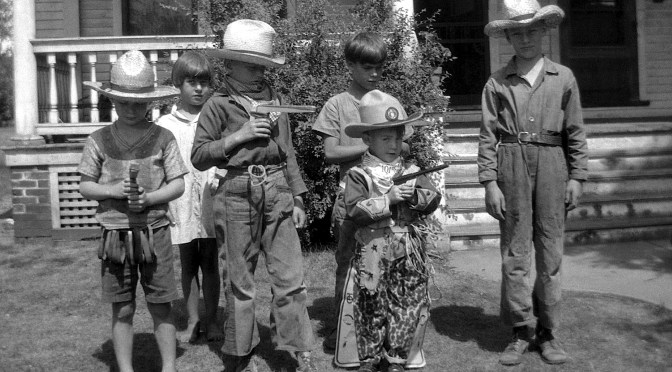
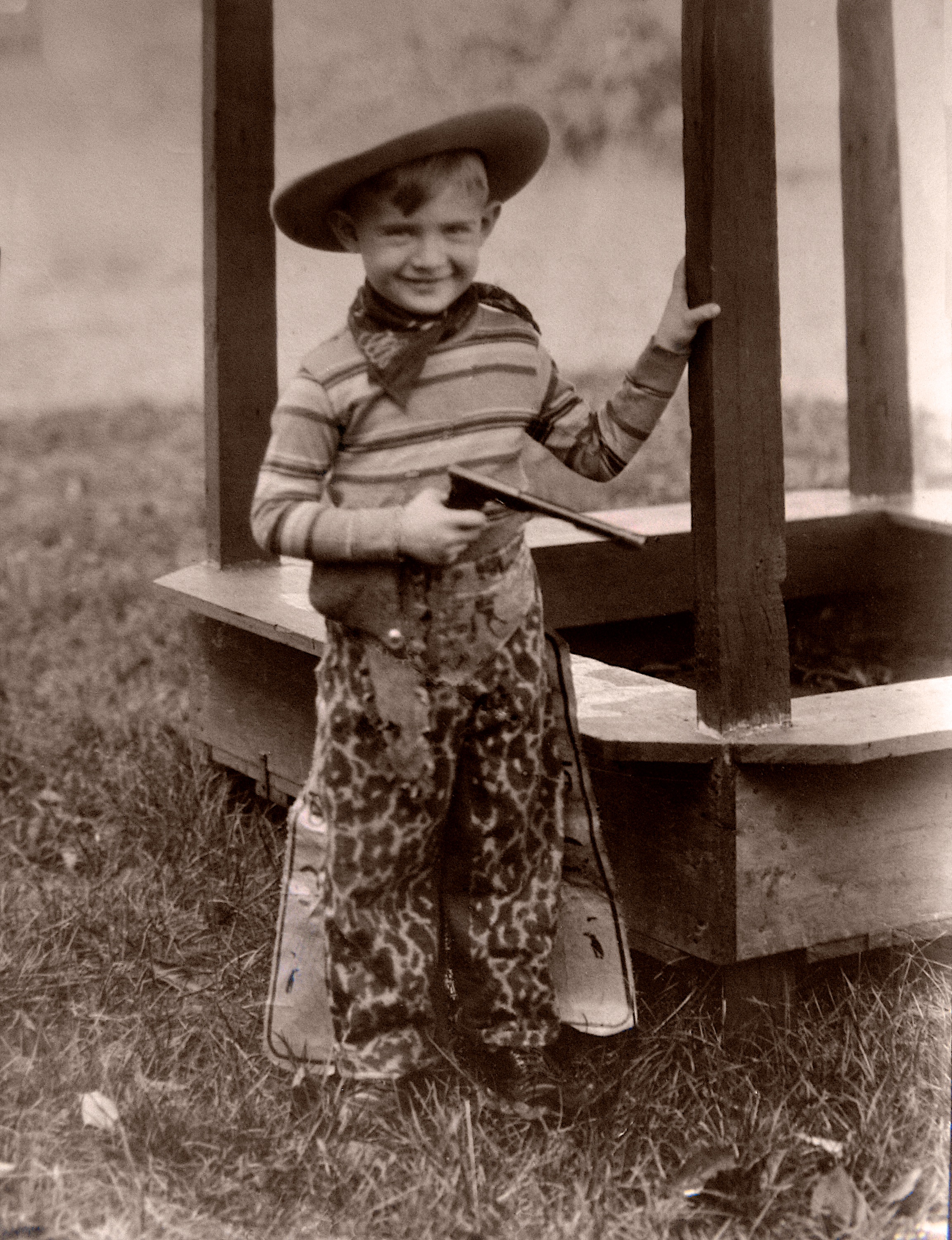
Even in the late 1920s, it was a time-honored tradition for the neighborhood boys to dress up as their favorite cowboy hero. The priceless image above shows a group of youthful cowpokes hard at play on Wisconsin Avenue in Wisconsin Rapids. The smallest cowpoke in front is Donn G. Hanneman, and judging by his spiffy cowboy getup, it might have been sometime near his August birthday.

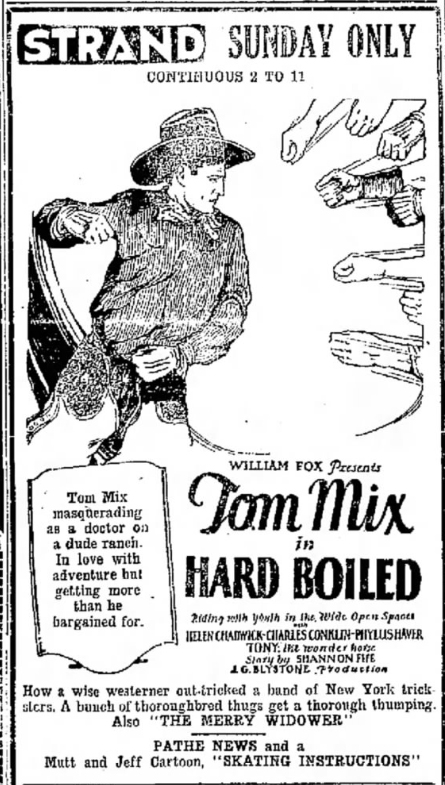
Youth flocked to see their hero Tom Mix and his steed, Tony the Wonder Horse.

So just which movie stars would these boys (and one perplexed young lady) be imitating while hard at play? The photo dates to around 1930, so it was well before the days of Red Ryder played by Red Barry and Rocky Lane, and long before the Lone Ranger. But no worries, the cowboy genre was well established at the movie house by such stars as Hoot Gibson, Tom Mix and even a very young John Wayne. These tykes might have gone off to see Fred Thompson in The Two-Gun Man or John Wayne in The Big Trail. It was still a few years before Gene Autry would be the star of In Old Santa Fe.

A bit older Donn Hanneman in his latest cowboy getup, circa 1933.

So here’s a tip of our 40-gallon hat to all of the aspiring cowboys of that era, with their chaps, shiny lawman’s badge, wooden gun and all the swagger a 5-year-old could muster. Let’s ride!

The Story of Hannemans’ Stay-Off Mosquito and Insect Repellent

More than 60 years after it was first used to ward off mosquitoes and other pests in central Wisconsin, the lavender and citronella scent of Carl F. Hanneman’s Stay-Off bug repellent still lingers across time. The Mauston pharmacist invented his own blend of essential oils that provided a natural defense against biting pests, and he sold the product across the area for years.

Carl F. Hanneman sold his insect repellent at bars and bait shops all over central Wisconsin.

Carl Hanneman’s inspiration for his product came from his need for extra income, and his knowledge of chemistry and pharmacology. Even in the depths of World War II, when rationing made it difficult to obtain raw materials, Carl found a way to make Stay-Off and sell it at taverns, bait shops and resorts all over the area. Due to an abundance of lakes and rivers, Central Wisconsin is known for proliferation of mosquitoes and other flying pests during tourist season.

“His being a pharmacist allowed him access to some of the compounds needed to make this stuff,” recalled Carl’s son, David D. Hanneman. The topical elixir, which used an olive oil base and a secret recipe of lavender, citronella and other essential oils, was often mixed on the back porch of the Hanneman home in Mauston, Wis. “It was kind of comical,” David Hanneman said.

Aside from providing access to the needed ingredients, Carl’s role as pharmacist at the Mauston Drug Store had other benefits that helped him sell Stay-Off on his own time. “Because he was his own dispensary, he was able to upgrade his gas card,” David Hanneman said. “So we weren’t restricted and limited in traveling. We could go back on up north and go fishing or do whatever over weekends. And we’d drop off a dozen bottles here, and a dozen bottles at that bar, a dozen bottles over at that other fishery house.”

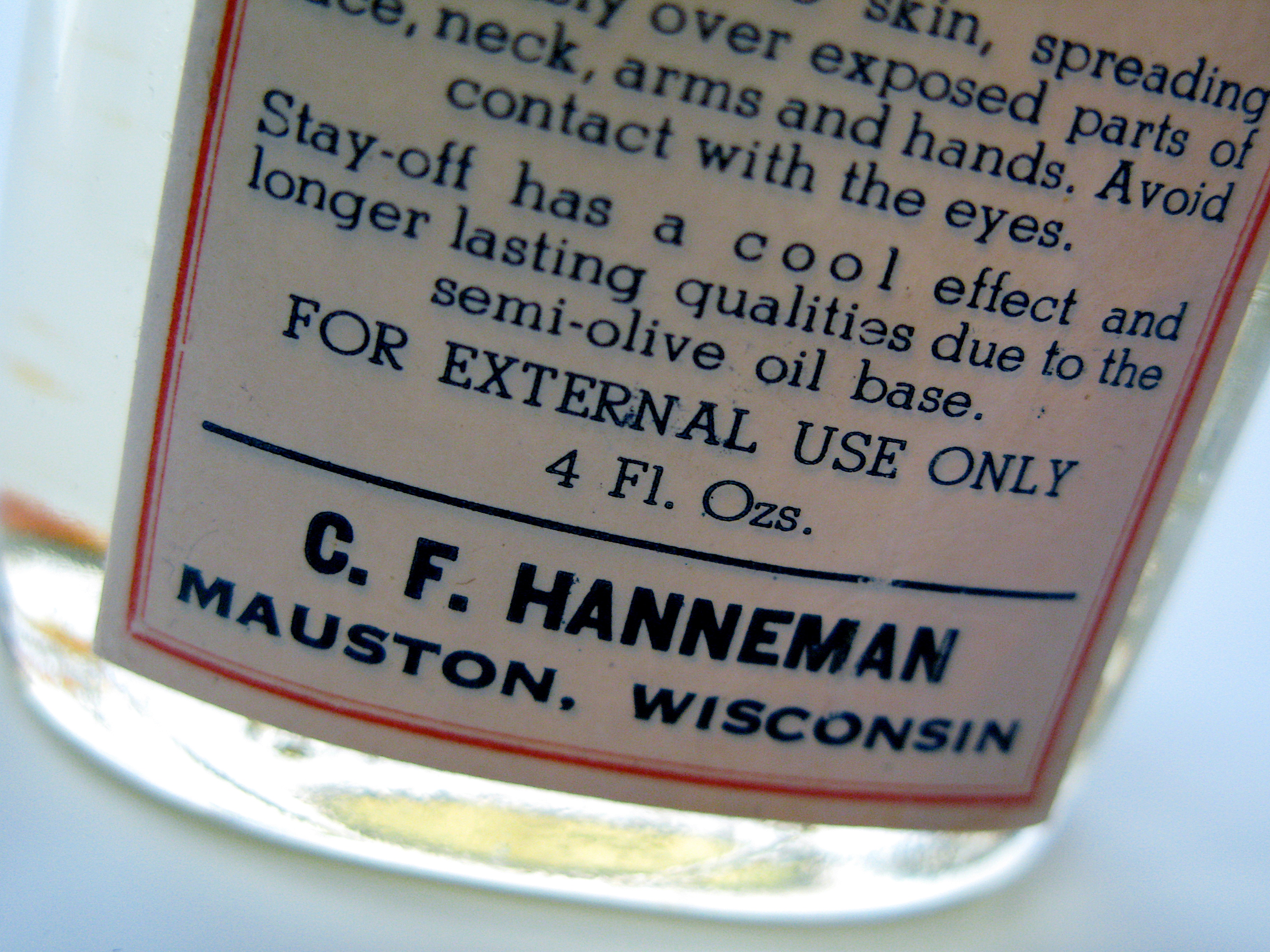
Carl F. Hanneman printed his own labels and wrote the ad copy for Stay Off.
Carl F. Hanneman printed his own labels and wrote the ad copy for Stay-Off.

Carl wrote his own marketing copy to help sell the 4-ounce bottles of Stay-Off. “Stay-Off is not only an excellent insect repellent, but has that cool, soothing and refreshing feeling on hot summer days,” he wrote. “It is highly recommended for women and children’s skin, producing a soft tenderness due to the semi-olive oil base.” The lotion soothes existing bug bites and provides protection against strong sun rays, he wrote.
David Hanneman said selling Stay-Off was a nice side business for the family. “It gave us nice added income,” he said, although “we never got rich off the stuff.”

The recipe for Stay-Off called for making the mixture in 1 gallon batches. A half-gallon of Stay-Off and several 4-ounce bottles survive to this day. All of the ingredients are still commercially available. So even 60 years after it was first mixed, it would be possible to make more Stay-Off using Carl’s old recipe.

Losing Our Home: ‘Goodbye’ Was the Very Hardest Word

This was a day I’d long dreaded. I knew it was coming, and prepared for it the best I could. But I feared it still, because I did not have an answer for the question it posed. How do I — how could Isay goodbye to our family home?

I walked through the now nearly empty house and I still had no answer. So much had happened during the nearly 14 years we lived here. Our third child joined us here. They all grew up here. Our oldest went off to college from here. I started a home-based business here; a business that failed during the long recession. That’s what eventually brought me to this day, just a short time before foreclosure would take it all away.

Stevie, Ruby and Samantha on the first day of school.

I stood in the front entryway and listened. Nothing. The quiet was almost deafening. A few boxes and odds and ends were scattered about, but very little remained of the home I loved. This is not how a home is supposed to look. I’m struck by how cold and empty it is. No pictures on the walls. No dogs running to the window to bark at the mailman. No children watching a favorite movie. No charcoal grill cooking steaks out on the deck. No carefully decorated Christmas tree in the corner of the family room, sending out a warm glow into the night. No family saying grace at the dinner table. This is not how I want to remember our home.

I start to walk the house. Almost like a projected movie, the memories flowed, right before my eyes.

The cluttered brilliance of my home office.

I peered outside the small window to the left of the front door. I can almost see my late father coming up the sidewalk with a broad smile and saying, “Hello, Jofus” (that was his little word play on my given name after St. Joseph). September 15, 2006. That was the last time he was here. The sun glints off his silver hair, he waves, and is gone.

I turn and start to head up the stairs to the second floor. The paint color is darker on a large section of the wall. For most of the time we lived here, a giant quilt hung on the wall, embroidered with the saying, “In a House with Love, All things are Possible.” The carpeting on a section of the landing looked new where a small cherry bookcase sat. The case had belonged to my Grandpa Carl. On top of  the case I had a shrine with candles, a large crucifix and a statue of the Blessed Virgin Mary. On many nights those candles burned in prayer for a dying relative, a sick friend or some special intention. I used to get angry at our son for dipping his fingers into the hot wax and either making fingerprints on the wood, or rolling little marble-size balls of warm wax that he left along the edge of the bookcase. What a silly thing to get upset about. How I wish I could put the case back and have those wax fingerprints again.

Welcoming Beacon: In a house with love, all things are possible.
My home office on one of its cleaner days.

At the top of the stairs, I paused. This was the site of one of the most frightening events in family history. Samantha, then 4, was playing with a magic kit. It had a small polystyrene ball and a black tube. Her little eyes turned to a look of terror when she realized the ball had become lodged in her throat. My wife tried the Heimlich maneuver and smacking Samantha between the shoulders. It didn’t work. In desperation, she picked little Samantha up by the ankles and held her upside down. Pop! Out it came. The tears of relief flowed.

I turned left and entered the master bedroom. The heart of the house was now nearly empty. In the corner still stood a chest of drawers. I opened the top drawer and saw an envelope and more than a dozen plastic baggies. Each bag contained a tiny tooth, snatched from under a child’s pillow and replaced with a gift. It was good of the Tooth Fairy to leave them. I kept them all. I picked up the letter, which was addressed to Santa Claus, North Pole. It even had a stamp on it. I gathered the bags and the letter into my pockets. Precious memories need to be kept.

Near the end of packing, I found a tooth that sat in a dish, unredeemed.

I walked down the hallway toward the children’s bedrooms. On the wall I could see the outlines where our wedding photos used to hang. How young we all looked on that Saturday, December 1, 1990, at St. Rose of  Lima Catholic Church. I still had hair and was 40 pounds lighter. What a blessed day that was. Such a contrast to the sadness of today.

As I approach the first bedroom, I see a large hole near the bottom of the wooden door. I remember the day in 2002 I rushed home from work because our then 10-year-old son Stevie had kicked a hole in the door in a fit of anger. As I walked inside the room, I could almost see my son’s battery-operated pteradactyl, flying in circles, anchored to the ceiling by fishing line. The wooden dressers that once sat along the western wall for years had glass aquariums on top — home to hermit crabs, green anole lizards and frogs. The anoles had a diet of live crickets, which were as likely to escape into the carpet as end up in a lizard’s stomach.

Samantha, Ruby and Stevie, waiting for Christmas with new puppy, Mr. Puggles.

Across the hall, I was impressed by the cheery green paint of another child’s bedroom. There were glow-in-the-dark stars pressed all over the ceiling. Pet nets hung in the corners, once home to dozens of stuffed animals. They are empty now. This room had changed hands several times over the years. It started out with white walls as a nursery. The white steel crib sat against the far wall, waiting for its new resident. She came home on a July 4 during our first summer here. It was 104 degrees outside. Little Ruby spent a week in intensive care with a hole in her lung. She was our third baby. We worried so much about her. Every peep on the baby monitor sent us scurrying down the hall. But all was well. How many times I sat in the oak rocking chair in this room, feeding Ruby a bottle. There’s no feeling in the world like rocking a newborn in the still of the night. I thank God for the experience, and the memories.

Samantha holds baby sister Ruby in July 1999.

There was one last bedroom on my tour. Over the years it was painted blue, white, pink and yellow. Today I saw a toddler bed tucked in the corner. I was reading a book to a curly hair redhead. It was a classic Dr. Seuss tome, Mr. Brown Can Moo! Can You? It was a favorite of all three children for its memorable, rhythmic lines. “Dibble dibble dop dop, cock-a-doodle-doo! Mr. Brown can do it. How about you?” Once the book was done, we started a nightly ritual to see how long I’d sit by her bed as she fell asleep. I started the bidding. “I’ll stay THESE minutes,” I said, holding up two fingers.  “No, THESE minutes,” Samantha shot back, holding up five fingers on each hand. After a few rounds of this, she usually won. Now I wish I had these minutes back again. As I turned to leave the room, I saw both daughters asleep in their beds. A small lamp threw off just enough to illumine the room. In my head I could hear a favorite Nat King Cole song:

Lights out, sweetheart / One more perfect day is through

Lights out, sweetheart / One more perfect dream come true

We’ve reached the hour of parting / So kiss me tenderly

Lights out, sweetheart / Close your eyes and dream of me

Close your eyes and dream … of me

Goodnight, sweetheart

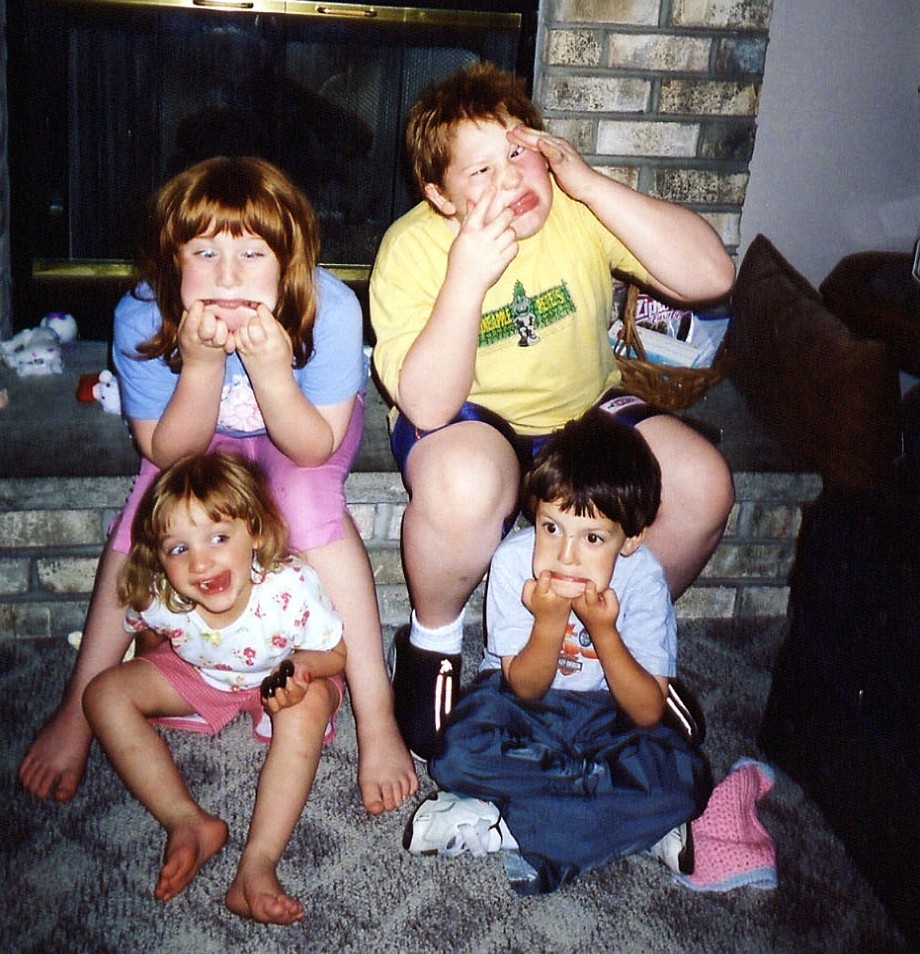
The kids and cousin Geoffrey have a creepy-face contest.

Back down the stairs, I stood in the foyer again. My grandmother’s 1899 Singer sewing machine had been the centerpiece for years as the staging place for all sorts of family displays. I saw the children gathered around the Advent wreath, taking turns lighting the purple and rose candles. Or placing Baby Jesus into the Nativity creche on Christmas Eve. Most of the year it was covered with framed family photos, from the kids’ sports and school pictures to the large wooden-framed antique photo of my Grandma Ruby Hanneman (1904-1977).

I walked into the kitchen and was overwhelmed with memories of family meals, birthday parties, family meetings and prayer time. I recall our weekly ritual of doing a “blessing cup” ceremony, where each of us would take the blessing cup and talk about something we are thankful for. Ruby, who was very young when we started the tradition, always said the same thing: “I’m sankable (thankful) for my skoowa (school).” It never got old. Today, the table is gone and the blessing cup is packed away. I am still most thankful for it all.

One of many birthdays celebrated at our kitchen table.

I looked out the sliding glass door to the deck. Suddenly the gas grill was fired up and I was cooking steaks, vegetable kabobs and hot dogs. On the corner of the deck, a fire pit crackled with warmth in the fall night, with our children and the neighbors gathered around, toasting marshmallows. A group of children and adults sat in chairs on the deck, watching me light fireworks for July 4th. “Ooh, pretty! Light the big one now, Daddy.” I looked up at the second-story windows and saw the low flickering light from a television playing a favorite Disney movie, Aladdin.

My Dad's handmade Nativity scene, restored by his granddaughter, Samantha.
My Dad’s handmade Nativity scene, restored by his granddaughter, Samantha.

I walked around the front of the house and the snow was suddenly 3 feet deep. On the porch was my Dad’s handmade wooden Nativity scene, which daughter Samantha had repainted and restored. It glowed a welcoming gold, red and green in the cold darkness. I walked toward the garage and all three kids came running down the driveway with their fishing poles and a tackle box in tow. “Wait for me!” one yelled, as they ran towards the neighborhood pond. How I miss those fishing days now.

I walked back inside and stood at the foot of the stairway. I listened, but heard nothing. Heavy silence. Nobody home anymore. My heart was so heavy, it felt like stone. I never wanted this day, but now it was here, and at an end. “Thank you so much,” I said out loud, almost expecting the house to answer me. “I’m sorry I failed you. Thank you for sheltering us for so long. I will never forget.” There was one more word I thought I should speak, but the lump in my throat kept it from coming out. I just couldn’t say it.

There was nothing like a lazy Sunday, fishing at the pond.

I pulled out of the driveway for the last time and started to drive away. I stopped and looked out the window. More than a decade of memories were visible to me all at once. They swirled around the house like fairy dust. In the upper window, my oldest daughter laid on her bed, reading a book. On the front lawn, our preschool children splashed in a pool. Relatives filed in the front door with armloads of Christmas presents. Our son sat in a lawn chair on the porch, studying for exams. All three children romped during a nighttime snowstorm. “Dadda, it’s snowing!” A petting zoo was set up in the front yard for a birthday party, with children taking turns riding a pony around the block. A tent was set up for a summertime sleepover. The smell of steaks wafted from the backyard grill. My Dad got out of his blue sedan and walked up the driveway with a wave. Voices rang out from the children’s rooms: “I had a bad dream.” “Santa came!” “I got all As!” “I love you, too.” “I’m really proud of you.” 

I rolled down the window and took it all in. I waved and bid all of the memories to come with me. And so they followed. Some things are just too precious to leave behind. ♦

An art project stuck to the sliding glass door.
The Christmas tree was always a labor of love.
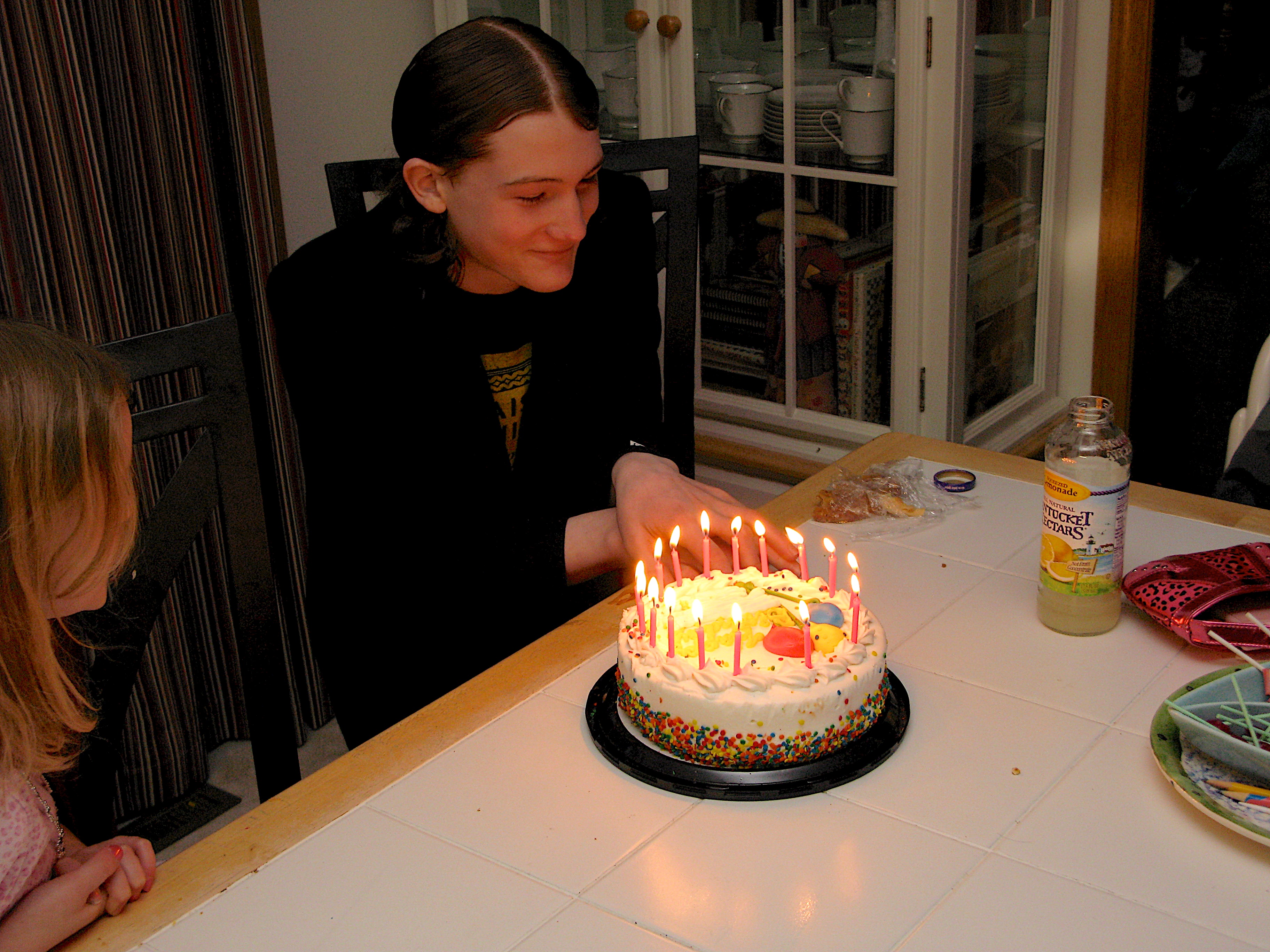
Stevie waits to blow out the candles on his 16th birthday.