Category Archives: Hanneman News Clips

Lloyd’s Life After Cancer: ‘I’m a Better Man Than I Ever Was’

By Joseph Hanneman
Racine Journal Times

A group of sparrows perched on the edge of the bird feeder outside Lloyd Miller’s window, pecking at the seeds like there was no tomorrow.

Oblivious to the man watching them from just feet away, the birds went about their business, then flew away. They are a living reminder of just how much Miller’s life has changed in the past four years.
This story was part of an award-winning 12-page special section published in The Journal Times  on Dec. 1, 1991. The project won awards from the Wisconsin Newspaper Association, the American Cancer Society and the American College of Radiology.

For much of his life, the 71-year-old Miller never had time for little hobbies like bird watching. From his early days as a cavalry instructor in the U.S. Army to his career as a salesman and Racine’s city development director, Miller was a busy man.

Then came cancer.

“I never had a bird feeder before. Now, I’m feeding the birds at $10 a week,” Miller says with a chuckle. “I’ll have to win the lottery.”

Aside from the pinkish patch of scar tissue on his head and his lack of hair, you would never know this man tangled with a rare, life-threatening cancer.

He has a firm handshake, a hearty belly laugh and a warmth that twinkles from beneath his spectacles.

Life has changed
The bird feeder is one of the little ways Miller is a different man now. He isn’t bothered by the little things anymore. He’s more tolerant. He finds it a lot easier to tell his wife and friends that he loves them.

And although life has brought him persistent heart problems and a cancer that came back four times, Miller considers himself lucky.

Lloyd Miller never used to have time for hobbies. Now he’s a regular bird-feeder. — Journal Times photo by Mark Hertzberg

“I do not consider myself dying of cancer,” he says, softly tracing an invisible pattern on the kitchen table with his index finger, “but living despite it. I do not look at each day as a day closer to death, but another day to be appreciated and enjoyed.”

Lloyd Miller is a cancer survivor.

He is one of the 50 percent of cancer patients who live through the terrifying diagnosis, the fear, the uncertainty, the sickening treatments and the real risk of death. He is part of a growing group with a determination to live life fully, with a new appreciation for what was almost lost.

Miller’s rare form of cancer is in remission, four years after it was discovered. And although there still is a risk the cancer could come back and attack his lungs, he doesn’t let it worry him.

“I feel so comfortable, it’s almost a sin. I don’t think about it every day.”

But for much of the past few years, Miller had little choice but to think about cancer.

The first inkling of trouble came in 1987 while he was on a cruise with Sue, his wife of 16 years. A sunburn-like patch of blisters appeared on the left side of his scalp. It didn’t concern him, until his eye began to swell so badly he had to soak it to get it to open. Upon returning to Racine from Miami, Miller went to see his doctor in Kenosha. The doctor took a biopsy, then delivered the kind of heart-stopping news everyone fears.
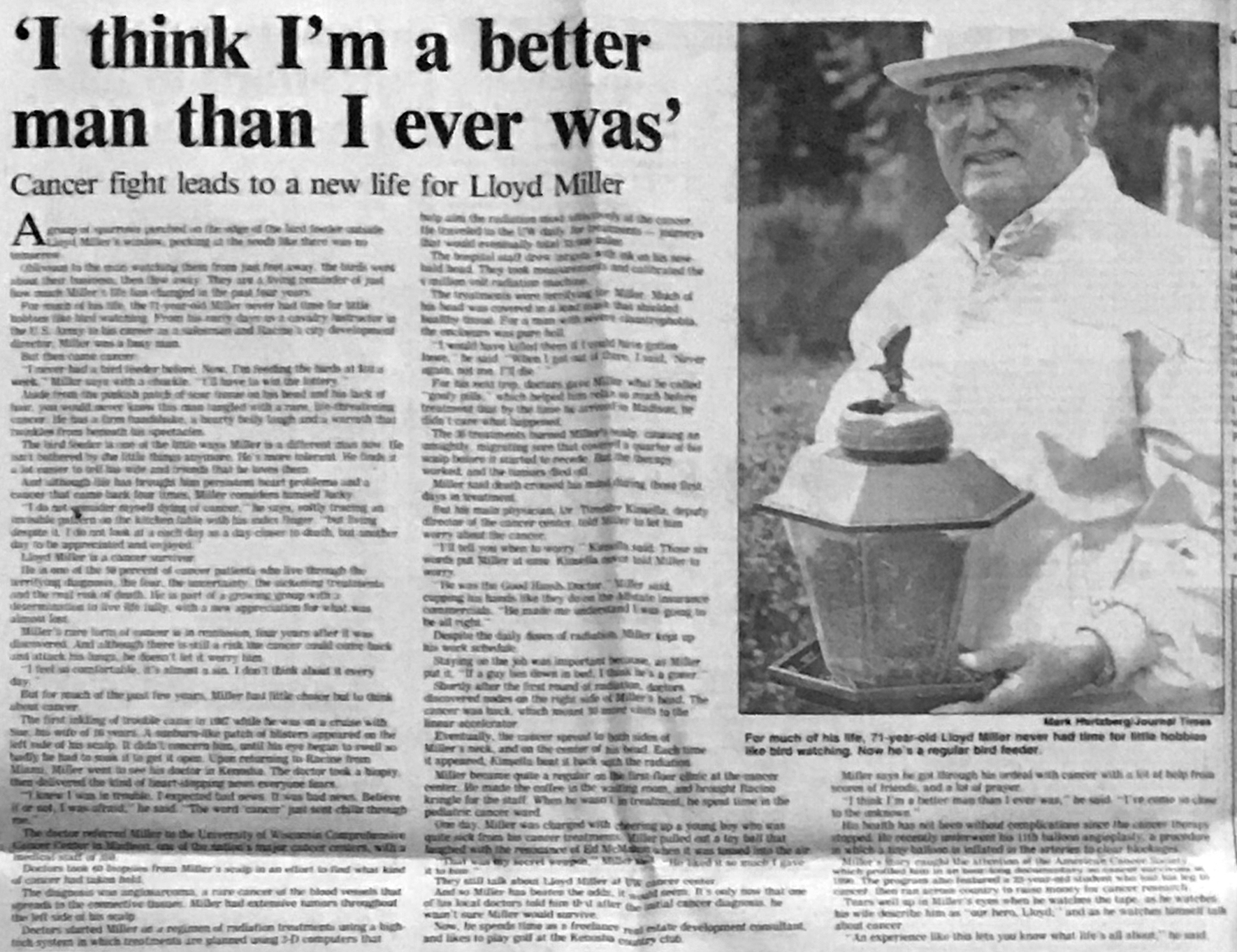
Lloyd Miller’s story as it appeared in the Journal Times on Dec. 1, 1991.

“I knew I was in trouble. I expected bad news. It was bad news. Believe it or not, I was afraid,” he said. “The word ‘cancer’ just sent chills through me.”

The doctor referred Miller to the University of Wisconsin Comprehensive Cancer Center in Madison, one of the nation’s major cancer centers, with a medical staff of 350.

Doctors took 60 biopsies from Miller’s scalp in an effort to find what kind of cancer had taken hold.

Rare cancer diagnosed
The diagnosis was angiosarcoma, a rare cancer of the blood vessels that spreads to the connective tissues. Miller had extensive tumors throughout the left side of his scalp.

Doctors started Miller on a regimen of radiation treatments using a high-tech system in which treatments are planned using 3-D computers that help aim the radiation most effectively at the cancer. He traveled to the UW daily for treatments — journeys that would eventually total 33,000 miles.

The hospital staff drew targets with ink on his now-bald head. They took measurements and calibrated the 6-million-volt radiation machine.

The treatments were terrifying for Miller. Much of his head was covered in a lead mask that shielded healthy tissue. For a man with severe claustrophobia, the enclosure was pure hell.

“I would have killed them if I could have gotten loose,” he said. “When I got out of there, I said, ‘Never again, not me. I’ll die.’ ”

For his next trip, doctors gave Miller what he called “goofy pills” that helped him relax so much before treatment that by the time he arrived in Madison, he didn’t care what happened.

Treatments burn the scalp
The 30 treatments burned Miller’s scalp, causing an unsightly, migrating sore that covered a quarter of his scalp before it started to recede. But the therapy worked and the tumors died off.

Miller said death crossed his mind during those first days in treatment.

But his main physician, Dr. Timothy Kinsella, deputy director of the cancer center, told Miller to let him worry about the cancer.

“I’ll tell you when to worry,” Kinsella said. Those six words put Miller at ease. Kinsella never told Miller to worry.

“He was the Good Hands doctor,” Miller said, cupping his hands like they do on the Allstate insurance commercials. “He made me understand I was going to be all right.”

Despite the daily doses of radiation, Miller kept up his work schedule.

Staying on the job was important because, as Miller put it, “If a guy lies down in bed, I think he’s a goner.”

Shortly after the first round of radiation, doctors discovered nodes on the right side of Miller’s head. The cancer was back, which meant 30 more visits to the linear accelerator.

Eventually, the cancer spread to both sides of Millers’ neck and on the center of his head. Each time it appeared, Kinsella beat it back with radiation.

Miller became quite a regular on the first-floor clinic at the cancer center. He made the coffee in the waiting room, and brought Racine kringle for the staff. When he wasn’t in treatment, he spent time in the pediatric cancer ward.

One day, Miller was charged with cheering up a young boy who was quite sick from his cancer treatments. Miller pulled out a toy ball that laughed with the resonance of Ed McMahon when it was tossed into the air. “That was my secret weapon,” Miller said. “He liked it so much I gave it to him.”

They still remember Lloyd Miller at UW Cancer Center.

Help and prayers
And so Miller has beaten the odds, it would seem. It’s only now that one of his local doctors told him that after the initial cancer diagnosis, he wasn’t sure Miller would survive.

Now he spends time as a freelance real estate development consultant and likes to play golf at the Kenosha country club. Miller says he got through his ordeal with cancer with a lot of help from scores of friends and a lot of prayer.

“I think I’m a better man now than I ever was,” he said. “I’ve come so close to the unknown.”

His health has not been without complications since the cancer therapy stopped. He recently underwent his 11th balloon angioplasty, a procedure in which a tiny balloon is inflated in the arteries to clear blockages.

Miller’s story caught the attention of the American Cancer Society, which profiled him in an hourlong documentary on cancer survivors in 1990. The program also featured a 23-year-old student who lost his leg to cancer, then ran across country to raise money for cancer research.

Tears well up in Miller’s eyes when he watches the tape, as he watches his wife describe him as “our hero, Lloyd,” and as he watches himself talk about cancer.

“An experience like this lets you know what life’s all about,” he said. •

EPILOGUE: Lloyd G. Miller died on March 6, 2004 at his retirement home in Orlando, Fla. He was 83.

Jeff Peterson Overcame Testicular Cancer: ‘A New Outlook on Life’

By Joseph Hanneman
Racine Journal Times

 Jeff Peterson will never forget Valentine’s Day 1985.

A battalion chief with the Racine Fire Department, Peterson was on his way to St. Mary’s Medical Center on a routine call that night. En route, he noticed a sharp pain in his groin, a pain that steadily worsened. By the time he arrived, he needed medical attention.

“By the time I got to St. Mary’s, I could hardly walk,” Peterson, 49, recalled.

Doctors who examined him originally thought he was suffering from torsion, a painful twisting of the vas deferens leading from the testicles. But efforts to relieve the pain were useless.

This story was part of an award-winning 12-page special section published in The Journal Times  on Dec. 1, 1991. The project won awards from the Wisconsin Newspaper Association, the American Cancer Society and the American College of Radiology.

Peterson underwent exploratory surgery that night at St. Mary’s. He was under local anesthetic and was able to ask the surgeon what he saw. There were lumps on one of the testicles, he was told, and it could be cancer.

“I thought I was going to die,” he said. “I thought I had a death sentence.”

Surgeons removed the diseased testicle, which they believed was the original site of the cancer. He went home the next day, still reeling from the diagnosis.

Smoke inhalation a factor?
Peterson did not smoke and he wondered how he could develop such a rare cancer, which strikes about 130 Wisconsin men a year. But he recalled his early days in the fire department, days when “you were a candy ass” if you wore an oxygen mask to a fire scene.

More than once, he recalled coughing up black phlegm after coming out of a fire. Now, he wonders what those early days did to him.

Peterson was admitted to the Mayo Clinic in Rochester, Minn., where doctors put him through a battery of tests. The news was not encouraging. The cancer had spread to Peterson’s lungs and the tumors were growing fast.

“They had grown from the size of the head of your pen to the size of a small orange in three weeks or so,” he said.

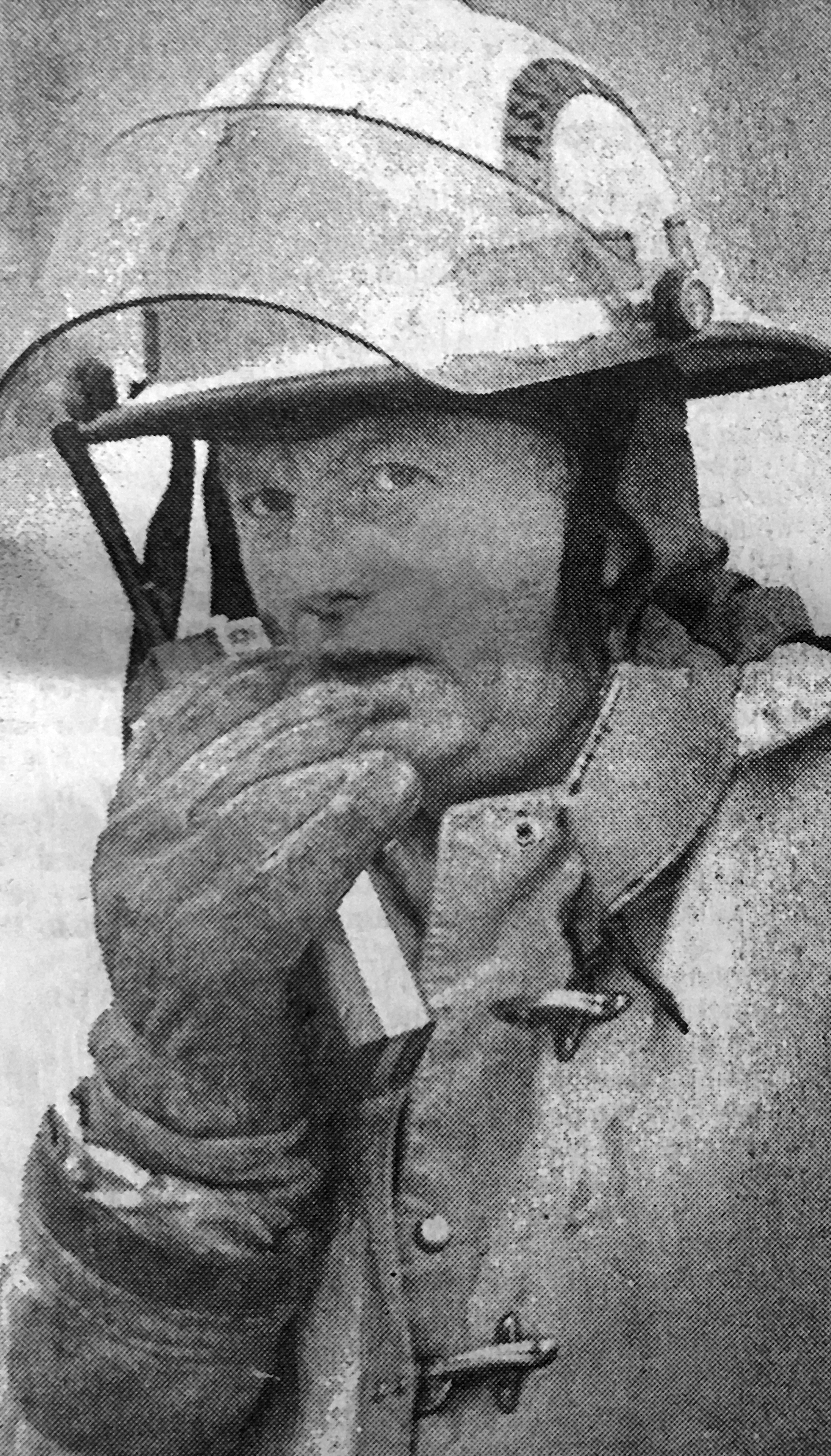
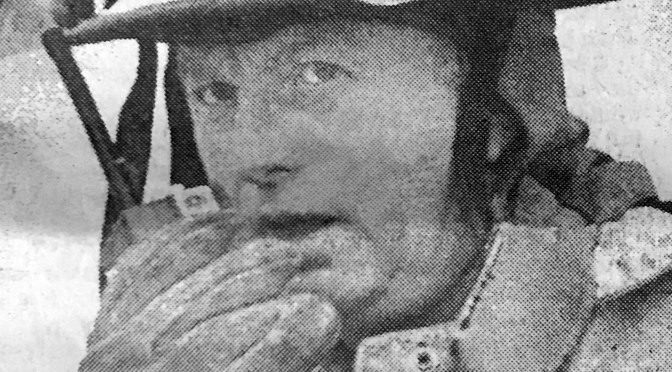
Jeff Peterson on duty with the Racine Fire Department. — Journal Times photo by Mark Hertzberg

Doctors decided to attack the lung tumors with chemotherapy. Peterson returned to Racine and went on a regimen of chemotherapy. One week of treatments was followed by three off weeks to let his body recover.

Peterson lost his hair from the nauseating treatments, but he decided to go back to work at the fire department, where he was in charge of training programs. Being at work was therapeutic.

“I found if I sat at home, the only thing I could think about is, ‘Am I going to die?’ ” he said. “I needed a diversion. That diversion was going to work.”

Diversion is not all he found at the fire department. He also found inspiration and the will to keep fighting.

Heroic inspiration
The source of the inspiration was Dan Christensen. Christensen was always the first to greet Peterson and ask him how he was doing. Christensen told him things would work out, he’d be OK.

Encouraging words are always good to hear, but Christensen’s words carried extra meaning for Peterson, because his fellow firefighter was dying from amyotrophic lateral sclerosis — Lou Gehrig’s disease.

“It was just remarkable, a person could take life, so little of which he had left, and still give so much to the people he had around him,” Peterson said.

Even as Christensen lost his motion control as his muscles deteriorated from the disease, he kept up the pep talks for Peterson. He visited him in the hospital and always had an encouraging word. He may not have known it at the time, but Christensen, who died in August, helped save his friend’s life.

“He made me keep on fighting,” Peterson said. “That’s a major part of beating cancer. You have to take one day at a time.”

There was plenty of fight ahead for Jeff Peterson.

The nausea and vomiting from chemotherapy put him back in the hospital. He developed blood clots in his lungs. Then, he developed a fungus-like disease in his lungs that put his life in jeopardy.

Jeff Peterson’s story as it appeared in the newspaper on Dec. 1, 1991.

He remembers that meeting with doctors well. The combination of complications could be fatal. The doctor had tears in his eyes.

“ ‘You’re not rid of me yet,’ ” Peterson said he told the doctor. “I made up my mind I was not going to be that statistic. I was going to be a statistic on the positive side.”

Doctors started treating the lung fungus with steroids, but the going was still rough. Peterson got angry when some of his visitors treated him like he was a sure bet to die.

No giving up
There were a few times in the hospital, when he was weary from the chemotherapy, that Peterson felt like giving up. Dying. But then sleep would come for a few hours, putting a little more fight in his soul.

By late 1985, Peterson turned the corner on his disease. The tumors responded to therapy and the fungus was subsiding. Peterson was winning.

That was six years ago. Peterson has been cancer-free ever since. The disease challenged him and nearly killed him, but it also gave him a sense of how precious life is.

“Cancer gives you a new outlook on life. Every day to me is a bonus,” he said. “I used to take a lot more things more seriously than I do now. You know the time here is so short, you should make the best of it every day.”

These days, Peterson spends part of his time delivering talks to high school boys about testicular self-exams, something even he was ignorant about before he got cancer.

“It’s a subject not many kids want to talk about, but it’s got to be done,” he said. “That’s one of the points I was extremely angry about. My own physician never told me to do a testicular exam.”

He also spends time whenever called upon to help cancer patients adjust to the disease. He won’t let them give up, just like Danny Christensen wouldn’t let him give up. One man he saw recently was ready to throw in the towel, but Peterson convinced him it was worth the fight. The man is doing fine now.

“That’s one of the boosts that makes me smile every day,” he said. •

EPILOGUE: Peterson retired from the Racine Fire Department in early 1999 after more than 30 years as a firefighter, including a stint as chief.

A Wish Granted: Experimental Treatment Cures Sarah Mazzie

By Joseph Hanneman
Racine Journal Times

It was Christmas 1986, and little Sarah Mazzie was making out her wish list for Santa Claus. At the top of the list wasn’t a Barbie doll, a Cabbage Patch Kid or a doll house.

At the top of Sarah’s list was written: “good health.”

“That amazed me, a child that age asking for good health,” said Sarah’s mother, Mary. “It was in that little scrawl handwriting, ‘Good health.’ ”

The 6-year-old Racine girl had her priorities straight. In the 20 months since she was diagnosed with acute lymphocytic leukemia, Sarah learned what it was like to be sick, to endure painful treatments and lose her hair. “Good health” has been on her Christmas list ever since.

This story was part of an award-winning 12-page special section published in The Journal Times  on Dec. 1, 1991. The project won awards from the Wisconsin Newspaper Association, the American Cancer Society and the American College of Radiology.

Bruce Camitta doesn’t look much like Santa Claus. He doesn’t have the Santa-like spare tire, and his thinning crop of hair doesn’t resemble St. Nick’s white mane.

But for Sarah, Camitta might as well have been Santa Claus.

The professor of pediatrics at the Medical College of Wisconsin in Wauwatosa had developed an experimental leukemia treatment that would save Sarah’s life.

Preventing recurrence
Camitta’s treatment used high doses of chemotherapy, followed by an extended period of lower doses, administered after patients had gone into remission. Patients often respond well to initial treatment, but Camitta’s goal was to prevent recurrence of the cancer.

Sarah was his 27th patient in the trial at Children’s Hospital of Wisconsin in suburban Milwaukee, and one of the 80-plus percent for whom the treatment has worked. She has been cancer-free ever since.

“He says I’m a pioneer girl,” said Sarah, now a pretty 11-year-old sixth-grader at Mitchell Middle School. She’s proud that she helped break medical ground and beat the cancer that could have stolen her young life.

“I don’t think about it,” she said of the leukemia. “It’s not hard, I’m just lucky they had medicine.”

Wearing a red shirt, black jeans and deck shoes, Sarah sits in a director’s chair at her family’s home on Newman Road in Mount Pleasant. Her long, black hair, dark eyes and striking smile tell no tale of cancer.

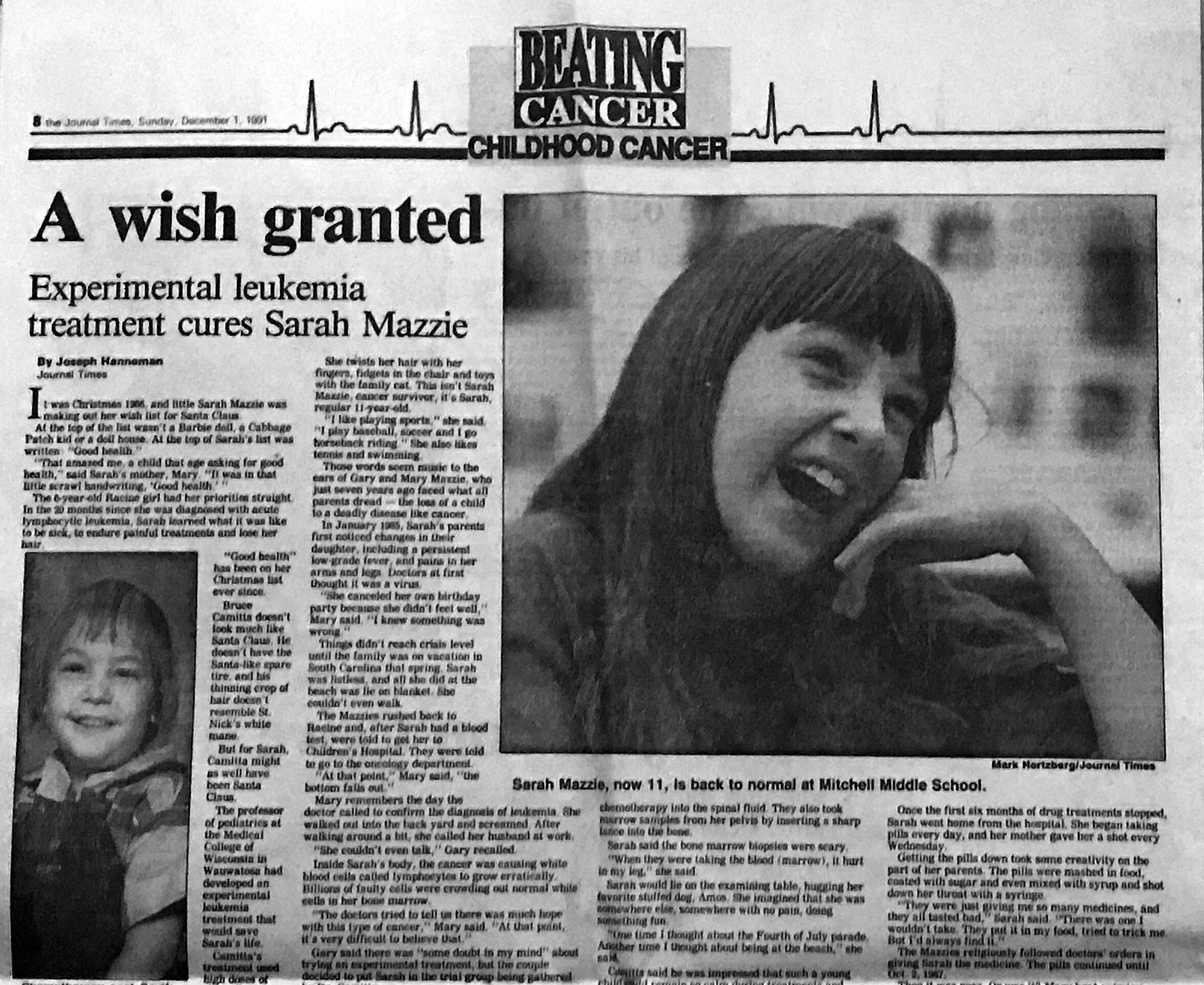
Sarah’s story as it appeared in the newspaper on Dec. 1, 1991.

She twists her hair with her fingers, fidgets in the chair and toys with the family cat. This isn’t Sarah Mazzie cancer survivor, it’s Sarah, regular 11-year-old.

“I like playing sports,” she said. “I play baseball, soccer and I go horseback riding.” She also likes tennis and swimming.

Those words seem music to the ears of Gary and Mary Mazzie, who just seven years ago faced what all parents dread — the loss of a child to a deadly disease like cancer.

In January 1985, Sarah’s parents first noticed changes in their daughter, including a persistent low-grade fever, and pains in her arms and legs. Doctors at first thought it was a virus.

“She canceled her own birthday party because she didn’t feel well,” Mary said. “I knew something was wrong.”

Things didn’t reach crisis level until the family was on vacation in South Carolina that spring. Sarah was listless, and all she did at the beach was lie on blanket. She couldn’t even walk.

‘The bottom falls out’
The Mazzies rushed back to Racine and, after Sarah had a blood test, were told to get her to Children’s Hospital. They were told to go to the oncology department.

“At that point,” Mary said, “the bottom falls out.”

Mary remembers the day the doctor called to confirm the diagnosis of leukemia. She walked out into the back yard and screamed. After walking around a bit, she called her husband at work.

“She couldn’t even talk,” Gary recalled.

Sarah once cancelled her own birthday party because she felt ill. Her parents knew something was wrong.

Inside Sarah’s body, the cancer was causing white blood cells called lymphocytes to grow erratically. Billions of faulty cells were crowding out normal white cells in her bone marrow.

“The doctors tried to tell us there was much hope with this type of cancer,” Mary said. ‘At that point, it’s very difficult to believe that.”

Gary said there was “some doubt in my mind” about trying an experimental treatment, but the couple decided to put Sarah in the trial group being gathered by Dr. Camitta.

Sarah would he treated with standard chemotherapy until the disease was in remission, then undergo six months of intensive chemotherapy and two years of oral anti-leukemia drugs.

Intensive treatment
Camitta said the goal is to keep drug levels high over long periods to reduce the number of leukemic cells in the system. Treating a child who is in remission with intensive chemotherapy was considered a somewhat “rogue” idea in the medical community at the time, he said.

Mary stayed in the hospital with Sarah each night, and Gary visited after work. Sarah was hospitalized for 21 days, and after about two weeks of chemotherapy, her cancer was in remission.

Sarah then came back to the hospital every two weeks for an infusion of methotrexate and 6-mercaptopurine, the drug combination Camitta had chosen for the experiment. Every other week, she went to the clinic for a checkup.

Doctors periodically had to insert a needle into Sarah’s spine to check for leukemic cells, and to inject chemotherapy into the spinal fluid. They also took marrow samples from her pelvis by inserting a sharp lance into the bone.

Sarah said the bone marrow biopsies were scary.

“When they were taking the blood (marrow), it hurt in my leg,” she said.

Sarah would lie on the examining table, hugging her favorite stuffed dog, Amos. She imagined that she was somewhere else, somewhere with no pain, doing something fun.

“One time I thought about the Fourth of July parade. Another time I thought about being at the beach,” she said.

Making something positive
Camitta said he was impressed that such a young child could remain so calm during treatments and tests. “She was super,” he said.

The treatments during those first six months made Sarah sick. The drugs dropped her count of infection-fighting white blood cells. She got headaches, and mouth sores. And her hair fell out.

To help make something positive out of a bad situation, Sarah took the hair that had fallen out off of her pillow each morning, and strung it out on the bushes outside. She wanted the birds to use it to build their springtime nests.

Although she was “kind of scared” about her hair falling out, Sarah adjusted. Most of her friends knew why she was losing her hair.

“When I was in kindergarten, someone thought I was a boy,” she said. “I knew it was going to grow back. I wore a lot of hats.”

Sarah’s parent said she handled the treatments well. She didn’t cry, or fight with the doctors. Her only response was to become silent and withdrawn on the way to the hospital. Occasionally she shed a few quiet tears.

Drug treatments continue
Once the first six months of drug treatments stopped, Sarah went home from the hospital. She began taking pills every day, and her mother gave her a shot every Wednesday.

Getting the pills down took some creativity on the part of her parents. The pills were mashed in food, coated with sugar and even mixed with syrup and shot down her throat with a syringe.

“They were just giving me so many medicines, and they all tasted bad,” Sarah said. “There was one l wouldn’t take. They put it in my food, tried to trick me. But I’d always find it.”

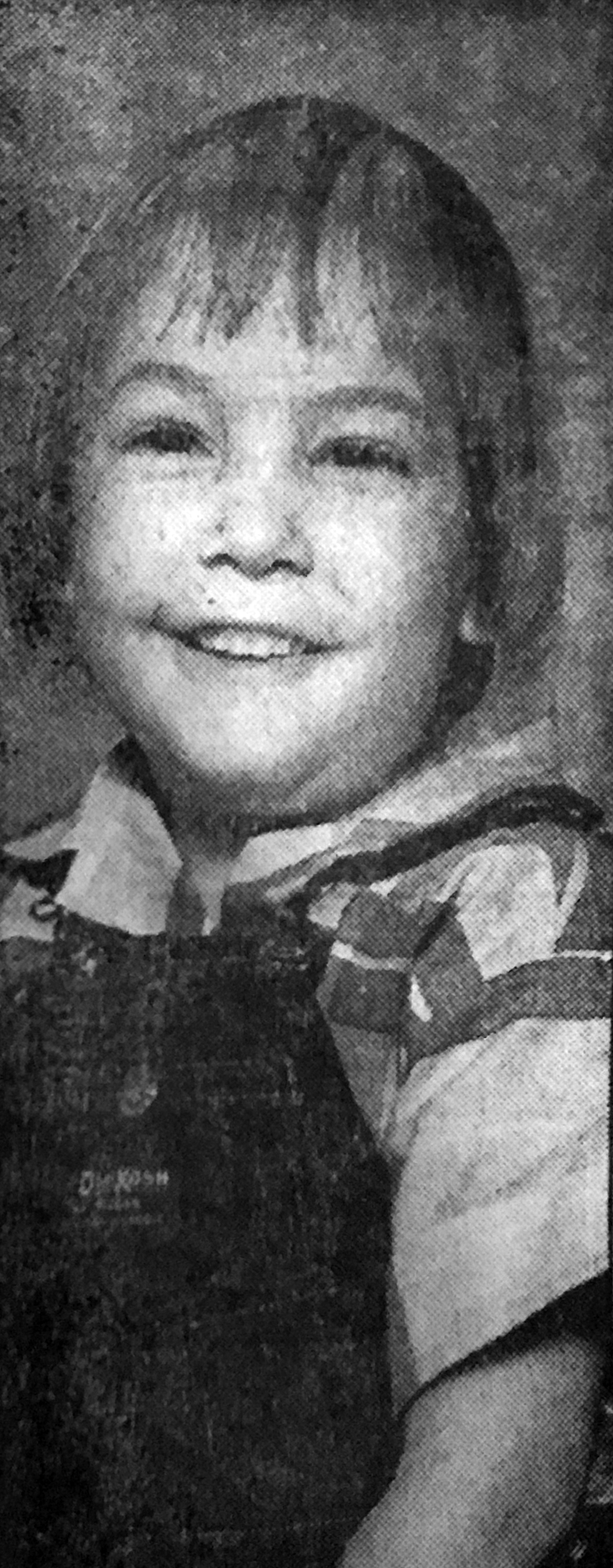
Sarah Mazzie. — Journal Times photo by Mark Hertzberg

The Mazzies religiously followed doctors’ orders in giving Sarah the medicine. The pills continued until Oct. 2, 1987.

Ordeal is over
Then it was over. Or was it? Mary kept quizzing doctors to see if any other children in the trial had a relapse of cancer. They told her not to worry.

Of the 73 children who underwent the treatment in the first two trials, more than 80 percent have remained cancer-free over long periods, Camitta said.

“That’s as good as anything else available, and we’re only using two drugs,” said Camitta, who has a giant teddy bear perched on a file cabinet outside his office. But many more children will have to be tested on the trial nationally to confirm the results, he said.

Camitta won three ardent believers on Newman Road in Mount Pleasant.

Gary said the family is stronger for the ordeal, and he realizes just how fragile life is. Whenever he has a bad day at work, he just looks at a picture of Sarah from back then, and is reminded of what is most important to him.

As for Sarah, she’s gotten on with her life, and will turn 12 in February. Asked if she has any advice for other children with cancer, she doesn’t hesitate in her response.

“I’d tell them you’d probably get better. If they cured me, they should probably be able to cure kids now.”

EPILOGUE: Sarah B. Mazzie graduated from the University of Wisconsin in 2002 and earned her Juris Doctor degree from the DePaul University College of Law in 2006. She was a partner in her own law firm and has worked for Immigration and Customs Enforcement in the U.S. Department of Homeland Security. Now 40, she is a U.S. immigration judge in Minneapolis. Her parents Iive in Racine.

Top photo: Sarah Mazzie in her classroom at Mitchell Middle School in Racine. — Journal Times Photo by Mark Hertzberg.

Bikers Found Guilty of Murder, Arson & Fraud

This article appeared on Page 3 of the national edition of
The Chicago Tribune on October 25, 1985.

By Joseph Hanneman
Special to the Tribune

MADISON, Wis. — The national president of the Ghost Riders motorcycle club and two other club members have been convicted of first-degree murder, arson and insurance fraud in a fatal tavern fire near here in 1983.

Convicted Wednesday were Alvin Hegge, 45, president of the club, based in Washington state; Scott Howard, 30; and Will Highfill, 41. Howard and Highfill also were convicted of endangering safety.

Alvin Hegge in Dane County Circuit Court. — State Journal photo by Joseph W. Jackson III

A Dane County Circuit Court jury deliberated for nine hours before delivering the verdict. The men were sentenced to life imprisonment on the murder charge. They will be sentenced on the other charges later.

Catherine L. Christian, 22, died in the March 1983 fire at Rosa’s Cantina, 5 miles southeast of Madison. Prosecutors contend the men planned to set the fire at the financially troubled tavern to collect insurance money and kill Christian, who the prosecutors say the three men believed to be a police informant.

Defense attorneys contend the fire was accidental, caused by faulty wiring.

Catherine L. Christian

Rosa’s Cantina became a hangout for the Ghost Riders when they tried to establish a chapter in Madison during 1982 and 1983, but those plans were abandoned shortly after the fire, according to court records.

Dane County Assistant District Atty. Robert DeChambeau, one of three prosecutors, said the verdict will significantly hurt the club.

“The Ghost Riders are pretty much through,” he said.

Hegge’s lawyer, Ralph Kalal, criticized the prosecutors for using convicted criminals to testify against Hegge. Kalal said the prosecution’s case was built “on a foundation of shifting sand. Yet the prosecution makes Mr. Hegge out to be the kingpin who ran the entire operation. It doesn’t make sense.”

Two other members of the bikers group were convicted last spring on lesser charges in the case.

Washington state officials say they have waited for the trial here to end and will now extradite Hegge and Howard to face federal and state charges in Spokane.

Will Highfill sports a winged-skull tattoo. — State Journal Photo by Joseph W. Jackson III

An arrest warrant has been issued for Hegge in connection with the shooting death of a Spokane police officer in 1983, according to the Spokane County Prosecutor’s Office. Officer Brian Orchard was killed during a police stakeout of Ghost Riders suspected of selling stolen weapons. Two club associates have been convicted of the murder.

Hegge also has been indicted in Spokane on a charge of conspiracy to possess with intent to deliver cocaine, according to the U.S. attorney’s office in Spokane.

Howard also was indicted on federal charges of conspiracy to possess with intent to deliver cocaine, unlawful transport of firearms and use of a firearm in a felony, according to the U.S. attorney’s office in Spokane. Both men will stand trial Dec. 9 on the federal charges.

Law enforcement officials who track the Ghost Riders in Washington state say the club has been one of the fastest growing groups in the country, but will be hurt by Hegge’s conviction.

Brent Pfundheller, a detective with the Washington State Patrol in Olympia, said Hegge was a strong group leader. “He was definitely in control of the Ghost Riders,” he said. “If he said to do something, it was done. You didn’t cross Al Hegge.”

The Ghost Riders are considered to be very dangerous and are monitored closely by law officials, said Larry Boyd, chief sheriff’s deputy in Grant County, Wash., where the group was formed in the mid-1960s.

With chapters in Washington state, Billings, Mont., British Columbia and Alberta, Canada, police estimate the group has between 75 and 150 members. •

EPILOGUE: Alvin Hegge was sentenced to life in prison for murder conspiracy and given 30 years for arson and theft by fraud for his role in the Rosa’s Cantina fire. He was also sentenced to life in prison for the second-degree murder of officer Orchard in Spokane, Wash. Highfill was sentenced to life in prison plus 34 years. Howard was given a life sentence for murder and arson in Wisconsin; and a six-year sentence for a drug conviction in Washington state.

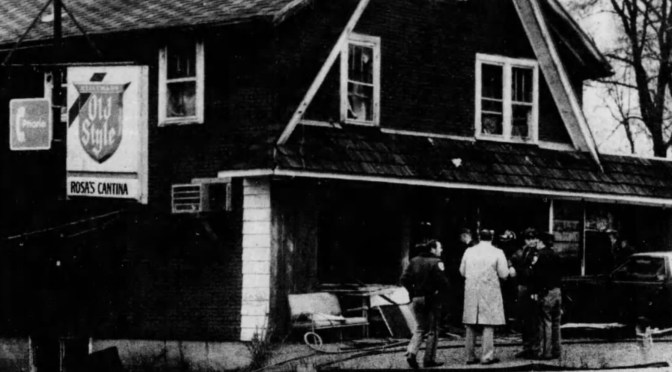
Top photo: A view of Rosa’s Cantina on the 1983 day the fire killed Catherine L. Christian, 22. — State Journal photo by Joseph W. Jackson III.

I was among a team of reporters who covered the Ghost Riders trial for the Wisconsin State Journal.

Judge Gets Final Word, ‘You Are an Armed Robber,’ Then Drops the Hammer

This article appeared on Page 1 of the Aug. 4, 1987 issue of the Racine Journal Times.

By Joseph Hanneman
Racine Journal Times 

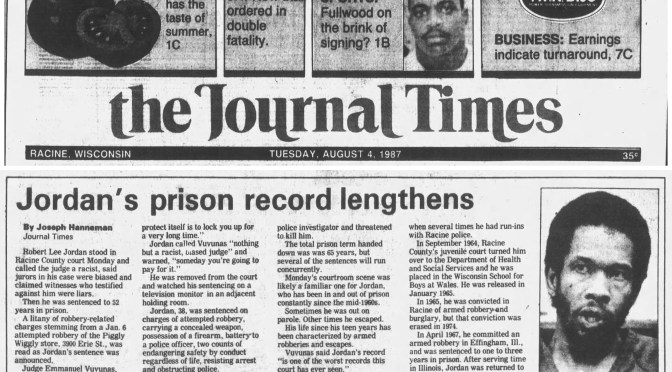
Robert Lee Jordan stood in Racine County court Monday and called the judge a racist, said jurors in his case were biased and claimed witnesses who testified against him were liars.

Then he was sentenced to 52 years in prison.

A litany of robbery-related charges stemming from a Jan. 6, 1987 attempted robbery of the Piggly Wiggly store, 3900 Erie St., was read as Jordan’s sentence was announced.

Judge Emmanuel Vuvunas, after listening to a blistering verbal attack from Jordan, said, “The only thing society can do to protect itself is to lock you up for a very long time.”

Judge Emmanuel Vuvunas (Racine Journal Times photo by Jim Slosiarek)

Jordan called Vuvunas “nothing but a racist, biased judge” and warned, “someday you’re going to pay for it.”

He was removed from the court and watched his sentencing on a television monitor in an adjacent holding room.

Jordan, 38, was sentenced on charges of attempted robbery, carrying a concealed weapon, possession of a firearm, battery to a police officer, two counts of endangering safety by conduct regardless of life, resisting arrest and obstructing police.

He was convicted in June for the robbery attempt, in which he struggled with an off-duty Racine police investigator and threatened to kill him.

The total prison term handed down was was 65 years, but several of the sentences will run concurrently.

Monday’s courtroom scene was likely a familiar one for Jordan, who has been in and out of prison constantly since the mid 1960s. Sometimes he was out on parole. Other times he escaped.

His life since his teen years has been characterized by armed robberies and escapes. Vuvunas said Jordan’s record “is one of the worst records this court has ever seen.”

According to court records, Jordan’s problems with the law began between 1961 and 1974, when several times he had run-ins with Racine police.

In September 1964, Racine County’s juvenile court turned him over to the Department of Health and Social Services and he was placed in the Wisconsin School for Boys at Wales. He was released in January 1965.

In 1965, he was convicted in Racine of armed robbery and burglary, but that conviction was erased in 1974. In April 1967, he committed an armed robbery in Effingham, Ill., and was sentenced to one to three years in prison. After serving time in Illinois, Jordan was returned to Wisconsin and paroled in July 1970.

Less than one month later, he committed another armed robbery in Racine. While in Illinois attempting to help recover items taken in the robbery, Jordan escaped from Racine police. He was captured and in February 1971 sentenced to 12 years in the Green Bay Correctional Institution.

In February 1973, Jordan was transferred to the State Farm in Union Grove. Eleven months later, he escaped from the farm. A 2½ year sentence for the escape was stayed and Jordan received probation.

He was again paroled on Nov. 19. On Nov. 20, 1974, Jordan was arrested and charged with committing armed robbery while an escapee from the Union Grove farm. Charges in that incident were considered later in a separate case. Three months later, Jordan committed armed robbery in Janesville and was sentenced to 10 years in prison, with a six-month jail term to run concurrently.

Jordan was sent to Oakhill Correctional Facility in Dane County. On Aug. 31, 1978, he escaped. Eventually he turned up in Avon, Mass., where on Dec. 1, he robbed a bank. He was charged with kidnapping, three counts of assault with intent to commit murder, assault and battery, use of a dangerous weapon, armed robbery and unlawful carrying of a firearm.

He was sentenced to six to 15 years and sent to the Massachusetts Correctional Institution at Walpole. On Dec. 15, 1986, he was paroled and returned to Wisconsin. On February 25, 1986, Jordan was released from prison on his mandatory release date for the 1975 robbery.

On Jan. 6, 1987, he was arrested for the Piggly Wiggly incident.

Jordan represented himself during the trial, which became characterized by his flashes of hostility toward Vuvunas, Assistant District Attorney Eric Guttenberg and the jury.

He said the case was decided by an “all-white, biased jury.” Referring to witnesses who testified against him, Jordan said, “All these people came and lied.”

But Vuvunas got the last word.

“The evidence in this case was absolutely overwhelming,” Vuvunas said. “The evidence was so overwhelming in this case that it really didn’t matter whether you had an attorney.”

Vuvunas, citing Jordan’s extensive criminal record, said it is clear the only choice was to impose a stiff prison term.

“You are an armed robber,” Vuvunas said. “I don’t think you’ve changed your spots. You’re still an armed robber. 

“This court has to make sure that a person as dangerous as you be kept out of the community for a very long time.” •

EPILOGUE: Jordan remains incarcerated at the Stanley Correctional Institution in Chippewa County, Wis. He filed a number of lawsuits from prison, one seeking $2 million from the Racine County district attorney, the Wisconsin attorney general and the head of the Wisconsin Department of Corrections. A federal judge denied his motions for damages and early release from prison. 

Judge Emmanuel Vuvunas is retired.

For Army Families, Emotions are the First Casualties of War

This story appeared on Page 1 of the Jan. 26, 1991 edition of the Racine Journal Times. It was based on observations during my second trip to Germany during the Persian Gulf War.

By Joseph Hanneman
Racine Journal Times

U.S. BASE, SOUTHERN GERMANY — Some of the first casualties of the Persian Gulf War were the emo­tions U.S. troops and families stationed in Europe, as they worried about loved ones in Saudi Arabia and expressed resentment toward anti-war protests back home.

In the first-week of combat between U.S.-led allies and Saddam Hussein’s Iraqi forces, one U.S. base in Germany displayed fear, anguish, anticipation and a host of other emotions.

People at the base clearly were in anguish. Many of them have relatives deployed in Saudi, as they call it here. Most of the deployed soldiers are in combat units.

Members of the Army’s VII Corps artillery units from this base are now at forward positions in Saudi Arabia. They would be in the thick of it if the United States starts a ground offensive into Kuwait.

“God Bless our Soldiers in Saudi Arabia,” proclaimed a banner inside one of the many post exchange shops on base. Employees wore yellow ribbons in remembrance.

At the U.S. Army hospital here, one nurse in the outpatient clinic said her husband was just deployed to the front lines.

Page 1 story from Jan. 26, 1991.

“I’ve just been pulling my hair out,” she said, adding that she has been glued to the TV set, watching Cable News Network’s coverage of the war. She said she fears a ground war is inevitable.

Discussion on the Army’s base shuttle bus turned to one active-duty soldier, who was supposed to be sent home last week because his unit was deactivated as the United States prepares to shut down some of its bases.

Three days before his plane was supposed to leave, he was told to report for duty in Saudi Arabia.

Fear has also become a staple in the daily routine.

The threat of terrorist attacks on U.S. bases is considered very real, and the military has employed many tools to reduce the risks.

Commercials on Armed Forces Radio and Television warn against speaking about military matters in public, for fear terrorists could be listening. It was reminiscent of the old war slogan, “Loose lips sink ships.”

Soldiers were also warned that Arab terrorists may try to buy military uniforms or identification cards.

Military families were told to venture off base sparingly, and try to blend into the German population as much as possible, lest they attract undue attention.

The Gulf War dominated global news in January 1991.

But the post commander appealed to parents not to pull their children from Defense Department schools on base. Many families here and elsewhere in Europe kept their children home in the wake of hostilities and terrorist threats.

Security was at a peak level, called “Threatcon Charlie.” That puts scores of heavily armed military police at every entrance, checking IDs and searching for bombs. At least two forms of photo identification were required, and every bag and package was searched.

There was growing resentment among soldiers and families as they watched news reports of anti-war protests at home.

Some soldiers who oppose Operation Desert Storm wondered aloud where the protesters were over the past 5 ½  months, when the United States built its war force in the Gulf. Others said it hurt knowing while they were overseas serving their country, some back home didn’t appreciate it.

The growing number of military reservists shipped here to fill in for regular troops sent to the Middle East complained of shabby treatment by regular Army personnel.

Some reservists said regular troops seem to resent the citizen-soldiers, and treat them accordingly. Reservists are performing a host of support duties, such as medical care, transportation and administration.

“The sacrifices we have made are not acknowledged by the regular army,” one reservist said. “They seem to consider us a burden.”

One thought was universal here — a desire for the war to end quickly. For military families, that will mean loved ones come back to Germany. For reservists, it will mean going home.

(Reporter Joseph Hanneman, who covers government and higher education for the Journal Times, travelled to Germany to visit his wife, Susan, an Army reservist called to active duty at the U.S. base in Germany.)

Feature image atop the story: A sculpture outside the museum at the former concentration camp near Dachau, Germany. Photo taken during my second trip to Germany in 1991.

©2020 The Hanneman Archive

Tension Grips Base in Germany as Persian Gulf War Erupts

This story appeared on Page 1 of the Jan. 18, 1991 edition of the Racine Journal Times. I filed the story from the U.S. Army base in Augsburg, Germany.

By Joseph Hanneman
Racine Journal Times

U.S. BASE, SOUTHERN GERMANY — Heavily armed military police patrolled in front of a U.S. Army base elementary school Thursday, with battle helmets on their heads and M-16 semiautomatic rifles slung over their shoulders.

It was an unmistakable sign that the United States had entered a war with Iraq, and that any U.S. citizen — even children — was a potential target for terrorists.

As Germany slept Wednesday night and early Thursday, U.S. and allied war planes screamed into Iraq as the offensive began to drive Saddam Hussein’s forces from Kuwait.

And overnight, this large military base in southern Germany transformed from a bustling community into an armed camp, where tension was high and fear so palpable you could almost taste it.

The Army was taking no chances amid terrorist threats against U.S. facilities around Europe and the Middle East.

At every housing facility, school and entrance to the base, military police were out in force. The grim-faced soldiers wore bullet-proof vests and carried high-powered weapons. The protective gas masks were clipped to belts at their sides.

An MP, his rifle on the seat next to him, rode the school bus with children as the vehicle darted off and on base, taking students home. This military base is home to more than 2,500 children.

And while children were being zealously protected, they also were not beyond suspicion. Youngsters returning home from school were required to show ID cards before entering housing complexes.

The author in the German countryside during one of two trips to Germany.

At each gate leading to the base, cars were stopped and searched. Guards looked in trunks and under hoods; they pushed large mirrors under vehicles to check the undercarriages for bombs.

No one, soldiers of all ranks included, escaped scrutiny.

At the entrance to the post exchange, 55-gallon drums filled with concrete were lined up to prevent cars or trucks loaded with explosives from reaching the building, which is usually filled with soldiers and family members.

Barbed razor wire was laid along the length of the sidewalk. Visitors had to pass through an armed checkpoint and were only allowed in the building with two forms of photo identification. Bags were searched.

Inside the PX, yellow ribbons hung fro the ceiling outside the cafeteria. Many soldiers from this base — including medical units and some of the heaviest armor units in the U.S. Army — were sent to Saudi Arabia as part of Operation Desert Shield, transformed Wednesday into Operation Desert Storm.

At the commissary (the Army’s version of the grocery store) aisles normally crowded on a weekday were deserted. Families, it seemed, preferred to stay home this day.

Area car dealerships that cater to U.S. soldiers closed early, and one U.S. club posted a sign that it would not be open Thursday, a day the sign labeled “Doom’s Day.”

Even the Burger King just outside the boundaries of the post was surrounded by armed guards. Only persons with military ID cards were allowed to eat.

At the U.S. Army Hospital, soldiers, nurses and visitors crowded around a television set in the internal medicine department, watching live cable news network accounts of the air attacks on Iraq and Kuwait.

Faces were stern. No one spoke. The expressions told of concern and relief that the operation had finally started.

Hospital officials refused to discuss the hospital’s role as a possible airlift treatment center for wounded soldiers. A reporter was told he could have access to medical staff only if he did not discuss Operation Desert Storm.

But it is widely expected here that the medium-size hospital would be pressed into service if casualties in the Middle East become heavy.

Soldiers said mobile hospital beds arrived in recent days to expand the facility’s capability.

And members of the 44th General Hospital, an Army reserve unit from Madison, began arriving here Thursday to fill in for medical staff shipped to the Middle East.

Bases all over Germany were setting up temporary hospital facilities to handle the wounded. German hospitals say they would assist with casualties. And the U.S. Veterans Administration was making ready 25,000 beds in the United States for possible casualties, according to local news accounts.

Elsewhere on base, soldiers listened to Armed Forces Radio for news about the start of the war. In between news dispatches, soldiers called in to request songs. Some were love songs for family members stationed in Saudi Arabia. Others, with titles like “We Will Rock You” and “Heads Will Roll” were dedicated to combat soldiers at the front.

(Joseph Hanneman is the state government/higher education reporter for the Journal Times. He flew to Germany last week to visit his wife, Susan, who is a reservist called to active duty there. Both live in Racine.)

Army Couldn’t Wait for Couple’s Christmas Wish

This article sat atop Page 1 of the Racine Journal Times on December 25, 1990. It was one of the few times I wrote about my personal life in the pages of the newspaper. The memories are still vivid nearly 30 years later.

By Joseph Hanneman
Racine Journal Times

For many Americans, Christmas Eve was spent gathered around the tree with family members, exchanging gifts and enjoying the holiday spirit. 

But for my family, there really is no Christmas this year. 

Instead of wrapping gifts, toasting with a glass of eggnog or listening to Bing Crosby sing “White Christmas,” my wife of three weeks, Susan, and I spent our first Christmas Eve together saying goodbye. 

Tears streamed down my face as I watched her board a bus Monday at Fort Sheridan, Ill., as her Army Reserve unit shipped out on its way to Europe and Op­eration Desert Shield. 

It seems for the U.S. Army, there is no Christmas ei­ther. 

The Persian Gulf crisis could not wait. 

Fort McCoy, Wis., where my wife’s plane will depart today -— Christmas Day — could not wait. 

Reserve units from Illinois and Wisconsin, which will board planes and leave on the one day of the year that symbolizes peace and brings together families, could not wait. 

It could not be Dec. 26, or 27. It had to be on Christmas. 

It was necessary, they say. I just wish I could believe that. 

If I have just one Christmas wish this year, it is that the people of this country think about what is happen­ing in the Persian Gulf.

As you open your gifts today and hear songs about “Peace on Earth, Good Will to Men,” think about it. This year, those words should carry extra meaning. 

As Christmas dinner is served, don’t forget what this crisis is doing to the citizen-soldiers of the military re­serves, or the sacrifice they are making. Remember their families, who this year spend the holidays filled with worry and uncertainty.

And realize that the impacts of this crisis go well be­yond what most people have heard. 

When George Bush decided to turn up the heat and mobilize more reservists than have been called since the Korean War, he affected more people than most of you will ever know. 

My situation is painful, but I am very lucky. My wife will not be in Saudi Arabia, scorched by heat, bored by the de­sert and worried about war. I thank God for that every day. 

Our story is far from unusual. Since the reserves were first called up in August, our lives have been under a cloud.

The specter of being sent to Saudi Arabia filled every day with worry. Every day that should have been full of excitement as we planned our wedding was shadowed by fear that the ceremony would not take place. 

We heard a million ticks of the clock during those months, but we made it to our wedding day, Dec. 1. We forgot about the Army for a while. We went on our honeymoon.

But we cut it short and came home when her unit was activated.  “That’s all right,” we said, “we will still have Christmas.” 

Between scrambling to put wed­ding gifts away and move into our home, our days have been filled with tension and bureaucracy. Power of attorney had to be de­cided, many forms filled out.

She will take a more than 40 per­cent pay cut from her job by being on Army pay. Forty percent cut, but no relief from creditors. Our in­terest rates are reduced a bit by Uncle Sam, but the bills keep com­ing. 

So we will sell one of our cars. We don’t have to, but we have this crazy idea about having enough money for phone bills, and for plane tickets when I go to visit. 

But again, we are lucky. She will be stationed where there are phones, and where a husband can fly in and see his wife. 

We are lucky, because we don’t yet have children who will see their mother taken away on Christmas Day. She’s not one of the single mothers who was forced to find care for her baby because the Army called her to duty. 

We don’t have a new house to worry about, or mortgage payments to make, like many reservists.

And we have had time together. It took getting up at 4 a.m. each day to make sure she reported promptly by 5:30 for duty, but we had time. Time to talk, and prepare, and pray for the day this whole thing ends and everyone comes home. 

We got so close to Christmas, we felt sure we would be safe for the holiday. Surely, I thought, even the Army believes in Christmas. Now, I know better. 

But we are lucky, I keep telling myself. And in the end, I know I will see the wisdom in those words.

But standing on the wind-whipped pavement of a cold military base on Christmas Eve, I don’t feel very lucky. 

(From the Dec. 25, 1990 issue of The Journal Times, Racine, Wis.)

“Get Off the Wheels and on the Heels,” Former Green Beret Says

This is one of my favorite stories from my newspaper days. Fritz was a decorated veteran of the 82nd Airborne, a former Green Beret and a colorful character who became well-known and beloved in Wisconsin and Tennessee.

By Joseph Hanneman
Racine Journal Times

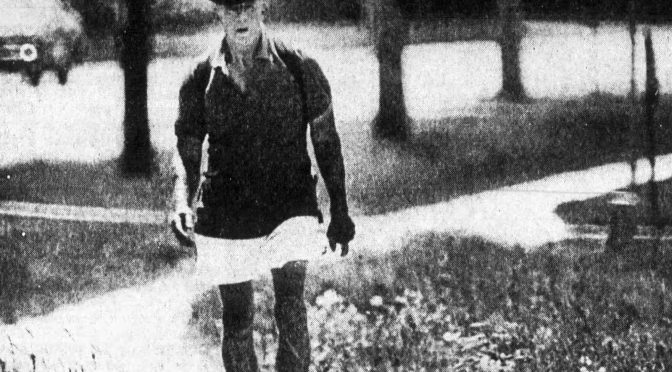
Fritz Bernshausen has walked 4,500 miles — just to deliver a message.

You might have seen him, two times a week, carrying the American flag from his south side Kenosha home, through Racine, to downtown Milwaukee.

What could be so important?

Fritz was front-page news in The Journal Times on August 29, 1987.

“I have a message,” Bernshausen said Friday on his way through Racine. “Walk America. That’s all it is. Two words — one verb, one noun.”

Bernshausen, 59, started walking the trail to Milwaukee about 3 1/2 years ago. In July, he started packing Old Glory to grab more attention.

“This is the 119th time I’ve done it,” he said. “I’m going to keep walking with that flag until I see some indication of a transposition of those two words — America walks.”

Bernshausen believes in foot power over gasoline power. You know, pedestrians over petroleum.

“America is in trouble all the world,” he said. “I figure the only way to solve that problem is to make America energy self-sufficient.”

Bernshausen said he is concerned about tensions in the Persian Gulf and Middle East, tensions he says cause two much risk and danger, just for the oil.

“A lot of boys are probably going to die for a barrel of oil,” said Bernshausen, a veteran of Army special forces from the Vietnam War. “It ain’t worth it.”

Fritz from his Vietnam days. (Johnson City Press photo)

“I’m concerned about my country,” he said. “I consider myself a public-spirited American…. This is my contribution to America.”

That contribution usually takes between 10 and 13 hours per trip, depending on the weather and how many people stop him along the way. If they ask, he gladly obliges.

“I got stopped by a policeman, I got stopped by a kid and a public works man,” he said, just before a photographer caught up with him. “I’m going to have to roll up the flag and run like hell.”

On occasion, Bernshausen packs some fruit to hand out to people along the route, which has become so familiar he said “I can almost do it blindfolded.”

Besides the flag, there is one other important bring-along.

“I carry some toilet paper,” he said, “just in case.”

While Bernshausen’s message is serious, the flag and the walking are good-natured ways of prodding citizens to think about fuel consumption.

“It’s real important to me,” he said. “It’s just too important (that) you can’t be serious.”

In that spirit, he quotes a phrase to sum up his effort: “Get off the wheels and on the heels.”

Once the long journey is finished, Bernshausen usually takes the bus home from Milwaukee’s Wisconsin Avenue. That was not the case on Friday. He met his daughter for dinner in Milwaukee and had to accept a car ride home.

A tough sacrifice for the cause.

(From the Aug. 29, 1987 issue of The Journal Times)

EPILOGUE: Fritz Albrecht Bernshausen died on March 13, 1993. He was just 64. He is survived by a son and four daughters. He requested that his  cremains be scattered from an airplane at 1,200 feet — a paratrooper’s jump altitude.

Double Overdose Ends Multi-State Crime Spree

By Joseph Hanneman
Journal Times

An escaped federal prisoner from Indiana was captured by Racine County sheriff’s deputies early Saturday after he took a hostage, went on a three-state crime spree and shot an Oak Creek police officer, authorities said.

Ronald R. Plummer, 39, a federal prisoner awaiting sentencing in Indianapolis, and his alleged accomplice, Elizabeth Bonvillain, 31, a jail social worker, were captured in a town of Raymond barn after they took an apparent drug overdose.

Both were in critical condition early today at St. Luke’s Hospital in Racine. A nursing supervisor said the couple were starting to come out of drug-induced comas they had been in much of the day.

A bullet tore through the patrolman’s badge. (Charles S. Vallone photo)

The couple are under armed guard. If they regain consciousness, they will be turned over to Oak Creek authorities to face charges of attempted murder of a police officer, police said

They also face a long list of charges in other jurisdictions-so many that police had not sorted them all out late Saturday. Charges could include kidnapping, federal escape, attempted murder and possession of firearms by a felon.

Meanwhile, Oak Creek Police Patrolman John Edwards, 26, was treated at a Milwaukee hospital, then released after he was shot in the hand and nearly shot in the chest, police said.

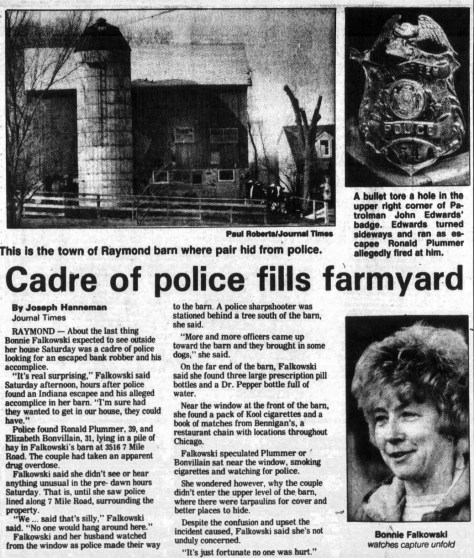
Cadre
Sidebar that ran with the Page 1 news article on Ronald Plummer’s crime spree.

Edwards was shot about 4:15 a.m. in the parking lot of the Union 76 Milwaukee Truck Stop, at Highway 100 and Interstate 94, as he routinely checked what he believed to be a suspicious vehicle.

“The driver of the car got out and had two guns pointed at officer Edwards — one in each hand,” said Oak Creek Police Lt. Gerald Stahl.

Plummer ordered Edwards to lie on the ground, but the patrolman turned sideways and started to run, Stahl said. Plummer fired a shot at Edwards.

“The bullet came from the side and hit his badge,” Stahl said. The bullet ripped a hole in the badge, which was knocked off, but the bullet did not enter Edwards’ body. A second bullet struck Edwards’ right index finger.

The escaped bank robber then got back in his car and fled south on I-94 with Edwards in pursuit.

Police lost sight of Plummer and Bonvillain as they headed west on 7 Mile Road in Racine County. About 6 a.m., Racine County sheriff’s deputy Jeff Holmes spotted Plummer’s car parked in a driveway at 3526 7 Mile Road.

Authorities from Racine County, Milwaukee County, the State Patrol and the U. S. Marshal’s office surrounded the barn next door after the Racine Police Department’s dog, Bonny, picked up the couple’s scent.

Bonny was sent into the barn at 3516 7 Mile Road ahead of officers and bit Plummer on the arm. Police found Plummer and Bonvillain in an animal stall, covered with hay, and semi-comatose from an apparent barbiturate overdose, authorities said. Two .38-caliber pistols were found.

Bonnie Falkowski, co-owner of the barn, said she found three “really big” prescription pill bottles and a bottle of water next to where the fugitives were found.

The bottles, which apparently had a woman’s name on them, were empty, Falkowski said. “It makes sense,” she said. “They probably had the water to take the pills.”

Spree started in Indiana

Plummer’s bizarre journey to Racine County began Friday in Indianapolis, where he was awaiting sentencing for a June 1987 robbery of an Evansville, Ind., bank.

He was brought to Indianapolis from the federal penitentiary in Lewisburg, Pa., where he was serving a sentence for robbing two Ohio banks and a federal savings and loan, police said.

Plummer apparently self-inflicted a hand injury at the jail and was taken to Wishard Memorial Hospital in Indianapolis for treatment, according to the Marion County (Ind.) Sheriff’s Department and the Indianapolis office of the FBI.

Plummer was shackled to a gurney in the X-ray room when Bonvillain, wearing a nurse’s coat and armed with the pistols and a bolt cutter, burst in and tried to give the gun to Plummer, police said.

“Evidently, the gun was on a table,” said Garry Schoon, FBI special agent in Indianapolis “Both the deputy and Plummer went for it. The deputy grabbed the top of it.”

Schoon said Plummer attempted to fire the weapon at the deputy, but the officer’s hand blocked the gun’s hammer from making contact with the bullet. Confronted with the loaded pistol, the deputy backed off. Plummer and Bonvillain took X-ray technician Donald Elsner hostage, and fled to a waiting car.

Fled in rental car

About three blocks away, on the Indiana University campus, they dumped the escape car and got into a rental car and fled north on Interstate 65, police said. Elsner was released unharmed in the Chicago area and the duo continued north on I-94 into Wisconsin.

Police believe there was “a considerable amount of planning” involved, said Sgt. Randy Russell of the Marion County Sheriff’s Department. “It looked to be fairly well thought out,” Russell said.

Police found a sketch of the hospital’s layout in the original escape car, Russell said.

Schoon said Bonvillain apparently met Plummer at the Hamilton County, Ohio, jail in Cincinnati, where she worked as a counselor. “They did have some contact in the Hamilton County Jail,” Schoon said.

Hamilton County authorities said Bonvillain was acting coordinator of the mental health unit at the Hamilton County Justice Center in Cincinnati. She was employed by Correctional Medical Services Inc., which provides service to the county.

She apparently met Plummer in February 1988 while he was awaiting trial on two Ohio bank robbery charges, police said. She called in sick on March 17 then began a vacation last week, Hamilton County authorities said. Last Monday, she purchased the two pistols in Cincinnati, police said.

On Thursday, she checked in to the Inntowner Motor Lodge in Indianapolis. Shortly before leaving for Wishard Hospital she took three calls from Plummer, who was in the jail, police said.

If the couple survive the drug overdose, they could face a long list of charges and warrants from numerous law enforcement agencies.

“He would be considered for kidnapping charges, probably federal and state,” said Jon Wendt, FBI special agent in charge of Wisconsin. “Traditionally, you look at the more violent crime first.” Marion County will consider “five or six” charges against the pair, Russell said, on top of charges being considered by the U.S. Attorney. ♦


— From the March 26, 1989 edition of The Journal Times. Read the original news pages.

EPILOGUE: In December 1990, Plummer was sentenced to 100 years in prison for the kidnapping of X-ray technician Elsner. He was earlier sentenced to more than 130 years in prison for a series of bank robberies. ….Bonvillain pleaded guilty to armed escape and conspiracy to commit kidnapping. In September 1990 she was sentenced in Marion County, Indiana, to 20 years in prison.